
Lake Ohrid Beaches: 25°C Water, Ljubaništa 30 km South
Lake Ohrid hits 25°C in July-August with 20+ m visibility: Lagadin 8 km out, Gradište 20 km, sandy Ljubaništa 30 km south by St. Naum. Where locals swim.
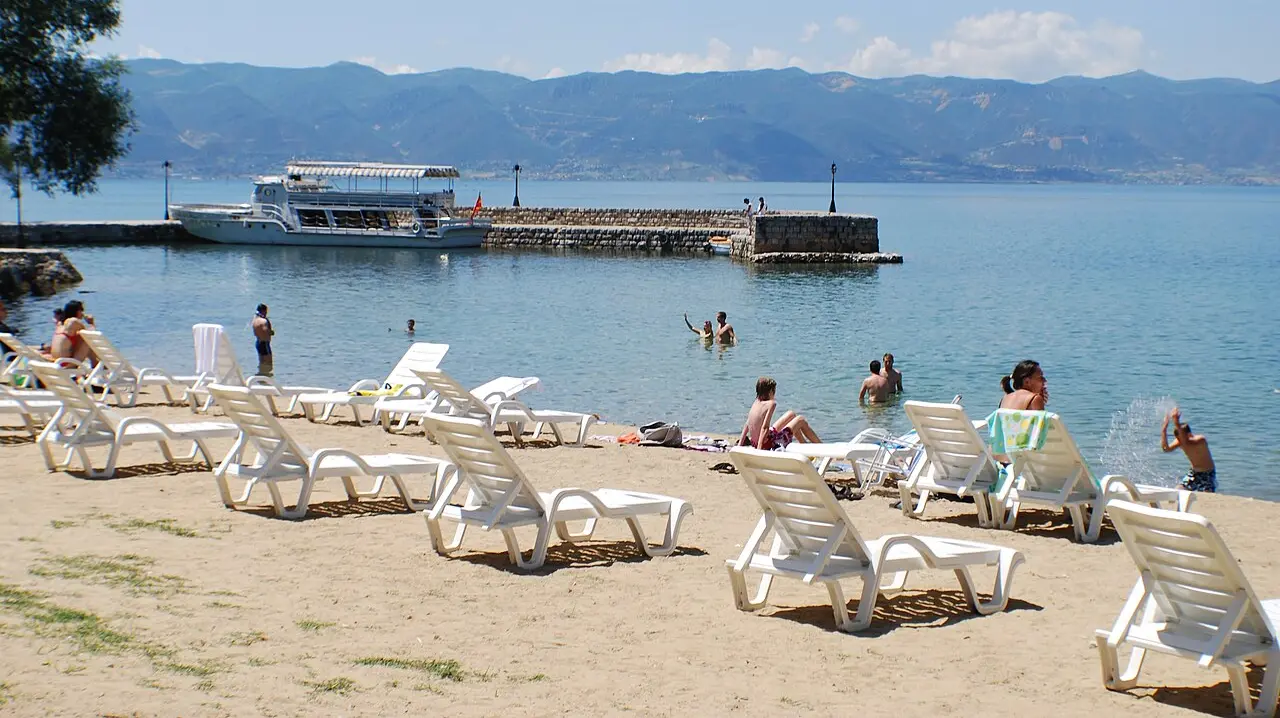
The easiest swim on Lake Ohrid is at Lagadin, about 8 km south of town on the main lake road, with sand-and-pebble shore, sunbeds, bars and a big car park - but the right beach depends on what you want from the day. Families and anyone without a car do best at Lagadin or the Ohrid town beach; the postcard cove is Trpejca, quiet and clear; the party is at Gradište; and the only proper sand is down at the southern tip by St. Naum. The lake is famously clear and, by July and August, genuinely warm - around 24-25°C - so this is a summer activity, best from June to September; air and water figures sit in weather and lake temperatures by month. This guide runs through the main beaches, what each is like and how to reach it.
Where to swim on Lake Ohrid at a glance
Ohrid town sits at the lake’s north-east corner. Almost all the swimming beaches line the eastern shore, on the road heading south toward the Galičica mountain and the Monastery of St. Naum at the southern tip. Most are pebble - smooth, rounded stone rather than sand - with the rare sandy stretches down at St. Naum and over at Struga. The water is exceptionally clear (visibility of 20-plus metres on a calm day) and cool until it warms through high summer. Here’s the quick version:
| Beach | Distance from Ohrid | Best for | Type |
|---|---|---|---|
| Ohrid town beach | In town | No car, a quick swim | Town beach, lifeguards in season |
| Lagadin | ~8 km south | Families, full facilities, easy access | Pebble |
| Bay of Bones / Peštani | ~13 km south | A swim plus the museum | Pebble, sheltered bay |
| Gradište | ~15-20 km south | Bars, music, a younger crowd | Pebble and sand |
| Trpejca | ~17 km south | Quiet, scenery, swimming off the rocks | Pebble cove |
| St. Naum / Ljubaništa | ~30 km south | Sand, families, a day trip | Sandy (rare here) |
Lagadin: the easy family beach
If you’re staying in town and want a full beach day without a long drive, Lagadin is the obvious choice. It sits about 8 km south of Ohrid, directly on the main lake road, with a large car park, so it’s the most accessible of the developed beaches - roughly a ten-minute drive, or a short hop by one of the buses and taxis that run down the eastern shore in summer. The pebble shore is backed by bars and restaurants and lined with sunbeds and umbrellas for hire, with showers and toilets, and the designated swimming area is watched by lifeguards in July and August. The water is calm and clean, and the bay is pretty.
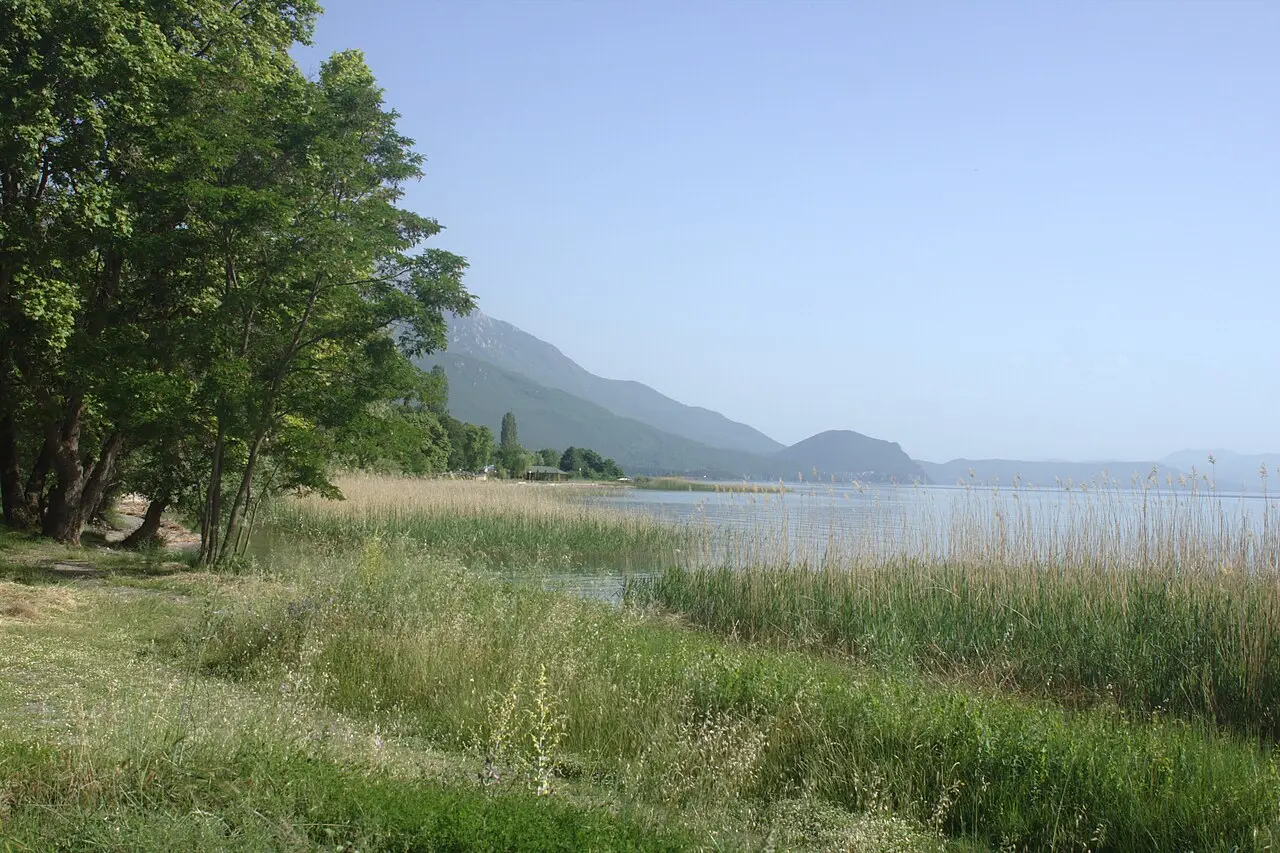
It’s the safe, sensible pick for families and first-timers: easy to reach, everything you need on site, and rarely uncomfortably full except on the peak August weekends. If you want a beach day built around comfort rather than adventure, start here. It pairs naturally with a base in town or the south-shore villages - see our where to stay in Ohrid guide for the lay of the land.
Gradište: the party beach
About 15-20 km south, in the Galičica National Park, Gradište is the liveliest beach on the lake. The long stretch of pebble and sand comes with sunbeds, beach bars, a restaurant and a big campsite, and through the summer it’s the centre of Ohrid’s beach nightlife - DJ sets and beach parties on most weekends, drawing a young, upbeat crowd. The water is clear and turquoise, and there’s room to spread out, plus water-sports such as kayaking and pedal boats.
The thing to plan around is parking and timing: the car park can fill by mid-morning on summer weekends, so arrive early or come midweek if you’d rather have space. It’s reached by car on the scenic lake road (or by the seasonal buses heading toward St. Naum). Gradište suits people who want music, bars and a social scene with their swim; if you’re after peace and quiet, it’s the one beach on this list to avoid in high season - head to Trpejca instead.
Trpejca: the quiet, scenic cove
The most photogenic swim on the lake is at Trpejca, a tiny old fishing village about 17 km south of Ohrid that tumbles down to a sheltered pebble cove. People call it the “Macedonian Saint-Tropez” - not for any glitz, but for the looks: clear, calm water, fishing boats pulled up on the stones, and the little church of Sveti Bogorodica on the headland. You swim off the pebbles and the rocks, the water is exceptional, and the whole place runs at a slower pace than the developed beaches.
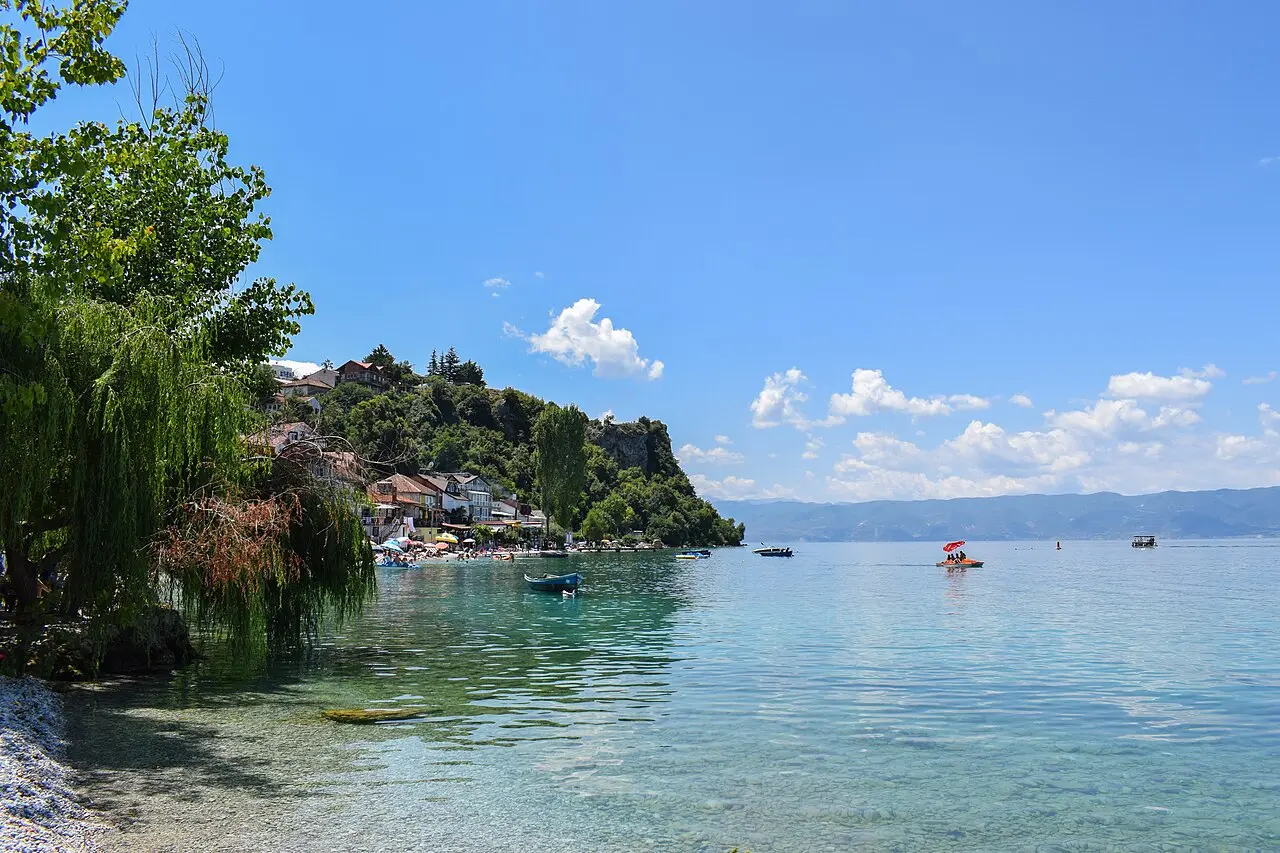
Facilities are limited - a small beach bar, a few sunbeds - so it’s more about the setting than the service. Getting there needs a little care: from the main lake road you turn off and drop down a steep, narrow lane into the village, and the final stretch is tight, so a compact car is far easier than a big one, and parking is scarce in peak season. It rewards the effort. Trpejca suits couples, photographers and anyone who’d trade beach bars for one of the prettiest corners of the lake.
St. Naum and Ljubaništa: the sandy south
At the lake’s southern tip, about 30 km from Ohrid, the shore by the Monastery of St. Naum and neighbouring Ljubaništa has something rare for Ohrid: proper sand. This is the classic full-day trip - a sandy, family-friendly beach, the famous spring-fed pools and the monastery right there, and boat trips on the crystal water. There are sunbeds, beach bars and campsites nearby, and the swimming is gentle and shallow, which suits children. The cover photo above is this stretch of shore.
Because it’s the farthest beach, treat it as a day out rather than a quick dip: drive the lake road south (paying the small parking/entry fee at St. Naum), or take a seasonal bus, or - the nicest way - arrive by boat from Ohrid. The classic excursion combines the beach, the springs and the monastery; see our guide to the Ohrid boat trip to Sveti Naum. It’s busy in peak season, so come early for a spot on the sand.
Town beaches and the Bay of Bones
You don’t have to leave Ohrid to swim. The town beach and a string of small lakeside spots below the old town - including the little pebble coves under the Kaneo cliffs - let you slip into the lake within a short walk of the centre, handy if you don’t have a car or just want a swim between sights. The designated city swimming area is watched by lifeguards in July and August.
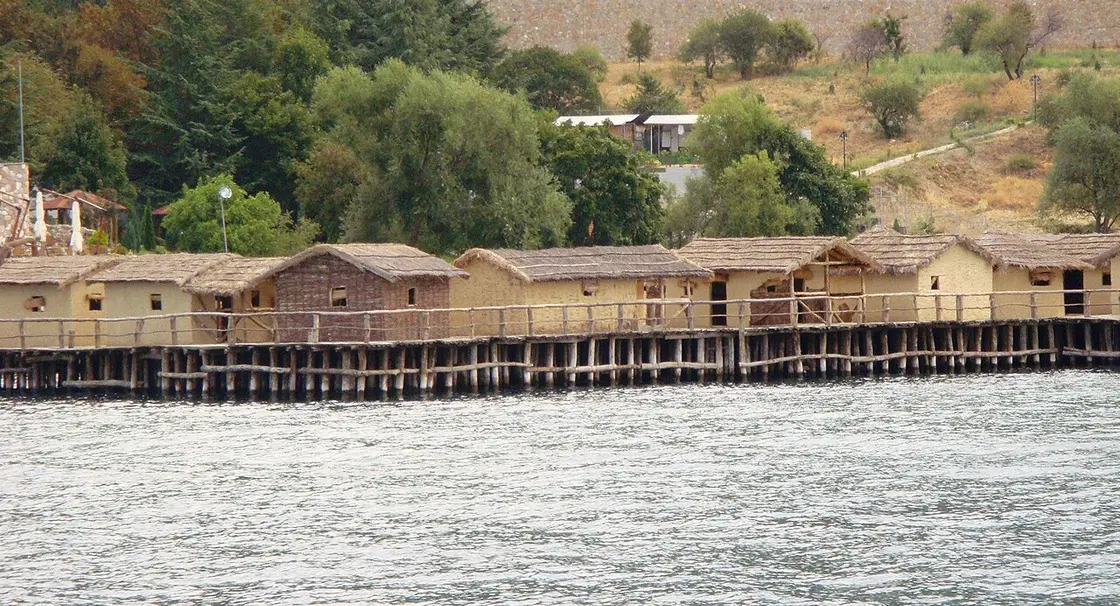
Halfway down the eastern shore, around 13 km out near Peštani, the Bay of Bones (Zaliv na koskite) is a reconstructed prehistoric pile-dwelling village built on a platform over the water, with a museum and a sheltered, shallow bay alongside - a good place to mix a bit of history with a calm swim. For more on it and the rest of the lake, see our things to do in Ohrid guide.
When to go, and what to know
This is firmly a summer activity. The swimming season runs roughly June to September, with beach bars and sunbeds generally open from about 1 June. The lake is cool in spring and warms through the season: by July and August the water reaches about 24-25°C - warm enough for long swims - which is also when the beaches are busiest and the parking tightest. September is the sweet spot: still warm, much quieter. A few practical notes:
- Pebble, mostly: most beaches are smooth pebble, so water shoes make getting in and out comfortable; the sandy exceptions are St. Naum and Struga. If you’re based in Struga for the Poetry Evenings, the town beaches let you swim by day and walk to the Bridge of Poetry at night.
- Getting around: a car opens up the whole eastern shore and the southern beaches; seasonal buses and taxis serve the main stops but thin out in the evenings. See our renting a car in North Macedonia guide.
- Cost: beaches are free to walk onto - you pay only for sunbeds, a drink or parking. St. Naum charges a small fee.
- Lifeguards cover the designated areas at Lagadin, Gradište and the city beach in July and August; elsewhere you swim at your own risk.
So, which beach?
- Family day, no fuss, easy to reach? Lagadin.
- Bars, music, a younger crowd? Gradište (arrive early for parking).
- The prettiest, quietest swim? Trpejca (small car, come early).
- Sand and a day trip? St. Naum and Ljubaništa at the southern tip.
- No car, or a swim between sights? The Ohrid town beach.
Sort out how you’ll get there first - most of the best beaches are south of town along the lake road - then pick the one that matches your day. Plan the rest of the lake with our things to do in Ohrid guide, and sort a lakeside base with where to stay in Ohrid.
Read also
- Understand the lake: Lake Ohrid guide
- The rest of the lake: things to do in Ohrid
- Festival week on the western shore: Struga Poetry Evenings
- Find a lakeside base: where to stay in Ohrid
- The classic excursion: Ohrid boat trip to Sveti Naum
- Reach the south-shore beaches: renting a car in North Macedonia
- More in the North Macedonia planning hub
Admission and opening hours
- Admission price
- Most beaches are free to walk onto; you pay only for what you use - sunbed and umbrella hire is typically a few euro per day, and St. Naum charges a small parking/entry fee. Beach bars and sunbeds generally run from about 1 June to September.
A summer-season activity: the swimming season runs roughly June to September, with the water warmest (about 24-25°C) in July and August. Prices and opening dates are indicative - confirm locally.
Details checked: July 1, 2026
Read also

Before you go · 11 min read
North Macedonia Travel Tips: Know Before You Go
Updated · September 5, 2026Pack a Type C/F adapter, plan around Sunday shop closures, carry denar, check tap-water alerts, and sort eSIM plus insurance before you land.

Before you go · 10 min read
Macedonian for Travelers: Phrases That Open Doors
Updated · August 31, 2026A working Macedonian phrase kit for travelers: Cyrillic, how to say it, and when it helps in a kafana, taxi or market.

Before you go · 9 min read
Skopje vs Ohrid: Which Should You Base Yourself In?
Updated · September 24, 2026Skopje for flights, museums and day trips; Ohrid for the UNESCO lake and summer swimming - about 3 h 20 apart by bus, and most trips work best split.

Before you go · 12 min read
Skopje or Sofia: Which Balkan Capital to Visit?
Updated · September 26, 2026Skopje's rooms cost less, Sofia's airport transfer is easier, and a direct bus links the two in about 5h for about EUR 27. Here's which to fly into first.