
Things to Do in Ohrid
What to do in Ohrid, North Macedonia: St. John at Kaneo, Samuel's Fortress, the ancient theatre, Lake Ohrid boat trips, where to stay and getting there.
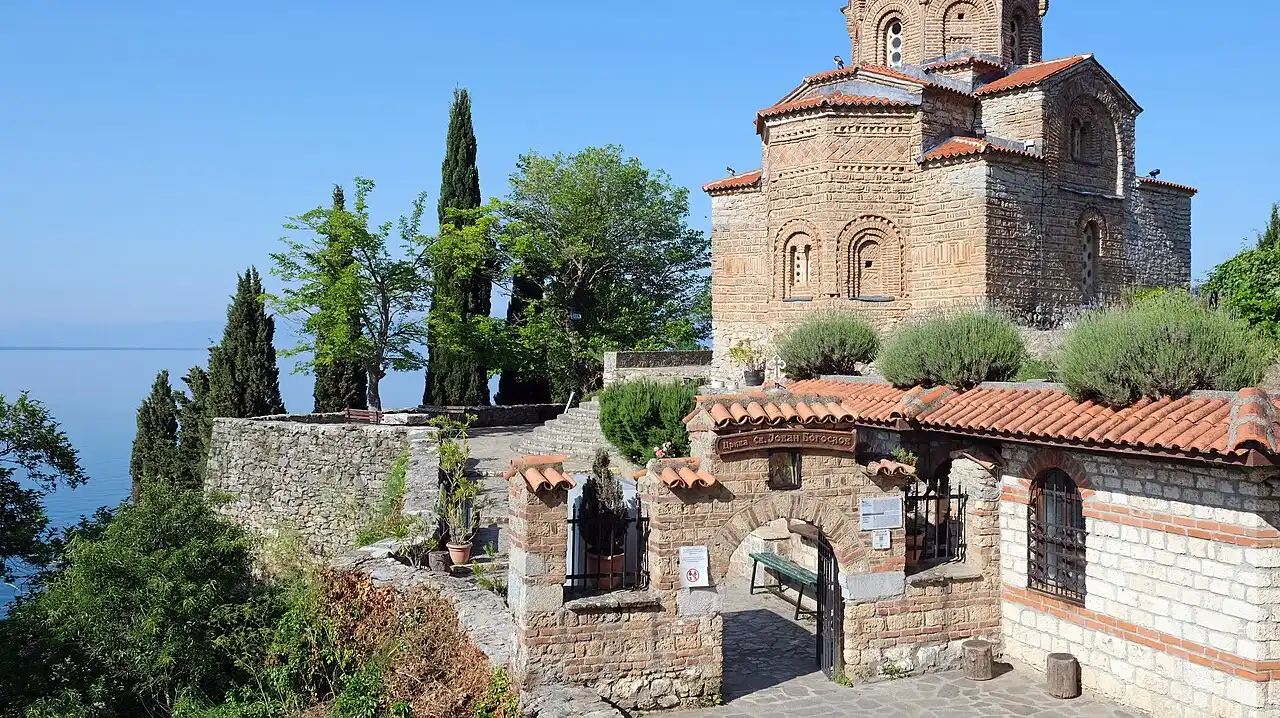
Ohrid is North Macedonia’s lakeside showpiece - a UNESCO World Heritage town where Byzantine churches, an Ottoman-era old quarter and a hilltop fortress tumble down to one of Europe’s oldest lakes. The headline things to do are simple: walk the old town up to Samuel’s Fortress, find the cliff-top Church of St. John at Kaneo, sit in the ancient theatre, and take a boat across Lake Ohrid to the Monastery of St. Naum. Two to three days let you do all of it without rushing. This guide covers what to see, the boat trips and beaches, where to stay, how to get there, and where to eat.
Not sure Ohrid should be your only base? Read Skopje vs Ohrid before you unpack.
What to see in Ohrid
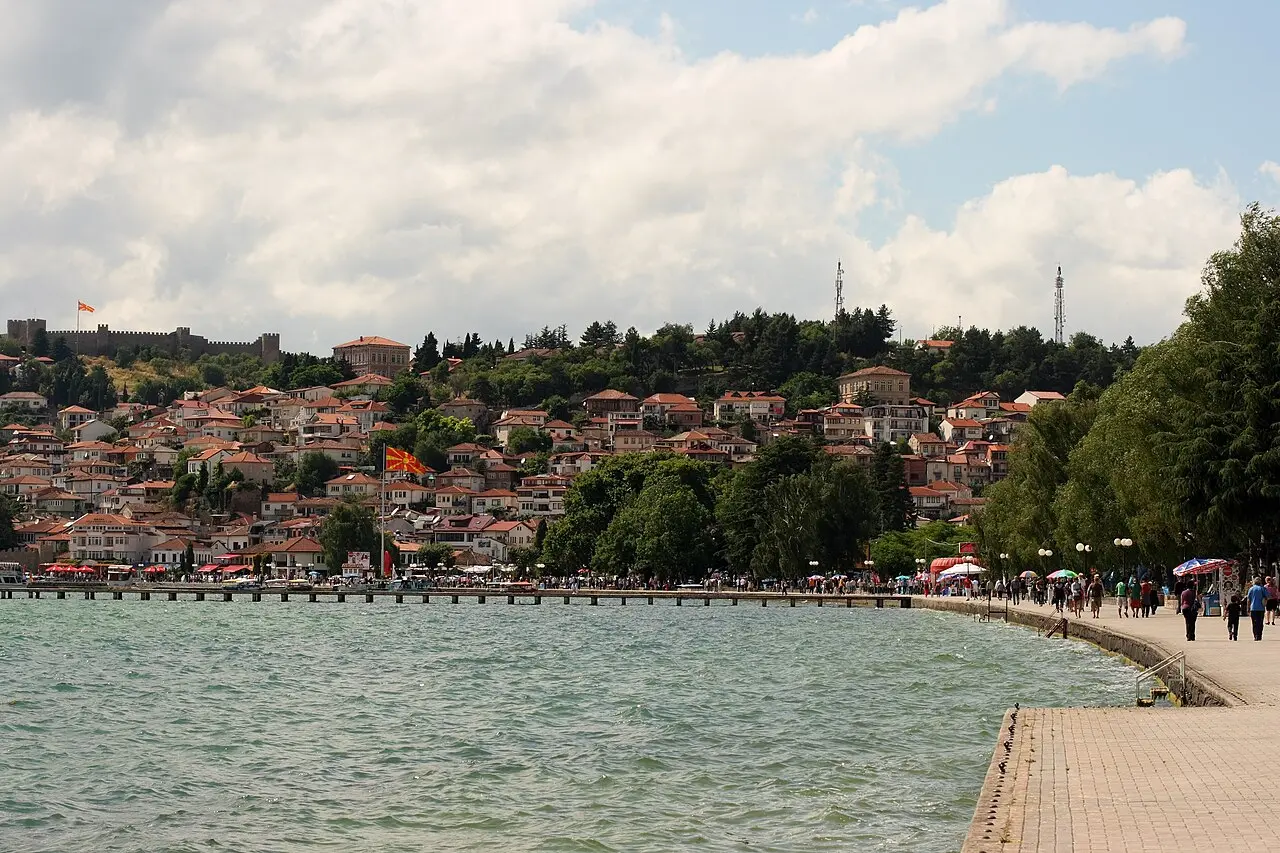
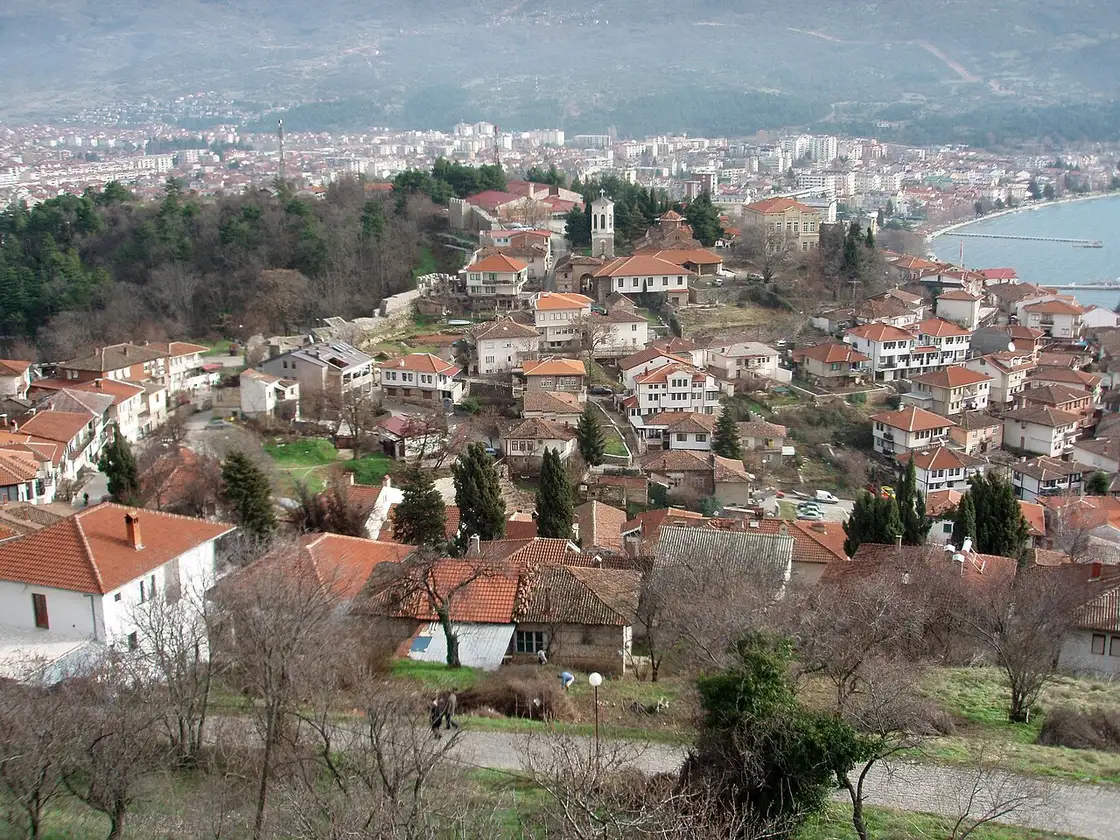
The old town climbs a steep headland between the lake and Samuel’s Fortress, and almost everything worth seeing is packed into it. It’s compact and walkable - but the lanes are cobbled and steep, so wear proper shoes and expect to go up and down a lot.
The old town and traditional houses
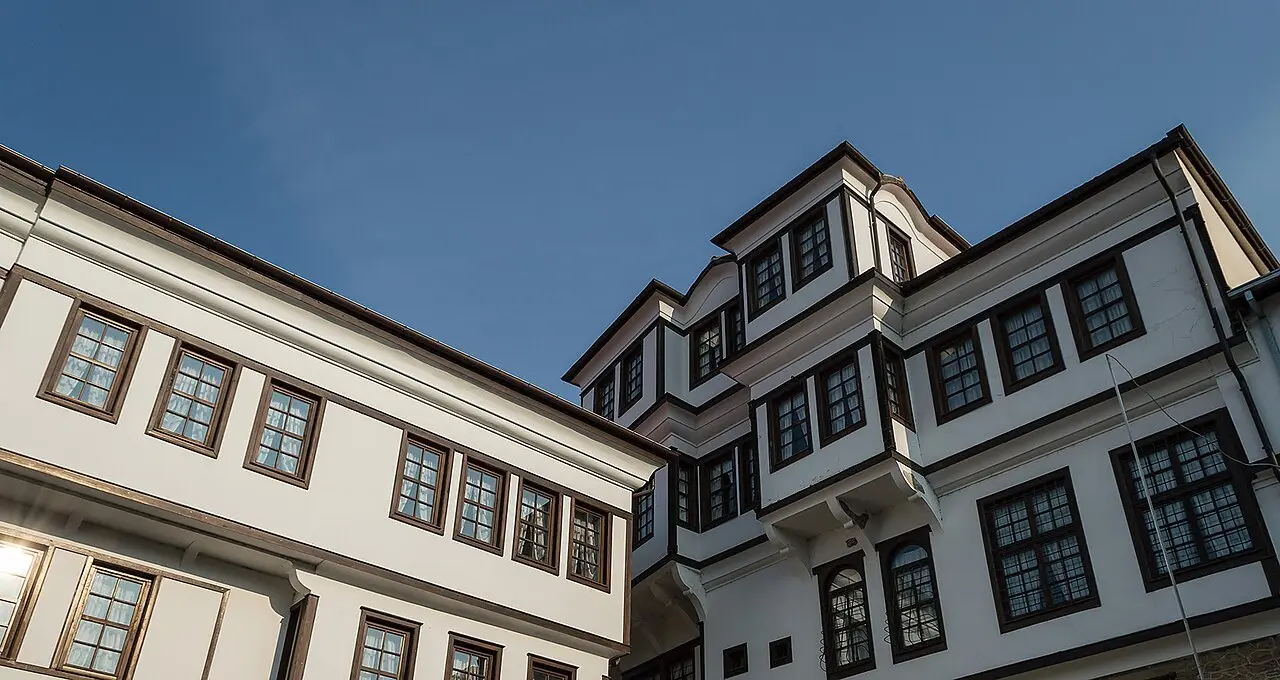
Ohrid’s old quarter is the reason half the listing is “cultural”: a maze of narrow lanes, churches and tall National Revival houses with whitewashed lower floors and dark, overhanging timber upper storeys that lean out over the street. The grandest is the Robevci House, now the local heritage museum, but the architecture is everywhere once you start looking up.
Church of St. John at Kaneo
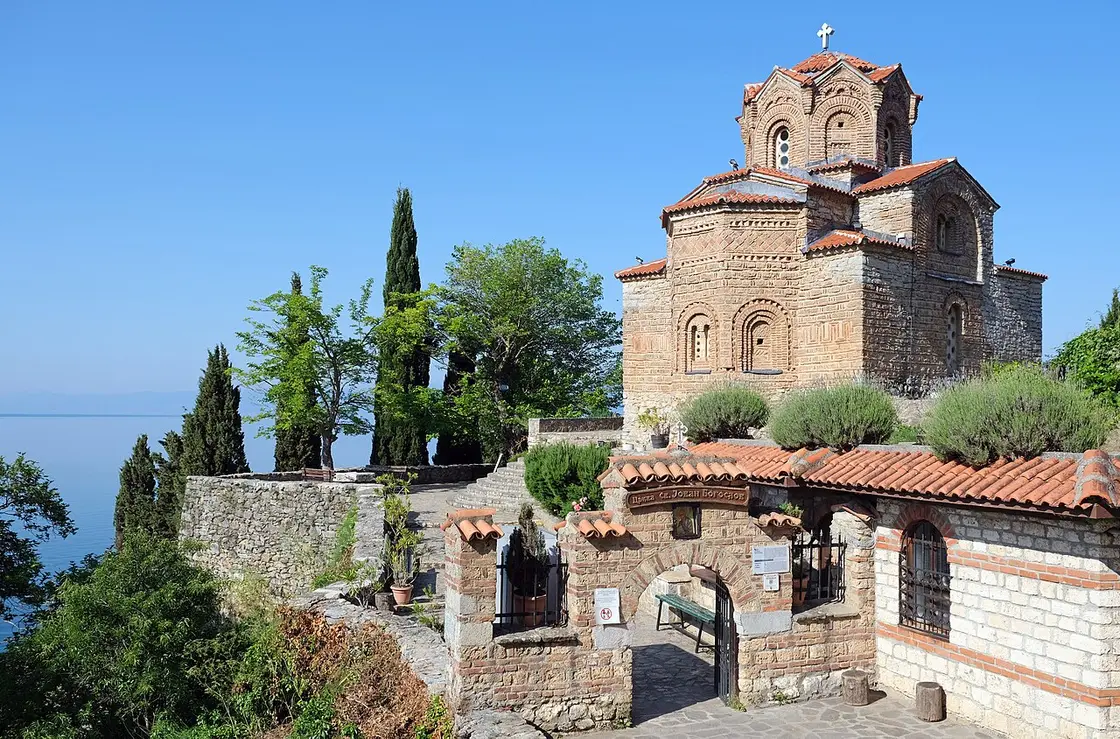
If Ohrid has one postcard, this is it. The Church of St. John the Theologian at Kaneo is a small 13th-century Byzantine church set on a rocky bluff right above the water, with the lake spreading out behind it. It’s a short, scenic walk from the harbour around the shoreline or down through the old town, and the light is best in the late afternoon. The fishing cove below it’s a popular spot for a swim. For the walking routes, the boat option and the best photo point, see our full Sveti Jovan Kaneo guide.
Church of St. Sophia
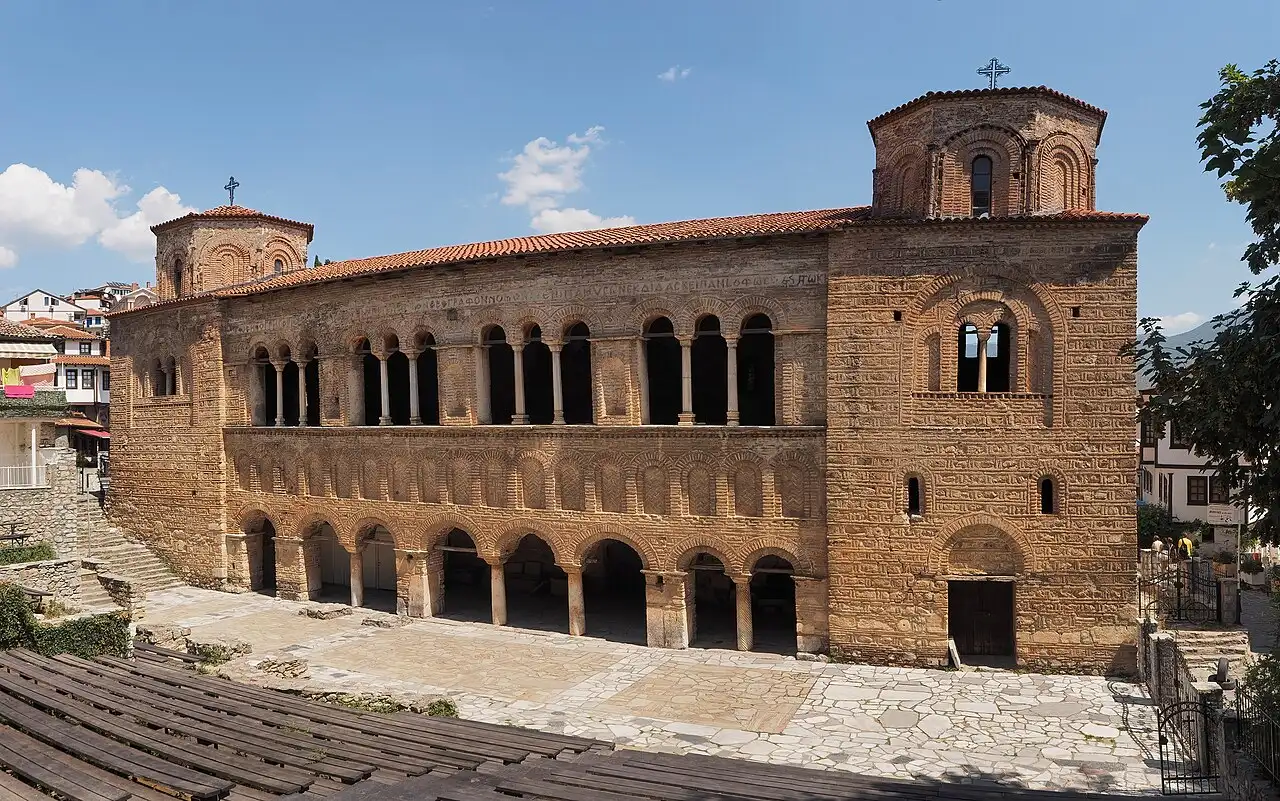
Down in the town, St. Sophia is the most important medieval church in Ohrid - a large stone basilica that served as the cathedral of the Ohrid archbishopric and keeps some of the finest 11th-13th-century Byzantine frescoes in the region. In summer its open exonarthex is used as a concert venue during the Ohrid Summer Festival.
Samuel’s Fortress
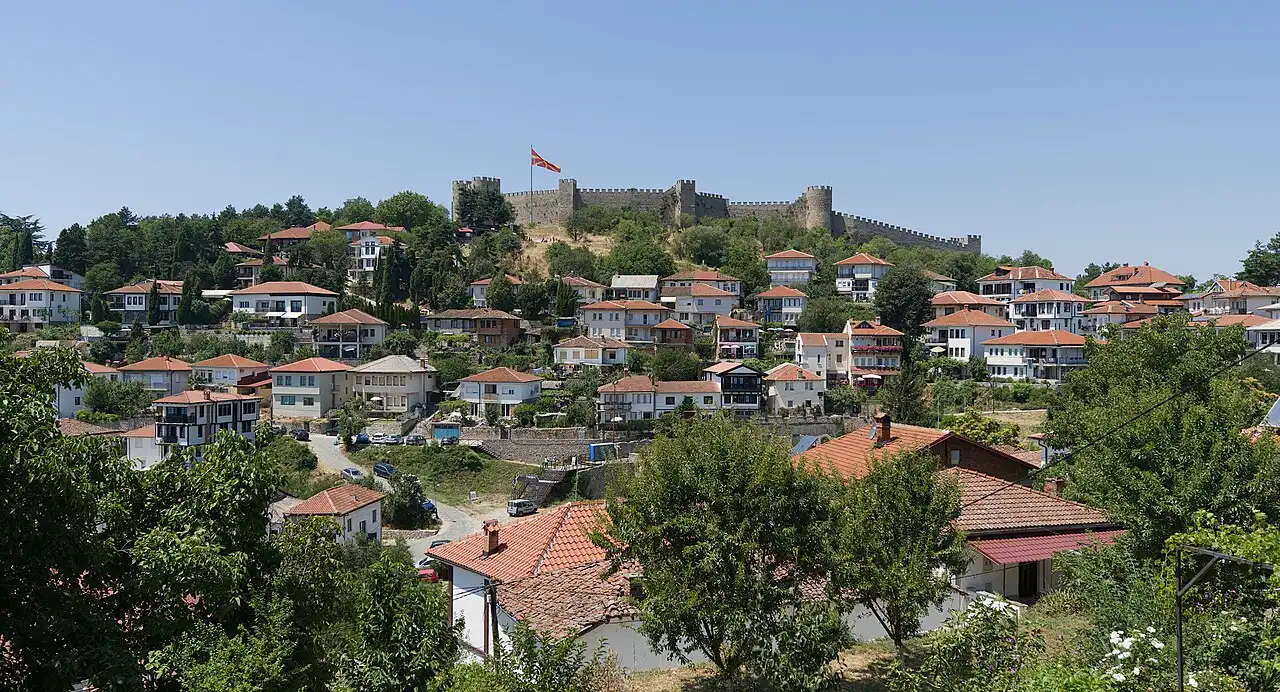
Crowning the hill above the old town, Samuel’s Fortress takes its name from Tsar Samuel, whose medieval Bulgarian state was centred on Ohrid around the turn of the first millennium. The restored walls and towers are the highest point in town, and the rampart walk gives you the whole sweep of the old roofs, the lake and the mountains. Come for late-afternoon light or sunset. Our full guide to Samuel’s Fortress covers tickets, hours and what’s genuinely old versus rebuilt in 2003.
The ancient theatre
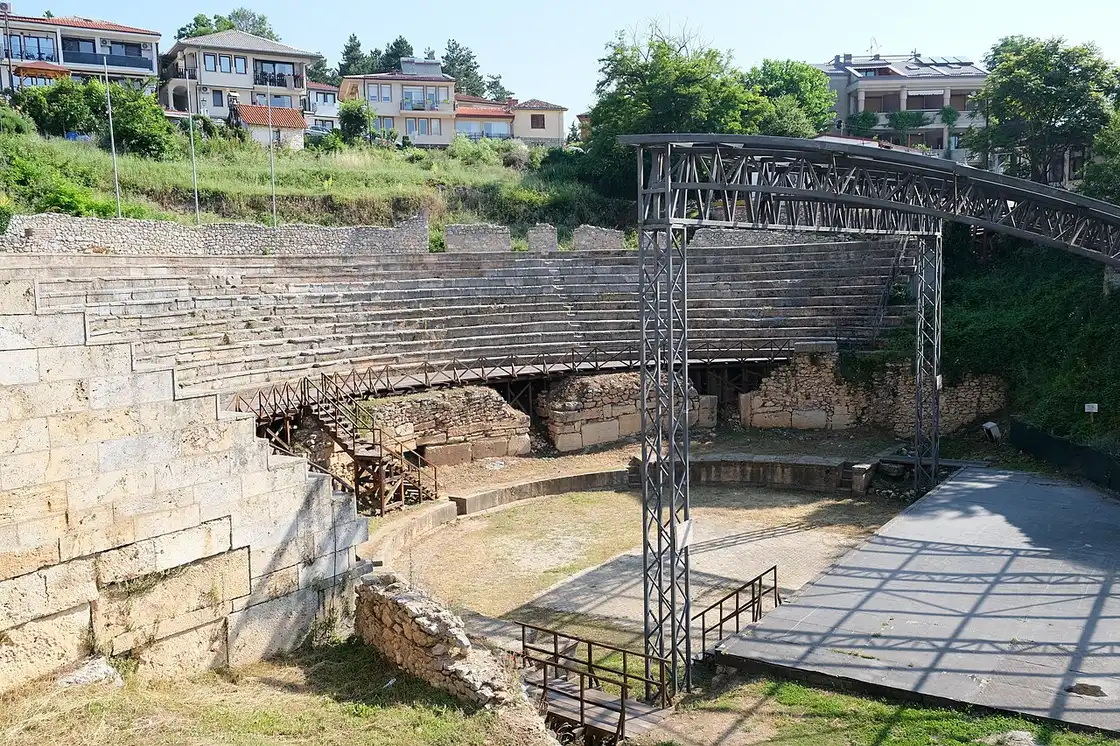
Just below the fortress, the ancient theatre dates from the Hellenistic period (around 200 BC), when Ohrid was the Greek and later Roman town of Lychnidos. It’s the only such theatre in the country and is still used for concerts and plays in summer. Even empty it’s an atmospheric stop on the walk up to the fortress.
Plaošnik
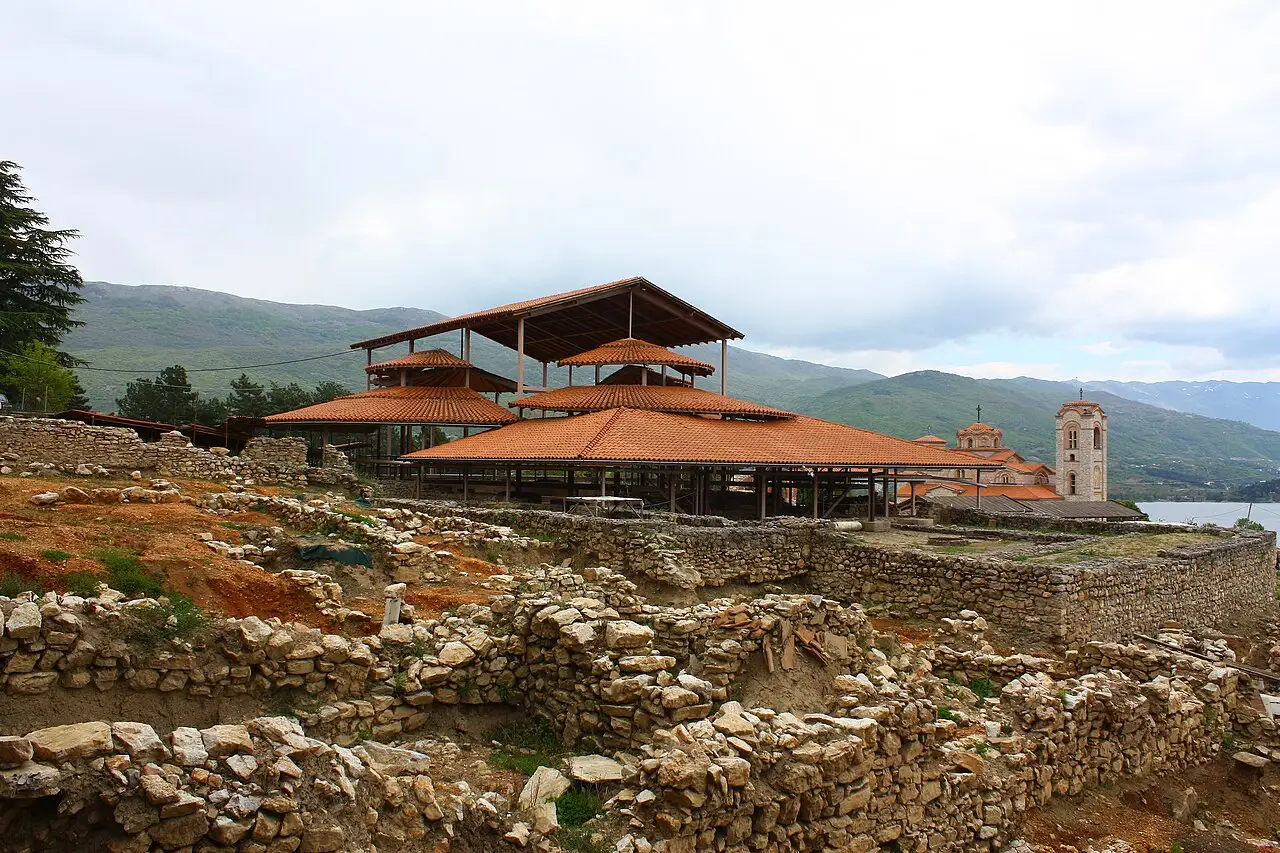
The Plaošnik complex, on the slope between the theatre and Kaneo, is Ohrid’s archaeological heart. It holds the reconstructed Church of St. Panteleimon, founded by St. Clement of Ohrid - a disciple of Saints Cyril and Methodius who ran an early Slavic school here - together with early-Christian basilica foundations and mosaic floors. Our full Plaošnik guide covers Clement’s tomb, the baptistery mosaics and how the 2002 church sits on Ottoman and medieval layers. It’s usually bundled with Kaneo and the fortress on one loop.
Lake Ohrid: a UNESCO site
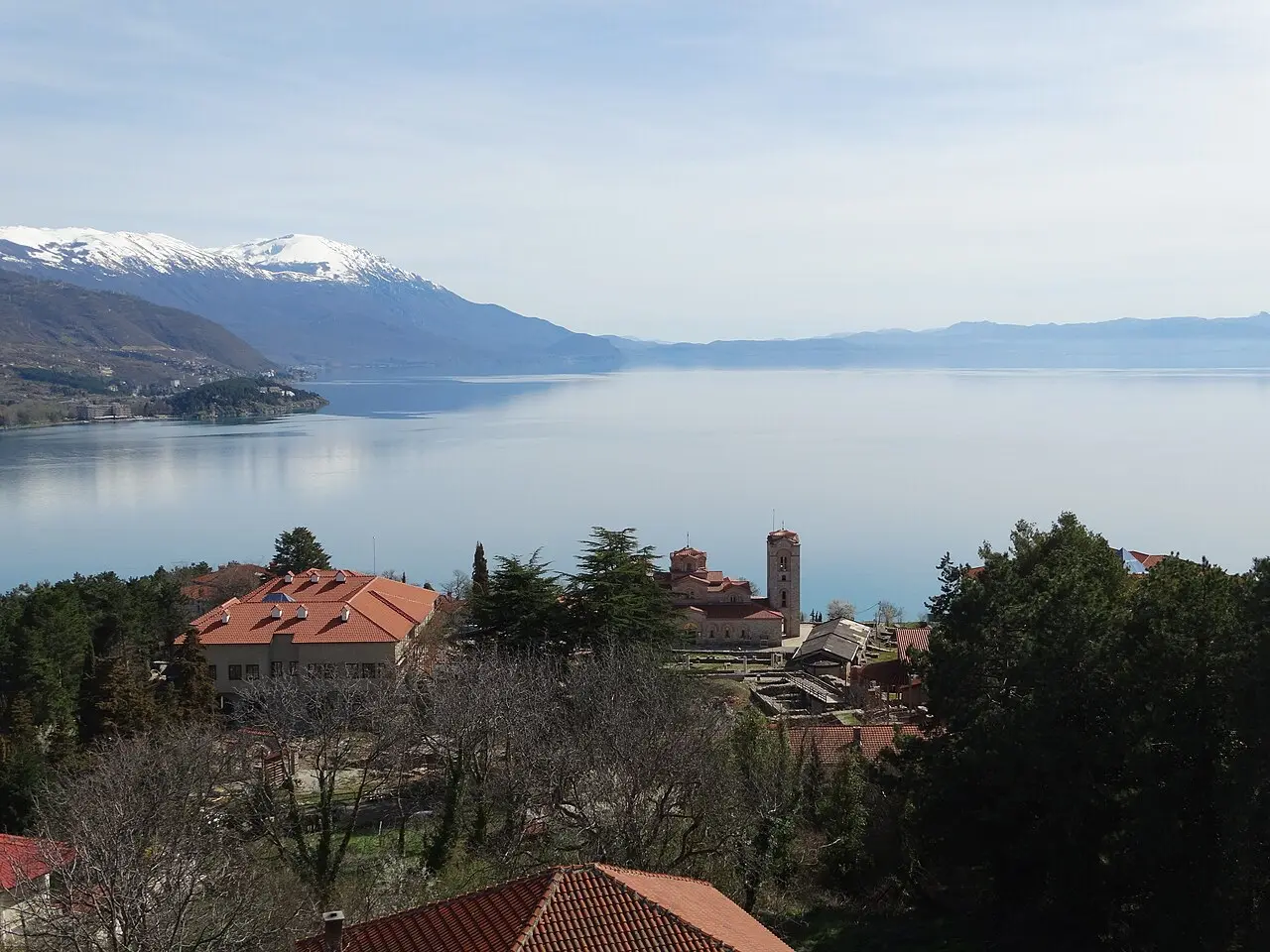
Everything in Ohrid sits beside Lake Ohrid, one of Europe’s oldest and deepest lakes - roughly 1.2 million years old and up to 288 m deep - and a rare mixed natural-and-cultural UNESCO World Heritage site. Its clear water holds more than 200 endemic species, including the prized Ohrid trout. The lake is shared with Albania, which makes a two-country lake loop possible: the Albanian town of Pogradec is only about 40 km away. With a car you’ll drive the whole shore in a day, leaving Macedonia at one border post and coming home through another - our Lake Ohrid two-country guide maps the loop through Struga, Lin, Pogradec and Sveti Naum. If you would rather carry on than turn back, the same crossing opens the road west in our Ohrid to Tirana and the Adriatic drive down to the coast.
Rising directly east of the town is Galičica National Park, the mountain wall that separates Lake Ohrid from neighbouring Lake Prespa. A panoramic road climbs over the ridge to viewpoints that take in the whole lake at a glance, and the park has hiking trails and rich wildlife - an easy half-day with a car if you’ve got one.
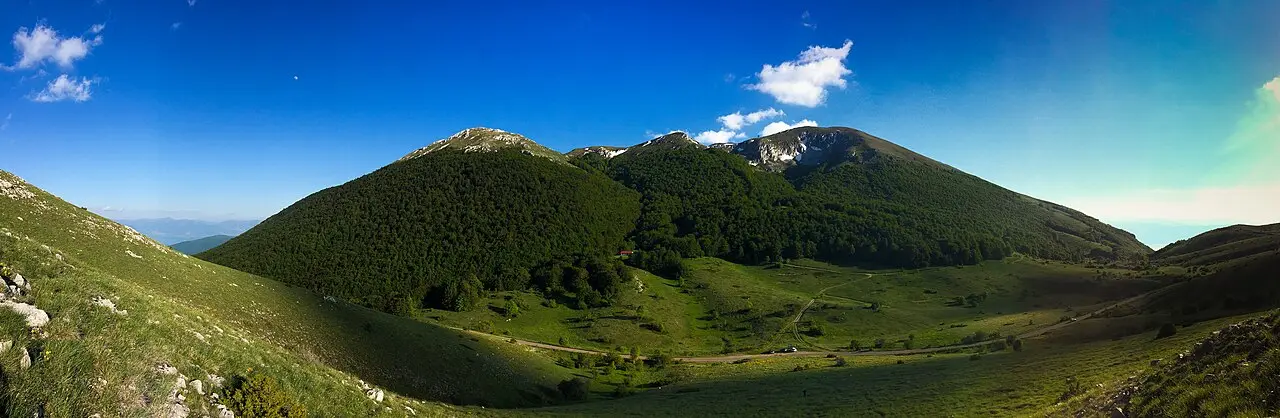
For the full story of the lake itself - its age, endemic species and the cross-border angle - see our Lake Ohrid guide.
Boat trips and beaches
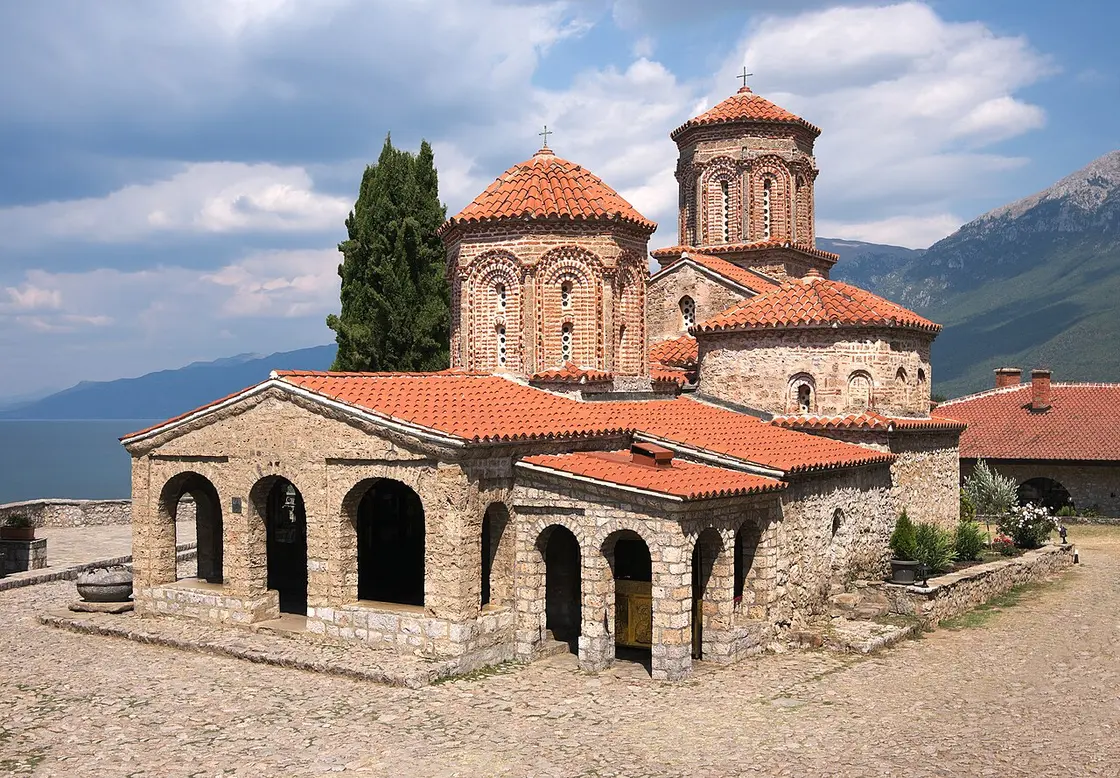
The classic excursion is the boat trip to the Monastery of St. Naum, about 29 km south along the shore near the Albanian border. The operators we checked leave Ohrid in the morning, between 09:40 and 10:30, and each sets its own season (Armada takes online bookings May to September); the ride takes about an hour and twenty minutes to an hour and a half each way, depending on the operator, or you can drive or take a local bus. It’s the pick of a strong set of outings from the lake - the day trips from Ohrid guide also covers the Galičica two-lakes viewpoint, Prespa and the Albanian shore. The monastery church of St. Naum, founded in the 10th century, sits on a bluff above springs that feed the lake - peacocks wander the grounds and small boats run out to the spring pools. Our full guide to Sveti Naum monastery and springs has the history, the tomb legend and how to reach it overland by bus, taxi or car. For where to actually swim - the best beaches and coves around the lake - see our guide to the best beaches on Lake Ohrid.
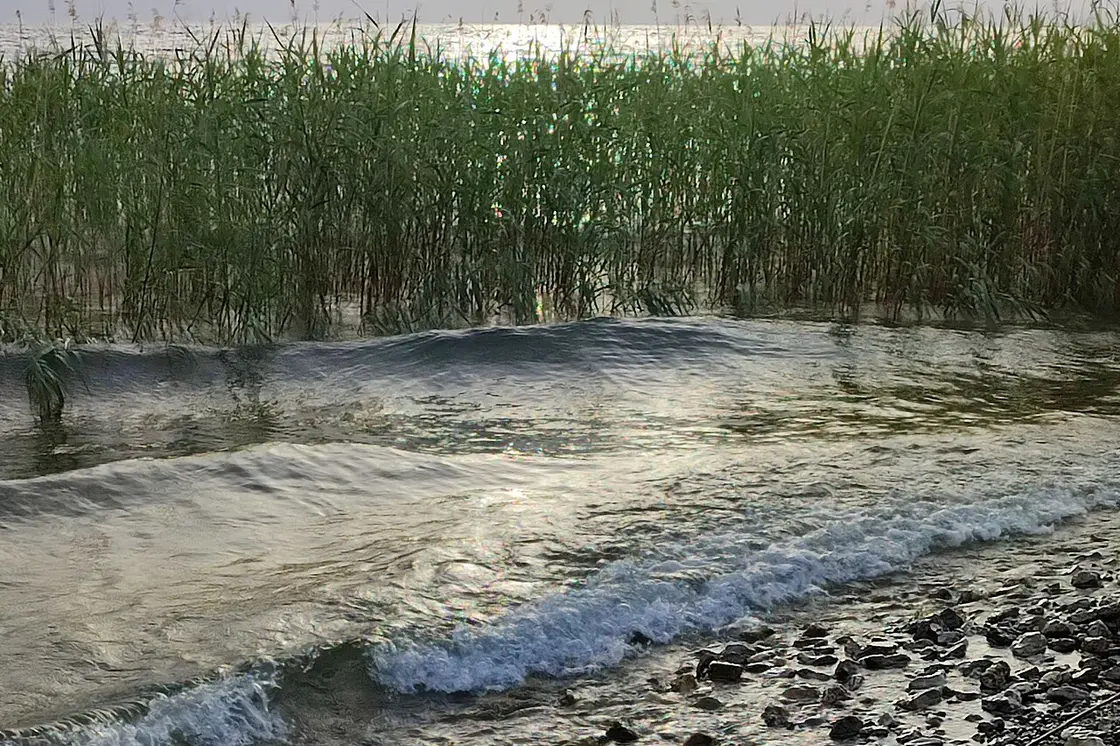
For swimming, the town beaches along the harbour promenade are the easiest, but the better strands are east of town toward Lagadin and Gradište, and around St. Naum in the south. The lake warms up through summer and it’s comfortable for swimming from roughly late June into September; July and August are the busy peak. The promenade itself is the heart of evening life - a long lakeside walk lined with cafés.
Ohrid’s quieter twin, Struga, sits just 15 km up the shore where the lake drains into the Black Drin - the same clear water and beaches, but calmer and noticeably cheaper for a room or a lakeside dinner. Minibuses shuttle between the two every 20-40 minutes, so it’s an easy half-day trip or a budget base for the lake.
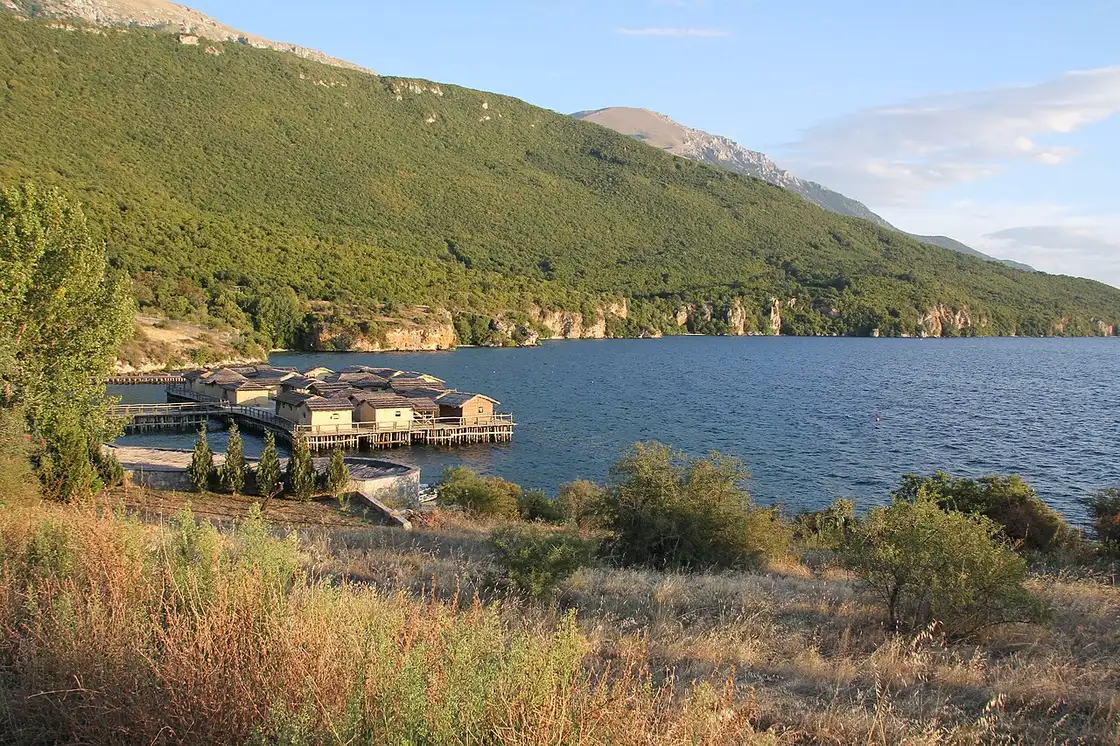
A worthwhile detour by boat or road is the Bay of Bones (Zaliv na Koskite), a reconstructed prehistoric pile-dwelling village built out over the water on the southern shore. The wooden houses on stilts recreate a Bronze- and Iron-Age lakeside settlement (roughly 1200-700 BC) found preserved on the lake bed, with a small underwater-archaeology museum alongside. You’ll find tickets, diving and how to get there in the full Bay of Bones guide.
Where to stay in Ohrid
Ohrid’s small, so location is mostly about atmosphere versus convenience:
| Area | Good for |
|---|---|
| Old town | Character, churches and the fortress on your doorstep; steep lanes |
| Harbour / promenade | Boat trips, restaurants and the evening stroll right outside |
| Lakeside east (Lagadin, Gradište) | Beaches and quieter resort-style stays; better with a car |
| St. Naum (south) | Springs, nature and calm; remote, best for a night or two |
Most first-time visitors stay in or just above the old town to be near the sights. Ohrid’s the country’s busiest tourist town and its summer peak (July-August, plus the festival weeks) is genuinely full, so book well ahead for those dates. Prices are in Macedonian denar (MKD), steady against the euro at roughly 61.5 MKD to €1, which keeps a stay here good value by European standards.
How to get to Ohrid
From Skopje. Ohrid is about 170 km southwest of the capital - roughly 2.5-3 hours by road. Buses run from Skopje’s main bus station through the day; a rental car or private transfer is faster and it’ll let you stop at Mavrovo or the lakes on the way - our Skopje to Ohrid road trip maps out the drive and its best stops. Note there’s no direct bus from Skopje airport to Ohrid - you travel via Skopje city. More options are in our how to get to Ohrid from Skopje and getting around North Macedonia guides.
By air. Ohrid “St. Paul the Apostle” Airport (OHD) sits 10 km northwest of town on the aerodrome sheet, which is 15 to 25 minutes by road; it runs mostly seasonal scheduled and charter flights, heaviest in summer; outside the season many travellers fly into Skopje (SKP) instead and continue overland. The last kilometres into town - taxi, a pre-booked transfer, or a hire car, and why there’s no bus - are in Ohrid Airport to town.
From Bitola. Ohrid is around 70 km from Bitola - about 1 to 1.5 hours by road - so they’re easy to combine on a southern loop.
| Route | Distance | Time |
|---|---|---|
| Skopje → Ohrid | ~170 km | ~2.5-3 h |
| Bitola → Ohrid | ~70 km | ~1-1.5 h |
| Ohrid → St. Naum | ~29 km | ~40 min by car / ~1 h 20-1.5 h by boat |
Distances and times are approximate - you’ll want to confirm current bus and flight schedules before you travel.
Where to eat in Ohrid
The lake puts its stamp on the menu. Look for Ohrid trout (the protected wild species is restricted, so most restaurants serve farmed trout or the related grivka) and other freshwater fish, alongside Macedonian staples like tavče gravče (oven-baked beans), ajvar, grilled meats and šopska salad - our guide to what to eat in North Macedonia explains each dish and how to order the trout responsibly. The harbour and promenade are lined with terraces - pleasant for the view, pricier for the location - while simpler, better-value spots hide in the old-town lanes; our full guide to where to eat in Ohrid picks the fish terraces down at Kaneo and the traditional kitchens up in Varosh. Wash it down with a Tikveš wine or a rakija. Cash in denar is handy for smaller places, though cards will work in most restaurants and you won’t need cash everywhere.
Practical tips
- How long to stay: two to three days covers the old town, Kaneo, the fortress and a St. Naum boat trip; add nights for beach time. Our guide to how many days in Ohrid breaks down day-by-day plans for 1, 2, 3 and 5 days.
- Money: the currency is the Macedonian denar (MKD). Cards are common in the centre; carry some cash for markets, kiosks and small cafés.
- When to go: July-August are hot, busy and the festival peak; June and September are warmer-water shoulder months with thinner crowds - often the sweet spot.
- Getting around: the old town is walkable (and steep); you’ll want a car for the beaches, St. Naum and Galičica National Park above the lake.
- Visas & entry: US, UK, EU and Ukrainian citizens travel visa-free for 90 days within any 180; Russian citizens need a visa (since 21 March 2022). Rules change - always confirm with an official source. More in our North Macedonia planning hub.
Read also
- Flying into Thessaloniki instead of Skopje? Thessaloniki to Ohrid covers the direct route
- Browse all cities of North Macedonia
- The lake’s quieter, cheaper twin 15 km up the shore: Struga travel guide
- Catch the poetry week across the lake: Struga Poetry Evenings visitor guide
- Still deciding? Is North Macedonia worth visiting?
- Pair it with the capital: things to do in Skopje
- The classic 7-day North Macedonia route links Ohrid with Skopje and Bitola
- Country-wide shortlist: best things to do in North Macedonia
- The lake itself: Lake Ohrid guide
- Drive the ridge for both lakes at once: Galičica National Park
Photos
On the map
The map loads on click - to keep the page lightweight.
The map didn’t load. Check your connection and refresh the page.
Distance
- Skopje ≈170 km · ~2.5-3 h No direct bus from Skopje airport - travel via Skopje.
- Bitola ≈70 km · ~1-1.5 h
Read also

Cities · 12 min read
Things to Do in Stip: Bargala Ruins & the Isar
Updated · August 29, 2026Stip travel guide: the Isar hill's UNESCO-listed Chetrse ritual, the Bargala ruins, the Bezisten gallery, pastrmajlija, and how to get there from Skopje.

Cities · 8 min read
Demir Kapija, Stobi and the Tikves Wine Road
Updated · July 15, 2026The Demir Kapija gorge, the Roman city of Stobi and the Tikves vineyards - how to see North Macedonia's Vardar valley in one easy day from Skopje.

Cities · 9 min read
Things to Do in Kratovo: Crater Town, Towers & Bridges
Updated · July 14, 2026Kratovo travel guide: a town in the crater of an extinct volcano, with medieval stone towers, high Ottoman bridges, mining history and how to visit.

Cities · 11 min read
Things to Do in Strumica: Carnival, Fortress & Monasteries
Updated · August 5, 2026Strumica travel guide: the pre-Lenten carnival, the Carevi Kuli fortress, the Veljusa and Vodoca monasteries, hot springs and how to get there.