
Kruševo Travel Guide
Kruševo, North Macedonia - the country's highest town: the Makedonium spomenik, the 1903 Ilinden uprising, Toše Proeski, Vlach houses and paragliding.
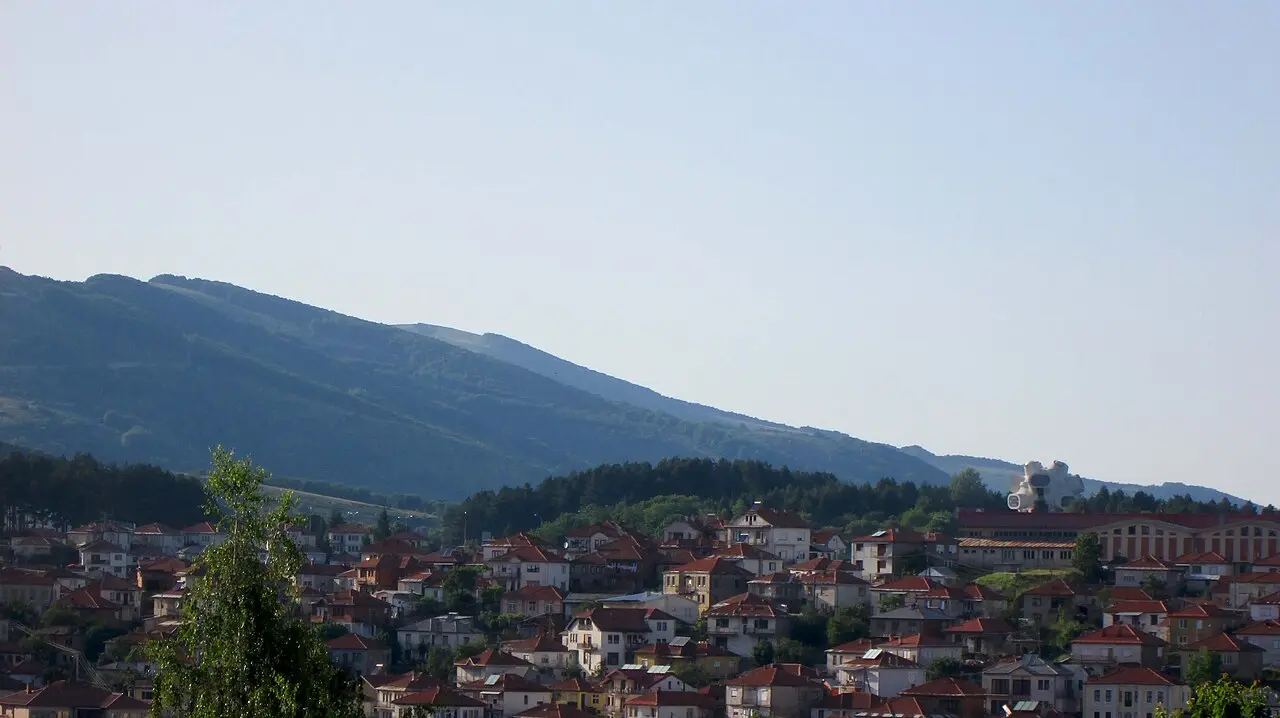
Kruševo is the highest town in North Macedonia - a mountain settlement clinging to a steep hillside at around 1,350 m, one of the loftiest towns in the entire Balkans. It’s tiny, home to just over 4,000 people, but it punches far above its size: this is where the 1903 Ilinden uprising declared a ten-day republic, where a beloved pop star is buried under a grass-roofed memorial, and where one of Yugoslavia’s most extraordinary monuments - the white, spaceship-like Makedonium - crowns the ridge. Add streets of unusual Vlach-and-Mijak houses and some of the best paragliding in the region, and you have a place worth the climb. This guide covers the history, the sights, when to come, where to stay and how to get here.
Why visit Kruševo?
Come for the concentration. Most Macedonian towns give you one headline sight; Kruševo stacks several onto one small, steep hill, and they’re genuinely distinctive rather than more-of-the-same. The Makedonium alone draws architecture pilgrims from across Europe. Layer on the founding-myth history of the Kruševo Republic, the Toše Proeski memorial, the whitewashed old town and the ridge-top launch where paragliders step off into thin mountain air, and a half-day here’s unusually rich.
It also sits at altitude, which shapes the visit: cool and green in summer when the plains below are baking, properly cold and snowy in winter. And because it’s a short hop from Bitola and Prilep, it slots neatly into a Pelagonia loop rather than demanding a special trip.
The 1903 story: Ilinden and the Kruševo Republic
You can’t understand Kruševo without the summer of 1903. On 2 August 1903 - Ilinden, St Elijah’s Day - an anti-Ottoman uprising organised by the revolutionary VMRO broke out across Macedonia, and insurgents took Kruševo. They proclaimed the Kruševo Republic, setting up a provisional government under Nikola Karev with councillors drawn from each of the town’s ethnic communities. Its Manifesto made a remarkable appeal for the time: it called on all the peoples of Macedonia, whatever their nationality or faith, to rise together against the empire.
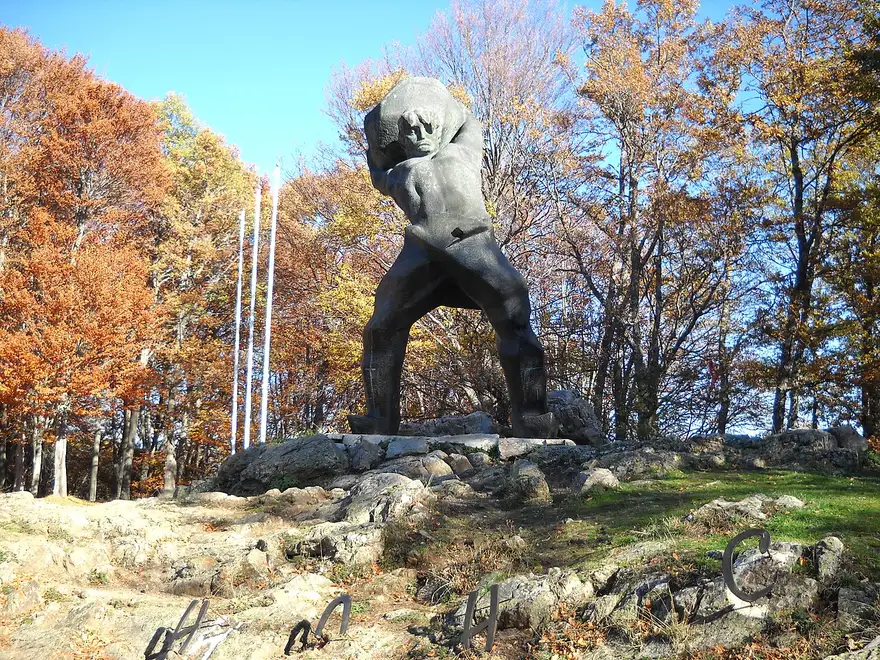
The republic lasted just ten days. Ottoman forces returned in strength, and the fighter Pitu Guli and his band made a doomed last stand at Mečkin Kamen - “Bear’s Stone” - on the edge of town before Kruševo was retaken and burned. Ilinden and the ten-day republic became a cornerstone of Macedonian national memory, and the date still marks the country’s Republic Day.
The Makedonium (Ilinden monument)
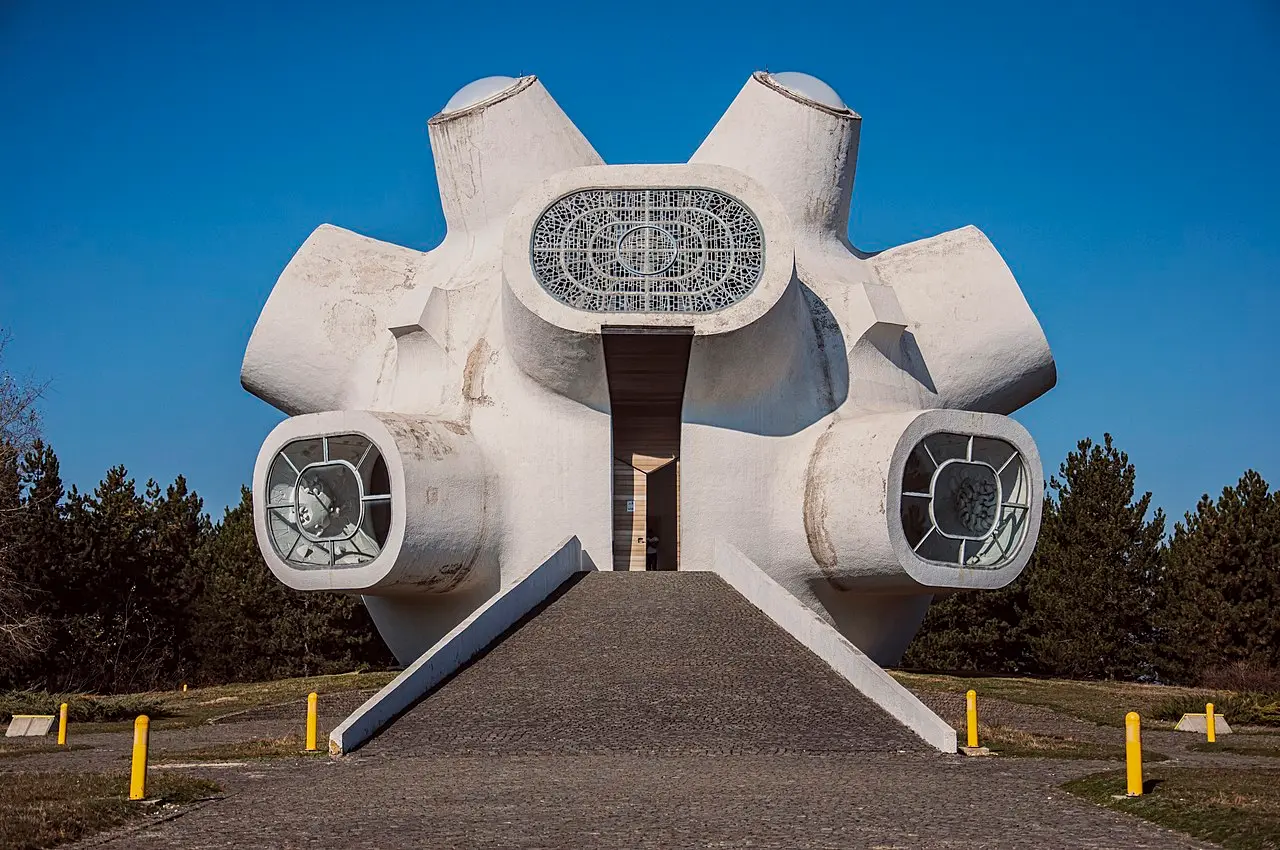
The town’s unmissable landmark sits on the hill above it, and there’s nothing else like it in the country. The Makedonium - also called the Ilinden monument - is a great white sphere sprouting bulbous, window-studded pods, looking for all the world like a spacecraft that landed on the ridge. It commemorates the 1903 uprising and the WWII fighters from Kruševo, and it opened on 2 August 1974, the uprising’s anniversary, to a design by the architect Jordan Grabuloski and artist Iskra Grabuloska.
It belongs to the extraordinary family of Yugoslav-era spomenici - abstract memorial sculptures built across the former Yugoslavia - and it’s among the most photographed of them all. Step inside and the bulbous “windows” become panels of coloured stained glass; the interior holds the tomb of Nikola Karev and a crypt. Even if brutalist monuments aren’t usually your thing, this one is worth the short climb for the sheer strangeness and the view back over the town and plain.
Toše Proeski Memorial House
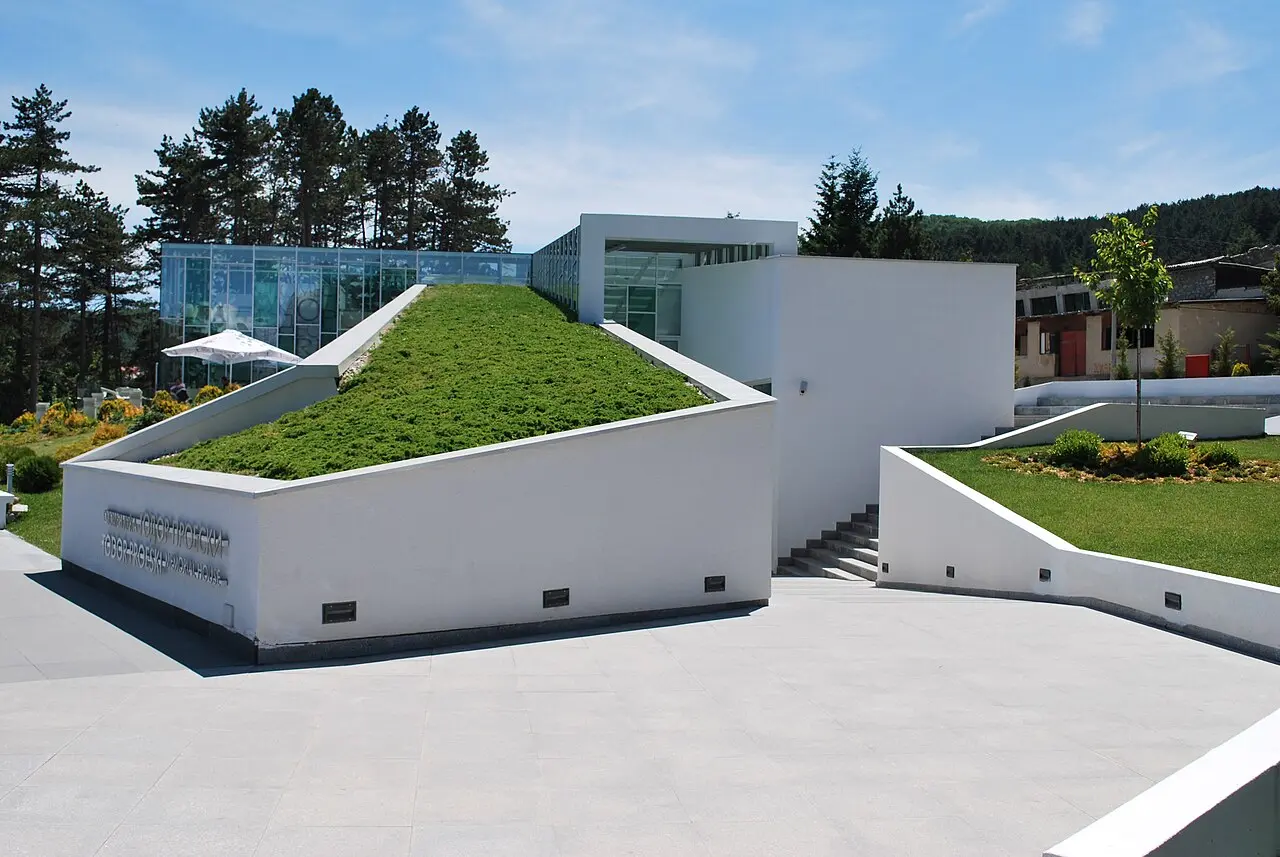
Kruševo has one more figure it’s fiercely proud of. Toše Proeski (1981-2007) was the most beloved pop singer in the country and a star across the Balkans, sometimes called the region’s “Elvis.” He grew up in Kruševo, and when he was killed in a car crash in Croatia in 2007, aged just 26, the nation mourned. The Toše Proeski Memorial House on the edge of town - a striking low building with a sloping grass roof and glass galleries - opened in April 2011 and went on to win an international architecture award in Barcelona that year. Inside are his stage costumes, personal belongings and a memorial to the singer. Even visitors who’ve never heard his music find it a moving, beautifully made space.
The old town and its houses
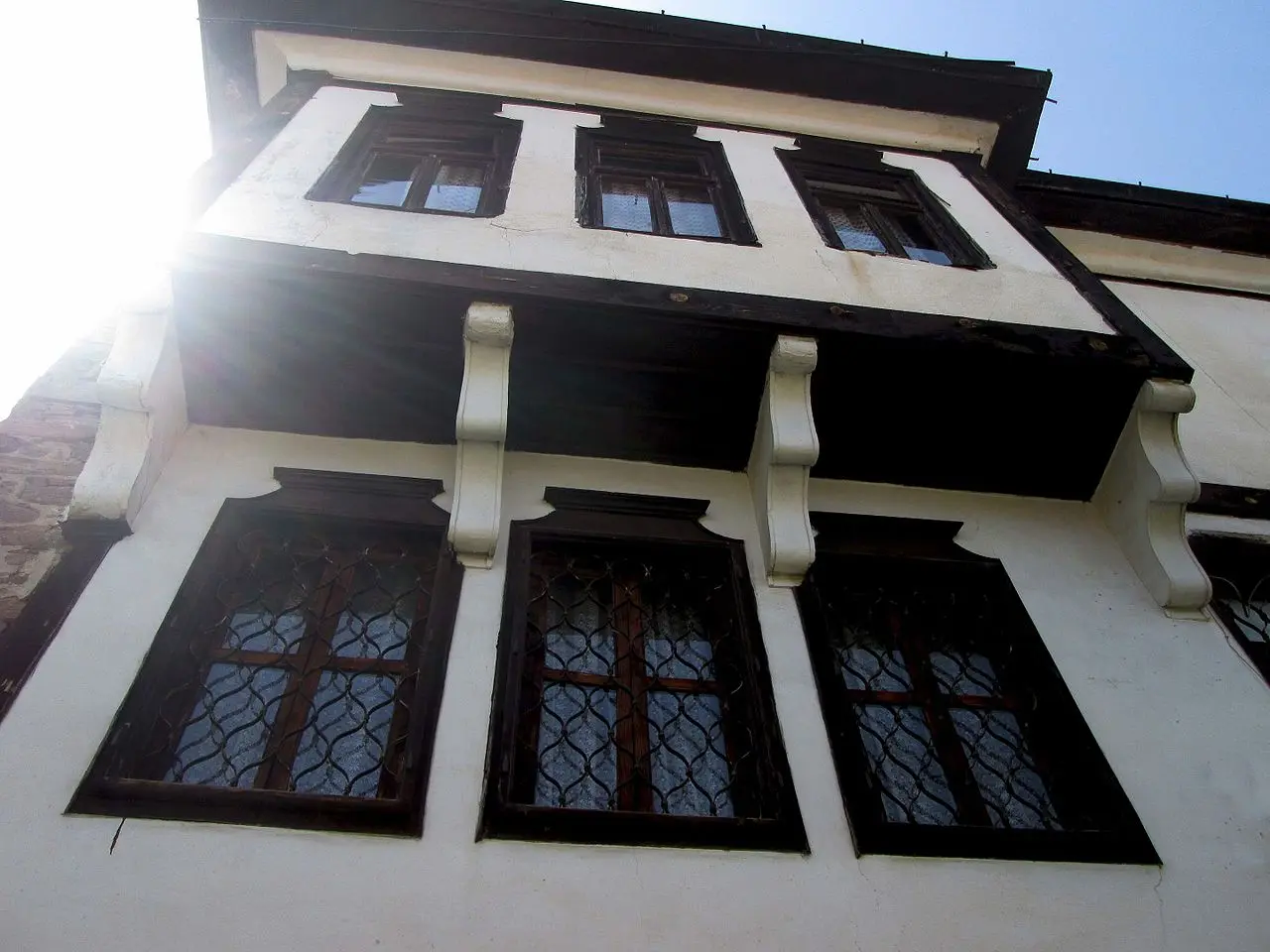
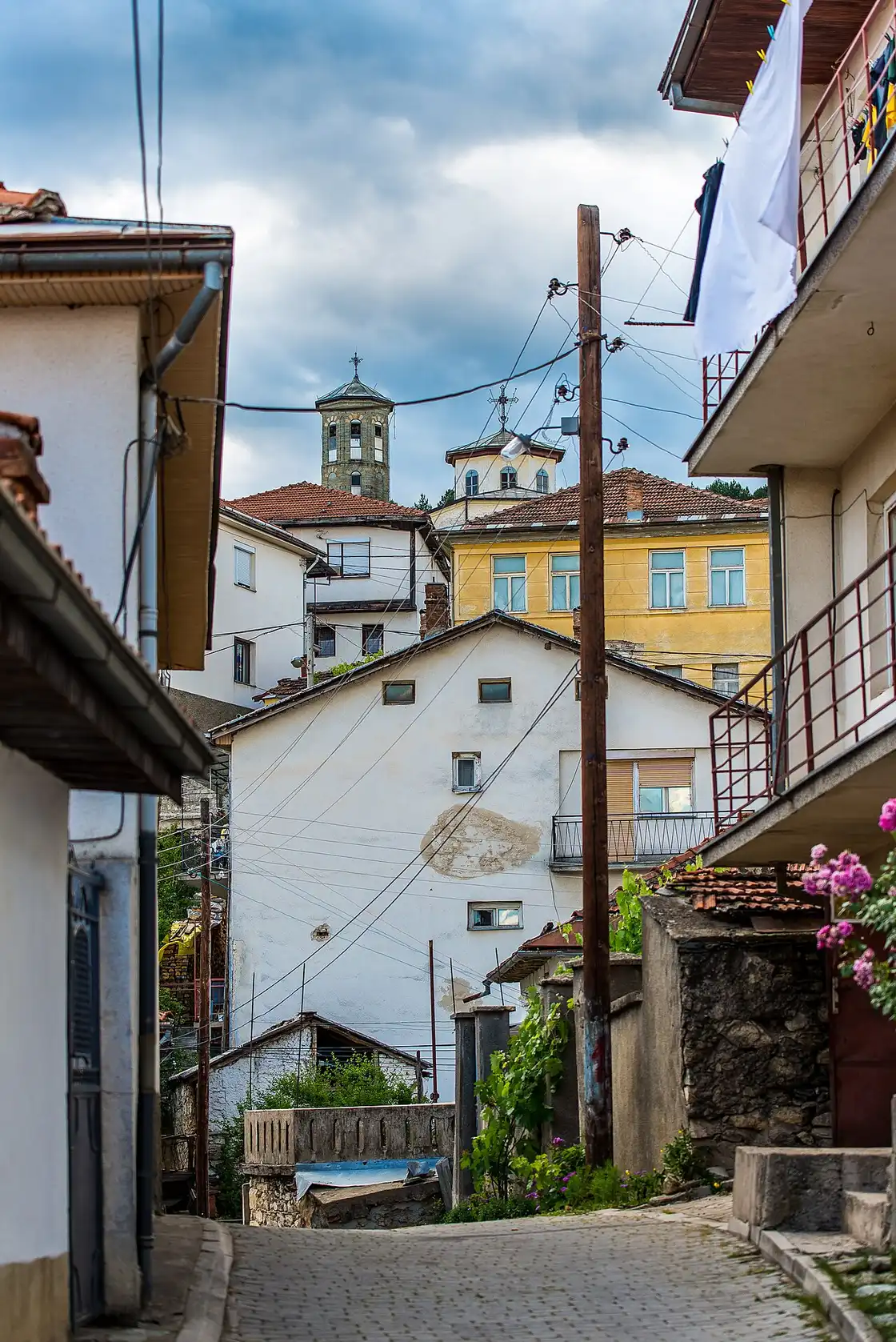
Wander down from the monument into the old town and you’ll notice the houses are unlike anywhere else. Kruševo grew rich in the 19th century as a Vlach (Aromanian) merchant town, and its distinctive architecture reflects that: the Vlachs financed the houses and Mijak master builders raised them, stone at the back where the slope rises, and tall timber-framed fronts - the “bondruk” technique - rendered in white plaster and hung with wooden balconies, all tumbling steeply down the hillside. Latticed windows, carved brackets and jettied upper floors give the lanes a real character, and the town remains one of the few places where you can see this Vlach-Mijak building style intact.
Kruševo is also still noticeably mixed - Macedonian and Aromanian, with the Vlach language and traditions kept alive - and it was the birthplace of the pioneering modernist painter Nikola Martinoski, honoured in a small gallery in town.
Paragliding and the outdoors
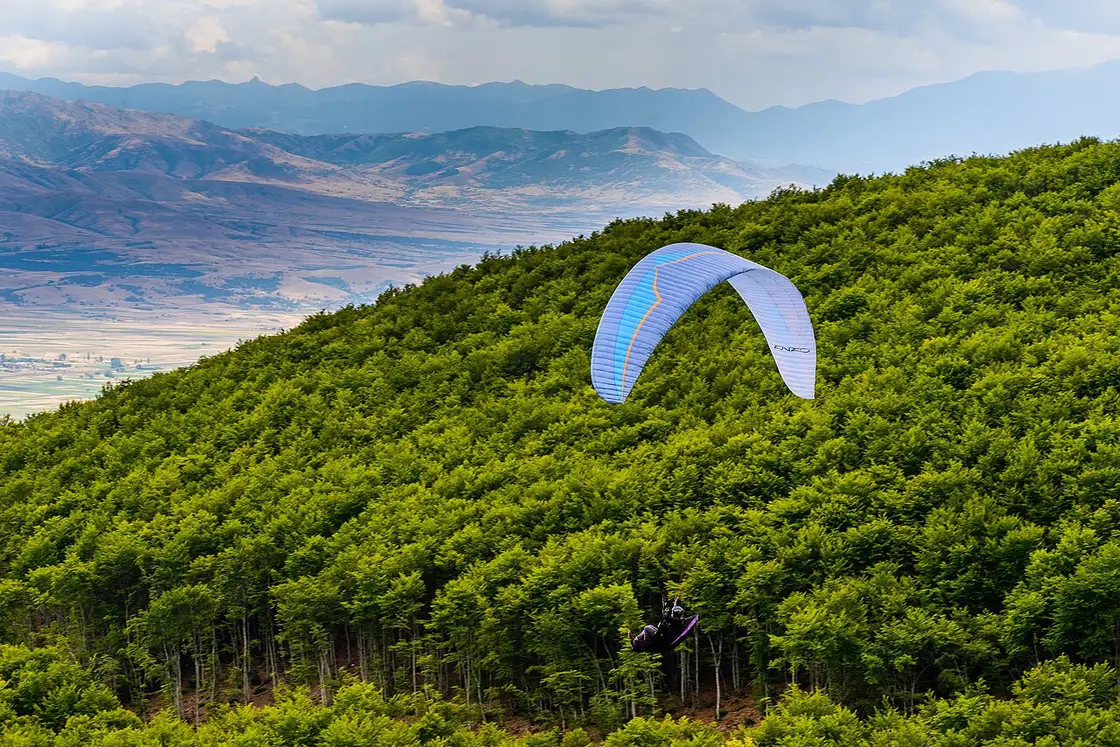
Being perched this high has a bonus: Kruševo is one of the finest paragliding spots in the Balkans. The launch is about 3 km south of town, 10-15 minutes up an asphalt road (4.6 km), a grassy take-off above wooded slopes that drop steeply to the Pelagonia plain - reliable thermals, a soft landing zone and huge views. It’s serious enough to have hosted the Paragliding World Cup, but tandem flights make it accessible to complete beginners too; operators run flights roughly spring through autumn (book ahead, and confirm conditions on the day). In winter the focus shifts to the small ski slopes just above town - modest and family-scale, but a rare chance to ski at this end of the country.
Where to stay and when to go
Kruševo is small, so lodging is a handful of hotels and family guesthouses in and just above the town, plus rooms in private houses - cosy, good value and often with mountain views. Staying the night is worth it: you catch the light on the Makedonium in the late afternoon and early morning, and you can pair the town with Prilep or Bitola over a couple of days without rushing.
On timing, the town works year-round but feels very different by season. Summer (roughly June to September) is best for the monuments, the old town, hiking and paragliding, with cool mountain air while the plains swelter. Winter brings snow, skiing and a hushed, atmospheric feel at altitude - but also real cold, so pack for it. Spring and autumn are quiet and often beautiful.

How long do you need?
A half-day covers the essentials - the Makedonium, a walk through the old town and one of the memorials. Give it a full day or an overnight to add Mečkin Kamen, the Toše Proeski house, a paragliding flight and time to simply wander the lanes. As part of a wider trip, most people fold Kruševo into a Pelagonia loop with Bitola and Prilep over two or three days.
How to get to Kruševo
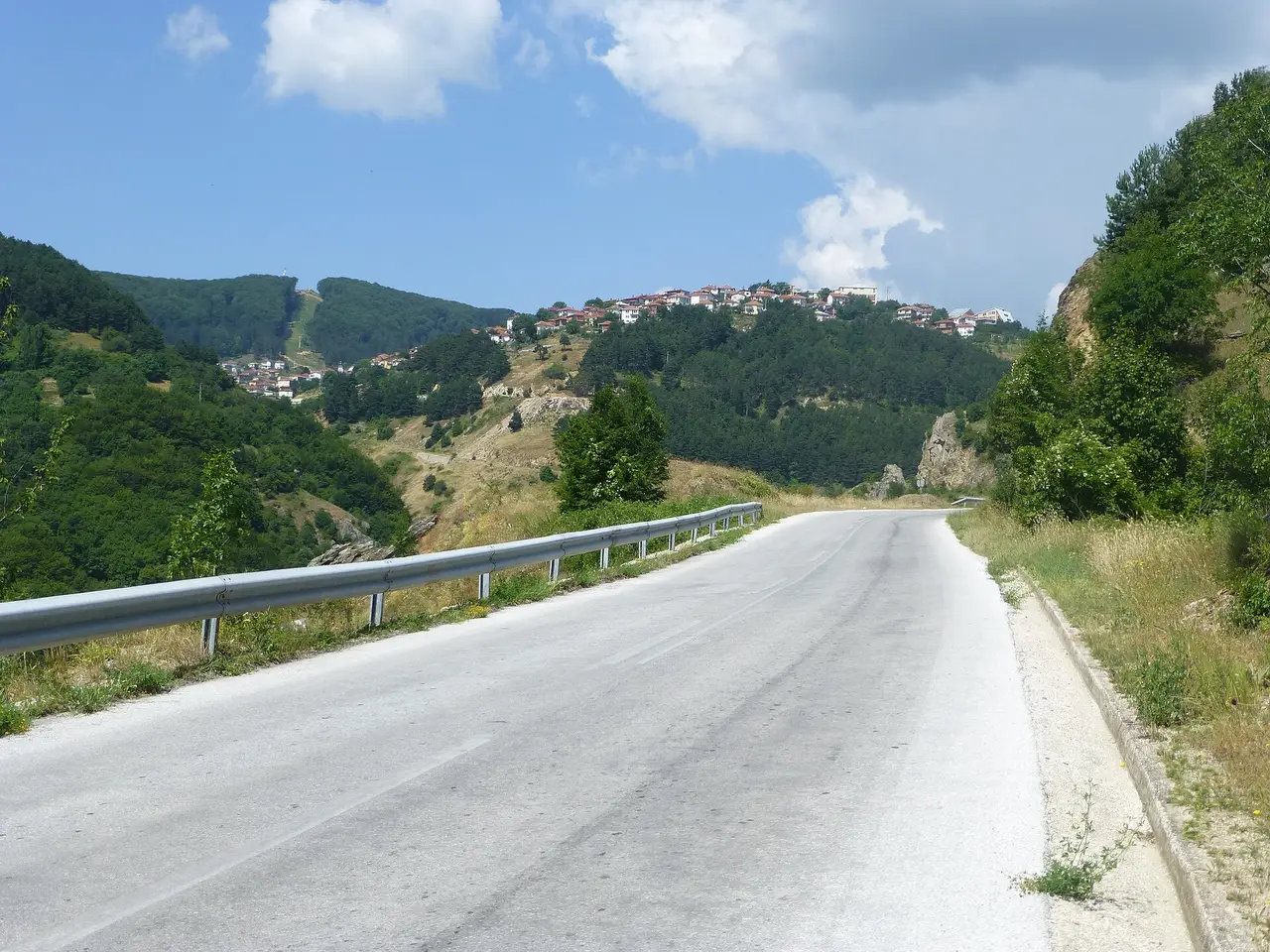
The mountain setting that makes Kruševo special also makes it a little fiddly to reach - the last stretch is a winding climb, and a car is the easiest way in.
From Skopje. It’s about 160 km, roughly three hours by car: south on the A1/E-75 motorway toward Veles, then west toward Prilep, then up the mountain road. Skopje’s bus station timetable shows no direct bus to Kruševo, so take a bus to Prilep and continue from there - confirm the schedule before you travel.
From Prilep. The nearest town is Prilep, about 35 km (40-45 minutes) away, with a direct bus that takes around half an hour. This is the handiest gateway if you’re coming by public transport.
From Bitola. Bitola is about 55 km (an hour by car), but there’s no direct bus - you change in Prilep, which stretches the trip to roughly 2h20. With your own wheels it’s a straightforward drive.
Nearest airport. Skopje International (SKP) is the main gateway; Ohrid (OHD) has seasonal flights but is farther by road.
| Route | Distance | Time |
|---|---|---|
| Skopje → Kruševo | ~160 km | ~3 h by car |
| Prilep → Kruševo | ~35 km | ~40-45 min (direct bus ~30 min) |
| Bitola → Kruševo | ~55 km | ~1 h by car (bus via Prilep, ~2h20) |
Distances and times are approximate - confirm current bus schedules and mountain-road conditions before you travel. For the wider region see our getting around North Macedonia guide; given the climb, a rental car is the most comfortable way to visit.
Practical tips
- How long to stay: half a day for the highlights; a night to add the memorials, Mečkin Kamen and a paraglide.
- Money: the currency is the Macedonian denar (MKD), steady against the euro at roughly 61.5 to €1. Carry cash for small guesthouses and cafés.
- Altitude & weather: at ~1,350 m it’s cooler than the plains - bring a layer even in summer, and serious warm gear in winter.
- Paragliding: tandem flights run spring-autumn; book ahead and confirm conditions.
- Getting around: the town is steep but small and walkable; a car helps for the monument, Mečkin Kamen and the region.
- Visas & entry: US, UK, EU and Ukrainian citizens travel visa-free for 90 days within any 180; Russian citizens need a visa (since 21 March 2022). Rules change - always confirm with an official source. More in our North Macedonia planning hub.
Read also
- Its Pelagonia neighbour, 35 km down the mountain: Prilep travel guide
- The nearest city base: things to do in Bitola
- The capital and likely arrival point: things to do in Skopje
- Where to base for the region: where to stay in Bitola
- Getting south from the capital: Skopje to Bitola
- Plan the season: best time to visit North Macedonia
- Fit it into a trip: the 7-day North Macedonia route
- Browse all cities of North Macedonia
Photos
On the map
The map loads on click - to keep the page lightweight.
The map didn’t load. Check your connection and refresh the page.
Distance
- Skopje ≈160 km · ~3 h by car
- Bitola ≈55 km · ~1 h by car (bus via Prilep)
Read also

Cities · 12 min read
Things to Do in Stip: Bargala Ruins & the Isar
Updated · August 29, 2026Stip travel guide: the Isar hill's UNESCO-listed Chetrse ritual, the Bargala ruins, the Bezisten gallery, pastrmajlija, and how to get there from Skopje.

Cities · 8 min read
Demir Kapija, Stobi and the Tikves Wine Road
Updated · July 15, 2026The Demir Kapija gorge, the Roman city of Stobi and the Tikves vineyards - how to see North Macedonia's Vardar valley in one easy day from Skopje.

Cities · 9 min read
Things to Do in Kratovo: Crater Town, Towers & Bridges
Updated · July 14, 2026Kratovo travel guide: a town in the crater of an extinct volcano, with medieval stone towers, high Ottoman bridges, mining history and how to visit.

Cities · 11 min read
Things to Do in Strumica: Carnival, Fortress & Monasteries
Updated · August 5, 2026Strumica travel guide: the pre-Lenten carnival, the Carevi Kuli fortress, the Veljusa and Vodoca monasteries, hot springs and how to get there.