
Getting Around North Macedonia: Buses, Taxis & Fares 2026
How to get around North Macedonia: intercity buses from Skopje, city buses, taxis and transfers, car hire and the airports - with denar-cash tips.
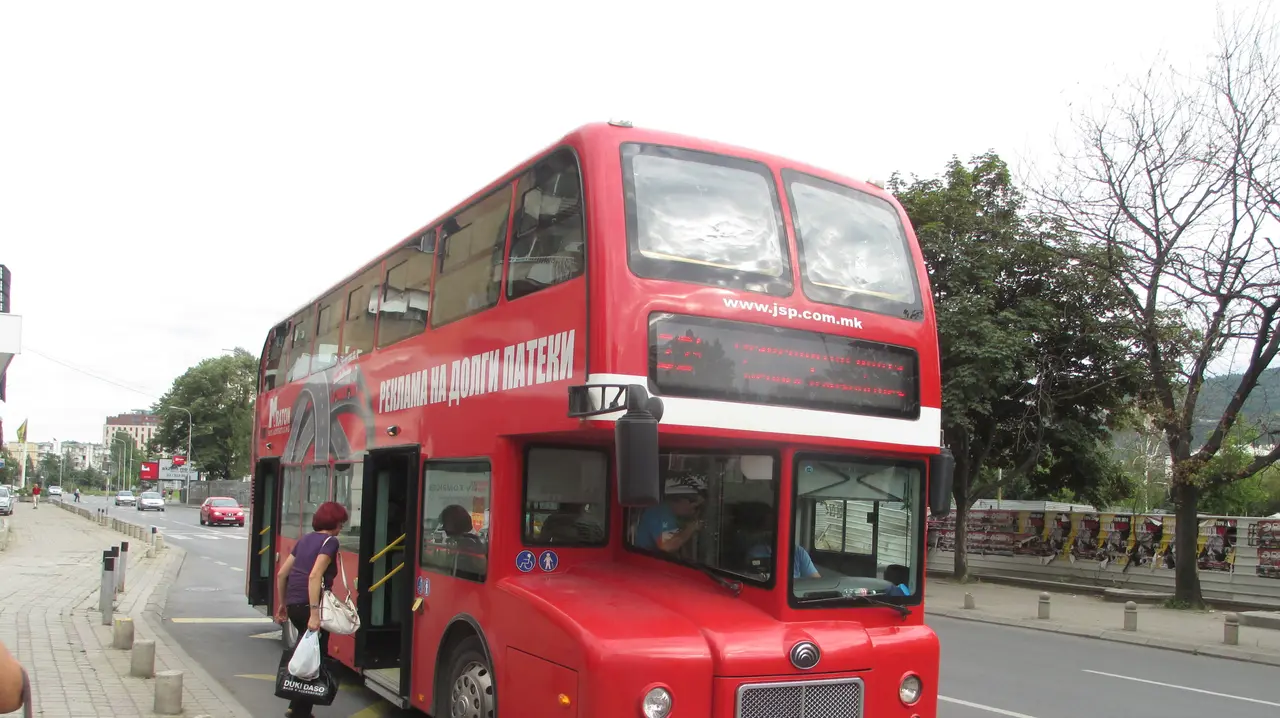
The honest answer is that you get around North Macedonia mostly by bus and by car - there’s no useful passenger train network for tourists, so put rail out of your mind. Intercity coaches link Skopje with Ohrid, Bitola, Tetovo and the rest from the main bus station, they’re cheap and reasonably frequent, and they cover the towns well. What buses don’t do is the scenic detours, the national parks and the trailheads - for those you want a car or a private transfer. Inside Skopje, red city buses and very cheap taxis do the job. This guide covers the trains question, intercity buses and how to buy a ticket, getting around Skopje, taxis and airport transfers, hiring a car, and the practical money habits that keep it all smooth.
Are there trains in North Macedonia?
Effectively, no - not for the way most travellers move around. The national railway, Železnici na Republika Severna Makedonija (MŽ), still runs, but the passenger network is thin and slow. The one tourist-relevant line, Skopje-Bitola (via Veles and Prilep), runs only a couple of sparse departures a day and takes longer than the bus. Crucially, there’s no railway to Ohrid at all - the country’s headline destination has never been on the rail map. The Skopje-Tetovo-Kičevo passenger service has been suspended for years, and the international trains to Belgrade and Thessaloniki are suspended too, paused around long-running construction on the line through southern Serbia.
So treat the train as a curiosity, not a plan. The backbone of getting around is the bus, with a car for everything off the main corridors. If your trip is built around the lake and the mountains, read our car rental in North Macedonia guide alongside this one - the two together cover every way of moving.
Intercity buses: the backbone of the network
Buses are how most people travel between Macedonian towns, and the system works well. The hub is Skopje’s main bus station - the Skopska Avtobuska Stanica (SAS), which sits in the integrated Transportation Center beside the railway station, a short ride from the centre. From here, coaches fan out across the country and on to neighbouring capitals. Several companies run the routes, so departures are frequent on the busy corridors and you rarely wait long.
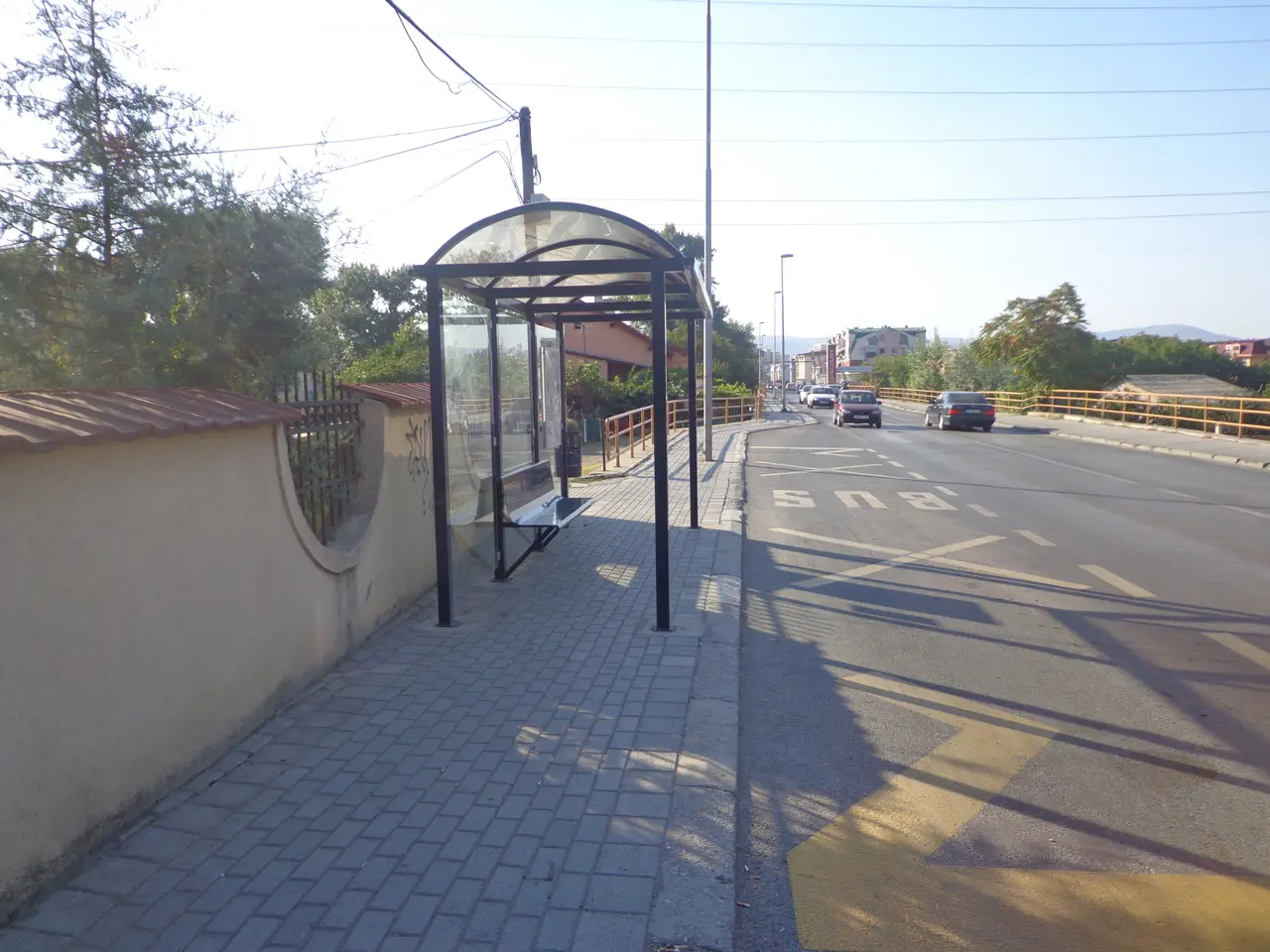
The journeys you’re most likely to take, with rough road distances and realistic bus times (always confirm the current timetable, as schedules and operators change):
| Route | Road distance | Typical bus time |
|---|---|---|
| Skopje ↔ Ohrid | ~170 km | about 3-3.5 hours |
| Skopje ↔ Bitola | ~170 km | about 3-3.5 hours |
| Skopje ↔ Tetovo | ~45 km | under 1 hour |
| Skopje ↔ Pristina / Sofia / Thessaloniki | international | half a day, with a border stop |
The international runs use the same station and the same counters. The busiest of them for visitors is the Albanian capital: four to seven coaches a day, five to seven hours, about EUR 20 to 30, and three possible roads to get there - see Skopje to Tirana for which corridor your ticket is buying. East to Bulgaria, the same counters sell the Sofia coaches - times, fares and the Deve Bair border are on Skopje to Sofia.
A few things worth knowing before you rely on them. Buses run to a fixed timetable rather than turning up on demand, so the last departure of the day can be early - check it before you plan an evening arrival. On the busiest route, Skopje-Ohrid, departures are frequent in summer and thin out in winter. And there’s no direct bus from Skopje airport to Ohrid: you transfer into the city first and pick up an onward coach, which is the single biggest argument for a car or a private transfer if the lake is your first stop.
How to buy a bus ticket
For most domestic routes you can simply turn up at the SAS counters and buy a ticket for the next departure, paying in denar - cash is the safe assumption. In summer and on popular runs like Skopje-Ohrid it is worth buying a few hours or a day ahead, especially for weekend travel, because seats on the best departures do sell out. Tickets are sold per operator at their window, and you may be charged a small fee for a large bag stored in the hold; keep some small denar notes for it. If you prefer to book in advance, some operators and aggregator sites sell online, but availability and reliability vary - for a domestic hop, the counter is usually simplest.
Getting around Skopje
Skopje’s centre is compact and walkable - the Old Bazaar, the Stone Bridge, Macedonia Square and the riverside are all an easy stroll apart, and for a city break you may barely need transport at all. When you do, the city runs on buses operated by JSP Skopje, including the well-known red double-deckers (a deliberate nod to London). There’s no metro and no tram - it’s a bus-only network - and routes radiate from the centre out to the suburbs and to Matka.
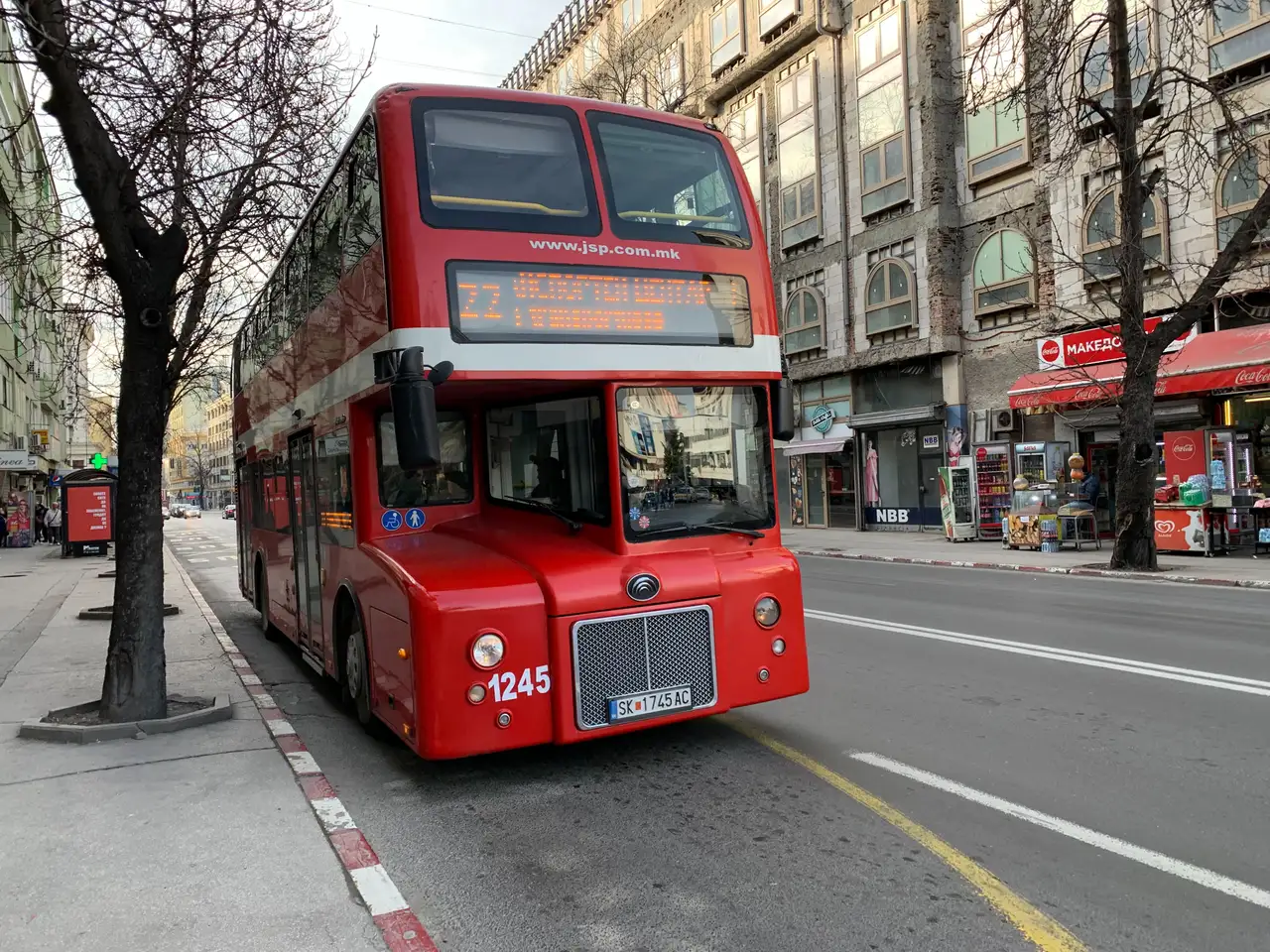
For the bus you pay with a rechargeable transit card or on board - carry small denar either way, and check the current fare locally as it’s low but does change. Honestly, though, for a short visit most travellers skip the city bus and use taxis, which are plentiful and cheap.
Taxis and airport transfers
Skopje’s taxis are metered, inexpensive and easy - flag one down, find a rank, or order by phone or app. Fares are low by Western European standards, with a small starting charge, so short city hops cost very little. Bolt and local taxi apps operate in Skopje (there’s no Uber in North Macedonia), which spares you haggling and the language barrier. The usual sensible rule applies: make sure the meter is running, or agree the fare before you set off, particularly for longer trips.
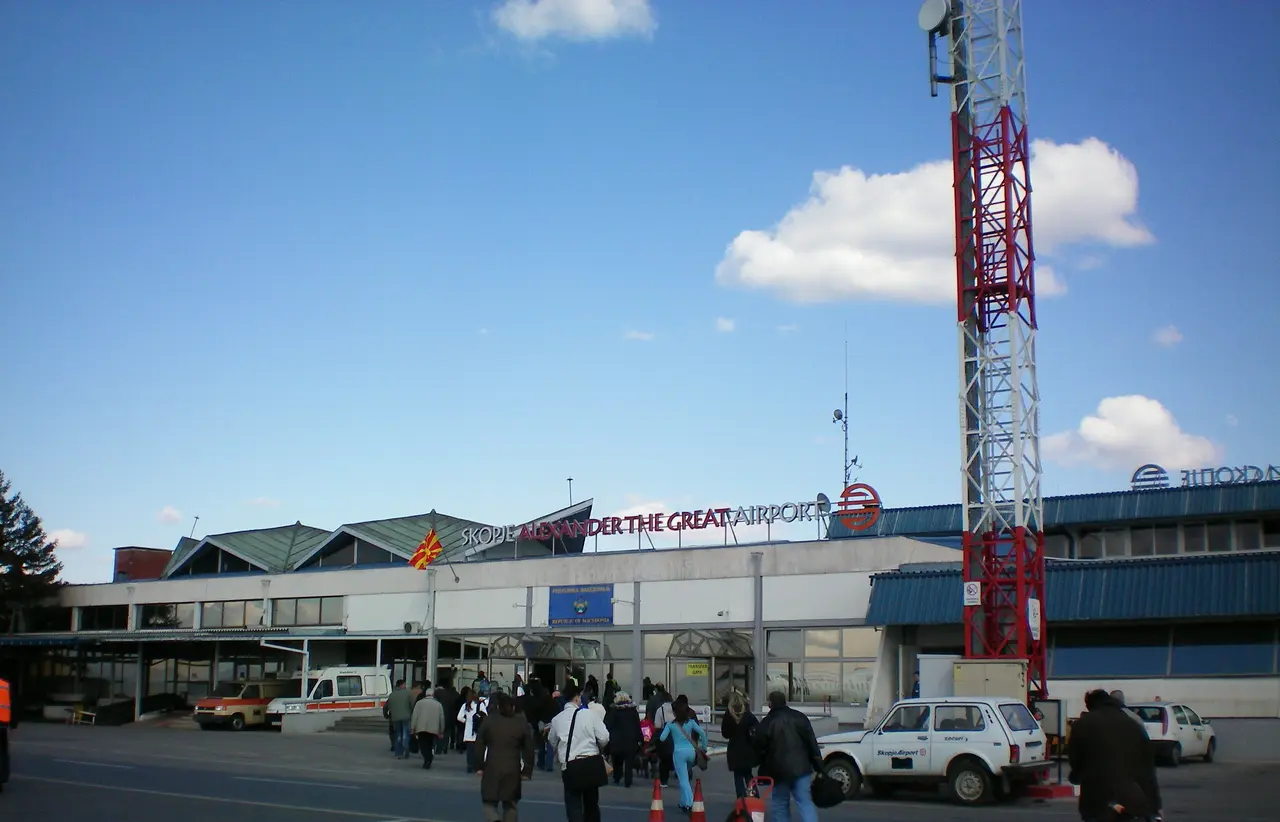
The airport is where transfers matter most. Skopje International Airport (SKP) lies in Petrovec, roughly 20-23 km southeast of the city centre. To reach town you have two main options: an airport shuttle bus that runs to the centre and the bus/railway station, and airport taxis, which work on a fixed published fare to the city rather than the meter - confirm the rate at the official taxi desk before you get in. For a door-to-door arrival, or if you’re heading straight for Ohrid (with no direct bus to the lake), a pre-booked private transfer removes all the friction on day one.
The other gateway, Ohrid St. Paul the Apostle Airport (OHD), sits 10 km northwest of town on the aerodrome sheet; by road allow 15 to 25 minutes (nobody publishes an official driving distance, and routing engines disagree by a third). It’s a seasonal airport, busiest in summer when low-cost flights come in, so onward options - taxi or transfer - are best arranged ahead, as public connections from there are limited. Ohrid Airport to town has the meter math, the live transfer quote and why you shouldn’t wait for a bus.
Hiring a car for the lakes and mountains
Buses cover the towns; they don’t cover the best of the country. The national parks (Mavrovo, Galičica, Pelister), Matka Canyon’s far end, St. Naum at the south of Lake Ohrid, Kruševo and the quiet back roads all reward having your own wheels - and the drives themselves are part of the trip.
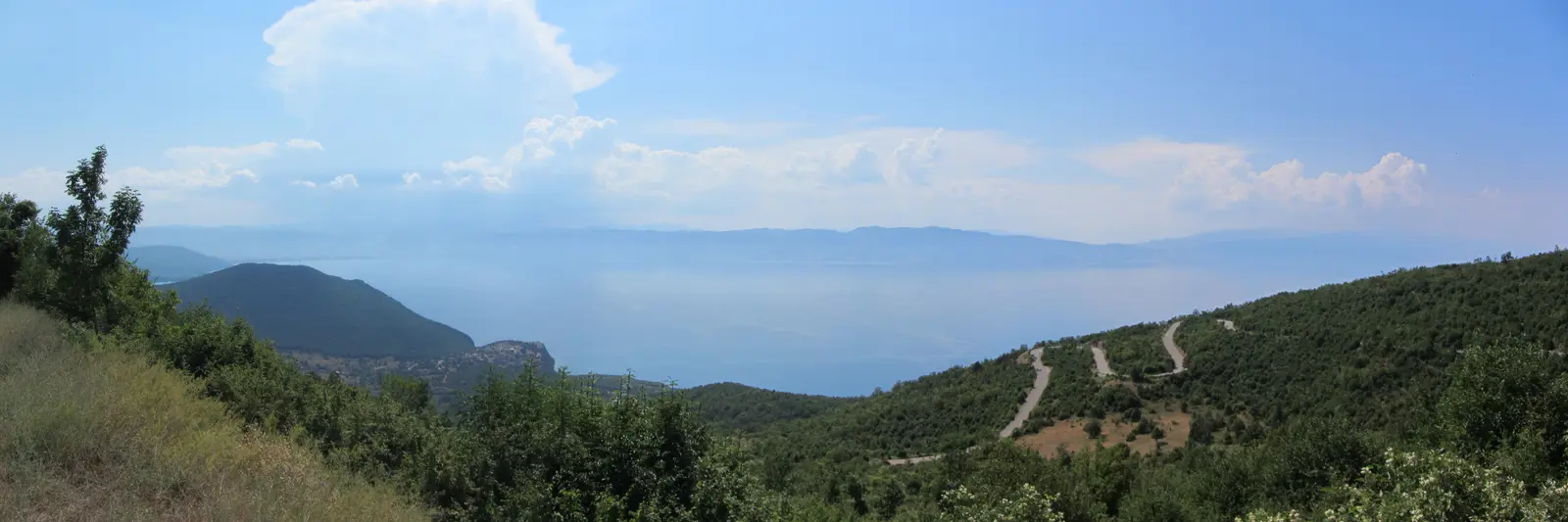
A common, efficient pattern is to bus or fly between the main bases and rent a car only for the days you go exploring - pick it up at Skopje airport or in town, do the parks and lakes, and drop it back rather than paying for a car to sit idle during your city days. The A1 motorway spine is modern and easy; the mountain passes are spectacular but slow, and best driven in daylight. For the full picture - where to hire, the deposit, insurance and the CDW excess, parking, fuel and crossing borders - see our dedicated renting a car in North Macedonia guide. With the right cross-border paperwork - a Green Card that names both countries - a hire car can even carry you over into Albania, the scenic way to leave the lake: our Ohrid to Tirana and the Adriatic route drives from Lake Ohrid down to the coast at Durres.
Intercity by taxi, minibus or private transfer
Between the scheduled bus and the rental car sit a couple of in-between options. Shared minibuses (kombi) run some shorter and local routes - around the lake between Ohrid and Struga, for instance, and out to villages - often leaving when full rather than to a strict timetable; ask locally where they depart. For a group, a private transfer or a pre-arranged taxi between cities (Skopje to Ohrid is the classic) can work out reasonable per person and saves the city-centre transfer that the airport bus forces on you. Agree the price up front, in denar, before you set off.
Practical tips for getting around
A handful of habits make Macedonian transport painless:
- Carry denar in cash. Buses, kombi, market taxis and small kiosks expect Macedonian denar (MKD), and many won’t take cards. The denar is steady against the euro at roughly 61.5 to €1, so amounts are easy to estimate; keep small notes for bus tickets and luggage fees.
- Check the last departure. Intercity timetables thin out in the evening and in winter - don’t assume a late bus exists.
- Book ahead in summer for Skopje-Ohrid and weekend travel; seats on the good departures fill up.
- Don’t plan around trains. The network is sparse and skips Ohrid entirely - bus or car only.
- From the airport to Ohrid, plan a transfer. There’s no direct bus; it’s a city transfer plus an onward coach otherwise.
- Agree taxi fares by meter or up front, and use the fixed airport-taxi rate from the official desk. The destination and price lines in Macedonian phrases for travelers help when the driver’s English is thin.
Put together, getting around North Macedonia is simpler than the lack of trains suggests: buses for the towns, a car for the scenery, cheap taxis in Skopje, and a transfer to smooth the airport. Plan the route first - our 7-day North Macedonia itinerary shows how the legs fit - then pick the mode that matches each day.
Read also
- The section hub: transport in North Macedonia
- Arriving overland: getting to North Macedonia from Sofia, Thessaloniki & Pristina
- Heading on to Albania: Skopje to Tirana - buses, the three corridors and the border
- North to Serbia: Skopje to Belgrade - Fudeks night run, FlixBus and the drive
- Rent for the parks and lakes: renting a car in North Macedonia
- Where you’re heading: things to do in Skopje, things to do in Ohrid and things to do in Bitola
- Tie it together: the 7-day North Macedonia itinerary
- Plan the trip: is North Macedonia worth visiting?
- What the arrival costs elsewhere: airport to city by bus, 10 capitals compared
Photos
Read also

Transport · 13 min read
Skopje to Mavrovo 2026: Bus 480 MKD, 96 km, Winter Tyres
Updated · September 26, 2026Skopje to Mavrovo: 96 km, about 1h45 by car, one 09:34 bus for 480 MKD (730 MKD return), tolls, and the 15 Nov-15 Mar winter-tyre law. Checked Sep 2026.

Transport · 12 min read
North Macedonia Border Crossings: A Driver's Guide
Updated · October 3, 2026North Macedonia border crossings to Albania, Greece, Bulgaria, Serbia and Kosovo: which to use, queue snapshots and how to check them live, the green card.

Transport · 10 min read
Skopje to Tetovo Bus 2026: 200-250 MKD, 40-50 Min, Timetable
Updated · September 26, 2026Skopje to Tetovo: 45 km, bus 200-250 MKD (about €3.25-4.06) in 40-50 minutes from the Transportation Center, fares read 26 Sept 2026, and the A2 drive.

Transport · 10 min read
Flights to North Macedonia: SKP & OHD Routes
Verified · August 28, 2026Fly into Skopje (SKP) or Ohrid (OHD) in 2026: Wizz Air 35-route SKP base, which Ohrid seasonals are already ending, and who else flies - checked Aug 2026.