
Driving in North Macedonia: Tolls, Rules & Fuel 2026
Driving in North Macedonia: speed limits, motorway tolls, drink-drive limit, the green card, fuel prices and winter rules - what you need to know.
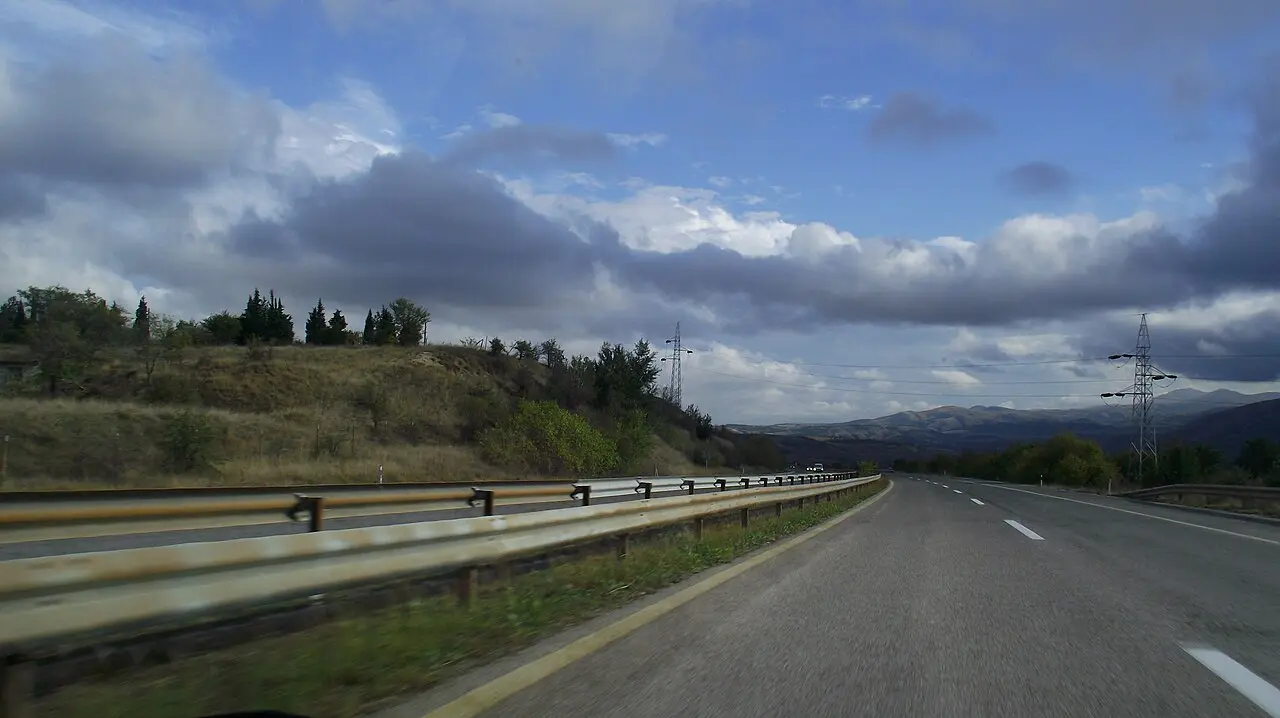
Driving in North Macedonia is straightforward for anyone used to European roads, and it is the part of the trip travellers worry about least once they read is North Macedonia safe. You drive on the right, motorway speed tops out at 130 km/h, the drink-drive limit is 0.5 g/L (0.05%), and motorway tolls are paid at each toll plaza rather than by vignette - so there’s no sticker to buy in advance. The two things first-timers most often miss: headlights must be on day and night, and you should travel with a green card (international insurance proof) plus your registration papers. Roads range from a fast modern motorway spine to slow, scenic mountain routes, and outside the A1 corridor you’ll share the tarmac with the occasional tractor.
The catch is never the driving itself - it’s the small print that trips up first-timers. Winter tyres are compulsory from 15 November to 15 March, and if your green card doesn’t stretch to North Macedonia you’ll buy insurance at the border for about €30. Get the paperwork right and the rest is just reading the signs.
The basics: side, limits and tolls
You drive on the right and overtake on the left, as across the rest of the Balkans. Speed limits, unless a sign says otherwise, run roughly like this:
| Road type | Typical limit |
|---|---|
| Built-up areas (towns) | 50 km/h |
| Open roads | 80-100 km/h (up to ~110 where signed) |
| Motorways (A1, A2, A4) | 130 km/h |
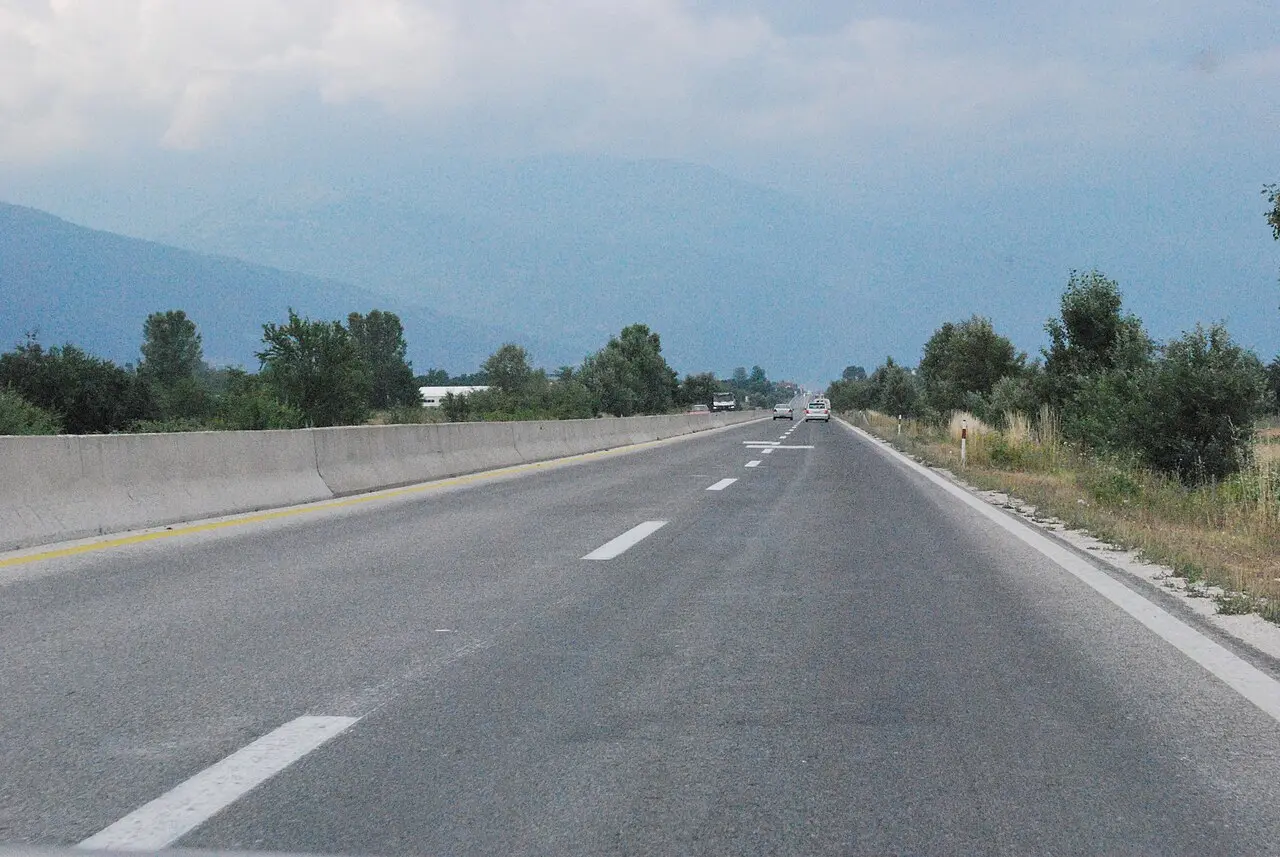
Signed limits override these, and speed cameras are real, so watch the signs through villages where the limit drops sharply. The motorways are tolled - the A1 north-south spine through the country, plus the A2, and the A4 where it’s built (the Skopje-Blace link toward Kosovo is still under construction as of September 2026, so don’t expect motorway the whole way there) - and there is no vignette and no entry ticket: every toll plaza charges a fixed amount for its own section, so a long run such as Skopje to Gevgelija means paying several times along the way. You can pay in Macedonian denar, euro or by card, or with an electronic TAG, so you don’t need exact change. There is no windscreen sticker to buy, which trips up people expecting the Austrian or Slovenian model.
Documents you need to carry
Keep these in the car and reachable:
- Your driving licence, and for most non-EU passports an International Driving Permit too. EU licences are fine on their own. Canada’s advisory says flatly that you must carry an IDP, and Australia says the same and warns that driving without one could void your insurance. The US State Department says American drivers need a US licence plus an IDP, and that the permit “can only be obtained in the United States” - so sort it before you fly. Britons are the exception: the Foreign Office says a UK photocard licence is enough in a rental car, and the 1968-style IDP is only needed if you’re driving your own car or hold a residence permit.
- Vehicle registration (V5) or rental agreement. Police can ask for proof you’re entitled to the car.
- Motor insurance, and a green card. The green card is the international proof that your insurance is valid here. If you’re driving your own car, check it lists North Macedonia; if it doesn’t, or your cover doesn’t extend here, you can buy border insurance - roughly €30 for a month (about 1,850 MKD).
- Passport or ID. Standard for any border crossing.
If you’re renting, the rental company supplies the registration and the insurance/green card - confirm the green card is in the glovebox before you drive off, and check whether your hire insurance has an excess you’d want to reduce. Our renting a car in North Macedonia guide covers deposits, the excess and what’s worth adding.
Drink-driving, lights and required kit
The blood-alcohol limit is 0.5 g/L (0.05%) for ordinary drivers, and effectively zero for professional drivers and anyone with under two years’ experience - so if you’ve just passed, don’t drink at all before driving. Enforcement is taken seriously.
A rule outsiders forget: dipped headlights must be on at all times, day and night, on every road. As for kit, you must carry a warning triangle and a reflective vest, and a first-aid kit and spare bulbs are recommended - rentals usually have the lot, but check. Wearing seatbelts is mandatory front and back, and using a handheld phone while driving is prohibited.
What the roads are actually like
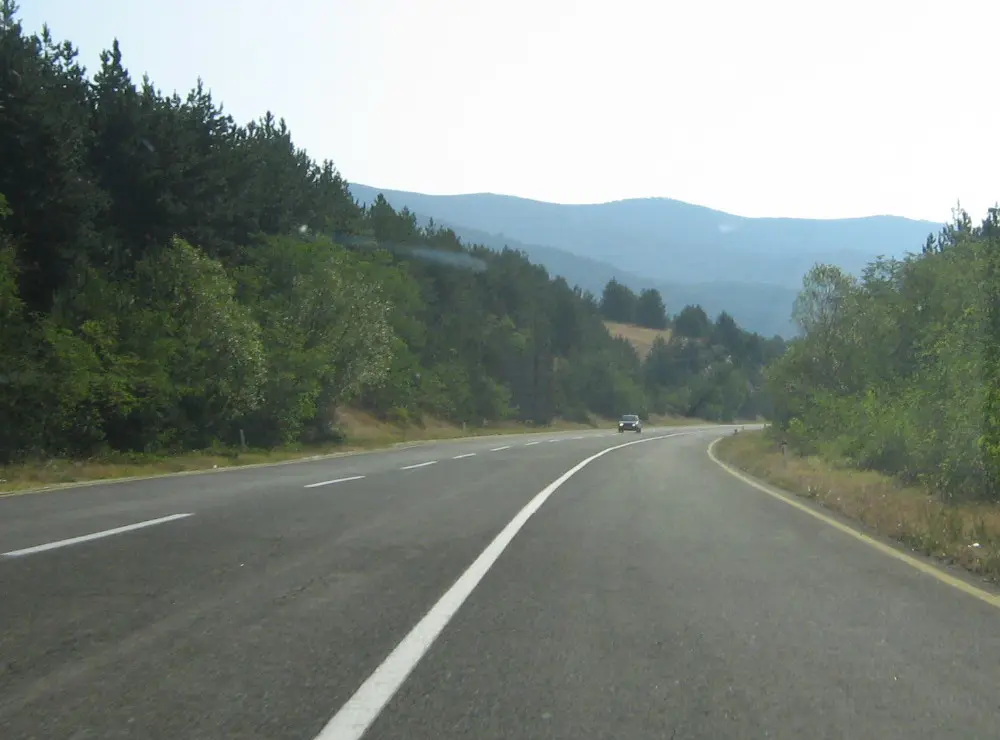
The A1 motorway is the country’s modern spine, running roughly north-south from the Serbian border through Skopje and on toward Greece - fast, well-surfaced and easy. Step off it and the picture changes. Most of North Macedonia is two-lane national roads (the old M- and R-numbered routes) that wind through hills and villages, where you’ll be slowed by trucks, tractors and the odd herd. They’re perfectly drivable, just not quick, so don’t plan distances at motorway pace once you leave the A1.
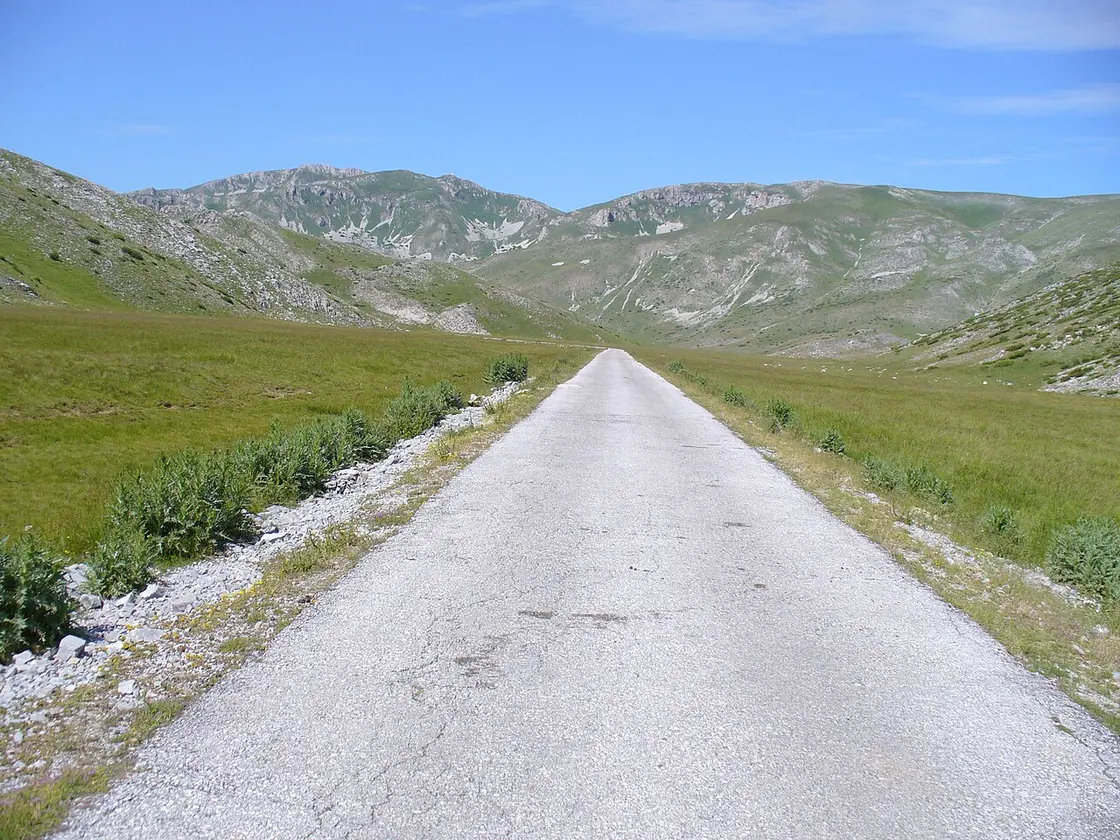
In the mountains - the Galičica pass above Lake Ohrid, the roads through Mavrovo and the high country toward Galičnik - surfaces are paved but narrow, with tight bends and steep drops, and some passes close in winter. They’re among the best drives in the country when open, but take them slowly and check seasonal closures before you set out. Urban driving in Skopje is the usual capital-city mix of busy junctions and improvised parking; out in the regions it’s calm.
Fuel, money and winter
Fuel is easy to find on main routes and around towns. Prices are capped centrally and revised every week or two: under the regulator’s decision of 28 September 2026 (in force from 29 September), petrol (BS-95) tops out at 100 MKD per litre and diesel at 100 MKD per litre. Diesel matches petrol only because this decision applies a temporary government cut in VAT on diesel, from 18% to 10%; under the previous decision of 21 September the ceilings were 99 MKD for petrol and 104.50 MKD for diesel. So the usual “diesel is cheaper to run” logic only pays off if you are covering long distances. Stations on the A1 and in cities take cards; smaller rural pumps may prefer denar in cash, so keep some on hand.
Winter brings real rules. From 15 November to 15 March, all vehicles must run winter tyres with at least 4 mm of tread, and snow chains may be needed on high routes (keep to about 50 km/h with chains fitted). Mountain passes can close in heavy snow. If you’re renting in the cold months, confirm the car is on winter tyres - it’s the law, and the high roads demand it.
For the rest of the picture - buses, taxis and when not to bother with a car at all - see getting around North Macedonia, and to turn a hire car into a proper trip, the North Macedonia road trip maps the classic Skopje-Ohrid-Bitola loop and the 7-day itinerary shows how the legs join up.
Quick checklist
- Drive on the right; 50 / 80-100 / 130 km/h unless signed otherwise.
- Headlights on, day and night - every road, all year.
- Tolls are paid at each plaza, no vignette - in denar, euro, by card or with a TAG.
- Drink-drive limit 0.5 g/L (zero for new and professional drivers).
- Carry licence, registration/rental papers, insurance and a green card; US, Canadian and Australian drivers are told by their own governments to carry an IDP as well.
- Warning triangle and reflective vest required; first-aid kit and spare bulbs sensible.
- Winter tyres 15 Nov-15 Mar; check mountain-pass closures.
- Budget about 100 MKD/L petrol, 100 MKD/L diesel (regulated maximums from the 28 September 2026 decision, revised often).
Get those right and driving here is genuinely enjoyable - a quick motorway when you need it, and some of the Balkans’ finest back roads when you don’t.
Read also
- Renting a car in North Macedonia - deposits, excess, insurance and pickup
- North Macedonia border crossings: a driver’s guide - which crossing to use for each neighbour, and the green card
- North Macedonia 7-day itinerary - a road trip that uses these rules in practice
- Getting around North Macedonia - buses and taxis when you’d rather not drive
- Skopje to Belgrade - the A1 north to Serbia, putarina and the border
- Ohrid to Bitola - including the scenic Galičica pass drive
- North Macedonia travel insurance - cover for the trip and the car
- The section hub: transport in North Macedonia
Photos
Read also

Transport · 13 min read
Skopje to Mavrovo 2026: Bus 480 MKD, 96 km, Winter Tyres
Updated · September 26, 2026Skopje to Mavrovo: 96 km, about 1h45 by car, one 09:34 bus for 480 MKD (730 MKD return), tolls, and the 15 Nov-15 Mar winter-tyre law. Checked Sep 2026.

Transport · 12 min read
North Macedonia Border Crossings: A Driver's Guide
Updated · October 3, 2026North Macedonia border crossings to Albania, Greece, Bulgaria, Serbia and Kosovo: which to use, queue snapshots and how to check them live, the green card.

Transport · 10 min read
Skopje to Tetovo Bus 2026: 200-250 MKD, 40-50 Min, Timetable
Updated · September 26, 2026Skopje to Tetovo: 45 km, bus 200-250 MKD (about €3.25-4.06) in 40-50 minutes from the Transportation Center, fares read 26 Sept 2026, and the A2 drive.

Transport · 10 min read
Flights to North Macedonia: SKP & OHD Routes
Verified · August 28, 2026Fly into Skopje (SKP) or Ohrid (OHD) in 2026: Wizz Air 35-route SKP base, which Ohrid seasonals are already ending, and who else flies - checked Aug 2026.