
Things to Do in Skopje
What to do in Skopje, North Macedonia: Old Bazaar, the Stone Bridge, the Skopje 2014 statues, Kale Fortress, where to stay, eat and get around.
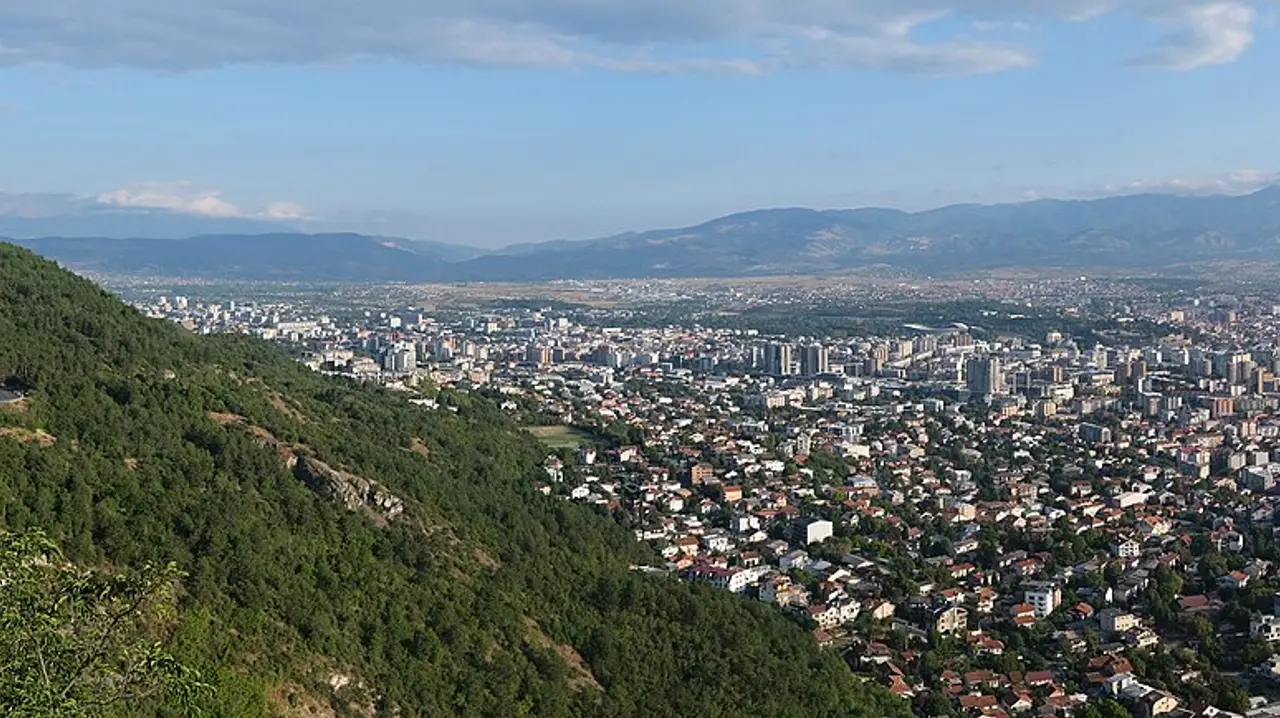
Skopje, the capital of North Macedonia, packs an outsized amount into a small, walkable centre: a Balkan-Ottoman bazaar on one bank of the Vardar, a square full of larger-than-life statues on the other, a medieval fortress on the hill, and a mountain with a giant cross right behind the city. Two unhurried days are enough to see the headline sights, with the Matka Canyon an easy half-day trip on top. This guide covers what to see, where to stay, how to get in from the airport, and where to eat. Deciding whether to fly into Skopje at all, or into Sofia instead? Our Skopje or Sofia comparison lines up flights, prices and sights side by side.
What to see in Skopje
The river Vardar splits Skopje neatly in two, and so does its character. The north bank is the old Ottoman city - the bazaar, the mosques and the fortress. The south bank is the modern, statue-heavy centre rebuilt around Macedonia Square. You can cross between them on foot in a couple of minutes over the Stone Bridge, which makes sightseeing simple - you don’t need a plan beyond comfortable shoes.
Old Bazaar (Stara Čaršija)
The Old Bazaar is the heart of old Skopje and one of the largest surviving Ottoman-era marketplaces in the Balkans - a protected zone of mosques, hans (caravanserais), hammams and craft workshops. Lose the map and wander: you’ll pass coppersmiths and jewellers, tucked-away courtyards, and a string of small mosques. It’s also the best-value place in the city to eat and to drink coffee.
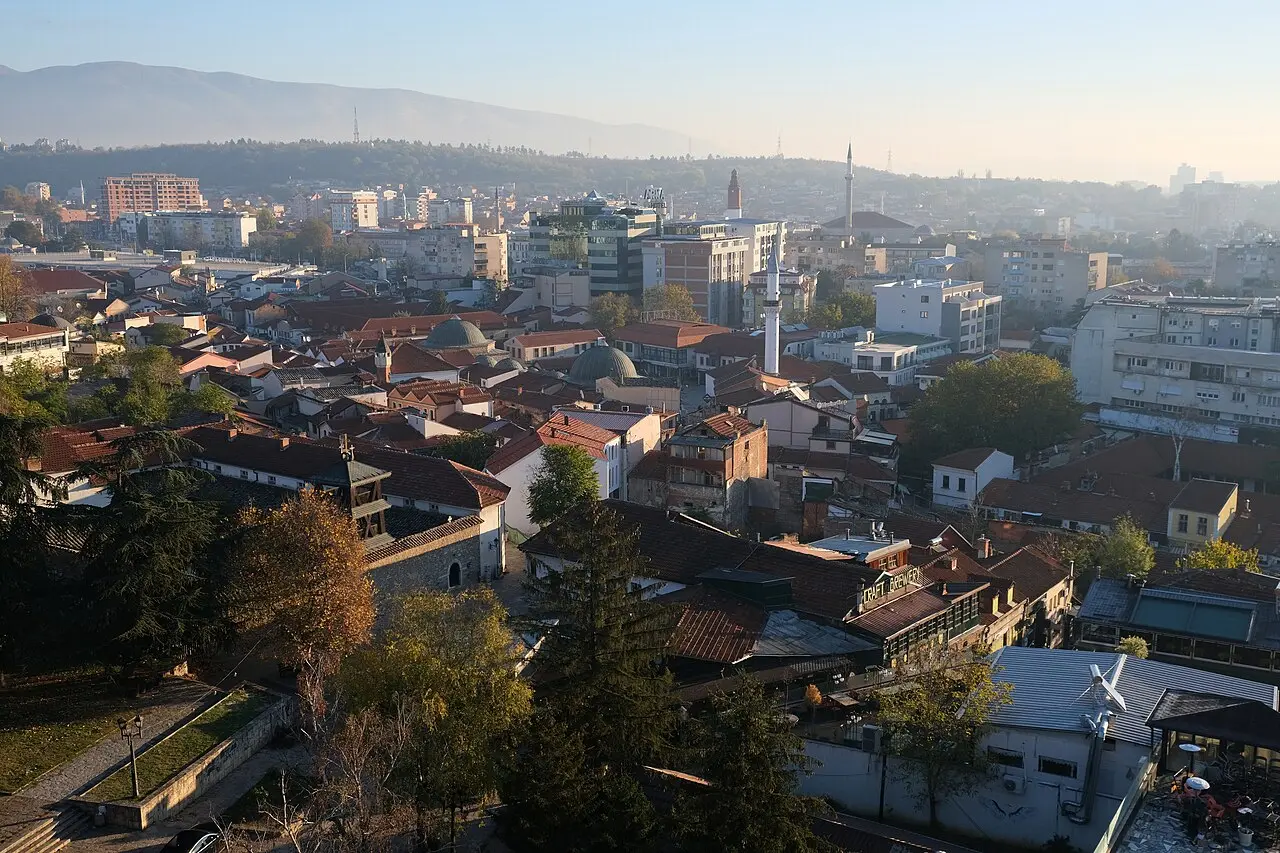
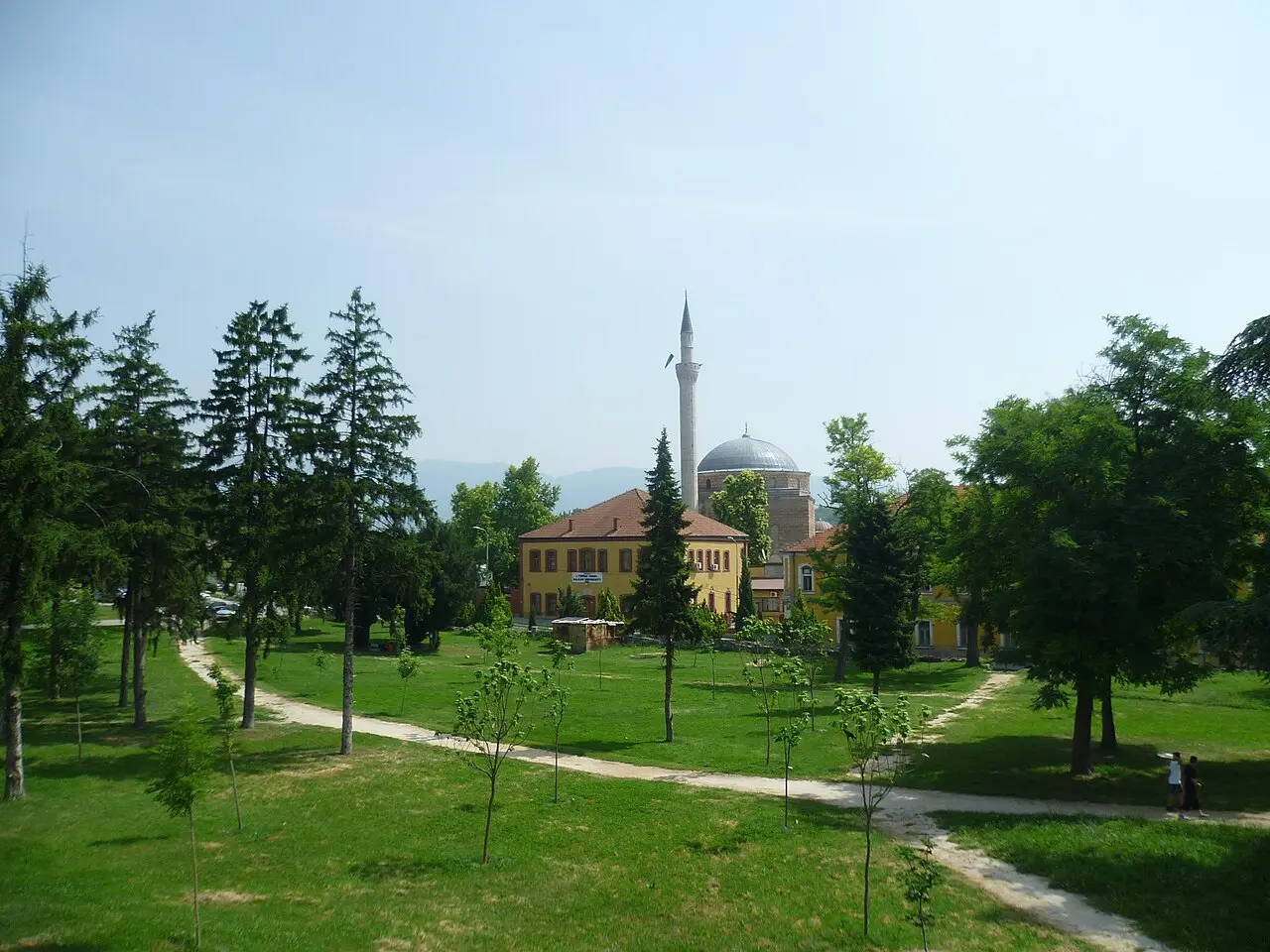
Within the bazaar, look for the Mustafa Pasha Mosque (1492), one of the finest Ottoman buildings in the country, set in a garden just below the fortress. Kapan An and the other restored caravanserais now hold cafés and small restaurants - a good excuse to stop for a Turkish coffee. For a full walk through the quarter - the hans, the hammam-galleries and where to eat - see our dedicated Skopje Old Bazaar guide. You’ll want an hour here even if you’re short on time.
The Stone Bridge and Skopje 2014
The Stone Bridge (Kamen Most) over the Vardar has linked the two halves of the city for centuries and is the de facto symbol of Skopje. It drops you straight onto Macedonia Square, the centrepiece of the Skopje 2014 project - a state building programme that filled the centre with neoclassical façades, fountains and dozens of bronze statues. Love it or don’t - you’ll photograph it either way.
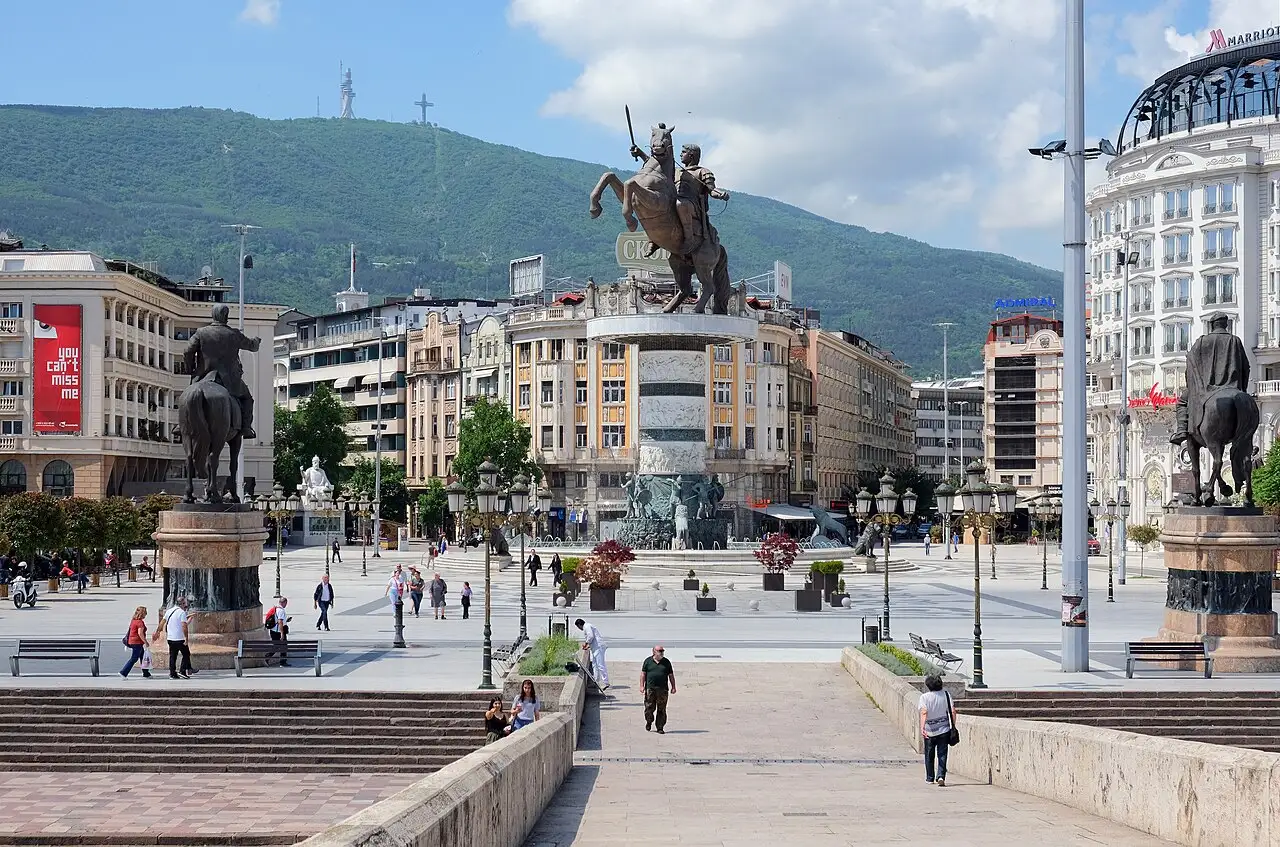
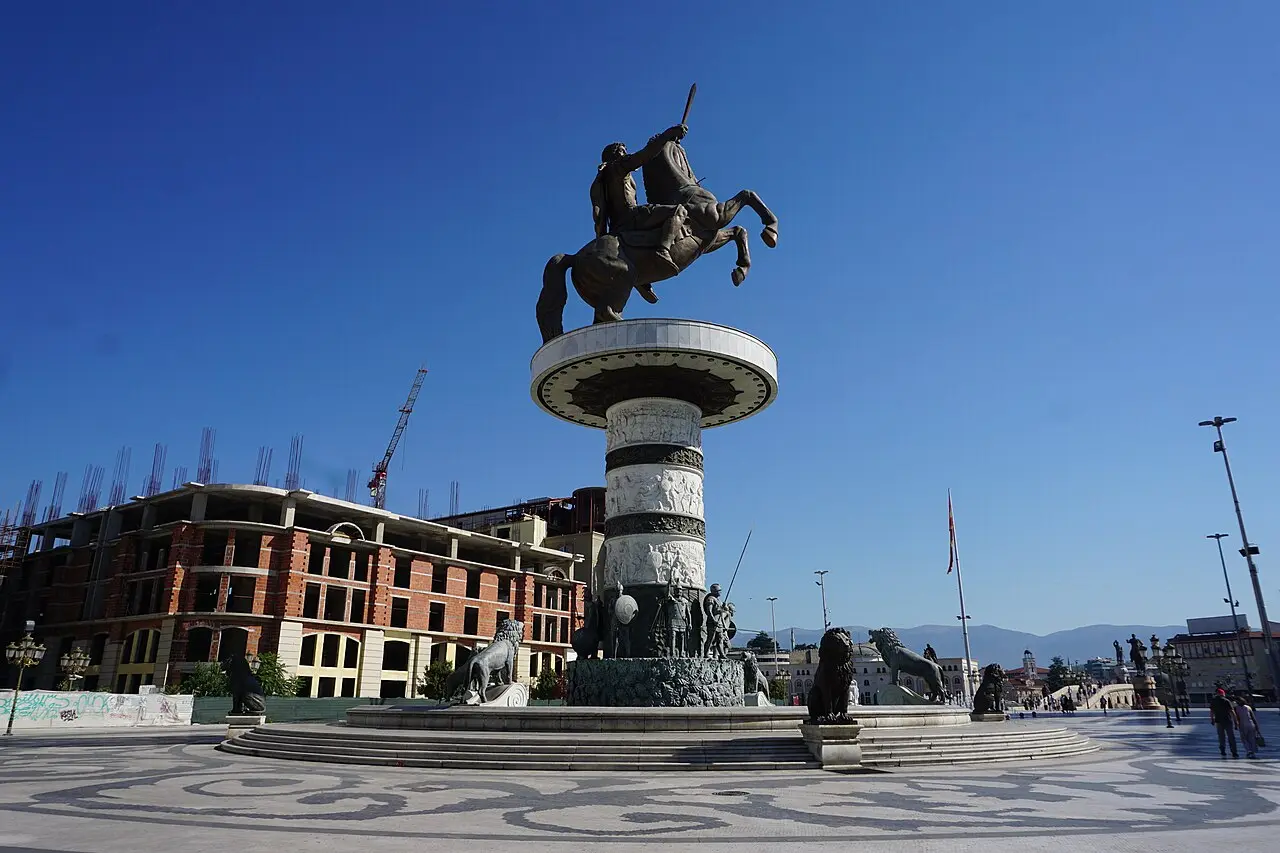
The square is dominated by the giant Warrior on a Horse fountain - widely understood to depict Alexander the Great. Whatever you make of the aesthetics (locals and visitors are divided), it’s undeniably photogenic, especially after dark when the fountains light up. Nearby stand the Porta Macedonia triumphal arch and the riverside statues of the Bridge of the Arts and Civilisations.
Just off the square is the Memorial House of Mother Teresa, built on the spot where she was born in Skopje in 1910; the small museum and chapel are free to enter (check current opening hours on site). For hours, tickets and a walkable route that strings it together with the archaeological museum, Holocaust center and Museum of Macedonian Struggle, see our Skopje museums guide. The 2014 marble sits on older concrete: walk the Tange-era south bank - Post Office, GTC, the 1981 station - in Skopje brutalist architecture. Don’t skip the concrete if you like cities that argue with themselves.
Kale Fortress
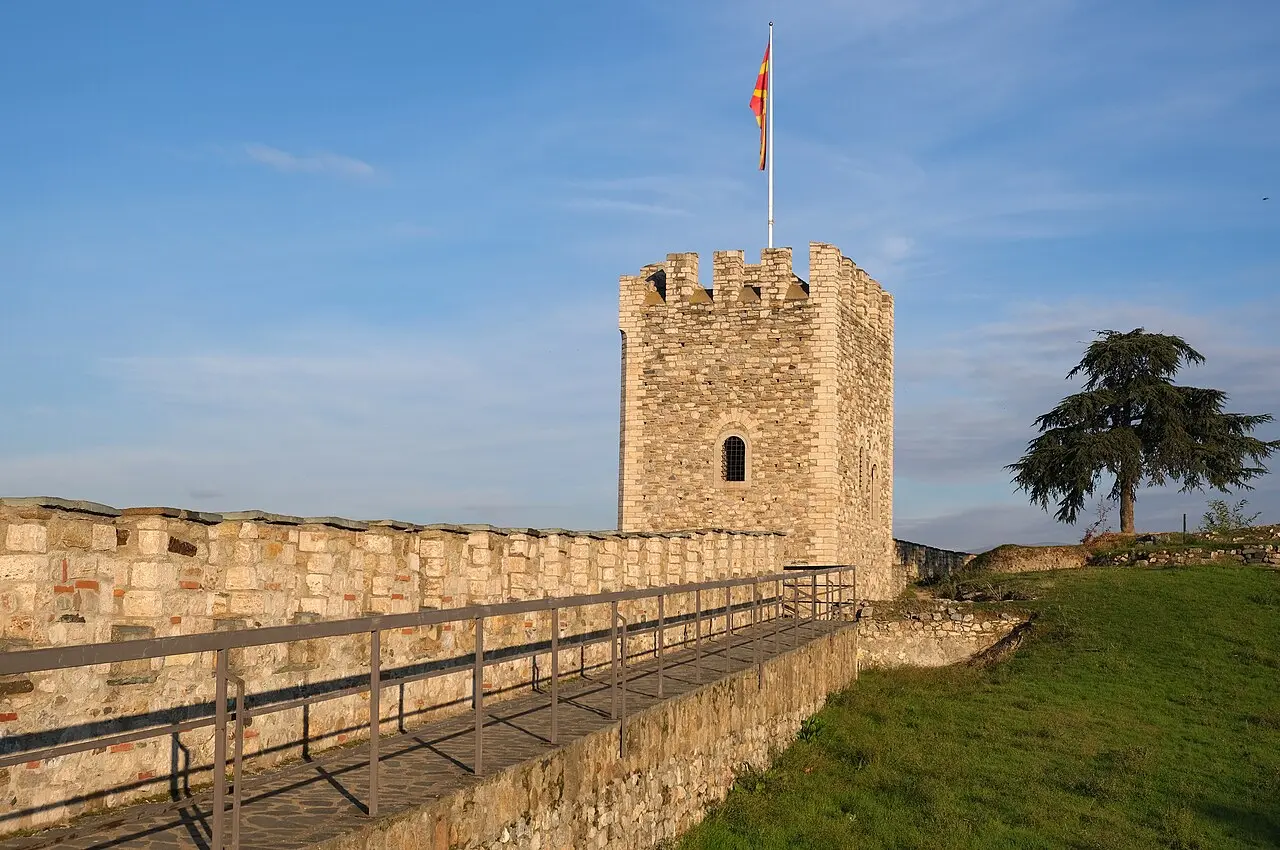
Above the bazaar sits Kale, the medieval fortress whose stout walls and towers look out over the whole city, the Vardar and Mount Vodno beyond. Entry to the grounds is free, and the rampart walk is the best free viewpoint in central Skopje - come for sunset.
Mount Vodno and the Millennium Cross
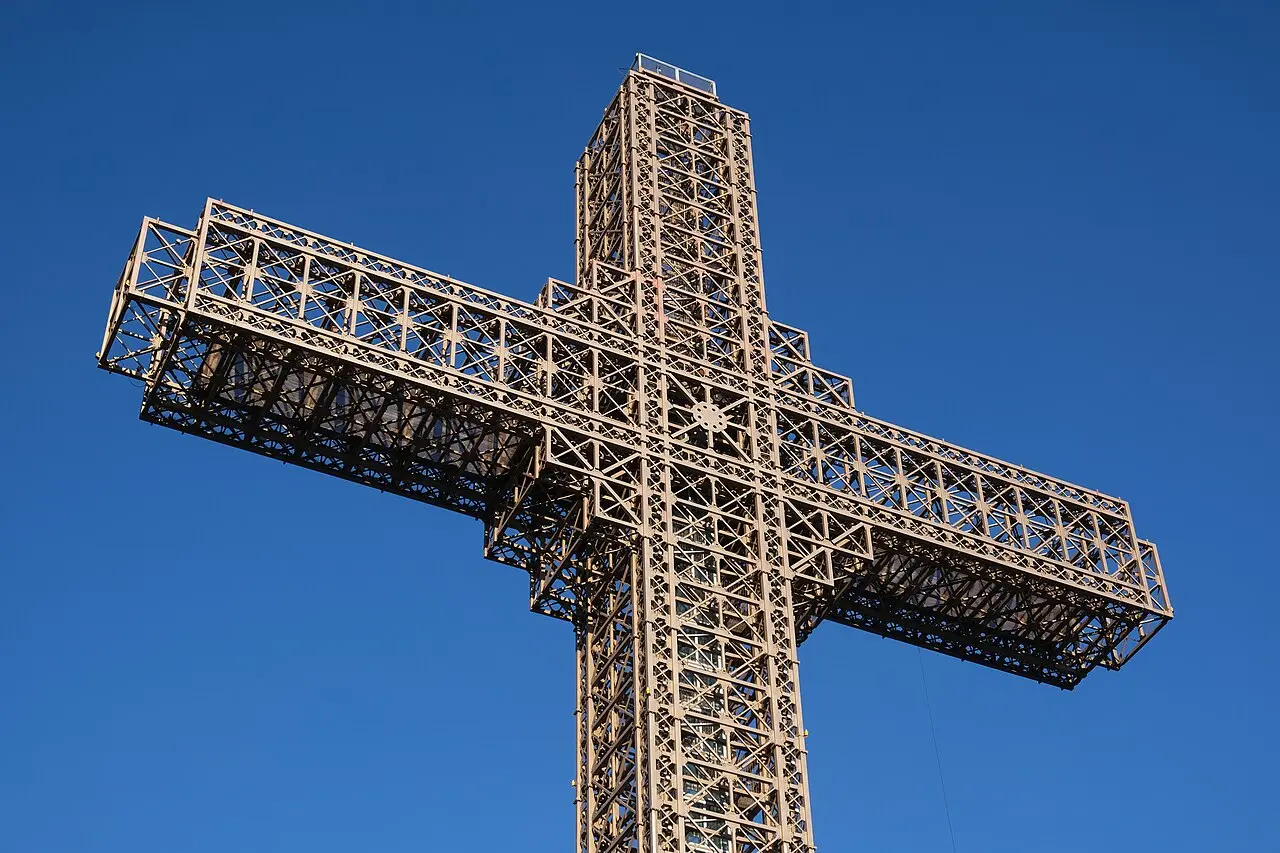
For the big view, head up Mount Vodno, the green ridge that backs the city, to the Millennium Cross, a 66-metre cross that’s lit at night and visible from most of Skopje. Vodno’s cable car from Sredno Vodno hasn’t run since April 2026 (status and walking routes), so you climb from the bus 25 terminus on a forest trail - allow an hour up. The viewing terrace takes in Skopje and the plain around it; Vodno is also a popular spot for hiking and paragliding. It’s worth the half-day if you’ve already done the centre.
Matka Canyon (half-day trip)
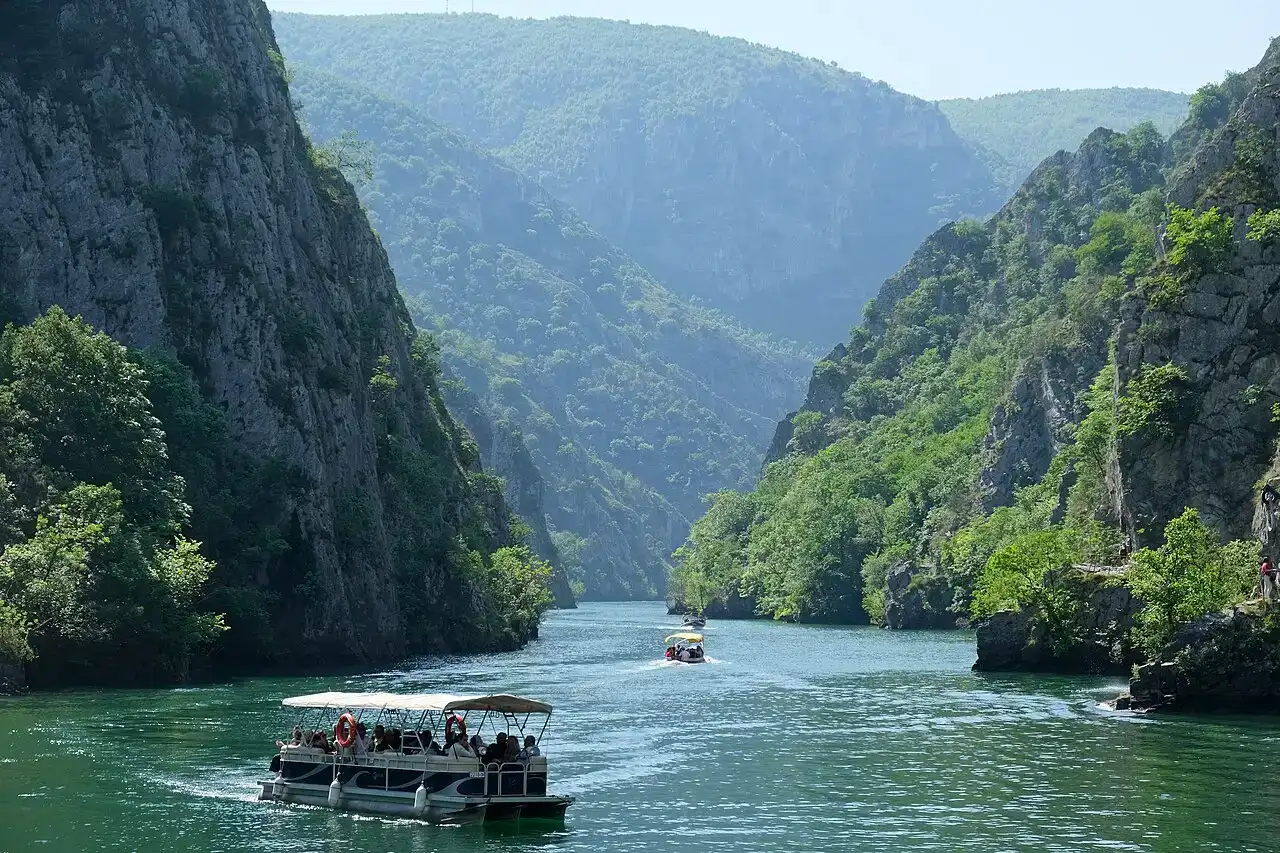
The most rewarding short trip from Skopje is Matka Canyon, about 17 km southwest of the centre. A dammed gorge of the Treska river, it offers lakeside walks, a few medieval churches, kayaking, and boat rides to the Vrelo cave. It works as a half-day on its own or as the first stop on a wider North Macedonia route.
Choosing a base for the country? Our Skopje vs Ohrid comparison splits capital energy against lake calm.
Where to stay: best areas
Skopje is compact, so almost anywhere central works. The obvious bases:
| Area | Good for |
|---|---|
| Centre / Macedonia Square | First visit, walking to every sight, nightlife and restaurants |
| Debar Maalo | Leafy, local feel; the city’s densest cluster of cafés and taverns |
| Old Bazaar edge | Atmosphere, character hotels, steps from the fortress |
| City Park / Vodno side | Quieter, greener, handy if you’ve a car |
Most visitors stay within a 10-15 minute walk of Macedonia Square, which keeps the bazaar, the square and the riverfront all on foot. Prices in Skopje are low by European standards; book ahead only in peak summer and around major events. For a full area-by-area breakdown of where to base yourself, see our guide to where to stay in Skopje.
How to get to Skopje
By air. Skopje International Airport (SKP) is about 20-25 km east of the city. The simplest options into the centre are the airport shuttle bus, a pre-booked transfer, or a taxi; agree the fare or use an official/metered taxi. Allow roughly 30-40 minutes by road (verify current schedules and prices on the day, as they change). For the fares and the shuttle timetable, see our guide to getting from Skopje Airport to the city center.
Onward to Ohrid. There’s no direct public bus from the airport to Ohrid - you travel via Skopje. From Skopje’s main bus station, buses run to Ohrid 9 times a day direct (around 170 km; the station posts no journey times, and FlixBus quotes 3 h 20 min for its own runs). If you’re short on time, a private transfer or a rental car is faster and opens up Mavrovo and the lakes; see our guide to getting around North Macedonia and car rental.
By bus and train. Skopje is the country’s transport hub, with bus links to Ohrid, Bitola, Tetovo and across the border to Pristina, Sofia, Belgrade and beyond. Trains are slower and more limited, but the bus network is cheap and reasonably frequent - you’ll use buses far more than rails.
Where to eat in Skopje
The Old Bazaar is the classic place for grilled meat (ćevapi, kebab), burek and Turkish coffee at low prices. For a more local night out, head to Debar Maalo, lined with kafanas (traditional taverns) serving Macedonian mezze, grilled dishes and house rakija - and, once the plates are cleared, the city’s best bar-hopping (see Skopje nightlife). Look for staples like tavče gravče (oven-baked beans), ajvar, šopska salad and the country’s good, underrated wines from the Tikveš region - our guide to what to eat in North Macedonia runs through the dishes and wines worth ordering. Prices are in Macedonian denar (MKD), steady against the euro at roughly 61.5 MKD to €1, so a casual meal stays inexpensive. For where to eat area by area - Old Bazaar grills, Debar Maalo kafanas and the central square - see our full guide to where to eat in Skopje. Don’t overthink it: bazaar lunch, Debar Maalo dinner.
Practical tips
- Money: the currency is the Macedonian denar (MKD). Cards are widely accepted in the centre; carry some cash for the bazaar and small cafés. Exchange offices give better rates than the airport - don’t change everything airside.
- Getting around: the centre is walkable end to end. City buses cover longer hops; taxis are cheap, but agree the fare or use an app.
- When to go: spring and autumn are mild and pleasant; July-August are hot. The Skopje basin can be hazy in winter. You’ll sweat less outside peak summer.
- Visas & entry: US, UK, EU and Ukrainian citizens travel visa-free for 90 days within any 180; Russian citizens need a visa (since 21 March 2022). Rules change - always confirm with an official source before travel. More in our North Macedonia planning hub.
- Day trips: beyond Matka Canyon, Skopje is a base for Tetovo’s Painted Mosque, the Kokino observatory, the Roman ruins at Stobi and the Mavrovo mountains - our roundup of the best day trips from Skopje ranks them by distance and tells you which need a car.
Read also
- Browse all cities of North Macedonia
- Still deciding? Is North Macedonia worth visiting?
- On the capital specifically: Is Skopje worth visiting?
- Flying in from further afield? Skopje or Sofia compares the two capitals
- Plan the trip in our North Macedonia planning guide
- The classic 7-day North Macedonia route links Skopje with Ohrid and Bitola
- Country-wide shortlist: best things to do in North Macedonia
- Heading south? See Lake Ohrid
- Climb up for the view: Mount Vodno & the Millennium Cross
Photos
On the map
The map loads on click - to keep the page lightweight.
The map didn’t load. Check your connection and refresh the page.
Distance
- Ohrid ≈170 km · ~2.5-3 h
- Bitola ≈175 km · ~2.5 h
Read also

Cities · 12 min read
Things to Do in Stip: Bargala Ruins & the Isar
Updated · August 29, 2026Stip travel guide: the Isar hill's UNESCO-listed Chetrse ritual, the Bargala ruins, the Bezisten gallery, pastrmajlija, and how to get there from Skopje.

Cities · 8 min read
Demir Kapija, Stobi and the Tikves Wine Road
Updated · July 15, 2026The Demir Kapija gorge, the Roman city of Stobi and the Tikves vineyards - how to see North Macedonia's Vardar valley in one easy day from Skopje.

Cities · 9 min read
Things to Do in Kratovo: Crater Town, Towers & Bridges
Updated · July 14, 2026Kratovo travel guide: a town in the crater of an extinct volcano, with medieval stone towers, high Ottoman bridges, mining history and how to visit.

Cities · 11 min read
Things to Do in Strumica: Carnival, Fortress & Monasteries
Updated · August 5, 2026Strumica travel guide: the pre-Lenten carnival, the Carevi Kuli fortress, the Veljusa and Vodoca monasteries, hot springs and how to get there.