
Matka Canyon Skopje: Vrelo Cave Boat, Hikes & Prices
Matka Canyon, 17 km from Skopje: the boat to Vrelo cave, kayaks, St. Andrew monastery and clifftop hikes, with 2026 prices and how to get there.
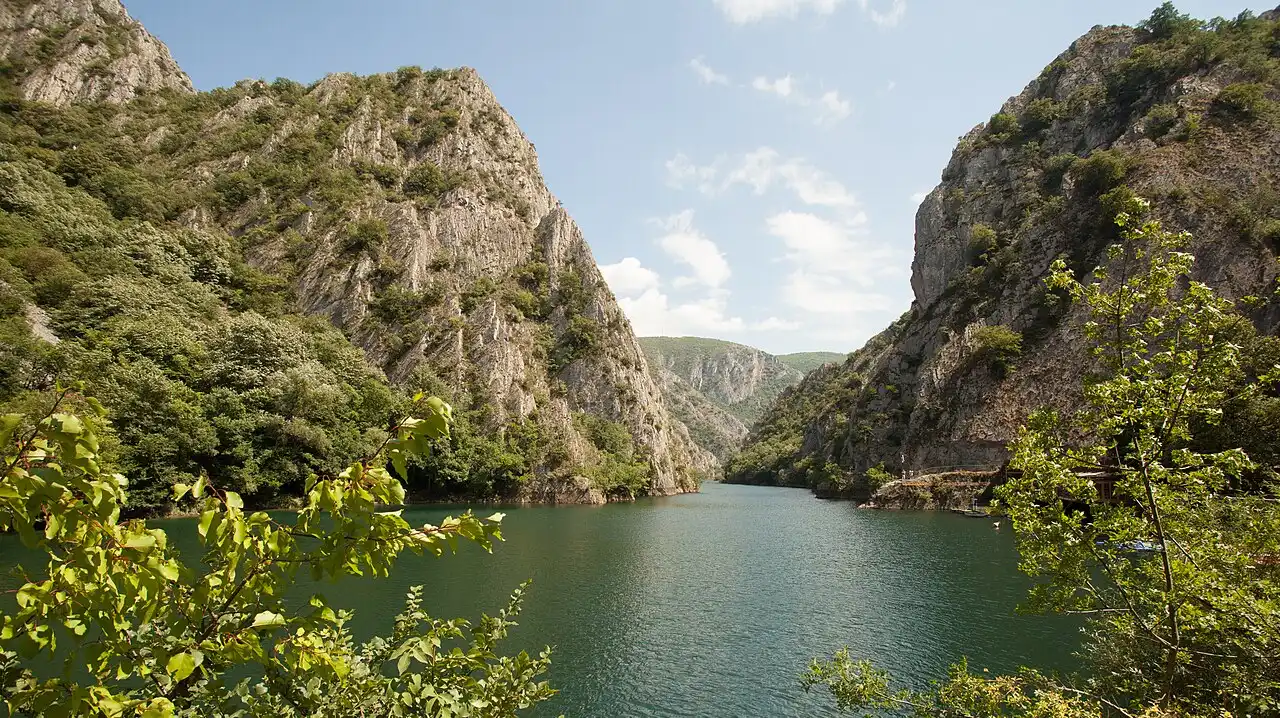
Matka Canyon is the easiest and most rewarding nature escape from Skopje - a steep limestone gorge of the Treska river, dammed into a long emerald reservoir, just about 17 km southwest of the capital. It’s a classic half-day trip: take a boat ride to the Vrelo cave, walk the lakeside path to the medieval St. Andrew monastery, hike up into the cliffs, or hire a kayak on the still green water. The canyon itself is free to enter, and you can be standing under the cliffs less than half an hour after leaving the city centre. You only pay for the boat, the kayak and lunch, and 2026 guide prices are further down, so Matka suits a cheap morning out or a full day on the water.
What is Matka Canyon?
Matka - the name means “womb” or “cradle” in Macedonian - is a gorge carved by the Treska river on the western edge of the Skopje basin. In the late 1930s the river was dammed at the narrow mouth of the canyon, creating one of the oldest hydroelectric reservoirs in the country and the calm, deep-green lake you see today. Sheer rock walls rise straight out of the water, and the whole area sits within a protected canyon recognised for its rich plant life, butterflies and birds of prey.
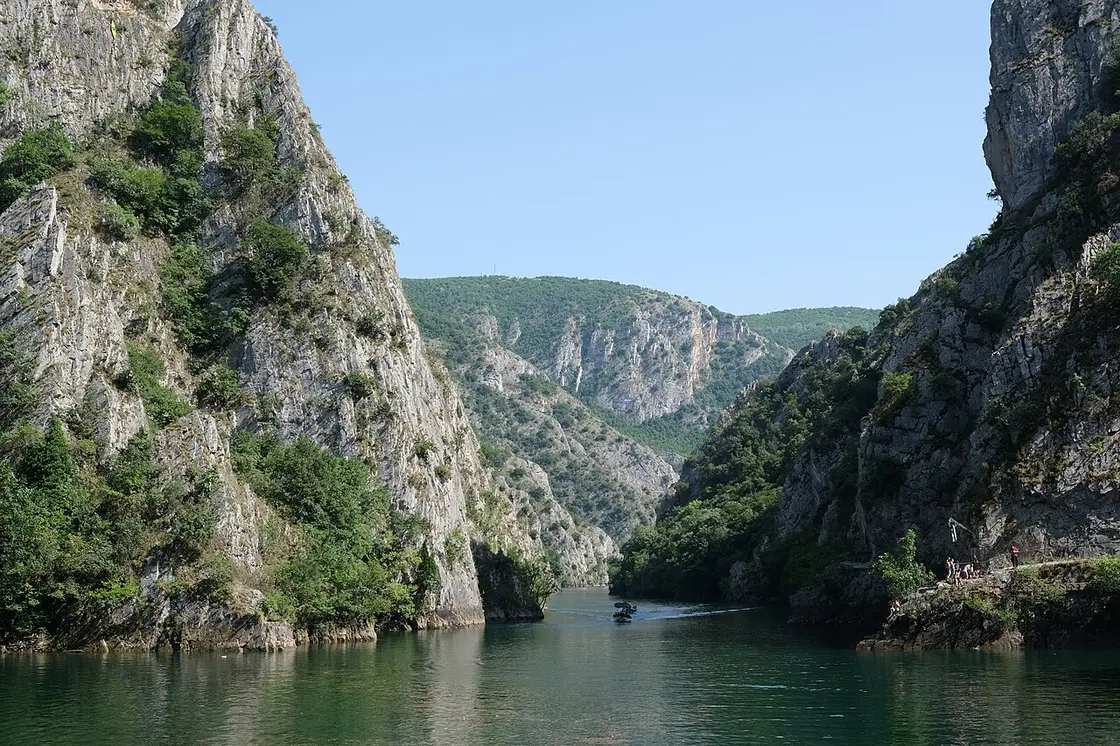
The hub of the canyon is the small dam and the cluster of jetties, terraces and a café-hotel just beyond it. From here the lakeside path, the boats and the kayak rentals all set off, so it makes an easy, self-contained base for a few hours - no planning required beyond getting there.
What to do at Matka
You can do as much or as little as you like at Matka. Most visitors combine a boat trip with a short walk; add a kayak or a longer hike if you have the time and the legs for it.
Boat trip to Vrelo cave
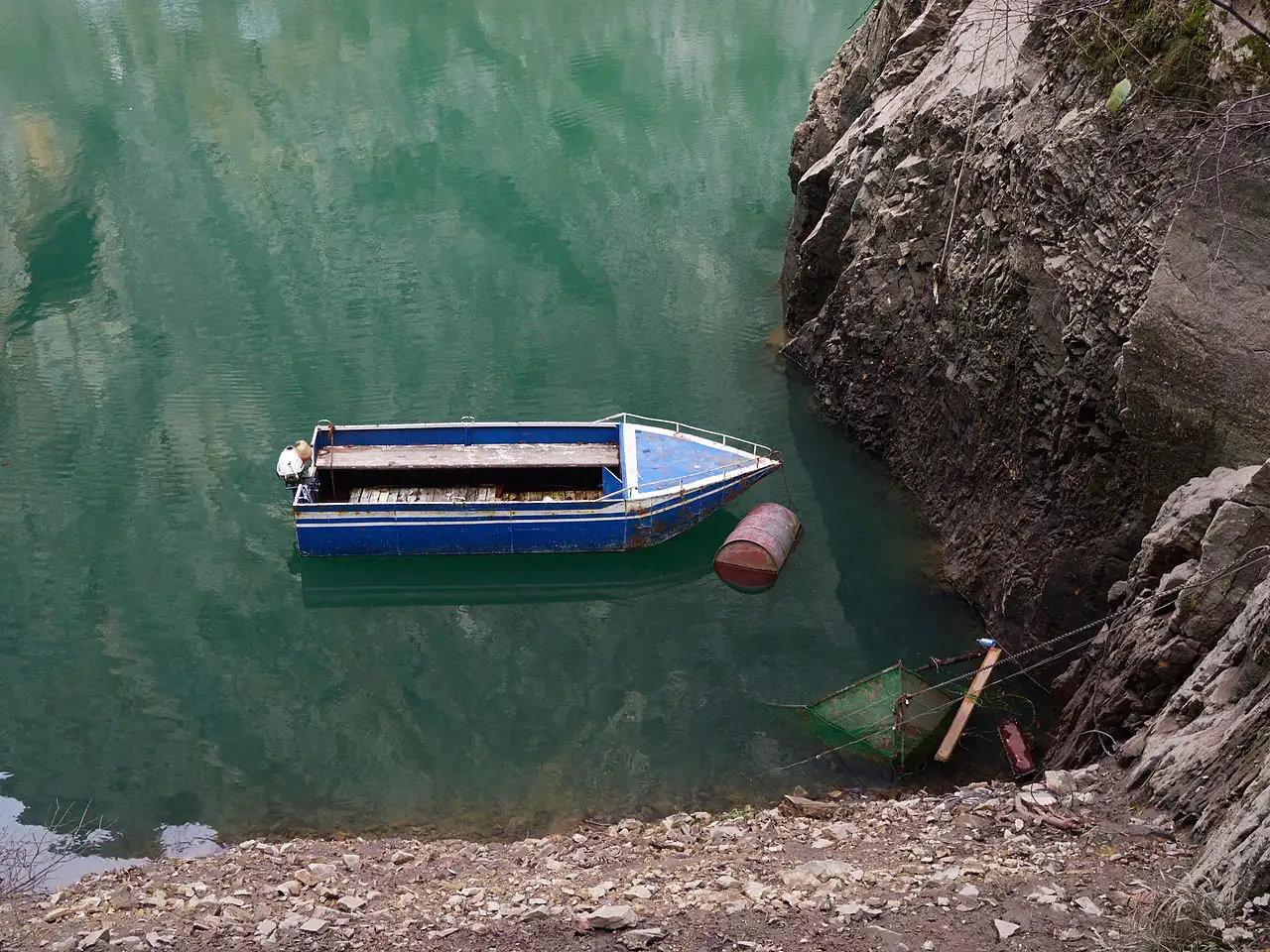
The signature experience is the boat ride up the canyon to the Vrelo cave. Small open boats run from the jetty by the dam, gliding under the cliffs to a karst cave on the lakeshore. Vrelo (“the spring”) is one of the most remarkable caves in the region: above water it’s a chamber of stalactites and stalagmites lit for visitors, while below the surface it plunges into one of the deepest underwater cave systems explored in the Balkans - diving expeditions have passed 200 m down without finding the bottom. You walk a short looped path inside the lit section; the deep part is for specialist divers only.
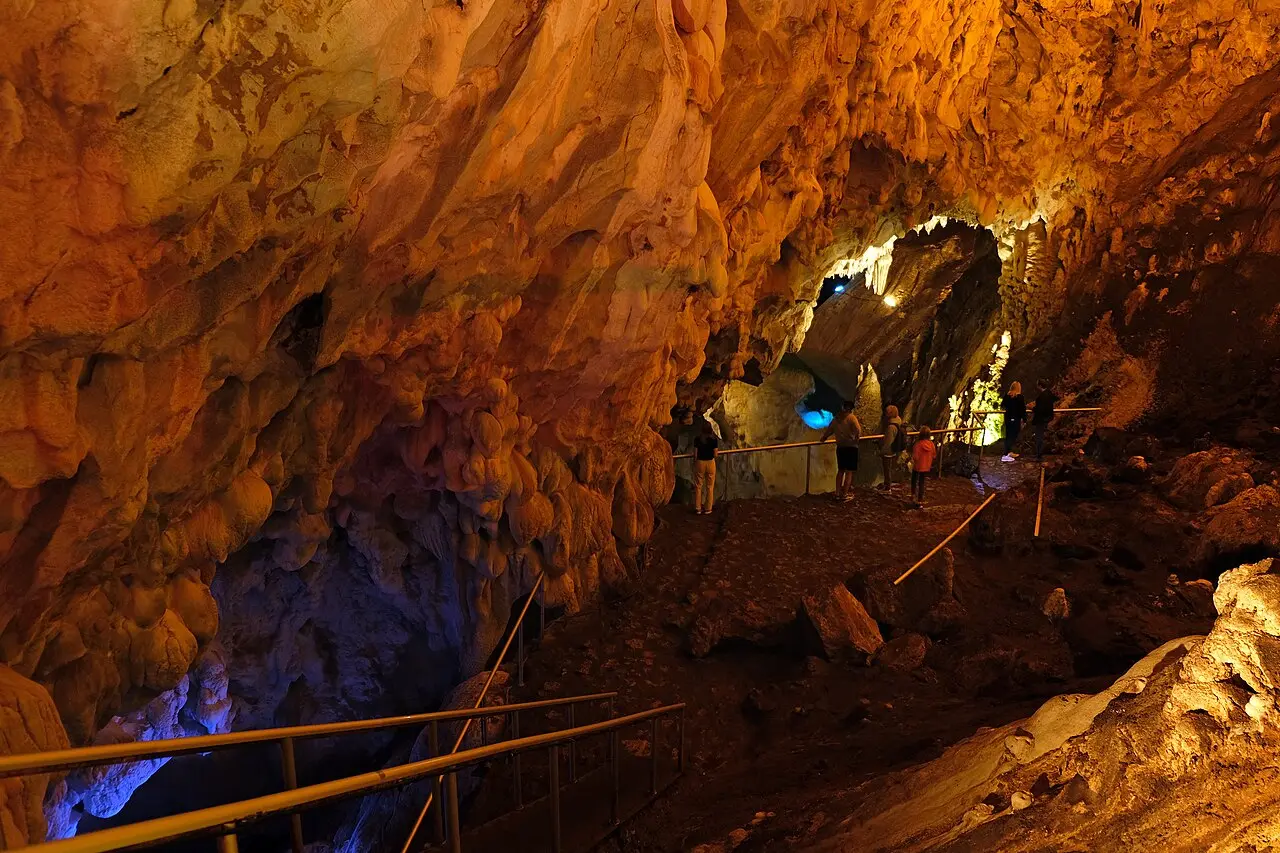
The boat to Vrelo Cave costs 500 denars (about 8.5 euro) at the operator’s own price list. Whether cave entry is included isn’t stated there, so ask at the jetty before you pay. Round-trip timing and time ashore still vary by boat - confirm at the jetty. Boats leave when they’ve got enough passengers rather than on a fixed timetable, and they run mainly in daylight, most often in the warmer months. Buy your ticket at the jetty; in peak summer there can be a wait, so go early.
St. Andrew monastery (Sveti Andrea)
A short, flat walk along the lakeside path from the dam brings you to the little Monastery of St. Andrew (Sveti Andrea, also written Sveti Andrija), perched right at the water’s edge beneath the cliffs. It was founded in 1389 by Andrija, a son of King Vukašin Mrnjavčević, and its modest church still holds fragments of medieval fresco painting from the 14th and 15th centuries. The setting - a stone church framed by the gorge and reflected in the still water - is one of the most photographed scenes in the canyon, and you’ll see why once you’re standing there.
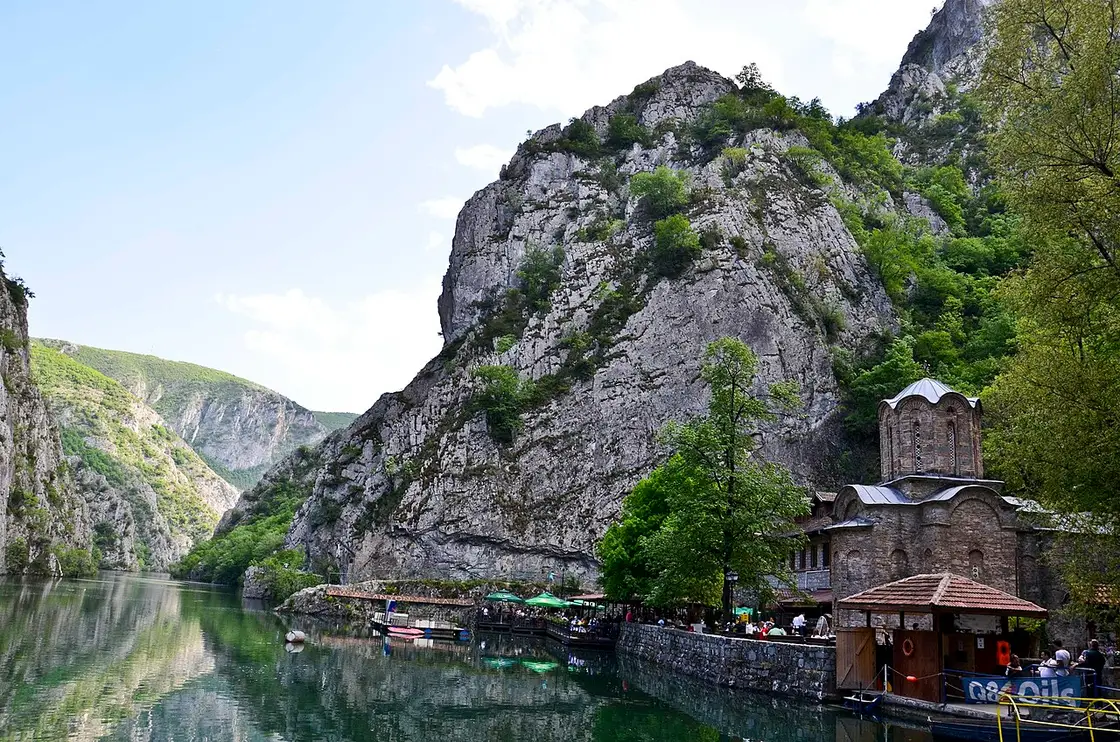
A few more medieval churches and chapels are scattered through the canyon, several reachable only on foot or by boat - Matka has been a place of monastic retreat for centuries.
Hiking the canyon trails
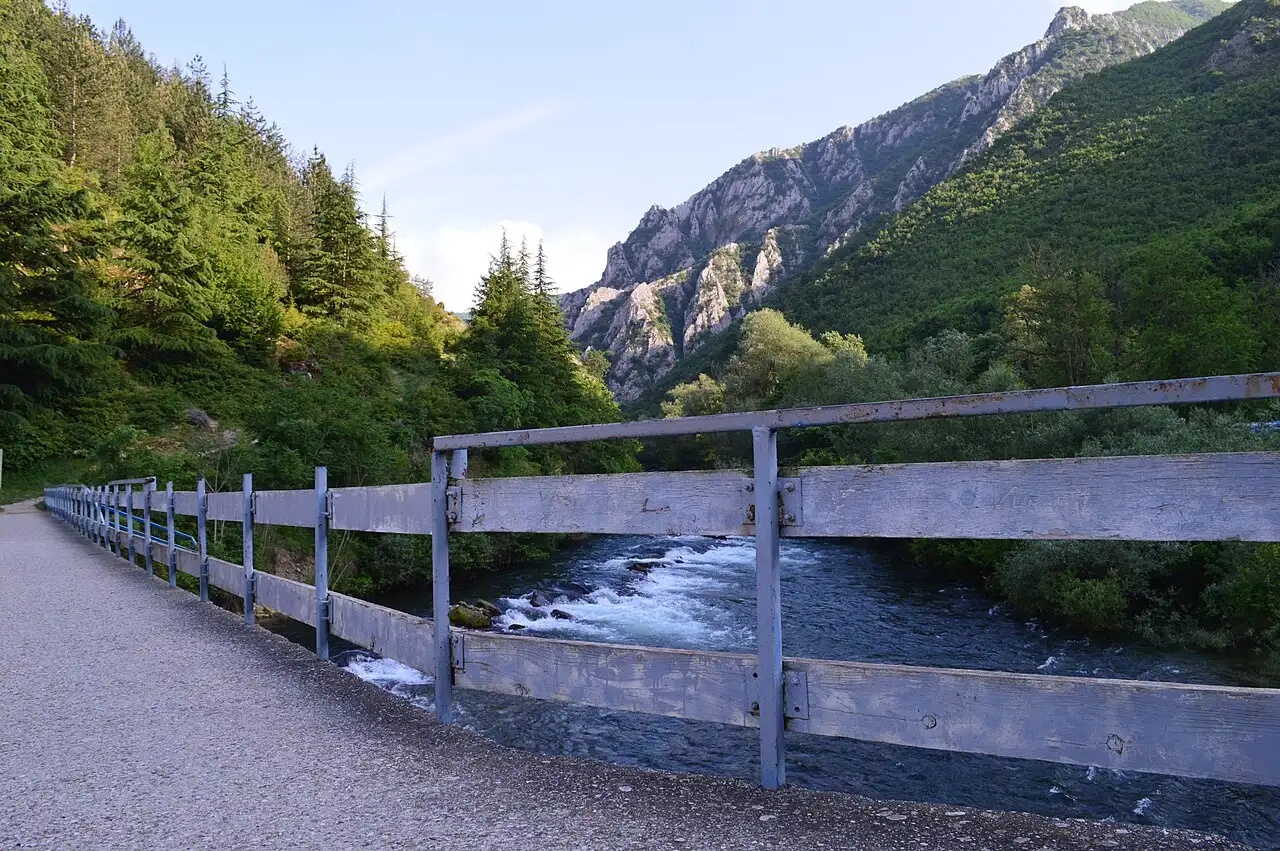
Matka is a fine spot for walking and hiking. The easiest route is the lakeside path that hugs the cliff from the dam past St. Andrew - partly a built boardwalk, partly a rocky trail - with the green water on one side and overhangs on the other. Beyond it, marked paths climb steeply into the hills toward higher chapels and viewpoints over the gorge; these are short but can be rough and exposed, so don’t wear flip-flops, and carry water in summer.
Kayaking and canoeing
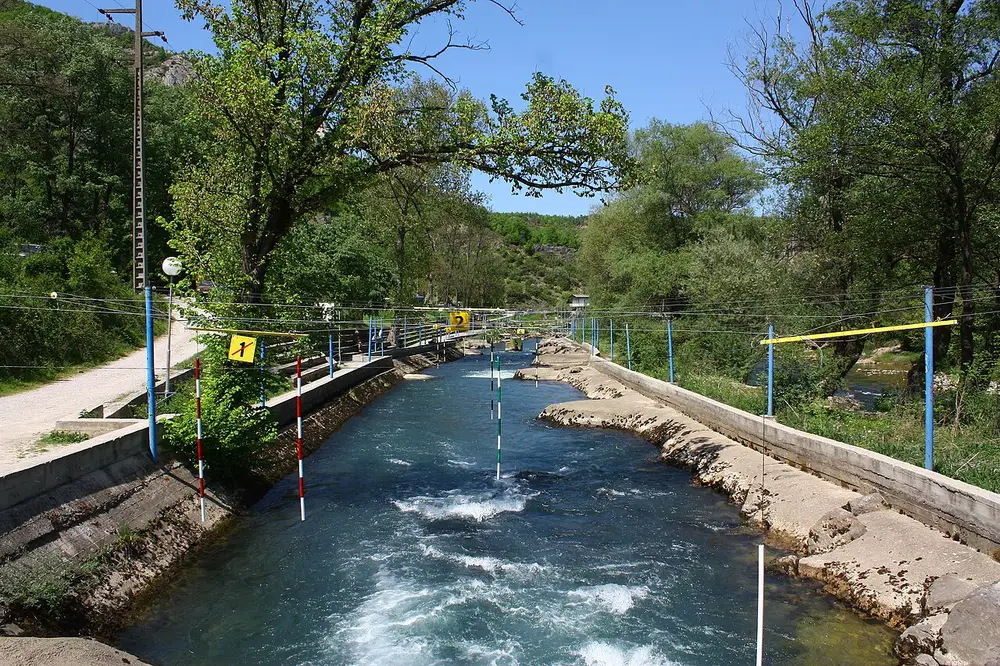
Matka is also North Macedonia’s home of whitewater and flatwater paddling. The calm reservoir is ideal for a relaxed paddle, with single and double kayaks for hire near the dam, while the faster Treska below it holds a slalom course that has hosted international kayak and canoe competitions. Even if you only rent a kayak for an hour, gliding through the gorge at water level - away from the boat queues - is the best way to feel the scale of the canyon, and that’s the bit most day-trippers skip.
How to get to Matka from Skopje
Matka lies about 17 km southwest of central Skopje.
| Option | Detail |
|---|---|
| Public transport | JSP city bus 60 from the Transport Center, or a taxi/rideshare - allow ~45-60 minutes by bus, ~25-30 by taxi |
| Private transfer, tour or rental car | A booked transfer or guided tour removes the planning and often bundles the boat and cave; a rental car adds free parking near the dam and the option to combine Matka with other sights - see our car rental guide |
There’s no entrance gate or fee for the canyon itself. For a full price-by-price comparison of getting here and what a whole day costs, see our Matka Canyon day trip guide. If you’re based further afield, Matka also slots neatly into a wider trip - it’s the first nature stop on our 7-day North Macedonia route. With a car it also pairs naturally with the mountains: our Skopje to Matka and Mavrovo loop does Matka as the warm-up before heading west to the sunken church and Bigorski, and returns to the capital without a change of hotel.
Prices and opening hours
The canyon is free to enter and open year-round in daylight; you only pay for the boat trip, the cave, kayak hire and refreshments. Boats run mostly on demand in daylight hours and are busiest from late spring through summer; outside the warm season they can be sparse or weather-dependent.
Costs are modest and paid on site in Macedonian denar (MKD) - the denar is steady against the euro at roughly 61.5 MKD to €1, so prices are easy to gauge in euros. The boat to Vrelo Cave costs 500 denars (about 8.5 euro) at the operator’s own price list. Cave entry isn’t listed on that sheet either, so ask at the jetty before you pay. Other on-site costs: 200-300 MKD for a single kayak or around 500 MKD for a double per hour, and roughly 35 MKD by card or app (50 MKD for a paper single) for the public bus 60 from the city. Rates and timetables change every season, so treat these as a guide and confirm at the jetty on the day. Bring cash: card payment isn’t reliable at the small kiosks and boats.
How long to spend at Matka
| Plan | Time | What you fit in |
|---|---|---|
| Quick visit | ~2 hours | Walk to St. Andrew, photos, a drink by the lake |
| Classic half-day | 3-4 hours | The above plus a boat trip to Vrelo cave |
| Full half-day+ | 4-5 hours | Boat, cave, a kayak or a longer hike, lunch |
A half-day (3-4 hours) is the sweet spot for most visitors and pairs perfectly with a day exploring the capital - see our guide to things to do in Skopje. Outdoor enthusiasts who want to hike and paddle can easily fill the best part of a day.
Practical tips
- Go early in summer. Matka is the capital’s favourite weekend escape; mornings are quieter, cooler and beat the boat queues.
- Bring cash in denar. Boats, the cave and kiosks take cash; cards are unreliable. Exchange in Skopje before you go.
- Wear proper shoes. The lakeside path is rocky in places and the upper trails are steep and exposed - not for flip-flops.
- Sun and water. There’s little shade on the lake; bring water, sunscreen and a hat in summer.
- Respect the monastery. St. Andrew is an active religious site - dress modestly and keep noise down inside.
- Combine it with the city. Matka is an easy add-on to a Skopje stay; deciding whether to come at all? See is North Macedonia worth visiting?
Read also
- Browse all attractions in North Macedonia
- Base yourself in the capital: things to do in Skopje
- Plan the wider trip in our North Macedonia planning guide
- The classic 7-day North Macedonia route opens with Matka
- Heading south after Skopje? See Lake Ohrid
- The capital’s other viewpoint: Mount Vodno & the Millennium Cross
- Where Matka ranks among the country’s walks: best hikes in North Macedonia
Photos
On the map
The map loads on click - to keep the page lightweight.
The map didn’t load. Check your connection and refresh the page.
Admission and opening hours
- Admission price
- Canyon free to enter. 2026 guide prices (pay on site, cash in denar): boat to Vrelo Cave 500 denars (about 8.5 euro) per the operator list; cave entry inclusion unclear; single kayak ~200-300 MKD/hour, double ~500 MKD/hour.
- Opening hours
- Outdoor area daytime year-round; boats run mainly in daylight, busiest in summer
Prices and boat times change seasonally - confirm at the jetty on the day.
Details checked: July 18, 2026
Distance
- Skopje ≈17 km · ~30 min by car / ~45-60 min by bus
- Ohrid ≈165 km · ~2.5 h
- Bitola ≈175 km · ~2.5-3 h
Read also

What to see · 14 min read
North Macedonia Monasteries: Six Worth the Drive
Updated · October 5, 2026Six monasteries in North Macedonia worth a detour - Nerezi, Lesnovo, Osogovo, Treskavec, Bigorski and Sveti Naum - by base town, with roads and stays.

What to see · 9 min read
Popova Šapka Ski Resort: Powder, Cats & Prices
Updated · October 5, 2026Popova Šapka above Tetovo: the 2025/26 ski pass prices, the six-seat chair, snowcat freeride on Šar, when the snow really arrives and how to drive up.

What to see · 9 min read
Skiing in North Macedonia: Resorts, Costs & Season
Updated · October 4, 2026Where to ski in North Macedonia: Mavrovo and Popova Šapka compared on lifts, height and pass prices, plus the small hills, the season and winter tyres.

What to see · 11 min read
Paragliding in Kruševo: Tandem Flights, Season & Prices
Verified · October 2, 2026Tandem paragliding in Kruševo, North Macedonia: what four local operators charge, the 1,420 m launch, season, weight limits and how to get there.