
Mavrovo National Park
Mavrovo National Park, North Macedonia: the sunken church of St. Nicholas, Bigorski Monastery, Mount Korab, Galičnik, skiing and the Balkan lynx.
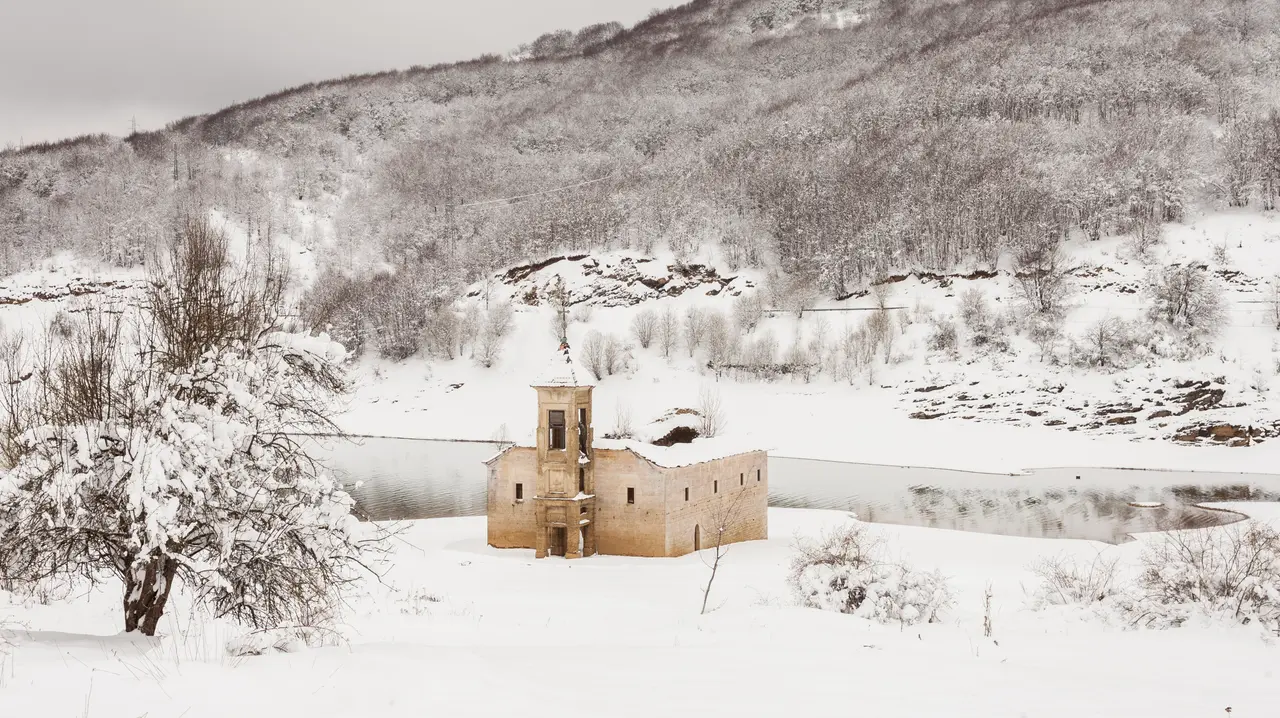
Mavrovo is North Macedonia’s largest and wildest national park - a vast sweep of mountains, forest and a glassy reservoir in the country’s far west, crowned by Mount Korab (2,764 m), the highest peak in the land. Its most famous sight is the “sunken church” of St. Nicholas, a stone church standing half-submerged in Lake Mavrovo that emerges and disappears with the water level. Add the spectacular Bigorski Monastery and its hand-carved iconostasis, the traditional mountain village of Galičnik, a ski centre, waterfalls and the country’s last stronghold of the Balkan lynx, and you have one of North Macedonia’s essential destinations. This guide covers what to see, when to go, where to stay and how to get there.
What is Mavrovo National Park?
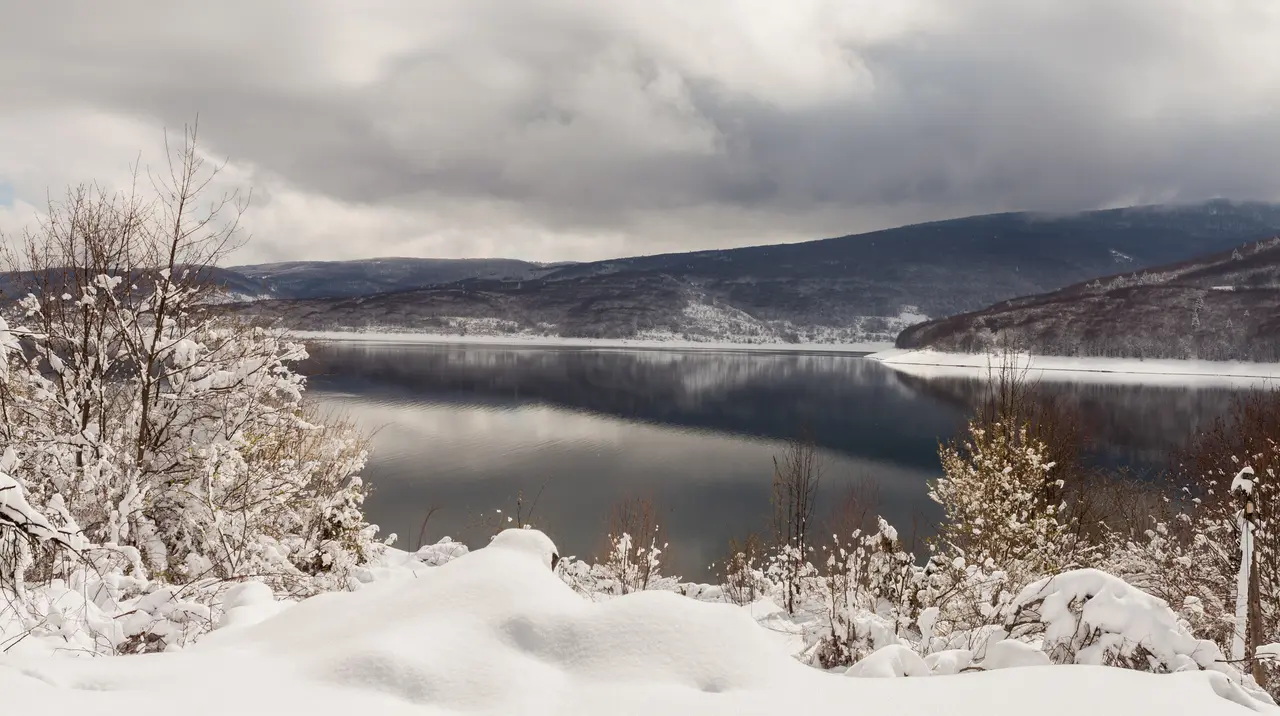
Established in 1949, Mavrovo protects around 731 km² (73,088 ha) of the western highlands - the largest of North Macedonia’s four national parks. It spreads across three great mountain systems, the Šar, Korab and Bistra ranges, divided by the deep gorge of the Radika river, which runs more than 25 km through the park beneath cliffs over 300 m high. The scenery ranges from the alpine summits along the Albanian border down through beech and pine forest to the shores of the reservoir, and it’s superb hiking, skiing and wildlife country.
What to see in Mavrovo
The sunken church of St. Nicholas
The park’s signature image is the Church of St. Nicholas, standing alone in the water by Lake Mavrovo. The church was built in 1850, but when the reservoir was created and filled in the early 1950s - damming the Mavrovo river for hydroelectric power - the village around it was flooded and the church submerged in 1953. Its solid stone walls and bell tower survived, and now it stands part-in, part-out of the lake. When the water is low, in dry spells, you can walk right out to it across the exposed lakebed; when the lake is high, it sits marooned in the shallows, mirrored in the water. It’s one of the most photographed sights in the country, and unforgettable under snow.
Bigorski Monastery
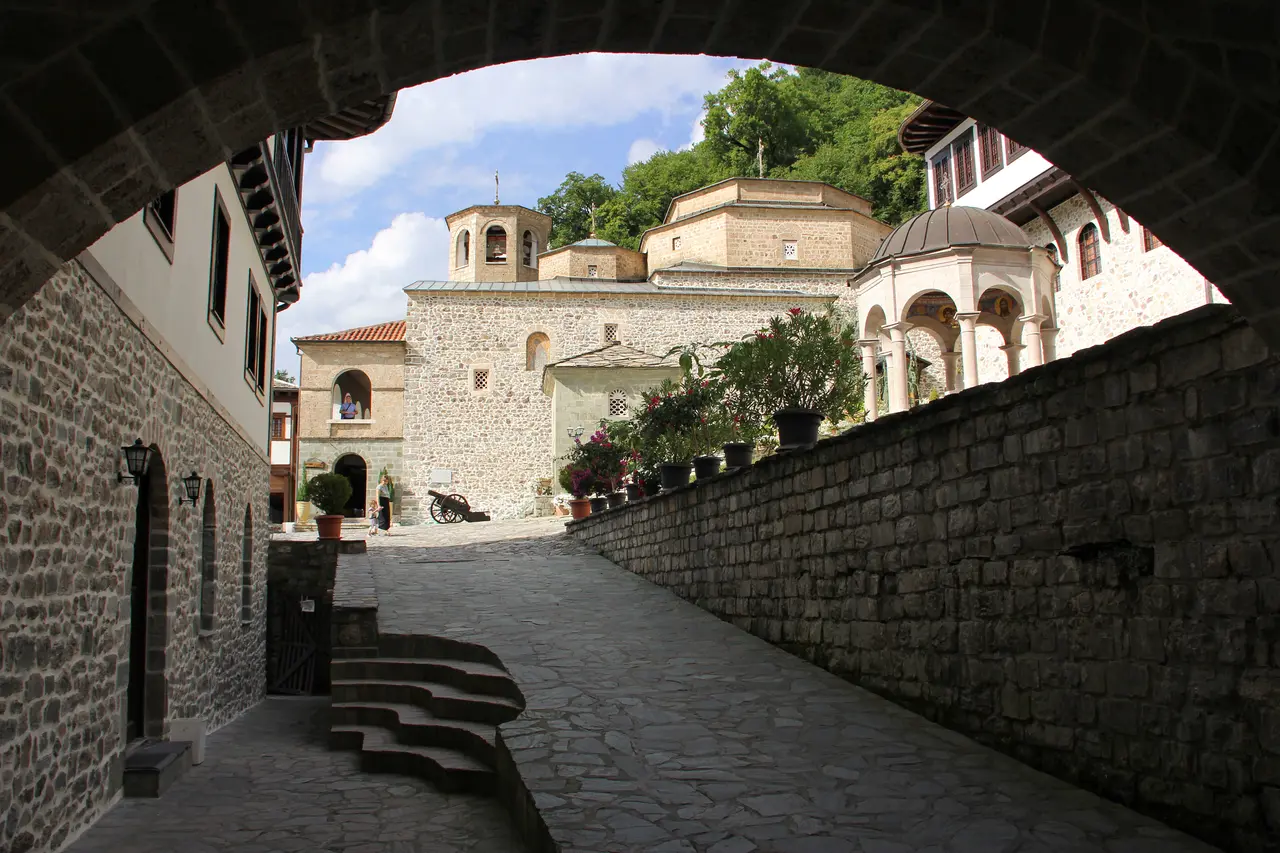
On the slopes above the Radika sits the Monastery of St. John the Baptist - Sveti Jovan Bigorski, one of the most important monasteries in North Macedonia. Founded in 1020 and rebuilt over the 18th and 19th centuries after periods of ruin, its treasure is the iconostasis: a vast wall of walnut carved between 1829 and 1835 by the celebrated Mijak woodcarvers - Petre Filipovski-Garkata, Makarije Frčkovski and Avram Dičov among them - into a dense forest of biblical scenes, animals, birds and foliage, regarded as some of the finest woodcarving in the Balkans. The monastery also keeps a venerated icon of St. John the Baptist and is an active, working community; dress modestly and check visiting arrangements. Our dedicated Bigorski Monastery guide has the full history, the 2009 fire and how to reach it from the road below.
Mount Korab
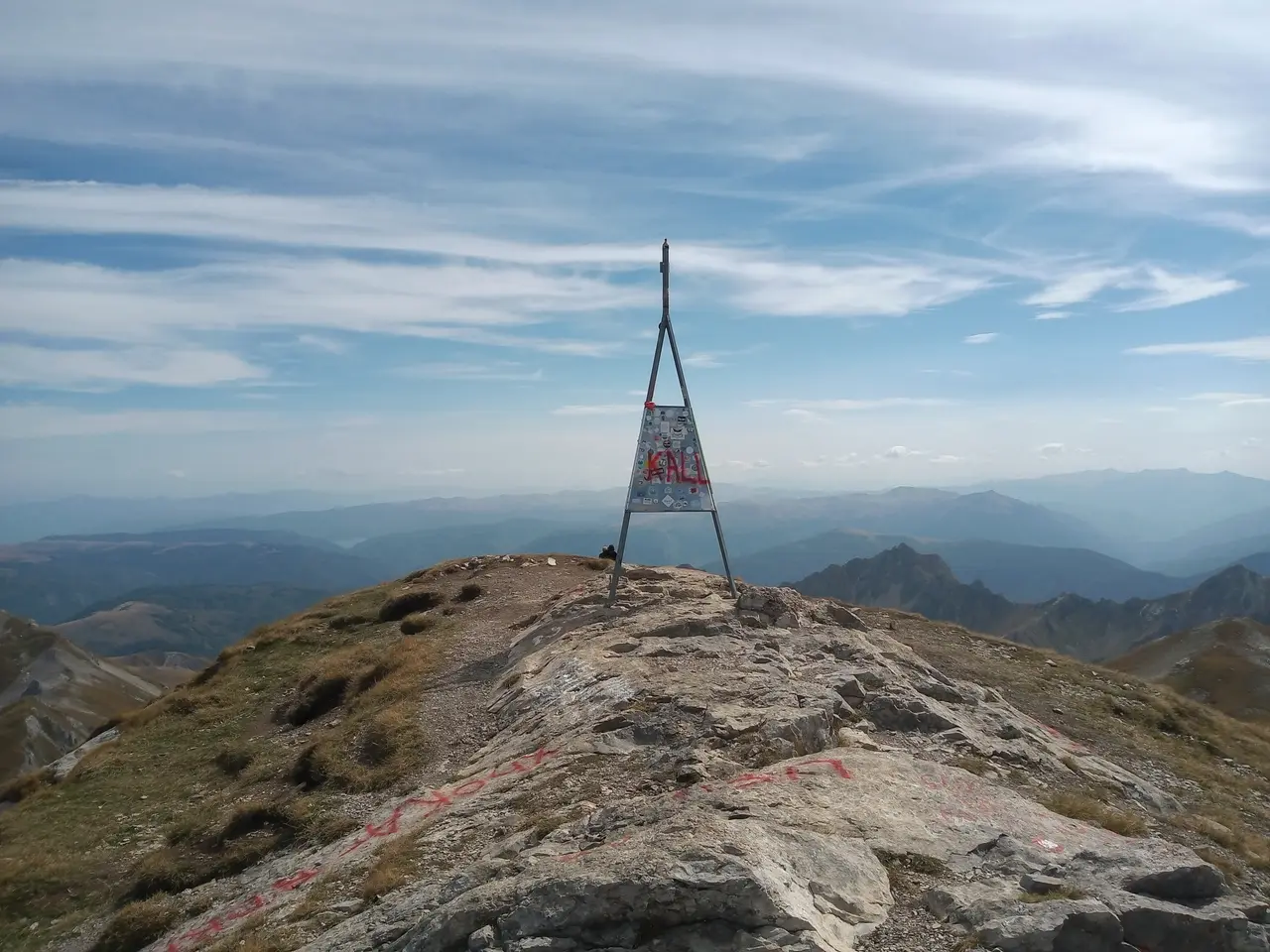
Straddling the Albanian border at the western edge of the park rises Mount Korab (Golem Korab), at 2,764 m the highest peak of both North Macedonia and Albania. It’s a serious high-mountain hike rather than a casual walk, usually done with the long-running annual “Korab” mass ascent, organised each year around Independence Day (8 September) - though the exact date shifts, so check the current year. The summit ridge and the wild border country around it are some of the most dramatic landscapes in the Balkans.
Galičnik and the Galičnik Wedding
High on Bistra at around 1,400-1,500 m is Galičnik, a beautiful, near-abandoned Mijak mountain village of stone houses stacked on a steep slope - once a thriving sheep-herding community, now alive mainly in summer. Its big day is the Galičnik Wedding (Galička Svadba), a folk festival held each year on the weekend nearest 12 July (Petrovden), when a couple is married in full traditional Galička dress and the men perform the thunderous Teškoto dance. The exact 2026 dates change year to year - check before planning around it.
Duf Waterfall
Near the village of Rostuše, on the western side of the park beneath Dešat, the Duf Waterfall drops some 23-26 m through a rocky gorge (sources differ on the exact height). It’s an easy, rewarding short walk and one of the prettiest spots on the Radika side of the park.
Skiing and winter
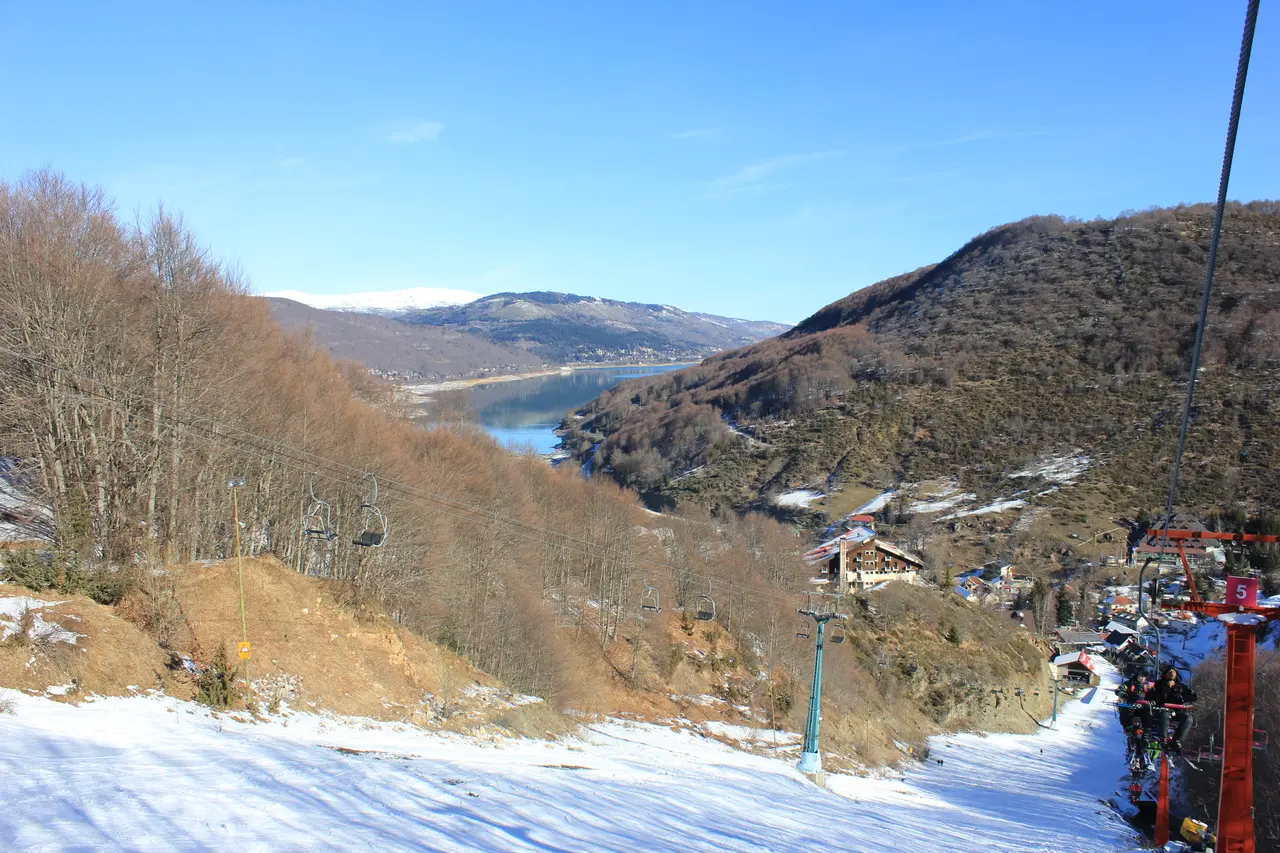
Mavrovo is North Macedonia’s main winter destination. The in-park ski centre is Zare Lazarevski (the Mavrovo resort), spread up the slopes of Bistra above the lake between roughly 1,255 and 1,878 m, with around 15 km of pistes - gentle higher up, steeper toward the valley. Snow season runs roughly December to March; for lifts, ski-pass prices and season dates, see our full Mavrovo ski resort guide. (Note that Popova Šapka, above Tetovo, is a separate ski area in the neighbouring Šar mountains, not part of Mavrovo itself.)
Wildlife: the Balkan lynx
Mavrovo is the most important refuge in the country for the Balkan lynx (Lynx lynx balcanicus), one of the rarest cats in Europe - critically endangered, with only an estimated 35-40 individuals left in North Macedonia, most of them here. It’s a national symbol, famously pictured on the 5-denar coin, and although you’re extremely unlikely to see one, knowing it’s out there says a lot about how wild this park still is. The forests also hold brown bear, wolf and chamois, and the Radika is home to native Balkan trout.
How to get to Mavrovo
From Skopje. Mavrovo lies about 100 km from the capital, roughly 1.5-2 hours by car, on the road west through Tetovo and Gostivar and up into the mountains. There’s no quick public-transport link into the park itself, so a rental car or an organised tour is by far the easiest way to explore - see our renting a car in North Macedonia guide, and getting around North Macedonia for buses to the nearer towns. The daily bus, tolls and the winter-tyre law for this road are on Skopje to Mavrovo by bus, car and transfer. If you want the park as a proper road trip rather than a single sight, our Skopje to Matka and Mavrovo loop strings the sunken church, Bigorski and Galičnik together with Matka Canyon and loops back to Skopje over one or two days.
| Route | Distance | Time |
|---|---|---|
| Skopje → Mavrovo | ~100 km | ~1.5-2 h via Tetovo & Gostivar |
| Tetovo → Mavrovo | ~60 km | ~1 h via Gostivar |
| Ohrid → Mavrovo | ~110 km | ~2-2.5 h |
Distances and times are approximate, and mountain roads can be slow in winter - check conditions before you set off.
Where to stay
Most accommodation clusters around Mavrovo village and the lakeside near the ski centre, where you’ll find hotels and lodges, with guesthouses in the surrounding villages (Rostuše and others, and seasonally Galičnik). It works well as a one- or two-night base, whether you’re skiing in winter or hiking and monastery-hopping in summer. Prices are in Macedonian denar (MKD) and good value; carry some cash for villages and smaller places.
When to go
- Summer (June-September): the best window for hiking - Korab, Bistra and the high trails - plus the Galičnik Wedding in mid-July and the Korab climb in early September.
- Autumn: the beech forests turn gold; quiet and beautiful.
- Winter (December-March): skiing at Zare Lazarevski, and the sunken church at its most photogenic under snow.
- Spring: high water on the Radika and at Duf Waterfall.
For the bigger seasonal picture, see our best time to visit North Macedonia guide, and to plan costs the North Macedonia trip cost guide.
Read also
- Browse all attractions in North Macedonia
- The gateway town: things to do in Tetovo
- Another natural wonder near the capital: Matka Canyon
- The UNESCO lake: Lake Ohrid
- Korab and the country’s other great climbs: best hikes in North Macedonia
- Fit it into the 7-day North Macedonia route
Photos
On the map
The map loads on click - to keep the page lightweight.
The map didn’t load. Check your connection and refresh the page.
Admission and opening hours
- Admission price
- Park entry is 100 MKD per person per day, payable on the park's ticket page; local residents don't pay. The ski centre, monastery donations and guided hikes are paid separately.
1 September to 31 October 2026: because of the fire risk, the forests are open only to visitors who register with the park first (in person in Mavrovi Anovi or online), and the fine is EUR 1,500-2,000. The sunken church is only walkable when the lake is low; the Korab climb and Galičnik Wedding are annual events with dates that change each year - check current.
Details checked: September 26, 2026
Distance
- Skopje ≈100 km · ~1.5-2 h by car via Tetovo & Gostivar
- Ohrid ≈110 km · ~2-2.5 h
Read also

What to see · 14 min read
North Macedonia Monasteries: Six Worth the Drive
Updated · October 5, 2026Six monasteries in North Macedonia worth a detour - Nerezi, Lesnovo, Osogovo, Treskavec, Bigorski and Sveti Naum - by base town, with roads and stays.

What to see · 9 min read
Popova Šapka Ski Resort: Powder, Cats & Prices
Updated · October 5, 2026Popova Šapka above Tetovo: the 2025/26 ski pass prices, the six-seat chair, snowcat freeride on Šar, when the snow really arrives and how to drive up.

What to see · 9 min read
Skiing in North Macedonia: Resorts, Costs & Season
Updated · October 4, 2026Where to ski in North Macedonia: Mavrovo and Popova Šapka compared on lifts, height and pass prices, plus the small hills, the season and winter tyres.

What to see · 11 min read
Paragliding in Kruševo: Tandem Flights, Season & Prices
Verified · October 2, 2026Tandem paragliding in Kruševo, North Macedonia: what four local operators charge, the 1,420 m launch, season, weight limits and how to get there.