
Airport to City by Bus: 10 Capitals Compared
What the ride from the airport into town costs in 10 European capitals, checked with the operators: free in Belgrade, 33 cents in Tbilisi, 4.29 in Tirana.
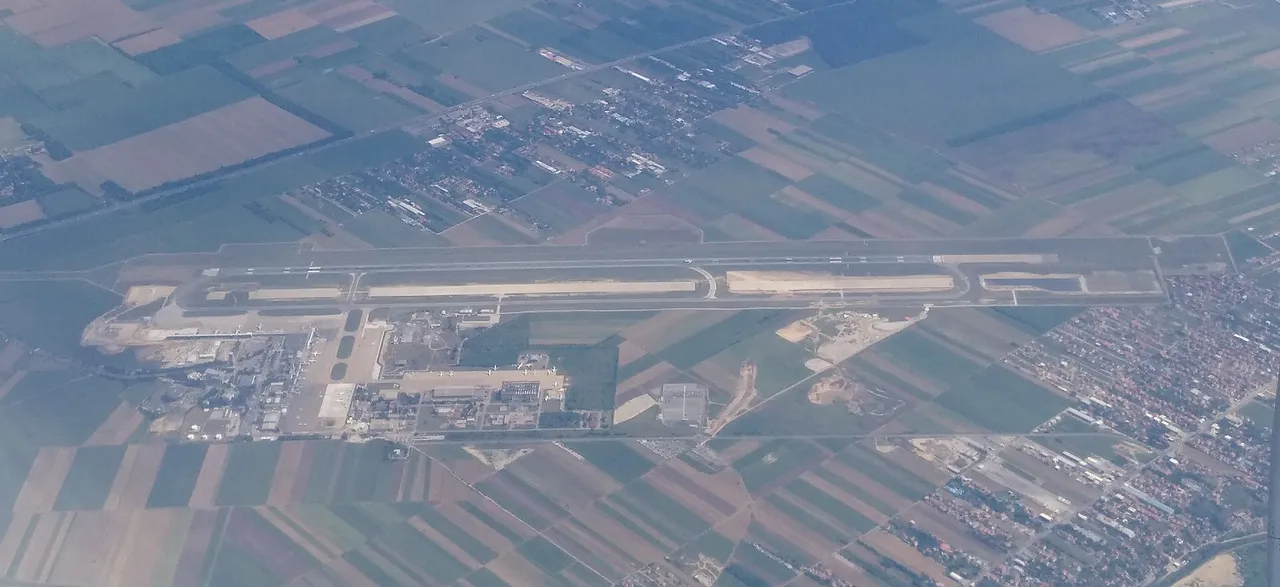
Landing in this part of Europe, the ride from the airport into town costs somewhere between nothing at all and 4.29 euros. That’s the whole range across ten capitals, and it’s the kind of spread that catches people out in both directions: some arrive braced for a rip-off and find a metro ticket cheaper than a coffee, others assume everything here is cheap and hand a taxi driver fifty euros for a trip the bus does for one.
We went to the operators for every figure below, not to the aggregators, because the aggregators are where stale prices go to live forever. All ten numbers were checked on 8 August 2026 against the company or authority that actually sets the fare - the metro operator in Sofia, the airport’s own passenger guide in Tbilisi and Skopje, the published tariff PDF in Split, the city’s tourism authority in Belgrade.
The table
Cheapest public option from the main international airport into the city centre, one person, one way. Local currency is what you’ll actually pay; euro conversions use rates dated 7 August 2026.
| City | How | Local price | Converted |
|---|---|---|---|
| Belgrade | city bus 72 | free | free |
| Tbilisi | bus 337 | 1 GEL | €0.33 |
| Bucharest | express bus 100 | 3 lei | €0.57 |
| Yerevan | bus 201 | 300 AMD | €0.71 |
| Sofia | metro line M4 | 0.80 EUR | €0.80 |
| Sarajevo | trolleybus 103 | 2.20 KM | €1.12 |
| Podgorica | airport bus | 1.50-2.90 EUR* | €1.50-2.90 |
| Split | bus 37 into the city | 3.00 EUR | €3.00 |
| Skopje | Erak shuttle | 199 MKD | €3.24 |
| Tirana | LU-NA bus | 400 ALL | €4.29 |
One person, one way, cheapest public option. Sort by any column; switch the converted column to USD or GBP. Local price is what you actually pay at the counter.
Link to this table:
https://macedoniaguidebook.com/transport/airport-to-city-price-index/
* Podgorica is the one gap. The airport lists its bus operators - BTC Zeta, MS Tours and Zejdin - but publishes no fare, and the operators don’t post a central price list either. The range comes from ticket sellers rather than from the carriers, so treat it as indicative. Podgorica’s own city buses are a separate service at 0.90 EUR for 90 minutes.
All twenty cities we have checked, Europe and North America together, sit in one sortable table on our airport transfer cost comparison page.
Belgrade really is free, and that’s not a typo
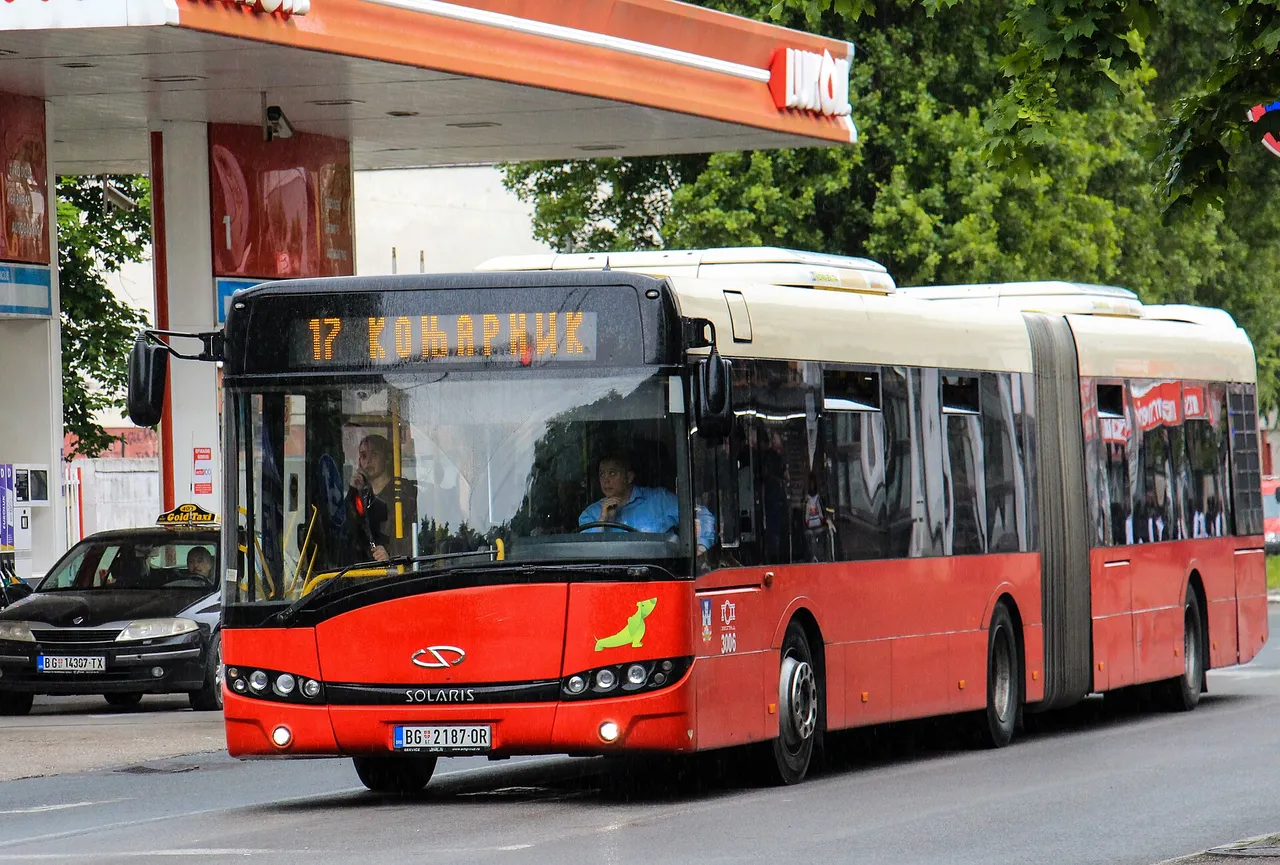
Since 1 January 2025, public transport in Belgrade has been free for everyone - buses, trams, trolleybuses and the BG Voz suburban trains, with no ticket, no card and no tourist exception. That’s the city’s own tourism authority stating it, not a traveller’s anecdote, and at roughly 1.7 million people Belgrade is among the biggest cities anywhere to have scrapped fares outright. It applies to the ride in from the airport too: city bus 72 runs from the terminal to Zeleni Venac, and you simply get on.
There’s one asterisk worth knowing before you plan around it. The A1 airport minibus, which is faster and drops you at Slavija Square, still charges - the free-travel rule covers the standard city and suburban network, not the express airport service. So the free option is the slower one, which is the trade-off you’d expect. Our guide to Belgrade airport transfers on Serbia Guidebook walks through both.
Under a euro: Tbilisi, Bucharest, Yerevan
Three cities land under the one-euro mark, and each does it differently.
Tbilisi is the cheapest fare on the list at 1 GEL, about 33 cents, and that buys 90 minutes of travel rather than a single hop - so the bus 337 out of the airport plus your onward connection is one ticket. The catch is the payment method: the 90-minute deal applies to a Metro Money card or a contactless bank card, and paying cash on board doesn’t get you the transfer. Cards cost 2 GEL at metro ticket offices. Details are in our Tbilisi airport transfer guide on Georgia Guidebook.
Bucharest charges 3 lei for a 90-minute journey on express bus 100, which works out at 57 cents. There’s also a train from the airport to Gara de Nord, quicker and only a couple of lei more, though the rail operator doesn’t publish that fare as clearly as STB publishes the bus tariff - our Bucharest airport guide covers both.
Yerevan is the one place where you need to know your route number. Bus 201, run by Elite Bus, costs 300 AMD and takes about 26 minutes to Yeritasardakan. Bus 100 costs 500 AMD, but it runs hourly through the night and takes cards, which makes it the only sane cheap option after 22:00. Get on the wrong one and you’ve either overpaid by 200 dram or you’re stuck without a night service. It’s laid out properly in our Zvartnots airport guide on Armenia Guidebook.
Sofia has the most civilised arrival in the region
The M4 metro runs from a station inside Sofia Airport straight into the centre for 0.80 EUR, and the ticket stays valid across the whole metro network, so a change of line costs nothing extra. No queue, no negotiating, no waiting for a shuttle to fill up - you walk down from arrivals and get on a train.
For a traveller landing in an unfamiliar country at the end of a long day, that combination of cheap, obvious and hard to get wrong is worth more than the eighty cents suggests. Our Sofia airport transfer guide on Bulgaria Guidebook has the timings and the luggage rules.
One to three euros: Sarajevo, Podgorica, Split
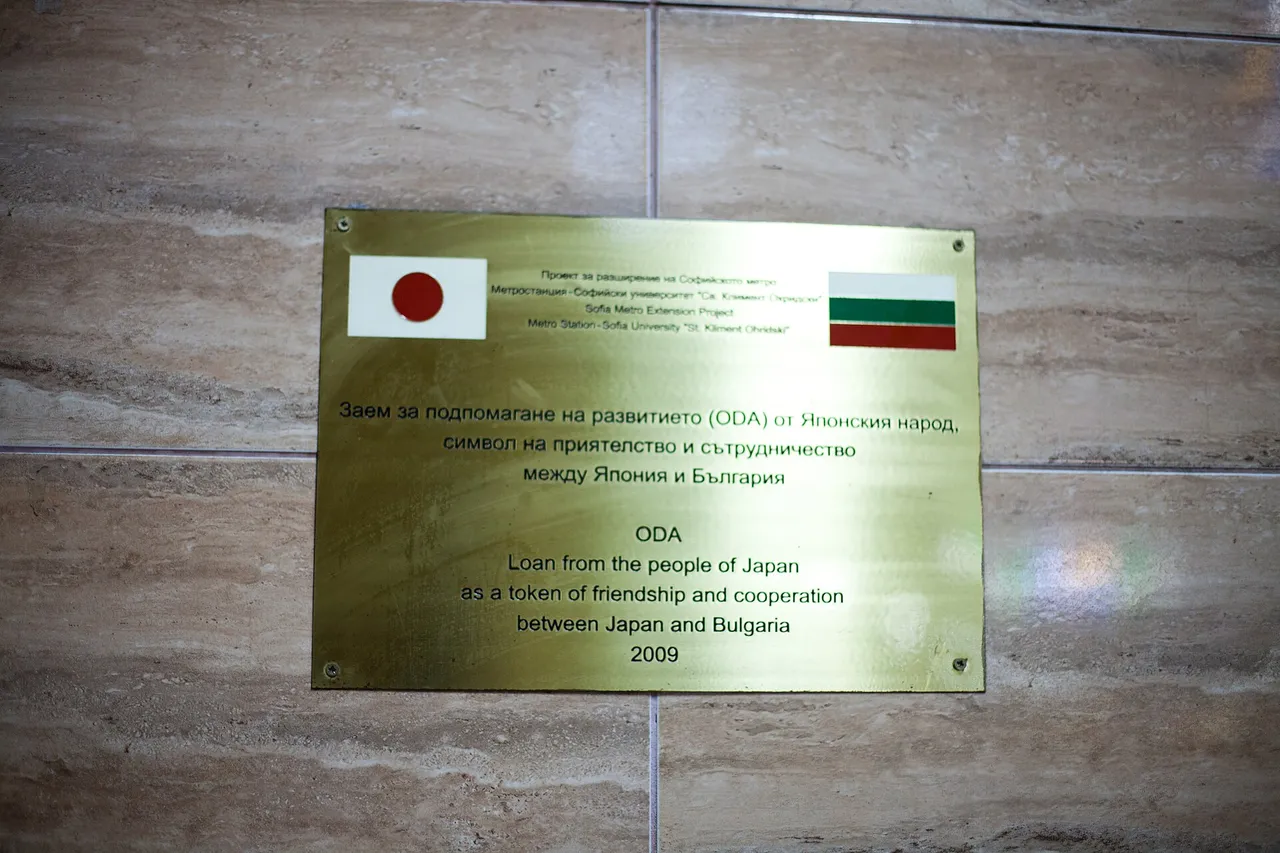
Sarajevo costs 2.20 KM, about 1.12 euros, on trolleybus 103 or a city bus - and that figure is worth stating plainly, because a lot of travel writing still quotes 1.60 or 1.80 KM. GRAS raised the fare in July 2025 and the old numbers simply never got updated. The other catch is geography rather than money: the cheap lines start in Dobrinja, a few minutes’ walk from the terminal, and they stop running in the evening. Our Sarajevo airport guide on Bosnia Guidebook has the walk and the timings.
Split is the one where the answer depends on where you are actually going, and it is easy to quote the wrong number. Promet runs line 37 along the Kastela coast past the terminal, and the operator prices the two directions separately on its own airport page: 3.00 EUR into Split, a fifty-minute ride, and 2.50 EUR to Trogir, ten minutes the other way. The zonal fare table is where the confusion starts - it lists the Kastela zone at 2.00 EUR, which is a shorter hop than the one into the city. There’s also a private airport shuttle at 10 EUR, which makes sense with luggage and no sense without it - both are compared in our Split airport guide on Croatia Guidebook.
Podgorica is the gap in the data, as noted above. If you’re heading for the coast rather than the capital - which most people flying into Podgorica are - the relevant run is the one to Budva, roughly 65 km and a different calculation entirely; our Podgorica to Budva guide on Montenegro Guidebook does the maths.
The expensive end is still cheap: Skopje and Tirana
Skopje tops the list at 199 MKD, about 3.24 euros, on the Erak Transporter shuttle - the airport’s official bus operator. It’s a proper airport coach rather than a city bus, it’s timed to flights, and it takes 35 to 45 minutes into town. Skopje Airport is 23 km out in Petrovec, which is a longer run than most on this list, and the airport taxi to the centre is a published fixed fare of 1,500 MKD, about 25 euros. The full breakdown is in our guide to getting from Skopje Airport to the city centre. Fixed fares like that are worth confirming before you get in the car - see the taxi-scam basics for North Macedonia.
Tirana is the most expensive at 400 ALL, about 4.29 euros, on the LU-NA bus. What you get for it is the best timetable in this table by a distance: hourly, in both directions, 24 hours a day, seven days a week. Nowhere else on the list runs a cheap airport bus through the night, which means Tirana is the one city where a 3 a.m. landing doesn’t force you into a taxi. Our Tirana airport transfer guide on Albania Guidebook covers the pick-up point behind the Opera.
For comparison: what the same ride costs in London
The point of the table isn’t that the region is cheap in the abstract. It’s the size of the gap.
To compare fairly, we should take London’s cheap option, not its premium one - the same way every figure in the table above is the cheapest public route into town.
That’s the Elizabeth line, and it costs from 13.90 GBP into Zone 1, roughly 16 euros - with no off-peak escape, because TfL charges peak fares on every Heathrow journey that starts, ends or passes through Zone 1, whatever the hour. It’s the sensible way in for most Londoners: it runs into the centre and beyond, and plenty of people find it more convenient than the express, not just cheaper. (The premium option, Heathrow Express, is 26 GBP on the day or 10 GBP booked a month ahead - worth knowing, but it isn’t the fair benchmark.)
So, cheap option against cheap option: London’s 16 euros is about fifty times the Tbilisi bus, twenty-eight times the Bucharest bus, and infinitely more than Belgrade, where the answer is zero. Even Tirana, the priciest arrival in this table, is under a third of it.
The gap is smaller than a Heathrow Express comparison would suggest - and it’s still enormous.
When the cheap option is the wrong one
Three situations turn the numbers upside down, and they’re the same three everywhere on this list.
You land after the last bus. Only Tirana runs its cheap airport bus around the clock, and Yerevan’s route 100 keeps an hourly night service. Everywhere else the saving evaporates somewhere between 22:00 and midnight, and a taxi or a pre-booked transfer is the only thing moving.
You’re not travelling light. A trolleybus with a 10-minute walk at the start of it is a different proposition with two suitcases and a tired child. Split’s fifty-minute crawl along the Kastela coast stops looking like a bargain the moment you’re wrestling luggage onto a busy city bus.
There are three or four of you. Per person, the bus wins every time. For a group, a fixed-price transfer often lands within a few euros of four separate tickets while dropping you at the door, and a hire car starts to make sense if you’re heading out of the city anyway - the desks at Skopje are covered in our guide to car hire at Skopje Airport.
If North Macedonia is where you’re landing, the airport bus is only the first leg. What the buses, trains and shared taxis cost between towns once you’re here is a separate calculation, and our guide to getting around North Macedonia does it properly.
How we checked this
Every fare above came from the body that sets it: the transport operator, the airport’s own passenger information, or the city authority. Where a figure exists only on aggregator sites or travel blogs, we’ve said so rather than dressed it up - that’s the case for Podgorica’s airport bus and for the Bucharest airport train, and both are flagged in the table and the text.
That distinction matters more than it sounds. Sarajevo’s fare has been wrong across a good chunk of the travel web for over a year, because the operator raised it in mid-2025 and nobody went back to check. Prices in this table were verified on 8 August 2026; fares change, so check before you travel, and if you spot one that’s drifted, we’d rather hear about it than keep repeating it.
Currency conversions use reference rates dated 7 August 2026. The Bosnian mark is fixed to the euro by currency board at 1.95583, and the Macedonian denar has held near 61.5, so those two conversions are stable. The lari, lei, dram and lek float, so the euro figures for Tbilisi, Bucharest, Yerevan and Tirana will drift by a few cents either way.
Photos
Read also

Transport · 13 min read
Skopje to Mavrovo 2026: Bus 480 MKD, 96 km, Winter Tyres
Updated · September 26, 2026Skopje to Mavrovo: 96 km, about 1h45 by car, one 09:34 bus for 480 MKD (730 MKD return), tolls, and the 15 Nov-15 Mar winter-tyre law. Checked Sep 2026.

Transport · 12 min read
North Macedonia Border Crossings: A Driver's Guide
Updated · October 3, 2026North Macedonia border crossings to Albania, Greece, Bulgaria, Serbia and Kosovo: which to use, queue snapshots and how to check them live, the green card.

Transport · 10 min read
Skopje to Tetovo Bus 2026: 200-250 MKD, 40-50 Min, Timetable
Updated · September 26, 2026Skopje to Tetovo: 45 km, bus 200-250 MKD (about €3.25-4.06) in 40-50 minutes from the Transportation Center, fares read 26 Sept 2026, and the A2 drive.

Transport · 10 min read
Flights to North Macedonia: SKP & OHD Routes
Verified · August 28, 2026Fly into Skopje (SKP) or Ohrid (OHD) in 2026: Wizz Air 35-route SKP base, which Ohrid seasonals are already ending, and who else flies - checked Aug 2026.