
Skopje Fortress (Kale): Views, History and Visiting
Skopje Fortress (Kale) above the Old Bazaar: no official hours found, 14 minutes on foot from the Stone Bridge, its history and the view from the walls.
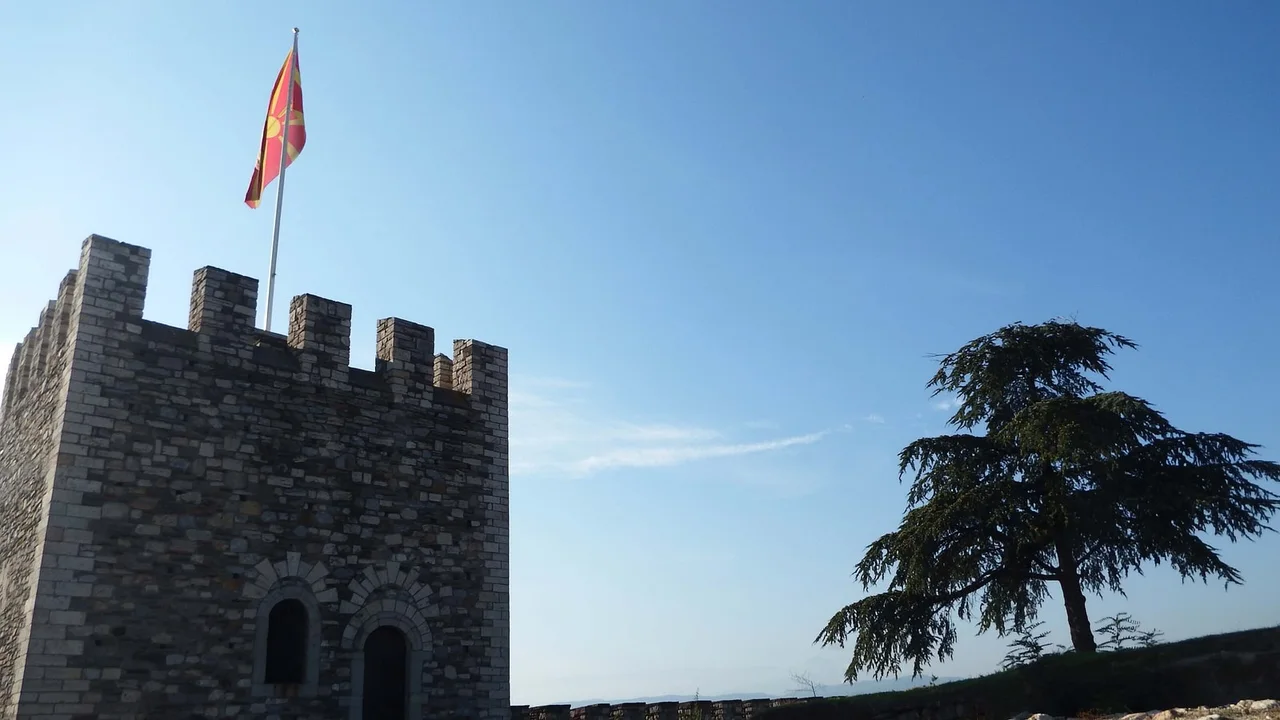
Skopje Fortress, known locally simply as Kale, is the walled hill above the Old Bazaar, about a 14-minute uphill walk from the Stone Bridge, and the hours and prices you’ll find online come from third-party listings that contradict each other. That sounds like a problem and mostly isn’t: the grounds work like a public park with ruins and a good view of how Skopje is laid out, so plan for daylight and footwear, not a timetable.
Why “Kale Fortress” says the same thing twice
Start with the name. Kale is the Turkish word for fortress, so “Kale Fortress” is, strictly, “Fortress Fortress”. Macedonians just say Kale, and Skopje itself uses the fortress as a symbol: it’s on the city’s coat of arms, which is also built into the city flag.
The hill has been used since the Neolithic, and the first fortress is dated to the 6th century, thought to be the work of Emperor Justinian I. The stone came from the nearby Roman town of Skupi, which was wrecked by an earthquake in 518, so the oldest walls are partly recycled Roman masonry with Latin inscription fragments in them. Further building followed in the 10th and 11th centuries.
Two moments give the place its weight. In 1346 Stefan Dušan took the title of emperor at Skopje and moved the capital of his empire here. And in 1660 the Ottoman traveller Evliya Çelebi described a fortified city with double walls and seventy bastions, built of chipped stone that shone as if polished (more on his account below). Compare that with what stands today and you’ll understand why the place feels like a ruin with ambitions: the 1963 earthquake brought down much of it, and serious excavation only started in late 2006.
What’s left, and what the digs found
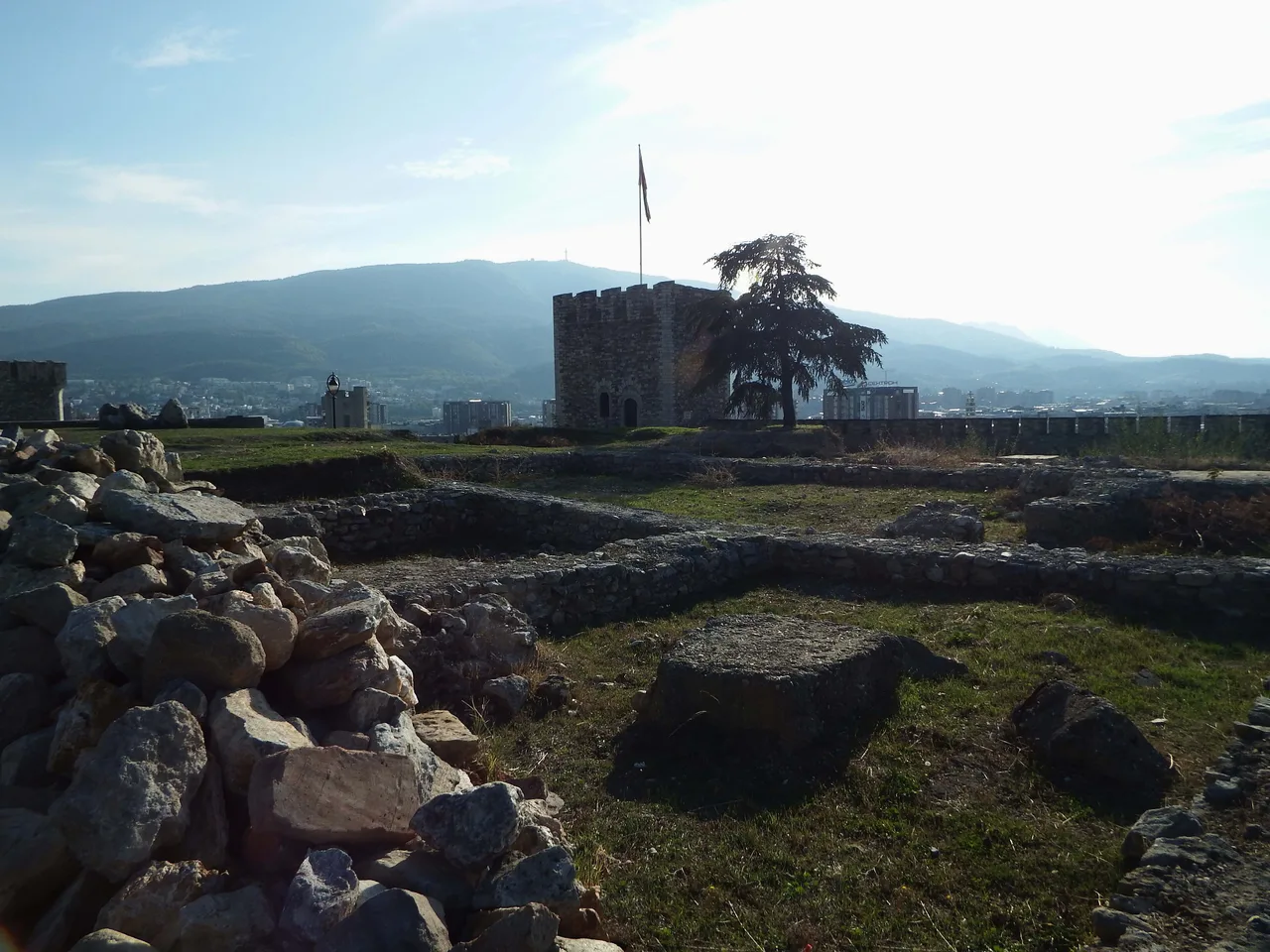
What survives are stretches of wall and a few towers, enclosing a landscaped interior with excavated foundations. The digs turned up real finds: in May 2010 archaeologists unearthed a large stash of Byzantine coins, and foundations of a 13th-century church came out of the ground inside the walls.
The church is the part with an uncomfortable footnote. A project to rebuild it as a museum became a political flashpoint, and a confrontation at the site in February 2011 left around ten people injured, including two police officers. The quiet interior hides a recent history that’s more contested than it looks.
From the walls: the layout of the city
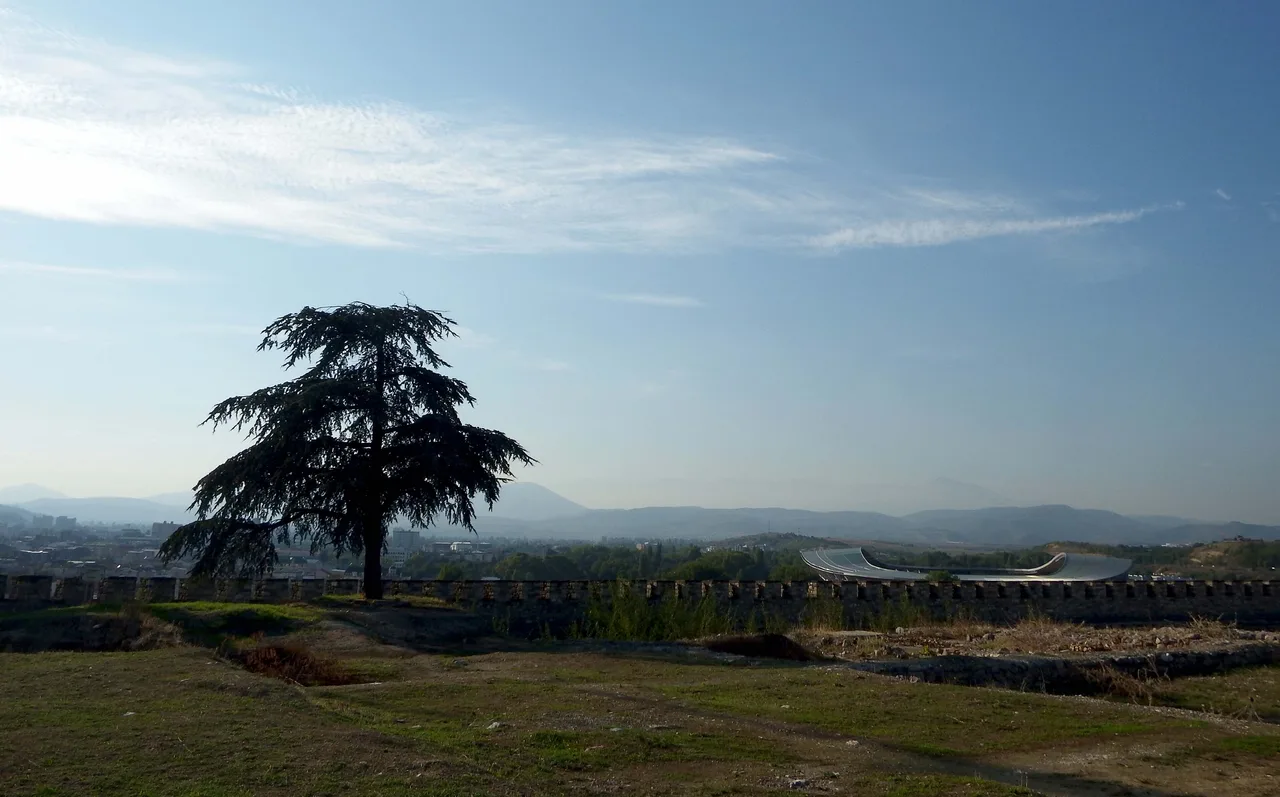
The fortress stands above the old town on the north bank, so the view is of the layout that’s hard to read from street level: the roofs and minarets of the bazaar below you, the Vardar and the Stone Bridge, Macedonia Square on the far bank with its statues, and Vodno’s long ridge behind. It’s a better view of the shape of Skopje than anything you get at ground level, and for most visitors the reason to climb.
Go in the late afternoon rather than midday: the light is better for photographs, and the low sun makes the stone read warmly. The interior is open and exposed, so bring water in summer and a layer in winter.
Getting up there on foot
The fortress sits on the north bank of the Vardar, directly above the bazaar. By OpenStreetMap’s walking router on 10 October 2026:
| From | Distance | Walking time |
|---|---|---|
| Stone Bridge | 1.0 km | about 14 min |
| Macedonia Square | 1.3 km | about 17 min |
| Mother Teresa Memorial House | 1.6 km | about 21 min |
The last stretch of each is uphill, so add a few minutes in summer heat. Taxis from the centre are possible, but there’s little point: the approach through the bazaar lanes is half the reason to come. Our guide to the Old Bazaar covers the lanes you’ll pass.
Hours and tickets: what we could and couldn’t confirm
We looked for an operator page, a municipal listing or a museum notice with hours for the fortress and didn’t find one on 10 October 2026. What’s out there is third-party and contradictory: visitor reviews on listing sites describe the grounds as open and free, one listing gives 09:00 to 17:00 and a small fee but copies the same text across other attractions, and a tourism guide says the grounds are open at all times. Don’t take any of them as settled. On 10 October 2026 the prime minister said admission will be charged once the fortress has been fully restored and put into use, adding “not now”, and that restoration works are due to start in 2026.
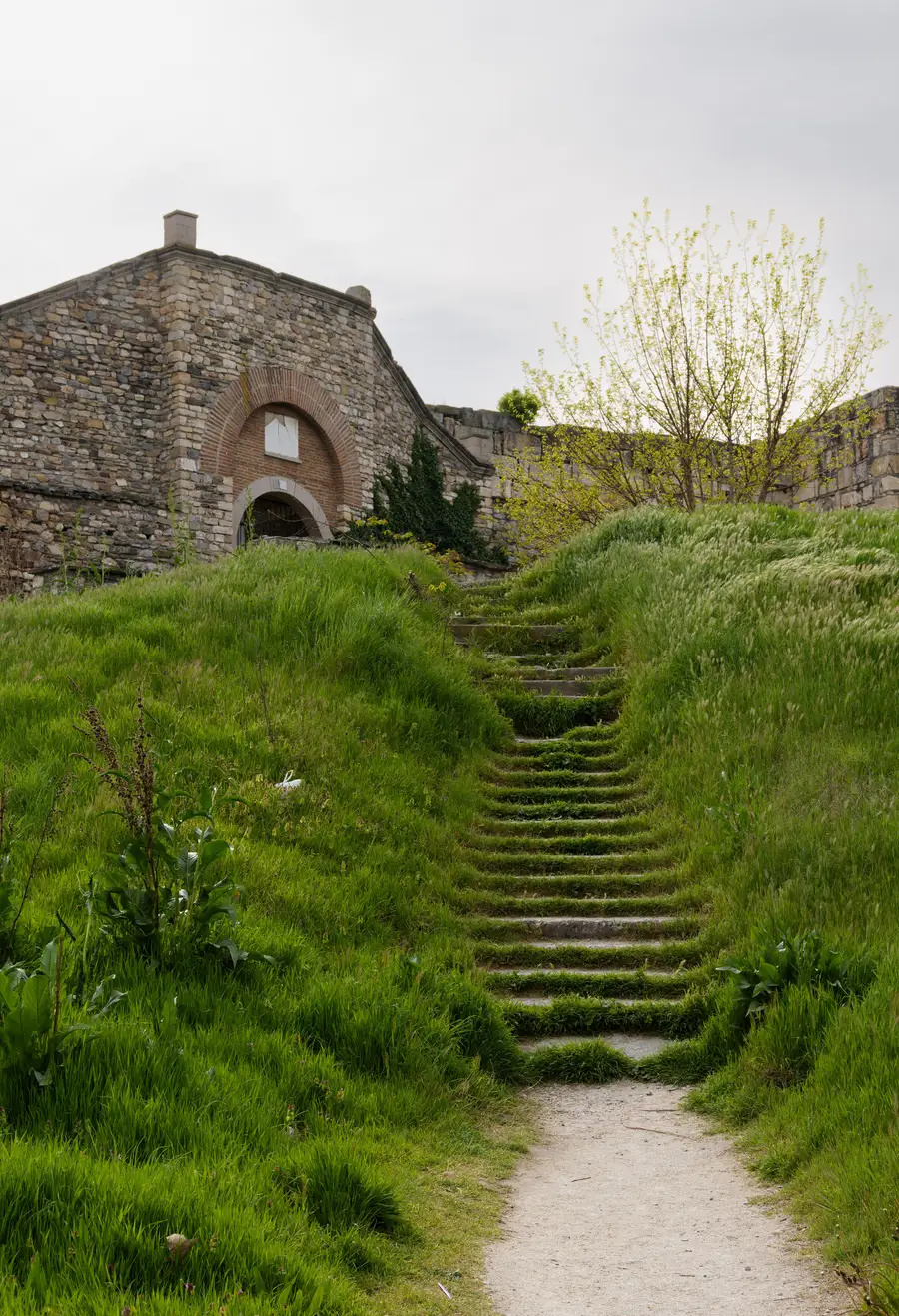
So the honest advice is conditional. Assume the grounds are walkable in daylight, expect no admission charge for now (a fee is planned once the restoration is done, so that can change), and stay off anything that looks unsound: visitors report that some lookout towers are unstable, so keep to the paths. If hours or a fee are ever posted, check for them at the gate.
How the defences were meant to work
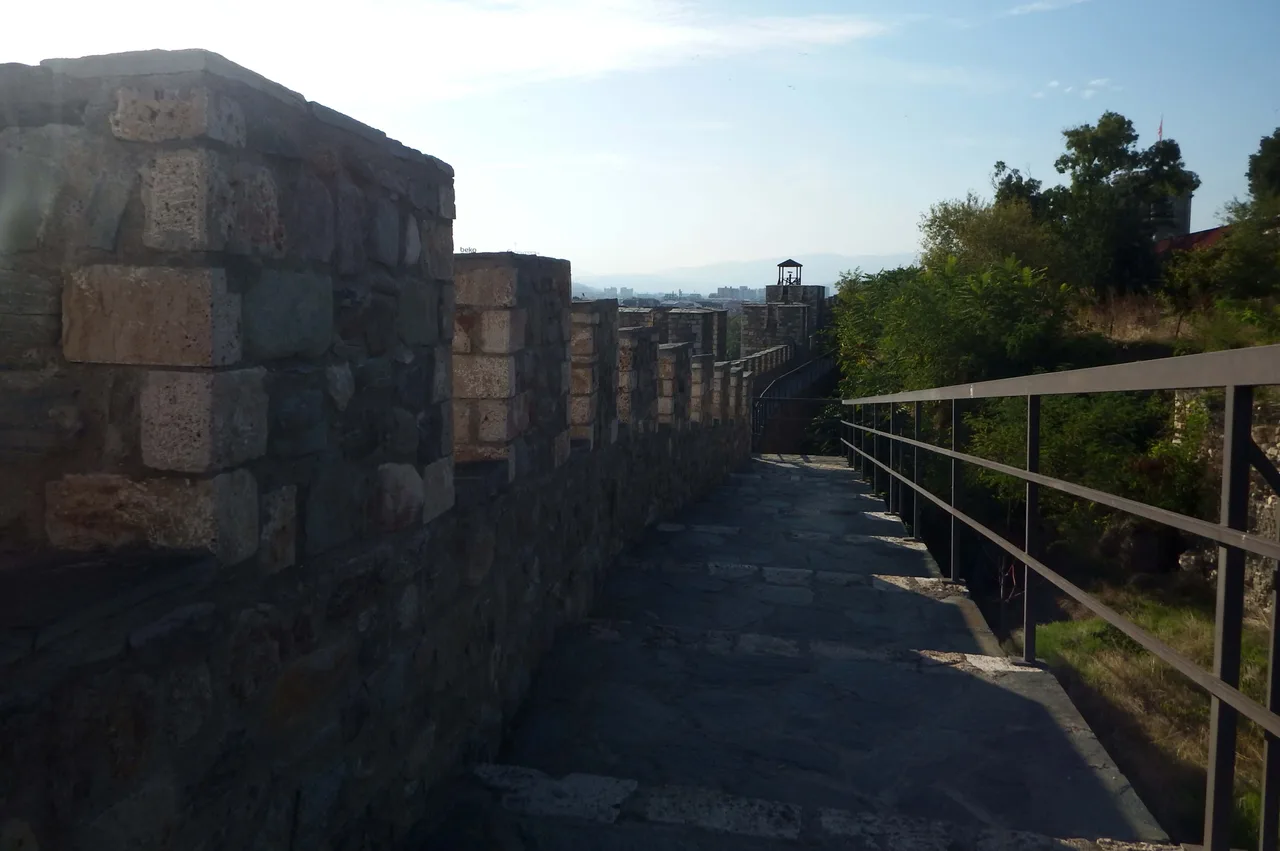
Evliya Çelebi’s 1660 account shows the fortress still at something like full strength, and it explains the position better than a plan would. He describes the city’s gate and walls as built of chipped stone, with the Vardar running below the western side where the rock drops away so steeply that, in his words, no ditch was needed or even possible. On the other sides, to the east, south-east and north, he describes deep trenches, and in front of the gate a wooden bridge that the guards lifted with a windlass. Above the gate he saw an inscription recording earlier repairs.
Stand on the walls with that text in mind and the geography makes sense. The river and the cliff did the work on one side, and the ditches on the others, and the hill itself did the rest.
One loop with the bazaar and the bridge
The fortress works best as the top of a short loop rather than a destination on its own. Go up through the bazaar, walk the walls, drop down towards the bridge and cross to Macedonia Square. That’s the route our things to do in Skopje guide strings together; guided walking tours of the old town cover the same ground with the history explained on the way.
Add the Mother Teresa Memorial House at the end of the loop on a Tuesday to Sunday: it’s about 1.6 km on foot from the fortress, and the two together make a relaxed half day.
Kale or Vodno: which view
If you’ve only got time for one viewpoint, the choice is straightforward. Kale is close, central and costs a short walk; it shows you the old town and the river. Vodno shows you the whole valley, but it’s a trip of its own, and our Vodno guide has the current way up. For one morning in the centre, Kale wins; for a clear day with a free afternoon, add Vodno.
Before you go
- Wear shoes with grip. The approach is uphill and the surfaces inside are uneven archaeological ground.
- Leave time for the descent. The bazaar lanes below are the point of the walk, and they’re best done on the way down when the heat has eased.
- Don’t plan around a ticket. No fee is charged at the moment, according to the prime minister on 10 October 2026, but one is planned after the restoration, and we found no posted timetable on that date.
Read also
On the map
The map loads on click - to keep the page lightweight.
The map didn’t load. Check your connection and refresh the page.
Admission and opening hours
- Opening hours
- No official opening hours found for the fortress grounds; third-party listings disagree with each other, so plan a daylight visit
No operator tariff published. The prime minister said on 10 October 2026 that a fee will be charged once the fortress is fully restored, "not now"; visitor reports describe the grounds as free to walk in. Checked 10 October 2026 - confirm on the day.
Details checked: October 10, 2026
Distance ≈1 km · ~14 min walk uphill from the Stone Bridge
- Skopje ≈1 km · ~14 min walk uphill from the Stone Bridge Walking route by OpenStreetMap routing, 10 October 2026: 1.0 km from the Stone Bridge, 1.3 km from Macedonia Square.
Read also

What to see · 7 min read
Mother Teresa Memorial House, Skopje: Hours and Visit
Updated · October 10, 2026Mother Teresa Memorial House in Skopje: free entry, open Tuesday to Sunday 10:00-18:00, what is inside, and why it is not her birthplace.

What to see · 10 min read
North Macedonia Thermal Springs: Five Spas and Prices
Updated · October 9, 2026Katlanovo near Skopje, Negorski Banji by the Greek border, Banjište and Kosovrasti at Debar, Kežovica in Štip: what each is like, published prices, access.

What to see · 14 min read
North Macedonia Monasteries: Six Worth the Drive
Updated · October 5, 2026Six monasteries in North Macedonia worth a detour - Nerezi, Lesnovo, Osogovo, Treskavec, Bigorski and Sveti Naum - by base town, with roads and stays.

What to see · 9 min read
Popova Šapka Ski Resort: Powder, Cats & Prices
Updated · October 5, 2026Popova Šapka above Tetovo: the 2025/26 ski pass prices, the six-seat chair, snowcat freeride on Šar, when the snow really arrives and how to drive up.