
Skopje Old Bazaar: Complete Guide
Skopje's Old Bazaar, often called the biggest Ottoman market in the Balkans outside Istanbul: hans, mosques, hammams, crafts and where to eat.
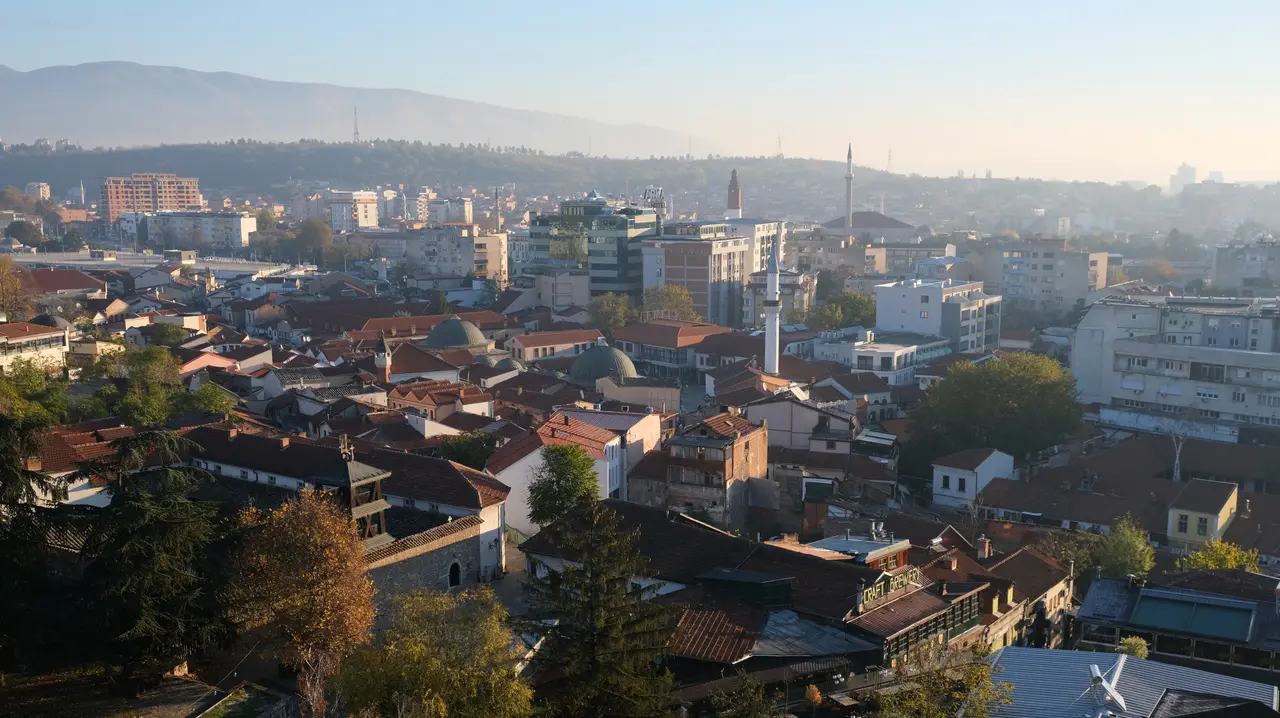
Skopje’s Old Bazaar (Stara Carsija) is the oldest, most atmospheric quarter of the city and, by common reckoning, the biggest surviving Ottoman-era marketplace in the Balkans outside Istanbul - a warren of stone lanes, minarets, domed caravanserais and craft workshops on the north bank of the Vardar. It’s free to wander, effectively always open, and easily half a day if you factor in coffee and lunch, which is why a single day in Skopje feels thin - how many days Skopje deserves spells that out. This guide walks you through what to look for, which buildings are worth stepping inside, and where to eat while you do it.
What the Old Bazaar is, and why it survived
Merchants have traded on this spot since at least the 12th century, but the bazaar you see is Ottoman. After the Ottomans took Skopje in 1392 it swelled into one of the great markets of the region, and by the 16th and 17th centuries it held around 30 mosques and a small city’s worth of inns and workshops. It has taken a beating over the centuries - an earthquake in 1555, a catastrophic fire in 1689 when an Austrian army torched the city, and the 1963 quake that levelled much of modern Skopje - yet the core of hans, hammams and mosques kept being patched up and put back to work. In 2008 parliament finally gave it formal protection as heritage of national significance.
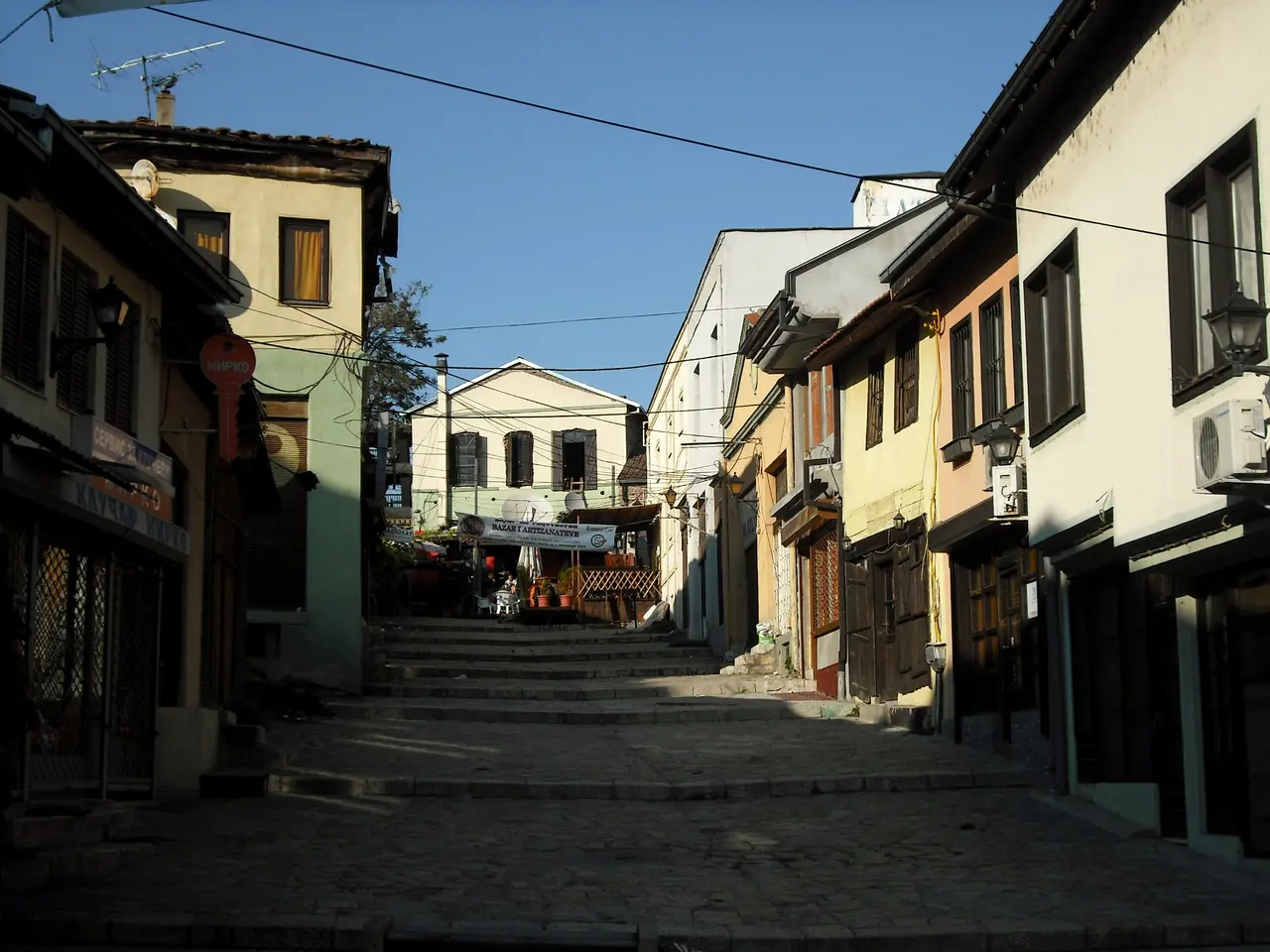
The layout is simple to hold in your head. The bazaar climbs the north bank between two landmarks: the Stone Bridge and Macedonia Square at the bottom, and the Kale fortress and the Bit Pazar market at the top. Between them the lanes fan out with no logic at all, which is the point. The best way to see it’s to put the map away, follow whatever alley looks interesting, and let the minarets and the smell of grilled meat pull you along.
The hans: Ottoman inns with second lives
The most impressive buildings are the hans, the old caravanserais where traders and their animals lodged. Three are worth seeking out, and the fun is that each now does something completely different.
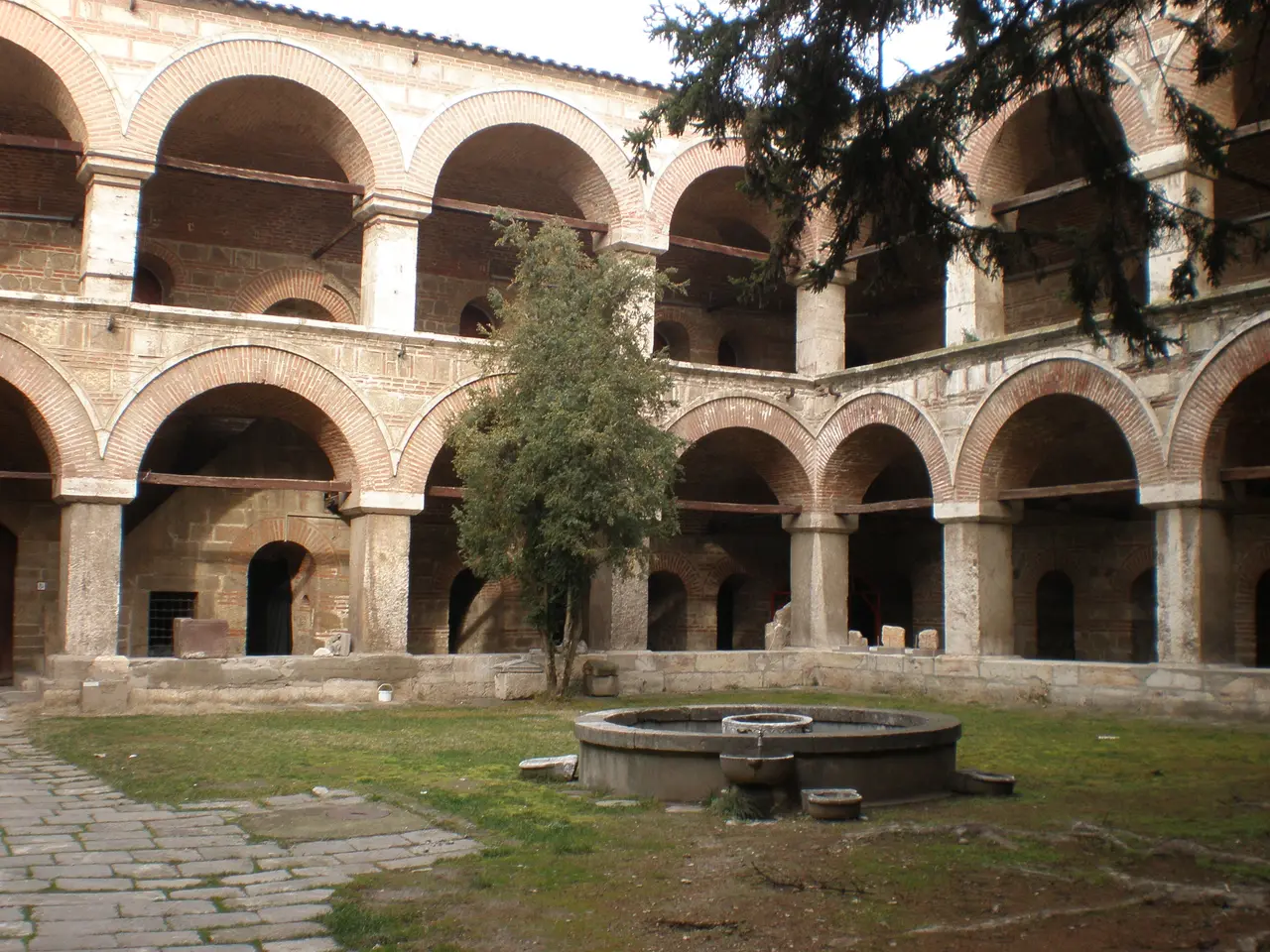
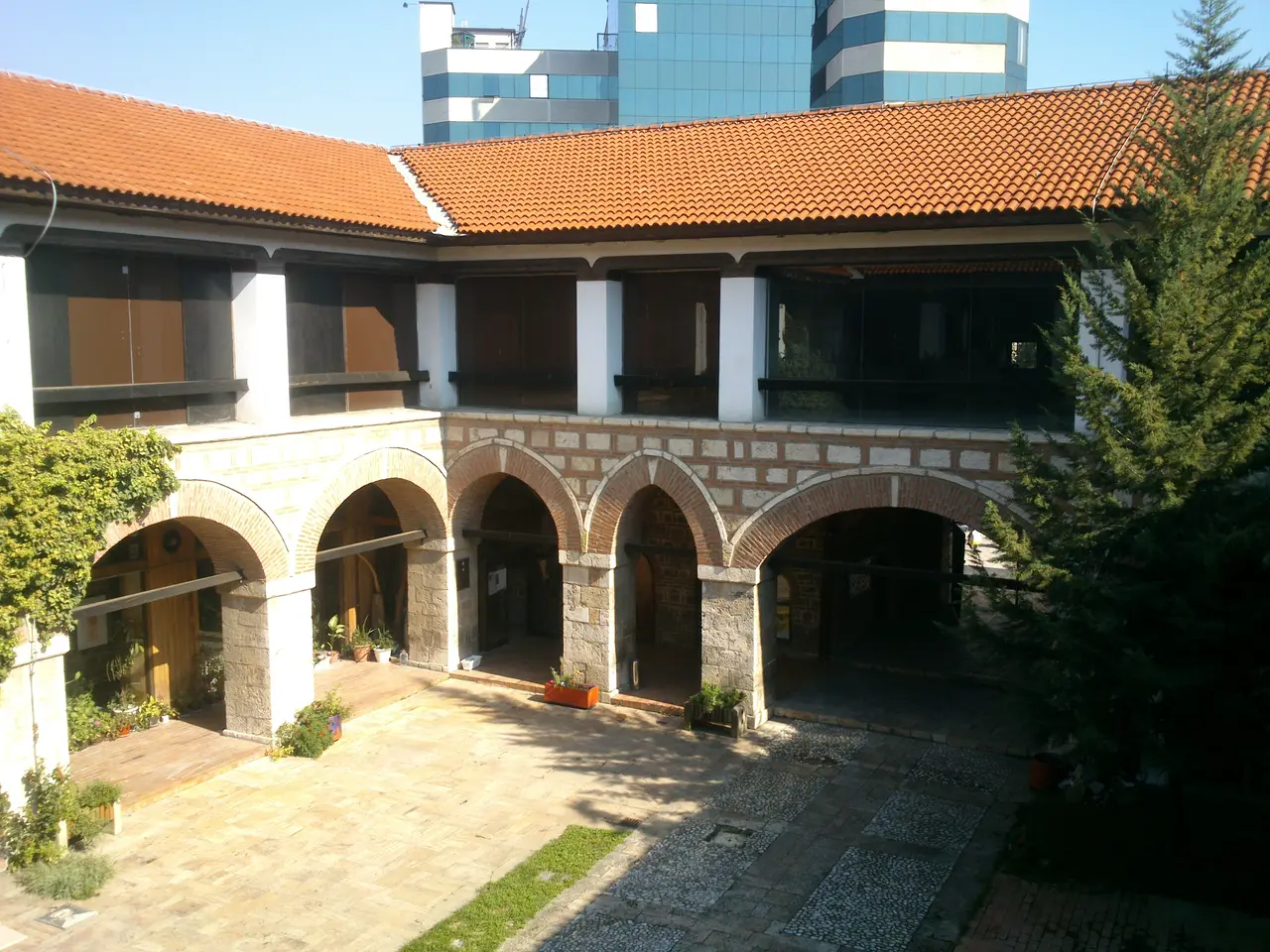
Kursumli An is the grandest, a 16th-century inn whose name means “the leaded one,” for the lead sheets that once covered its domes. Its arcaded courtyard is the single most photogenic corner of the bazaar, and it now displays the stone and sculpture collection of the Museum of Macedonia. Suli An, a century older, has become the Academy of Arts, with a small museum of the bazaar tucked inside. Kapan Han, also 15th-century, went the tastiest route: it’s now full of cafes and grill restaurants, so you can eat lunch under the same vaults that once stabled camels.
Hammams that turned into galleries
The two Ottoman bathhouses have had the same second act: both are now art museums. Daut Pasha Hammam, a rambling 15th-century complex of domed chambers near the bottom of the bazaar, has housed the National Gallery of North Macedonia since 1948 - worth going in as much for the light falling through the star-shaped holes in the domes as for the paintings. Cifte Hammam, the “double bath,” is a second National Gallery space used for changing contemporary shows. Even if art isn’t your thing, ducking into one gets you inside a hammam and out of the summer heat for the price of a small ticket.
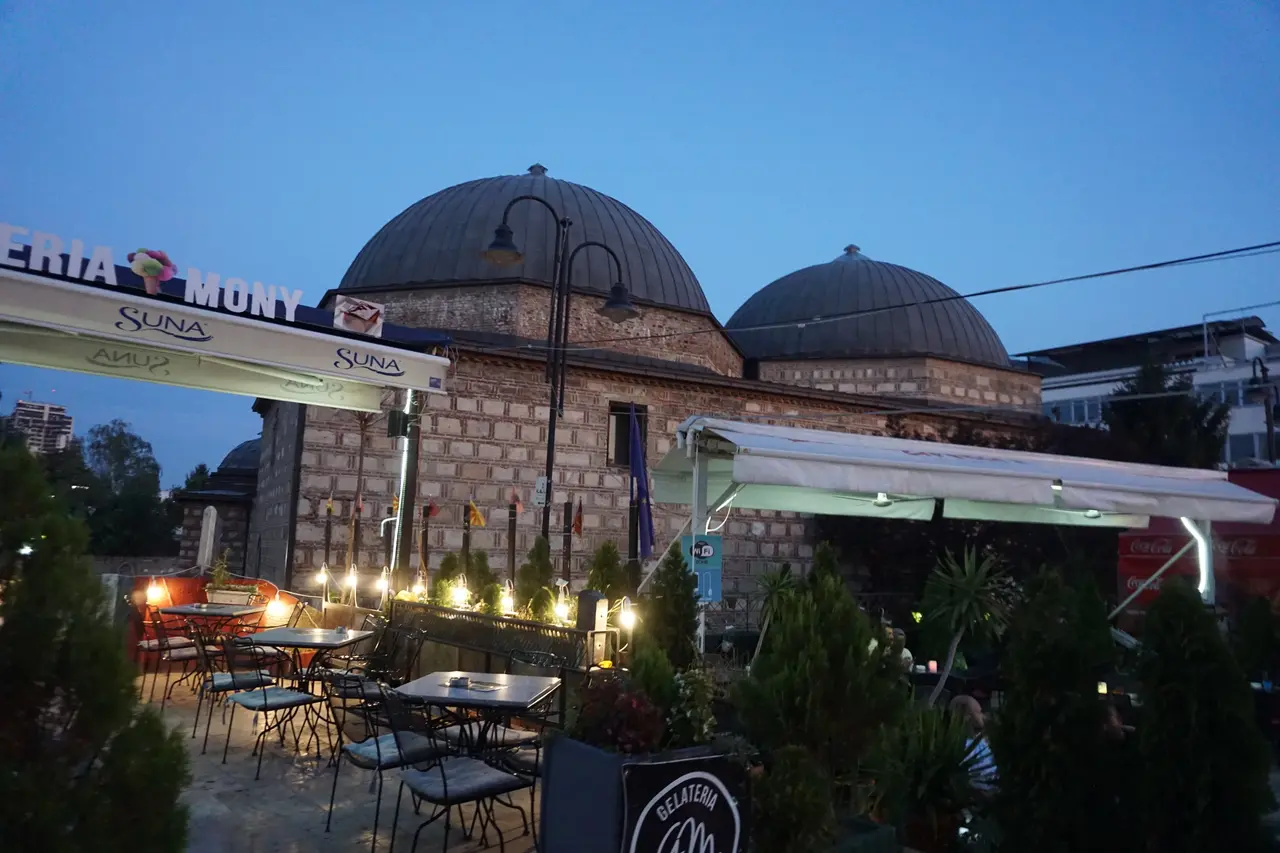
Mosques, the clock tower and the covered market
Minarets set the skyline, and two mosques stand out. The Mustafa Pasha Mosque of 1492, in a garden just below the fortress, is the best-preserved Ottoman monument in the country, with a single great dome and a calm rose garden that makes a good breather. The Sultan Murad (Hunkar) Mosque is among the oldest in Skopje, and beside it rises the stone Clock Tower, one of the earliest Ottoman clock towers in this part of the Balkans. Visit mosques outside the five daily prayer times, dress modestly and take your shoes off at the door.
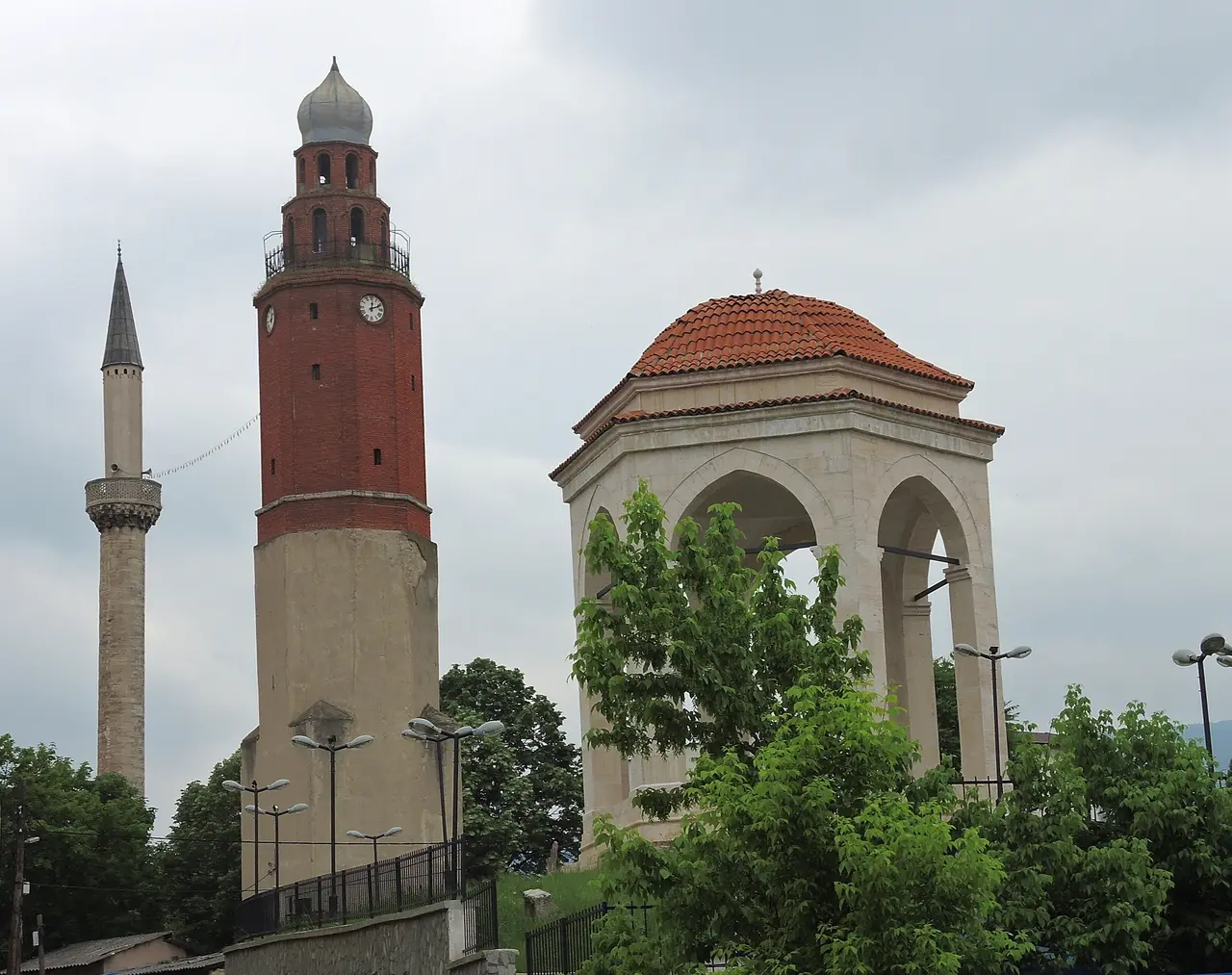
For the old commercial heart, find the Bezisten, the 15th-century covered market where cloth and valuables were once traded behind lockable stone gates; it was rebuilt in 1899 and still shelters small shops. Right on the bazaar’s upper edge is Bit Pazar, the sprawling open-air market where the city buys its fruit, vegetables, cheese and pickles - loud, cheap and completely un-touristy, and the best place to feel the quarter as a living market rather than a monument.
Sveti Spas and the Museum of Macedonia
Tucked among the mosques is a church that catches everyone off guard: Sveti Spas, the Church of the Holy Saviour, half-buried below street level. Under Ottoman rule a church wasn’t allowed to stand taller than a mosque, so the builders dug this one down into the ground instead - you step down to go in, and from outside it looks almost modest. Inside is its treasure: a huge iconostasis carved from walnut in the 1820s by the Filipovski brothers and Makarije Frckovski, master woodcarvers of the Mijak school, packed with tiny biblical scenes you could study for an hour. In the courtyard stands the tomb of Goce Delcev, the revolutionary hero whose name is on streets across the region. A few steps away, the Museum of Macedonia gathers the archaeology, history and ethnography of the whole country under one roof and makes a good backup if the weather turns. For the city’s headline museums on the riverbank - the Archaeological Museum, Holocaust center and more - see our Skopje museums guide. Between them they’re the reminder that the bazaar was never only a market or only Ottoman - it is the layered, mixed heart of the old city.
Where to eat, and the crafts to look for
This is the best-value eating in Skopje, full stop. The bazaar is the home of cevapi (little grilled minced-meat fingers), burek (flaky filled pastry, the classic breakfast), kebapi and thick Turkish coffee, all served in tiny grills that have been at it for generations. Follow the smoke to a busy one and you’ll not go wrong. If you want the wider picture of what to order and why, our guide to Macedonian food runs through the dishes, and for sit-down places by district see where to eat in Skopje.
Between meals, the bazaar is still a craft quarter. Look for the coppersmiths hammering trays and pots, the goldsmiths and filigree workers, and stalls of spices, dried goods and slippers. It’s a genuinely multi-ethnic corner of the city - Macedonian, Albanian, Turkish and Roma - which is a large part of what gives it its texture.
Practical tips
- Cost and hours: the streets are free and open around the clock; individual mosques, museums, galleries and shops keep their own hours. The bazaar is on the official list of tourist places, so the Sunday retail ban does not apply here and shops may trade 08:00-22:00 - though plenty of individual owners still take Sunday off, so expect a thinner lane, not a closed one. Mosques close to visitors at prayer times. Confirm gallery opening times on the day.
- Best time: come in the morning for the working market and soft light, or late afternoon for cafe life. Midday in July and August is fierce - the galleries and han courtyards are your shade.
- Money: carry some cash in denar for market stalls and small grills; cards work in cafes. The denar is steady at roughly 61.5 to the euro.
- Combine it: the Kale Fortress sits directly above the bazaar (free, great views), and the Stone Bridge drops you onto Macedonia Square across the river, so the whole old-and-new contrast is a single walk.
Read also
- Things to do in Skopje - the bazaar in the context of the whole city
- Macedonian food - cevapi, burek and how the table works
- Where to eat in Skopje - grills, kafanas and coffee by district
- Is Skopje worth visiting? - the honest case for the capital
- Where to stay in Skopje - the best areas to base yourself
Photos
On the map
The map loads on click - to keep the page lightweight.
The map didn’t load. Check your connection and refresh the page.
Distance
- Ohrid ≈170 km · ~2.5-3 h
- Bitola ≈175 km · ~2.5 h
Read also

What to see · 11 min read
Skopje Brutalist Architecture Walking Guide
Verified · September 3, 2026Walk Skopje's post-1963 concrete: Post Office, GTC, Tange's station and MoCA. Dates and architects from named sources.

What to see · 9 min read
Plaošnik & St Clement's: Ohrid's Sacred Hill
Updated · August 25, 2026Plaošnik in Ohrid: St Clement's church, early Christian mosaics and Slavic literacy's cradle - what to see, the walk up and looping Kaneo.

What to see · 9 min read
Skopje Museums: Archaeology to Mother Teresa
Updated · August 23, 2026Four Skopje museums worth an afternoon: archaeology, Mother Teresa, the Holocaust center and Macedonian Struggle - hours, tickets and how to visit.

What to see · 12 min read
Bigorski Monastery: The Carved Wonder of Western Macedonia
Updated · August 4, 2026Sveti Jovan Bigorski: the walnut iconostasis with 500+ carved figures, what the 2009 fire took, and how to get there from Skopje or Ohrid.