
North Macedonia Monasteries: Six Worth the Drive
Six monasteries in North Macedonia worth a detour - Nerezi, Lesnovo, Osogovo, Treskavec, Bigorski and Sveti Naum - by base town, with roads and stays.
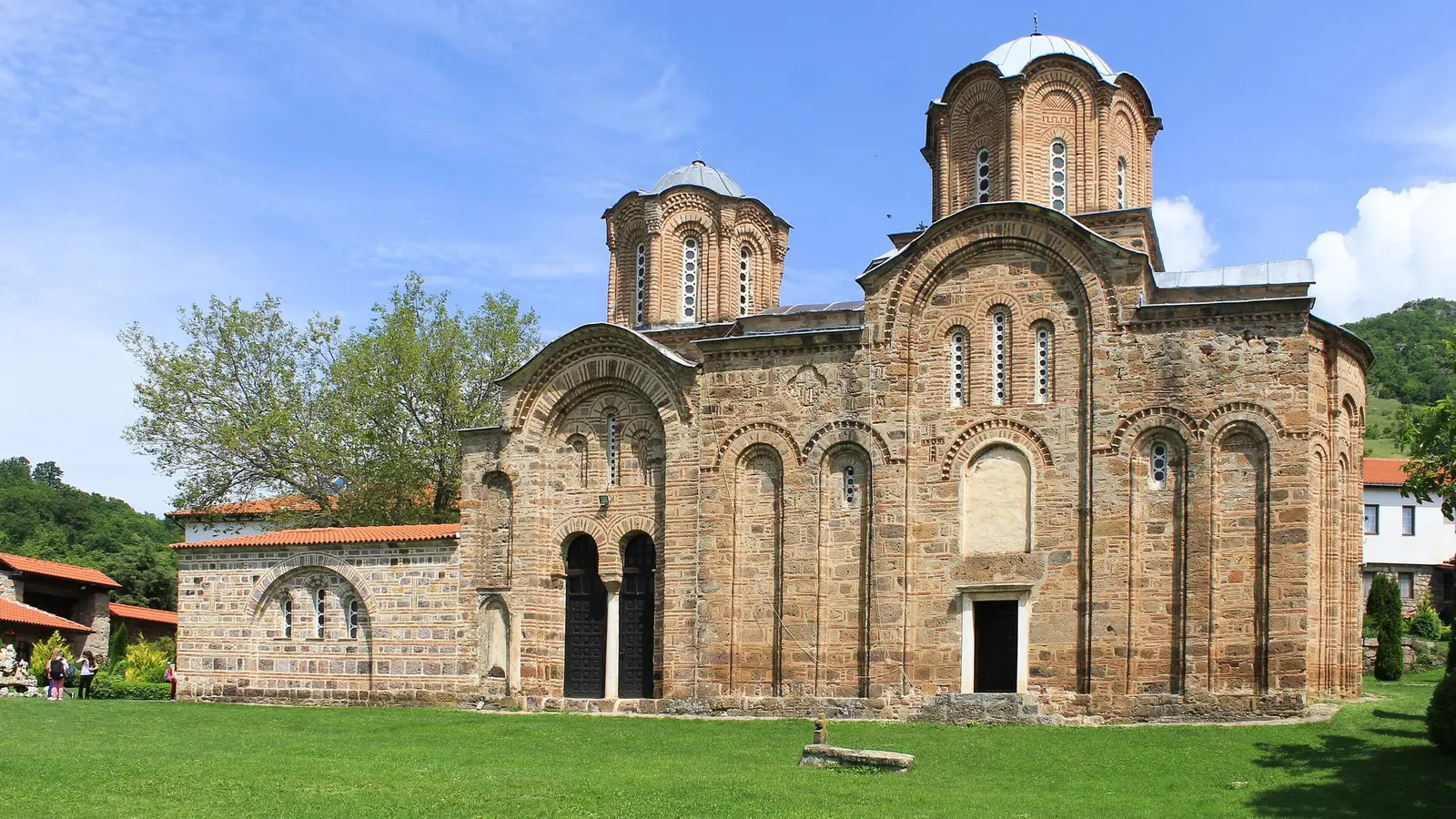
Six monasteries in North Macedonia repay the drive, and the easiest way to pick between them is by where you’re sleeping. From Skopje, St Panteleimon at Nerezi is 8 km and about 15 minutes up the side of Mount Vodno, with frescoes painted in 1164. In the east, Lesnovo and Osogovo are each a little over 100 km from the capital, roughly an hour and a half by car. Treskavec sits under a bare rock peak above Prilep, Bigorski stands over the Radika gorge near Debar, and Sveti Naum closes off the southern end of Lake Ohrid.
Two details change how you’d plan this. You can sleep on the spot at Osogovo, Bigorski and Sveti Naum: Osogovo keeps lodgings for pilgrims and runs a restaurant, Bigorski takes believers who ask a few days ahead, and at Sveti Naum the Hotel St. Naum stands right beside the monastery. And Treskavec, which the national tourism site still calls a ruin, had its fire-gutted lodgings rebuilt and its monks back by April 2025.
Which monastery for which base
Each of the six is a short hop from a town you’d plausibly stay in, so the shortlist mostly sorts itself.
| Monastery | What you’re there for | Nearest town | By car from there |
|---|---|---|---|
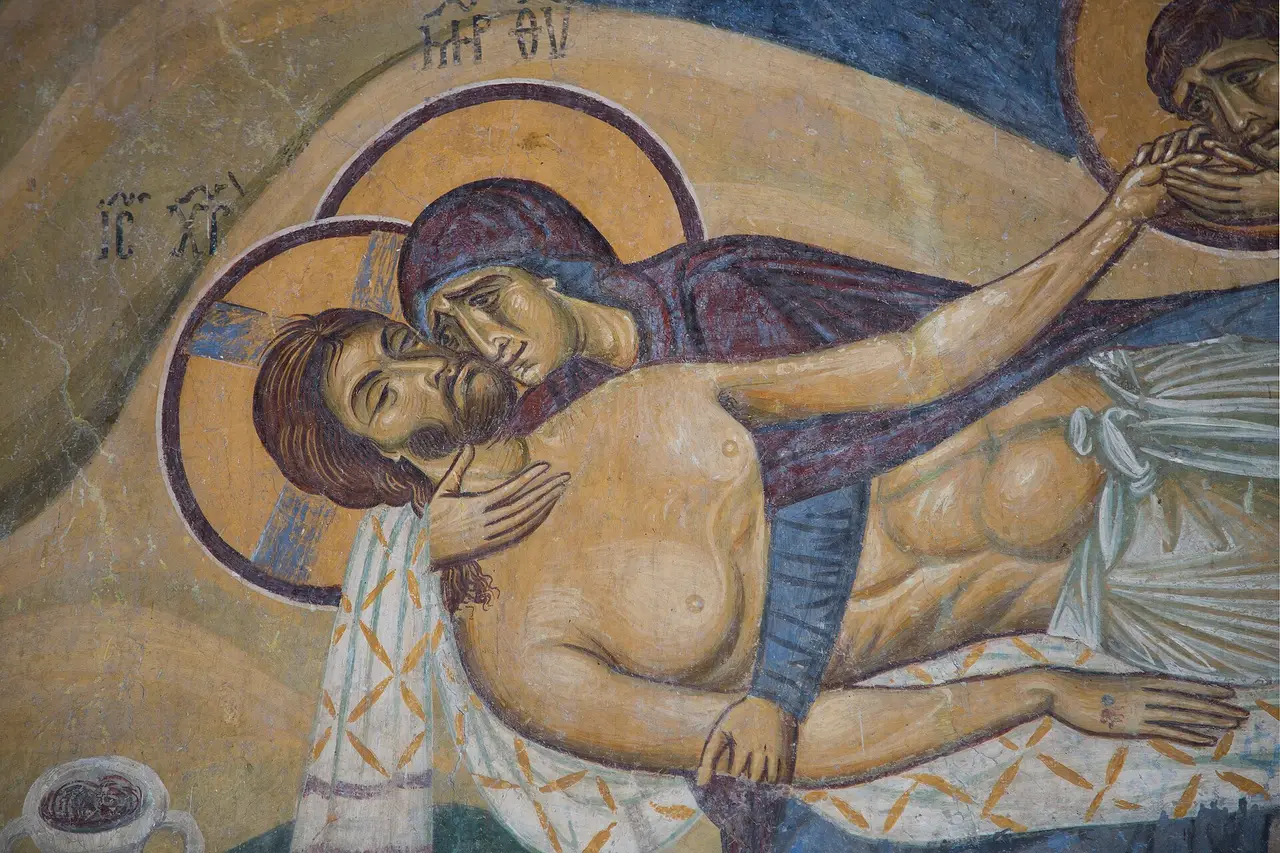
| St Panteleimon, Nerezi | the 1164 frescoes, the Lamentation above all | Skopje | 8 km, about 15 min |
| Lesnovo | 1340s frescoes and the founder’s portrait | Probištip or Kratovo | 13-14 km, 30-40 min |
| Osogovo | a twelve-domed church in oak forest, rooms for pilgrims | Kriva Palanka | 4 km, under 10 min |
| Treskavec | a domed church against a bare rock peak | Prilep | about 30 min |
| Bigorski | the carved walnut iconostasis | Debar | 21 km, about 30 min |
| Sveti Naum | the lakeshore setting and St Naum’s tomb | Ohrid | 29 km, about 40 min |
Drive times are routing estimates (OSRM, town centre to monastery, measured on 6 October 2026), so give mountain roads some slack: the road up to Treskavec, for one, was designed only about 3.5 m wide. Three more have their own pages here: St Andrew at the water’s edge in Matka Canyon, and Veljusa and Vodoča in our Strumica guide.
Nerezi: Skopje’s 12th-century frescoes
St Panteleimon is a small church in the village of Gorno Nerezi, and it’s the quickest of the six to fit into a city break. It was built and painted in 1164 for a Byzantine prince, Alexios Komnenos, whose mother was the youngest daughter of Emperor Alexios I Komnenos.
Not everything on the walls is from that year. The upper parts of the church lost their original painting for good and were repainted in the 16th century, so the 1164 work survives lower down: parts of the altar, a row of standing saints at eye level, and scenes from the life of Christ in the band above them. That band holds the Lamentation, the scene people come for. Mary has thrown herself over the body and wraps it, her face pressed to his. MARH, a Macedonian architectural heritage site, puts it well: she’s mourning her only son here, not the saviour of humankind. It’s an unusually raw image for Byzantine painting, and you don’t need any art history to feel it.
Getting there is easiest by taxi or car: it’s 8 km from Macedonia Square, about a quarter of an hour. City bus 25 goes up to the Makedonsko Selo complex next to the church, but in August 2026 SDK reported that the old minibus on the route kept breaking down, so don’t count on it for the ride back. On foot, trail 10 of the national mountain sports federation (FPSM) starts right in front of the monastery and climbs 3.2 km, from about 600 m to 1,066 m, to Krstovar, the top of Vodno where the Millennium Cross stands. The federation’s trail register allows 1 hour 20 minutes for the climb. Walk up from the church and you’ve done Skopje’s two big hill sights in one morning. The cable car’s current status and the other paths are in our Vodno and Millennium Cross guide, and the capital’s other sights are in things to do in Skopje.
Lesnovo and Osogovo: the eastern pair
These two sit on opposite flanks of the Osogovo mountains, about 60 km and 80 minutes apart by road, and each a little over 100 km from Skopje. Together they make a long day with a car, or a much better one with a night at Osogovo.
Lesnovo
Lesnovo stands at 870 m at the edge of Lesnovo village, inside an old volcanic crater, about 14 km from Probištip and 13 km from Kratovo, whose tower houses and stone bridges make the natural base. Hermits lived here in the 11th century, Gabriel of Lesnovo among them, and the monastery still carries his name next to the Archangel Michael’s. The church you see is younger. The Serbian magnate Jovan Oliver founded it in 1341, and four painters covered the nave in 1342-43. When the Skopje council of 1347 made Lesnovo the seat of a new bishopric, a domed narthex went up and was painted in 1349.
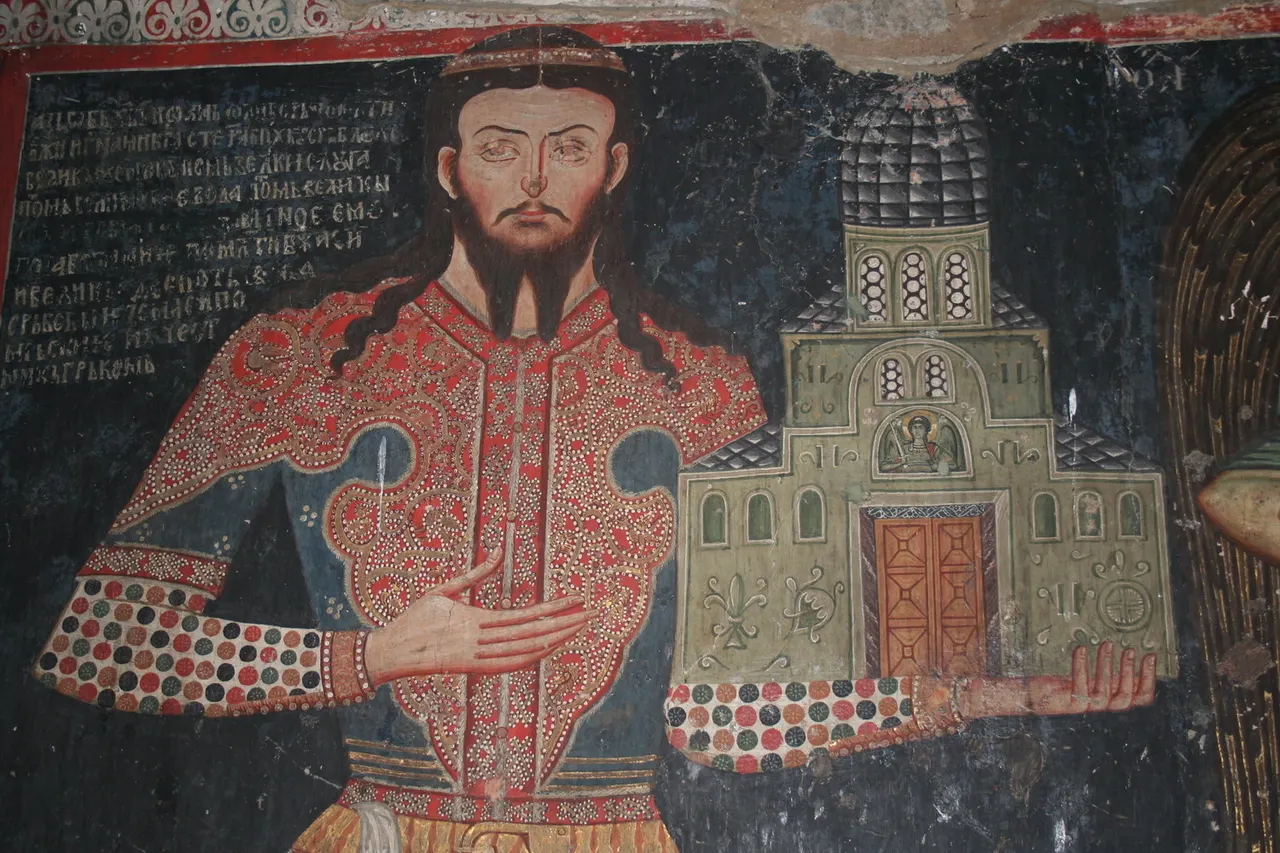
Two scenes are worth hunting for. On the north wall Oliver himself stands in a lavish robe, holding a model of the church out to the archangel: the donor presenting his gift. In the narthex the painters illustrated the last three psalms, including the verse of Psalm 149 about praising God “in the dance”. A September 2026 Telma TV feature repeats the local story that Oliver, who owned gold mines, paid for the blue and red pigments in gold. Whatever the accounting, it’s the blue you’ll remember.
There’s a thread here that runs west. Lesnovo’s carved iconostasis, made in 1811-14, is the work of Petre Filipovski-Garkata and his band of Mijak carvers, the same workshop that went on to carve the iconostasis at Bigorski in the 1830s. See both and you can compare one team’s work twenty years apart.
Osogovo
Osogovo, 3 km north-east of Kriva Palanka in old oak forest, is the opposite of Lesnovo’s quiet lawn: eighteen buildings spread over the slopes of the Osogovo mountains, which has earned it the nickname “monastery town”. The national tourism agency dates its foundation to the reign of the Byzantine emperor Manuel I (1143-1180). The small church of the Holy Mother of God was renewed in the 14th century. The big white church of St Joachim beside it was built in 1847-1851 by the master builder Andreja Damjanov, and it carries twelve domes, one for each apostle. Inside, look for the fresco of St Paul preaching in Macedonia: at the end of the composition the painter put local believers in Kriva Palanka folk dress, alongside Lydia, the merchant woman Paul baptised at Philippi.
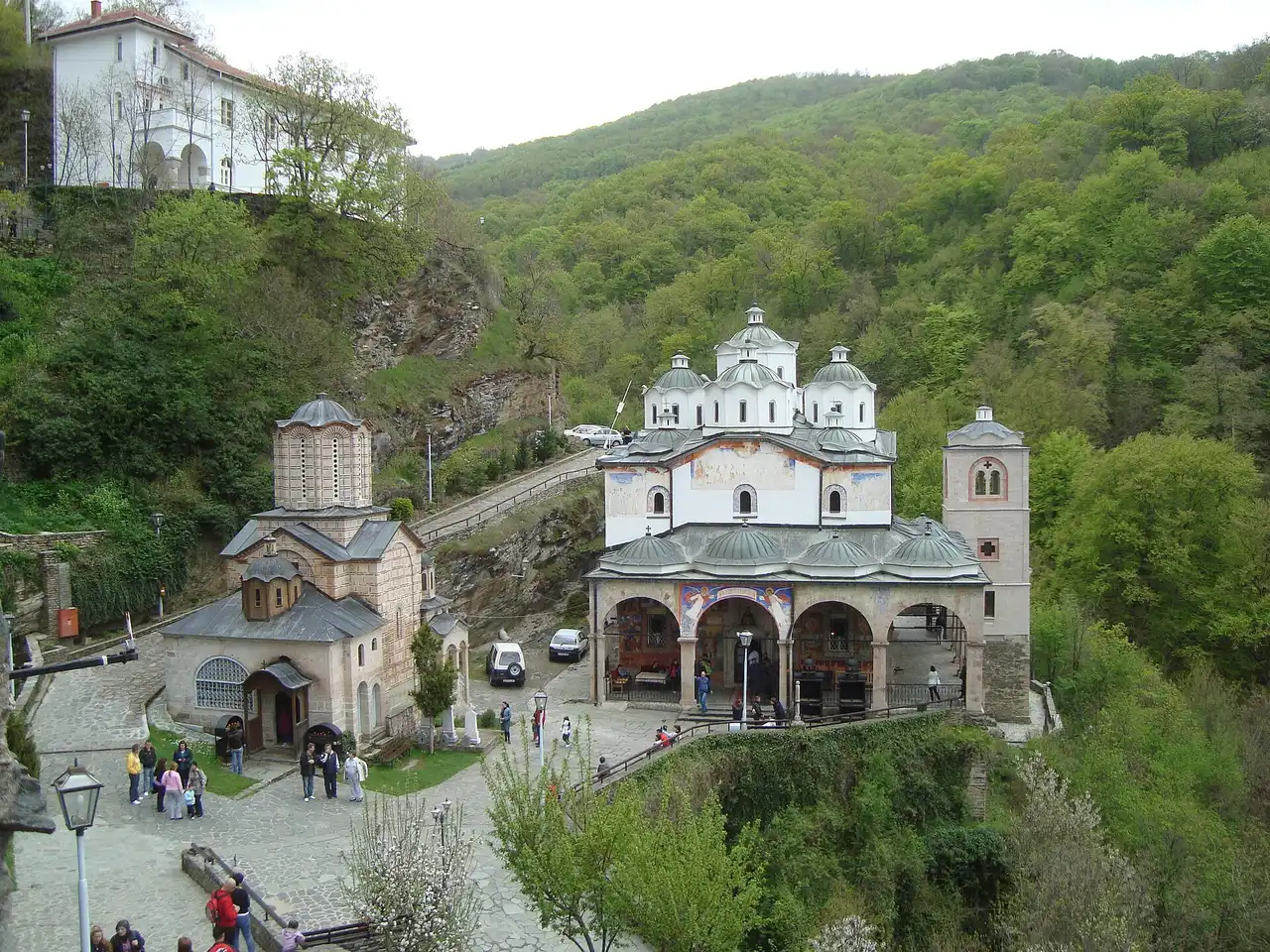
It’s also the one in the east you can do without a car. The Skopje bus station board listed three Proleter departures to Kriva Palanka for Wednesday 7 October 2026, at 09:00, 16:00 and 18:30, for 420 MKD (about €7 / $8 / £6) one way, and from town the monastery is about 4 km by road, a short taxi ride or a walk. The board says its times are for information only, so check again for your own date. Kriva Palanka also lies near the Deve Bair crossing into Bulgaria, which makes Osogovo an easy stop on a Skopje to Sofia drive.
One thing to expect, as of March 2026: building work. A new abbot’s lodging, a rebuild of the old “Bini” konak, which Jordan Mihajlovski, author of three books on the monastery, says burned in 1911, has been going up in the courtyard since its foundation stone was laid in August 2024. By March 2026 the concrete frame had set off a public row, with critics online describing it as ground plus five floors; the clergy told 360 stepeni it’s a restoration, not a hotel.
Treskavec: back from the 2013 fire
Treskavec stands on Zlatovrv, a ridge of bare boulders about 8 km north of Prilep, at roughly 1,280 m. It was founded in the 12th century and rebuilt in the 14th under the Serbian kings Milutin and Dušan, and its domed church looks as if it grew out of the rock behind it.
On Monday 4 February 2013 fire swept through the lodgings. Two days later the investigating judge told Faktor that it had started in a room next to the bell tower, with a faulty chimney or the wiring as the likely causes, and noted that the place had already been patched up once after a catastrophic fire in 1990. The church came through; the lodgings didn’t.
For years after that, Treskavec was written up as a ruin, and the national tourism agency’s English page still reads that way: checked on 6 October 2026, it says the monastery is in ruins apart from the church, with no restoration launched “as of 2015”. That’s out of date. In April 2025 the Ministry of Culture said the lodgings were finished and the monks had returned, after 124 million denars (about €2 million) of state money, and that conservation of the frescoes comes next.
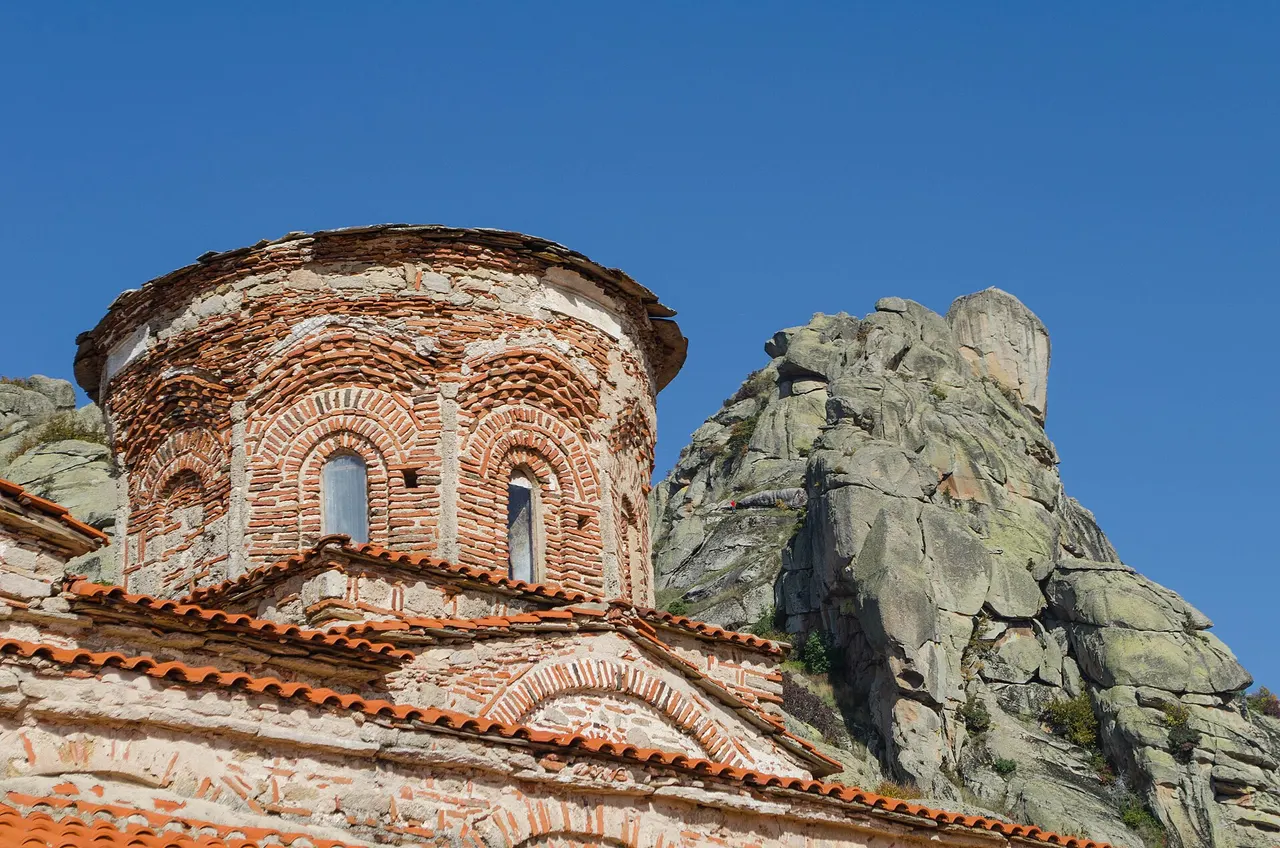
Work on a 7.5 km access road, about 3.5 m wide, began in August 2012, and today it’s around half an hour by car from central Prilep. The other way up, the walk from Markovi Kuli through the boulder country, is laid out in our Prilep travel guide. Coming from Bitola, Bitola to Prilep weighs the bus, the train and a hire car for exactly this leg.
Bigorski and Sveti Naum, in brief
Both have their own full guides on this site, so here’s just what puts them on the list.
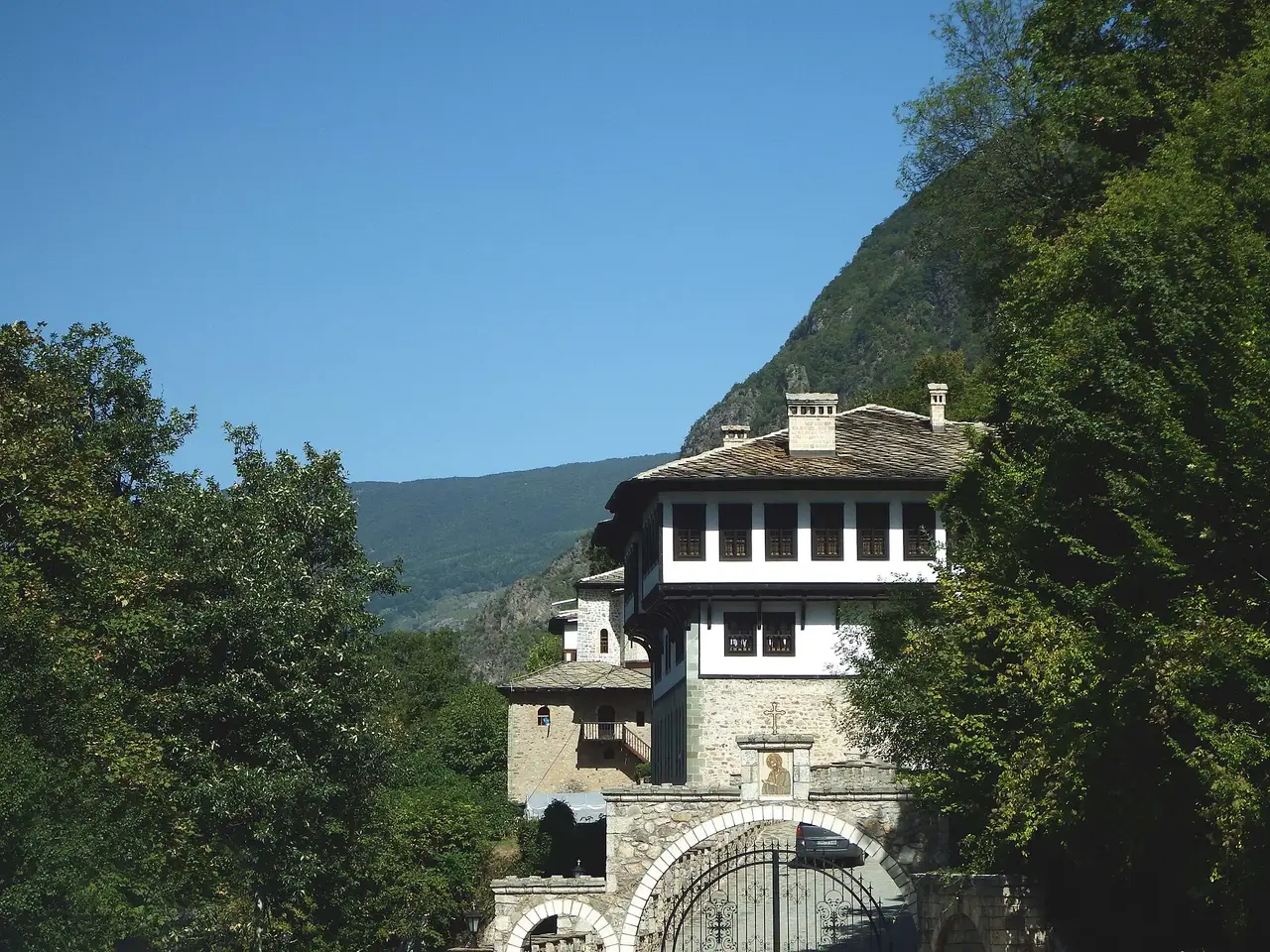
Bigorski is built from blocks of bigor, the travertine it stands on, above the Radika canyon on the slopes of Mount Bistra. It goes back to the 11th century and has been plundered and burned more than once. The tourism agency writes that the icon of St John the Baptist came through every one of those disasters, and believers hold that it vanished during each attack and came back afterwards. The draw today is the walnut iconostasis carved in 1830-1835 by Garkata’s workshop with Makarij Frčkovski; the Bigorski Monastery guide tells the full story, from the 2009 fire to the roads in. A few kilometres from Debar, the convent of St George at Rajčica belongs to Bigorski. Its nuns hand-make bishops’ mitres, and the agency suggests it as a stop on the road to Ohrid.
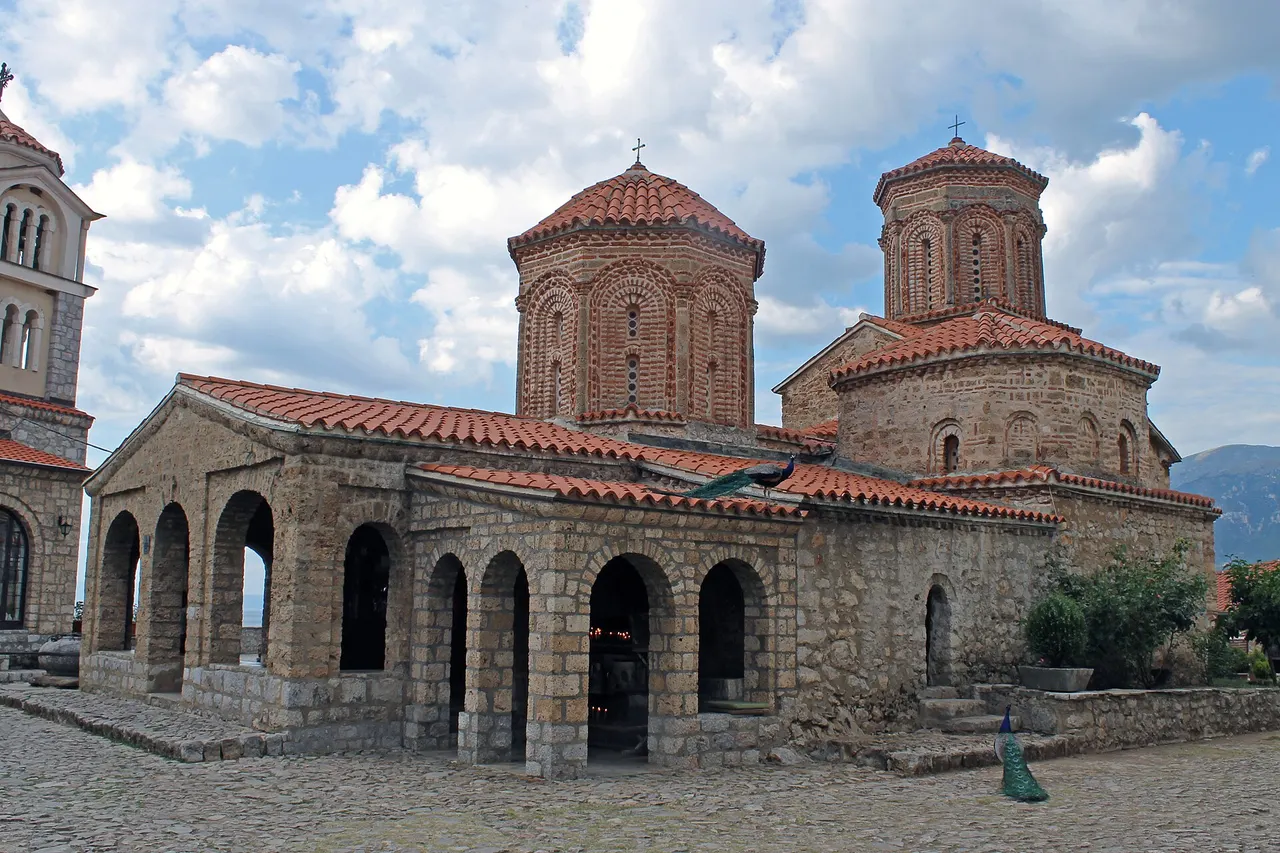
Sveti Naum was founded by Naum, a medieval writer and teacher counted among the founders of Slavic literacy, and he’s buried in its Church of the Archangel, built on a clover-leaf plan and raised again on the old foundations from the 16th century on. The custom is to lean your head against the saint’s tomb: wait quietly, the tourism agency promises, and you’ll hear a deep thud that the faithful say is his heart. For the entrance, hours, springs and the bus from Ohrid, go to the Sveti Naum guide; arriving by water is its own outing, covered in the Ohrid boat trip to Sveti Naum.
Nights, clothes and feast days
- Staying over. Bigorski’s own rules say believers who want to spend the night must announce themselves a few days ahead to the brothers who look after guests, with the abbot’s blessing. Guests take part in the services and the common meals, and smoking, alcohol and “improper clothing and behaviour” aren’t allowed. Osogovo has lodgings built for pilgrims and a restaurant on site; ask the monastery about a room before you count on one, especially while the building work goes on. At Sveti Naum the Hotel St. Naum stands right beside the monastery, so you can stay on after the day boats have gone back to Ohrid (Sveti Naum guide).
- What to wear. Bigorski only asks guests to avoid “improper clothing”, and the usual reading of that works for all six: shoulders and knees covered, nothing that reads as beachwear, a scarf in your bag just in case.
- Feast days. Each house has its patron feast, and on that day it fills up. Bigorski keeps the Beheading of St John the Baptist on 11 September with an all-night vigil, and Prilep has a long tradition of walking up to Treskavec for the Assumption on 28 August. Come on the day for the crowds and the singing, or any other day for the quiet.
Fitting them into a trip
- Skopje, half a day, no car. A taxi to Nerezi, then trail 10 up to the Millennium Cross. For longer outings from the capital, see day trips from Skopje. Some half-day Matka tours from Skopje stop at Nerezi too; what one includes and leaves out is in our Matka day trip guide.
- The east, one long day or two easy ones. Skopje to Lesnovo is about 106 km, Lesnovo to Osogovo about 60 km, and Osogovo back to Skopje about 103 km: call it four and a half hours of driving before you stop anywhere. Sleep in Kratovo or at Osogovo and it stops feeling like a rally. For the hire-desk paperwork, see renting a car in North Macedonia.
- Pelagonia. Treskavec takes half a day from Prilep, and Prilep sits between Skopje and Bitola, so it slots into a southbound leg.
- The west. Bigorski pairs with Mavrovo National Park and the Debar road; Sveti Naum with a day on Lake Ohrid. With a car you can string them across two days, sleeping in Ohrid.
Read also
Read also

What to see · 9 min read
Popova Šapka Ski Resort: Powder, Cats & Prices
Updated · October 5, 2026Popova Šapka above Tetovo: the 2025/26 ski pass prices, the six-seat chair, snowcat freeride on Šar, when the snow really arrives and how to drive up.

What to see · 9 min read
Skiing in North Macedonia: Resorts, Costs & Season
Updated · October 4, 2026Where to ski in North Macedonia: Mavrovo and Popova Šapka compared on lifts, height and pass prices, plus the small hills, the season and winter tyres.

What to see · 11 min read
Paragliding in Kruševo: Tandem Flights, Season & Prices
Verified · October 2, 2026Tandem paragliding in Kruševo, North Macedonia: what four local operators charge, the 1,420 m launch, season, weight limits and how to get there.

What to see · 11 min read
Skopje Brutalist Architecture Walking Guide
Verified · September 3, 2026Walk Skopje's post-1963 concrete: Post Office, GTC, Tange's station and MoCA. Dates and architects from named sources.