
Things to Do in Strumica: Carnival, Fortress & Monasteries
Strumica travel guide: the pre-Lenten carnival, the Carevi Kuli fortress, the Veljusa and Vodoca monasteries, hot springs and how to get there.
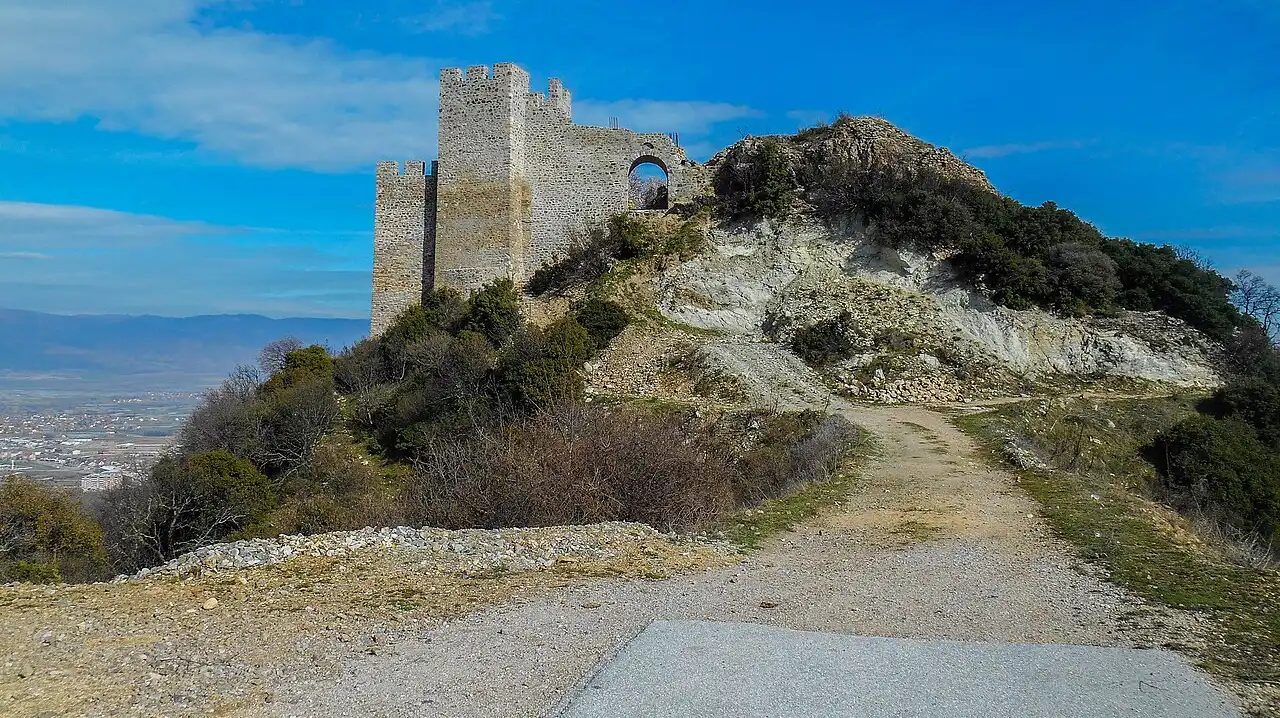
Strumica is the town people mean when they say Macedonians know how to throw a party. It sits in a fertile valley in the far southeast, near the point where the country meets Bulgaria and Greece, and is best known for its riotous pre-Lenten carnival - but there’s more here than one wild week. A hilltop fortress with about 6,000 years of history rises right above the streets, two of the country’s finest Byzantine monasteries stand just outside town, and the wooded Belasica mountains behind hide waterfalls and thermal springs. Few foreign travellers make it this far east, which is part of the appeal; if you’re stitching together the country’s overlooked corners, pair it with Kratovo, the crater town of stone towers and Ottoman bridges to the north. This guide covers what to see in and around Strumica, when to come for the carnival, where to eat and stay, and how to get here.
Be clear about one thing before you arrive: central Strumica is a modern town. Earthquakes, fires and 20th-century upheaval swept away most of the old core, so you’ll not find the Ottoman bazaars of Bitola or the lakeside charm of Ohrid. What you get instead is an easy-going provincial city of about 34,000 people, a lively pedestrian corso, and a cluster of genuinely worthwhile sights ringed by countryside. Treat it as a base for a day or two, not a museum-piece old town, and it delivers.
What to see in Strumica
Carevi Kuli (the Tsar’s Towers)
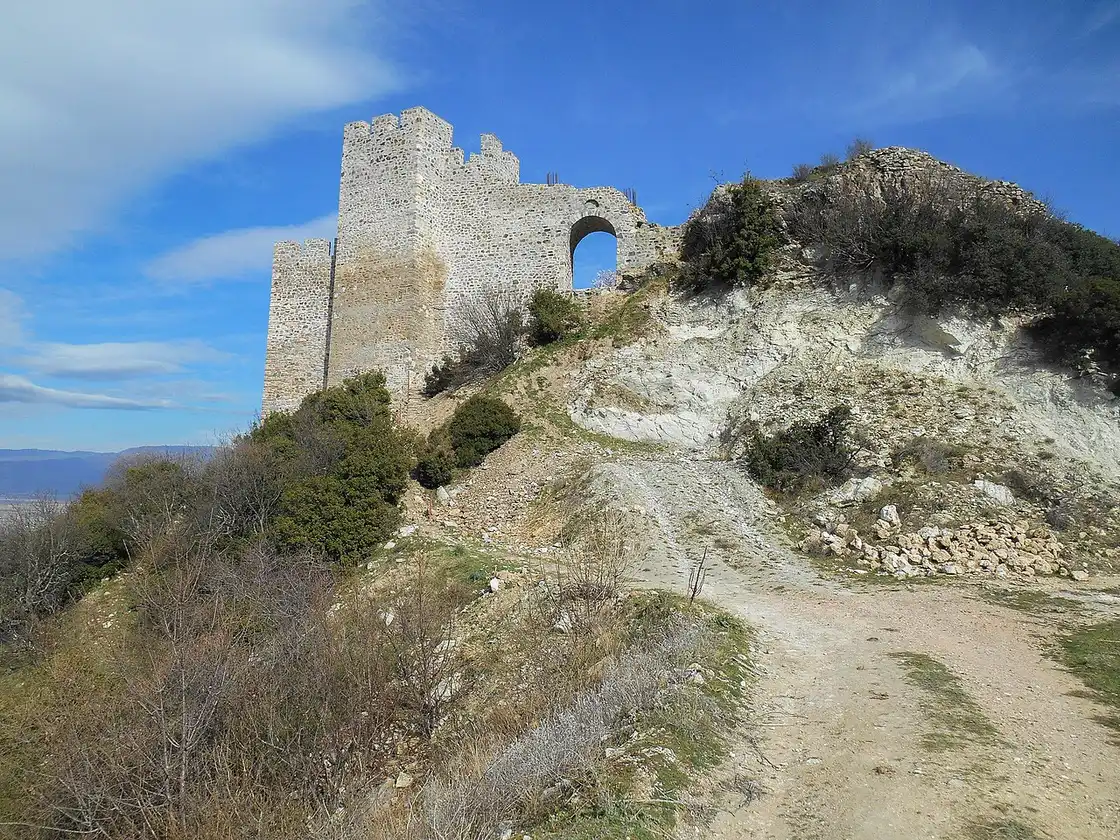
The one unmissable sight is Carevi Kuli, the fortress on the hill directly above the town. Archaeologists have dug through layers here going back to the 4th and 3rd millennia BC, which makes the hill one of the longest continuously used spots in the region; the stone walls and tower you see today are medieval, and have been under restoration since 2014. It’s a short, steep climb or a quick drive up, and the reward is the view: the whole Strumica plain spread out below, the town at your feet and the Belasica ridge closing off the horizon to the south. Go late in the day when the light softens and the valley turns gold.
The centre, the corso and the cathedral
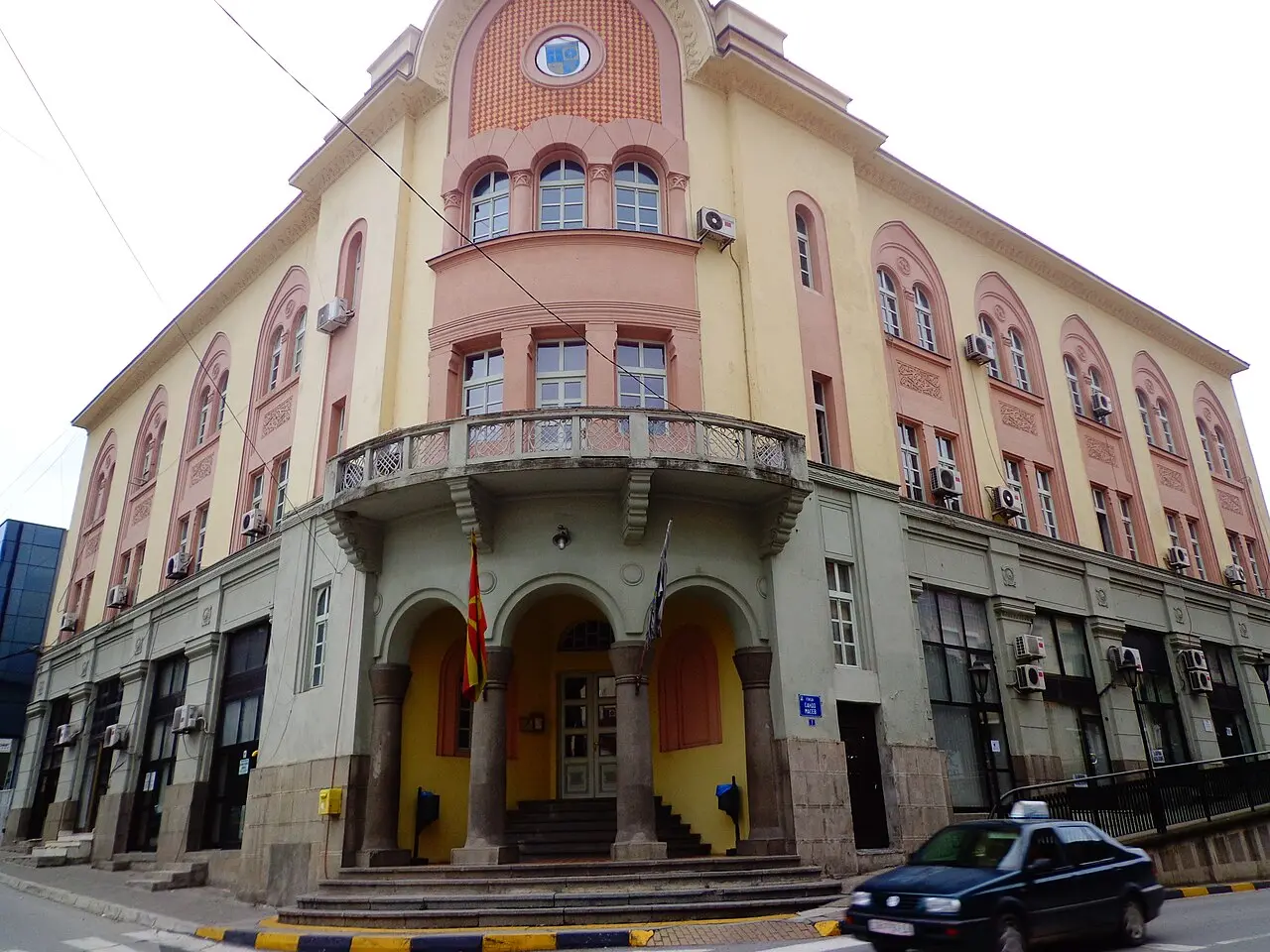
Down in town, life revolves around the central square and the pedestrian corso, where the whole city seems to turn out for a coffee and a slow evening walk. This is where Strumica feels most itself: unhurried, friendly, and much cheaper than anywhere on the tourist trail. The town’s patrons are the Fifteen Holy Martyrs of Tiberiopolis, and the large Orthodox cathedral dedicated to them anchors the centre. Wander the side streets and you’ll still spot a few handsome early-20th-century buildings among the newer blocks, survivors of the town’s more prosperous turn-of-the-century years.
The Strumica Carnival
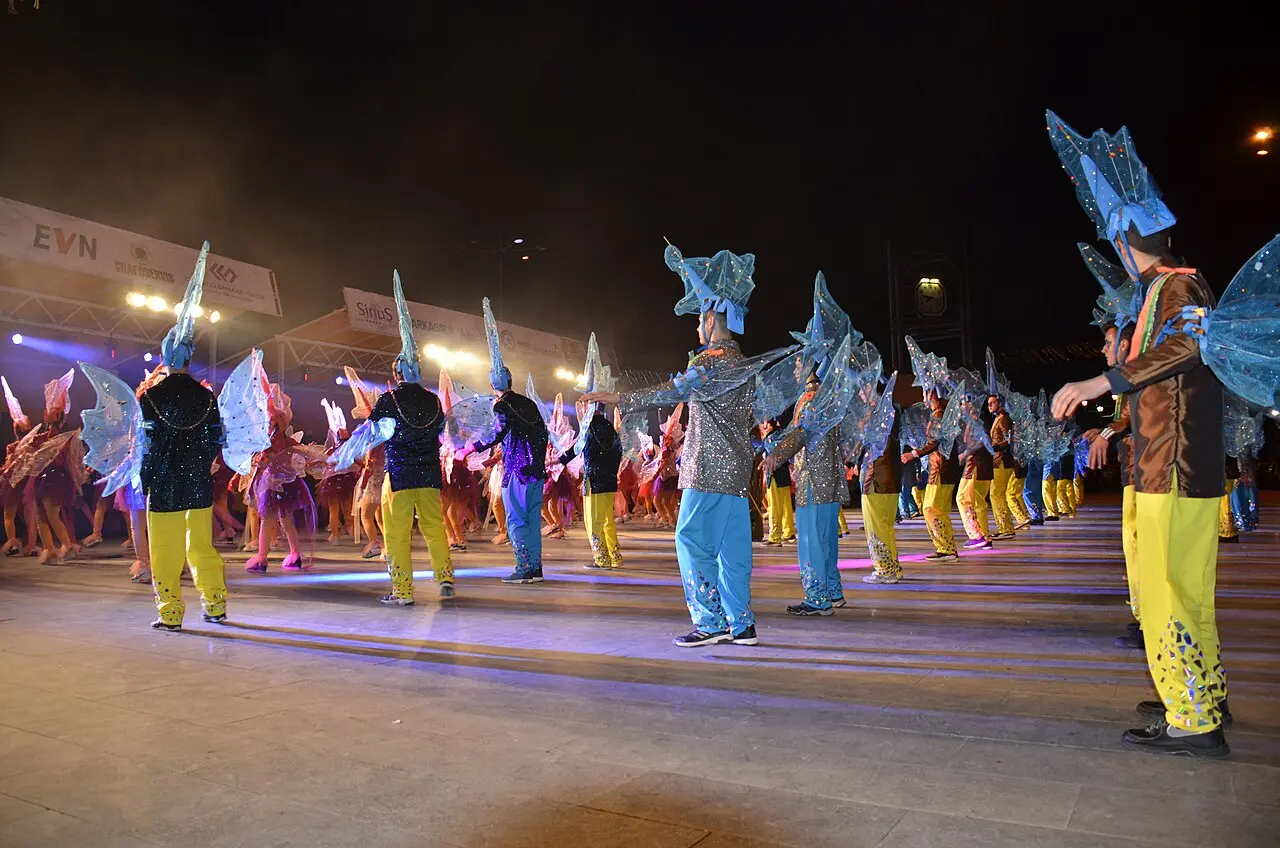
If you can time your trip to it, the Strumica Carnival is the reason to come. This isn’t a tourist re-enactment - it’s a living tradition that locals guard fiercely. A masked pre-Lenten custom was already being written about here in 1670, when the Ottoman traveller Evliya Çelebi described people running house to house in masks. Today the carnival is a member of the FECC (the international federation of carnival cities), and it fills the streets with thousands of costumed kukeri and a huge night parade of floats, music and satire.
The timing is the catch. The carnival falls during Trimeri, at the very start of Orthodox Lent, and the exact dates shift each year with the Orthodox calendar. In 2026 the municipality confirmed an eight-day programme from 18 to 25 February, with the main international parade on Saturday 21 February. The traditional children’s carnival follows on Prochka, Forgiveness Sunday, the last Sunday before Lent starts - so 22 February this year. Nights get cold and late, and the town fills up, so reserve a room early. Come for the Saturday parade, but also for the smaller neighbourhood mask parties and the general sense that the whole valley has decided to let loose. See our North Macedonia events calendar for how the carnival’s shifting dates line up against Vevčani’s fixed one and the rest of the year’s festivals and public holidays.
The monasteries: Veljusa and Vodoca
The other real draw sits in the hills just west of town, where two of North Macedonia’s most important Byzantine monasteries stand within a few kilometres of each other.
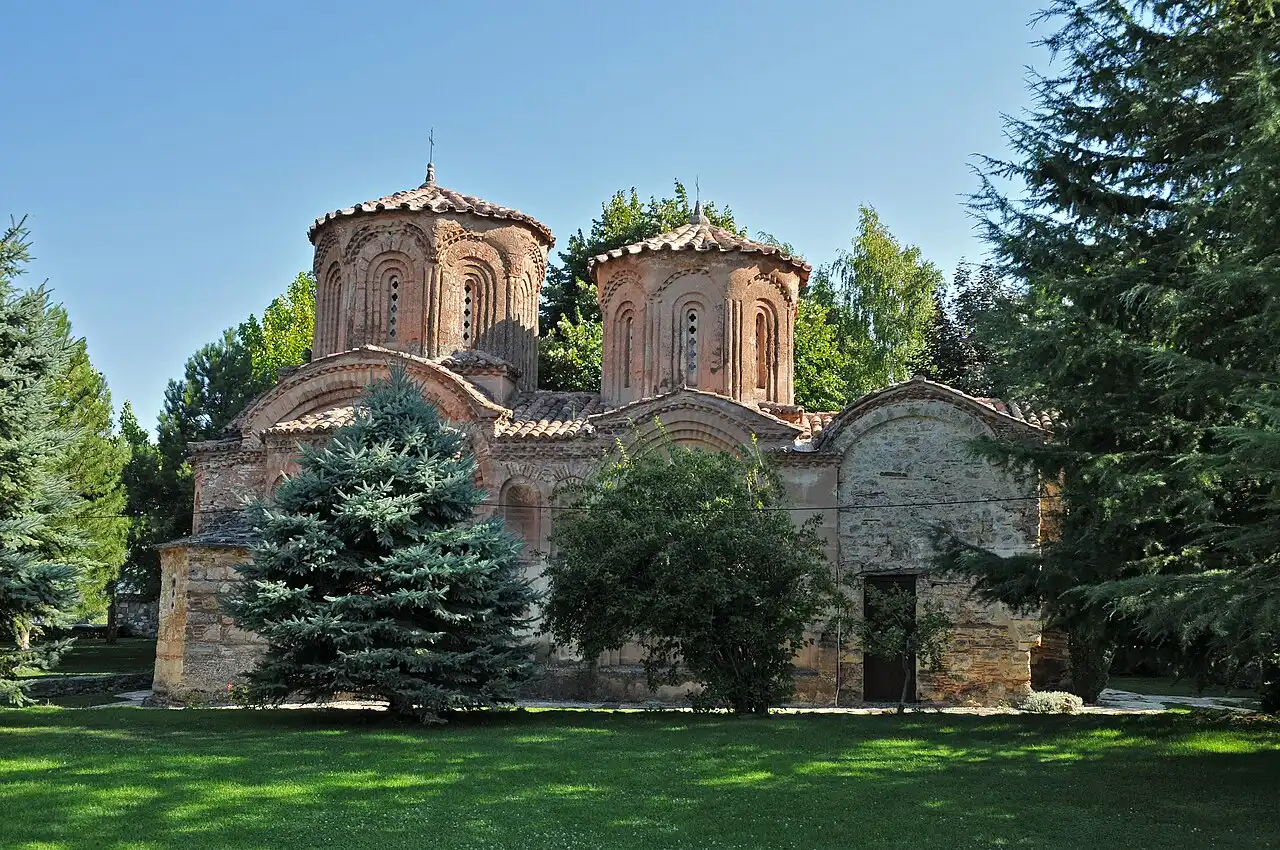
Veljusa, about 7 km out above its namesake village, is the star. Its little church of the Holy Mother of God Eleusa was built in 1080 and has never been fully destroyed or rebuilt, which is rare - so it keeps its original marble iconostasis and frescoes dating from around 1085. The exterior alone is worth the drive: a compact, quatrefoil church in warm patterned brick, set in quiet gardens with the valley falling away below. It’s small, so it doesn’t take long, but it’s one of the oldest intact Byzantine interiors in the country.
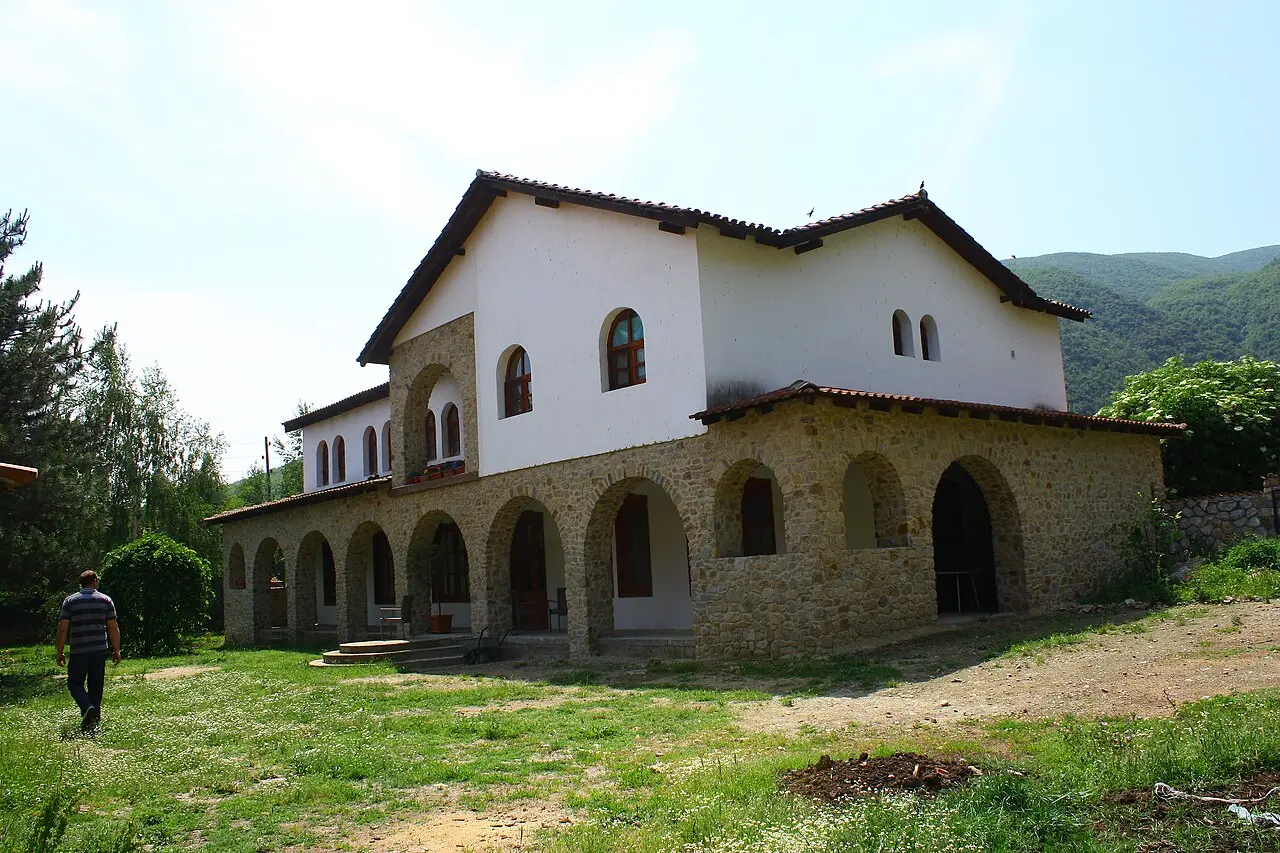
A few kilometres away, Vodoca is the seat of the Strumica Diocese and has a longer, layered story. The Byzantine monastery here (11th to 12th century) was built over the remains of a much older basilica going back to the 5th or 6th century, and its name is tied to a grim medieval legend about blinded soldiers - “Vodoca” is popularly read as “vadi oci,” to gouge out eyes. It’s an active religious community today, calmer and less visited than Veljusa, and the two pair naturally into one half-day loop by car or taxi.
Into the hills: waterfalls, Belasica and hot springs
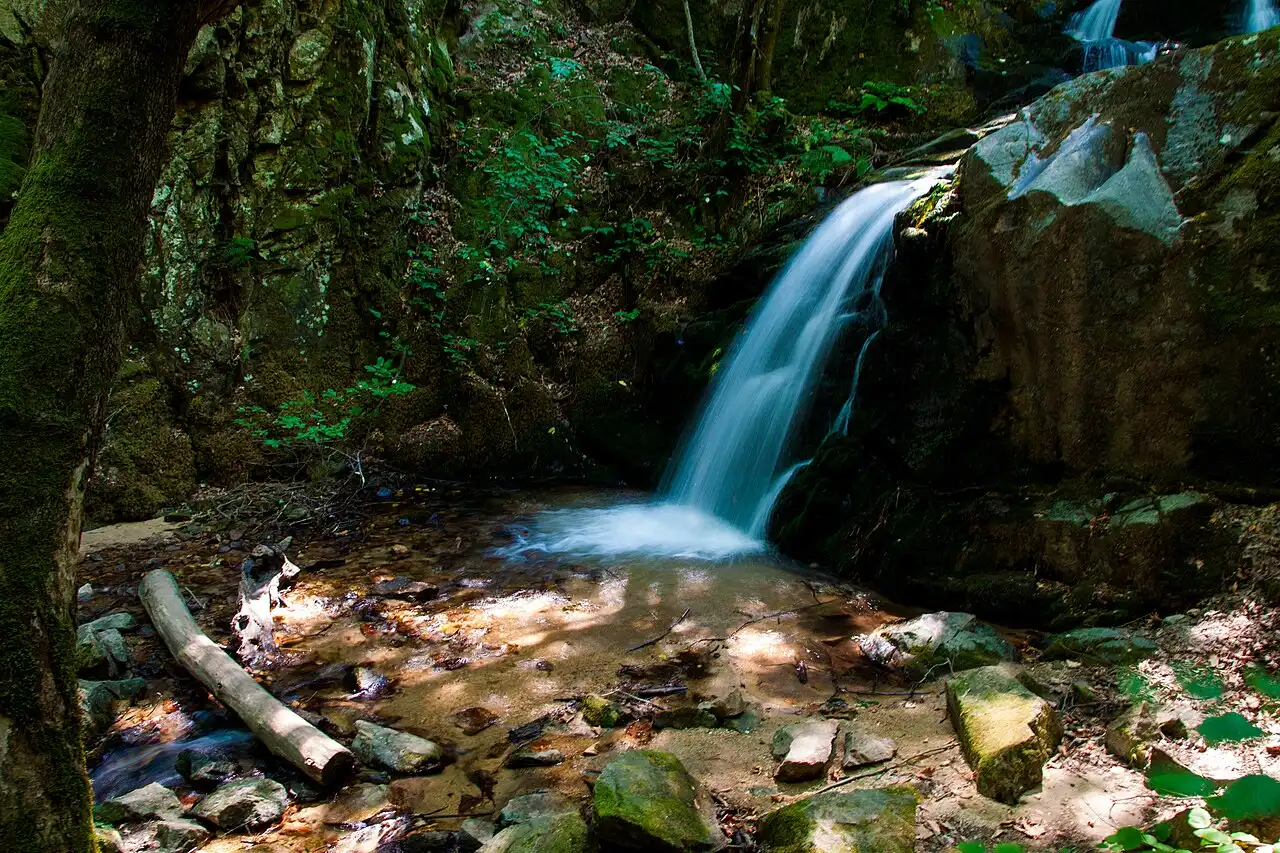
South of town the Belasica mountains rise along the Greek border, and that’s where Strumica keeps its best day trips. The headline is the pair of waterfalls above Novo Selo: Smolare, at about 39.5 m the tallest permanent waterfall in the country, and the lower Kolesino falls a little way off, both reached by well-made walkways and wooden staircases through cool forest. They make an easy half-day out of Strumica and are a blessing in the summer heat, when the valley bakes.
For something more restful, the Bansko thermal springs just outside Strumica have drawn bathers since Roman times. Five thermo-mineral springs run at 47 to 72 degrees C year-round and feed a spa and wellness complex - handy if you want an afternoon soak after a morning on the fortress hill. And all around lies the Strumica plain, one of the most fertile corners of the country and its unofficial vegetable garden; if the produce at your dinner table tastes better here, that’s why this flat, well-watered valley grows so much.
Where to eat in Strumica
Strumica eats well and cheaply. The corso and central square are lined with cafés, grills and pizzerias, and this being a domestic town rather than a tourist one, prices are in local denar (MKD) and portions are generous. Look for grills doing skara (mixed grilled meats), the usual Macedonian tavce gravce (baked beans) and ajvar, and plenty of fresh valley vegetables. Coffee culture is serious - joining the evening corso for a slow drink is half the point of being here.
Where to stay in Strumica
The town has a handful of city hotels and guesthouses, plus spa hotels out toward the Bansko springs, and everything is good value by Balkan standards. Most visitors stay central to be near the corso and restaurants, then drive out to the monasteries and waterfalls. The one time to book well ahead is carnival week, when rooms across the whole valley fill up fast and you won’t find a spare bed easily.
How to get to Strumica
From Skopje. Strumica is roughly 150 km southeast of the capital, about 1 hour 45 minutes to 2 hours by car on the A1 south and then east through Veles and Stip. Buses run from Skopje too, though you’ll want a car (or a taxi day trip) to string the monasteries, waterfalls and springs together, since they’re scattered around the valley rather than in town. See our guide to getting around North Macedonia for buses, and the car rental guide if you want the freedom to explore the Belasica.
Onward. Strumica sits close to the borders with Bulgaria and Greece, which makes it a logical stop on a longer eastern loop - it’ll slot neatly into the eastern leg of our 10-day North Macedonia grand tour. When D Festival is back on Lake Dojran, Strumica is also the practical hotel overflow for that weekend - denser bed stock than Star Dojran, and a short drive to the shore.
| Route | Distance | Time |
|---|---|---|
| Skopje → Strumica | ~150 km | ~1 h 45 min - 2 h by car |
| Strumica → Veljusa monastery | ~7 km | ~15 min |
| Strumica → Vodoca monastery | ~4 km | ~10 min |
| Strumica → Smolare & Kolesino falls | ~25-30 km | ~30-40 min |
Distances and times are approximate - confirm current bus schedules before you travel.
Practical tips
- How long to stay: a full day covers the fortress, the corso and the two monasteries; add a night to fit in the waterfalls or a spa afternoon.
- When to go: late February or early March for the carnival (check the current dates); spring and autumn for the best weather; the valley is very hot in high summer, when the Belasica waterfalls are a cool escape.
- Money: the currency is the Macedonian denar (MKD), steady against the euro at roughly 61.5 to 1. Carry some cash for smaller cafés and village monasteries.
- Getting around: the town centre is walkable; a car or taxi is the practical way to reach the monasteries, springs and falls.
- Visas & entry: US, UK, EU and Ukrainian citizens travel visa-free for 90 days within any 180; Russian citizens need a visa (since 21 March 2022). Rules change - always confirm with an official source. More in our North Macedonia planning hub.
Read also
- On the way in from Skopje: things to do in Stip, with the Isar hill and the Bargala ruins
- Browse all cities of North Macedonia
- Another under-visited town: things to do in Tetovo
- The country’s easy-going third city: things to do in Bitola
- Fit Strumica into the 10-day North Macedonia grand tour
- Festival overflow for a Dojran-side year: D Festival visitor guide
- Plan the budget: North Macedonia trip cost
- Time it right: best time to visit North Macedonia
Photos
On the map
The map loads on click - to keep the page lightweight.
The map didn’t load. Check your connection and refresh the page.
Distance ≈150 km · ~1 h 45 min - 2 h by car
- Skopje ≈150 km · ~1 h 45 min - 2 h by car
Read also

Cities · 12 min read
Things to Do in Stip: Bargala Ruins & the Isar
Updated · August 29, 2026Stip travel guide: the Isar hill's UNESCO-listed Chetrse ritual, the Bargala ruins, the Bezisten gallery, pastrmajlija, and how to get there from Skopje.

Cities · 8 min read
Demir Kapija, Stobi and the Tikves Wine Road
Updated · July 15, 2026The Demir Kapija gorge, the Roman city of Stobi and the Tikves vineyards - how to see North Macedonia's Vardar valley in one easy day from Skopje.

Cities · 9 min read
Things to Do in Kratovo: Crater Town, Towers & Bridges
Updated · July 14, 2026Kratovo travel guide: a town in the crater of an extinct volcano, with medieval stone towers, high Ottoman bridges, mining history and how to visit.

Cities · 11 min read
Kruševo Travel Guide
Updated · July 3, 2026Kruševo, North Macedonia - the country's highest town: the Makedonium spomenik, the 1903 Ilinden uprising, Toše Proeski, Vlach houses and paragliding.