
Demir Kapija, Stobi and the Tikves Wine Road
The Demir Kapija gorge, the Roman city of Stobi and the Tikves vineyards - how to see North Macedonia's Vardar valley in one easy day from Skopje.
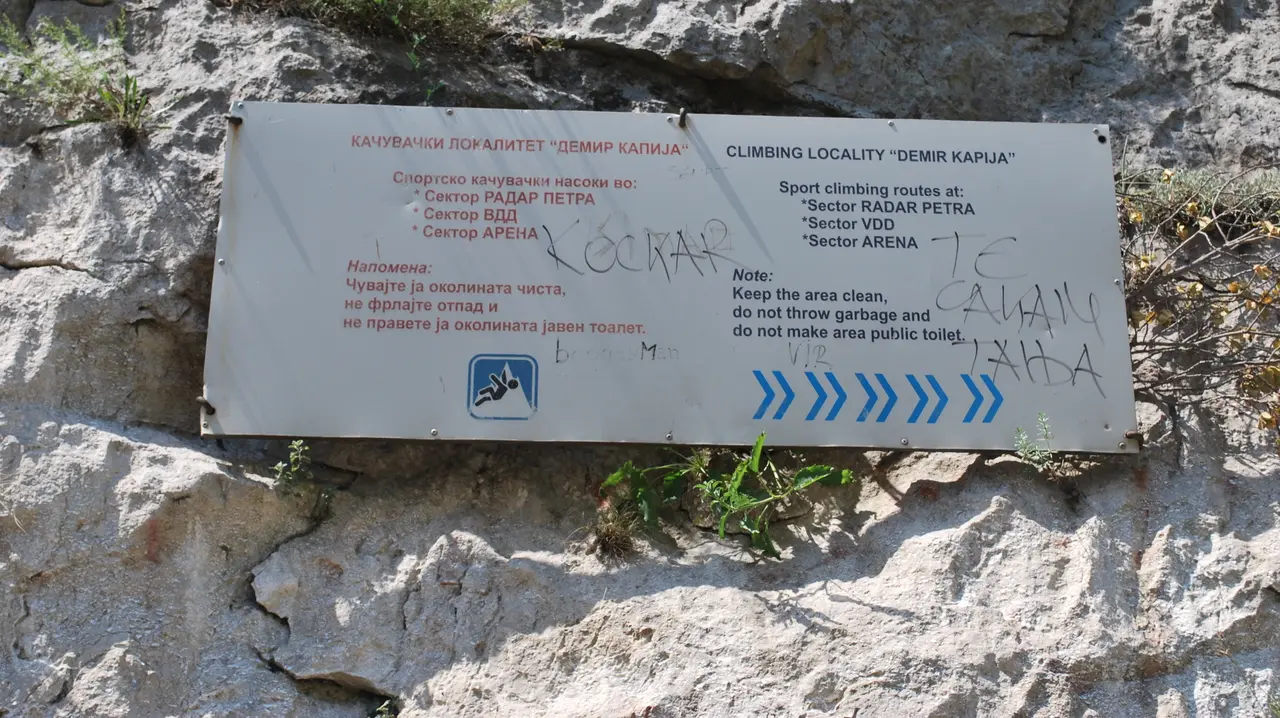
An hour south of Skopje the motorway threads through a wall of bare limestone where the Vardar squeezes into its narrowest gap. This is Demir Kapija, the “Iron Gate,” and the short stretch of valley around it holds three of North Macedonia’s best day-trip reasons in one place: a dramatic river gorge full of vultures, the ruins of Stobi, once a Roman provincial capital, and the vineyards of Tikves. You can drive down, see all three and be back in the city by dinner. This guide covers what’s actually here and how to string it together; for the winery bookings and tasting prices, our Tikves wine region guide does the logistics.
The Iron Gate gorge
The name is Ottoman Turkish for “iron gate,” and it fits: for centuries this defile was the choke point on the road from the Danube to the Aegean, easy to block and hard to force. The Vardar has carved the longest gorge on its whole course here, roughly 19 km of limestone that the ancients simply called Stenae, “the narrows.” The modern A1 motorway and the Corridor X railway both thread through it, so even if you never stop you get the scenery through the windscreen.
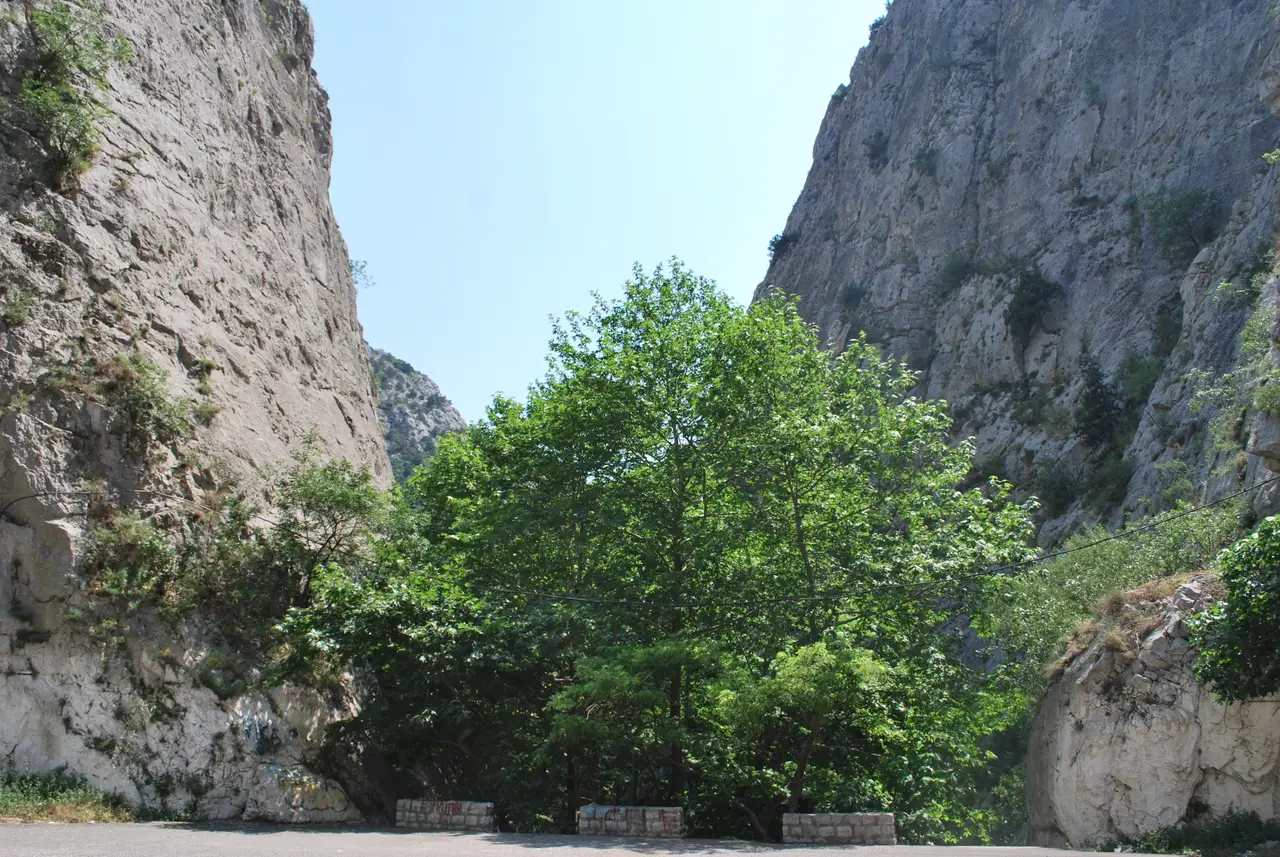
It’s also one of the best raptor gorges in the Balkans. The cliffs and the side valleys make up a 10,500-hectare Important Bird Area, home to griffon and Egyptian vultures, golden eagles, short-toed snake-eagles and rock partridges. You’ll not be guaranteed a sighting from the road, but scan the thermals over the ridges on a warm morning and you have a real chance of a vulture wheeling overhead. One warning that matters in July and August: this is the hottest spot in the country. The national record, 45.7 C, was set right here in 2007, so the valley cooks in high summer.
The town, and the ghost of Prosek
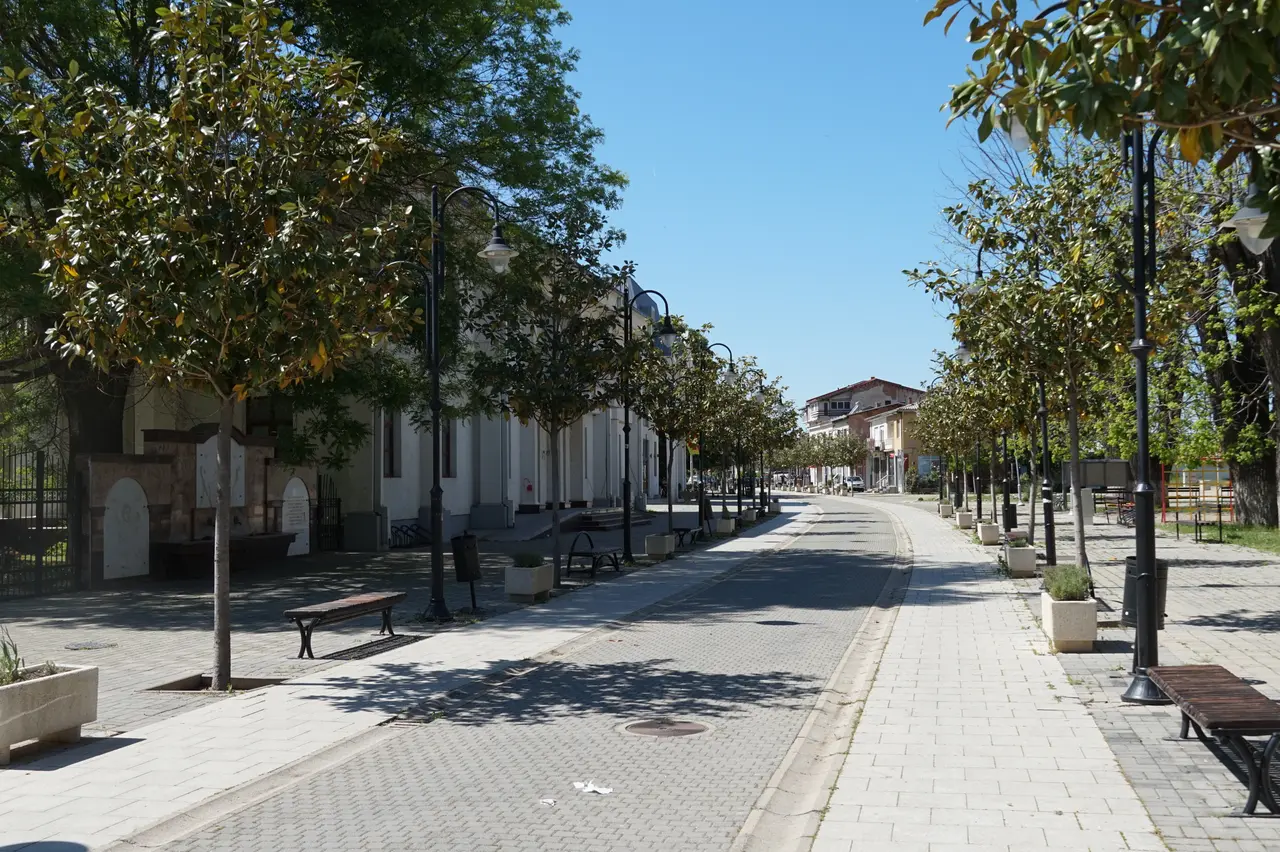
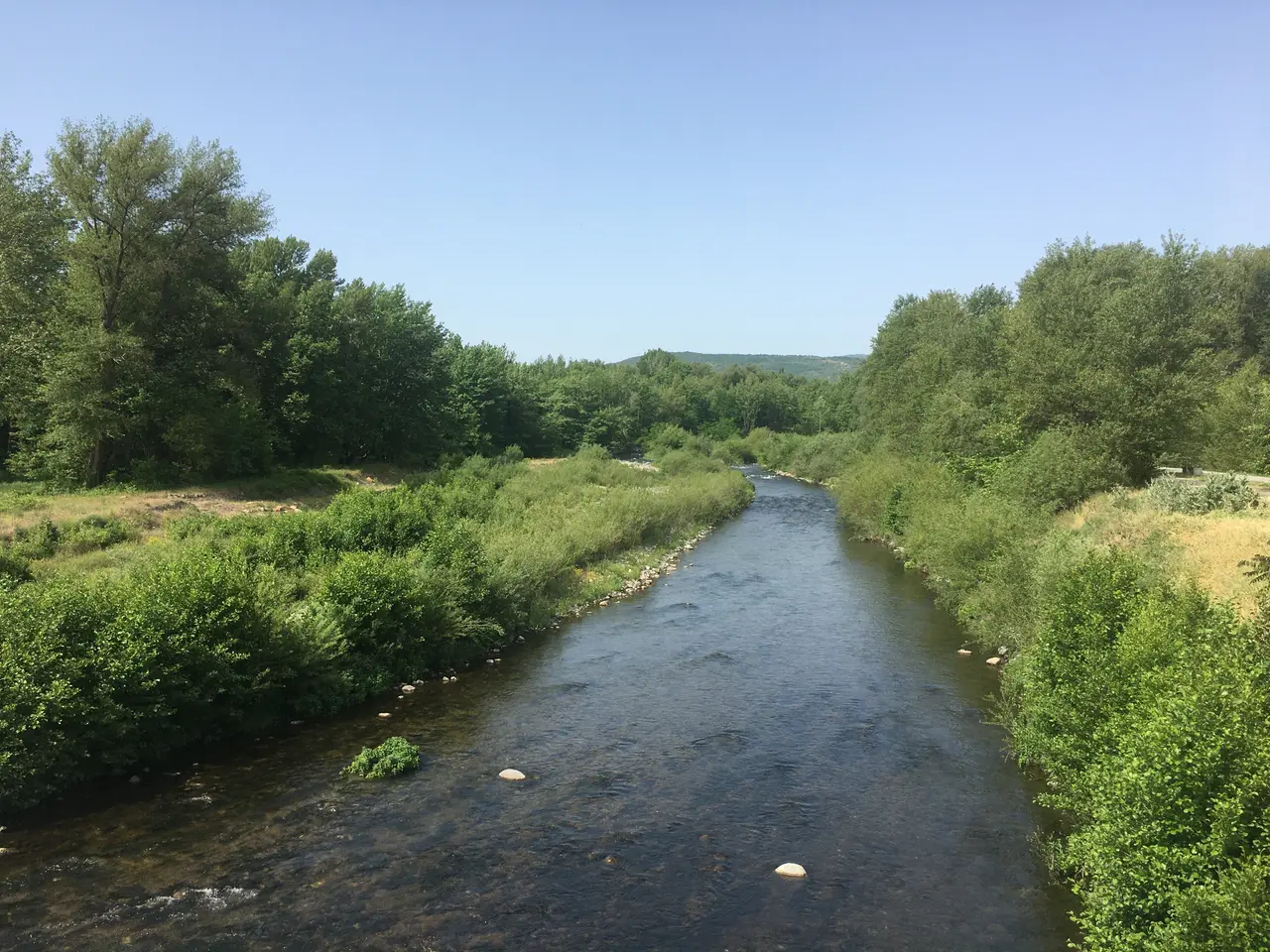
Demir Kapija the town is small, a few thousand people, and it doesn’t pretend to be a sight in itself. There’s a tidy central square, a riverside park along the Bosava, and the workaday feel of a wine-and-railway town. It’s a pleasant place to grab a coffee and stretch your legs between the gorge and Stobi rather than a destination you plan a day around.
That’s the interesting part. In the Middle Ages a fortified town called Prosek sat on a bluff above the gorge, and around 1199 a local warlord, Dobromir Chrysos, held it against the Byzantine emperor - the classic Balkan story of a rock nobody could take. Higher up, on Mount Ramniste, are the ruins of a Paeonian fortress reckoned to be some 3,000 years old, one of only three such structures known in the country. Be honest with yourself before you go looking: these aren’t groomed monuments with a ticket office - they’re unmarked, overgrown sites for people who like a scramble and a map. Most visitors admire Prosek as a story and a skyline rather than a place to walk.
Stobi: the real headline
There’s one stop that justifies the drive on its own, a little to the north, near Gradsko, where the Crna river joins the Vardar: Stobi, a genuinely major ancient city that you probably haven’t heard of. It started as a Paeonian settlement, gets its first written mention in 197 BCE, and rose under Rome to become the largest city in the northern part of the province of Macedonia. By 69 BCE it was a municipium minting its own coins, and in late antiquity it served as the capital of the province of Macedonia Salutaris. Emperor Theodosius I stayed here in 388. Then the luck ran out: the Ostrogoth Theodoric sacked it in 479, a powerful earthquake flattened much of it in 518, and the Avar and Slav invasions of the following century finished the job.
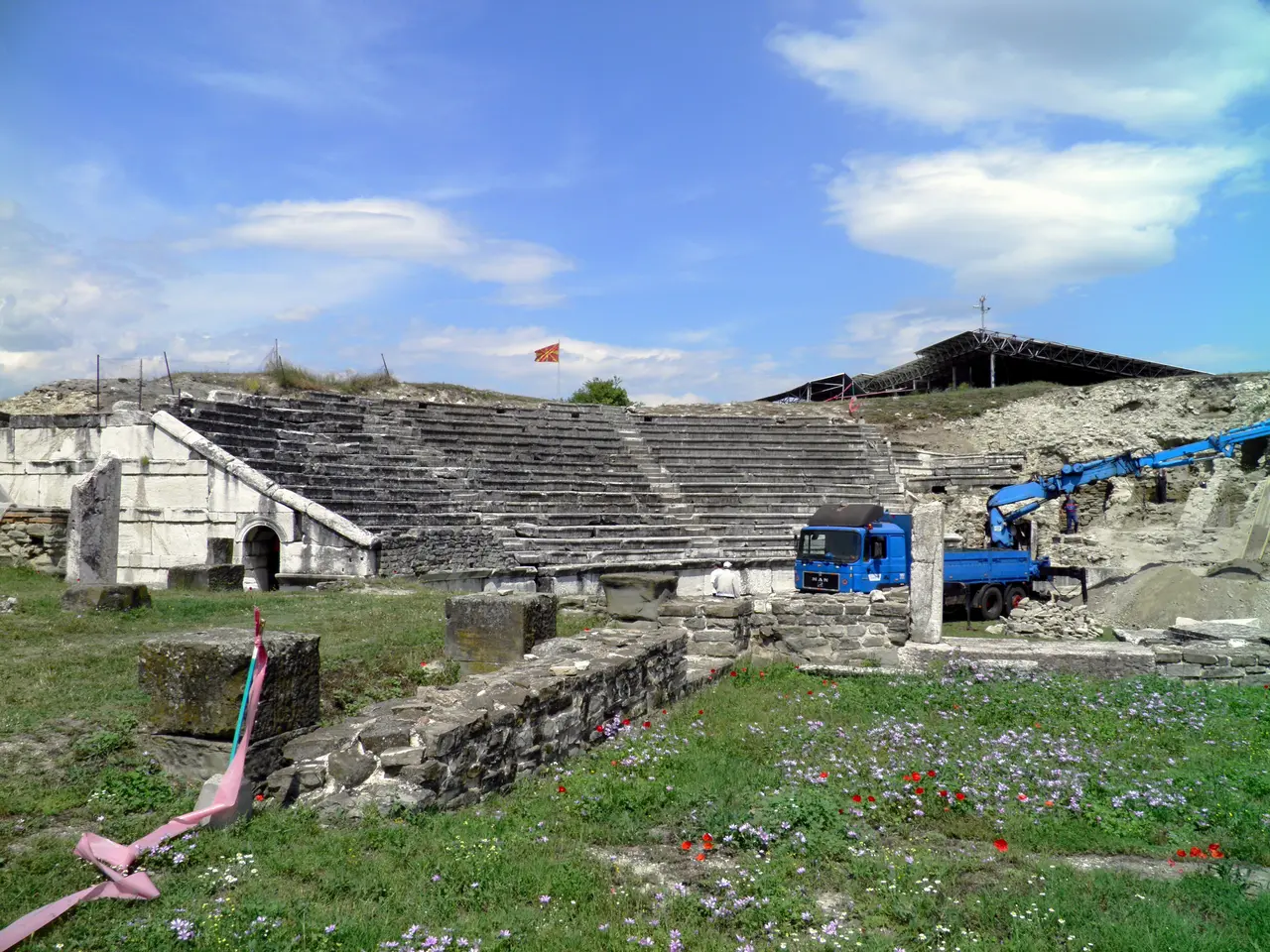
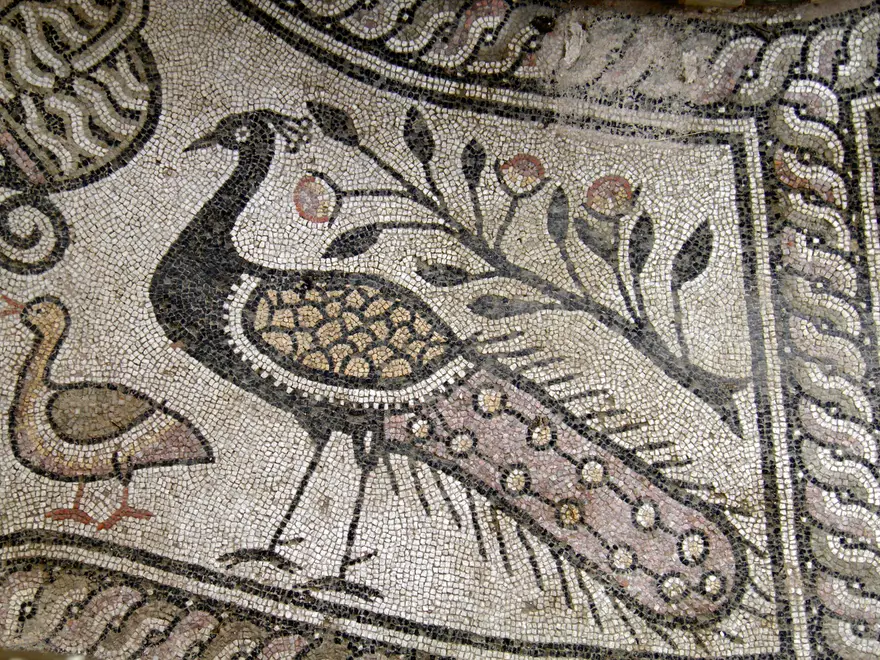
What you’ll find is a proper archaeological park you can spend two or three hours in. The Roman theatre, the colonnaded streets, the big public baths and the ruins of grand town houses give you the shape of a real city, not a scatter of stones. The showpiece is the Episcopal Basilica and its baptistery, where the fifth-century floor mosaics of peacocks and deer are some of the finest late-antique mosaics in the Balkans. You’ll want to look for the House of Psalms and the House of Peristerius too, both with mosaic floors, and the remains of an early synagogue that predates the Christian basilicas - that’s a reminder of how mixed a trading city this was.
Practical notes: entry has been about 300 denar (roughly 5 euros) in 2025, there’s a small visitor centre with finds, a ticket kiosk and toilets, and a site map sells for about 50 denar. Check the current fee and hours on the site’s own page before you rely on them, because posted times aren’t always accurate. The single most useful tip is about the sun: there’s almost no shade among the ruins, so in summer come early or late and bring water. Give it two hours minimum.
The wine road
All of this sits in Tikves, the hot basin that holds about four in five of the country’s wineries, so it would be rude not to build in a cellar. The obvious stop right at Demir Kapija is Popova Kula, a modern winery with its own hotel on the edge of the vineyards. It’s the estate that rescued Stanusina, a pale local red you can’t easily drink anywhere else, and because you can sleep on site it solves the eternal problem of who drives home after a tasting.
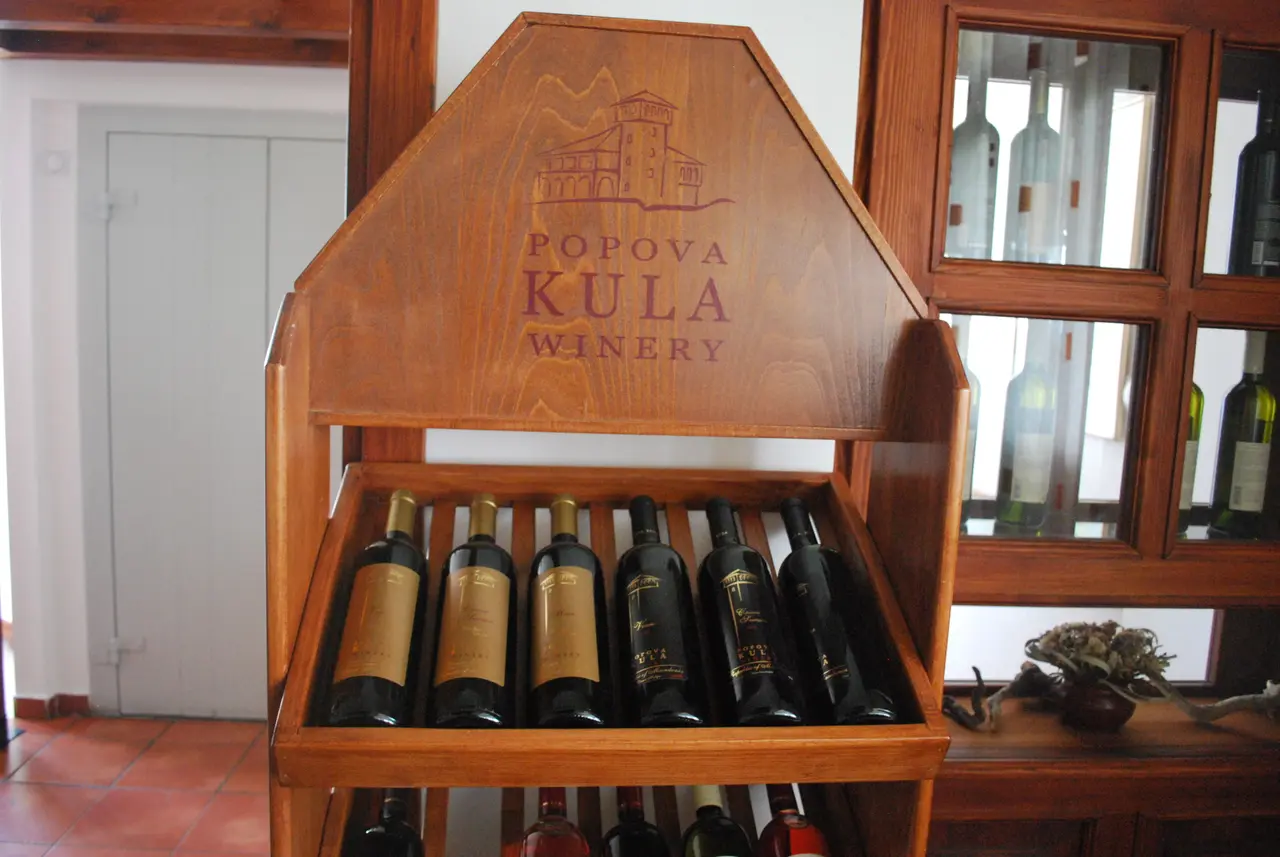
I’ll not repeat the winery-by-winery detail here. If you want tastings, prices and how to organise a day around cellars rather than ruins, our Tikves wine region guide covers Popova Kula, Stobi Winery and the others, and the Macedonian wine guide explains the grapes worth chasing, from Vranec to that Stanusina. If you’re aiming for early September, the Tikves Grozdober harvest festival in Kavadarci is the loud public face of the same valley.
How to do it in a day
From Skopje it’s simple. Head south on the A1/E75; Stobi sits by the Gradsko exit at about 75 km, and Demir Kapija is roughly 85 km, an hour of easy motorway. My order for a day: Stobi first thing while the ruins are still cool, the gorge and a coffee in town around midday, and a winery in the afternoon, ideally one where you can either taste and drive on sensibly or stay the night. If you would rather not drive at all, day tours from Skopje pair Stobi with a Tikves winery and hand you a driver, which is the civilised way to actually drink.
Spring and autumn are the sweet spots: the light is kind, the vineyards look their best in September, and you’re not being roasted at Stobi. Summer works if you’re disciplined about the heat and start early. For where this fits in a wider trip and what it all costs, see what a North Macedonia trip costs, and if you’re basing yourself in the capital, our things to do in Skopje sets up the day.
See also
- Tikves wine region: wineries and tasting tours - the cellars, prices and how to book
- Macedonian wine: grapes and regions - Vranec, Stanusina, Temjanika
- Things to do in Skopje - the base city for the day
- Matka Canyon - the other easy gorge trip from the capital
- North Macedonia trip cost - is it expensive, and what a day costs
Photos
On the map
The map loads on click - to keep the page lightweight.
The map didn’t load. Check your connection and refresh the page.
Distance
- Skopje ≈85 km · ~1 h South on the A1/E75; Stobi (Gradsko) at ~75 km, Demir Kapija at ~85 km.
- Bitola ≈120 km · ~2 h
Read also

Cities · 12 min read
Things to Do in Stip: Bargala Ruins & the Isar
Updated · August 29, 2026Stip travel guide: the Isar hill's UNESCO-listed Chetrse ritual, the Bargala ruins, the Bezisten gallery, pastrmajlija, and how to get there from Skopje.

Cities · 9 min read
Things to Do in Kratovo: Crater Town, Towers & Bridges
Updated · July 14, 2026Kratovo travel guide: a town in the crater of an extinct volcano, with medieval stone towers, high Ottoman bridges, mining history and how to visit.

Cities · 11 min read
Things to Do in Strumica: Carnival, Fortress & Monasteries
Updated · August 5, 2026Strumica travel guide: the pre-Lenten carnival, the Carevi Kuli fortress, the Veljusa and Vodoca monasteries, hot springs and how to get there.

Cities · 11 min read
Kruševo Travel Guide
Updated · July 3, 2026Kruševo, North Macedonia - the country's highest town: the Makedonium spomenik, the 1903 Ilinden uprising, Toše Proeski, Vlach houses and paragliding.