
Things to Do in Kratovo: Crater Town, Towers & Bridges
Kratovo travel guide: a town in the crater of an extinct volcano, with medieval stone towers, high Ottoman bridges, mining history and how to visit.
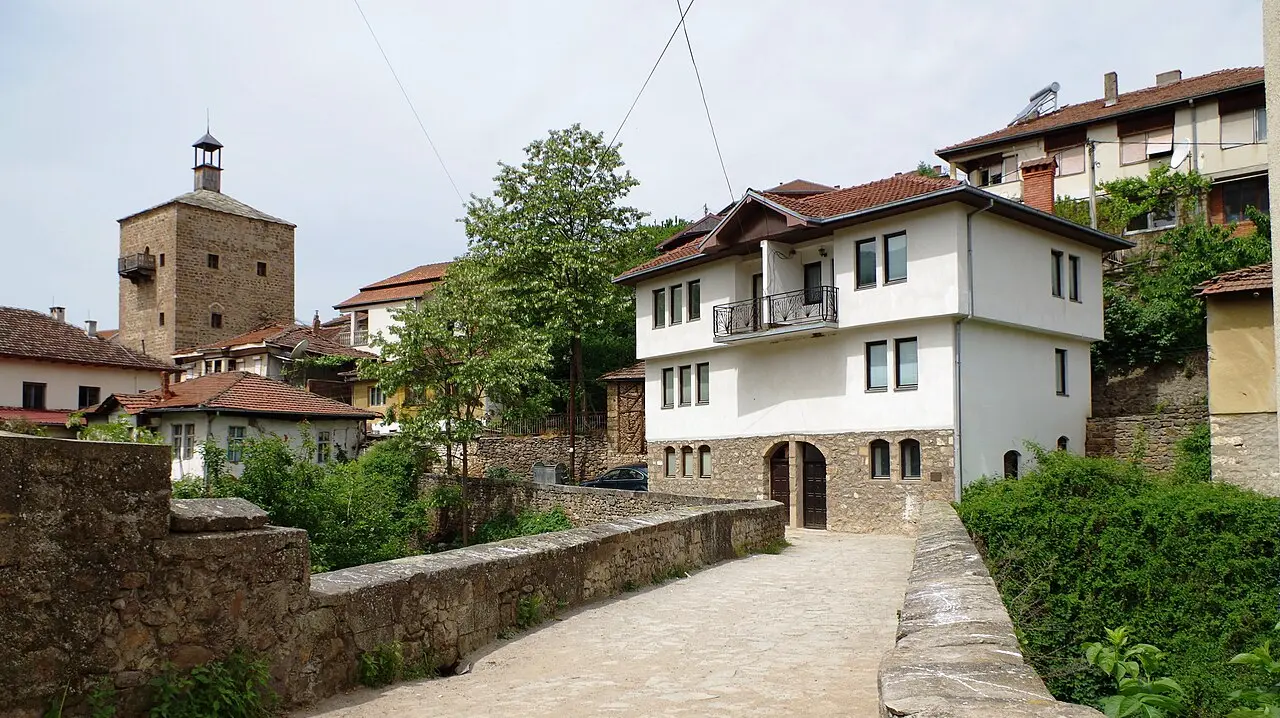
Kratovo is the strangest-sited town in North Macedonia: it sits inside the crater of an extinct volcano, its stone houses stacked up the sides of a deep ravine and stitched together by high arched bridges. Add a skyline of medieval stone towers left over from a long-gone gold and silver boom, and you get a place that looks like nowhere else in the country. It’s small, steep and quietly atmospheric, an easy day trip from Skopje that hardly any foreign visitors make. This guide covers what to see, the towers and bridges that make Kratovo special, the nearby Kuklica stone dolls, and how to get here.
Set your expectations right and you will love it. Kratovo isn’t a polished tourist town - it’s a lived-in, slightly faded old mining settlement of under 6,000 people, with power lines strung across the lanes and a handful of sights you can cover on foot in half a day. The pleasure is in the setting and the wandering: crossing and re-crossing the stream on old bridges, climbing cobbled alleys, and looking up at the towers over the rooftops.
The setting: a town in a volcanic crater
The first thing to grasp is the shape of the place. Kratovo grew up in the crater of an extinct volcano, around the stream that cuts through the bottom of the gorge. That is why the town feels vertical and tangled - neighbourhoods sit on different levels of the crater walls, linked by stairways and by the bridges that are the town’s trademark. At about 600 m of altitude, it also keeps a mild microclimate, pleasant in spring and autumn when the surrounding hills turn green or gold.
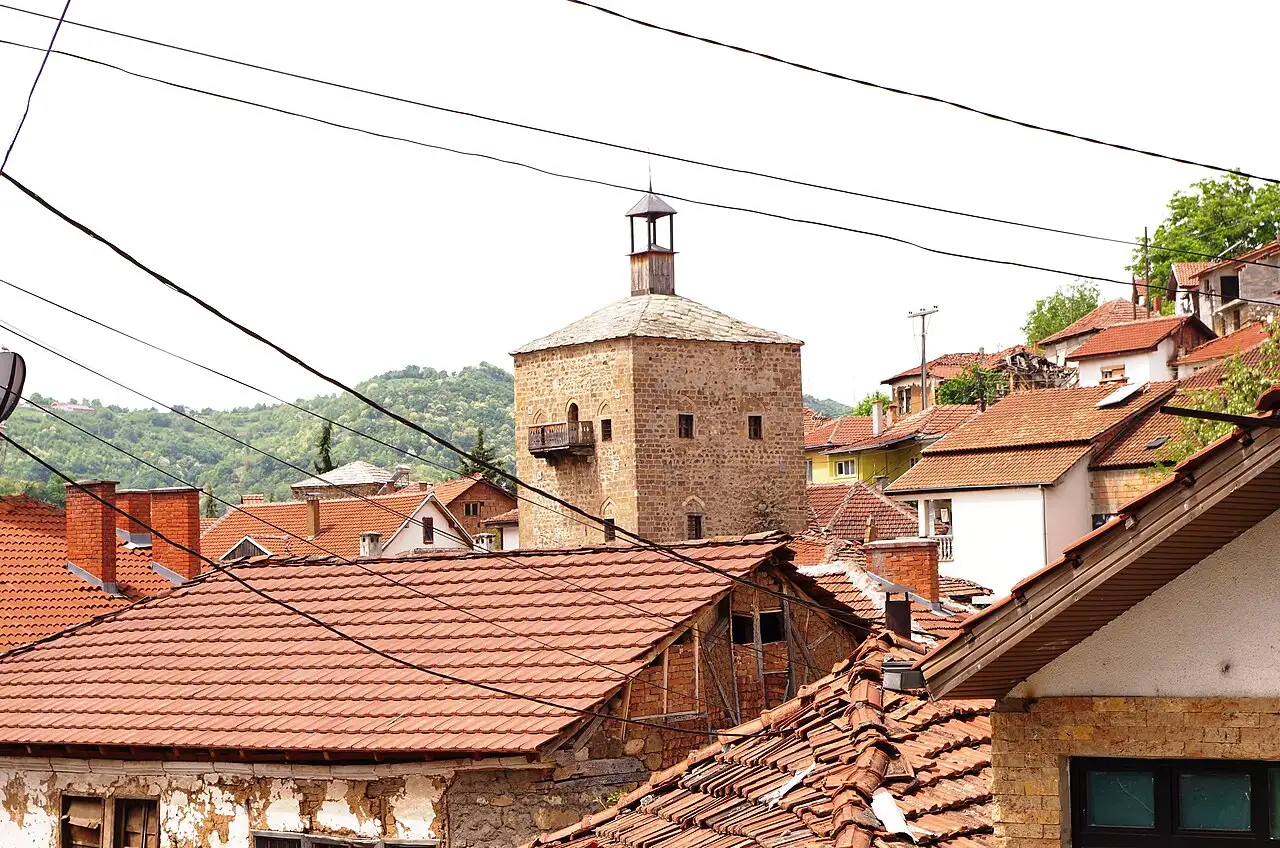
All of this exists because of what was under the ground. In the Middle Ages Kratovo was one of the great mining centres of the Balkans, digging gold, silver, lead, iron and copper out of the surrounding hills. The wealth was serious enough that the Ottoman mint here, opened in the late 15th century, became the second-largest coin producer in the whole Ottoman Empire, behind only Novo Brdo. The mines kept working, on and off, until they finally closed in 1882 - and the money they made is exactly why a small town ended up with a cluster of fortified towers.
The towers
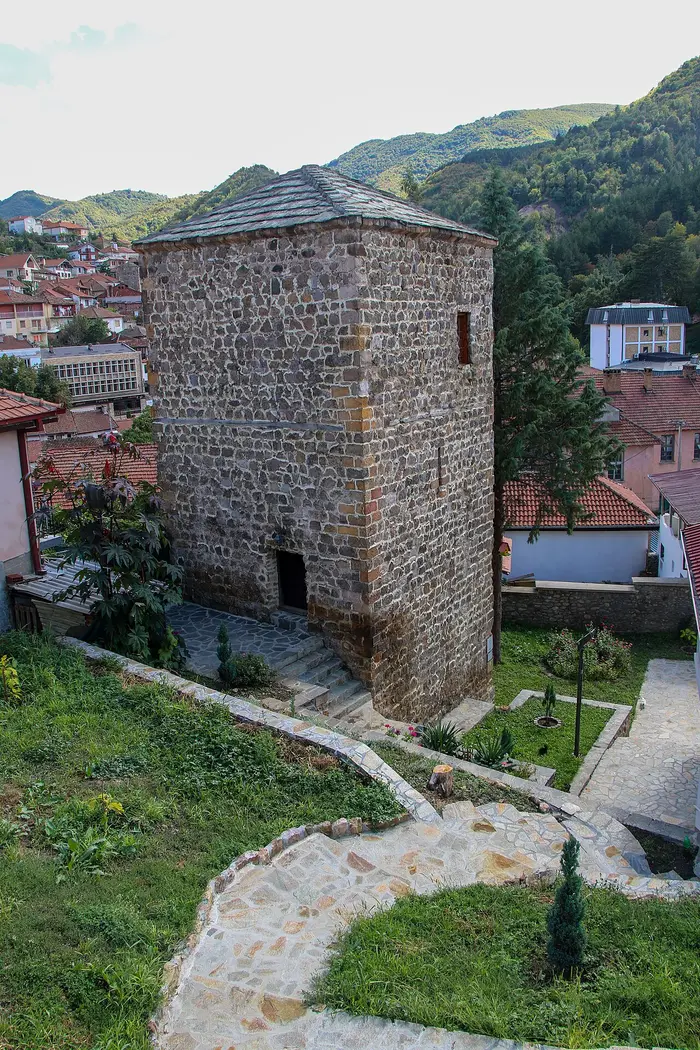
Kratovo’s signature sights are its stone towers (kuli). These weren’t military castles but fortified tower-houses - part home, part treasury and stronghold - built from the late 14th century by the families who ran the mines and trade. Of an original twelve, six still stand, and spotting them above the roofs as you walk is half the fun.
The one you can reliably go inside is the Clock Tower (Saat Kula), which dates to around 1372 and now holds the Kratovo city museum over its three floors - the logical first stop for the town’s mining and coin-minting story. Confirm current opening hours when you arrive, as they can be short and seasonal.
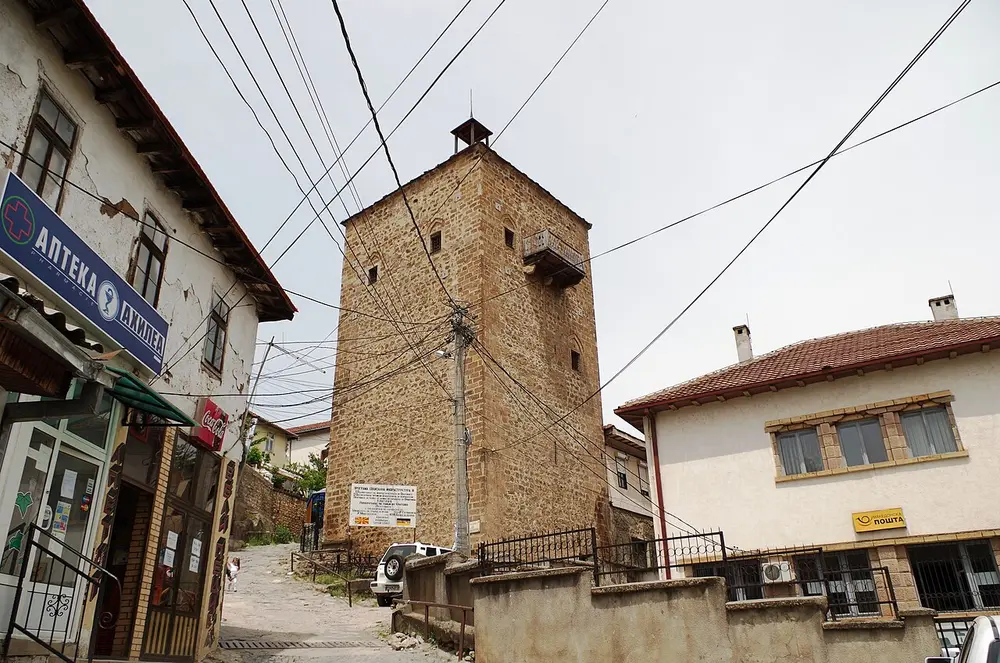
The others - the Zlatkov Tower (about 1365, the oldest of them), the Simic Tower (around 13 m tall), and the Krstev, Eminbeg and Hadzi-Kostov towers - are scattered across the two sides of the gorge, some restored, some still lived in or fenced off. You’ll not necessarily get inside every one, but they are worth tracking down for their setting and their handsome coursed stonework.
The bridges
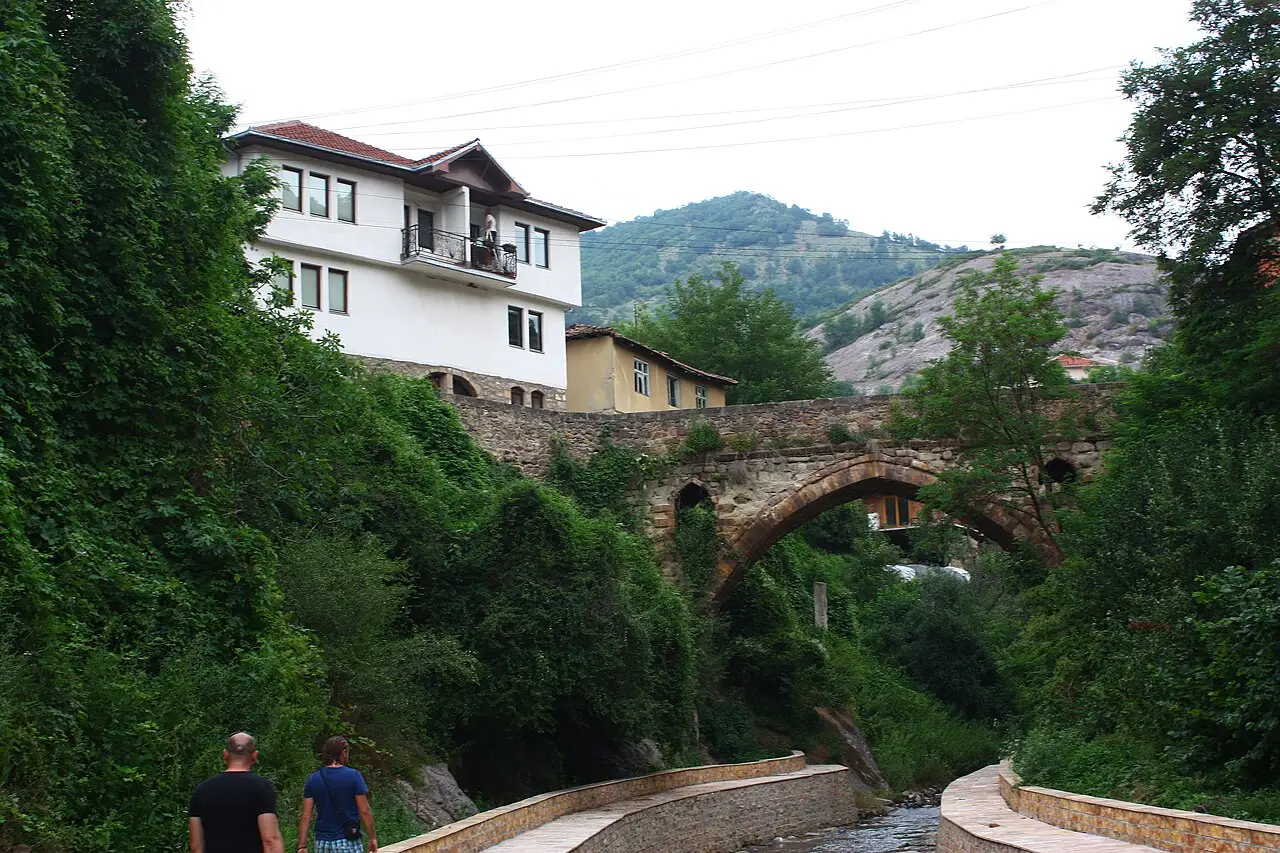
If the towers are Kratovo’s landmarks, the arched stone bridges are what you actually use to get around, hopping the stream from one side of the gorge to the other. They’re built from the local volcanic stone, and the effect - narrow humped spans between tall old houses, greenery spilling down the ravine - is genuinely photogenic. The oldest go back to the early-Ottoman period; the best-known, the graceful Radin Bridge, took its present form in 1833. Take your time crossing a few; each frames a different view down the gorge.
Wandering the old town
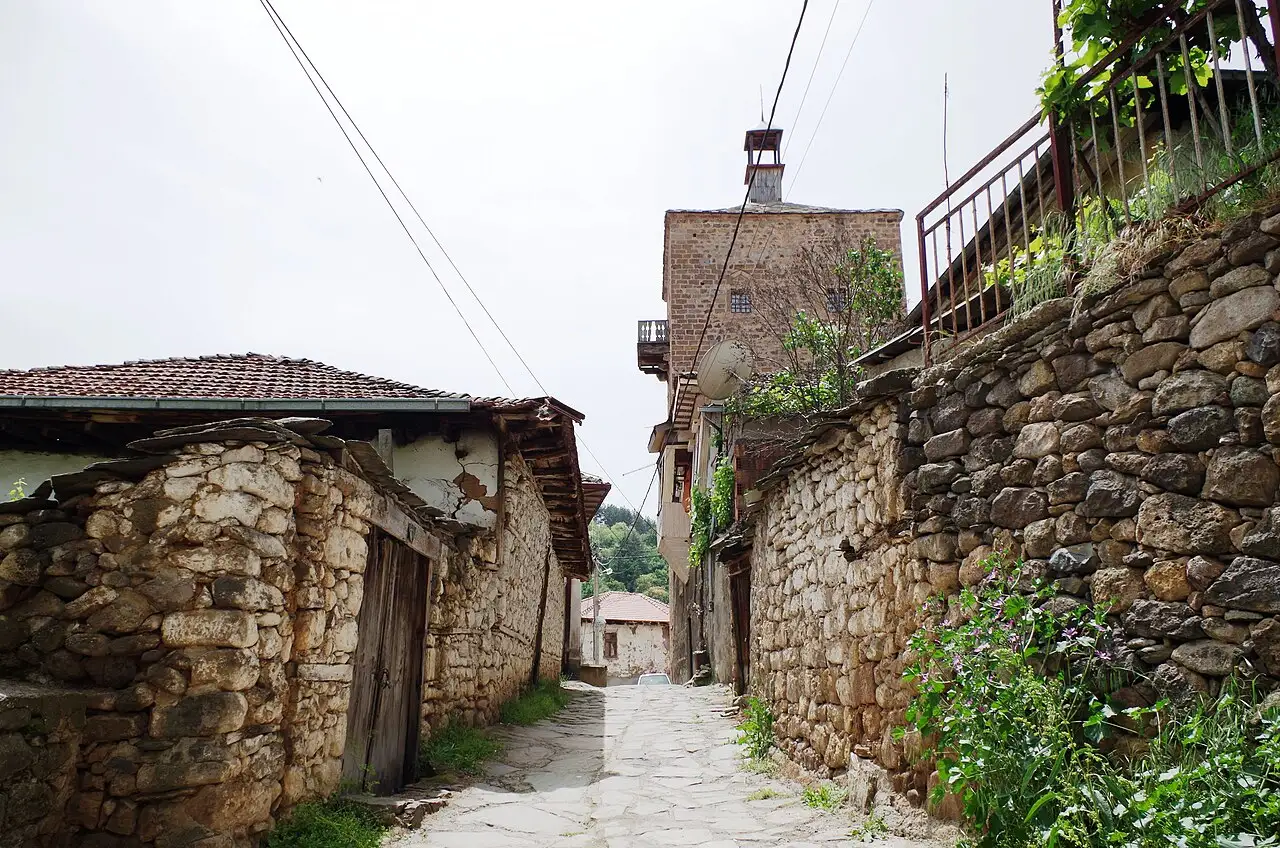
Beyond ticking off named sights, the best thing to do in Kratovo is simply to walk. Steep cobbled lanes run between dry-stone walls and old timber-and-stone houses, opening now and then onto a bridge, a tower or a little church. It’s compact enough to explore without a map - just follow the stream and the stairways - but the gradients are real, so wear shoes with grip. Pause at a cafe on the small central square to watch the slow rhythm of a town where everyone knows everyone.
Day trip: the Kuklica stone dolls
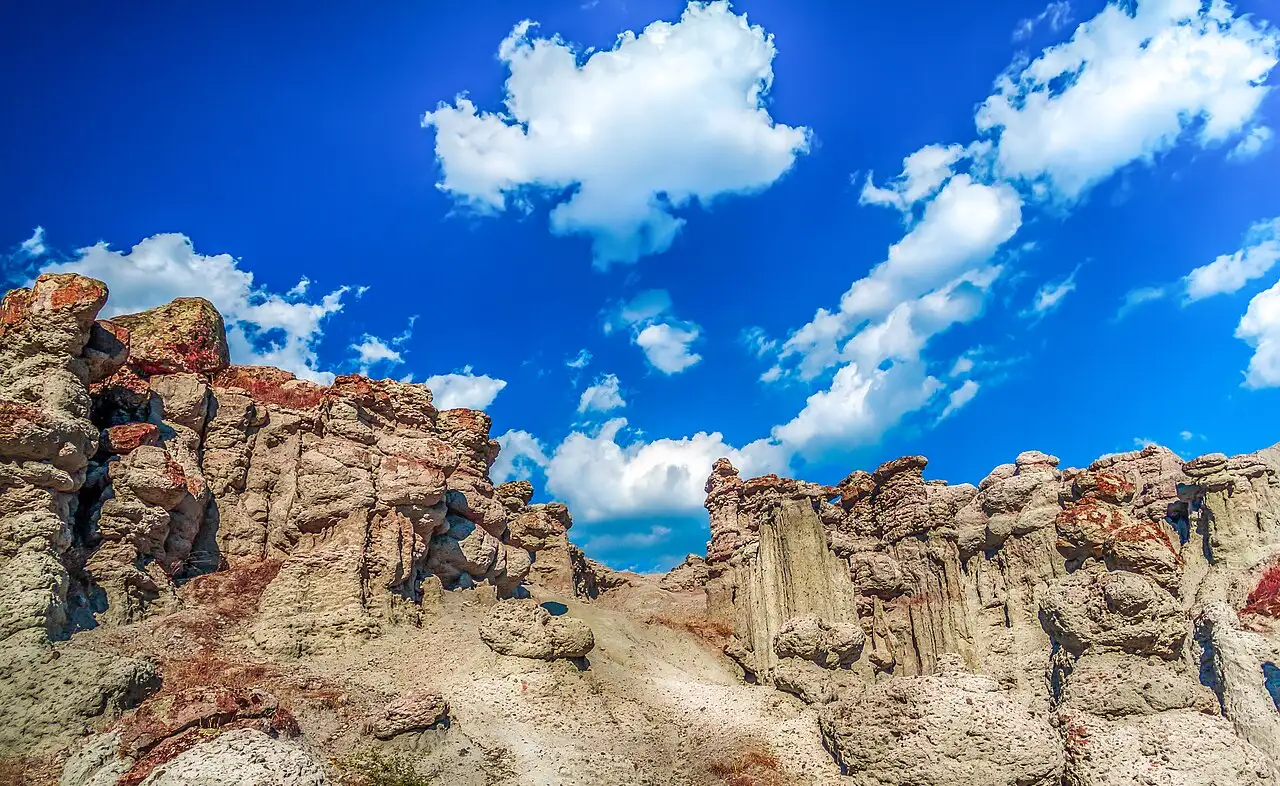
The big draw just outside town is Kuklica, the “stone dolls” - a field of natural erosion pillars about 11 km west of Kratovo. There are roughly 15 tall columns (some up to about 10 m) and around 120 smaller ones, and local legend explains them as a wedding party turned to stone. It’s an easy add-on to a Kratovo trip by car or taxi, and it pairs well with the megalithic observatory at Kokino further north if you’re making a full day of the northeast. Both really deserve their own visit, so treat them as a reason to linger a second day rather than a rushed afternoon stop.
Where to eat and stay in Kratovo
Kratovo is a small town, so keep it simple. A couple of traditional restaurants in and around the centre do the usual Macedonian grills, bean dishes and local trout, sometimes with live music at weekends; prices are in denar (MKD) and low. For a bed, options are limited - there’s a main town hotel plus a scattering of guesthouses and rooms - so if you want to stay over (worthwhile to fit in Kuklica), book ahead, especially on summer weekends. Many people simply visit on a long day trip from Skopje.
How to get to Kratovo
From Skopje. Kratovo lies roughly 90 km northeast of the capital, about 1 hour 20 to 30 minutes by car. There are daily buses from Skopje, as well as from Kumanovo and Stip; the bus station sits at the western end of town. If you’re short on time, a taxi from Skopje runs around 30 EUR, and from Kumanovo about 1,500 denars. A car makes it far easier to combine Kratovo with Kuklica and Kokino, which are scattered across the countryside. See our getting around North Macedonia guide for buses and the car rental guide for self-driving.
On a longer trip. Kratovo is the natural first stop heading into the little-visited northeast, and it opens the eastern leg of our 10-day North Macedonia grand tour.
| Route | Distance | Time |
|---|---|---|
| Skopje → Kratovo | ~90 km | ~1 h 20-30 min by car |
| Kratovo → Kuklica stone dolls | ~11 km | ~20 min |
| Kratovo → Kumanovo | ~40 km | ~45 min |
Distances and times are approximate - confirm current bus schedules before you travel.
Practical tips
- How long to stay: half a day covers the towers, bridges and old lanes; add a night to reach Kuklica and Kokino without rushing.
- When to go: spring (April to June) and autumn (September to November) are the most pleasant; the crater setting means shady lanes even in summer.
- On foot: everything in town is walkable but steep - wear proper shoes and expect stairs.
- Money: the currency is the Macedonian denar (MKD), steady against the euro at roughly 61.5 to 1; carry cash for cafes and the museum.
- Visas & entry: US, UK, EU and Ukrainian citizens travel visa-free for 90 days within any 180; Russian citizens need a visa (since 21 March 2022). Rules change - always confirm with an official source. More in our North Macedonia planning hub.
Read also
- Further along the eastern leg: things to do in Stip, with the Isar hill and the Bargala ruins
- Browse all cities of North Macedonia
- The capital and gateway: things to do in Skopje
- Another off-the-trail town: things to do in Tetovo
- Fit Kratovo into the 10-day North Macedonia grand tour
- Plan the budget: North Macedonia trip cost
Photos
On the map
The map loads on click - to keep the page lightweight.
The map didn’t load. Check your connection and refresh the page.
Distance ≈90 km · ~1 h 20 min - 1 h 30 min by car
- Skopje ≈90 km · ~1 h 20 min - 1 h 30 min by car
Read also

Cities · 12 min read
Things to Do in Stip: Bargala Ruins & the Isar
Updated · August 29, 2026Stip travel guide: the Isar hill's UNESCO-listed Chetrse ritual, the Bargala ruins, the Bezisten gallery, pastrmajlija, and how to get there from Skopje.

Cities · 8 min read
Demir Kapija, Stobi and the Tikves Wine Road
Updated · July 15, 2026The Demir Kapija gorge, the Roman city of Stobi and the Tikves vineyards - how to see North Macedonia's Vardar valley in one easy day from Skopje.

Cities · 11 min read
Things to Do in Strumica: Carnival, Fortress & Monasteries
Updated · August 5, 2026Strumica travel guide: the pre-Lenten carnival, the Carevi Kuli fortress, the Veljusa and Vodoca monasteries, hot springs and how to get there.

Cities · 11 min read
Kruševo Travel Guide
Updated · July 3, 2026Kruševo, North Macedonia - the country's highest town: the Makedonium spomenik, the 1903 Ilinden uprising, Toše Proeski, Vlach houses and paragliding.