
Kuklica Stone Town: North Macedonia's Petrified Wedding
Kuklica stone dolls near Kratovo: how the pillars formed, the wedding legend, how to get there and the entry-fee dispute you should know about.
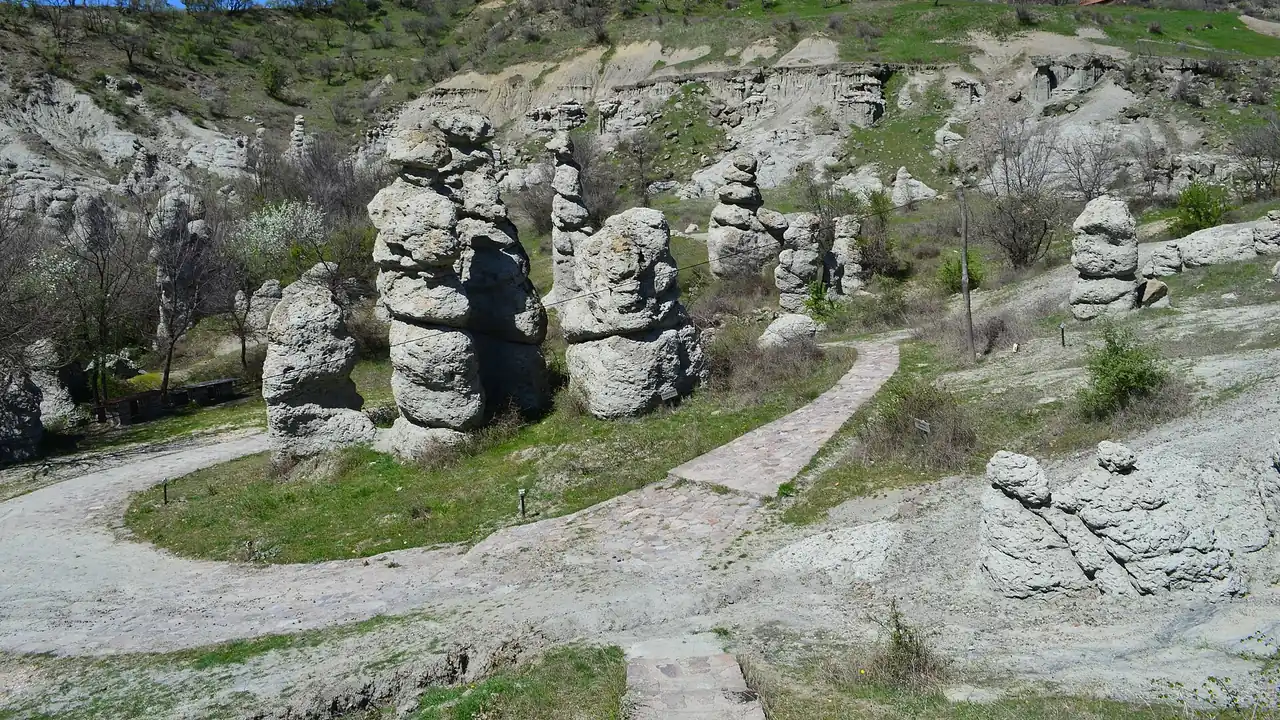
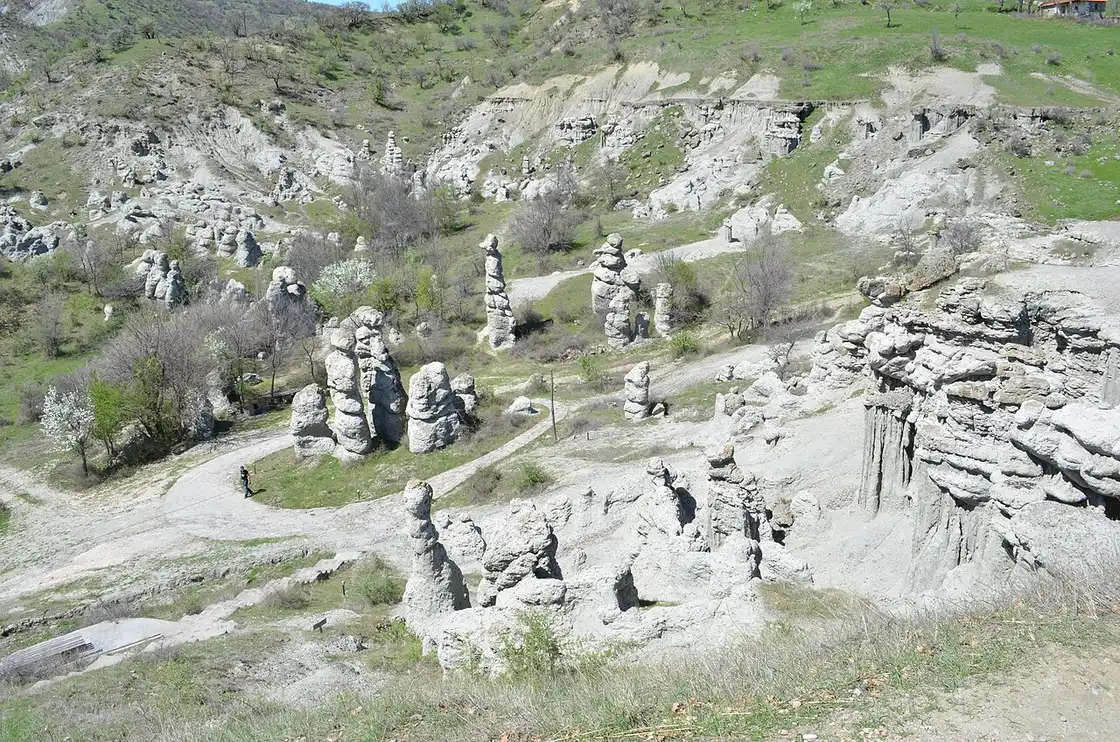
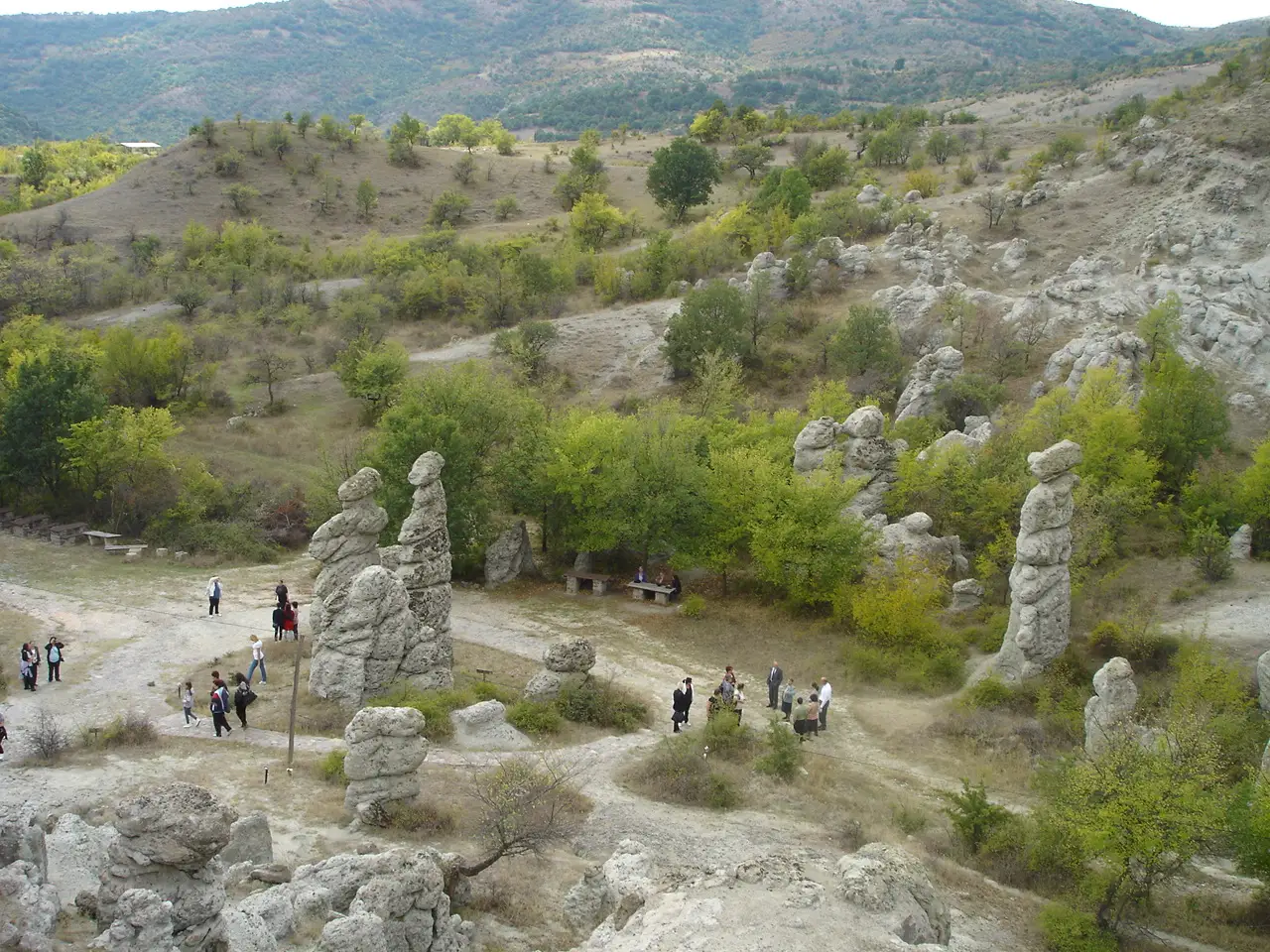
Kuklica is a field of eroded stone pillars in the hills north-east of Skopje, close to the old mining town of Kratovo, and it looks exactly like what the locals call it: a wedding party turned to stone. Somewhere between 120 and 150 pillars stand across roughly a third of a square kilometre, most of them 4 to 10 m tall, each capped with a harder rock that acted as an umbrella while the softer stone around it washed away. It takes an hour or two, no entry tariff has ever been published for it, and you need a car.
Before the geology and the legend, one practical thing the guidebooks haven’t caught up with. Since June 2026 the Municipality of Kratovo has been saying publicly that this protected site is held without right, that visitors are being charged for tickets by people with no authority to sell them, and that some have been intimidated. Because no lawful entry fee has ever been published for Kuklica, any money asked at the gate is a private demand and not a state ticket. By mid-July 2026 the row had turned physical, and it is worth knowing the state of it before you drive out.
How the stone dolls were made
The pillars are earth pyramids, the same family of landform as hoodoos in the American West, and they exist here because of a neat accident of geology. The bedrock is volcanic: soft tuff at the bottom, capped by hard andesite and ignimbrite roughly 30 million years old. Rain strips the soft tuff away fast; wherever a solid block sat on top, it sheltered the column beneath it, and the surrounding ground kept dropping. What’s left standing is a pillar wearing a stone hat.
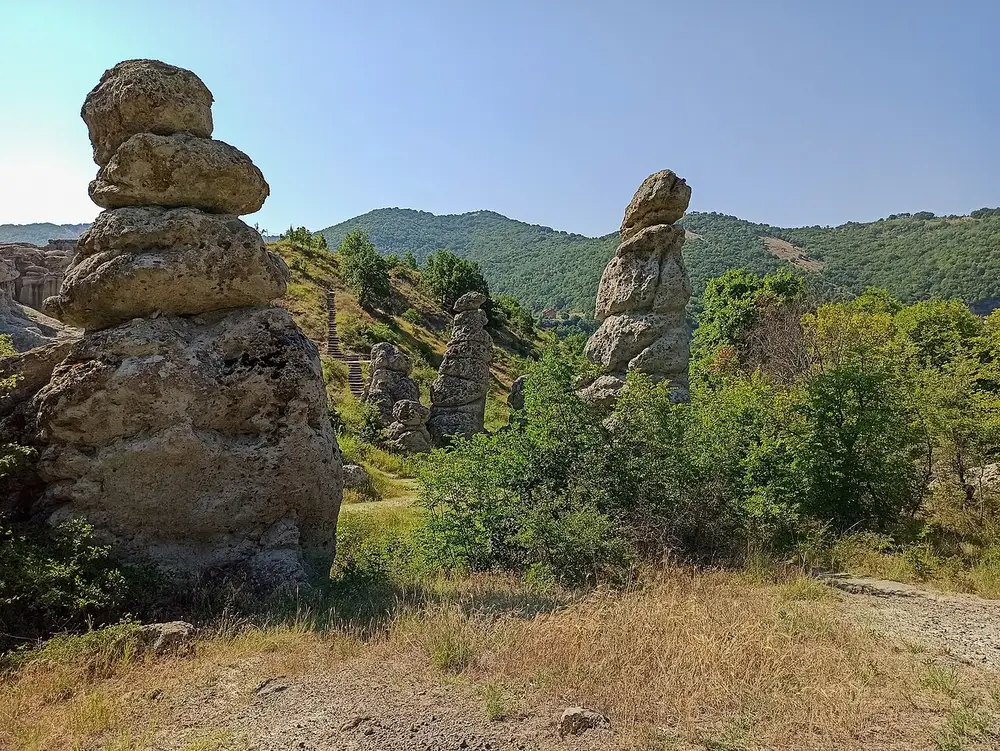
The dating you’ll see quoted is that the pillars themselves are young, on the order of 100,000 years of erosion, while the capping rock is tens of millions of years old. Treat the first figure as a round number rather than a measurement: sources word it loosely and the process is still running. Villagers say new figures appear every five or six years, which is folklore in tone but entirely plausible in mechanism, since the ground here’s actively wearing back.
This is the same extinct volcanic district that gave Kratovo its crater setting, and the family resemblance in the rock is obvious once you’ve seen both on the same day.
The wedding that got cursed
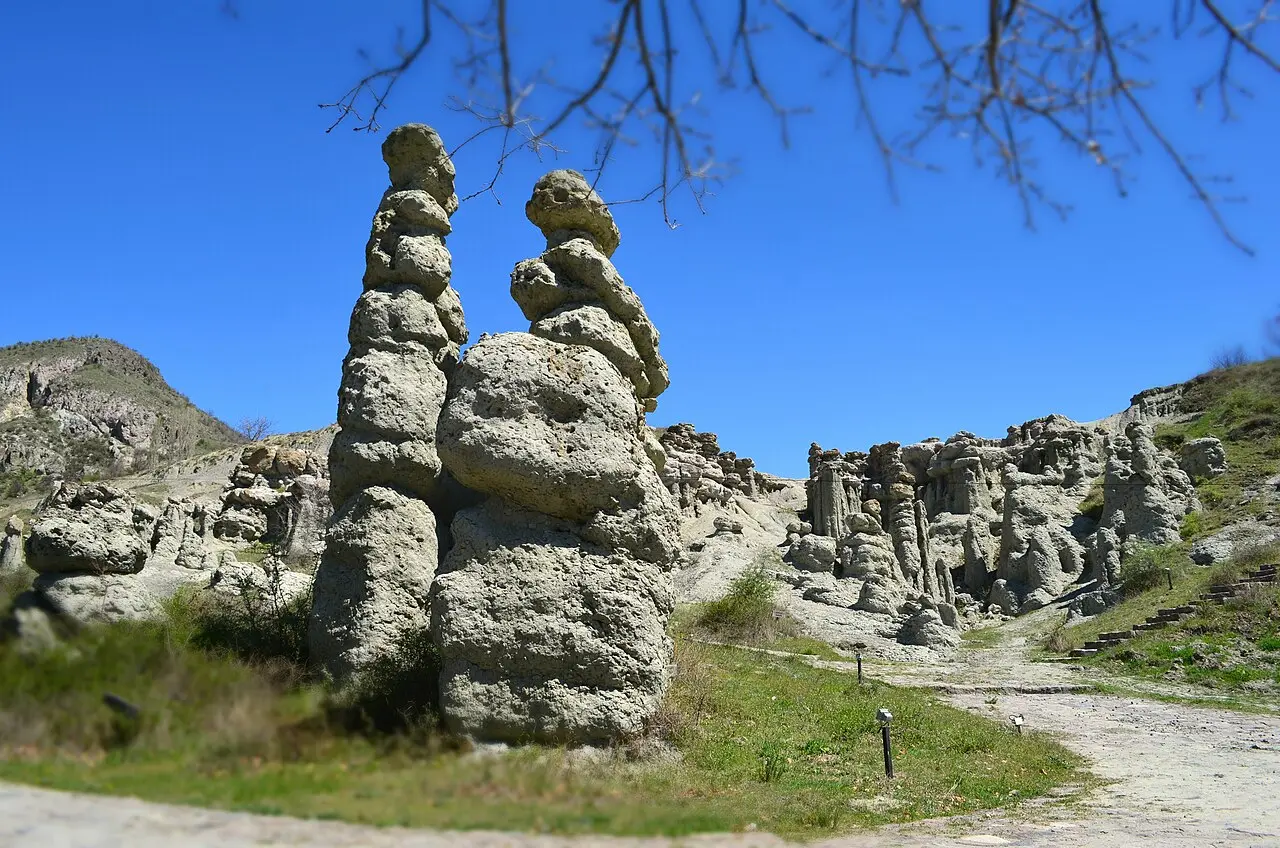
The story attached to the site is one of the better Balkan legends, mostly because it’s petty rather than heroic. A man couldn’t choose between two women, so he arranged to marry both on the same day at different hours. While the first wedding was under way, the second bride came to see who was getting married on her day. She saw the man she was to marry at the altar with someone else and cursed the entire wedding party, which turned to stone on the spot. Two of the pillars are pointed out as the bride and the groom, and the local name for the whole phenomenon is Vesela svadba, the merry wedding - you’ll hear the story from whoever’s near the gate.
A second, less popular story says the area was forest until a battle burned it down, after which an army crossing the wasteland froze to death and turned to rock. That one’s less told, and it isn’t as sticky.
The entry-fee row, and what to do about it
Kuklica has been a protected natural monument since 2008, classified as a third-category protected area under the Law on Nature Protection, and its official manager is the Municipality of Kratovo, working with local NGOs. No tariff for entering has ever been published, and travel accounts written before the dispute describe a wooden gate with no ticket desk and no attendant. Don’t treat an unofficial ask as a state ticket.
In June 2026 the municipality issued a public statement that changes the picture. It said the site has been held unlawfully by a local association, that the municipality is therefore blocked from carrying out its legal duties of maintenance and protection, and that the people occupying it have been selling entrance tickets without authority and, in the municipality’s words, endangering visitors through intimidation, false representation and aggressive behaviour, including with dogs. Its own position on the money is blunt: entry to the stone dolls is free and must not be charged. A court ruling from March 2026 requires the site to be vacated and the wooden cabin handed over to the Kratovo city museum within 15 days of the ruling becoming final; that ruling has been appealed. The public prosecutor in Kumanovo has since filed an indictment for usurpation of immovable property against two people and the association, plus a penal order over threatening visitors with a dog. That’s the official paper trail - you’ll want to check it hasn’t moved before you drive.
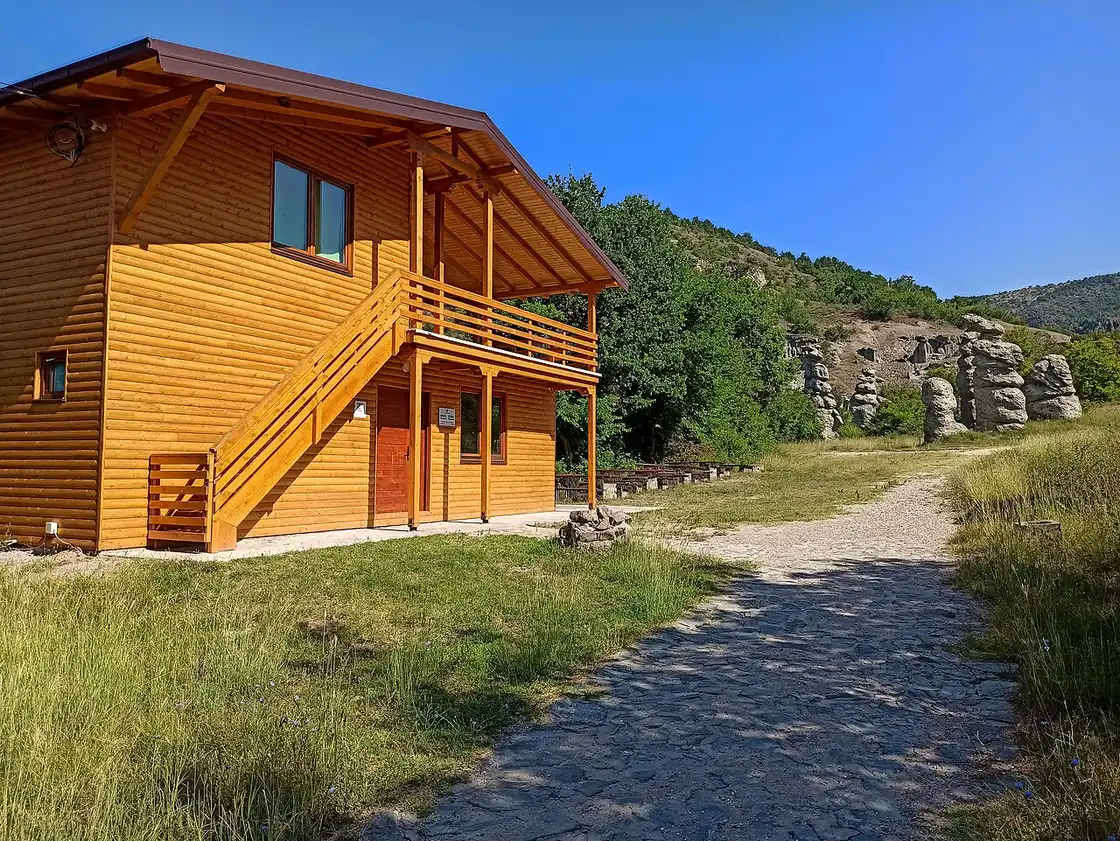
Then July happened. The Basic Court in Kratovo imposed precautionary measures including a ban on approaching the site, and Macedonian media reported the person concerned there anyway on 11 July 2026. On 12 July a group of visitors, foreign and Macedonian, found the entrance padlocked and drove home. On 16 July two inspectors from the tax authority came to check a posted temporary ban on trading at the locality; a 41-year-old British citizen threw stones at them and at their car, they broke off the inspection, and the court remanded him in custody for eight days on a charge of obstructing an official. The sums reported over the same weeks aren’t pocket money either: 10 to 20 EUR a head with no receipt, elsewhere 150 denars for entry and parking, and in July an announcement on social media of a flat 5 EUR with a fiscal receipt.
None of that’s settled, and none of it’s our verdict: it’s an official municipal statement, a live prosecution and reported incidents. What it means on the ground is simpler. No lawful published entry fee exists, so any charge is a private demand rather than a state ticket, and you may equally find the gate locked with nobody to argue with. If someone does ask for money, ask for a fiscal receipt, and don’t argue on the spot in a remote village - there’s nothing to win there. Check the current position before you commit the drive: the Kratovo city museum and the municipality are the right places to ask, and a guided day trip from Skopje sidesteps the question entirely because the operator deals with it.
Getting to Kuklica
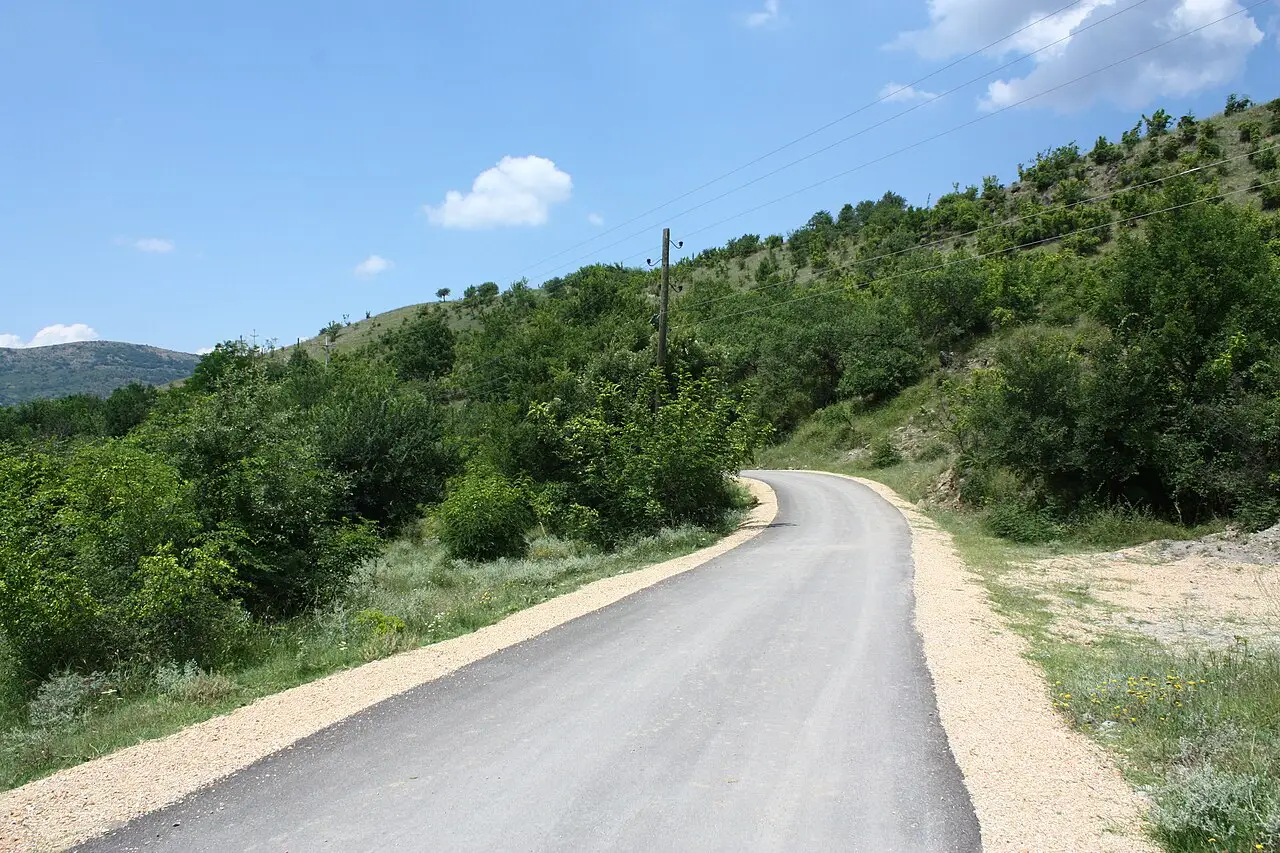
Kuklica sits about 8 km north-west of Kratovo in a straight line, which is roughly 10 to 11 km on the road and about 15 to 20 minutes by car. From Skopje that puts it at 80 to 85 km via Kumanovo, around an hour and a half; the national tourism portal says one and a half to two hours, which is fair once you leave the main road. Signposts for Kuklica stand on the main road towards Kriva Palanka, and the final approach runs down through the village of Dolna Kuklica.
There’s no bus to the site. Buses serve Kratovo daily from Skopje, Kumanovo and Stip, but the last few kilometres to Kuklica are yours to solve with a taxi from Kratovo, a rental car or an organised tour. Our renting a car in North Macedonia guide covers hire and insurance, driving in North Macedonia covers road conditions and rules, and getting around North Macedonia covers the intercity buses that get you as far as Kratovo.
| Leg | Distance | Time |
|---|---|---|
| Kratovo → Kuklica | ~10 km by road | ~15-20 min |
| Skopje → Kuklica | ~80-85 km | ~1 h 30 min |
| Kumanovo → Kuklica | ~30 km | ~35-40 min |
Distances are approximate; sources differ on whether Kuklica is measured straight-line or by road, and the Skopje and Kumanovo legs are worked back from the road distances in our Kratovo guide.
Practical notes
How long, and how far from the car. One to two hours covers it comfortably. There’s no approach hike: parking is at the roadside by the entrance and the first pillars stand a short walk beyond it, on paths that are short, informal and uneven underfoot. No sign posts the exact distance, but if you’re weighing Kuklica against Kokino for a day out with small children, that’s the practical difference between them - Kokino asks for 10 to 15 minutes uphill on rough ground, Kuklica asks for a stroll.
When. March to November. Early morning and late afternoon give the pale rock the shadows it needs; midday flattens the whole site and there’s very little shade. Winter is atmospheric but the tracks turn to mud.
What to bring. Water, sun cover, shoes with grip. There’s no cafe and no reliable toilet, and the nearest proper meal is in Kratovo.
What not to do. Don’t climb on the pillars. This is a protected natural monument and the caps are exactly what keeps each column standing.
Building a day around it
Kuklica alone doesn’t justify an hour and a half of driving from Skopje, and it doesn’t need to. Pair it with Kratovo, fifteen minutes away, where a small town sits inside the crater of an extinct volcano with medieval stone towers and high arched bridges. That combination is a full and genuinely unusual day: geology in the morning, a lunch of grilled food and a wander through the towers in the afternoon.
The third point of the same triangle is the Bronze Age hilltop of Kokino, north-west of here and cut into the same Kratovo-Zletovo volcanic rock. Doing all three in one day is possible but tight, and the hill roads between them are slower than the map suggests; sleeping in Kratovo and starting at Kokino for sunrise is the version people come back happy from.
If you want to see how the whole north-east fits together, our best day trips from Skopje ranks it against the closer options, and the 10-day North Macedonia itinerary puts Kratovo and its surroundings on the eastern leg of a full loop.
Read also
- Browse everything in attractions in North Macedonia
- The town next door: things to do in Kratovo
- Start from the capital: things to do in Skopje
- Budget the trip: North Macedonia trip cost
- Pick your season: best time to visit North Macedonia
On the map
The map loads on click - to keep the page lightweight.
The map didn’t load. Check your connection and refresh the page.
Admission and opening hours
- Opening hours
- Open ground, no gate hours; daylight only in practice
Kuklica has been a protected natural monument since 2008 and is managed by the Municipality of Kratovo, which states that entry is free and must not be charged. No official entry tariff has ever been published. A dispute over unauthorised charging has been running since June 2026 and escalated in July: a court ban on approaching the site, visitors turned away at a padlocked gate on 12 July 2026, and an eight-day remand after tax inspectors were stoned at the site on 16 July 2026. Ask in Kratovo before you drive out. Do not climb the pillars.
Details checked: July 23, 2026
Distance ≈85 km · ~1 h 30 min by car via Kumanovo
- Skopje ≈85 km · ~1 h 30 min by car via Kumanovo No bus serves the site itself; signposts for Kuklica stand on the main road towards Kriva Palanka. Roadside parking at the entrance, no climb to the pillars.
Read also

What to see · 11 min read
Skopje Brutalist Architecture Walking Guide
Verified · September 3, 2026Walk Skopje's post-1963 concrete: Post Office, GTC, Tange's station and MoCA. Dates and architects from named sources.

What to see · 9 min read
Plaošnik & St Clement's: Ohrid's Sacred Hill
Updated · August 25, 2026Plaošnik in Ohrid: St Clement's church, early Christian mosaics and Slavic literacy's cradle - what to see, the walk up and looping Kaneo.

What to see · 9 min read
Skopje Museums: Archaeology to Mother Teresa
Updated · August 23, 2026Four Skopje museums worth an afternoon: archaeology, Mother Teresa, the Holocaust center and Macedonian Struggle - hours, tickets and how to visit.

What to see · 12 min read
Bigorski Monastery: The Carved Wonder of Western Macedonia
Updated · August 4, 2026Sveti Jovan Bigorski: the walnut iconostasis with 500+ carved figures, what the 2009 fire took, and how to get there from Skopje or Ohrid.