
Things to Do in Stip: Bargala Ruins & the Isar
Stip travel guide: the Isar hill's UNESCO-listed Chetrse ritual, the Bargala ruins, the Bezisten gallery, pastrmajlija, and how to get there from Skopje.
Stip, also written Shtip or Štip, will not out-charm Ohrid or out-history Bitola, and it doesn’t try to. What it has is a fortress hill that hosts Chetrse, the springtime ritual UNESCO listed as intangible heritage in 2013. Twenty minutes down the road there’s a buried Roman-to-Byzantine city, and in the centre a covered Ottoman market that’s spent six decades as an art gallery. The motorway reached town in 2019, so the drive from Skopje runs an hour to an hour and a half - all of it inside a day trip from the capital.
Give it a morning. Isar, the market and a chapel or two fit into one unhurried walk through a lived-in city of about 42,000 that lines its main streets with sewing workshops where other towns keep souvenir stalls. The one sight that needs wheels is Bargala, the ruined city out past Karbinci - bring a car or hire a taxi for the day, and it folds in before lunch.
The Isar hill towers over the old town
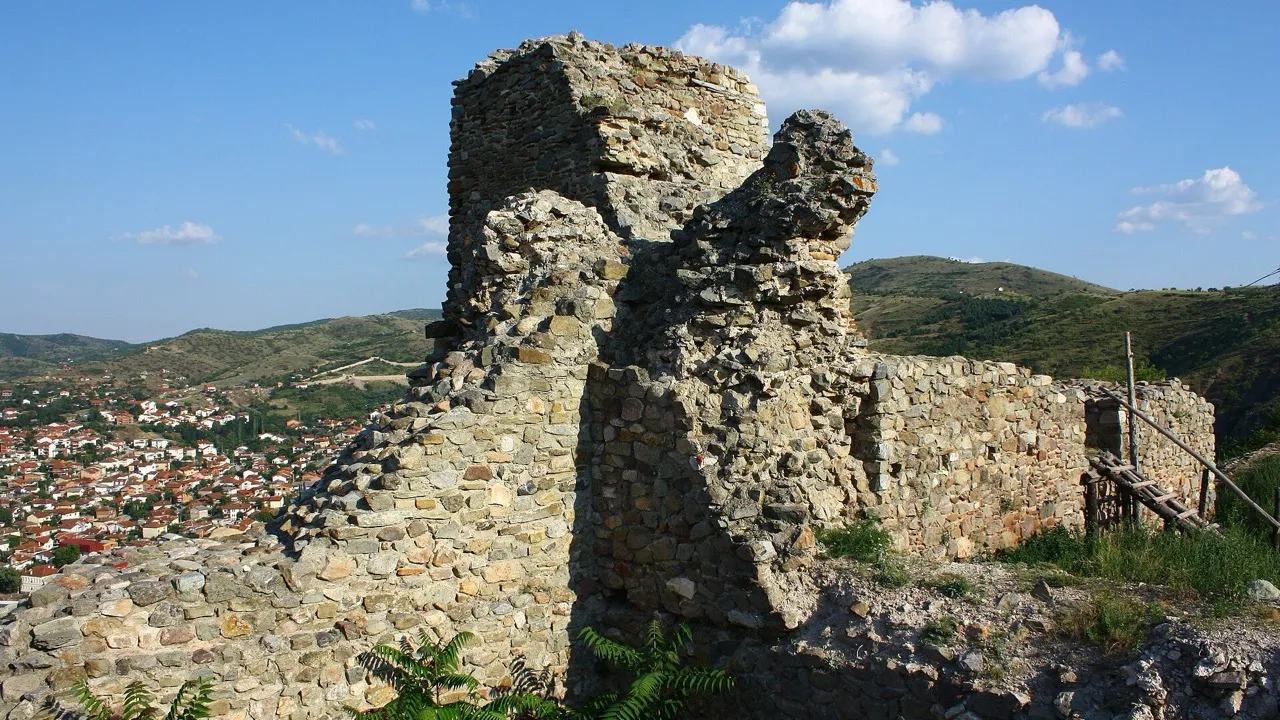
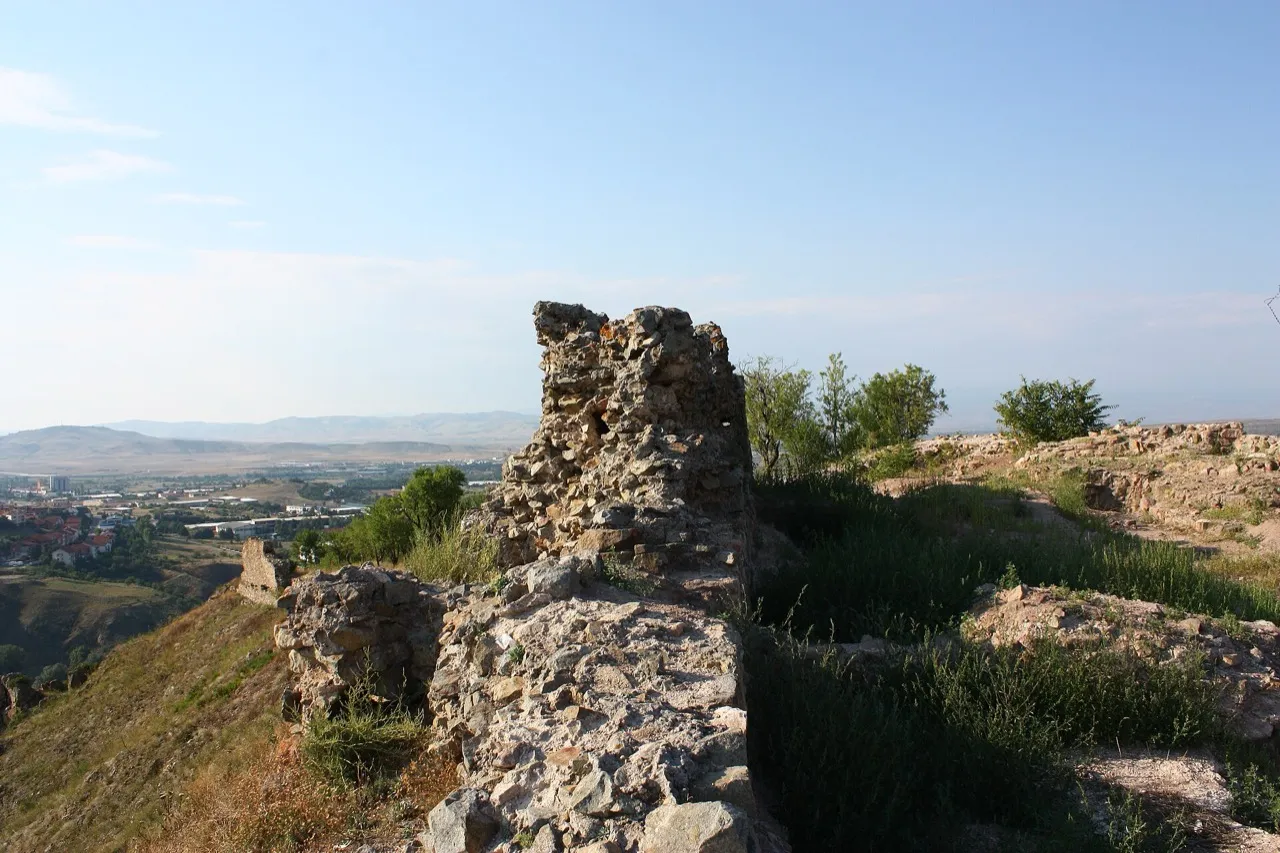
The hill everyone climbs first is Isar, a rock on the western edge of the centre with the Bregalnica under its west face and the Otinja along its south. Its keeper, the town’s heritage institute, is careful with dates. It calls Isar a medieval fortress and names no builder. When a guidebook hands you a confident 14th century, it’s quoting the national tourism portal. The institute goes no further than four small churches raised around the hill that century. Enough stone survives along the ridge to read the shape of the place, and the climb pays out the best view in town - red roofs below, hills beyond.
There’s a legend attached to the hill as well. In 2009, archaeologists found around 30 metres of a tunnel running from the riverbank toward the summit, which locals take as settling an old story about a besieging Ottoman army slipping in underground. Whatever the tunnel did, the Ottomans valued what they had taken, and the tourism portal has them garrisoning Isar for at least two centuries after. The keeper’s page doesn’t repeat the story. It says only that Isar today is a tourist attraction and the stage for Chetrse, and no source we found publishes opening hours or an entry price for the hill.
How Chetrse made UNESCO’s list
Once a year the hill fills with the whole town. On 22 March, the feast of the Holy Forty Martyrs, Stip performs Chetrse, the custom UNESCO listed in 2013 as the first Macedonian entry on its Representative List of the Intangible Cultural Heritage of Humanity. Families climb Isar together, stopping at a church, and UNESCO’s record makes the rules exact: greet 40 people you know, gather 40 pebbles and 40 almond twigs or blossoms on the climb, wish at the top, throw 39 pebbles into the Bregalnica. The fortieth goes home under your pillow. Local tradition goes one step further than UNESCO’s text and says that whoever turns up in the dream is your future partner.
It isn’t staged for tourists. What UNESCO recorded is a custom that pulls the town’s generations, faiths and backgrounds onto one hillside on the same afternoon.
Getting to Stip
Stip sits about 75 km east of Skopje. The A4 motorway between Miladinovci and Stip opened in 2019 and cut a once-long cross-country drive to roughly an hour to an hour and a half. Three toll booths break up the route (Skopje-Miladinovci, Miladinovci-Sveti Nikole, Sveti Nikole-Stip), and a standard rental car pays 160 denars (about EUR 2.60) one way. If this is your first time behind the wheel here, our car rental guide has the paperwork and the road rules.
Buses run through the day from Skopje’s main station, split across several small operators, so schedules shift from year to year - check the departure board on the day. Tickets here are typically one-way only, so a same-day round trip means buying two. Rail is not an option right now, whatever older guides say. On the current 2025-2026 timetable the Skopje-Kocani service that touches Stip carries the operator’s own note, “temporarily not operating”. See getting around North Macedonia for the wider bus picture.
| From | Distance | Time |
|---|---|---|
| Skopje -> Stip | ~75 km | ~1 h - 1 h 30 min by car (tolled motorway) |
| Stip -> Bargala | ~17 km by road | ~20-25 min by car |
| Stip -> Strumica | ~65 km | ~1 h by car |
Bargala: the ruined city outside town
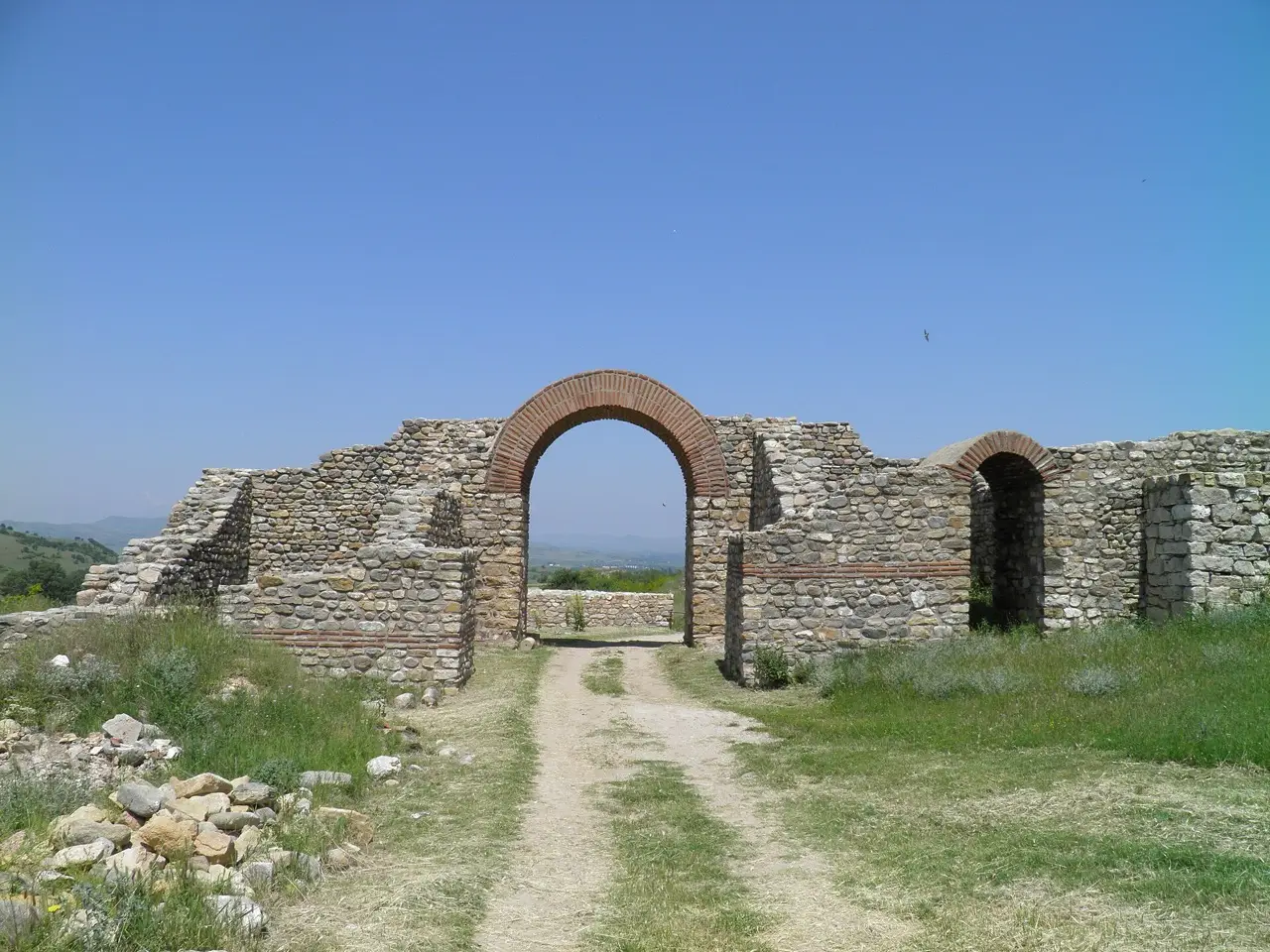
Northeast of Stip, out past Karbinci, farmland hides Bargala - a walled late-Roman and early Byzantine city with barely a tenth of its 4.7 hectares dug. Its keeper puts the site 12 km northeast of town. Your odometer will say 17 km, because the road bends through the villages on the way. The city’s name survives on a memorial plaque marking the raising of a gate, dated 371 or 372 AD, though the plaque turned up at Hanche, some way from the gate it describes. By the 5th or 6th century Bargala was a bishopric, with an episcopal basilica and a mosaic-floored baptistry dug out by a Yugoslav-American team in the 1970s.
The municipal count is three early Christian basilicas plus an excavated winery in the northeastern corner, so Bargala earned a living as well as standing guard. Archaeologists have come back on and off since 1966, and the finds include gold coins of the emperor Phocas, struck between 602 and 610 - twenty-odd years later than the coin evidence for the city’s abandonment in the 580s. The municipality’s own page closes that gap in a single line. Avar and Slav raids destroyed the episcopal town, and people moved back soon after.
There’s no bus out here, so drive or book a tour, and budget an hour or two. The final stretch, after the Dolni Balvan turn toward Tarinci, is asphalt but narrow and shared with farm machinery, and it ends at a generous parking area. A Macedonian tourism magazine walked the site in June 2023, four months into a 6-million-denar fencing, lighting and signage project, and still found nobody collecting entry, one faded board short of the ruins and grass over the walls. Read up before you go, because the site will not explain itself to you.
The Bezisten and the museum
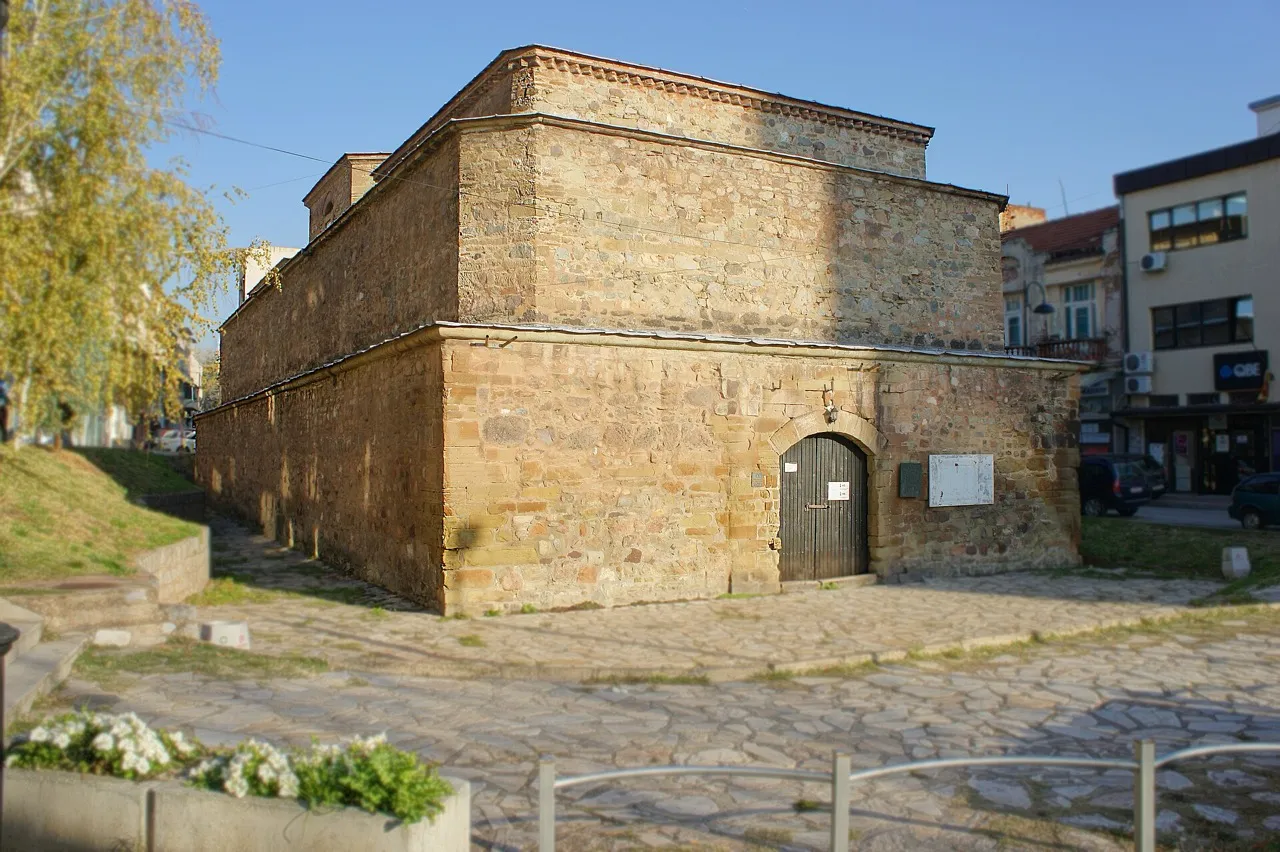
Back in town, on the right bank of the Otinja, the Bezisten is Stip’s other headline stop, a stone-vaulted covered market built before 1662 as the bazaar for luxury goods and fine cloth. In 1962 the town’s heritage institute reconstructed it as the Permanent Art Gallery of Contemporary Macedonian Art, and it still hosts exhibitions, concerts and the odd trade fair. Thick ochre walls with almost no windows make it striking from the street alone. Getting inside takes a phone call. Its keeper, Zavod i Muzej Stip, publishes hours for its own office and nothing venue-specific for the gallery, so ring 032 392 044 and ask what’s on.
The same institute runs the Institute and Museum of Stip, founded in 1950, holding finds from the Neolithic through the 18th century from digs around the region, Bargala included. Expect small-town scale. One body curates Isar, Bargala and these cabinets, so Stip’s whole ancient and medieval story sits in a single pair of hands.
St Nicholas and the old churches
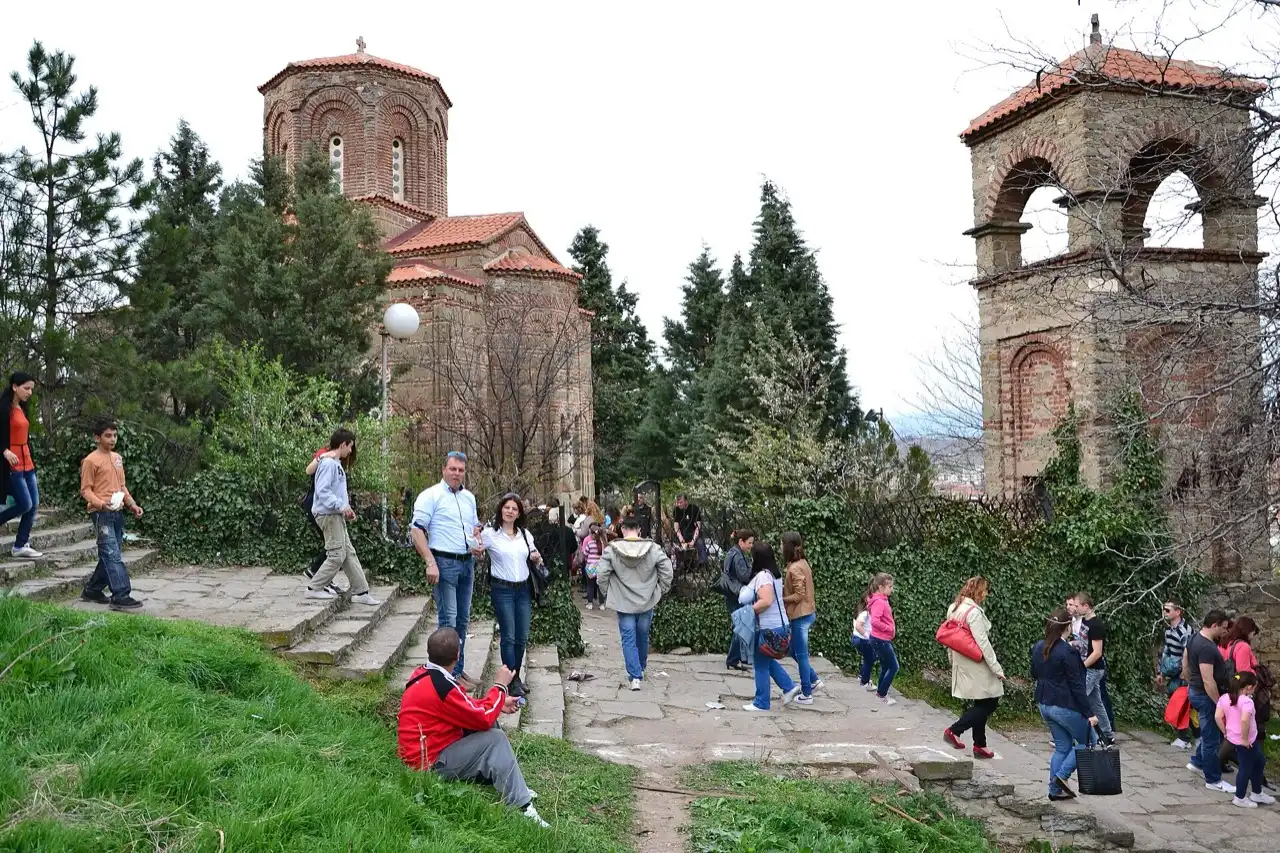
Four small chapels once ringed Isar in a symbolic cross, all raised in the 14th century: St Michael the Archangel east, St John the Baptist west, St Nicholas north, St Blaise south. Only fragments survive. The Monastery of St Michael the Archangel, on the fortress’s eastern side, is the one still worth seeking out.
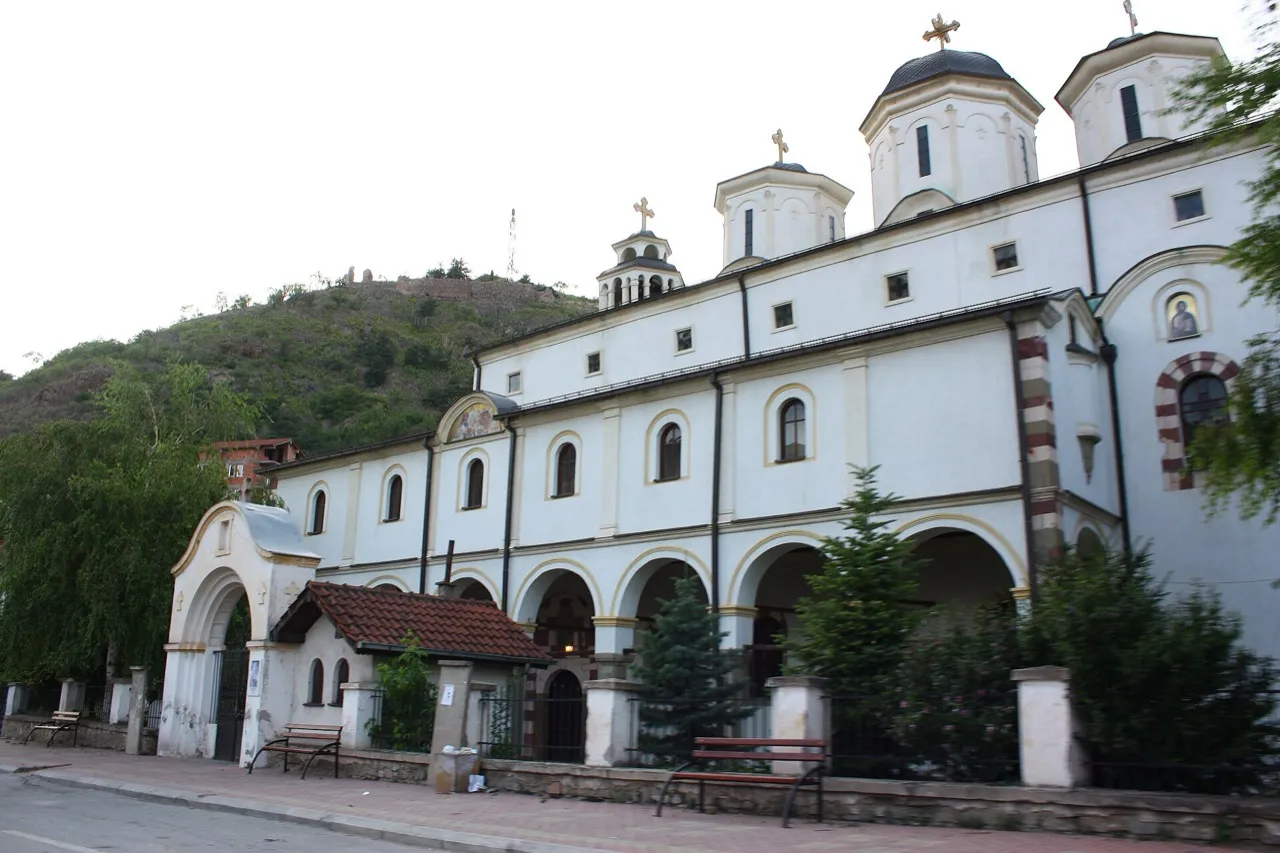
The big whitewashed cathedral anchoring the lower town, its domes visible from most surrounding streets, is a different St Nicholas altogether, and much younger. It went up on the site of an older 1341 church and was finished on 10 May 1867, per an inscription over its west door, by builders in the tradition of the master Andreja Damjanov. Inside, an icon gallery formed in 1990 holds work by painters of the 17th to 19th centuries, 29 pieces in the south wing alone.
The lower town holds one more footnote. Stip claims the first opera performance in Macedonian history, a staging of Pagliacci in the 1920s, which says more about the place than the industrial frontage it shows the highway.
What the textile trade means for a visitor
Long before the sewing machines, Stip’s money came from opium poppy. The Ottomans brought the crop to Macedonia in the early 1800s, and a 1960 UN bulletin on the drug trade puts the region’s first cultivation trial in Stip, in 1835.
Sewing is what the town does now, and it does more of it than anywhere else in the country. Makers like Albatros, Modena and Maksima stitch clothing for export - including, according to one travel guide, contracts with Italian fashion houses. None of it is a tourist attraction, but it explains why the town looks the way it does. Stip is apartment blocks and working streets, without a polished old quarter. If you’re here weighing the country’s low taxes and cheap living rather than the ruins, our guides to the cost of living and taxes for expats have the numbers.
Pastrmajlija and where to eat
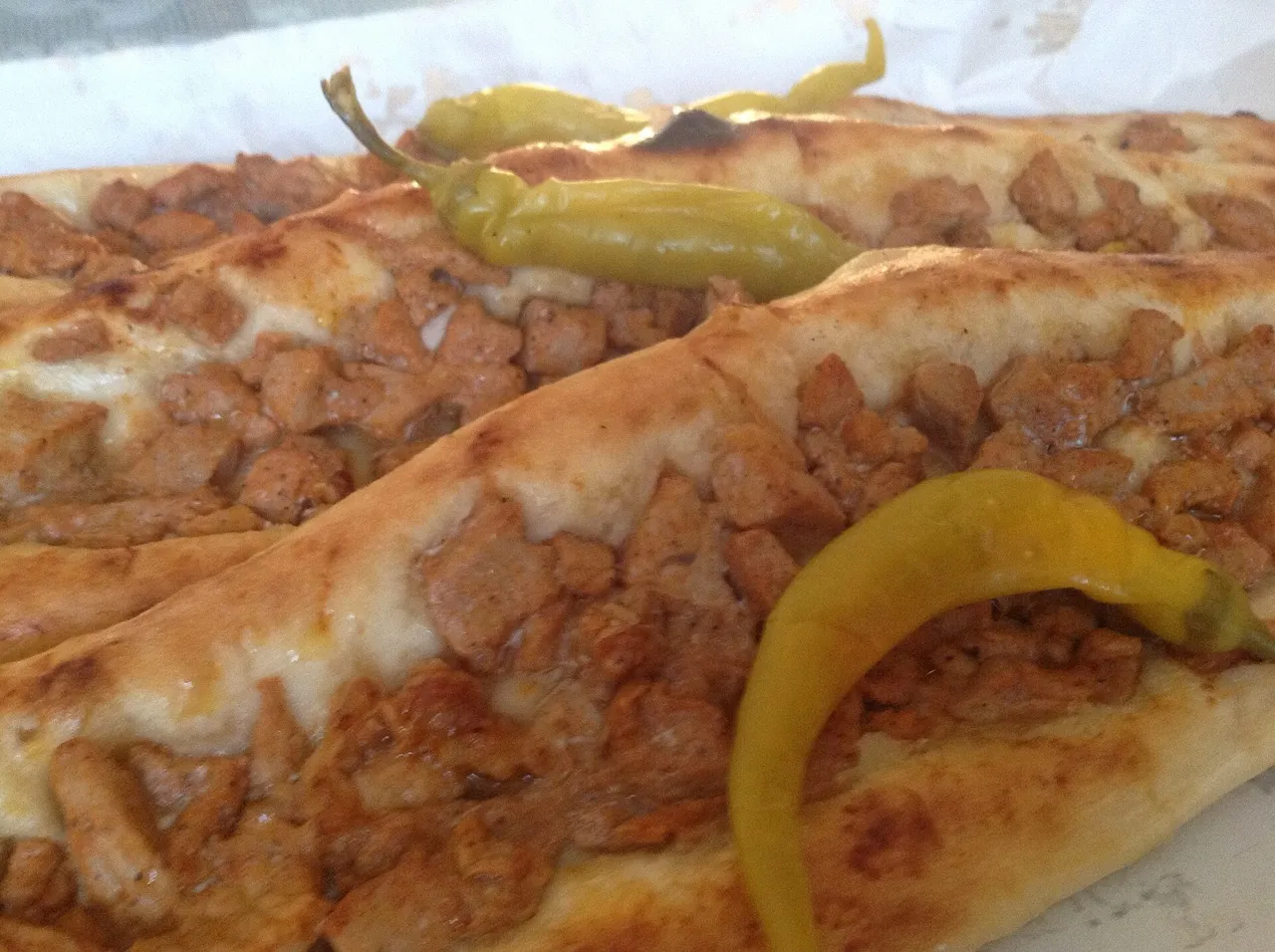
Eat the local specialty and you’ll see why Stip takes its food seriously. Pastrmajlija is an oval flatbread loaded with diced cured meat - traditionally lamb or pork, chicken now too - baked until the crust blisters and the meat renders into the dough. It’s a Stip original, shared with Veles and Sveti Nikole, and the town backs the claim with an annual festival, Pastrmalijada. The 2026 edition opens 19 September at the City Stadium. Watch the municipality’s channels for the full line-up, which was still being announced when we checked.
Beyond the festival, ordinary bakeries and grill houses around the centre serve it fresh and cheap, alongside the wider Macedonian grill menu of skara and the pepper-and-aubergine relish ajvar. Passing through for a few hours, a slice from a bakery beats a sit-down meal. What to eat in North Macedonia covers what else to order around the country.
A stop, or a night in Stip?
For most itineraries, half a day covers Stip: Isar and the Bezisten in the morning, Bargala by car, then push on. The town sits between the capital and the southeast, which is how our own 10-day North Macedonia road trip uses it - the link from the northeastern towns to Strumica. Strumica is about an hour further on, with its own carnival and monasteries, and Kratovo makes a similar detour to the north if you like your Macedonian towns quiet and slightly odd.
The exception is timing. If your dates land on 22 March, stay the night for Chetrse. The hill draws the whole town from early morning, and a tight round trip wastes the one day of the year that matters here. The other date to check is D Festival, North Macedonia’s biggest open-air music weekend, which moved from Lake Dojran to Stip for 26-28 June 2026 and is booked to return 25-27 June 2027. Dojran is still the festival’s original home, so confirm the host city on the organiser’s site nearer the time.
Outside those windows, hotel and guesthouse options are limited but functional, priced the way a working town prices things. As everywhere in the country, US, UK, EU and Ukrainian citizens travel visa-free for 90 days in any 180, and the UK government’s own advice confirms that three-month window. A visa has been required for Russian citizens since March 2022. Confirm current requirements with an official source, and see our North Macedonia planning hub for the rest.
Photos
On the map
The map loads on click - to keep the page lightweight.
The map didn’t load. Check your connection and refresh the page.
Distance ≈75 km · ~1 h - 1 h 30 min by car (motorway, tolled)
- Skopje ≈75 km · ~1 h - 1 h 30 min by car (motorway, tolled) Three toll booths en route; about 160 MKD (EUR 2.60) one way for a standard car.
Read also

Cities · 8 min read
Demir Kapija, Stobi and the Tikves Wine Road
Updated · July 15, 2026The Demir Kapija gorge, the Roman city of Stobi and the Tikves vineyards - how to see North Macedonia's Vardar valley in one easy day from Skopje.

Cities · 9 min read
Things to Do in Kratovo: Crater Town, Towers & Bridges
Updated · July 14, 2026Kratovo travel guide: a town in the crater of an extinct volcano, with medieval stone towers, high Ottoman bridges, mining history and how to visit.

Cities · 11 min read
Things to Do in Strumica: Carnival, Fortress & Monasteries
Updated · August 5, 2026Strumica travel guide: the pre-Lenten carnival, the Carevi Kuli fortress, the Veljusa and Vodoca monasteries, hot springs and how to get there.

Cities · 11 min read
Kruševo Travel Guide
Updated · July 3, 2026Kruševo, North Macedonia - the country's highest town: the Makedonium spomenik, the 1903 Ilinden uprising, Toše Proeski, Vlach houses and paragliding.