
North Macedonia Taxes for Expats: The 10% Flat Rate 2026
North Macedonia expat taxes in 2026: the 10% flat rate, the 183-day residency test, 28% social contributions, and how freelancers self-report.
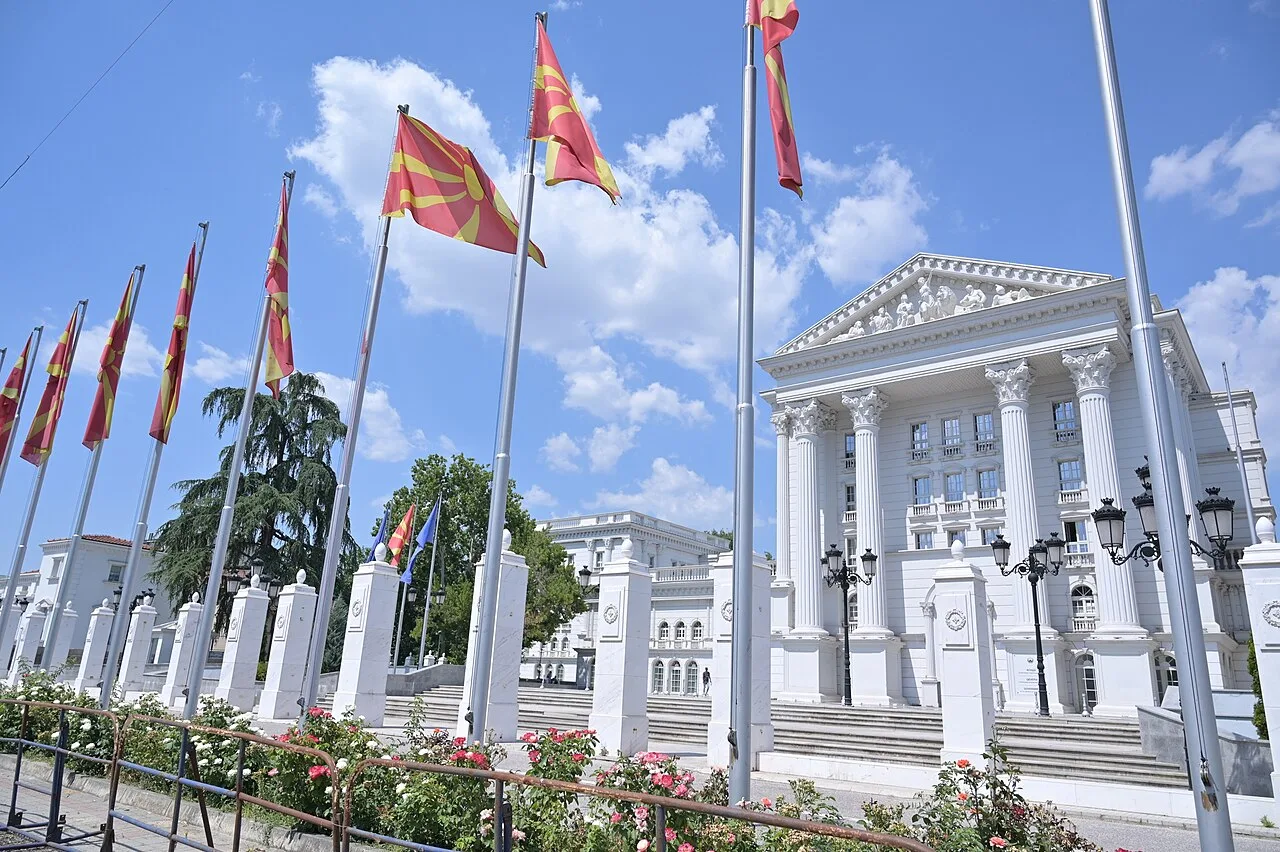
Spend 183 days or more in North Macedonia within any rolling 12-month period and you become a Macedonian tax resident, regardless of your passport or whether you hold a residence permit at all - a treaty can shift how that’s read, but the plain rule is the day count. From that point you owe a flat 10% on everything you earn worldwide, not just locally, plus 28% in social contributions if you’re on a local payroll. What actually catches people out isn’t the rate, though. It’s who does the paperwork: paid by a foreign client with no Macedonian company in the chain, and nobody withholds anything for you - you’re the one filing a return every single month.
Money and residency territory - read the caveats first. Every figure below was checked directly against the Public Revenue Office (UJP, ujp.gov.mk) and PwC Worldwide Tax Summaries on 20 August 2026; PwC’s own pages were last reviewed 23 July 2026. Rules change, and your specific situation (nationality, income type, home-country tax obligations) changes the answer. Confirm anything here with UJP directly and a licensed accountant before you act - this is orientation, not tax advice.
Setting up a business is a different question, covered in our company registration guide (DOO/DOOEL formation, corporate tax).
Who counts as a tax resident (it isn’t about your permit)
North Macedonia’s rule is a day count, not an immigration status. You’re a tax resident, irrespective of citizenship, if you have a permanent residence in the country, or if you stay continuously or intermittently for 183 days or more within any 12-month period. Miss that threshold with no qualifying permanent residence, and you’re a non-resident, taxed only on income sourced inside North Macedonia. Where a double tax treaty applies, the 183-day principle is read through that treaty’s own terms.
Two things about this test surprise people. First, it doesn’t ask whether you’re here on a permit, a business visa route or simply repeated 90-day visa-free stays - only whether you’re actually present. You can trip the 183-day wire without ever filing residence paperwork. Second, “permanent residence in the country” is its own, separate trigger alongside the day count - more on how that interacts with your immigration status below.

What “worldwide income” actually pulls in
Once you cross into tax residency, the scope changes completely: residents are taxed on worldwide income, not just what’s earned here. A salary from a UK employer, invoices from US clients, rental income from a flat back home - all of it, in principle, joins your Macedonian tax base. Non-residents, by contrast, are taxed only on income actually derived inside North Macedonia.
If you already paid tax on that income elsewhere, North Macedonia will credit it, but only up to what the Macedonian tax on that same income would have been - not a blank cheque that erases your bill with a bigger foreign one. Where you’re from changes the mechanism: North Macedonia has signed double tax treaties with 49 countries on the Ministry of Finance’s list (a couple aren’t yet in force), and the United Kingdom is one of them, so a UK reader gets treaty-based relief with its own tie-breaker rules. The United States, Canada and Australia are not on that list - relief there runs through Macedonia’s general domestic credit rule instead of a treaty. That doesn’t automatically mean you’ll be taxed twice, but it does mean checking your own country’s cross-border treatment with someone qualified there. Macedonia’s side of the ledger is covered here; your home country’s is a separate conversation.
The flat 10%, and the allowance most guides miss
The headline hasn’t changed since it was introduced: a flat 10% on employment income, self-employment income, royalties, rental income, capital income, capital gains, insurance income and most other categories, applied regardless of the amount of income realised. There’s no progressive bracket and no surtax for higher earners, whatever you might read on aggregator sites. Two narrow exceptions sit outside it: gambling winnings at 15%, and capital gains on securities or fund shares held longer than two years drop to 0%. Interest on term deposits is currently untaxed too, but that’s a postponement tied to eventual EU accession, not a permanent carve-out. There’s also a real deterrent built in: income whose origin you can’t document - the gap between what you own and what you can prove you earned it with - is taxed at 70%. You’ll probably never owe that rate, but it’s a good reason to keep invoices and transfer records somewhere retrievable.
There’s a genuine deduction hiding in the mechanics that most English-language guides skip. North Macedonia publishes an annual “tax reduction” (danocno namaluvanje, called licno osloboduvanje - “personal exemption” - until the terminology changed in 2018) that shields part of salary, wage-supplement and pension income specifically before the 10% applies to the rest. Invoice as a freelancer with no local payroll and this one isn’t yours - it only reaches income that’s already running through a payer. For 2026 it’s 131,184 MKD a year, or 10,932 MKD a month - roughly €2,133 and €178 at the current rate. The Finance Minister sets the figure each December for the year ahead, indexed to half the growth in the average gross wage, so it moves every year: 2025’s was 123,240 MKD, a different year’s indexed amount rather than a discrepancy, and PwC’s own tax summary is still quoting that 2025 figure as of its most recent review.

Social contributions: 28% if you’re on a payroll
If you’re formally employed here, or on your own company’s payroll, add 28% of gross salary in compulsory social contributions on top of the 10% income tax, deductible in full from your income-tax base before the 10% applies - the company guide has the current rate breakdown (it changed on 6 July 2026) and the floor-and-ceiling base for employees. What the health part of that contribution buys, and who can be on the Fund at all, is on the HIF public health insurance page.
If you’re self-employed with no employer at all - invoicing clients abroad directly - the same law still reaches you, more specifically than PwC’s summary suggests: it defines self-employed broadly (independent economic activity, or a professional or other intellectual service - consulting, development, writing all qualify), makes that person their own payer, and bases contributions on a monthly advance of net income. The floor is steeper here than for an employee: 100% of the national average salary for professional/intellectual services, roughly 69,141 MKD a month (about €1,124) on 2026’s figure, against 50% (about €562) on a payroll. The ceiling is lower too, 12 times the average rather than 16. What’s still open is which registration regime you fall under - flat-rate freelancers had the calculation itself move to UJP under the same July 2026 change, though paying it stays on you - so confirm your regime with UJP or an accountant. Registering your own DOOEL and paying yourself a salary, covered in full one section up, is the route most solo operators end up using precisely because it puts them inside this system in a structured way.
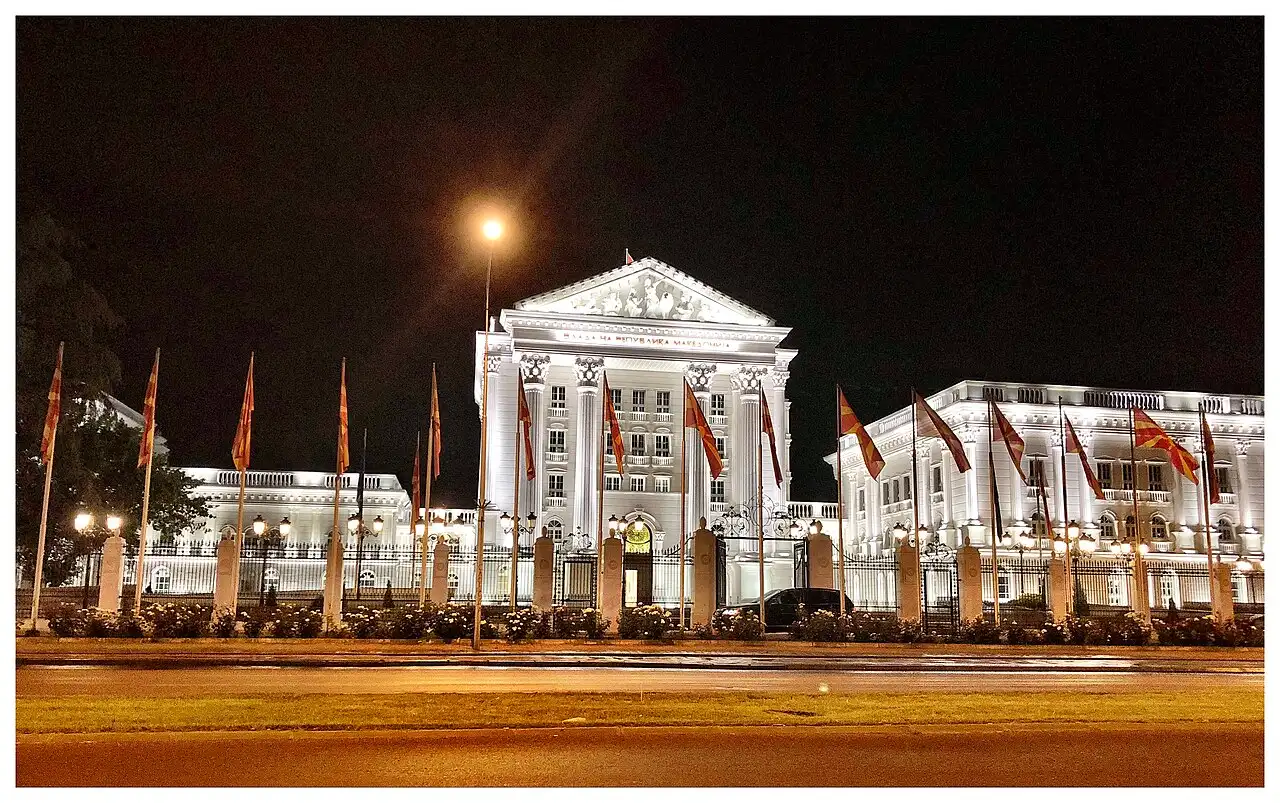
How you actually pay it: monthly filing vs. withholding
This is the part that trips up remote workers specifically, because “flat 10%, done” is the story everyone repeats, and it’s only true if somebody else is doing the withholding for you.
If you’re paid by a domestic company, or by any domestic taxpayer that keeps proper accounting records, they’re on the hook: they calculate your tax, withhold it, file an electronic calculation with the tax authority for approval, and pay it before the income reaches your account. You don’t file anything yourself in that case.
In every other case - most freelancers invoicing foreign clients directly, plus remote employees paid straight from abroad with no Macedonian entity involved - the obligation flips to you. You self-report and pay tax in advance, monthly: file an electronic calculation by the 10th of the following month for what you earned the month before, then pay by the 15th, once approved. Miss that rhythm and you’re behind every month it happens, not just once a year.
One exception is easy to miss: salary received from abroad doesn’t follow the monthly pattern - it’s reported once a year, by 31 March, even though other foreign-source income (freelance invoices, rental income) still follows the monthly 10th/15th cycle. Remote employee on a foreign payroll? That annual date is yours. Freelancing? The monthly one is.
Most individuals don’t file the classic annual return themselves under current law. The tax authority prepares a draft from everything filed electronically about you and delivers it by 30 April; you then have until 31 May to confirm or fix it, or it becomes final by default. The exception is business-income filers with accounting records, who file their own return by 15 March, pay monthly advances of one-twelfth of the prior year’s tax, and settle by 30 June. Miss the rhythm and the consequence is concrete: the authority issues a Tax Assessment Form, and whatever it says you owe is due within 15 days of delivery. Neither the penalty percentage nor the interest rate is published on the pages checked here - ask UJP or an accountant for the current figure before you’re in that position.

Freelancing without a local company
You don’t strictly need a DOO or DOOEL to work legally and pay tax as an individual here. North Macedonia has a lighter sole-trader registration, trgovec poedinec, filed at the Central Registry rather than through UJP, and some freelancers use it instead of forming a company. It’s a narrower fit than it sounds for most readers here, though: it requires permanent domicile in the country, so it’s not open to someone fresh off a visa-free entry, and it carries unlimited personal liability - the opposite of a DOOEL’s limited-liability protection. Rates and timelines for registering it aren’t centrally published, so cost and time it with an accountant before choosing between this and a DOOEL.
A DOOEL you own and pay yourself from puts a domestic payer in the chain - it’s often less about running a “real” company and more about becoming your own withholding agent. The tax question is separate from your budget - our cost of living guide has current ranges for Skopje, Bitola and Ohrid.

Tax residency vs. residence permit: two different clocks
Two different bodies, two different laws, and they don’t automatically move together. The residence permit comes from the Ministry of Interior under the Law on Foreigners, and it governs whether you’re allowed to live here. Tax residency runs on UJP’s 183-day test, and it cuts both ways: hold a permit but genuinely live elsewhere most of the year with no permanent domicile registered here, and you can still land under 183 days and stay a tax non-resident. One more wrinkle, and it’s a real answer, not an open one: the tax law’s “permanent residence” is a civil-registration domicile, a different legal concept from the immigration law’s “permanent residence permit” after five years - the English translation collapses the two into one phrase, but holding one doesn’t settle the other either way.
Three ways people actually owe this, side by side
All three rows assume you’ve crossed the 183-day test. What changes below is who calculates it, who pays it, and when it’s due.
| Situation | What you owe | Who files it | Filing rhythm |
|---|---|---|---|
| Remote employee, foreign employer, 183+ days here | 10% on worldwide income | You, for the salary | Once a year, by 31 March |
| Freelancer, foreign clients, no Macedonian entity, 183+ days here | 10% on worldwide income | You, every month | 10th filed, 15th paid, for the prior month |
| DOOEL owner drawing a salary from their own company | 10% income tax + 28% contributions on salary; company profit taxed separately at 10% CIT - nil under 3 million MKD turnover, 1% between 3-6 million (company guide) | The company, as a domestic payer | Monthly, withheld by the company |
Row 1: whether social contributions apply to a remote employee of a foreign employer with no local payroll isn’t clearly addressed for that specific case - the law regulates workers posted abroad separately, so don’t assume either way; ask UJP directly. Row 2’s freelancer contributions are real and covered above, even without a local employer.
Whichever row is yours, two things are worth a direct question to UJP: whether you’ve actually crossed into tax residency yet, and who’s on the hook for the next filing deadline. Get either wrong and the fallback isn’t a warning - it’s the Tax Assessment Form above, landing in your inbox instead of a return you filed yourself.
Read also
- The company side of this: register a company (DOO/DOOEL) and corporate tax
- Whether you’re even allowed to stay: North Macedonia residence permit
- What it actually costs to live here: cost of living in North Macedonia
Good to know
Tax figures here were checked against the Public Revenue Office (UJP) and PwC Tax Summaries on 20 August 2026. Rules change - confirm the current position with UJP (ujp.gov.mk), PwC Tax Summaries and a licensed local accountant before you rely on any figure here.
Details checked: August 20, 2026
Read also

Relocation · 16 min read
HIF Health Insurance North Macedonia 2026: Who Can Join
Updated · September 5, 2026North Macedonia public health insurance (HIF/FZO) for foreigners: Article 5 grounds, 8-day ZO-1 registration, 8% health contribution, 20% co-pay cap. 2026.

Relocation · 10 min read
Moving to North Macedonia: Start Here
Verified · September 3, 2026Move in order: entry, police registration, residence, housing, tax, health. Live numbers sit on the linked pages, not here.

Relocation · 11 min read
Healthcare in North Macedonia for Expats
Updated · September 24, 2026How expats and nomads use North Macedonia public HIF, private clinics in Skopje, and when long-stay cover still matters. Checked 30 Aug 2026.

Relocation · 12 min read
Buying Property in North Macedonia as a Foreigner
Updated · August 24, 2026Can foreigners buy in North Macedonia? EU/OECD rules, cadastre checks, notary steps, transfer tax, and the EUR 40k residence link - checked Aug 2026.