
HIF Health Insurance North Macedonia 2026: Who Can Join
North Macedonia public health insurance (HIF/FZO) for foreigners: Article 5 grounds, 8-day ZO-1 registration, 8% health contribution, 20% co-pay cap. 2026.
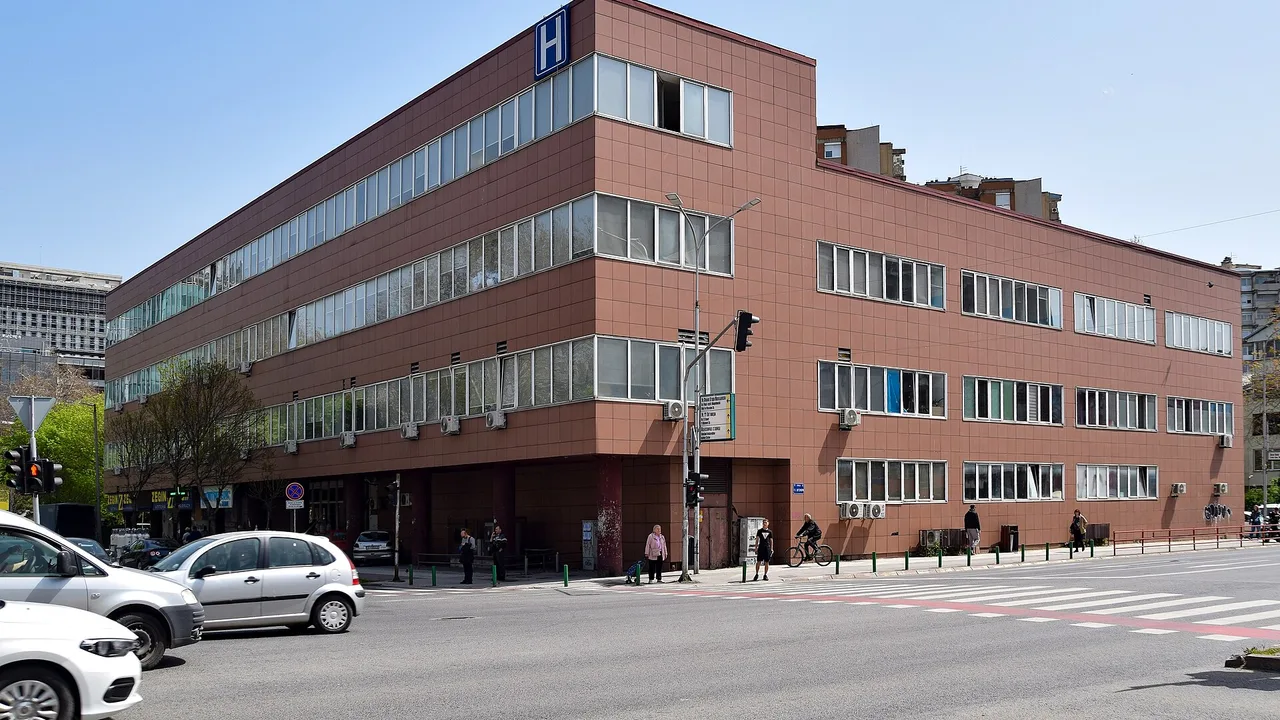
North Macedonia’s Health Insurance Fund (Фонд за здравствено осигурување, usually HIF or FZO) insures people by legal ground, not by passport and not by residence stamp. Article 5 of the Health Insurance Law lists who is compulsorily insured, and a foreigner gets in mainly as an employee, a self-employed person, a company director, staff of a foreign employer or international body, a student, or the spouse or child of someone already on the Fund. Registration runs on form ZO-1 within eight days of the ground arising, the health share of payroll contributions is 8% of gross salary (7.5% plus 0.5% for occupational cover), and once you’re in, most care costs you a fixed co-payment the law caps at 20% of the average cost of the service.
Two questions decide everything here, and both are answered in the statute and nowhere else: can I join, and what will it cost me? Which private clinics expats use, where an ambulance takes you and why evacuation cover still matters after enrolment are on the healthcare for expats page.
Read this before you file anything. This is general orientation, not legal, insurance or tax advice. Article numbers and figures below come from the consolidated law text current through amendment 60/2023 and from UJP pages read on 5 September 2026; later amendments exist and haven’t been individually checked against this wording. Confirm your own category with the Health Insurance Fund, the Public Revenue Office and a licensed local adviser.
Who the law insures
Article 5 opens with a numbered list of roughly fifteen categories, and two of them mention foreigners by name. Point 11 covers a foreigner who is, on Macedonian territory, in employment or service with a foreign individual or company, an international organisation or a diplomatic or consular mission; point 12 covers a foreigner studying or in professional training here. Both carry the rider “unless an international treaty provides otherwise”. Recognised refugees and people under subsidiary protection have their own ground in point 10, unrelated to residence status. A British developer working for a Skopje company fits none of these, and doesn’t need to.
That developer gets in through the categories written without any citizenship test. Point 1 insures any worker in an employment relationship with a legal entity or a self-employed person, point 3 insures any self-employed person, and point 1-a insures an executive board member, management board member or manager of a company who isn’t insured on another ground. These three are the routes almost every working expat uses: a local job, a registered sole-trader activity, or your own DOOEL with you as its manager (the company guide covers that structure). Managing your own company is itself an insurance ground.
The catch-all at the end of the list, point 15, insures a national of North Macedonia who isn’t covered by any other point. Then, past a page break that is easy to miss, Article 5 adds two paragraphs that matter to foreigners more than the list does. Paragraph 2 says that citizens (граѓаните) not covered by the list may accede to compulsory insurance to use the Article 9 services. Paragraph 3 says that people receiving a pension from a foreign insurer, where North Macedonia has a social-security agreement with that country covering health insurance, and who live here, may accede on the terms of that agreement. The list uses the word државјанин (national) and the paragraphs use граѓаните (citizens, or in everyday Macedonian simply residents); the law doesn’t say whether the second word reaches a foreign resident, and the Fund’s own procedure page reads both paragraphs narrowly, filing the accession route under the citizens-only ground 15 and splitting the foreign-pension ground 9 into “with” and “without a convention”, both for nationals. The answer for a foreign resident is therefore at the regional office, not in the statute.
What a residence permit does, and doesn’t, do
A temporary residence permit is what makes the grounds above reachable. You can’t hold a local employment contract, register as self-employed or sit on your own company’s payroll unless your stay is legal. But the permit itself appears nowhere in Article 5, so the file at the Fund is always about the ground, never about the card in your wallet.
| Your situation | Article 5 ground | How you get on the Fund |
|---|---|---|
| Employed by a Macedonian company | Point 1 | Generated electronically from the employment registration your employer files |
| Registered self-employed, freelancer on your own activity | Point 3 | Article 25 puts points 1-3 on the electronically generated application; the Fund’s page for ground 3 still lists the ZO-1, the M1 form and the health booklet, so bring them |
| Manager of your own DOO/DOOEL, not otherwise insured | Point 1-a | Filed through the company; note that sick pay under Articles 13-14 is for points 1-3 only, not 1-a |
| Employed by an embassy, international organisation or foreign employer while in North Macedonia | Point 11 (unless a treaty provides otherwise) | Filed by that employer, with the M1 employment form |
| Enrolled at a Macedonian university or training programme | Point 12 (same treaty rider) | Filed by you with proof of enrolment |
| Non-working spouse or child of any of the above | Article 6 | Added as a dependent on the insured person’s file |
| Retiree on a foreign pension, living here | Article 5, paragraph 3: accession under the social-security agreement between the two countries, if there is one and it covers health; the Fund’s page files ground 9 under nationals | Ask the regional office; terms follow the agreement |
| Financially independent person with no work here | Article 5, paragraph 2: accession route for those outside the list; written for “граѓаните”, which the Fund’s page files under the citizens-only ground 15 | Ask the regional office; until they confirm, you’re a self-paying patient |
| Remote employee of a foreign company, physically here | Point 11, read literally, covers a foreigner employed by a foreign legal person while on Macedonian territory; the practical hurdle is the M1 form and a contribution payer | Ask the regional office before you assume either way |
The last three rows surprise people in both directions. Point 9 starts with the word “national”, so it doesn’t reach a German retiree in Ohrid on a Deutsche Rentenversicherung pension; paragraph 3 does, but only where the two countries’ agreement covers health insurance and only on its terms. The remote employee of a Dutch company is the mirror image: point 11 covers “a foreigner in employment with a foreign legal person” without asking where the employer sits, yet the Fund’s document list for that category wants an M1 employment registration, which an employer with no Macedonian presence has nothing to file. Neither case is a flat no, and neither is a yes you can plan on. Until the regional office confirms a route, this group holds international cover, the same thing you’d hold in the months before any Article 5 file goes through.
Family members ride on your file
Article 6 extends compulsory cover to the family of anyone insured under Article 5, provided the family member isn’t insured on a ground of their own. The definition is tight: the spouse (брачниот другар) and children, whether born in or out of marriage, stepchildren, adopted children and dependent children taken into the household. An unmarried partner isn’t on the list. Article 7 keeps children on until 18, or 26 if they’re in regular education, and for as long as the incapacity lasts if they can’t live and work independently.
One person on a Macedonian payroll insures the whole household; the non-working spouse doesn’t need a job, a company or a student place to be covered, just the marriage on file and the registration; Article 31 has the Fund pull civil-registry extracts and identity documents from the population register itself.
Registering: form ZO-1, eight days, and the electronic card
Article 25 sets the mechanics. Insured status is established on an application for health insurance, filed either by the party that calculates and pays your contribution or by you. The deadline is eight days from the start of employment or from the day the ground arose. For points 1, 2 and 3, which take in employees and the self-employed, the application is generated electronically from the employment registration filed with the competent institution; for every other ground the form is the Fund’s ZO-1 (Пријава / Одјава / Промена), filed at the regional office (Подрачна служба) for your municipality. The Fund’s procedure page nonetheless lists the ZO-1, the M1 form and the health booklet for the self-employed too, so a freelancer should expect to hand those in.
The Fund’s page for foreigners under point 11 lists what goes with it: the ZO-1, the M1 employment registration, the paper health booklet (здравствена легитимација) and a foreigner’s identity card or proof of regulated residence; expect a similar set for the other grounds, with the employment form swapped for proof of your activity or enrolment. That list comes from the Fund’s site as search engines and the Internet Archive hold it, because the site blocks automated reading, so check it at the counter. The forms are in Macedonian (Article 27 lets speakers of another official language have the card application printed in theirs), and if the party who should have registered you didn’t, Article 26 lets you ask the Fund to establish your status by decision.
Once you’re registered, Article 27 says your rights run on the electronic health insurance card, on the Fund’s record that your contribution is paid, or on both. The booklet is the paper document the Fund still lists; the card’s digital certificate signs electronic applications (Article 31), and the Minister sets what issuing, replacing or unblocking it costs. Since January 2026 uslugi.gov.mk also issues three certificates to individuals (registration and deregistration; insured or uninsured status with paid contribution; the sick-leave wage fee) and one to companies. Under Article 31 the Fund decides on a complete application within 30 days, 45 where a medical commission has to opine, and you can appeal to the Minister of Health within 15 days; paper applications go in during office hours, electronic ones through the Fund’s portal at any time.
What it costs: the contribution split
Health insurance is funded from the compulsory social contributions on gross salary, which total 28%. Official Gazette 148/2026 changed the internal split, and UJP applies the new numbers to salary for the months from July 2026, tying the rate to the salary month rather than the payout date.
| Contribution | Rate of gross salary (salary months from July 2026) |
|---|---|
| Pension and disability (PIOM) | 19.9% |
| Health insurance (FZO / HIF) | 7.5% |
| Additional health (occupational) | 0.5% |
| Unemployment | 0.1% |
For salary months through June 2026 the split was 18.8 / 7.5 / 0.5 / 1.2, so the health share hasn’t moved; check UJP’s table again once you’re dealing with 2027 salary months. The employer withholds and remits. The base for an employee sits between a floor of 50% and a ceiling of 16 times the national average salary, which UJP puts at MKD 69,141 a month for 2026. Self-employed people are their own payer, and their ceiling is 12 average salaries against an employee’s 16. The floor is where they split: 50% as a rule, but 100% of the average salary for anyone providing what UJP’s guide calls a professional or other intellectual service. How that interacts with income tax is on the taxes for expats page; the health part of the bill is fixed by law, not negotiated with the Fund.
Your chosen doctor and what the Fund pays for
Article 28 makes the primary-care doctor both a right and a duty: you choose a doctor in primary care, and that doctor provides your primary services, follows your health and, under Article 28-a, signs your electronic prescriptions for medicines on the Fund’s list. Everything above primary care runs on that doctor’s referral. Article 10 puts specialist and hospital services without a referral outside compulsory cover, and primary care from a doctor who isn’t your chosen one along with them.
What’s inside is set by Article 9 across three tiers, primary, specialist-consultative and hospital care, delivered only through the institutions in the official health network. The lines an expat actually uses are all there: emergency help including ambulance transport where necessary, treatment at the surgery or at home, pregnancy and birth, dental treatment, medicines on the Fund’s list, prostheses and aids on the Fund’s indications, and hospital accommodation and food, including a companion’s stay with a child under three for up to 30 days.
Article 10 lists what’s out, and the list is longer than most expat forums admit. The items that bite an expat:
- aesthetic surgery that isn’t medically indicated, and any higher standard of service than the set one;
- medicines not on the Fund’s list, and the price difference on prostheses and aids made from above-standard materials;
- specialist and hospital care without your chosen doctor’s referral, and primary care from a doctor who isn’t your chosen one;
- services taken out of turn on a waiting list, and every kind of medical certificate;
- spa and climate treatment, and treatment abroad outside the Fund’s approval route, plus a dozen smaller exclusions in the same article.
What you still pay at the till
Compulsory cover isn’t free at the point of use. Article 32 sets participation (партиципација) at no more than 20% of the average cost of the service or medicine, and the Fund fixes it as a flat amount, inversely proportional to the price, in a general act the Minister approves. It’s a fixed sum per service, not a percentage of your bill; the actual sums are in the Fund’s general acts, not in the statute. Approved hospital treatment abroad runs on its own rule: 20% of the cost, capped at 200 EUR in denar equivalent.
Article 33 sets a steeper share for prostheses, orthopaedic and other aids and sanitary devices: up to 50% of the set price, and only for devices made from standard material; anything above standard falls under Article 10 for the difference. Article 35 lifts that share for children under 18 and for users of limb prostheses, hearing aids, orthoptic aids, wheelchairs and continence aids.
Article 34 is the relief clause, and it’s written around Article 32 participation. Examinations by your chosen doctor and on-call emergency care carry no participation at all, and there’s an annual ceiling: once your participation for specialist and hospital care in a calendar year exceeds 70% of the previous year’s average monthly salary in the country, you’re exempt for the rest of the year. On UJP’s 2026 gross average of MKD 69,141 that ceiling lands near MKD 48,000; the law counts the previous year’s figure and the Fund’s act names the statistic, so read it as an order of magnitude. Prescription medicines in primary care and treatment abroad don’t count toward the ceiling, and you keep paying for them after it kicks in. For the Article 33 share on aids, the exemptions are the ones in Article 35.
Leaving, gaps and the sick-pay trap
Cover follows the ground. When employment or self-employment ends, Article 25 obliges the payer to file a deregistration within eight days; for employees it’s generated electronically from the employment deregistration. From that day you’re a self-paying patient again until a new ground is registered. That is the gap between two jobs, or between closing a company and opening the next one, and it catches people who assumed the card keeps working.
Two conditions in Article 15 matter for anyone counting on sick pay rather than just treatment. Wage compensation during sick leave requires that your health insurance ran at least six months without interruption before the illness, with injury at work and occupational disease as the exceptions, and that your contributions were paid on time or no more than 60 days late. A freshly registered freelancer who falls ill in month four is treated, but not paid. And Articles 13 and 14 open sick pay and maternity pay only to points 1, 2 and 3 of Article 5: a company manager insured under point 1-a, which by definition means a manager who isn’t on a payroll, is treated and never paid.
Inside or outside, in one look
You’re inside the Fund if you hold a local job, a self-employed registration, the manager’s seat in your own company, a post with an embassy or international body, a student place, or a marriage to someone who has one of those. Then it’s form ZO-1 or an electronic registration within eight days, a card, 8% of gross salary as the health share of a 28% contribution, and care in the public network for a flat co-payment, capped and often waived.
You’re outside it, for now, if your money comes from a foreign pension or a foreign employer and nobody in the household is on a Macedonian payroll. The law has an accession route and a treaty route for exactly this group, written in words the Fund reads as citizens-only, so the regional office has to interpret them for you. Until that answer arrives, international cover is doing the Fund’s job, and Article 10 is the list of things it will keep doing afterwards.
Good to know
Article numbers, deadlines and percentages below were read directly from the consolidated Health Insurance Law and from UJP pages on 5 September 2026. Rules change - confirm your own case with the Fund (fzo.org.mk), the Public Revenue Office (ujp.gov.mk) and a licensed local adviser before you rely on them.
Details checked: September 5, 2026
Read also

Relocation · 10 min read
Moving to North Macedonia: Start Here
Verified · September 3, 2026Move in order: entry, police registration, residence, housing, tax, health. Live numbers sit on the linked pages, not here.

Relocation · 11 min read
Healthcare in North Macedonia for Expats
Updated · September 5, 2026How expats and nomads use North Macedonia public HIF, private clinics in Skopje, and when long-stay cover still matters. Checked 30 Aug 2026.

Relocation · 12 min read
Buying Property in North Macedonia as a Foreigner
Updated · August 24, 2026Can foreigners buy in North Macedonia? EU/OECD rules, cadastre checks, notary steps, transfer tax, and the EUR 40k residence link - checked Aug 2026.

Relocation · 12 min read
Coworking in Skopje: Spaces, Prices & Cafés
Updated · August 21, 2026Skopje coworking 2026: Coffice from €15/day, The Hub 1,190 MKD/day, Highspace €25/day, Public Room advertises free desks. Checked Aug 2026.