
Buying Property in North Macedonia as a Foreigner
Can foreigners buy in North Macedonia? EU/OECD rules, cadastre checks, notary steps, transfer tax, and the EUR 40k residence link - checked Aug 2026.
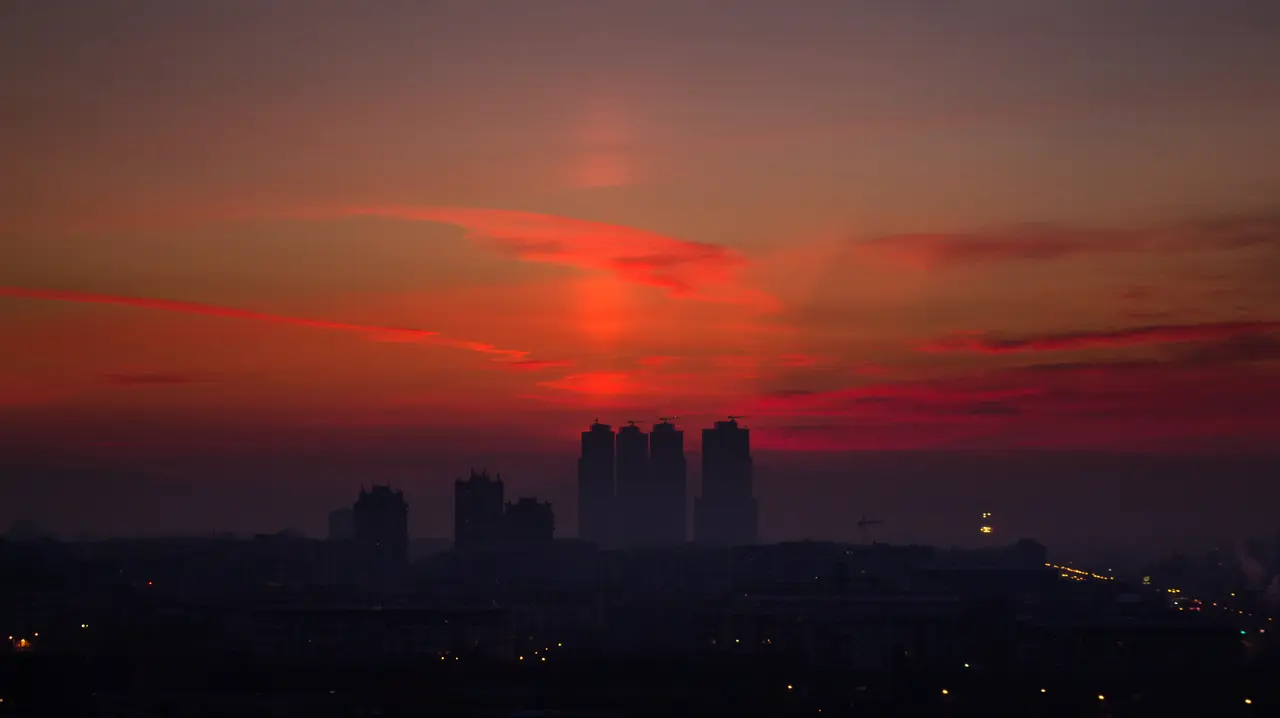
Yes - foreigners can buy property in North Macedonia, but the door opens wider for some passports than others. If you’re a resident of an EU or OECD country (that includes the US, UK, Canada and Australia), you can generally buy an apartment, house or business premises on the same terms as a Macedonian citizen, and you can also own construction land under the same rules. Everyone else faces a reciprocity check through the Ministry of Justice. Agricultural land is off the table for direct ownership. For EU/OECD buyers, there’s a second reason the market gets attention: buy a qualifying home worth at least EUR 40,000 and you may apply for temporary residence on that basis - though ownership alone doesn’t hand you a permit. This guide walks through who can own what, how the cadastre fits in, and the notary-and-tax pipeline from offer to registered title.
Read this before you wire a deposit. Two separate Macedonian laws sit behind this page - one on who can own property, one on who can turn that purchase into a residence permit - and a lot of English-language guides blur the two together. What follows was checked against the property law, the tax law and the Law on Foreigners directly, not just secondhand summaries, on 24 August 2026. Property and immigration rules still shift and hinge on your specific nationality, so confirm the live position with the Agency for Real Estate Cadastre (katastar.gov.mk), a notary and a licensed lawyer before you sign or apply for anything.
Who can own what
North Macedonia’s Law on Ownership and Other Real Estate Rights splits foreign buyers into tiers. The table is the practical summary; edge cases (dual citizenship, companies, inherited property) need a lawyer.
| Your status | Apartment / house / business premises | Construction land | Agricultural land |
|---|---|---|---|
| EU or OECD resident | Same terms as Macedonian citizens | Ownership or long-term lease, with Justice Ministry consent (transport and finance ministries give an opinion first) | No ownership; long-term lease only, with ministerial consent and reciprocity |
| Other foreign nationals | Allowed if reciprocity is confirmed (Macedonian citizens must have equivalent rights in your country) | Same reciprocity condition | No ownership; lease route as above |
Three details buyers miss:
- “Resident of an EU/OECD state” is a legal category in the ownership law, not the same thing as holding a Macedonian residence permit. If you’re American living in Germany, clarify with a lawyer which passport and residency the file will use.
- Reciprocity isn’t automatic. Non-EU/OECD buyers need the Ministry of Justice to confirm that Macedonian citizens can buy equivalent property in their home country before you close. Budget time and legal fees for that step.
- Agricultural land and direct foreign ownership don’t mix. The usual workaround for investors who need land is a locally registered company that holds the asset - our DOO/DOOEL company registration guide covers the corporate side; the property still has to be bought through proper due diligence.
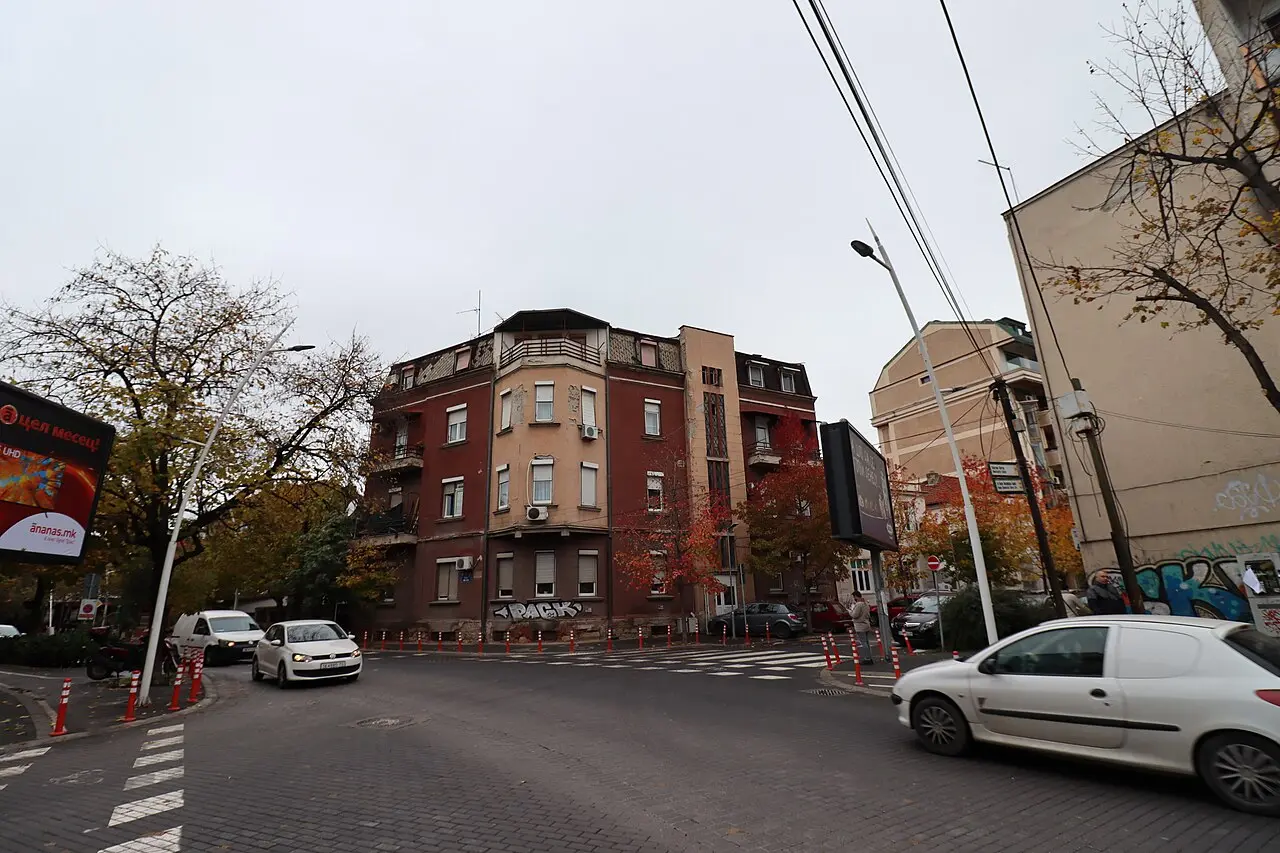
The EUR 40,000 threshold - purchase price and residence
A lot of English-language articles blur two separate questions: can I buy? and can I stay? North Macedonia keeps them apart in law.
Buying: there’s no statutory minimum price for a foreigner to acquire an apartment or house - only the nationality and land-type rules above.
Staying: under the Law on Foreigners, a foreigner who is a resident of an EU or OECD member state and has acquired an apartment, residential building or house worth at least EUR 40,000 has the right to apply for temporary residence for up to one year, renewable yearly, provided they also meet subsistence, accommodation, health insurance and criminal-record requirements. It’s not open to every nationality, and it’s not automatic - the Ministry of Interior (MVR) decides. Your permit won’t be renewed if you were absent without a justified reason for more than one quarter of the period the last permit covered.
So EUR 40,000 is not a market benchmark - it’s a legal trigger, not a price floor. Nothing in the ownership rules stops you buying for less, and plenty of Skopje and Ohrid stock now sells for well above it anyway (more on that below). What the figure actually does is unlock the property-based residence route, and only for qualifying EU/OECD residents who go on to actually spend time here. The full immigration file, 2025 rule changes and renewal windows sit in our North Macedonia residence permit guide; read that next if residence is the goal, not just a holiday flat.
Cadastre due diligence - the property list
Before you wire a deposit, everything hinges on the Agency for Real Estate Cadastre (katastar.gov.mk). It keeps the public register of who owns what, plus mortgages, easements and parcel data. Basic ownership data is searchable online; the document you want for closing is the imoten list - issued by the cadastre or a notary, chargeable, and the only paper accepted as valid proof of title. A posedoven list (“possession list”) looks similar and gets waved around by some sellers, but it is not proof of registered ownership - insist on the imoten list.
A standard due-diligence pass should confirm:
- Seller matches the register - names, share if it’s co-owned, and whether a spouse must consent (property bought during marriage usually needs spousal approval to sell).
- Encumbrances - outstanding mortgages, pledges, easements or pending disputes.
- What you’re actually buying - apartment vs co-ownership share vs whole building; in multi-unit blocks, your flat is held as etazna sopstvenost (“floor ownership”) - a distinct title to your unit plus a share of the common parts, separate from the land underneath. Do not confuse it with stanarsko pravo, a leftover socialist-era right to occupy a state flat that some older, unprivatised units still carry - that’s a right to live there, not to sell it. Treat it as a due-diligence red flag, not a synonym for ownership.
- Urban-plan status for land deals - construction rights follow the municipal plan; don’t assume a field can be built on.
If the seller is disposing of a co-ownership share, other co-owners have a 30-day pre-emptive right to buy on the same terms, served through a notary. Skip that step and a co-owner can challenge the sale in court.
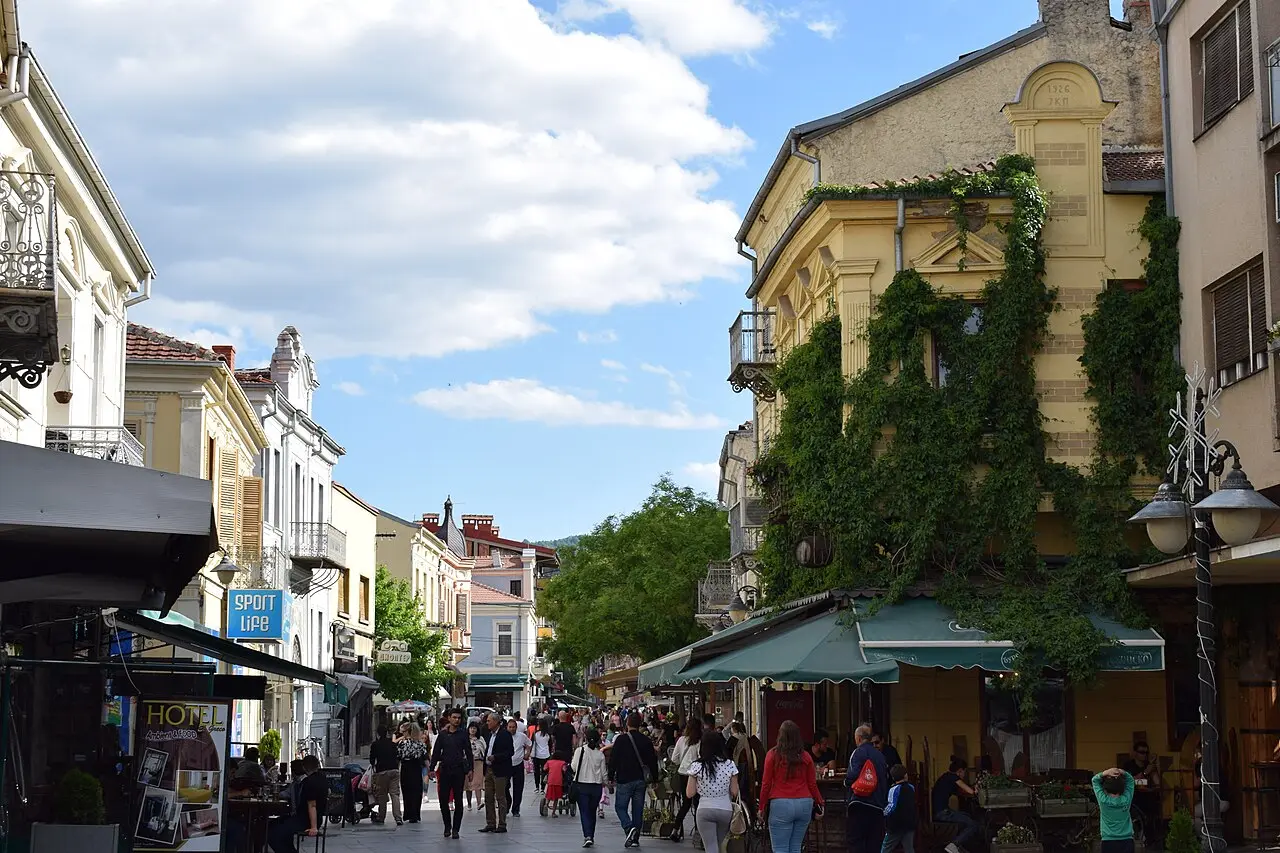
From offer to registered owner
Every sale follows the same backbone, even when agents gloss over steps:
- Negotiate and inspect - walk the flat, check utilities, read the cadastre list. A preliminary agreement is optional; the binding purchase contract must be in writing.
- Lawyer-drafted contract if value exceeds EUR 10,000 - above that threshold the law requires the contract to be prepared by a lawyer with seal and signature, then notarised or solemnised by a notary public.
- Municipal transfer-tax clearance - the parties submit the contract to the municipality where the property sits. Property transfer tax is 2% to 4% of market value; the rate is set by the municipal council (Skopje has its own schedule). The seller is the default taxpayer, but contracts often assign the bill to the buyer - read the clause.
- Notary registration - once tax is paid, the notary files the ownership change with the cadastre. You’re not done until your name appears on a fresh imoten list.
- Foreign-investment report - foreign buyers must report the investment to the Central Registry within 60 days of signing, with the contract, payment proof and property sheet. Missing the deadline is a Foreign Exchange Law violation; your lawyer normally handles the filing.
Notary fees scale with property value under the national notary tariff - there’s no single euro figure to quote. Budget them alongside tax, not as an afterthought.
| Cost line | Typical range | Who pays (default) |
|---|---|---|
| Purchase price | Agreed with seller | Buyer |
| Property transfer tax | 2%-4% of market value | Seller (often shifted to buyer by contract) |
| Notary + lawyer | Tariff-based on value | Usually buyer |
| Cadastre list / due diligence | Fixed fees per extract | Buyer |
| Annual property tax (after purchase) | 0.10%-0.20% of assessed value; 50% off if it’s your primary home | Owner |
The first sale of a new residential building or apartment, within five years of construction, carries a reduced 5% VAT rather than the standard 18% - Parliament extended that reduced rate through 31 December 2028 in a December 2025 law change, after it had been due to snap back to 18% in January 2026. It is a real difference: on a roughly 70m² flat, the Ministry of Finance put the gap between 5% and 18% at around EUR 15,000. The standard 18% still applies to first sales of non-residential space (offices, retail units). Most resale flats you see on local portals fall outside the five-year window either way - but if you’re buying off-plan, check the invoice for the VAT line, and do not assume the 5% rate survives past 2028.
Paperwork pitfalls worth a second look
Use this as a pre-signing checklist with your lawyer, not a substitute for one:
- Reciprocity not confirmed before you pay a non-refundable deposit (non-EU/OECD buyers).
- Co-owner or spouse consent missing on the seller’s side.
- Mortgage or lien still on the title at signing.
- EUR 40,000 valuation - the residence route cares about documented purchase price/value; a cash side payment won’t help your permit file.
- 60-day Central Registry report forgotten after closing.
- Absence rule on the residence permit - buying then leaving for months undermines renewal even if the flat sits empty.
Skopje vs Ohrid - where foreign money goes
Skopje has the depth: more stock, more agents who work in English, easier flights, and neighbourhoods from leafy Debar Maalo to tower-heavy Aerodrom and Karpoš. It’s the pick for city services, coworking and a year-round base - our living in Skopje and Ohrid as a nomad guide compares the daily rhythm.
Ohrid trades on the lake and UNESCO old town. Summer prices and short-let pressure are real; winter is quiet. You buy the lifestyle as much as the square metres - running costs after you own are in our cost of living in North Macedonia guide.
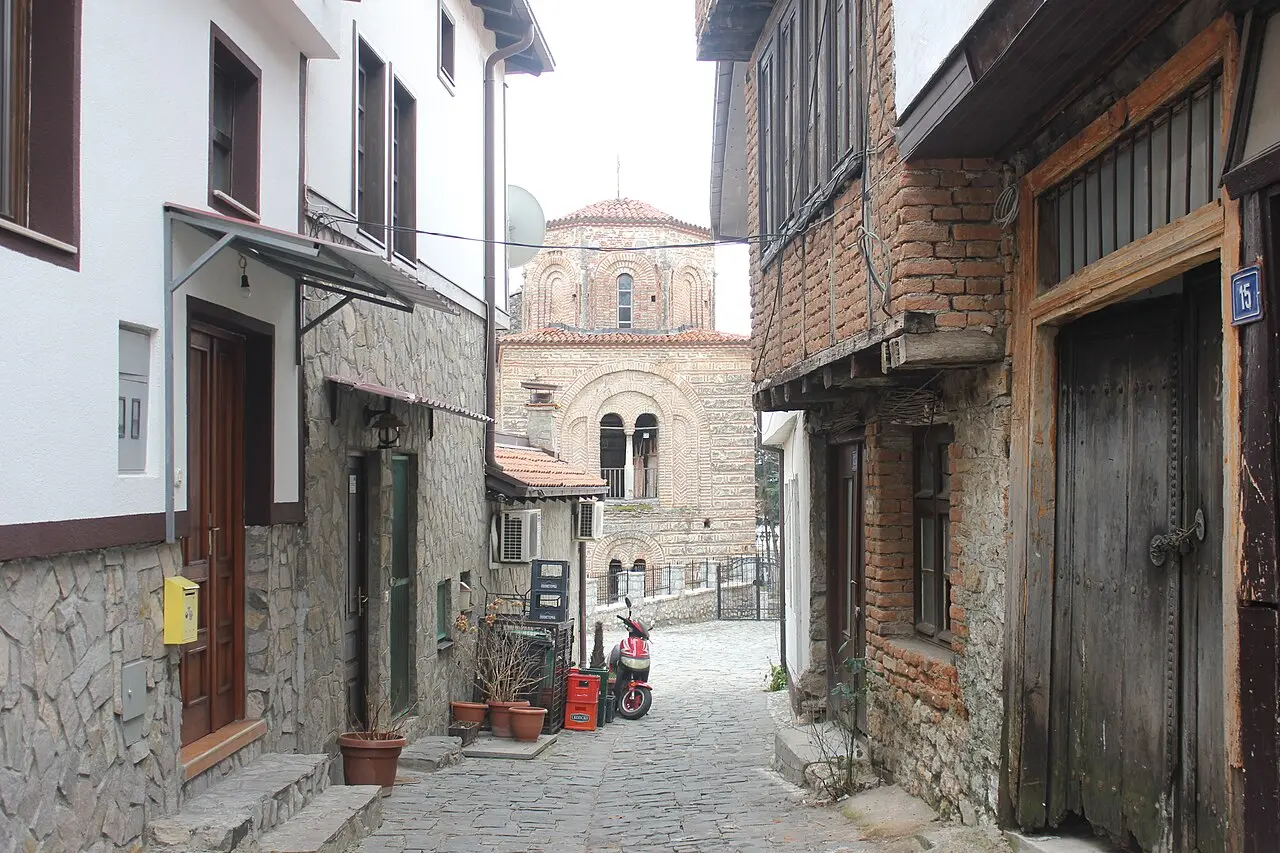
Both markets have been moving fast, and it shows in the official data, not just agent talk. The state statistics office used to publish an average price per m² broken out by city, but that series stopped after the release covering 2019 - so there is no current official city-average sale price from that source for either city. What is current is the National Bank’s quarterly residential property price index, built on actual Real Estate Cadastre Skopje transaction data: it put the weighted average around EUR 1,266/m² in Q1 2026, with annual growth of roughly 25% in Q4 2025 cooling to about 16.7% in Q1 2026 - still fast, just less fast. That figure tracks closed transactions, so it usually reads lower than the asking prices on portals.
On a 24 August 2026 spot-check of Tvoj Dom, ordinary Skopje flats ran from about EUR 105,000 for a two-bed in Aerodrom to EUR 229,900 for 93m² in Centar with a view; Ohrid flats ran from about EUR 84,150 for a new 51m² unit near Bolnicki Izvori to EUR 300,000 for an unspecified lake-view unit. Refresh those before you budget - they’re listing snapshots, not averages - but they make the practical point: EUR 40,000 buys very little ordinary stock in either city centre now. It is realistic money for a small, older flat away from the centre, or for looking at Struga, Bitola or a smaller town instead - not for a lake-view balcony or a new Skopje tower.
The practical split: buy in Skopje for year-round infrastructure and the widest choice near the EUR 40,000 mark; buy in Ohrid only if the lake itself is the point, budget well above the threshold for anything central, and go in knowing summer is crowded and winter is quiet.
When renting makes more sense
Buying ties up capital, triggers transfer tax and locks you into a market you’re still learning. If you’re not sure you’ll stay past a season - especially in Ohrid, where owners flip to summer lets - renting first is the lower-risk move. Our long-term rentals in Skopje and Ohrid guide covers portals, deposits and police registration; a lease also satisfies the “secured accommodation” box while you explore purchase options.
Health cover while you close
You’ll need continuous health insurance for any residence application tied to the purchase, and it’s sensible cover while you’re travelling for viewings and signing. Employer plans rarely follow a Balkan flat hunt. Compare long-stay health cover before your first trip - treat policy wording as something to read, not a box to tick, and confirm it meets the MVR requirement for your permit type before you file.
Read also
- Immigration file after you buy: North Macedonia residence permit
- Monthly budgets once you own: cost of living in North Macedonia
- City choice for remote workers: living in Skopje and Ohrid as a nomad
- Try before you buy: long-term rentals in Skopje and Ohrid
- Land or company structuring: register a company (DOO/DOOEL) and tax
Photos
Admission and opening hours
Property, tax and residence rules here were checked directly against the Law on Ownership and Other Real Estate Rights, the Law on Property Taxes, the VAT Law and the Law on Foreigners (texts held by the Public Revenue Office and Ministry of Finance), cross-checked with the CEE Legal Matters North Macedonia Real Estate Guide 2025 (Law Office Lazarov) and the Agency for Real Estate Cadastre, on 24 August 2026. Rules change and depend on your nationality - confirm with a notary, the cadastre agency (katastar.gov.mk) and a licensed lawyer before you sign.
Details checked: August 24, 2026
Read also

Relocation · 10 min read
Moving to North Macedonia: Start Here
Verified · September 3, 2026Move in order: entry, police registration, residence, housing, tax, health. Live numbers sit on the linked pages, not here.

Relocation · 13 min read
Healthcare in North Macedonia for Expats
Updated · August 30, 2026How expats and nomads use North Macedonia public HIF, private clinics in Skopje, and when long-stay cover still matters. Checked 30 Aug 2026.

Relocation · 12 min read
Coworking in Skopje: Spaces, Prices & Cafés
Updated · August 21, 2026Skopje coworking 2026: Coffice from €15/day, The Hub 1,190 MKD/day, Highspace €25/day, Public Room advertises free desks. Checked Aug 2026.

Relocation · 12 min read
North Macedonia Taxes for Expats: The 10% Flat Rate
Updated · August 20, 2026North Macedonia expat taxes in 2026: the 10% flat rate, the 183-day residency test, 28% social contributions, and how freelancers self-report.