
Healthcare in North Macedonia for Expats 2026
How expats and nomads use North Macedonia public HIF, private clinics in Skopje, and when long-stay cover still matters. Checked 30 Aug 2026.
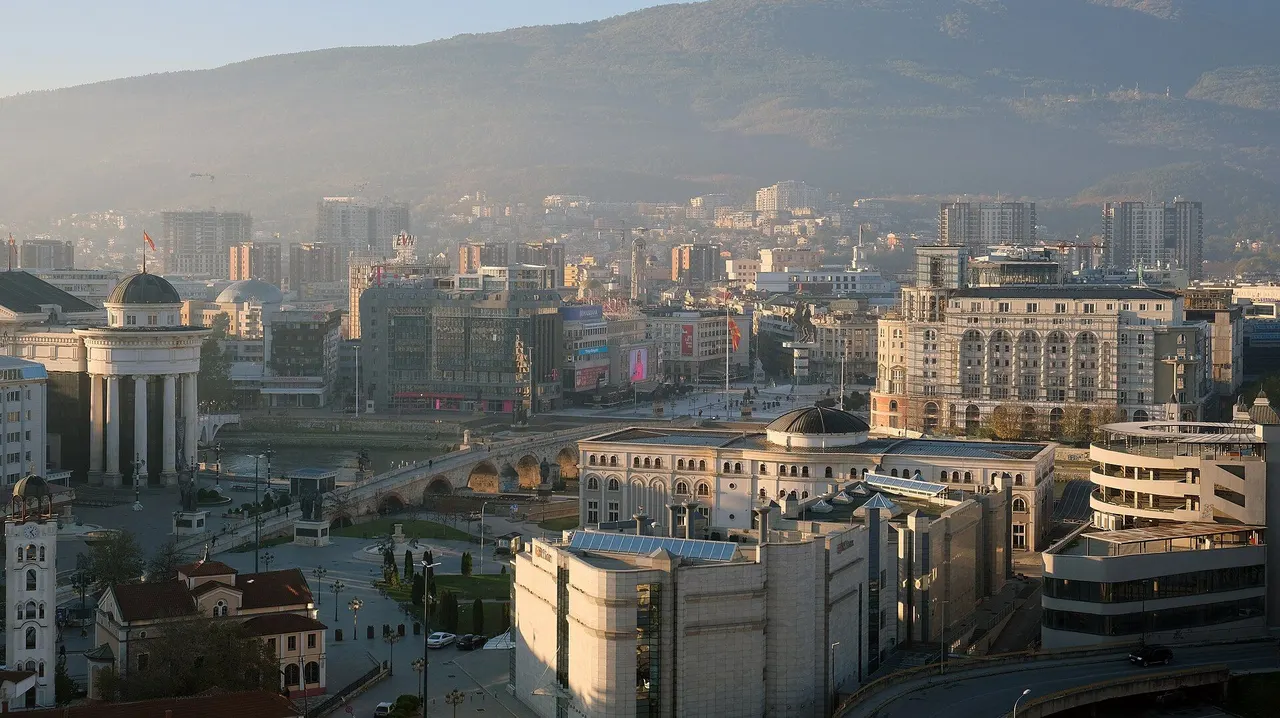
If you’re moving to North Macedonia on a residence permit, healthcare stops being a tourist problem and becomes a residency one. Temporary or permanent residence opens a path into the compulsory public system run by the Health Insurance Fund (HIF / FZO) - it does not drop a Fund card in your hand by itself. You still need a legal basis for insurance (employment, self-employment, or another category the Fund recognises), a registration/contribution trail, and confirmation at a local FZO desk. Employers usually register payroll staff automatically; everyone else deals with that office. In practice most expats still mix public cover with private clinics in Skopje - and keep separate insurance for medical evacuation. Figures below were checked on 30 August 2026; confirm your category at fzo.org.mk before you act.
YMYL disclaimer. This is general orientation, not medical, insurance or immigration advice. Contribution rates, HIF eligibility, clinic practice and entry rules change. The specific law articles named below (5, 6, 32, 33 and 34) are quoted from the Health Insurance Law’s official consolidated text current through amendment 60/2023; later amendments exist - including 154/2023, 209/2023, 144/2025 and 154/2025 - and haven’t been individually checked against this wording, so treat article numbers and thresholds as a starting point, not the final word. Confirm the current position with the Health Insurance Fund (
fzo.org.mk), the Ministry of Health, your embassy’s medical page, and a licensed local adviser. Clinic prices aren’t listed here - ask the facility for a current quote.
Residents vs weekend visitors
Short trips and long stays use different tools.
A visitor is usually a self-paying patient. The U.S. Department of State also notes that foreign citizens must present travel medical insurance on entry. That trip-level product - medical sum, sports add-ons, evacuation for a holiday - sits on the travel insurance for North Macedonia page.
This article is for people who already have, or are getting, a residence permit and need the state fund, private clinics and long-stay cover to fit together. Still choosing between Skopje and Ohrid as a base? Day-to-day living is in living in Ohrid and Skopje as a nomad.
How the public system is built
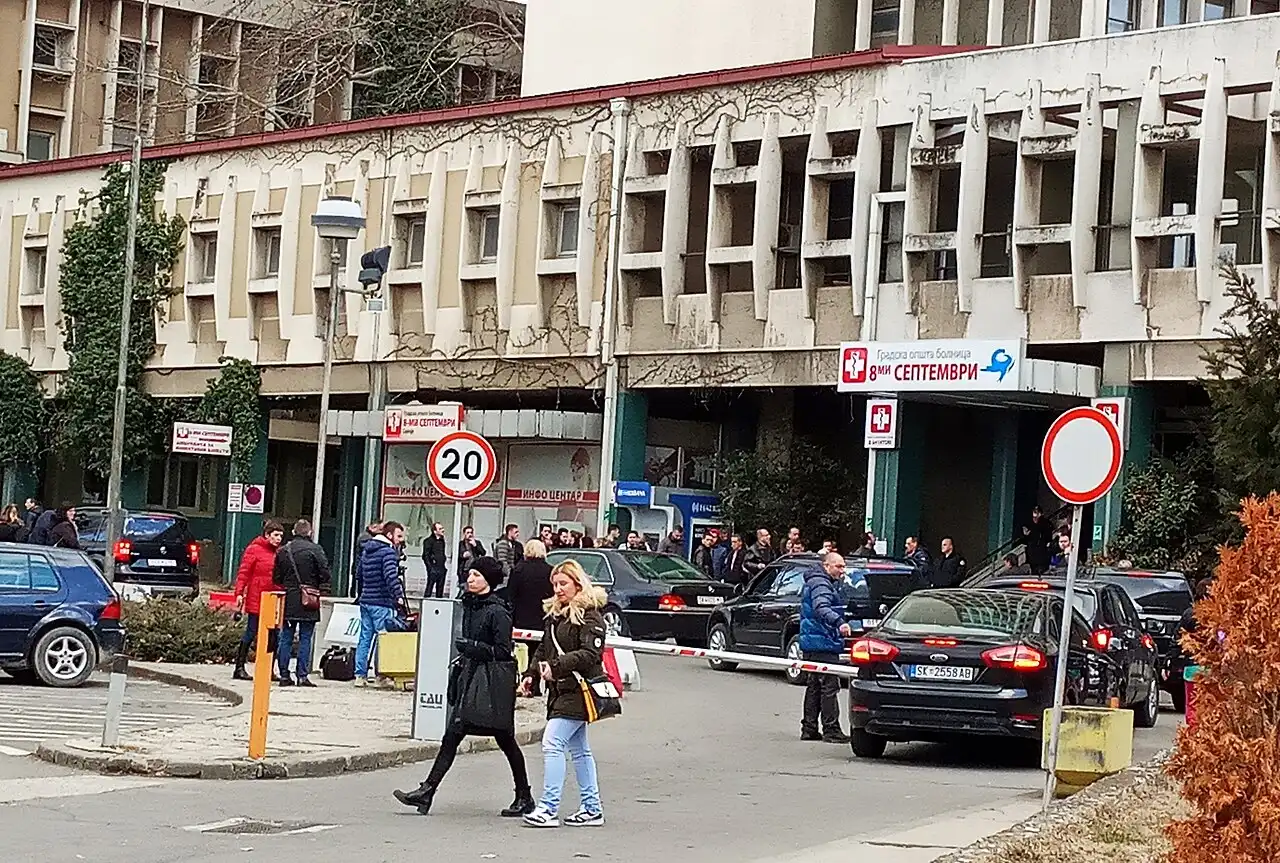
North Macedonia runs a social health-insurance model. The IOM Germany Country Fact Sheet for 2025 describes two paths: care financed through the Health Insurance Fund, or paying the bill yourself.
Under HIF cover, you’ll start with a general physician. That GP is the gatekeeper. After the first exam they refer you up - specialist consultative care, then hospital care - and they name the institution. Tertiary care (university clinics in Skopje) depends on those earlier referrals. Compulsory insurance, in the Fact Sheet’s wording, covers primary, specialist-consultative and hospital benefits.
Compulsory cover isn’t unlimited. The same Fact Sheet lists examples outside compulsory HIF that may need voluntary insurance or self-pay: aesthetic surgery, certain sanatorium and rehab treatments, higher-standard inpatient stays, medicines not on the HIF list, some orthopedic items, and gerontology accommodation. The Fund’s detailed exclusion list lives on fzo.org.mk - check that portal for the current text.
Insured people and family members still share costs, but the law - not the Fact Sheet’s summary - sets the actual mechanics, split across two articles with different relief. Article 32 caps the general participation at 20% of the average cost of the service or medicine, not 20% of your bill, with the Fund fixing it as a flat amount, not a percentage charged at the till - the actual figures live on the Fund’s own general-acts page, not in the statute itself. That same article carries its own relief: a chosen-GP visit and on-call emergency care are exempt entirely, and there’s an annual ceiling - once your specialist and hospital participation in a calendar year passes 70% of the previous year’s national average monthly salary, the Fund covers the rest. Prescription medicines under primary care and approved treatment abroad keep charging regardless - neither counts toward that 70%. Treatment abroad runs on its own rule anyway: 20% of the actual bill, capped at 200 EUR in denar equivalent.
Prosthetics, orthopaedic and other aids and sanitary devices sit under a different article, 33, with a steeper share: up to 50% of the set price, and only for devices made from standard materials - higher-grade materials fall outside that cap. That relief above is Article 32’s only; it doesn’t reach this participation. The positive medicines list is at lekovi.zdravstvo.gov.mk.
Can an expat join HIF?
Yes - through a specific legal basis, not a residence stamp. Article 5 of the Health Insurance Law lists exactly who is compulsorily insured, and “foreigner with a residence permit” isn’t one of the categories. For foreigners specifically, the law lists two narrow grounds: employment or service with a foreign employer, international organisation or diplomatic mission in North Macedonia, and studying or professional training here. Recognised refugees and people under subsidiary protection have their own separate ground, unrelated to residence status. Most working expats actually qualify a different way: Article 5 also covers any employee and any self-employed person, full stop, with no citizenship test attached - that’s the route an ordinary local job or freelance registration uses. The law’s catch-all “everyone else” category, by contrast, is written for citizens specifically. Registration runs through the local HIF office (or, for employees, through the employer).
That’s the hinge most nomads miss. Visa-free days don’t put you on the Fund. Residence opens the door, but you join the Fund only after a recognised basis plus registration/contribution - not after the residence stamp alone. Until that file is through at FZO, treat yourself as a self-paying patient and keep trip or nomad medical cover active.
If you’re employed locally
For employed people, the Fact Sheet is blunt: the employer registers you with HIF. The process is automated; you don’t file the insured-person pack yourself. Contributions come out of gross salary on payday.
If you’re self-employed, a dependent, or neither
Self-employed people register themselves at the local FZO office - the same Article 5 ground as an employee, minus the employer doing the paperwork. Bring originals, expect Macedonian or Albanian forms, and confirm the current document list with the Fund directly.
If neither fits you, check Article 6 before assuming there’s no way in: it gives automatic dependent cover to a spouse or child of someone already insured under Article 5, through that person’s own file, no separate basis needed. A non-working spouse of an employed or self-employed expat isn’t stuck outside the system - they register as a dependent. Outside both routes - a retiree on a foreign pension with no locally-insured spouse, or anyone financially independent with no employment link here - Article 5 has no category to register under, residence permit or not. That’s a real gap in the law, not a documentation problem, so private or international cover for that group is doing permanent work, not just bridging a wait.
Since January 2026 HIF certificates also sit on uslugi.gov.mk (registration status, paid contribution and related docs, per MIA). Useful once you’re in; it doesn’t replace first enrolment.
What residents pay in social contributions
Payroll social contributions follow the Law on Mandatory Social Insurance Contributions. Official Gazette 148/2026 amended the split, and UJP applies the new numbers to salary for the months July-December 2026 - its own rate-table column is headed “01.07.2026”, and the rate follows the salary month, not the payout date: a December 2026 salary paid out in January 2027 still falls under this split. Total stays 28% of gross; the pieces moved:
| Contribution | Rate of gross salary (salary for Jul-Dec 2026) |
|---|---|
| Pension and disability (PIOM) | 19.9% |
| Health insurance (FZO / HIF) | 7.5% |
| Additional health (occupational) | 0.5% |
| Unemployment | 0.1% |
For salary for the months through June 2026, the published split was 18.8% / 7.5% / 0.5% / 1.2%. English aggregator pages (including PwC’s tax summary) often still show that older breakdown - use UJP’s table, and recheck the split again once you’re looking at salary for January 2027 or later. See also taxes for expats.
The employer calculates, withholds and remits, and that 50%-to-16x base is the employee rule. Self-employed people - freelancers on their own registration, not a DOOEL payroll - start from that same 50% floor by default. UJP raises it only for one group: anyone providing a professional or other intellectual service - consulting, development, writing and similar - faces 100% of the national average salary instead. Whichever floor applies, the ceiling for self-employed contributors is 12 average salaries versus an employee’s 16. UJP itself puts the 2026 monthly national average gross at MKD 69,141, which is what both floors are measured against. Treat the average as orientation; UJP controls payroll filings.
Private clinics - where expats usually go for speed
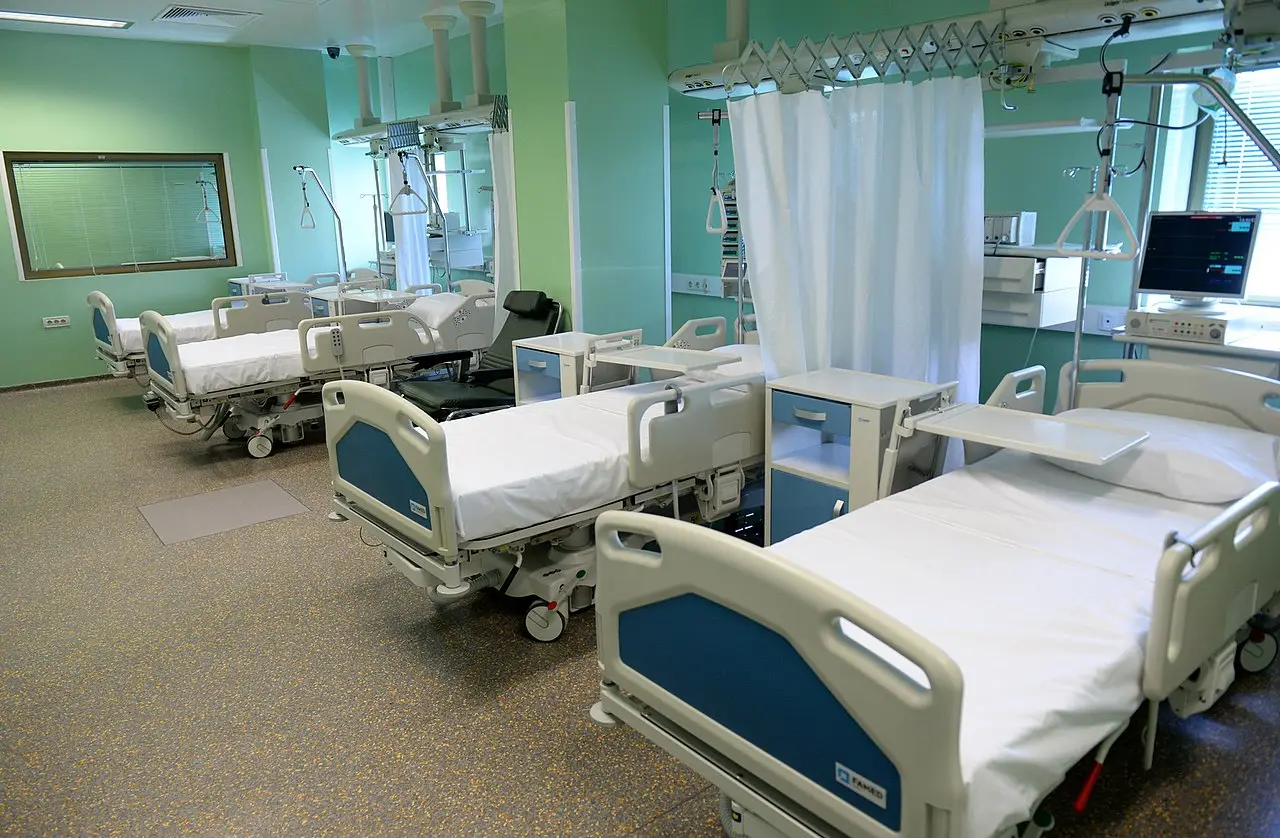
Public cover and private care sit side by side. The U.S. Embassy in Skopje medical page (updated June 2025) says many Macedonian physicians are trained to a high standard and that well-equipped private clinics are available, especially in Skopje - while most public hospitals and clinics aren’t equipped and maintained at U.S. or Western European standards, and specialised treatment may not be obtainable.
The State Department country page adds geography: Skopje has four private hospitals spanning services from cardiovascular surgery to paediatric intensive care, yet quality still doesn’t match U.S. healthcare. Beyond Skopje, care “generally falls below standard,” with an explicit exception for trauma services in Ohrid.
Habits that matter day to day, from those same U.S. sources:
- Expect to pay at the time of treatment. The Embassy notes doctors and facilities generally won’t settle claims directly with U.S. insurers; you pay, then reclaim from your carrier.
- U.S. Medicare doesn’t reimburse medical expenses incurred in North Macedonia.
- Hospitals and doctors may ask for proof of adequate insurance or payment upfront; credit cards aren’t always accepted.
- Government ambulances usually take you to a state hospital unless you specifically request a private facility. Private emergency services in Skopje meet higher standards per the State Department’s wording.
- Patients bear the cost of transfer to or between hospitals.
The Embassy publishes a non-endorsed contact list. Names that come up often for Skopje residents include Acibadem Sistina Hospital, Zan Mitrev Clinic, Re-Medika General Hospital, the state Clinical Center “Mother Theresa”, and City General Hospital “8 September”. For the southwest, the Embassy lists the regional hospital in Ohrid and the orthopaedics/trauma hospital St. Erazmo. Call ahead for English-speaking staff and a price estimate - we don’t invent consultation fees here because clinics set their own tariffs and change them.
Emergencies, medicines and the winter air
Dial 112 or 194 for ambulance services - the U.S. Embassy publishes both numbers, while FCDO’s own guidance names only 194 (“dial 194 and ask for an ambulance”). If you carry a U.S. phone, the Embassy notes you can also dial 911.
Bring chronic medications in original packaging with a doctor’s prescription, and check customs rules before you fly. The State Department warns that many medicines approved in the United States aren’t approved here, that insulin isn’t available to non-citizens (their wording) - bring your own supply and do not plan on public or state insulin programmes as a non-citizen - and that counterfeit medication is a real risk - buy from a reputable pharmacy. The HIF positive list at lekovi.zdravstvo.gov.mk is the public-system reference once you’re insured.
Skopje’s winter air pollution is a planning issue for anyone with asthma or other respiratory conditions. That’s one more reason the State Department “strongly recommend[s] supplemental insurance to cover medical evacuation” - a serious case can outgrow what local facilities can finish.
UK nationals - a narrow reciprocal path
British nationals (and some related categories) have a reciprocal healthcare agreement with North Macedonia. GOV.UK guidance (updated 15 January 2025) says you get emergency hospital treatment, some emergency dental treatment, and other emergency medical treatment on the same basis as a local resident. You still pay for prescribed medicines. Proof is normally a UK passport (UK-resident non-nationals need proof of National Insurance enrolment).
That agreement is an emergency visitor tool. It isn’t a substitute for HIF enrolment once you live here, and it doesn’t cover repatriation. FCDO still tells you to carry adequate insurance. EU travellers shouldn’t assume an EHIC/GHIC works - North Macedonia is outside the EU card schemes.
Cover that bridges the gaps
Public HIF answers a lot once you’re enrolled and using contracted providers. It doesn’t automatically answer private-clinic bills, every medicine, or a flight home to a better-equipped hospital. That gap is why long-stay and nomad medical products exist alongside the state fund.
Reach for international or nomad medical cover when:
- you’re between visa-free entry and completed residence/HIF registration;
- you need faster private care and a way to reclaim cash payments;
- you need medical evacuation / repatriation limits that local public cover doesn’t replace.
Read the live policy wording, exclusions and waiting periods before you commit - premiums and covered sums move often enough that quoting one here would be stale within months. SafetyWing is the long-stay option linked from this page; local and regional insurers such as EKTA aren’t set up as a link here, so check their own sites directly if you’re comparing. For a pure holiday policy, use the travel insurance page instead.
A working setup for people who stay
What holds up for most Western remote workers and employees:
- Get residence and the Fund basis right - HIF follows a recognised insurance basis and contributions, not the stamp alone. See the residence permit routes.
- Confirm HIF enrolment with your employer or the local Fund office; keep digital and paper proof of insured status (uslugi.gov.mk certificates help once you’re registered).
- Pick a GP inside the public network so referrals work the way the system expects.
- Keep a private-clinic shortlist in Skopje (or Ohrid trauma contacts if that’s home), with current phone numbers from the Embassy list - and ask for prices before you book non-urgent care.
- Hold evacuation-capable insurance until HIF is active, and often after, for private care or a path out on complex cases.
- Plan medicines before arrival; don’t assume a U.S. or UK script is stocked.
Healthcare here is workable - especially in Skopje - when you treat the public fund as the backbone for residents and private clinics plus medevac cover as the speed and safety layer. What fails is arriving on tourist habits and discovering, mid-illness, that you’re still a cash patient with no Fund card and no evacuation line.
Photos
Admission and opening hours
Rules, contribution rates and clinic practice change. Figures below were checked against official and embassy sources on 30 August 2026 - confirm with FZO (fzo.org.mk), the Ministry of Health (zdravstvo.gov.mk) and the clinic before you rely on them.
Details checked: August 30, 2026
Read also

Relocation · 10 min read
Moving to North Macedonia: Start Here
Verified · September 3, 2026Move in order: entry, police registration, residence, housing, tax, health. Live numbers sit on the linked pages, not here.

Relocation · 12 min read
Buying Property in North Macedonia as a Foreigner
Updated · August 24, 2026Can foreigners buy in North Macedonia? EU/OECD rules, cadastre checks, notary steps, transfer tax, and the EUR 40k residence link - checked Aug 2026.

Relocation · 12 min read
Coworking in Skopje: Spaces, Prices & Cafés
Updated · August 21, 2026Skopje coworking 2026: Coffice from €15/day, The Hub 1,190 MKD/day, Highspace €25/day, Public Room advertises free desks. Checked Aug 2026.

Relocation · 12 min read
North Macedonia Taxes for Expats: The 10% Flat Rate
Updated · August 20, 2026North Macedonia expat taxes in 2026: the 10% flat rate, the 183-day residency test, 28% social contributions, and how freelancers self-report.