
North Macedonia Events Calendar: Month by Month 2026
What's on in North Macedonia and when: carnivals, Ohrid's festival, Skopje Jazz and the national holidays that actually close things down.
Upcoming events
- October 11-12, 2026 Day of the Macedonian Uprising (public holiday; observed Monday 12 October)
- Day of the Macedonian Revolutionary Struggle (public holiday)
- Saint Clement of Ohrid Day (public holiday)
All upcoming dates by month (11)
October 2026
- October 11-12, 2026 Day of the Macedonian Uprising (public holiday; observed Monday 12 October)
- Day of the Macedonian Revolutionary Struggle (public holiday)
December 2026
- Saint Clement of Ohrid Day (public holiday)
January 2027
- New Year (public holiday)
- Orthodox Christmas (public holiday)
- January 13-14, 2027 Vevčani Carnival
May 2027
- Labour Day (public holiday)
- Saints Cyril and Methodius Day (public holiday)
July 2027
- July 10-11, 2027 Galichnik Wedding (weekend nearest 12 July)
- July 12 - August 20, 2027 Ohrid Summer Festival
August 2027
- Republic Day, Ilinden (public holiday)
Dates marked "to be confirmed" follow the previous edition: the organiser had not announced the new ones when we last checked.
Dates checked: September 5, 2026
North Macedonia doesn’t run on one festival season - the big dates are scattered across the calendar, and several of them move every year. The two most famous fixtures, the Galichnik Wedding and the Ohrid Summer Festival, land every July, but Struga’s poetry festival just jumped from its traditional August slot to late June, and the carnival crowd in Strumica and Vevčani has you in a mask before spring even starts. Three of 2026’s fixed national holidays also fall on a Sunday, which under Macedonian law pushes the actual day off to the Monday after - handy to know before you plan a bank errand around one.
| Month | What’s on | 2026 date | Moves or fixed |
|---|---|---|---|
| January | Vevčani Carnival | 13-14 Jan | Fixed every year |
| February | Strumica Carnival (8-day programme) | 18-25 Feb | Fixed for 2026, moves yearly |
| March | Eid al-Fitr (expected) | around 20 Mar | Moves with the moon |
| April | Orthodox Easter Monday | 13 Apr | Moves with Easter |
| May | Labour Day / Eid al-Adha (expected) | 1 May / around 27 May | Fixed / moves |
| June | Struga Poetry Evenings | 24-29 Jun | New slot for 2026 |
| July | Galichnik Wedding / Ohrid Summer Festival opens | 11-12 Jul / from 12 Jul | Weekend-linked |
| August | Ohrid Summer Festival runs / Republic Day | to 20 Aug / 2 Aug | Fixed (holiday shifts to 3 Aug) |
| September | Tikves Grozdober (Kavadarci) / Independence Day | 4-6 Sep / 8 Sep | Fixed for 2026, moves yearly / Fixed |
| October | Skopje Jazz Festival / two uprising holidays | 15-18 Oct / 11 & 23 Oct | Festival moves, holidays fixed |
| December | Saint Clement of Ohrid Day | 8 Dec | Fixed |
January: masks first, then a quiet stretch
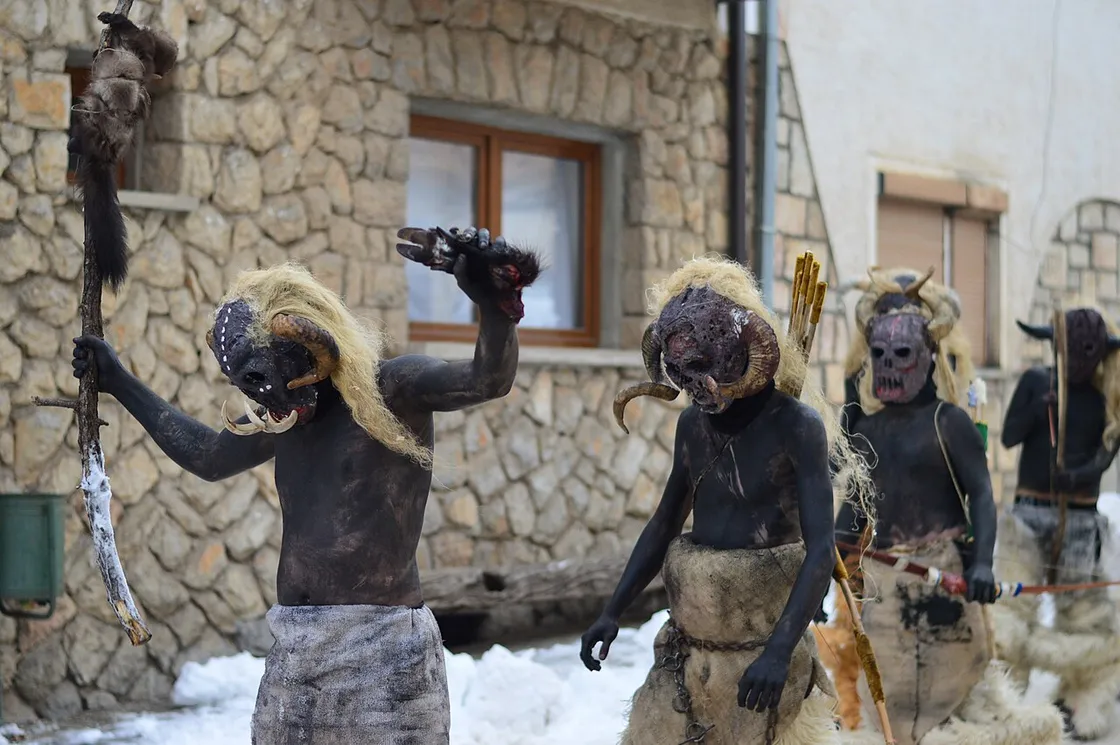
The year opens with the fixed pair everyone expects, New Year on the 1st and Orthodox Christmas on the 7th, and then the one you probably haven’t heard of. On the night of 13 January, the old-calendar New Year’s Eve, the mountain village of Vevčani stages a carnival that’s been running in some form for around 1,400 years. Masked figures parade through the village lanes making fun of whatever happened in Macedonian and world politics that year, and the whole thing ends with the masks burned on a bonfire. Our Struga travel guide covers Vevčani’s springs and the practical side of getting up there for the carnival, since the village sits just up the hill from Struga. After the 14th the country goes quiet again until spring, which is exactly when hotel rates in Ohrid and Skopje are at their lowest.
February: Strumica’s carnival, and why the date keeps sliding
Strumica’s carnival is the bigger of the country’s two big mask events, a FECC-registered festival with thousands of costumed kukeri and a night parade, and it’s been documented here since at least 1670. The municipality confirmed the 2026 programme at a press conference: eight days of events from 18 to 25 February, with the main international carnival parade on Saturday 21 February, plus a new addition this year, a Carnival Musical on the 19th. The date moves every year because the whole event is timed to Trimeri, the run-up into Orthodox Great Lent, which itself follows Orthodox Easter’s shifting calendar. The traditional children’s carnival falls on Prochka, Forgiveness Sunday, the last Sunday before Lent starts - the day after the main parade, so 22 February in 2026. Adults get Saturday night in the main square; the children’s parade is Sunday morning. Our full things to do in Strumica guide covers the fortress and the monasteries you can pair it with.
March and April: a quiet month, then two calendars collide
March has no fixed public holiday of its own, but it isn’t empty: Eid al-Fitr is expected around 20 March 2026, pending the actual moon sighting, and it’s a legal non-working day specifically for North Macedonia’s Muslim community - a meaningful share of the population, concentrated in Tetovo, around Struga, and in Skopje’s Old Bazaar. Turn up to shop the bazaar on that specific day and you’ll find a different, quieter street than the one in most generic listicles, which rarely mention the closure at all. April brings the country’s main Christian holiday: Orthodox Easter Monday falls on 13 April 2026, and offices and a lot of small businesses close for the long weekend around it.
May: two public holidays and one that moves with the moon
May carries the country’s other big Christian-calendar public holiday, Saints Cyril and Methodius Day on the 24th, alongside Labour Day on the 1st - a Friday in 2026, so it stretches into a long weekend. The 24th itself is a Sunday this year, and it’s the third of 2026’s fixed holidays that gets bumped: the actual non-working day shifts to Monday 25 May. Eid al-Adha is expected around 27 May 2026, again pending confirmation, and follows the same community-specific rule as Eid al-Fitr. If you’re chasing wine country rather than city holidays, May is also a good time to be in the Tikveš region before the summer heat sets in.
June: the poetry festival moves, and the first big outdoor weekend arrives
For over sixty years the Struga Poetry Evenings ran in late August, one of the oldest and most prestigious poetry festivals anywhere: past winners of its Golden Wreath award include Pablo Neruda, Joseph Brodsky, Seamus Heaney and Margaret Atwood, and the closing ceremony is traditionally held on the town’s own Bridge of Poetry over the Black Drin. In 2026, for its 65th edition, the organisers moved it forward to 24-29 June - partly to catch bigger outdoor crowds before the summer heat, partly to save money ahead of the peak season, and partly because a June date suits the academic calendars of the visiting poets and critics better than late August does. It’s a genuinely useful thing to know before you plan around the “usual” late-summer slot; our Struga travel guide has more on the new dates and how to plan around them. Late June is also when a long-running outdoor music weekend, D Festival, has typically been held: the 2026 edition ran 26-28 June in Shtip, its 16th edition, headlined by IDLES and Boris Brejcha, though the festival started life by Lake Dojran and some listings still describe it that way, so treat the venue as settled for this year rather than fixed forever.
July and August: the double act at Ohrid, and a national holiday in between
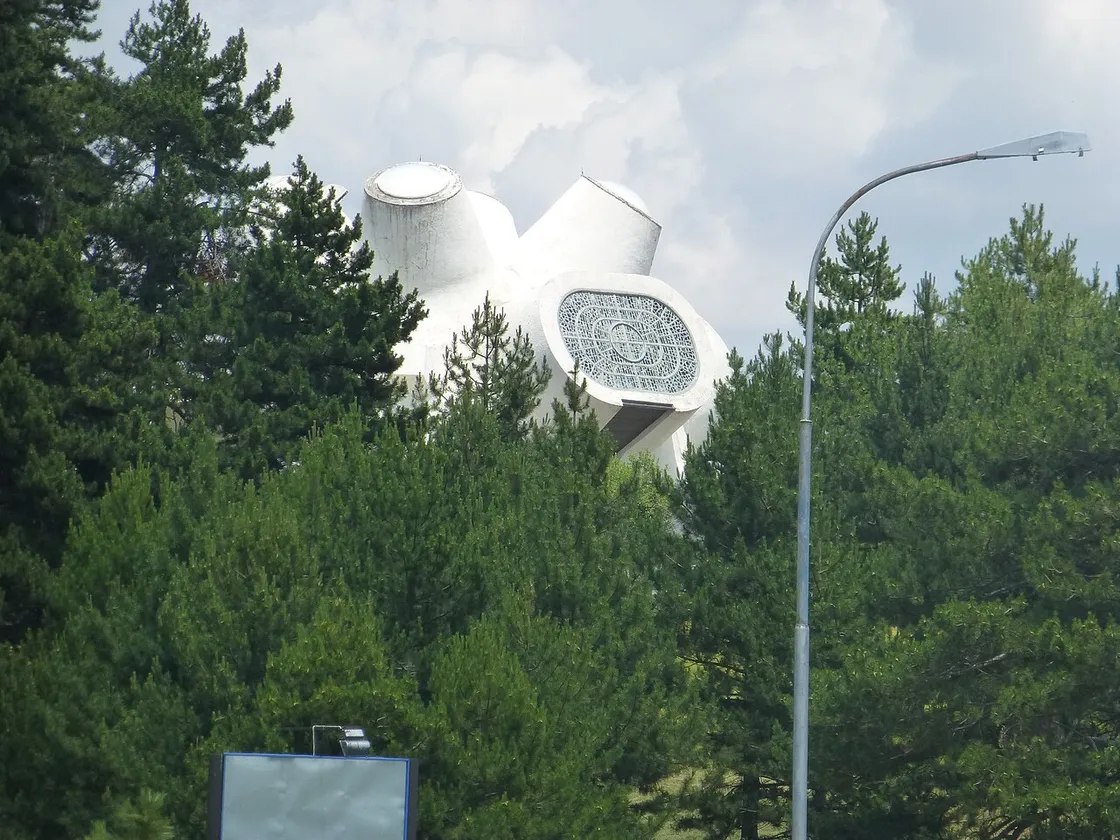
This is the fortnight nearly every visitor asks about. The Galichnik Wedding runs on the weekend nearest 12 July, and in 2026 that’s 11-12 July; the Ohrid Summer Festival opens on the same date and runs all the way to 20 August, its 66th edition. Book a room in Ohrid for that window and you’re competing with everyone who wants both events in one trip. In between, 2 August is Republic Day, which does double duty in the national calendar: it marks the 1903 Ilinden Uprising and the short-lived Kruševo Republic, and it marks the 1944 founding assembly of socialist Macedonia at St Prohor Pčinjski, an event contemporaries nicknamed the “Second Ilinden” for landing on the same date on purpose. In 2026 the 2nd falls on a Sunday, so the actual non-working day shifts to Monday 3 August.
September and October: independence, then jazz
The month opens down in wine country: Tikves Grozdober, Kavadarci’s grape-harvest festival, ran 4-6 September in 2026 with carnival floats, wine stalls and evening concerts on the city square - a wine-country event to pair with a Tikves trip, not a Skopje-only visit, and worth checking against the municipality’s own festival page each year since the exact days aren’t fixed on the calendar the way Independence Day is.
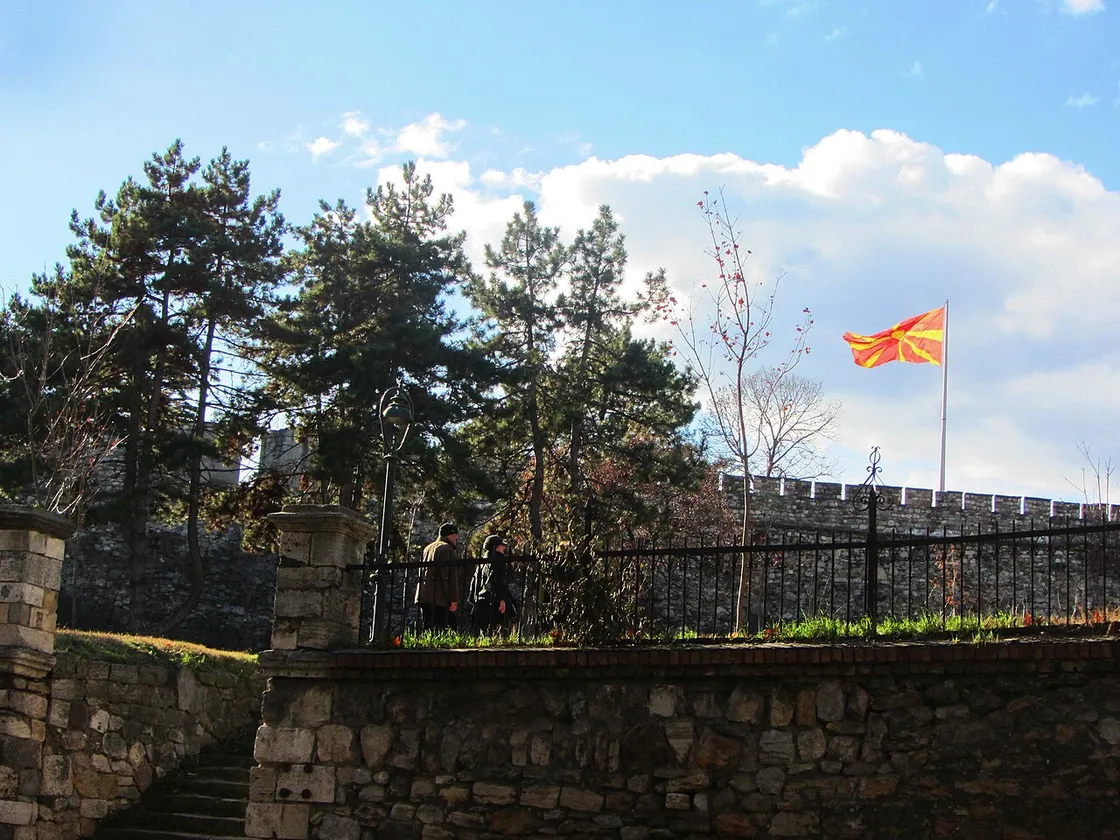
Independence Day on 8 September marks the 1991 referendum, and it falls on a Tuesday in 2026 - no weekend shift needed, just a single closed midweek day. October carries two more public holidays rooted in the national struggle, from two different eras entirely: the Day of the Macedonian Uprising on the 11th, marking the day in 1941 when a partisan unit in Prilep attacked the local police station and opened the anti-fascist resistance in occupied Macedonia (a Sunday in 2026, shifting the closure to Monday the 12th), and the Day of the Macedonian Revolutionary Struggle on the 23rd, marking the 1893 founding of the IMRO independence movement in Thessaloniki (a Friday this year, so it stands alone).
Somewhere in the same month, usually the middle two weeks, Skopje’s jazz venues fill up for the Skopje Jazz Festival, running since 1982 and one of the longer-running jazz festivals in the Balkans. The 45th edition runs 15-18 October 2026, and the line-up was first announced on 22 August, with the final programme (two of the eleven acts changed) on the festival site by 12 September: eleven projects drawn from the Norwegian Punkt and ECM circle, European free and chamber jazz, South African spiritual jazz and French accordion, with no stadium name booked to pad the bill. The 44th ran 16-19 October 2025 with Marc Ribot and a Wadada Leo Smith duo, so the mid-October slot holds year to year - but the exact days land barely eight weeks ahead, which is why the festival’s own site, skopjejazzfest.com.mk, is the thing to check before you book flights around it.
November and December: the quiet close of the year
November has no fixed national holiday and very little on a public calendar - it’s the year’s other genuinely quiet stretch alongside March, and a reasonable time to catch Skopje or Bitola without festival crowds or summer heat. December’s one fixed date is Saint Clement of Ohrid Day on the 8th, a public holiday honouring the medieval scholar whose name is attached to half the country’s schools and to the university headquartered in Bitola - Ohrid itself, despite the shared name, only hosts one of that university’s faculties. By late December the mountains take over the calendar instead: lift dates at Mavrovo are announced only a week or two ahead each year, tied to snowfall rather than the calendar, so winter sports plans need to stay flexible into the season itself.
Picking your month
If you want the headline spectacle with the least homework, come in July and accept that you’re booking Ohrid alongside everyone else who read the same two paragraphs above. If you’d rather see something almost no foreign visitor plans a trip around, Vevčani in January or Strumica in February gets you a real local festival with no ticket booth and no English signage - bring cash, patience, and warm clothes. If your interest is cultural rather than loud, June’s new poetry-festival dates or October’s jazz week suit a quieter, indoor-friendly trip. And if you’re simply trying to avoid a closed bank or a shuttered office on the day you land, the public-holiday dates above matter more than any festival - especially the ones that land on a Sunday in 2026 and quietly move the closure to the Monday instead.
Read also
- Ohrid Summer Festival - the full night-by-night 2026 programme, venues and ticket prices
- Tikves Grozdober - Kavadarci’s grape-harvest weekend, carnival and concerts, early September
- D Festival - the late-June open-air weekend (Dojran roots, 2026 in Shtip)
- Galichnik Wedding Festival - the two-day ritual, the Teshkoto dance, and how to reach the village
- Struga travel guide - the poetry festival’s new June dates and the Vevčani carnival day trip
- Things to do in Strumica - the carnival’s fortress and monastery pairings
- Best time to visit North Macedonia - matching a season to weather, crowds and prices
- Krusevo travel guide - the Makedonium monument behind Republic Day
- Mavrovo ski resort - what replaces the festival calendar once winter arrives
Good to know
Dates for the moving events (the carnivals, Eid al-Fitr, Eid al-Adha, Orthodox Easter) shift every year and the ones below for 2026 are either officially published or calculated from a sourced anchor date - confirm the current year's programme before you book anything around them.
Details checked: September 5, 2026
Read also

Entertainment · 11 min read
Skopje Jazz Festival: A Visitor's Guide
Updated · September 13, 2026Skopje Jazz Festival, founded in 1982: how the four October nights at the National Opera and Ballet work, what tickets cost, and where to stay nearby.

Entertainment · 10 min read
Tikves Grozdober: Kavadarci's Grape Harvest Party
Verified · September 5, 2026Tikveski Grozdober in Kavadarci: early-September grape harvest festival, carnival, wine stalls, concerts - how to plan a weekend.

Entertainment · 9 min read
Manaki Brothers Film Festival: A Visitor's Guide
Updated · August 26, 2026Manaki Brothers in Bitola: world's oldest cinematographers' festival, 47th edition 19-25 Sep 2026, venues, tickets and where to stay.

Entertainment · 8 min read
Struga Poetry Evenings: A Visitor's Guide
Updated · August 13, 2026SPE 2026 ran 24-29 June in Struga: Golden Wreath, Bridge of Poetry nights, hotels by the lake, and how to plan around the festival.