
Ohridsko Leto Programme: 12 Jul-20 Aug, Tickets 600 MKD 2026
Ohridsko Leto 2026, the 66th Ohrid Summer Festival, 12 July to 20 August: night-by-night programme, five stages, tickets 600-1,000 MKD (about €10-16).
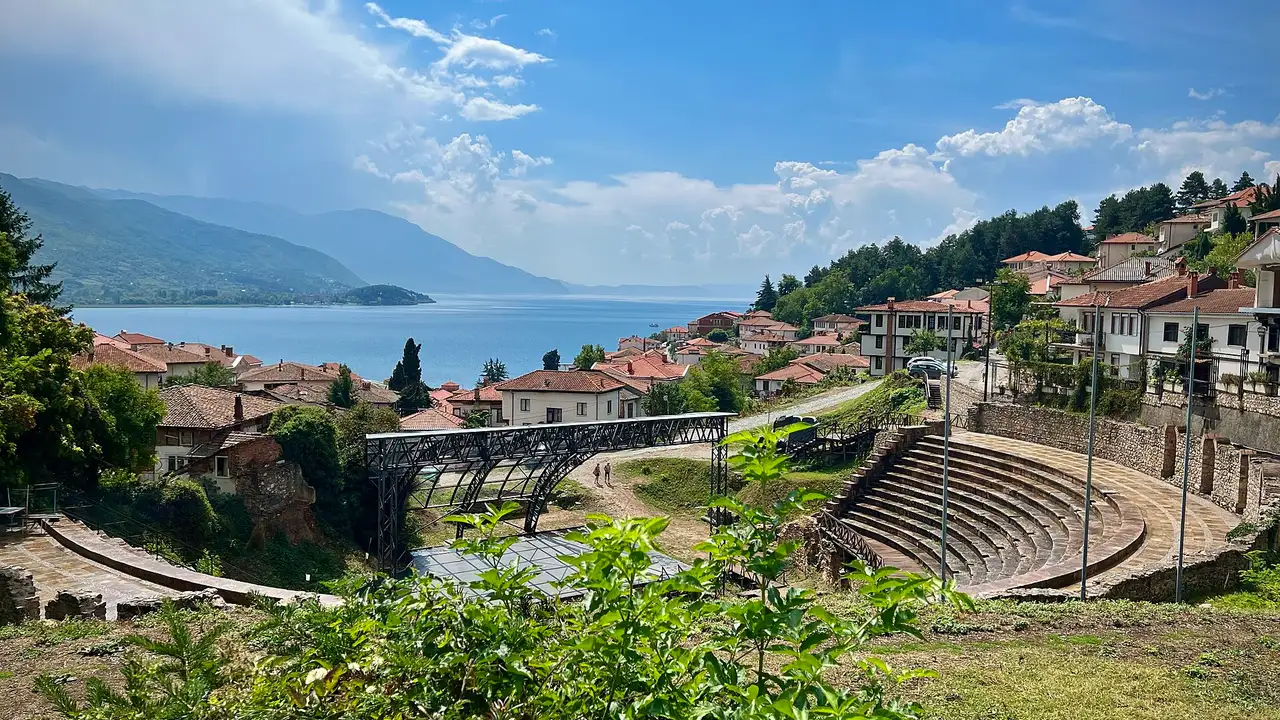
The Ohrid Summer Festival (Ohridsko Leto) is North Macedonia’s biggest and oldest arts festival: roughly six weeks of classical music, opera, ballet, jazz and theatre staged in Ohrid’s lakeside monuments each summer. It has run every year since 1961, always between about 12 July and 20 August, and the 2026 season is its 66th edition. Published 2026 prices sit at 600 to 1,000 MKD - about 10 to 16 euros, $11-19 or £8-14 - for named concerts on the official seller, part of the programme is free, and the season opened in a 2,000-year-old open-air theatre above the lake. For about what one cinema ticket costs in London you can watch a Mercury-shortlisted saxophonist play under the stars, which isn’t a sentence you can write about many festivals. Those lake evenings feel different by month - see weather by month.
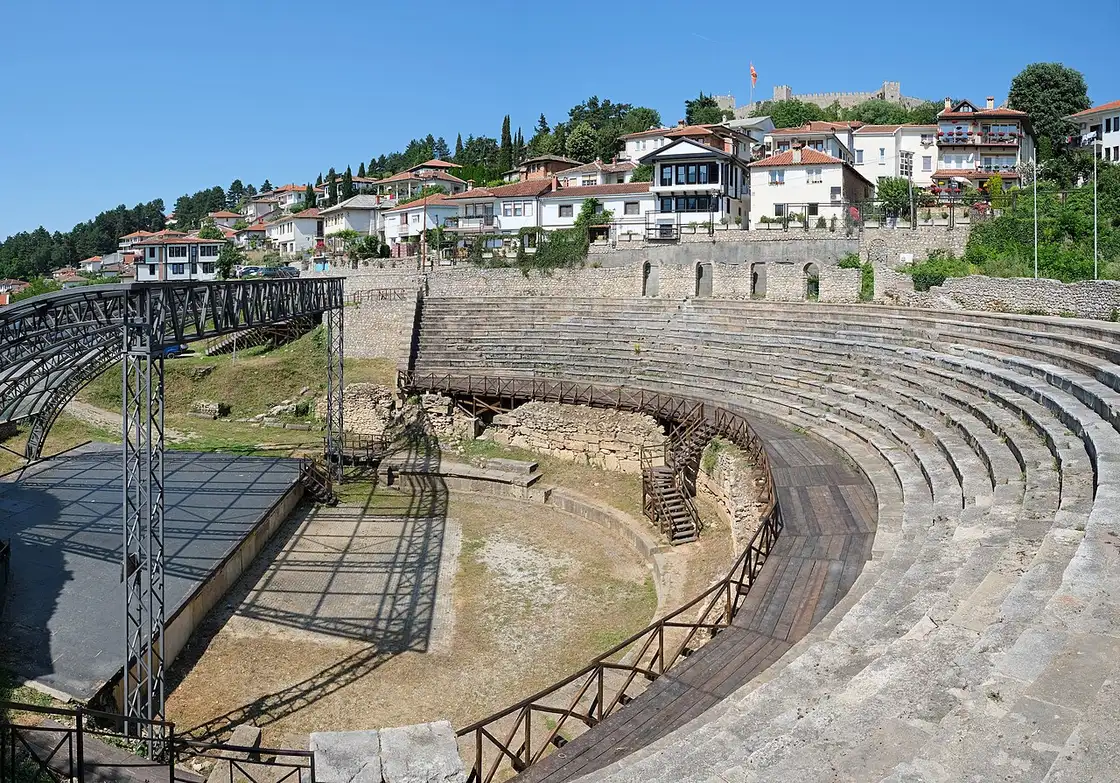
One thing to sort out before you build a trip around it. The ancient theatre is the festival’s showpiece room and the reason it feels different from a concert hall back home: cut into the hillside of the old town more than two thousand years ago, buried by the townspeople after the Roman era, uncovered by accident in the 1980s, and now seating a crowd under open sky with the lake below the stage. It took the opening gala on 12 July, and the festival has nothing else scheduled there this year. What’s left of the 2026 season, from 4 to 20 August, runs in the church of St Sophia and its vestibule, on the open-air terraces of Dolni Saraj and in the indoor hall at the Grigor Prlichev centre. Come for the theatre and you want next July, not this August.
A festival with some history behind it
Ohridsko Leto, written Охридско лето on every poster in town, was first held in 1961, and it grew into one of the more serious cultural dates in the region. Since 1994 it has been a member of the European Festivals Association, the network of Europe’s established summer festivals, and the President of North Macedonia serves as its patron. The list of artists who have played here over the decades is the quickest way to grasp its standing: the pianist Svyatoslav Richter, the cellist Mstislav Rostropovich, the conductor Zubin Mehta, the composer Ennio Morricone, and singers José Carreras and Jessye Norman, among many others.
None of that means it’s stuffy or hard to get into. Alongside the big names the programme leans on Macedonian and regional ensembles, young soloists and touring orchestras, and a good share of the calendar costs only a few euros.
The venues: five stages, and they aren’t interchangeable
Half of planning a night here’s choosing where, not just what: the festival runs five separate stages and they give completely different evenings. The other half is dinner before the show - on festival nights Ohrid’s old-town restaurants fill up early. One thing plenty of listings get wrong: the Antique Theatre and Dolni Saraj are two stages, not one name for the same place.
The Antique Theatre is the wooden platform set above the ancient central stage, and it takes the opening gala and the highest-ranked performances: 1,719 fixed seats plus another 210 on the assembly section. That’s the excavated one, and the seating is genuinely old stone, hard and backless. Dolni Saraj, the terraced area just below, is a different animal despite the neighbouring address. The festival’s own description of it’s unromantic: several levels built up in solid concrete with chairs set out on them, 1,000 seated or up to 2,000 standing. It carries most of the big open-air nights, including three of the four 2026 jazz nights.
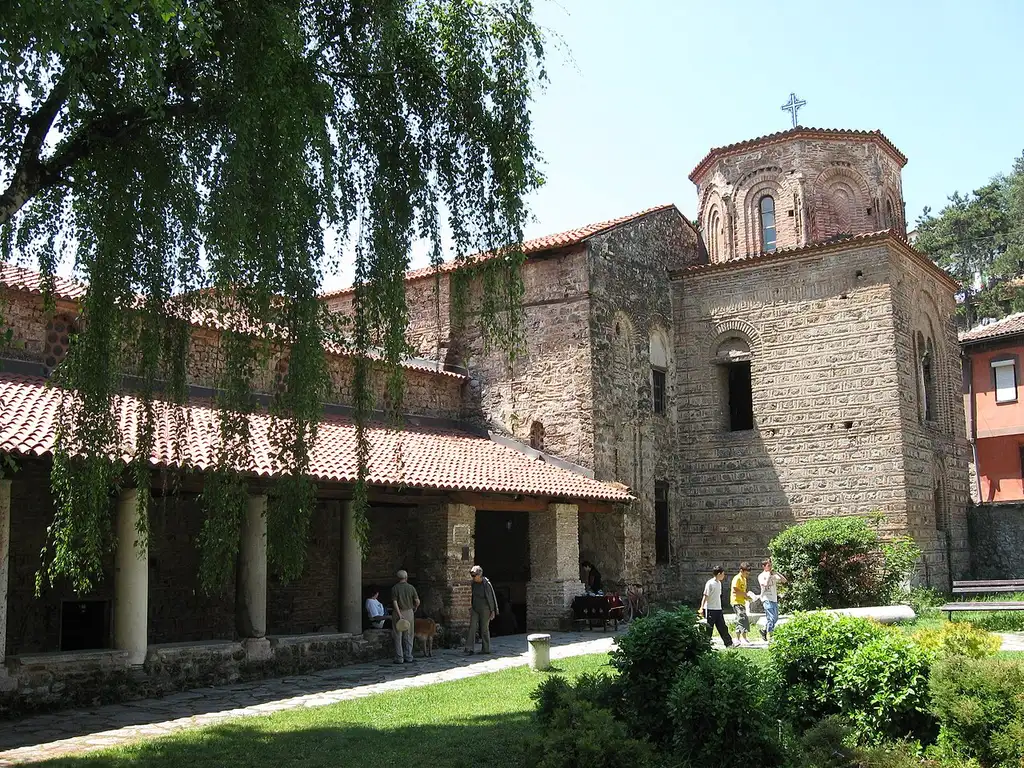
The Church of St Sophia (Sveta Sofija), an 11th-century building near the lakefront, actually gives you two rooms. Inside the church itself there are only 200 to 250 seats, and by agreement with the Macedonian Orthodox Church that stage runs from 19:00 to 23:00 and never hosts theatre; the vestibule outside it seats 470 on fixed wooden benches. The Grigor Prlichev Centre for Culture is the indoor hall: a main stage of 540 (400 in the stalls, 140 in the boxes and gallery) plus a 144-seat studio, and it’s where the theatre productions and anything that needs a roof end up.
That church contract is worth knowing for one very practical reason. The interior stage belongs to the festival only between 19:00 and 23:00, with a 12:00 to 15:00 window held on rehearsal and dress-rehearsal days, so if you walk past around lunchtime on a concert day you may well hear the rehearsal through the doors for nothing - and that’s a free tip worth using.
Ohridsko Leto 2026: the programme, night by night
The 66th edition opened on 12 July 2026 with a gala at the ancient theatre and closes on 20 August. Every remaining night is now published with a time and a stage, and this is the full bill from the festival’s own events feed (ohridskoleto.com.mk, checked 4 August 2026):
| Date | Time | Programme | Stage |
|---|---|---|---|
| 4 Aug | 19:00 · 21:00 | Monograph launch “Ana Lipsha-Tofovikj”, then the festival Birthday concert, “Vocal and Piano Fireworks” | St Sophia |
| 5 Aug | 21:00 | Dutch Evening | St Sophia |
| 6 Aug | 21:00 | Candlelight concert | Vestibule of St Sophia |
| 7 Aug | 21:00 | Greek Evening | St Sophia |
| 8 Aug | 21:00 | Gothic Voices, the British renaissance choir | St Sophia |
| 9 Aug | 21:00 | EU Evening, “Last Rose of Summer” | St Sophia |
| 10 Aug | 21:00 | Alisa Sadikova, harp (Russia/USA) | St Sophia |
| 11 Aug | 21:00 | Evening of baroque music | St Sophia |
| 12 Aug | 21:00 | Song Siheng, piano (China) | St Sophia |
| 13 Aug | 20:00 · 21:30 | Jazz: Kristo Rodzevski, “Orthodoxia Kai Thanatos” (N. Macedonia/USA), then Dine Doneff, “Storytales” (Germany/Greece) | St Sophia, then the vestibule |
| 14 Aug | 21:00 | Jazz: National Jazz Orchestra of North Macedonia with Peter Somuah (Ghana) | Dolni Saraj |
| 15 Aug | 20:00 · 21:30 | Jazz: Peter Somuah Group, then Nubya Garcia (UK) | Dolni Saraj |
| 16 Aug | 21:00 | Jazz: KIIŌTŌ (UK), and the play “Una” indoors at the same hour | Dolni Saraj · Grigor Prlichev |
| 17 Aug | 17:00 · 21:00 | Master-class final concert (violin, viola, chamber), then the Western Balkans Youth Orchestra | St Sophia · Dolni Saraj |
| 18 Aug | 21:00 | Hungarian evening | St Sophia |
| 19 Aug | 21:00 | Polish Evening | St Sophia |
| 20 Aug | 21:00 | Gala closing of the 66th edition, the musical “Kao Kakao” | Dolni Saraj |
Times and venues shift, and this table was checked against the festival’s own listings on 4 August 2026. One conflict to know about: the closing musical on 20 August is 21:00 in the events feed and 20:00 on karti.com.mk, the festival’s own ticket seller. Work to 21:00 and check the day before you go - you don’t want the wrong door.
Three things stand out once you read it as a calendar rather than a list. Almost everything starts at 21:00, so an evening here’s a late one and dinner comes first. The national evenings - Dutch, Greek, Hungarian, Polish, EU - are the festival’s diplomatic backbone and usually the easiest tickets to get. And the jazz block from 13 to 16 August is the strongest run for a British or American visitor in years: Nubya Garcia, the London tenor saxophonist whose album Source made the 2021 Mercury Prize shortlist, plays Dolni Saraj at 21:30 on 15 August, after the Peter Somuah Group at 20:00, with KIIŌTŌ closing the run the following night. You’ll want those jazz nights booked early.
Two dates are double bills rather than single concerts. On 13 August the jazz evening starts inside St Sophia at 20:00 and moves out to the vestibule at 21:30 for Dine Doneff; the ticket for that night is sold as one “jazz evening” at St Sophia, and nothing published says whether it also covers the later vestibule set, so ask at the desk when you buy. On 17 August there’s a free-standing 17:00 concert by the international master class before the youth orchestra takes Dolni Saraj at nine. And on 16 August the only indoor theatre night of the run, the play “Una” at the Grigor Prlichev Centre, clashes head-on with the last jazz night, so you’re choosing between them - you can’t do both. For a whole festival of jazz rather than one evening, Skopje’s Skopje Jazz Festival runs four nights every October.
The bill gets confirmed piece by piece rather than published as one block months ahead, which is why a line-up you read on a blog in spring is worth nothing by July. Check the official events page for the current year, then book the big nights early.
What tickets cost in 2026, and the four ways to buy one
Prices are gentle by European standards and, for once, published rather than rumoured. On karti.com.mk, the festival’s own seller, the confirmed 2026 prices (checked 1 August 2026) are:
- 600 MKD (about €10 / $11 / £8) - the Candlelight concert on 6 August in the St Sophia vestibule, and the closing musical “Kao kakao” on 20 August at Dolni Saraj;
- 1,000 MKD (about €16 / $19 / £14) - each of the four jazz nights, 13 to 16 August, including Nubya Garcia.
Across a whole season the range is wider, from free up to around 1,200 MKD for the biggest set pieces, but those six figures are the checkable ones for this edition. Dollar and pound conversions use the European Central Bank rate of 31 July 2026, and since the denar is steady against the euro at about 61.5 to 1 they barely move from year to year.
There are four ways to get a ticket, and if you’re arriving from abroad only two are useful before you land:
- Online at karti.com.mk or mktickets.mk - the only option that works from home, and the one to use for anything with a name on it.
- The head office, Str. Partizanska 4 in Ohrid, open 08:00-19:30 in summer, phone +389 70 375 784.
- The sales desk in the courtyard of St Sophia, daily 10:00-15:00 - the easiest walk-up if you’re already in the old town.
- The box office at the venue, from one hour before the performance: fine for a quiet chamber night, useless for the gala.
Two rules catch people out. A phone or email reservation (tickets@ohridskoleto.com.mk) only holds until 15:00 on the day of the event, after which the seat goes back on sale. And tickets are valid only on the day printed: no refunds or exchanges for an unused ticket, and a lost one isn’t replaced. Cash, Visa, Mastercard and Maestro are accepted at the desks.
Which night should you pick?
If you’ve one free evening, the answer depends on what you want and on when you’re here. Over a whole season the spectacle is a big concert at the Antique Theatre, the open-air bowl above the lake, and that’s what to aim for if you can pick your dates: in 2026 it took the opening gala on 12 July and nothing since.
For the rest of this season the open-air option is Dolni Saraj, a couple of minutes below the theatre, and it’s the one to take for atmosphere: the jazz block from 13 to 16 August and the gala closing on 20 August all play there. For the music itself, a chamber or piano night inside St Sophia is the connoisseur’s choice, closer and warmer inside an 11th-century church, and it’s where most of what’s left sits. If it’s the theatre production on 16 August or the weather looks unsettled, the indoor Grigor Prlichev Culture Centre is the safe bet. My steer for a first visit in August: one Dolni Saraj night for the open sky, then a cheap mid-week St Sophia concert, the best value on the whole calendar and one that rarely sells out.
Neither open-air stage is a padded seat. The theatre is old stone, hard and backless, Dolni Saraj is concrete tiers with chairs set on them, and even in August the air off the lake turns cool once the sun drops, so bring a light layer and take a cushion if your back has opinions. Wear shoes you can walk up cobbles in, eat in the old town first and start up as the light goes soft: on a sold-out night the narrow lanes fill and the climb slows to the pace of the crowd in front of you.
Make days of it around the lake
The festival is a reason to be in Ohrid, not the whole trip. The town is packed from mid-July through August, so book a bed early; our where to stay in Ohrid guide splits the old town from the quieter lakeside. Fill the daylight hours with the things to do in Ohrid roundup, and don’t miss Sveti Jovan Kaneo, the cliff-top church that’s the postcard of the region and a ten-minute stroll from the theatre. Coming from the capital, how to get to Ohrid from Skopje covers the bus, transfer and drive. If you’re building a longer trip around this and the country’s other moving dates, our North Macedonia events calendar lines up the festival season against the Galichnik wedding, the carnivals and the public holidays.
Read also
- Things to do in Ohrid - how to fill the days around the concerts
- Where to stay in Ohrid - old town versus the quieter lakeside, and why to book early
- Sveti Jovan Kaneo - the cliff-top church a short walk from the theatre
- How to get to Ohrid from Skopje - bus, private transfer or car
Photos
On the map
The map loads on click - to keep the page lightweight.
The map didn’t load. Check your connection and refresh the page.
Read also

Entertainment · 11 min read
Skopje Jazz Festival: A Visitor's Guide
Updated · September 13, 2026Skopje Jazz Festival, founded in 1982: how the four October nights at the National Opera and Ballet work, what tickets cost, and where to stay nearby.

Entertainment · 10 min read
Tikves Grozdober: Kavadarci's Grape Harvest Party
Verified · September 5, 2026Tikveski Grozdober in Kavadarci: early-September grape harvest festival, carnival, wine stalls, concerts - how to plan a weekend.

Entertainment · 9 min read
Manaki Brothers Film Festival: A Visitor's Guide
Updated · August 26, 2026Manaki Brothers in Bitola: world's oldest cinematographers' festival, 47th edition 19-25 Sep 2026, venues, tickets and where to stay.

Entertainment · 8 min read
Struga Poetry Evenings: A Visitor's Guide
Updated · August 13, 2026SPE 2026 ran 24-29 June in Struga: Golden Wreath, Bridge of Poetry nights, hotels by the lake, and how to plan around the festival.