
Vevčani Carnival: Masks, Satire and Getting There
Vevčani Carnival runs 13-14 January: the masked parade, satire, burning of the masks, what to wear and how to reach the village from Ohrid or Struga.
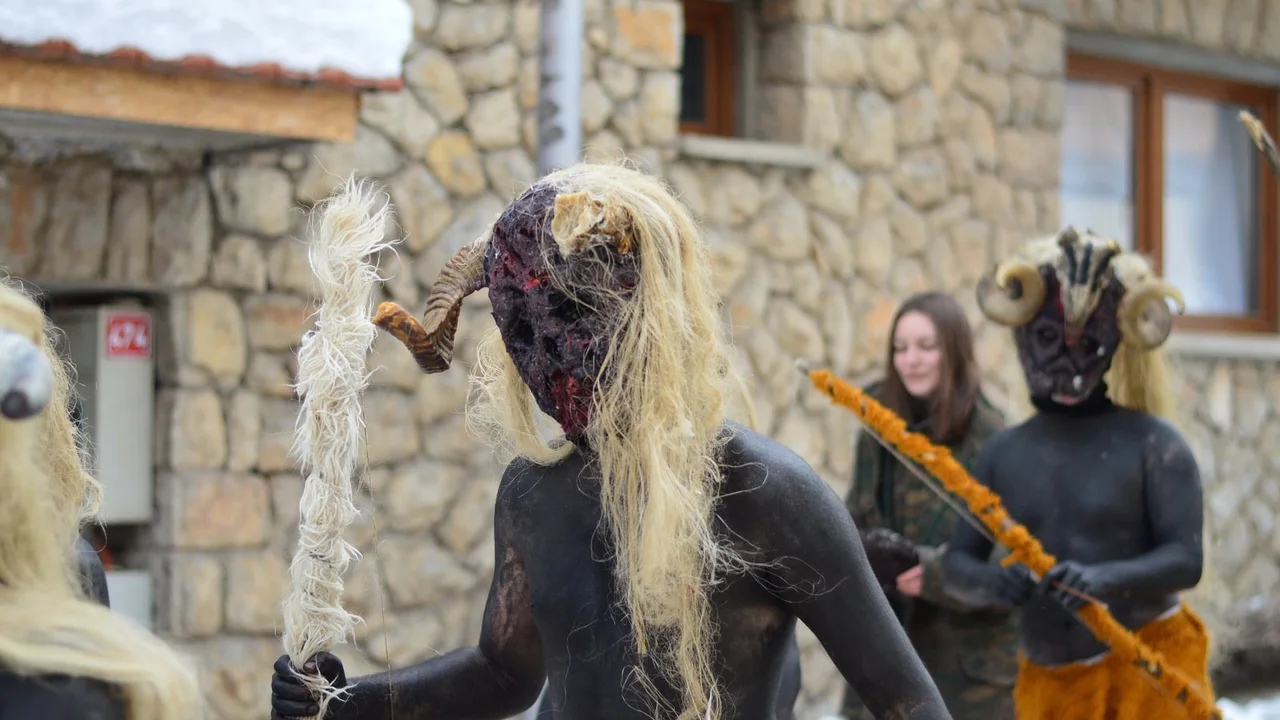
Vevčani’s carnival is held every year on 13 and 14 January, and it’s less a parade than a village-wide piece of improvised theatre: masked locals act out the previous year’s news, and the whole thing ends with the masks burned in the village centre. It’s a day-trip from Ohrid or Struga, 25 and 12 km away by road, and the main thing to plan is how you get there and back in the middle of winter. In 2027 the dates fall on Wednesday 13 and Thursday 14 January.
What happens, and when
The festival marks St Basil the Great and the New Year by the old (Julian) calendar, which is why it lands in mid-January rather than at the turn of the year. The municipality of Vevčani gives the dates as 13 and 14 January. The programme itself is published only days ahead: the organisers presented the 2026 edition at a news conference in Skopje on 9 January 2026, and the programme for January 2027 hadn’t been announced by 10 October 2026.
The 2026 edition is a fair template for the shape of the two days, as reported by the state news agency MIA:
- 12 January, evening: concerts, with a hip-hop duo, a pop singer’s band and a brass band.
- 13 January, 13:00: the central masked parade, with the masked revellers gathering in the middle of the village. Folk artists were billed for that evening.
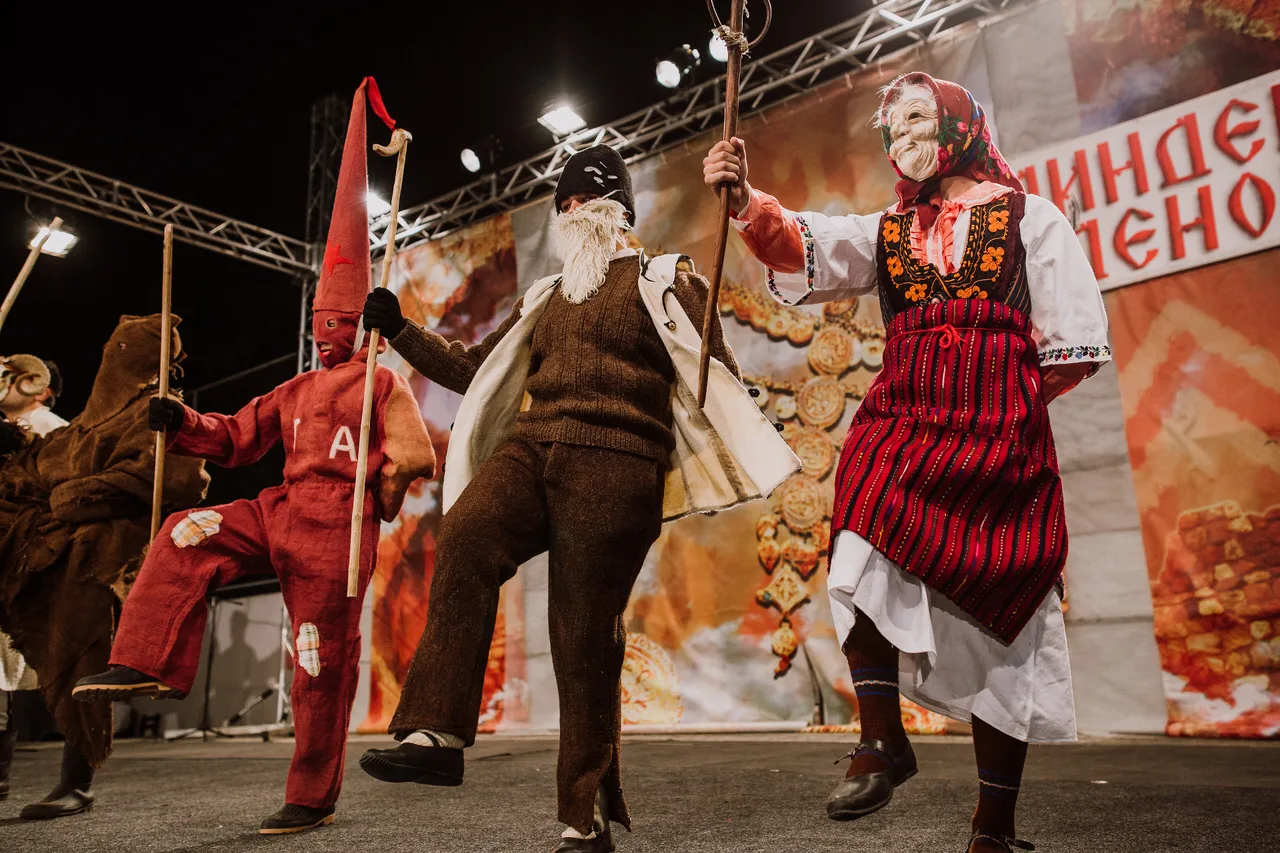
- 14 January, daytime: masked groups, including the bride and groom, devils and the foolish Augusts, visited the homes of people named after St Basil.
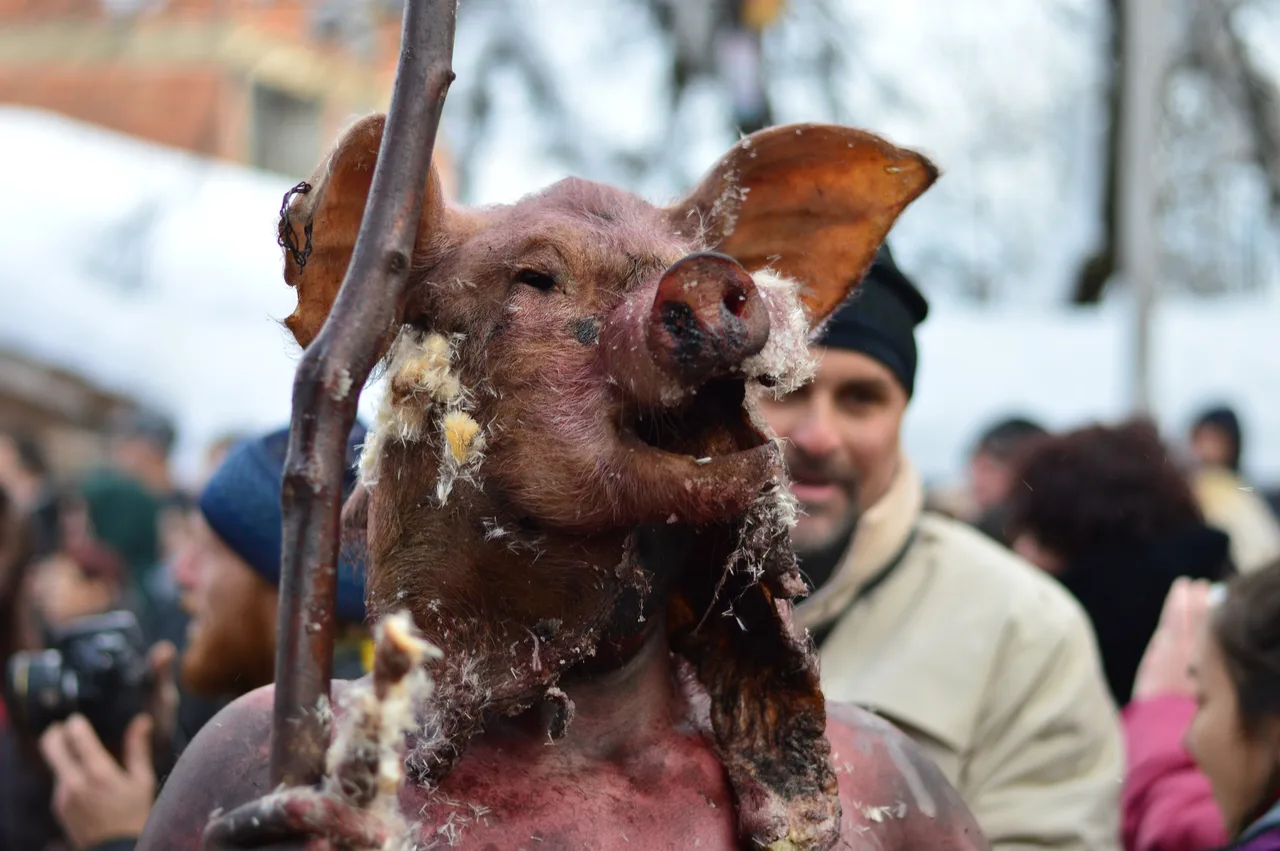
- 14 January, afternoon: the closing Vasilica folk dance and the burning of the masks in the village centre.
The hours above are the 2026 pattern and nothing more: a parade scheduled for 13:00 on a Tuesday in 2026 may move on a Wednesday in 2027. Check the municipality’s announcements in the first days of January.
The masks: a traditional few, and the rest new each year
The cast is partly fixed. The bride and groom and the character called Stupid August are the traditional masks and turn up every year; the devils were part of the home-visit groups in 2026. Everything else is made fresh, and that’s the draw. As MIA reported from the 2026 news conference, the masks “are inspired by events from the previous year”, and the carnival is mostly entertainment, with criticism of society tucked inside it.
What gets mocked is whatever filled the news. In January 2026 the reported targets included migrant camps, the political situation at home, investments in Dubai and the halt of United States oil and financial support to Cuba. That’s the part a visitor who doesn’t read Macedonian will miss: the jokes are in the costumes and the performance, and some of the references are local politics. You’ll enjoy the physical comedy and the sheer craft without a translator, and you’ll get more from it if you’ve read a week of North Macedonian headlines.
MIA’s description of the closing day is worth quoting for its tone: the village is “an open theatrical stage, without a script or director”, where masked locals parade before their neighbours and visitors from the country and abroad.

How old is it, really?
You’ll see “1,400 years old” everywhere, including on the municipality’s own page, which says the carnival is “older than 1,400 years” and describes it as a mixture of the pagan and the modern. Read that as the village’s own account of a tradition rooted in pre-Christian rites, not as a documented date. Wikipedia words it more carefully, as an event “claimed to be over 1,400 years old”. It’s a good story and a fair summary of how deep local memory runs; it isn’t something anyone can check against a record.
Two things are easier to pin down. The municipality’s page notes that the carnival is listed by the Federation of European Carnival Cities. And the village has a long habit of making its identity a performance: the “Republic of Vevčani”, first declared in 1991 after a dispute over the village springs and kept alive as a joke and a tourism draw, has its own passports and a souvenir currency, and the tongue-in-cheek tone is part of the same spirit.
From Ohrid or Struga in January
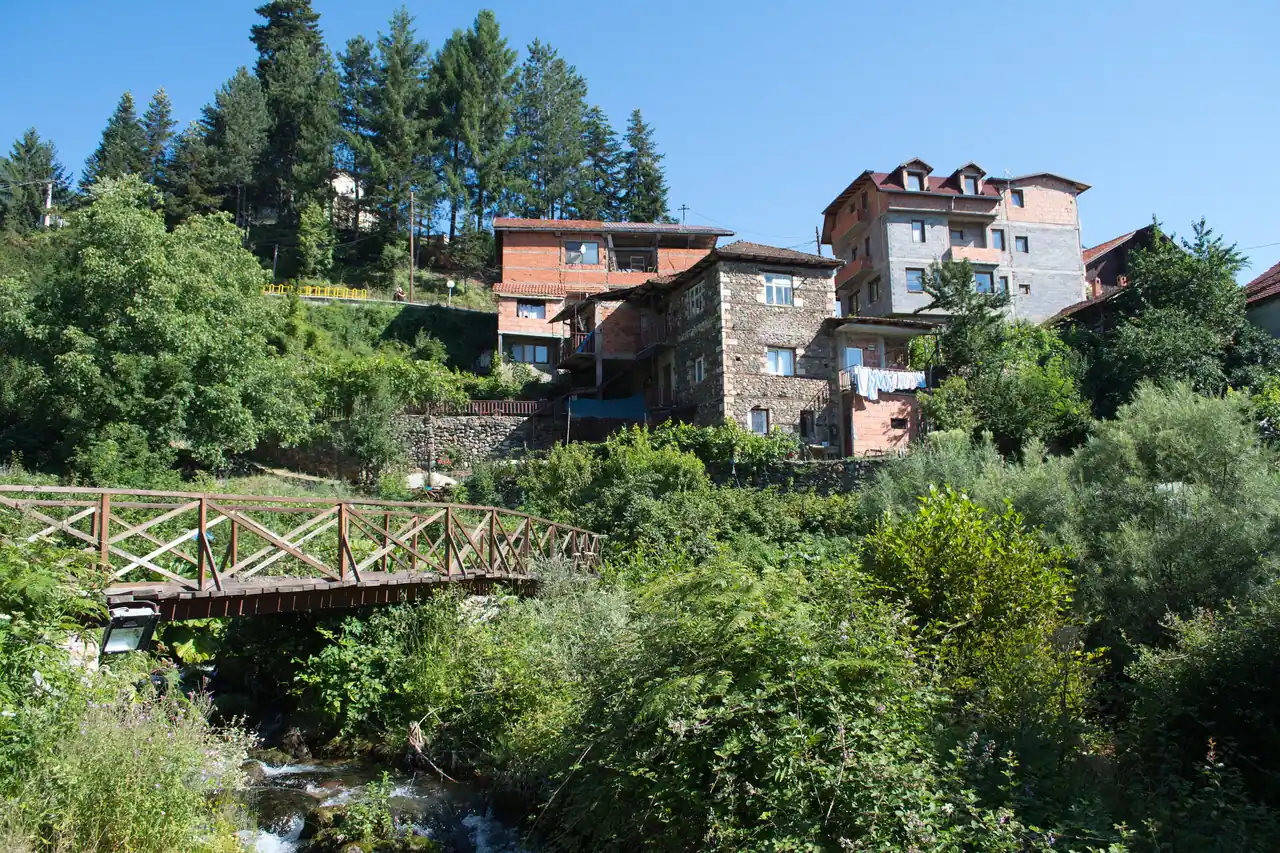
Vevčani sits above Struga, and the drive is short. By routing software on 10 October 2026, it’s 12 km and about 17 minutes from the centre of Struga, and 25 km and about half an hour from the centre of Ohrid. Those are free-flow figures; on the carnival afternoon, with a village full of visitors, leave margin both ways, and give the return trip at least as much time again.
Getting there means the road. We couldn’t find a published bus timetable for Struga to Vevčani on 10 October 2026, so don’t build the day around a minibus. What works instead:
- Own car or hire car. Winter equipment rules apply in January; the dates and details are in our driving guide. Park on the edge of the village and walk in, because the centre is the stage.
- Taxi or private transfer from Struga or Ohrid, agreed with a return time before you go, so you aren’t stranded when the crowd thins.
- Staying overnight in Struga, which makes it simpler to catch the concerts on the eve of the carnival (12 January in 2026) and not drive after wine. The Struga accommodation guide compares the neighbourhoods.
Not keen on snow driving? Book the transfer ahead and the road becomes someone else’s problem.
What to wear and what to expect
Take the mayor’s advice, as given at the 2026 announcement. Every house in the village has an open door during the carnival, he said, and you’ll be welcomed with love; the advice that followed was to put on old clothes so a splash of red wine doesn’t matter. That’s about as official as a dress code gets here.
Beyond that, January at village altitude is cold. Dress for standing outdoors for hours: boots with grip for streets that may be icy, layers, gloves. Carry some cash for food and drink rather than counting on a card terminal at a village stall. And if you photograph masked performers, behave as you would at any street performance: they’re acting, but they’re also neighbours.
Planning backwards from 13 January 2027
To be there on the day, this order avoids the usual January scramble:
- By late November: decide whether to base yourself in Struga or Ohrid, and book the room and any flights.
- In December: book a car or a transfer and agree the return time.
- In the first week of January: read the municipality’s announcement for the actual programme, and check the 13:00 parade time for the 13th.
- On the day: arrive early enough to park outside the centre, then walk in.
For the other dates worth building a trip around, our North Macedonia events calendar has the full year, and the Struga travel guide covers the town you’d be staying in and the village springs, which it describes as a short outing in any season.
Read also
On the map
The map loads on click - to keep the page lightweight.
The map didn’t load. Check your connection and refresh the page.
Admission and opening hours
- Opening hours
- 13-14 January every year (St Basil the Great and the old-calendar New Year); in 2026 the central parade was scheduled for 13:00 on 13 January and the masks were burned on the afternoon of 14 January, per the state news agency MIA
The programme for January 2027 is not published yet; the 2026 programme was announced on 9 January 2026.
Details checked: October 10, 2026
Distance ≈25 km · ~30 min by car
- Ohrid ≈25 km · ~30 min by car Road distance and time by routing software, 10 October 2026; allow longer on a winter carnival day.
Read also

Entertainment · 12 min read
Skopje at Christmas & New Year: Concert, Market, Vodici
Updated · October 24, 2026Skopje over Christmas and New Year: the square concert and Christmas market, Badnik, Orthodox Christmas on 7 January, Vodici, and which days are days off.

Entertainment · 10 min read
Taksirat Festival, Skopje: Date, Venue and Tickets
Updated · October 8, 2026Taksirat, Skopje's winter music festival: the 2026 edition on 7 December at SC Jane Sandanski, what 2025 tickets cost and how the night runs.

Entertainment · 12 min read
Skopje Jazz Festival: A Visitor's Guide
Updated · October 27, 2026Skopje Jazz Festival, founded in 1982: how the four October nights at the National Opera and Ballet work, what tickets cost, and where to stay nearby.

Entertainment · 10 min read
Tikves Grozdober: Kavadarci's Grape Harvest Party
Verified · September 5, 2026Tikveski Grozdober in Kavadarci: early-September grape harvest festival, carnival, wine stalls, concerts - how to plan a weekend.