
Skopje Jazz Festival: A Visitor's Guide 2026
Skopje Jazz Festival, founded in 1982: how the four October nights at the National Opera and Ballet work, what tickets cost, and where to stay nearby.
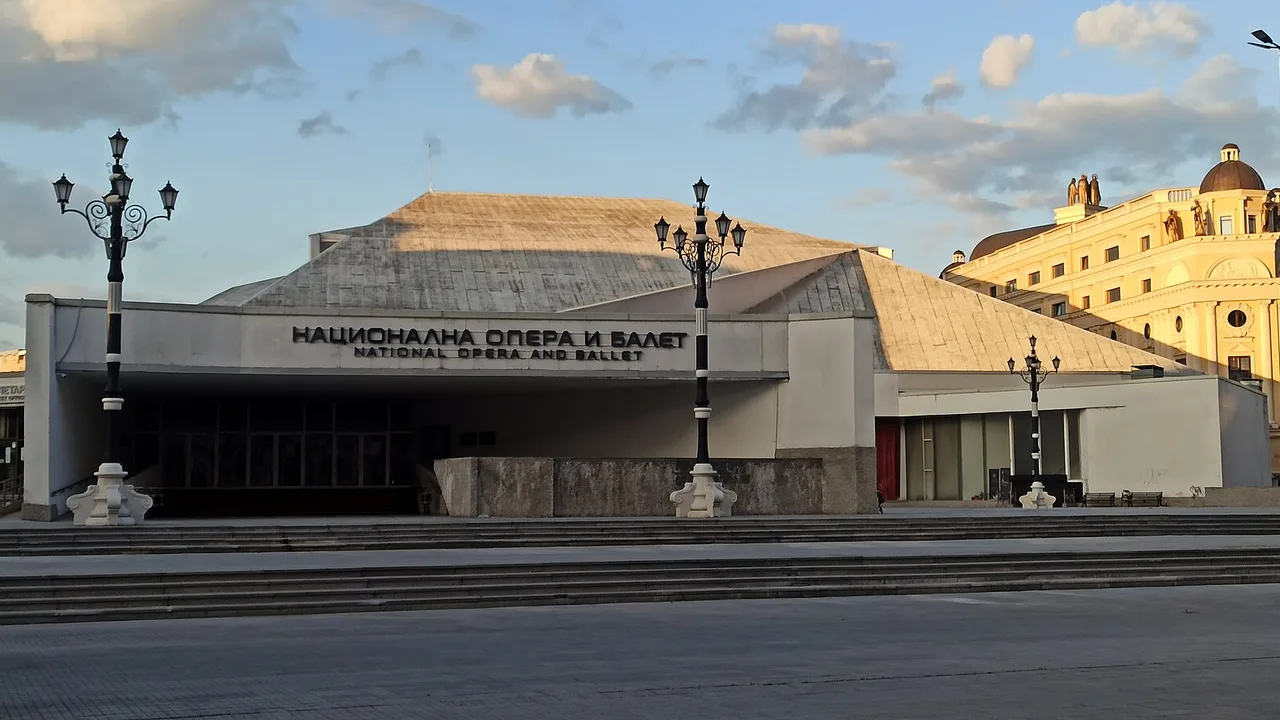
Skopje Jazz Festival is one of the longer-running jazz festivals in the Balkans, founded in 1982 and held in October in recent editions - 15-18 October 2026 on the festival’s own site, 16-19 October 2025 on its ticket seller’s listing. The 45th edition plays four nights, 15-18 October 2026, at the National Opera and Ballet in central Skopje: eleven acts across a main stage and a smaller late-night room, plus a documentary screening two days earlier, on 13 October, at a different venue. The festival puts its programme out first and opens ticket sales weeks later: on 13 September 2026 the official programme page carried the full four-night bill while the tickets page still read “Coming soon.” What you can plan around right now is the shape of the festival itself, and last year’s prices give a fair idea of what a ticket will cost once sales open.
That venue choice isn’t neutral. For decades the festival’s real home was the Universal Hall, a landmark built as a gift to Skopje after the 1963 earthquake. It closed in 2013, and a rebuild didn’t begin until 2021 - only to stall the same year under a change of city government, sit stalled for two years, then pass to the national government in September 2023. A fire in April 2024 left only the metal structure standing before the work was finished. Around EUR 20 million is now earmarked for reconstruction, targeting the end of 2027 to line up with Skopje’s turn as European Capital of Culture in 2028 - which is why the 2026 programme, as in 2025, plays out at the Opera and Ballet instead.
Four nights, eleven acts, two stages
Three of the four nights follow the same shape: a set on the main stage at 20:00, a second at 22:00, then something quieter or stranger on the “small stage” from midnight on. The closing night, 18 October, breaks that pattern - it ends after the 22:00 set, with no midnight slot.
When the programme was first announced in the Macedonian press on 22 August 2026, it was framed around four scenes: Norwegian players from the Punkt/ECM orbit, European free and chamber jazz, a South African spiritual-jazz strand, and a French accordion voice. Two of the eleven projects in that August announcement dropped off the final bill - Norwegian saxophonist Trygve Seim and Slovenian saxophonist Jure Pukl’s “Analog AI” - and two others took their places, Skuli Sverrisson & Olof Arnalds and Sao Paulo Underground; the other nine carried over. The bill below is the one that’s been live on the official programme page since 12 September, unchanged as of this check.
If you’d rather pick one night than book all four, here’s roughly what each scene sounds like on stage. 16 October carries the Norwegian strand most directly: Eivind Aarset and Jan Bang’s “Dream Logic” opens under the festival’s own “Punkt International” billing, followed at midnight by a live remix from Bang and Erik Honore (the official site spells it “Eric”). 17 October has the strongest name recognition of the four: South African pianist Nduduzo Makhathini, the first South African musician signed to Blue Note Records, plays the 22:00 slot, with Alexander Hawkins and Sofia Jernberg’s “Musho” closing the night after midnight. 15 October pairs Italian vibraphonist Pasquale Mirra with Hamid Drake, the American drummer who’s spent five decades in Chicago’s free-jazz scene, on the midnight bill. 18 October, the short night, ends with French accordionist Vincent Peirani’s “Living Being” at 22:00 - one of the nine acts named in August that made it to the final programme unchanged.
| Date | Time | Act | Stage |
|---|---|---|---|
| 13 Oct | 20:00 | Ron Carter: Finding The Right Notes (documentary) | MKC Kino Frosina |
| 15 Oct | 20:00 | Zlatko Kaučič Kombo BC, “Bravery of the Brave” | National Opera and Ballet |
| 15 Oct | 22:00 | Leonhard Skorupa New Quispel Octet | National Opera and Ballet |
| 15 Oct | 24:00 | Pasquale Mirra and Hamid Drake, “Lhasa” | Small stage |
| 16 Oct | 20:00 | Eivind Aarset & Jan Bang, “Dream Logic” | National Opera and Ballet |
| 16 Oct | 22:00 | Skúli Sverrisson & Ólöf Arnalds | National Opera and Ballet |
| 16 Oct | 24:00 | Erik Honoré & Jan Bang, live remix | Small stage |
| 17 Oct | 20:00 | Andrea Mirčeska Quintet, “Lullaby for Lunatics” | National Opera and Ballet |
| 17 Oct | 22:00 | Nduduzo Makhathini | National Opera and Ballet |
| 17 Oct | 24:00 | Alexander Hawkins and Sofia Jernberg, “Musho” | Small stage |
| 18 Oct | 20:00 | São Paulo Underground | National Opera and Ballet |
| 18 Oct | 22:00 | Vincent Peirani Quintet, “Living Being” | National Opera and Ballet |
Checked against the festival’s own programme page on 13 September 2026, unchanged since 12 September. The 13 October date breaks the four-night pattern entirely: it’s not a concert but a documentary screening at MKC Kino Frosina, a cinema inside Skopje’s Youth Cultural Centre and a different venue from the Opera and Ballet, so it’s worth double-checking the address if that’s the night you’re catching. If you’re staying for all three sets on one of the first three nights, plan your route home - or your taxi - accordingly, since the midnight slot means a full night here can run past 1am; 18 October wraps up earlier, right after the 22:00 set.
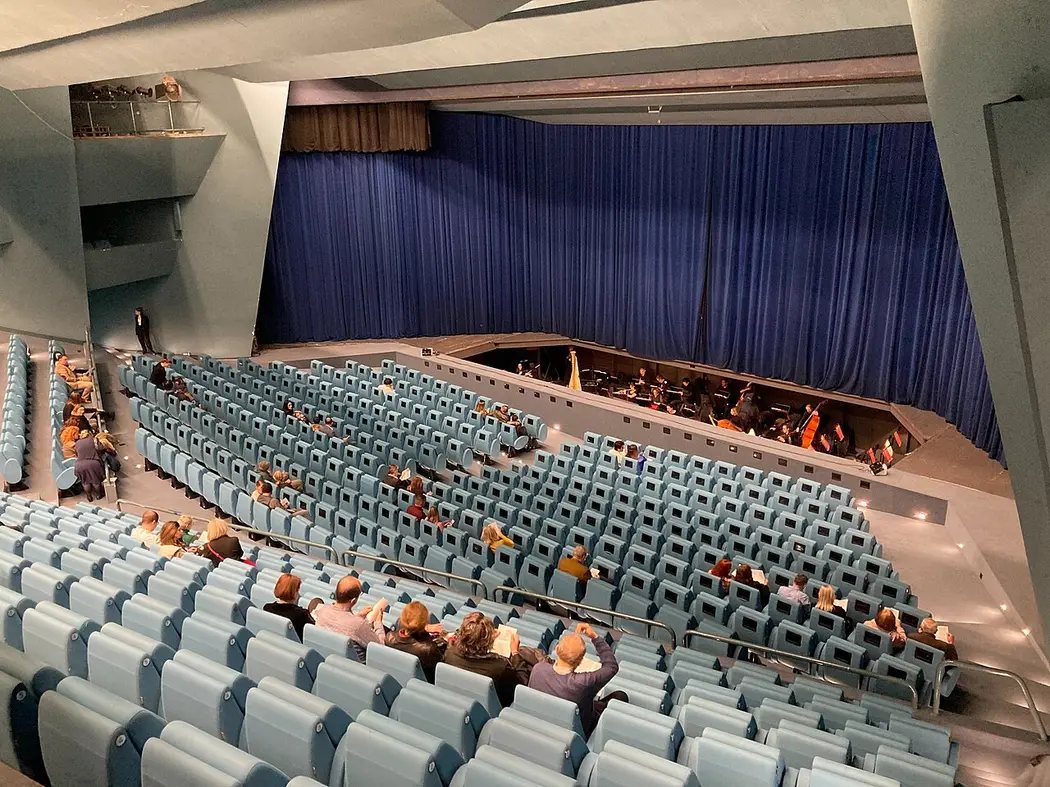
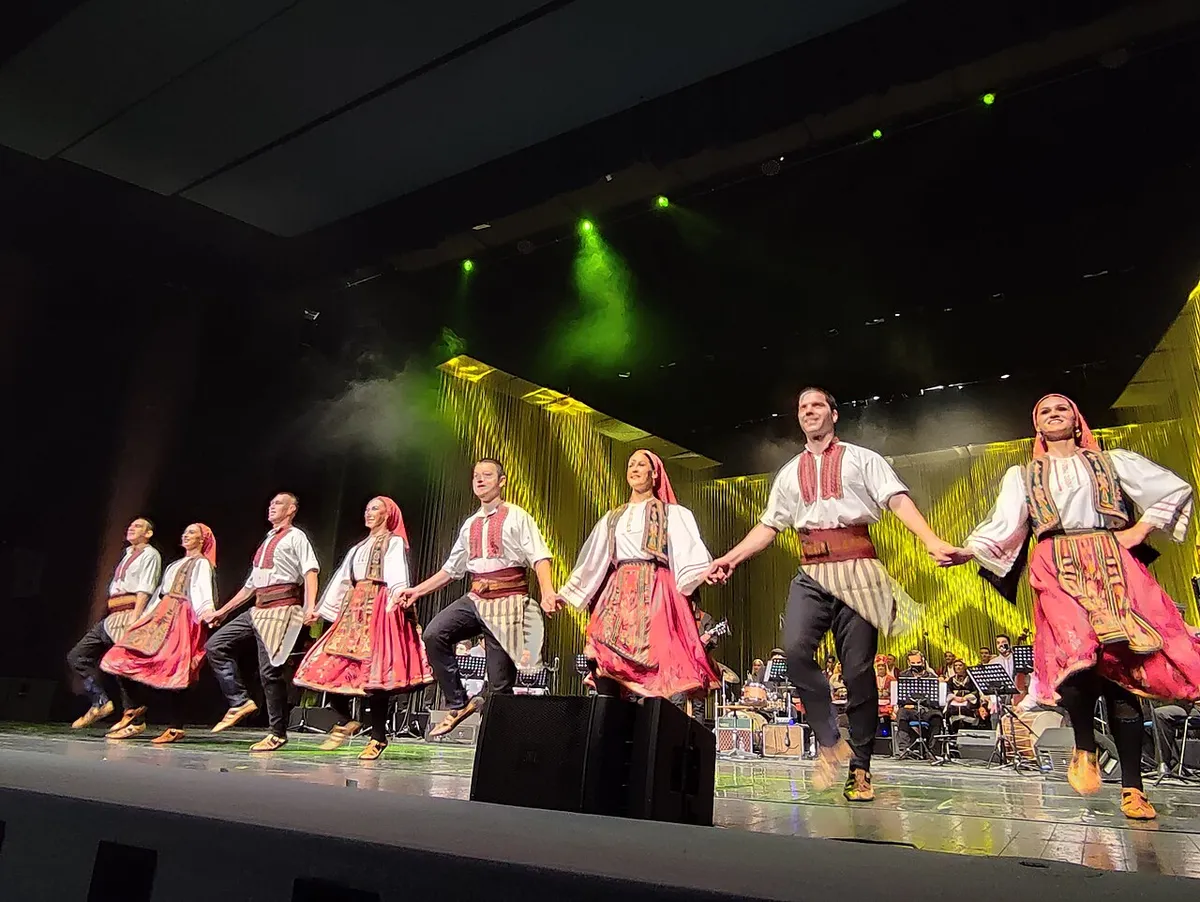
The room itself isn’t built for jazz alone. It’s Skopje’s national opera and ballet house, and outside festival week it runs a full season of its own.
Tickets: what 2025 cost and when 2026 goes on sale
As of 13 September 2026 the tickets page still reads “Coming soon.” The line-up itself was announced in the press on 22 August 2026, and the official programme page carried the final bill by 12 September - so this year’s sequence has been programme first, prices later. Whether 2025 ran the same way isn’t documented on the festival’s own pages, so treat this as this year’s sequence, not a rule.
For scale, here’s what the 44th edition charged last October. A single-night ticket for the 18 October 2025 show - After the Wildfire Quartet and Goran Kajfeš Tropiques, both at the National Opera and Ballet - sold for 1,000 MKD (about EUR 16 / $19 / £14 at the long-standing rate of roughly 61.5 MKD to the euro) through karti.com.mk. A four-night “Festival Set” covering the whole 2025 programme cost 3,200 MKD (about EUR 52): karti.com.mk’s own listing just showed a “150/1000 mkd” range without saying what each number covered, but the same pass on mktickets.mk was priced plainly at 3,200 MKD, and its “Buy tickets” button forwards straight to that karti.com.mk listing.
Once 2026 sales open, a few mechanics carried over from 2025 are worth knowing. Karti.com.mk was the actual seller; mktickets.mk lists the same shows but sends buyers to karti at checkout, so there’s really one place to pay. Karti.com.mk takes Visa, Mastercard, Maestro and Diners cards through its Casys payment processor, which matters if you’re booking from outside the country. You’ll get an e-voucher by email that has to be printed - for some events that printed voucher gets exchanged for a physical ticket at the venue box office, for others it’s your ticket as printed - and if someone else is collecting or using tickets bought under your name, they’ll need your ID card or a copy of it. Read the terms before you buy: an unprinted e-voucher isn’t valid at the door, and karti.com.mk rules out a refund if you simply can’t make it.
Check skopjejazzfest.com.mk directly before you commit to flights - the exact days shift a little from year to year, though mid-October itself has held across the last two editions.
The festival behind the four nights
Oliver Belopeta founded Skopje Jazz Festival in 1982 and is still its artistic director and main contact, alongside Irena Stevanovska. The festival’s own archive, which runs back to 1995, credits a run of major names since: Ray Charles (1996), Tito Puente (1996), Al Di Meola (1997), Youssou N’Dour (1998), Herbie Hancock (1999), Maria Joao (2003), Chick Corea (2009) and the Pat Metheny Trio (2011), among others - not a bad record for a festival in a city most touring schedules skip. It also runs its own label, SJF Records, which had released 52 CDs by the festival’s own count in 2026.
In a 2019 interview, Belopeta described a stretch of years when the festival’s only option was to borrow a single unusable piano, transported each year from the lakeside town of Ohrid. “This is a big shame and a tremendous risk,” he said at the time. That’s a historical account from 2019, not a claim about the piano situation today - the interview doesn’t say whether things have improved since, so this guide won’t guess either way.
If you’re weighing an autumn trip against a summer one, Skopje runs a second festival from roughly the same circle: OFFest, a world-music event the festival’s own site says has run for 25 consecutive years, usually in late May or early June. Different bill, same city, about four and a half months apart from the jazz week in October.
Sleeping within walking distance of the Opera
The National Opera and Ballet sits on Blvd. Goce Delchev, about ten minutes’ walk from Macedonia Square and a bit more from the Old Bazaar on the far side of the river. Our where to stay in Skopje guide covers the full picture, but the short version for festival week: the Centre, 10-15 minutes from the square, puts you closest to the venue and the after-show options; leafy Debar Maalo, a similar walk the other direction, is quieter and usually cheaper, with its own run of bars for the walk home.
Four nights that can run past midnight change the calculation a little: a short walk home matters more here than it would for a single evening show. October is shoulder season for Skopje generally, but rooms near the centre still fill up once the programme goes public, so book once you know your dates rather than waiting on ticket prices to confirm them.
What else to build into the trip
Concerts alone don’t fill four days. Skopje’s things to do roundup covers the fortress, the old bazaar and the brutalist landmarks that make this city look nothing like its Balkan neighbours, and most of it sits within walking distance of the venue. If a midnight set leaves you wanting one more drink before bed, Skopje’s nightlife guide covers where the later crowd actually goes, which is useful given how late this festival runs.
Mid-October in Skopje is properly autumn, not late summer, so pack a layer for the walk between venue and hotel - check the month-by-month weather guide if you’re weighing this trip against the country’s other big music date, the Ohrid Summer Festival, which plays out in July and August under a very different sky. Mapping the whole year rather than just one week works too: the North Macedonia events calendar lines up all the country’s festivals side by side.
One thing to flag for anyone reading this after 2026: the venue could change. The Universal Hall’s rebuild is targeted for the end of 2027, tied to Skopje’s turn as European Capital of Culture in 2028, and if that timeline holds, a future edition could move back to its old home. Nothing about that is confirmed - the 2026 programme is locked in at the Opera and Ballet regardless - but the venue address on this page has a shelf life the festival’s mid-October slot doesn’t.
On the map
The map loads on click - to keep the page lightweight.
The map didn’t load. Check your connection and refresh the page.
Read also

Entertainment · 10 min read
Tikves Grozdober: Kavadarci's Grape Harvest Party
Verified · September 5, 2026Tikveski Grozdober in Kavadarci: early-September grape harvest festival, carnival, wine stalls, concerts - how to plan a weekend.

Entertainment · 9 min read
Manaki Brothers Film Festival: A Visitor's Guide
Updated · August 26, 2026Manaki Brothers in Bitola: world's oldest cinematographers' festival, 47th edition 19-25 Sep 2026, venues, tickets and where to stay.

Entertainment · 8 min read
Struga Poetry Evenings: A Visitor's Guide
Updated · August 13, 2026SPE 2026 ran 24-29 June in Struga: Golden Wreath, Bridge of Poetry nights, hotels by the lake, and how to plan around the festival.

Entertainment · 10 min read
D Festival: Dojran, Shtip, Dates and Tickets
Updated · August 11, 2026D Festival began on Lake Dojran in 2011. The 2026 edition ran free in Shtip (26-28 June); 2027 is set for 25-27 June - confirm the venue before you book.