
Sveti Jovan Kaneo, Ohrid: Free Entry, 10-Min Walk, Boat Taxi
Sveti Jovan Kaneo, the 13th-century church above Lake Ohrid: free to reach at any hour, donation inside, the boardwalk from the old town, boat taxis.
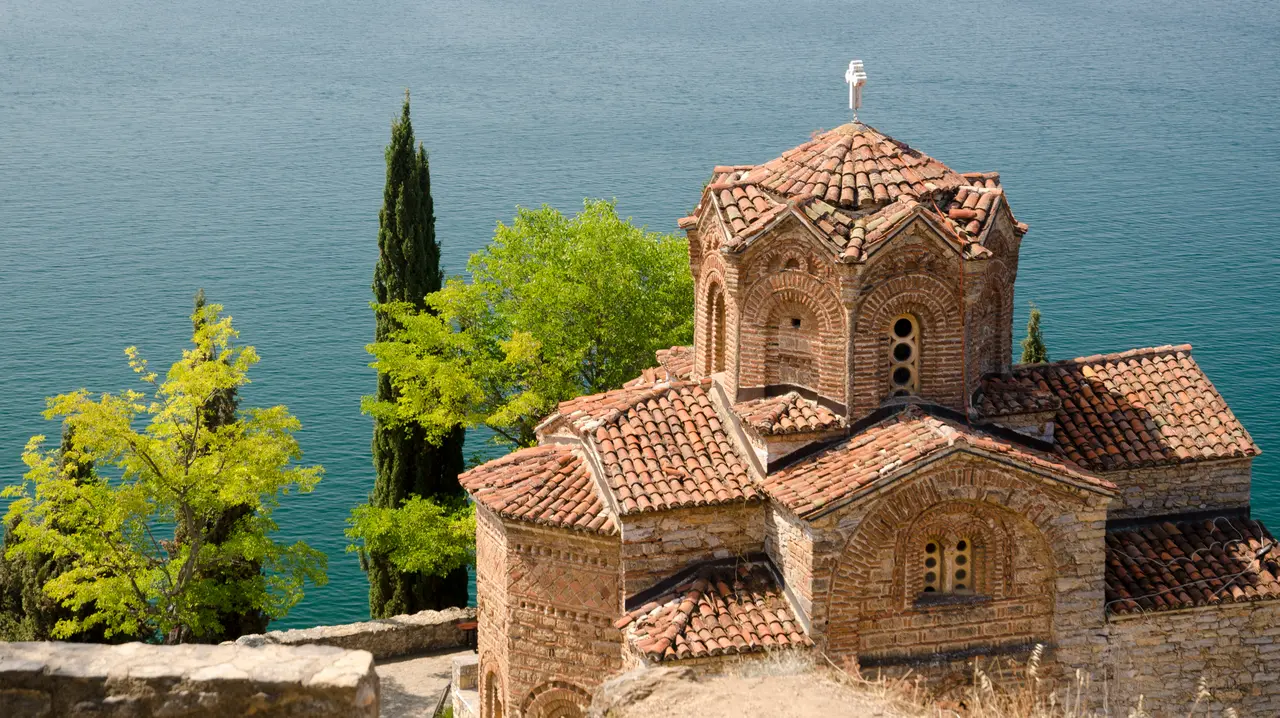
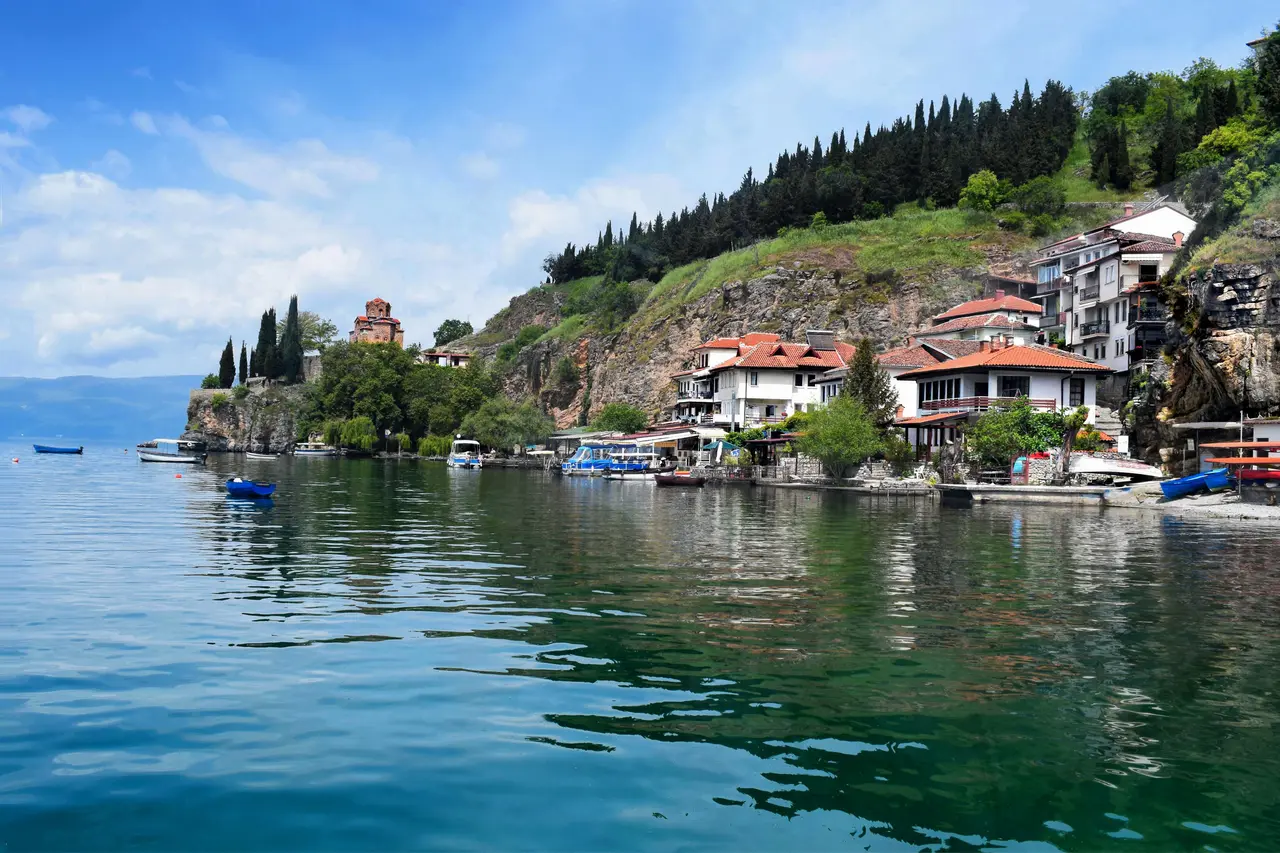
If North Macedonia has one postcard, this is it: a small stone church perched on a bluff with the whole of Lake Ohrid spread out behind it. Sveti Jovan Kaneo - the Church of St John the Theologian at Kaneo - is a 13th-century Byzantine church about ten minutes from Ohrid’s old town, and the reason to come is as much the setting as the building. This guide covers what you’re actually looking at, the few easy ways to reach it, and how to get the shot everyone comes for.
The church itself
The church is dedicated to St John the Theologian, the apostle also known as John of Patmos, who wrote the Book of Revelation. Nobody knows the exact year it went up, but the best guess is the 13th century, and documents mention its lands before 1447, so it’s comfortably medieval. It is small, and that is part of the charm - a compact cross-in-square plan on a rectangular base, built in the Middle-Byzantine manner with alternating courses of pale stone and red brick and a single dome sitting on top. The brickwork patterns are worth a slow look; masons of the period treated the outside walls almost like textile.
Inside it’s dim and simple: a wooden iconostasis and fragments of fresco, including a Christ Pantocrator up in the dome and the local saints Clement and Erasmus on the walls. Several of the frescoes were only uncovered during a restoration in 1964. It is a working church rather than a museum, so opening isn’t guaranteed and photography inside is often discouraged - treat the interior as a quiet bonus, not the main event.
The name is worth knowing. Kaneo was the old fishermen’s quarter of Ohrid, the cluster of cottages and boats that spilled down to this cove, and the church sat above the nets rather than up in the grand religious centre at Plaosnik. That humble origin is part of why it feels so different from the big medieval churches in the town: it was a working neighbourhood’s church perched on a dramatic rock, not a bishop’s showpiece, and it wears that lightly.
Why it is the icon of Ohrid
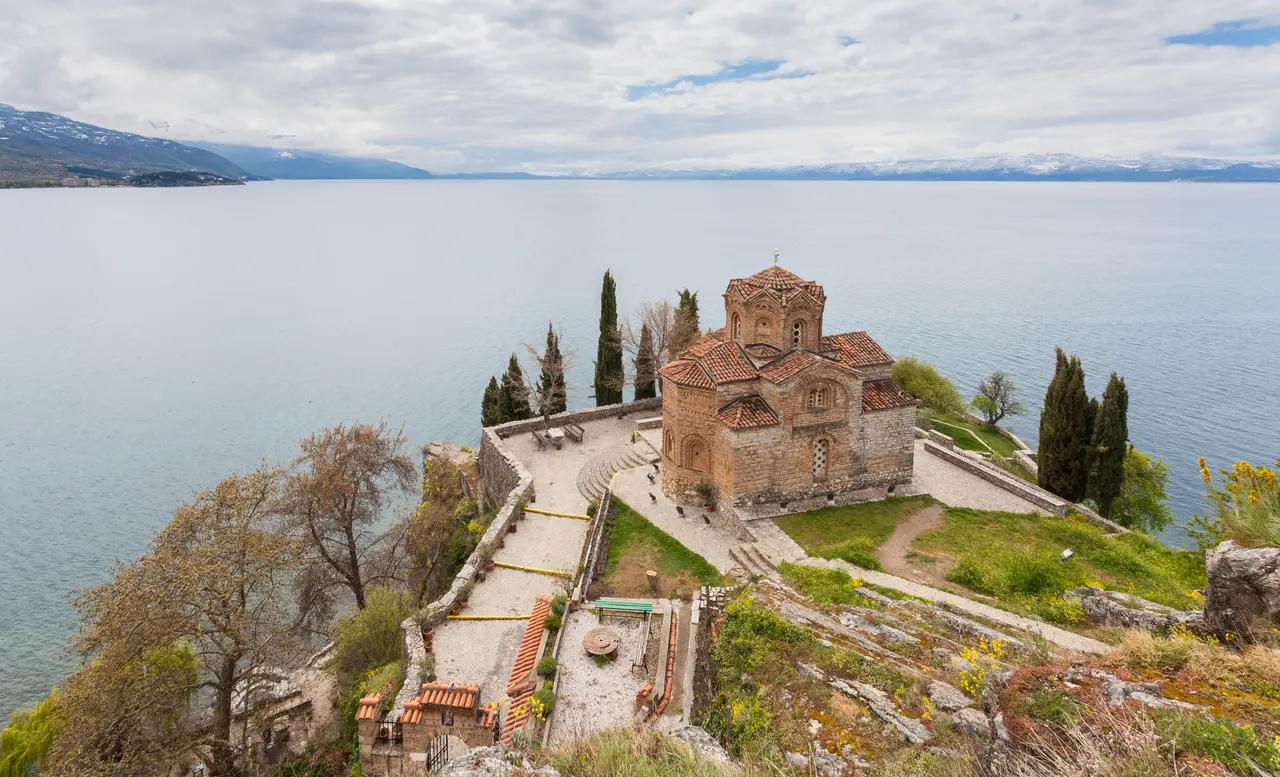
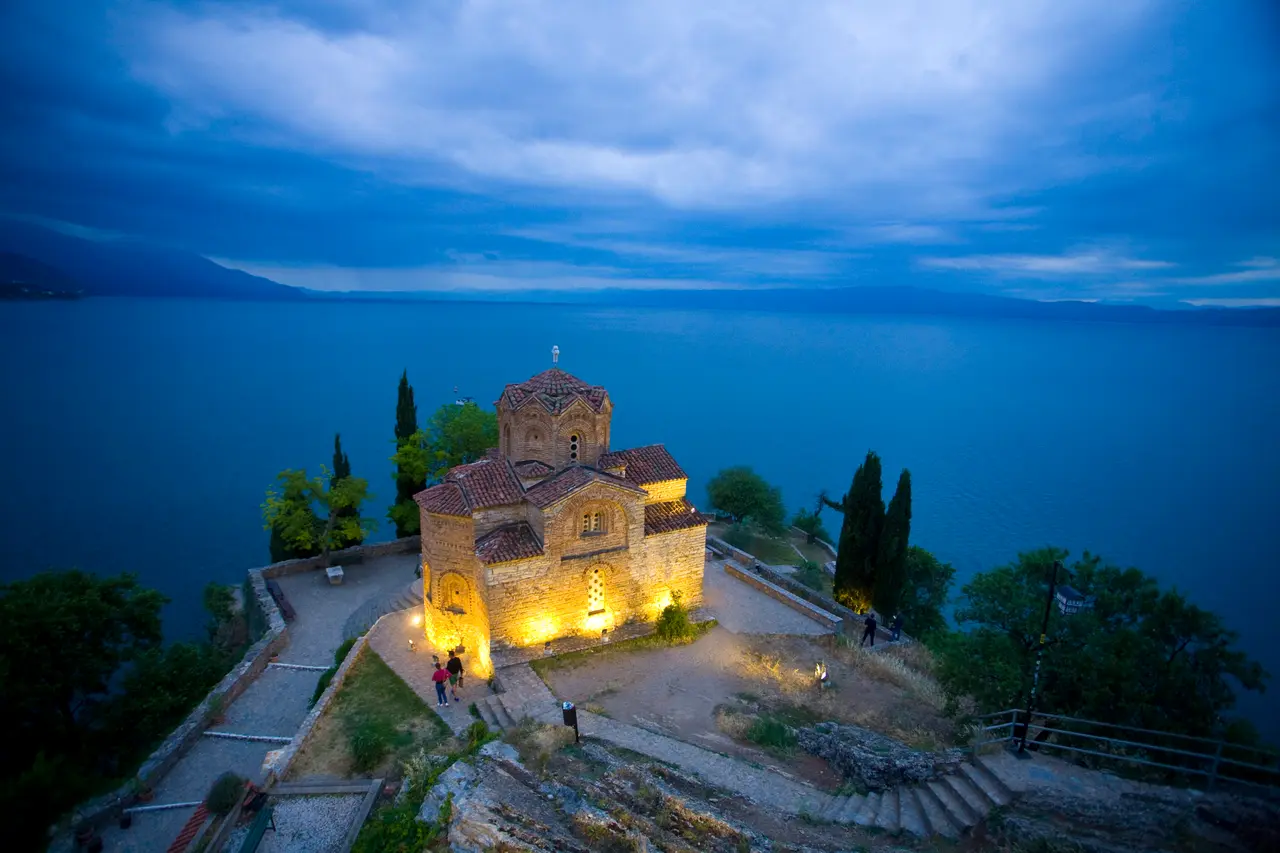
Plenty of Balkan towns have a pretty medieval church. What makes Kaneo the image on every fridge magnet and travel feature is where it sits: alone on a rocky headland, the church face turned to the open lake, with nothing behind it but water and the mountains of the far shore. Come in the late afternoon and the sun swings round onto the stone and lights it up gold against the blue - that is the classic shot. Early morning gives you the same scene without the crowds if you would rather have the terrace to yourself.
The best viewpoints aren’t from the church itself but from just beyond it. Walk a little past the church along the shore path and turn back, or climb the few steps above it, and you get the church, the cliff and the lake all in one frame. The little terrace by the church is where most people stand, but a step or two further usually beats the obvious spot.
There’s a reason this church turns up on every poster, magnet and tour brochure in the country. It distils everything Ohrid is selling into a single frame - old stone, deep clear water, mountains on the far shore, a sense of quiet age - without needing a word of explanation. One honest warning that follows from that fame: at sunset in July and August the terrace fills with people all angling for the same shot, and the little cafe above it does a brisk trade. If you want the picture without a crowd in it, arrive around opening on a summer morning, or come in the shoulder months of June and September, when the light is still good and the lake is warm enough to swim but the terrace is half empty.
How to get there
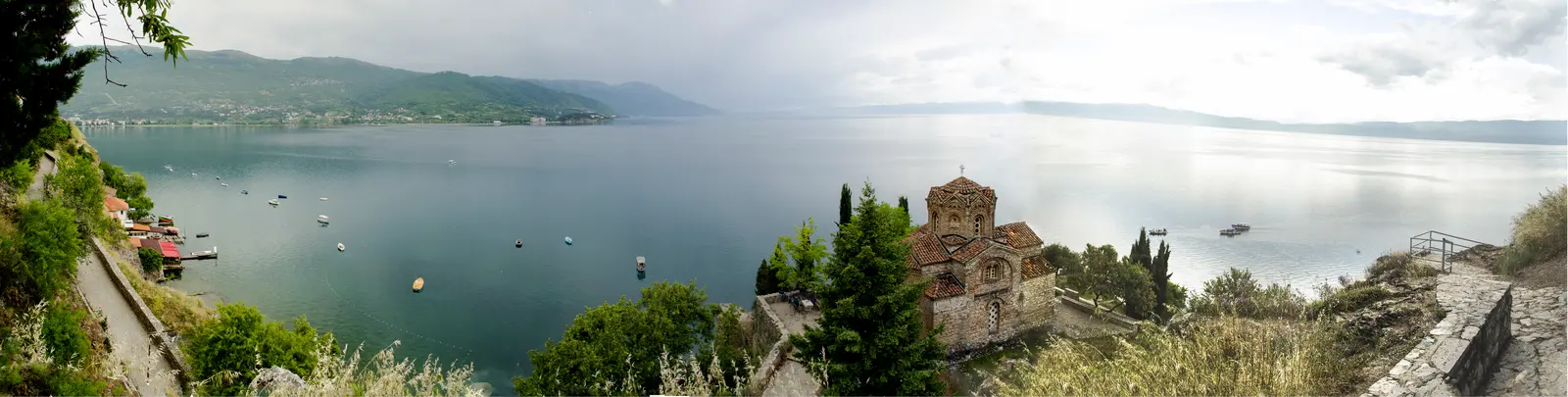
The church is only five to ten minutes from the old-town lanes, but there are a few good ways to make the approach, and which you pick changes the whole experience.
- The lakeside boardwalk (easiest and prettiest). A wooden walkway hugs the shore below the cliffs, running from near the church of St Sophia and the end of Ilindenska street, past the little Potpes cove, all the way to Kaneo beach; from there a short flight of steps takes you up to the church. It’s flat, shaded in places by willows, and hangs right over the clear water. If you only walk it one way, walk it here.
- Through the old town. The cobbled lanes climb up and over the headland from the centre, passing the old Ohrid houses on the way. It is a touch more up-and-down but strings together the sights.
- Down from Plaosnik. If you’re already up at the Plaošnik archaeological site or Samuel’s Fortress, you can drop down to the church on the same loop rather than doubling back.
- By boat taxi. Least effort of all: small boats run from the Ohrid harbour to the pier just below the church for a modest fee, which is the move if the legs have had enough or you want the church rising up in front of you from the water.
Kaneo beach, and making a loop of it
Directly below the church, Kaneo Bay is a small fishing cove with a pebble beach and a couple of fish restaurants built out over the water - the obvious place to cool off after the photos or settle in for grilled lake fish with your feet almost in the lake. It gets busy in July and August, so come early for a lounger. For the wider picture of swimming spots around the lake, see our guide to the best beaches on Lake Ohrid.
The smart way to see it’s as one loop rather than a there-and-back: walk the boardwalk out to Kaneo and the church, then climb from behind it to Plaošnik, the ancient theatre and Samuel’s Fortress on the same headland, and come down through the old town. That knits the whole UNESCO-listed core together in a couple of unhurried hours. Our guide to things to do in Ohrid lays out the rest of the walk, and the Lake Ohrid guide explains why the lake behind the church is a World Heritage site in its own right.
Practical tips
- Entry: wandering to the church and enjoying the view is free at any hour. When a custodian is present the interior may ask a small entry fee or donation; hours aren’t fixed, so treat getting inside as luck rather than a plan.
- Best light: late afternoon for the golden church face, early morning for empty terraces. Midday is harsh and busy.
- Wear proper shoes: the boardwalk is easy, but the old-town and Plaosnik routes are cobbled, steep and slippery when wet.
- UNESCO context: the church is part of the Natural and Cultural Heritage of the Ohrid region, a rare mixed World Heritage site - the lake and the town are protected together.
Read also
- Things to do in Ohrid - the church in the full old-town walk
- Lake Ohrid guide - the UNESCO lake behind the church
- Best beaches on Lake Ohrid - where to swim, including Kaneo
- Ohrid boat trip to Sveti Naum - the classic lake excursion
- How many days in Ohrid? - day-by-day plans for the lake
Photos
On the map
The map loads on click - to keep the page lightweight.
The map didn’t load. Check your connection and refresh the page.
Distance
- Skopje ≈170 km · ~2.5-3 h No direct bus from Skopje airport - travel via Skopje.
- Bitola ≈70 km · ~1-1.5 h
Read also

What to see · 11 min read
Skopje Brutalist Architecture Walking Guide
Verified · September 3, 2026Walk Skopje's post-1963 concrete: Post Office, GTC, Tange's station and MoCA. Dates and architects from named sources.

What to see · 9 min read
Plaošnik & St Clement's: Ohrid's Sacred Hill
Updated · August 25, 2026Plaošnik in Ohrid: St Clement's church, early Christian mosaics and Slavic literacy's cradle - what to see, the walk up and looping Kaneo.

What to see · 9 min read
Skopje Museums: Archaeology to Mother Teresa
Updated · August 23, 2026Four Skopje museums worth an afternoon: archaeology, Mother Teresa, the Holocaust center and Macedonian Struggle - hours, tickets and how to visit.

What to see · 12 min read
Bigorski Monastery: The Carved Wonder of Western Macedonia
Updated · August 4, 2026Sveti Jovan Bigorski: the walnut iconostasis with 500+ carved figures, what the 2009 fire took, and how to get there from Skopje or Ohrid.