
Plaošnik & St Clement's: Ohrid's Sacred Hill
Plaošnik in Ohrid: St Clement's church, early Christian mosaics and Slavic literacy's cradle - what to see, the walk up and looping Kaneo.
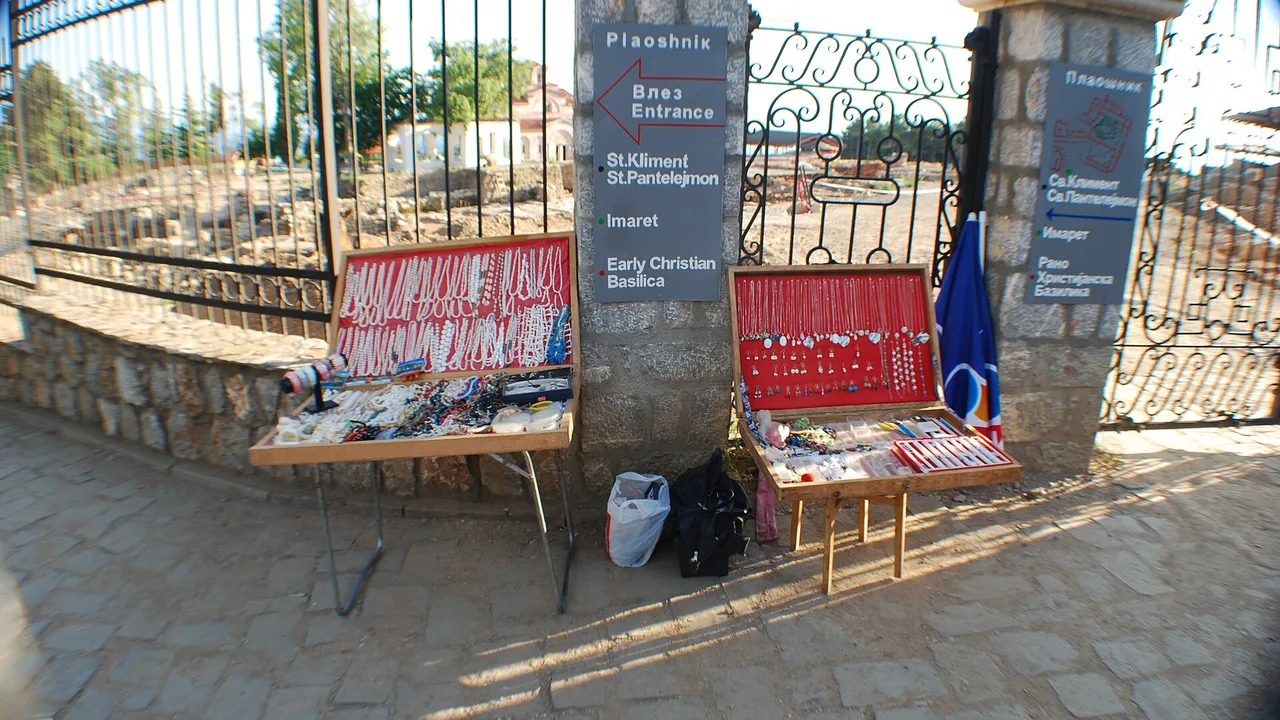
Plaošnik is the sacred hill between Samuel’s Fortress and Kaneo - an open-air archaeological park where early Christian basilicas, a baptistery with vivid floor mosaics and a reconstructed medieval church share one terrace above Lake Ohrid. This is where Saint Clement of Ohrid, a disciple of Saints Cyril and Methodius, founded his teaching centre in 893 CE and ran what scholars call the first Slavic literary school. You’ll walk past real 5th-6th century ruins in the morning sun, step into a church rebuilt in 2002 on Clement’s foundations, and look down the slope to the lake that made Ohrid a UNESCO site. It’s less photogenic than Kaneo’s cliff church, but it’s the intellectual and spiritual core of the old town - and it’s cheap enough that the cost barely enters the decision.
The church on the hill - and what is new
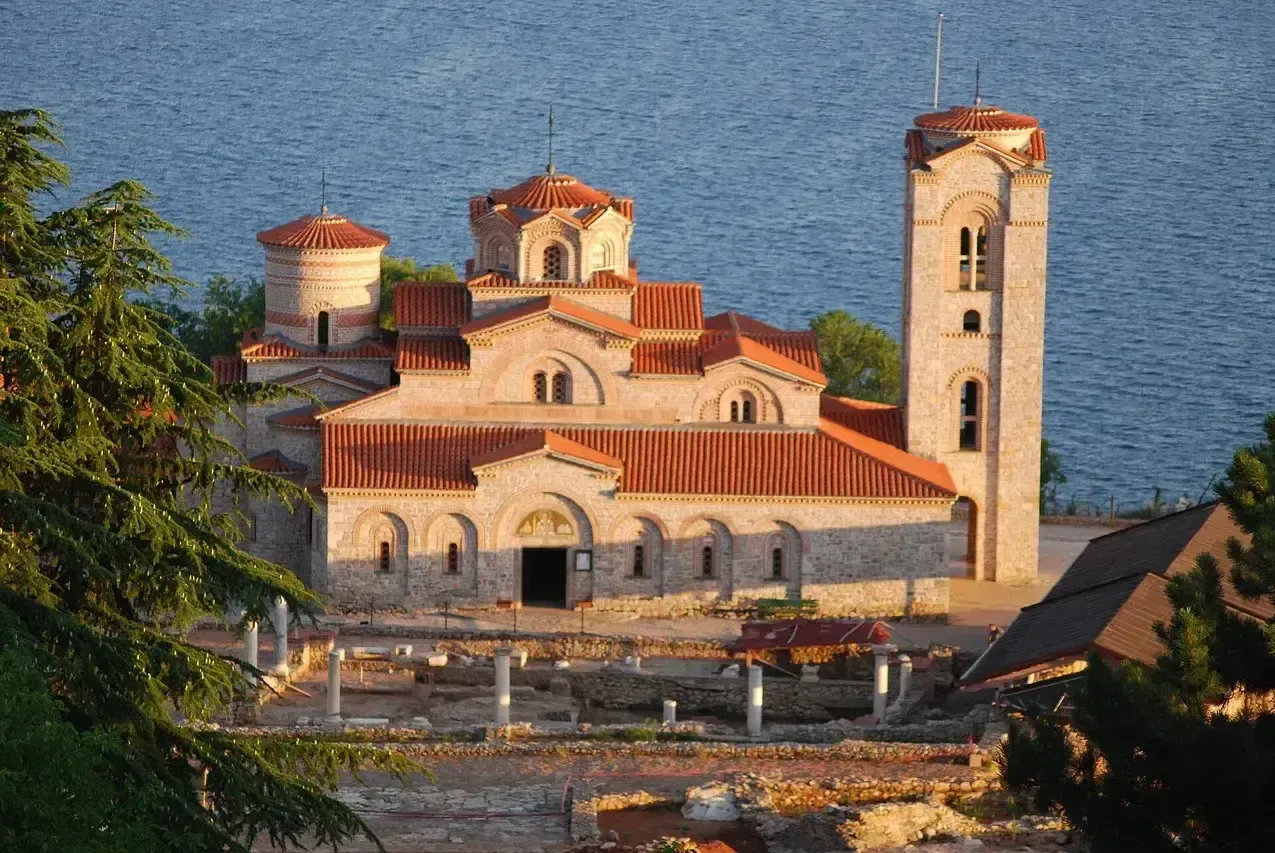
The building that dominates Plaošnik today is the Church of Saints Clement and Panteleimon - red brick and pale stone in classic Byzantine style, with domes you can see from the fortress walls. Set expectations honestly: almost everything above ground is a reconstruction finished in August 2002, not untouched medieval fabric. After the Ottoman conquest the original church was turned into a mosque; later, at some point under Ottoman rule - sources put it anywhere from the 15th century to the early 17th - the Imaret Mosque rose on the same terrace and stood until it was removed in 2000. Museum chronicles often call that later Islamic building the Sultan Mehmed mosque - same terrace, later Ottoman layer - so when dig accounts say “Sultan Mehmed,” they mean the ruins of that Imaret-era structure, not a second mosque beside it. The present church was raised on the excavated foundations of Clement’s monastery church, with fragments of the Islamic structure kept visible as witness to that later chapter.
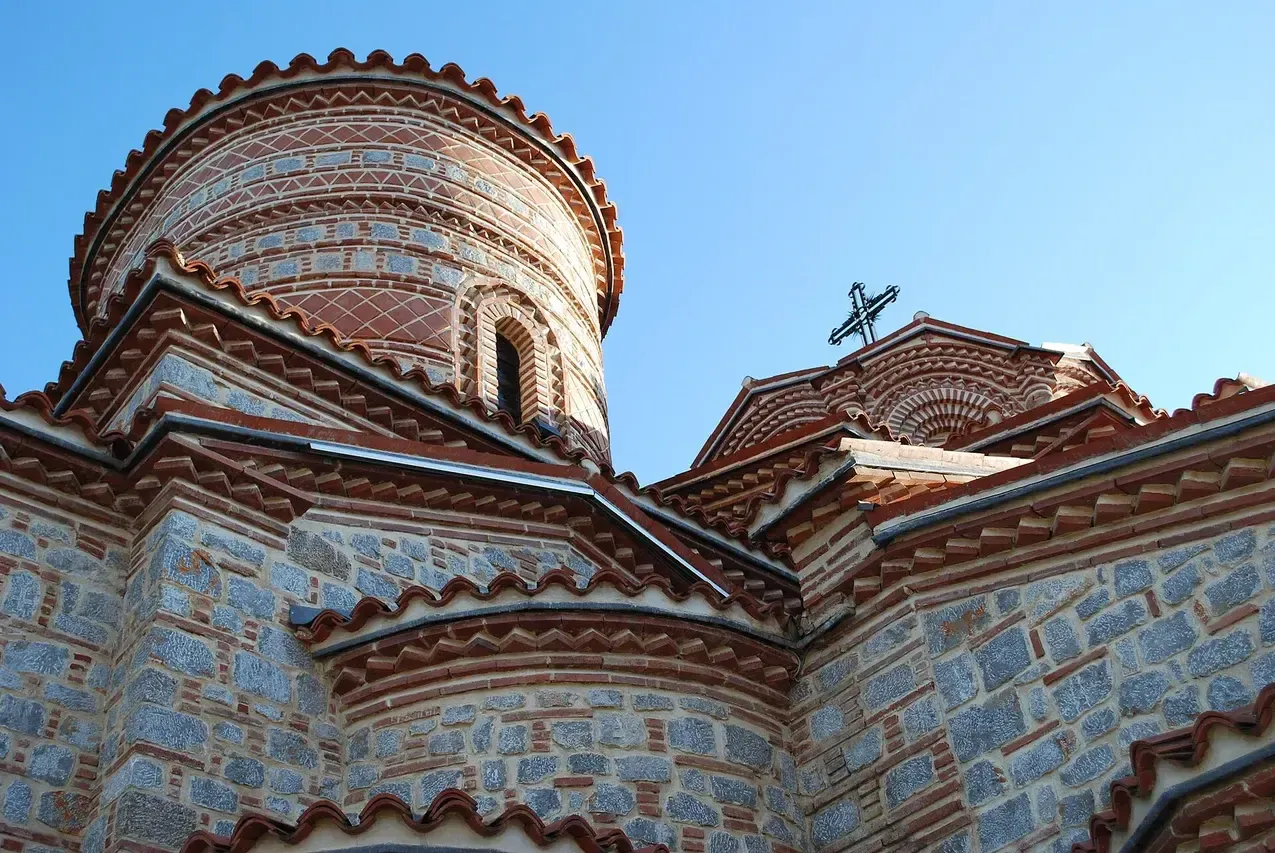
Inside it’s a working Orthodox church: dim light, incense, and crowds on feast days. Ask before photographing in the nave - treat the interior as a liturgical space, not a museum gallery. What you’re paying for is the setting and the layers outside, where the story is told in stone and mosaic rather than in a display case.
Why Clement matters
Saint Clement arrived in Ohrid at the request of the Bulgarian ruler Boris I and chose this terrace for a reason. In 893 he built (or rebuilt over an older basilica) a church dedicated to Saint Panteleimon and turned it into the base of the Ohrid Literary School. Students were taught to read and write in Glagolitic and, soon after, Cyrillic - the scripts that carried Old Church Slavonic across the Balkans and into the wider Slavic world. Whether you call it a university, an academy or a monastery school, it’s the reason Macedonians treat Plaošnik as a national birthplace of literacy, not just another pretty church.
Clement died in 916 and was buried on the site. For centuries his tomb lay hidden under later buildings until October 1942 to May 1943, when excavations inside the ruined Sultan Mehmed mosque uncovered the original church foundations and the grave. Prof. Dimche Koco published the results in 1948; most of Clement’s relics were solemnly returned when the new church was consecrated in 2002. Standing on the terrace, you’re on the same ground where those digs changed how the country reads its own past.
Archaeology under your feet
Plaošnik isn’t a single church - it’s a stack of cities and faiths. Prehistoric and Roman layers lie under the medieval monastery, and the museum’s own account describes an exceptional archaeological complex with remains from antiquity through the Middle Ages.
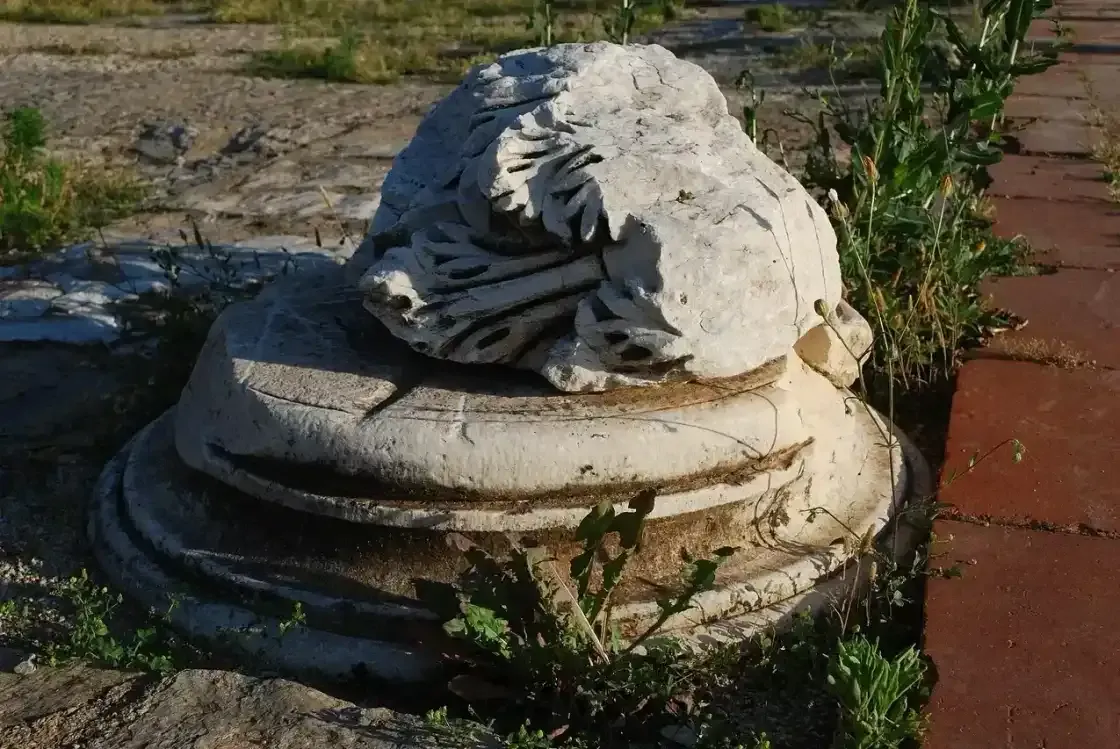
The headline ruins are early Christian, from the 5th and 6th centuries. Digs in the 1960s opened a polyconchal basilica from that era; campaigns from 1999 to 2002 then fully exposed a monumental three-aisled basilica with a narthex, atrium, side chambers and wide courtyards to the east. Marble columns with carved bases and capitals still stand in the atrium. In the narthex and the north aisle, mosaic floors survive in several phases - geometric patterns, borders and figurative work that reward slow looking instead of a quick circuit.
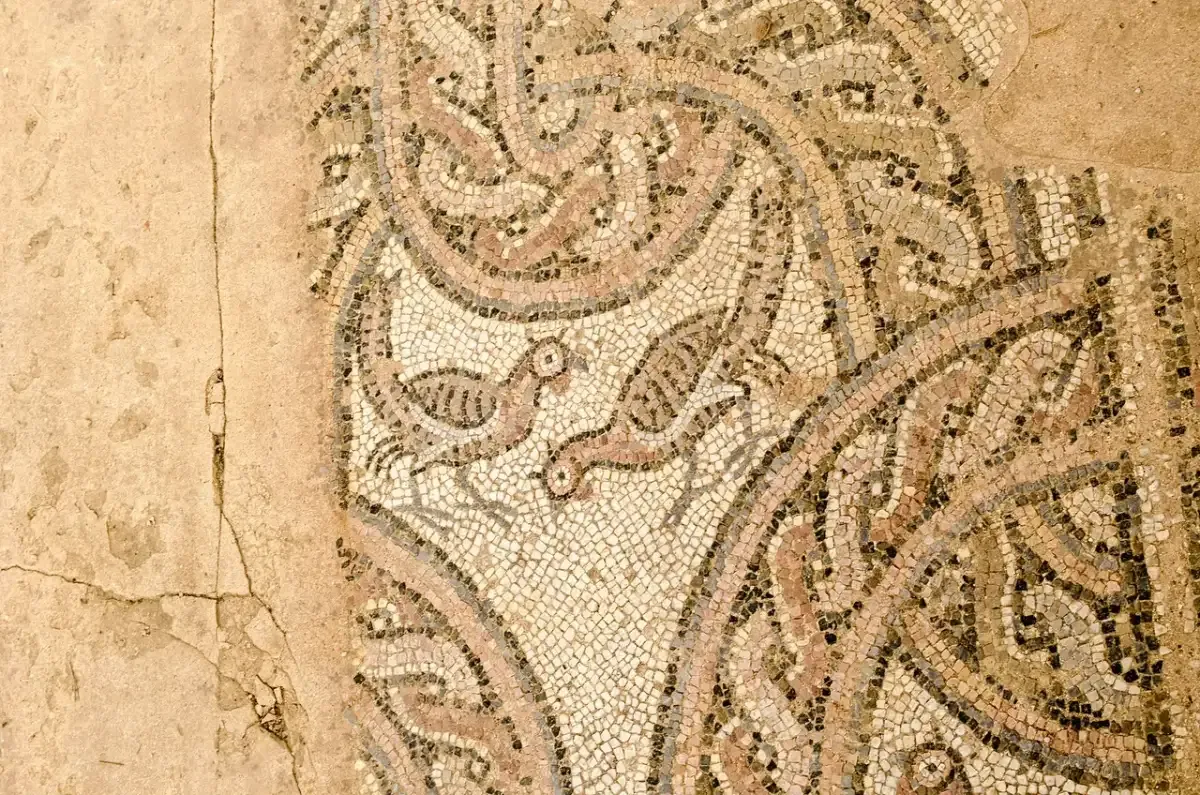
South of the apse sits the site’s showpiece: a baptistery with an exceptionally preserved mosaic floor. The pool is a rectangle with a circular font in the centre and steps down on the east side - the practical architecture of baptism turned into art. The pavement mixes geometry with vines, leaves, flowers and animals: grapes, a lamb, a lion, a peacock, a rooster, water birds. Crosses appear in the border, including forms that read as swastikas to modern eyes but belonged to early Christian decorative vocabulary. A protective roof now covers the floor so you can look down without stepping on it.
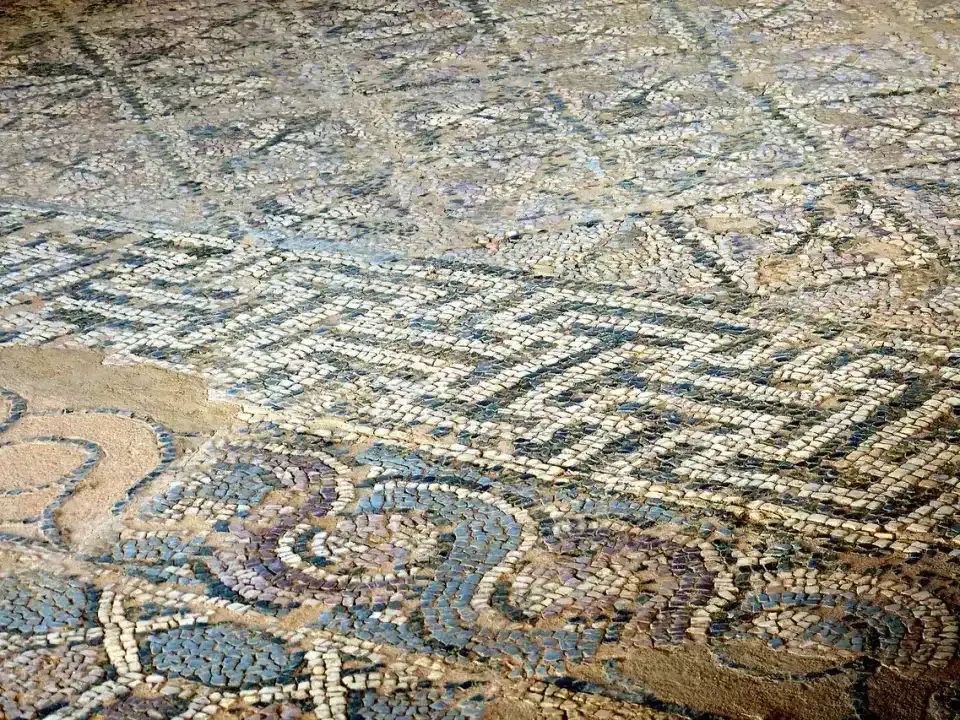
Nearby, a polyconchal basilica from the same early Christian period has its own mosaics under a separate protective shelter. Conservation work continued into the 2000s, including new supports under the baptistery floors and covers over both baptisteries so rain doesn’t undo what the earth preserved for fifteen centuries.
Excavations still surprise when you dig into the record. In October 2007 a deposit of about 2,383 Venetian coins turned up - mundane silver, but the excavator read it as a sign that Ohrid traded with Venice when you might expect only church and farm. That year’s campaign opened phase two: locating the monastic quarters that would have housed Clement’s students, the physical footprint of the “university” you’ve read about in guidebooks. Systematic digs continued through 2007 and 2008 as that phase got under way; research on the monastic quarters has continued since, even when the season isn’t a full trench campaign.
The view and the UNESCO setting
Plaošnik’s terrace looks south and west over Lake Ohrid - the same water Kaneo’s church frames from its cliff, but from higher up and with the whole basin in view. The site sits inside the Natural and Cultural Heritage of the Ohrid region, UNESCO’s rare mixed listing that protects both the ancient lake and the medieval town on its shore. You don’t need a separate ticket for the view: pause at the low wall on the south edge before you drop down toward Kaneo.
For what the lake itself means - depth, endemic trout, the Albanian shore - see our Lake Ohrid guide. For the town wrapped around this headland, see our Ohrid town guide.
How to visit Plaošnik
The complex lies on the south-west slope of Ohrid’s old-town headland, between Samuel’s Fortress on the crest and the Church of St John at Kaneo on the cliff below. From the harbour or St Sophia it’s a 10-15 minute walk uphill on cobbles - steep in places, so wear shoes with grip.
Tickets and hours aren’t published for Plaošnik at all as of August 2026 - notable, because the same institute posts both for Samuel’s Fortress next door (09:00-16:30 in summer, closed Mondays). Visitors through 2024-26 describe a single site ticket of roughly 100-150 MKD (about €1.7-2.5) and summer opening around 09:00-19:00. Seasonal opening, liturgical services and restoration work can close parts of the site without much notice. Check muzejohrid.mk or ask at the gate the morning you go - don’t plan a tight schedule around fixed hours.
The efficient way to see Ohrid is one loop, not three separate trips:
- Up from the old town past St Sophia and the ancient theatre to Plaošnik and the fortress (our Samuel’s Fortress guide covers the citadel ticket and the 2003 rebuild).
- Across Plaošnik to the church, mosaics and lake viewpoint.
- Down the slope to Kaneo and the lakeside boardwalk back to town.
That ties the sacred hill to the postcard church in a single afternoon. Our Sveti Jovan Kaneo guide has the boardwalk route, boat taxi and beach below the cliff - start there if you’d rather climb than descend.
Practical notes:
- Dress modestly if you enter the church; shoulders and knees covered is the safe default.
- Sun and heat hit the open terraces hard by midday in July and August - morning or late afternoon is easier on both skin and camera.
- Accessibility is limited: steps, uneven stone and excavation pits; the fortress approach is steeper still.
- Guides aren’t mandatory but help with the chronology - the difference between 6th-century basilica, 9th-century school and 21st-century rebuild blurs quickly without context.
Plaošnik vs Kaneo - which first?
If you only have time for one stop on the headland, Kaneo wins on pure drama - the cliff, the lake, the single perfect frame. Choose Plaošnik first if you care why Ohrid matters: scripts, Clement’s tomb, mosaics you can study up close, and the honest mix of ruin and rebuild. In practice you’ll want both, and the walk between them is the point.
Read also
- Ohrid town guide - Plaošnik in the full old-town day
- Sveti Jovan Kaneo - the cliff church below Plaošnik
- Lake Ohrid guide - the UNESCO lake at your feet
- Samuel’s Fortress - the citadel directly above
- Monastery of St. Naum - Clement’s companion saint at the south end of the lake
On the map
The map loads on click - to keep the page lightweight.
The map didn’t load. Check your connection and refresh the page.
Admission and opening hours
- Opening hours
- The institute publishes no hours for Plaosnik itself; visitors in 2024-26 report summer opening around 09:00-19:00 - confirm at the gate
The NI Institute for Cultural Heritage and Museum - Ohrid (muzejohrid.mk) manages the site but publishes no Plaosnik tariff or hours, unlike its neighbouring Samuel's Fortress page. Visitors in 2024-26 report a site ticket of roughly 100-150 MKD (about EUR 1.7-2.5). Check at the gate.
Details checked: August 25, 2026
Distance
- Skopje ≈170 km · ~2.5-3 h No direct bus from Skopje airport - travel via Skopje.
- Bitola ≈70 km · ~1-1.5 h
Read also

What to see · 11 min read
Skopje Brutalist Architecture Walking Guide
Verified · September 3, 2026Walk Skopje's post-1963 concrete: Post Office, GTC, Tange's station and MoCA. Dates and architects from named sources.

What to see · 9 min read
Skopje Museums: Archaeology to Mother Teresa
Updated · August 23, 2026Four Skopje museums worth an afternoon: archaeology, Mother Teresa, the Holocaust center and Macedonian Struggle - hours, tickets and how to visit.

What to see · 12 min read
Bigorski Monastery: The Carved Wonder of Western Macedonia
Updated · August 4, 2026Sveti Jovan Bigorski: the walnut iconostasis with 500+ carved figures, what the 2009 fire took, and how to get there from Skopje or Ohrid.

What to see · 10 min read
Kuklica Stone Town: North Macedonia's Petrified Wedding
Updated · July 23, 2026Kuklica stone dolls near Kratovo: how the pillars formed, the wedding legend, how to get there and the entry-fee dispute you should know about.