
Samuel's Fortress, Ohrid: Hours, 150 MKD Ticket & Views
Samuel's Fortress above Ohrid: 09:00-16:30 May-Sept, 09:00-15:30 Oct-Apr, closed Mondays, ticket 150 MKD (about €2.50). Tsar Samuel's story and the views.
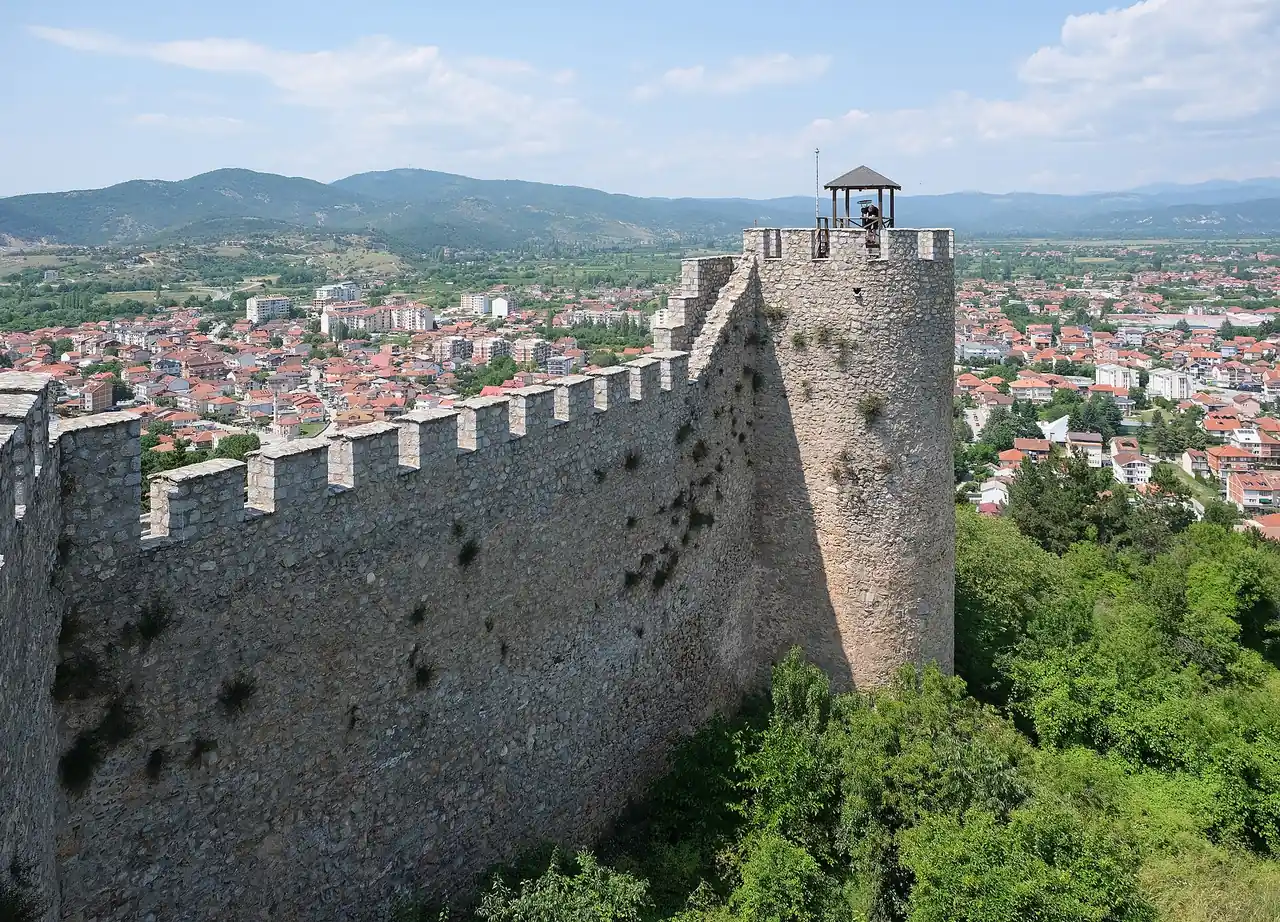
Samuel’s Fortress is the walled citadel on the hilltop above Ohrid’s old town, and it’s the highest and best viewpoint in the city - a rampart walk with the red roofs, the lake and the far mountains laid out beneath you. It’s named after Tsar Samuel, who made Ohrid the capital of the First Bulgarian Empire a thousand years ago, and the ticket to climb the walls costs 150 denars, about two and a half euros. One honest catch is worth knowing before you pay: a good deal of what you see was rebuilt in 2003, so treat it as a spectacular viewpoint with a real backstory rather than a set of untouched ancient stones.
A fortress named after a tsar
Ohrid has been fortified for a very long time. Archaeologists have found traces of a fort here from the 4th century BC, probably thrown up under Philip II of Macedon, back when the town was the Greek and later Roman settlement of Lychnidos - the historian Livy already mentions it for the year 209 BC. But the walls you climb today carry one man’s name. Around the turn of the 11th century, Tsar Samuel made Ohrid the capital of his First Bulgarian Empire and rebuilt the hilltop into a serious medieval stronghold. It has been Samoilova Tvrdina, Samuel’s Fortress, ever since.
This was Ohrid at its medieval peak, and the fortress was only half the story. The same era made the town a great religious and cultural centre - the seat of an archbishopric and the home of the Ohrid Literary School founded by St Clement, one of the cradles of Slavic letters, whose churches you pass on the way up the hill. The fortress was the sword; the churches below were the pen.
Samuel’s own story ends badly, and it’s worth knowing as you stand on his walls. In 1014 his army was crushed by the Byzantine emperor Basil II at the Battle of Kleidion. By the traditional account, Basil took thousands of prisoners and had them blinded - leaving, the chroniclers say, one man in every hundred with a single eye to lead the rest home - which earned him the cold nickname “the Bulgar-slayer.” When the column of blinded soldiers reached Samuel, he’s said to have collapsed and died within days, on 6 October 1014. His empire was swallowed by Byzantium four years later. The walls outlived the state by a thousand years.
Walls, towers and the Upper Gate
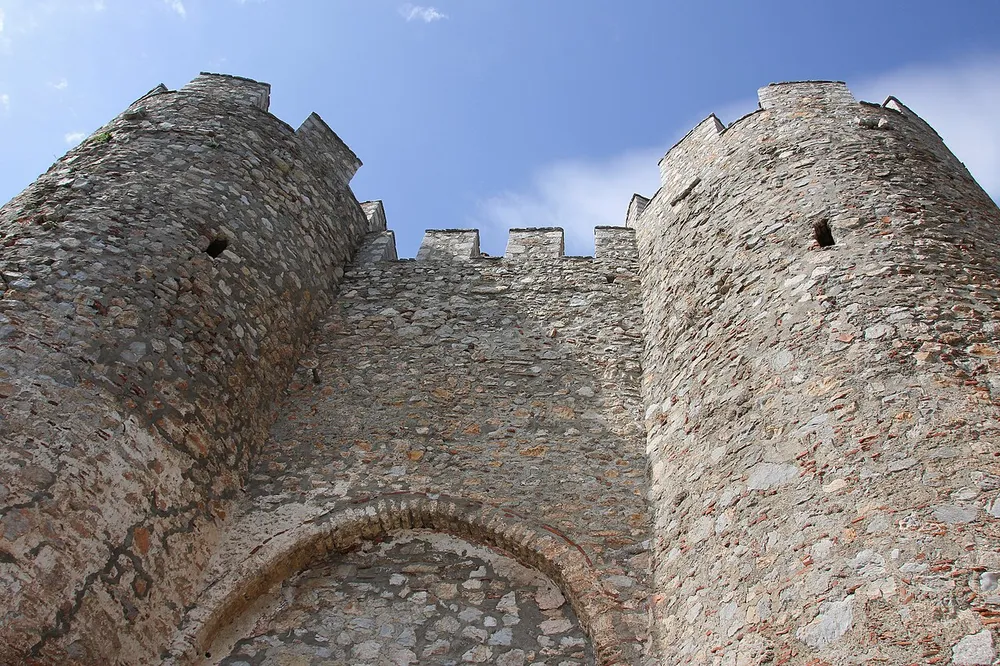
At its height the fortified circuit was substantial: something like 3 km of wall wrapping the citadel and the town, rising anywhere from 3 to 16 metres depending on the slope, studded with around eighteen to twenty towers and pierced by several gates. That makes it one of the largest medieval fortifications in the country, even though the compact citadel core is really all you walk today - and you won’t need more than that for the view.
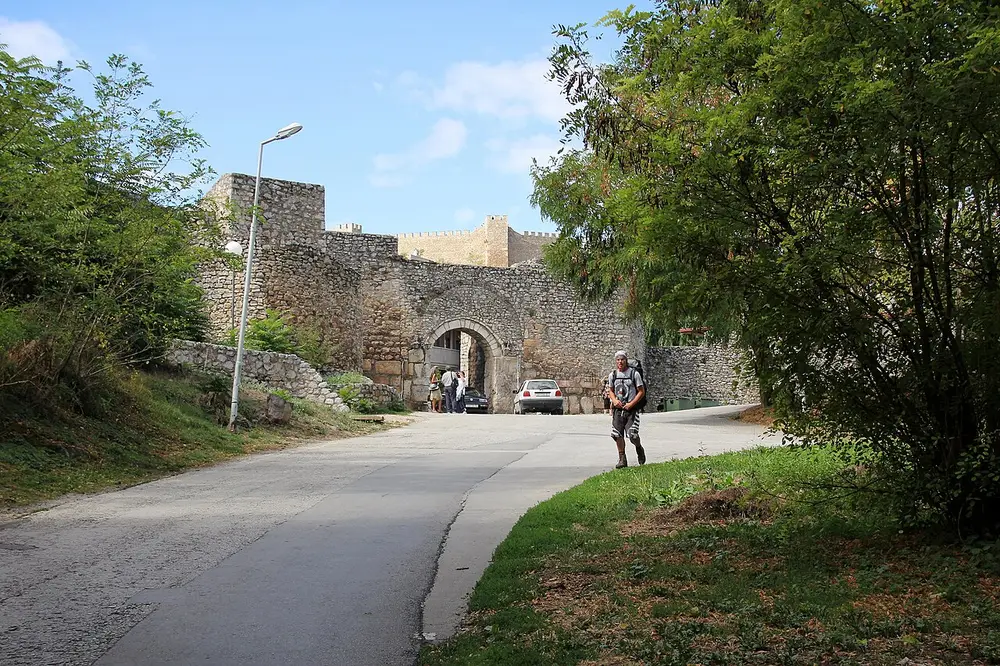
The one piece that survived the centuries genuinely intact is the Upper Gate (Gorna Porta), the main way in on the town side. Look closely at its stonework and you’re reading recycled history: the builders reused blocks from antiquity, including marble tombstones carved with Greek and Roman inscriptions, and a fragment of an ancient Greek inscription is still visible in one of them. It’s the most authentically old thing on the hill, and most people walk straight through it without a second glance.
The rest is more complicated, and the guidebooks tend to skip it. The fortress fell into ruin over the centuries, and the version you see is largely a modern reconstruction: excavation and conservation began in 2000, and in 2003 the walls and battlements were substantially rebuilt, with entirely new crenellations added where nothing had survived. This isn’t really a secret - once you know it, you can read it in the too-even rows of pale stone - but it takes nothing away from the climb. Think of it as a restored stage set standing on real medieval foundations - don’t come expecting untouched battlements.
The view is the whole point
Let me be blunt about why you come up here: the view. The fortress sits about 100 metres above the lake on the highest ground in Ohrid, and the rampart walk swings you round from the town side to the water. On one side the whole old town tumbles down the headland in a cascade of red roofs and church domes; on the other, Lake Ohrid opens out blue and vast toward the mountains of the Albanian shore. That’s the whole point of the ticket.
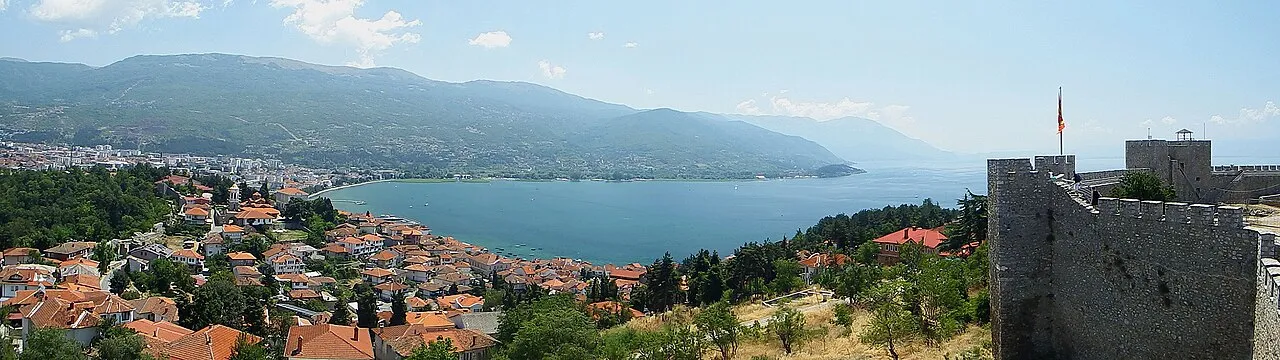
The classic photo is the lake framed between two merlons - the stone teeth of the battlement - and it pays to walk the full circuit rather than stopping at the first tower, because the angle keeps changing. The tower with the little wooden lookout pavilion, on the town side, is the crowd-pleaser and where the giant Macedonian flag flies; the western stretch of wall gives you the cleaner, emptier lake view.
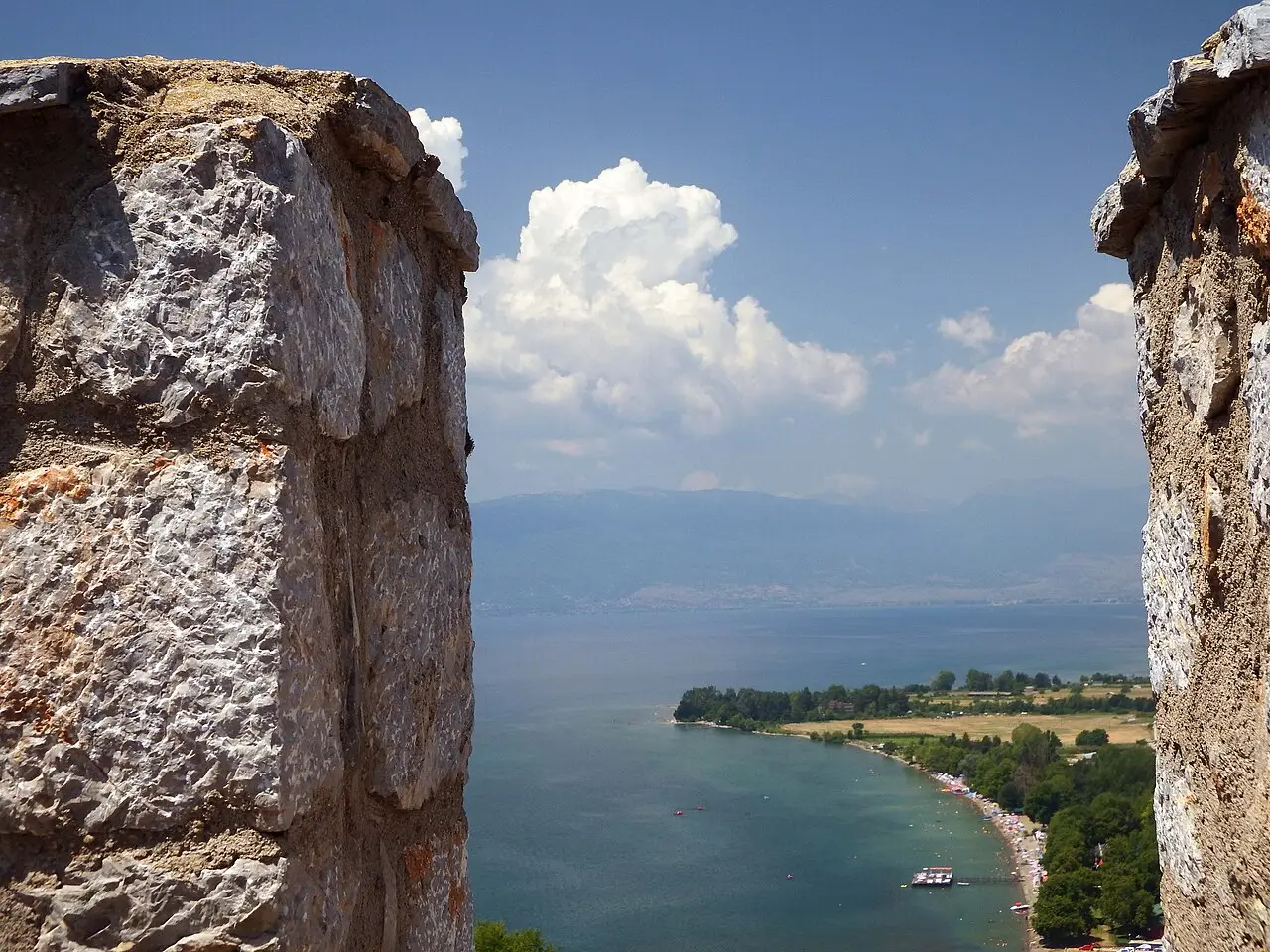
Two honest tips on timing. Come at opening or in the last hour before sunset: midday flattens the light and packs the walls with tour groups walking up from the theatre. After sunset, head down for dinner under the fortress - our pick of Ohrid’s restaurants covers the terraces and old-town kitchens below. And know that you can get a lot of this panorama for free from the Upper Gate terrace and the paths just outside the walls - the ticket buys you the rampart walk and the framed-battlement photos, not the only view in town.
Tickets, hours and getting up there
Walking the ramparts costs 150 denars for foreign visitors - about €2.50 - with 120 denars for residents and 60 for children and students. That’s the admission tariff published by the managing institute, the Institute for Protection of Monuments and Museum - Ohrid, and it matches what visitors report paying at the gate; the institute lists it as a general tariff rather than on the fortress page itself, so a small change on the day wouldn’t be a shock. Bring denar - card acceptance at a hilltop gate is nothing to count on. The grounds and the approach are free; you only pay to go up onto the walls.
The same institute posts the hours plainly: 1 May to the end of September, 09:00-16:30, and 1 October to 30 April, 09:00-15:30, with Monday a non-working day all year round. That 16:30 close catches people out in July, when the light lasts until nine - and the Monday closure is not a winter-only thing, so don’t save the fortress for last thing on any afternoon.
Getting there’s a short, sharp climb. From the old town or the centre, follow the brown Samoilova Tvrdina signs uphill; it’s 10 to 15 minutes on foot, on cobbles and then a lane, and you enter through the Upper Gate. If your legs are done, a taxi to the upper entrance costs only a couple of euros. The natural approach is to walk up through the old town past the ancient theatre and the Plaošnik archaeological site, which sit just below the walls on the same headland.
Make a loop of it
The fortress is best done as one unhurried loop of Ohrid’s UNESCO-listed old core rather than a there-and-back dash. Climb from the old town to the ancient theatre (a Hellenistic semicircle from around 200 BC, still used for summer concerts), carry on up to the fortress for the ramparts and the view, then drop down the far side to Plaošnik and the cliff-top Church of St John at Kaneo, returning along the lakeside boardwalk. That strings the whole headland together in a couple of easy hours.
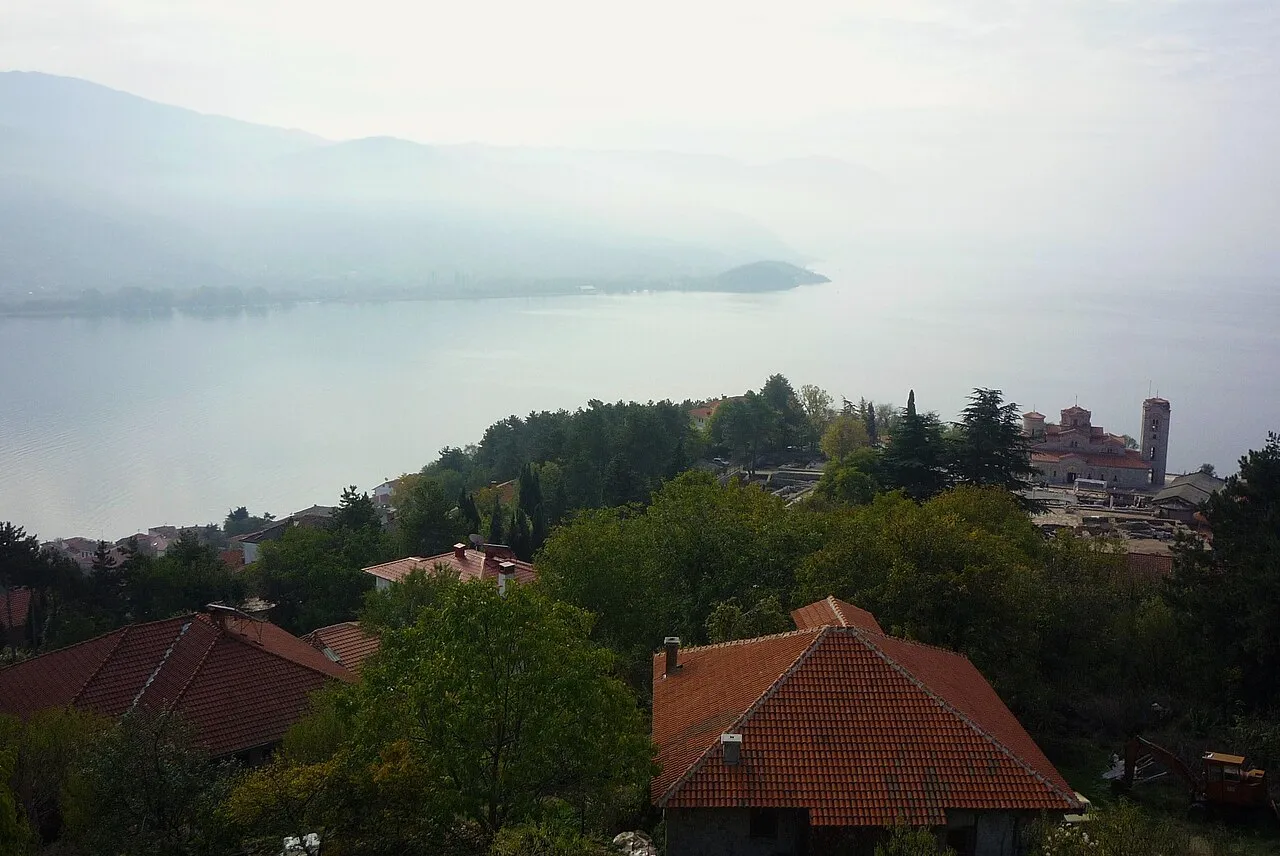
For the rest of that walk - the churches, the bazaar and where to eat - see our guide to things to do in Ohrid. The Lake Ohrid guide explains why the water below the walls is a World Heritage site in its own right, and the Church of St John at Kaneo is the postcard view you’ll want to reach on the way down.
Practical tips
- Wear proper shoes. The climb is cobbled and steep, and the rampart walk is uneven with low or open edges in places - fine in trainers, awkward in sandals, and not one for a pushchair.
- Bring denar and water. The fee is small and best paid in cash; there’s little shade on the walls and no real cafe inside, so carry water in summer.
- Time it. Early or late for the light and the space; skip midday in July and August, when the tour groups and the heat both peak.
- Combine, don’t isolate. The theatre, Plaošnik and Kaneo are all on the same walk - budget half a day for the headland rather than a quick up-and-down.
- Manage expectations. Much of the wall is a 2003 rebuild. Come for the view and the story, and the modern masonry stops mattering.
Read also
- Things to do in Ohrid - the fortress in the full old-town walk
- Church of St John at Kaneo - the postcard church below the walls
- Lake Ohrid guide - the UNESCO lake beneath the fortress
- Sveti Naum monastery - the other great Ohrid set-piece, down the lake
- How many days in Ohrid? - fitting the fortress into a day-by-day plan
- Where to stay in Ohrid - old town versus lakeshore bases
On the map
The map loads on click - to keep the page lightweight.
The map didn’t load. Check your connection and refresh the page.
Admission and opening hours
- Admission price
- Admission 150 MKD for foreign visitors (about EUR 2.50), 120 MKD residents, 60 MKD children and students, per the managing institute; grounds and approach free
- Opening hours
- Summer (1 May-30 Sept) 09:00-16:30, winter (1 Oct-30 Apr) 09:00-15:30; closed Mondays all year, per the managing institute
The institute publishes the tariff as a general admission rather than on the fortress page - confirm at the gate on the day.
Details checked: September 2, 2026
Distance
- Skopje ≈170 km · ~2.5-3 h No direct bus from Skopje airport - travel via Skopje.
- Ohrid ≈0 km · ~10-15 min walk uphill A steep cobbled climb up from the old town.
- Bitola ≈70 km · ~1-1.5 h
Read also

What to see · 14 min read
North Macedonia Monasteries: Six Worth the Drive
Updated · October 5, 2026Six monasteries in North Macedonia worth a detour - Nerezi, Lesnovo, Osogovo, Treskavec, Bigorski and Sveti Naum - by base town, with roads and stays.

What to see · 9 min read
Popova Šapka Ski Resort: Powder, Cats & Prices
Updated · October 5, 2026Popova Šapka above Tetovo: the 2025/26 ski pass prices, the six-seat chair, snowcat freeride on Šar, when the snow really arrives and how to drive up.

What to see · 9 min read
Skiing in North Macedonia: Resorts, Costs & Season
Updated · October 4, 2026Where to ski in North Macedonia: Mavrovo and Popova Šapka compared on lifts, height and pass prices, plus the small hills, the season and winter tyres.

What to see · 11 min read
Paragliding in Kruševo: Tandem Flights, Season & Prices
Verified · October 2, 2026Tandem paragliding in Kruševo, North Macedonia: what four local operators charge, the 1,420 m launch, season, weight limits and how to get there.