
Sveti Naum Monastery & Springs, Lake Ohrid
Sveti Naum monastery near Ohrid: the 905 AD church and tomb, resident peacocks, the Black Drim springs, and how to get there by bus, taxi or car.
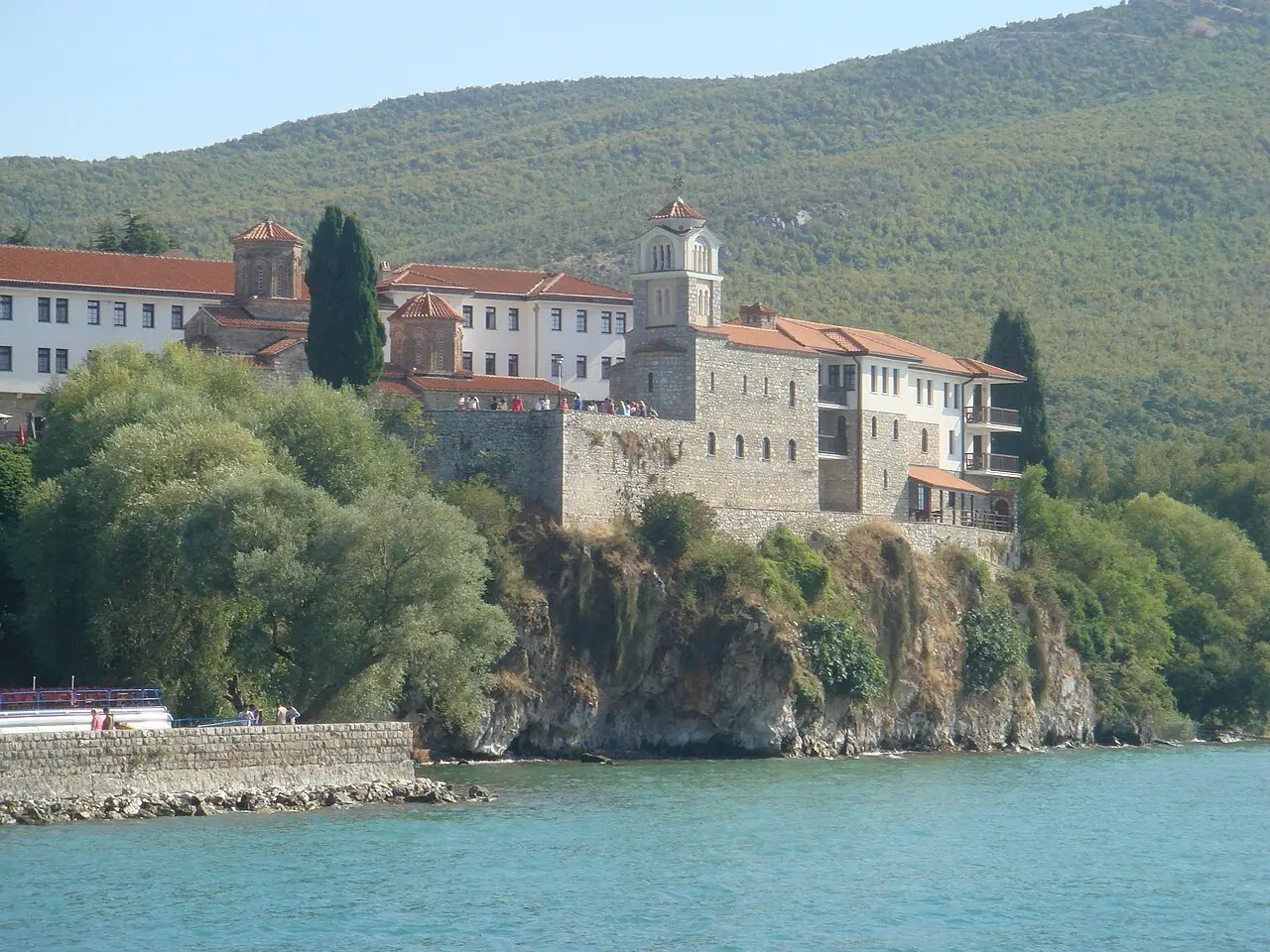
Sveti Naum is the domed monastery on a wooded bluff at the far southern tip of Lake Ohrid, 29 km from Ohrid town and close enough to Albania that the border hills sit just across the water. Saint Naum founded it in 905 and is buried inside the church, but most people leave talking about two other things: the peacocks that stalk the courtyard, and the cold springs below the walls that push a whole river up out of the ground. You can reach it overland by bus, taxi or car, so you don’t have to take the famous lake cruise to get here.
What Sveti Naum actually is
Sveti Naum is three things stacked on one headland, and that mix is why it earns a half day rather than a quick photo stop. It is a working Macedonian Orthodox monastery with a 10th-century foundation and a church you can step inside. It’s a small nature spot, because the springs that start the Black Drim river well up right beneath it. And it’s a relaxed lakeside corner with pebble beaches, a couple of terrace restaurants and a hotel in the old monastic lodgings, on a point that runs almost into the Albanian frontier.
Because it sits at the southern end of the lake, many visitors arrive on the all-day boat from Ohrid harbour. That cruise is a fine way to come, and we cover it separately in the Ohrid boat trip to Sveti Naum guide. If you would rather set your own pace, here’s how to reach it by road.
A monastery founded in 905
The story starts with Saint Naum of Ohrid, a scholar-monk who worked alongside Saint Clement in the circle of disciples that carried on the mission of Saints Cyril and Methodius. This was the group that shaped early Slavic writing, and Ohrid grew into one of its main centres of learning. Naum built his monastery on this spot in 905, ran it as a place of teaching and worship, and died in 910. He was buried in the church and later canonised.
What you see today is not his original building. Naum’s first Church of the Holy Archangels was destroyed under Ottoman rule, and the present multi-domed church was rebuilt over the old foundations in the 16th and 17th centuries. Inside, the carved iconostasis dates to 1711 and most of the wall painting to the 19th century, though older, smoke-darkened fresco fragments survive in the inner chambers. It’s low, close and candle-lit rather than grand, which suits it.
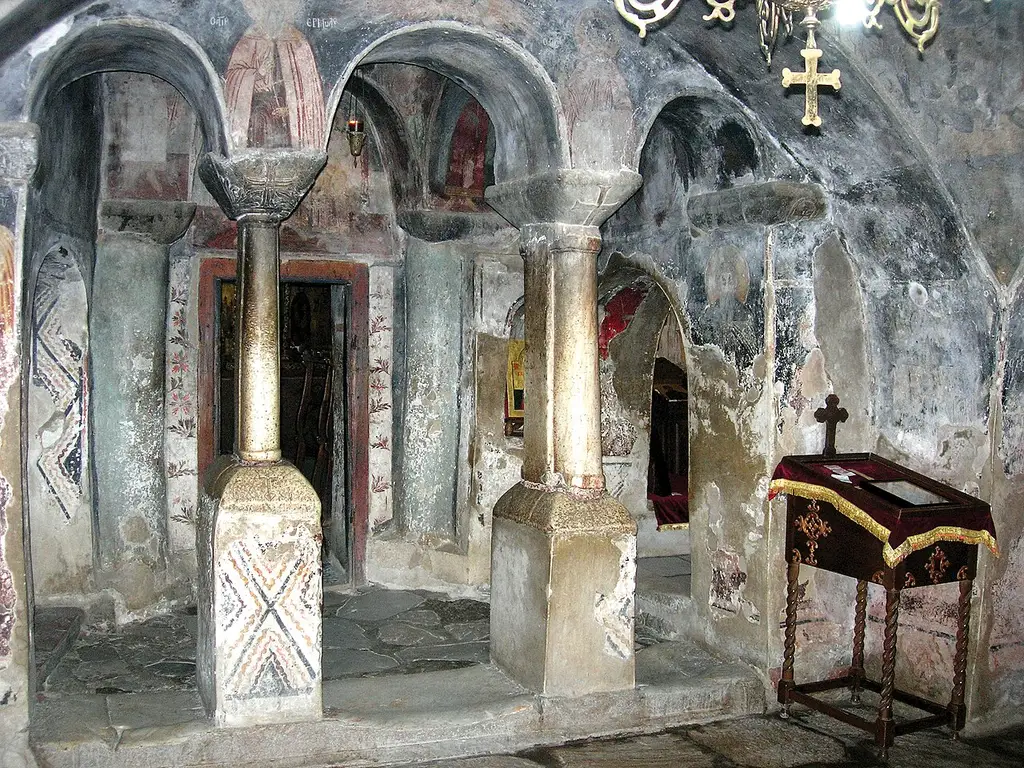
The detail everyone tries is the tomb. Local tradition says that if you lean in and put your ear to Saint Naum’s stone sarcophagus, you can hear a faint heartbeat. The romantic version calls it the saint’s own heart; the plain-water version is that you are hearing the underground springs moving through the rock below the church. Either way, it’s a good excuse to stand still on foundations more than a thousand years old. One more piece of history to picture while you’re there: the border has shifted around this church, which actually sat inside Albania from 1912 until 1925 before the frontier was redrawn a little to the south.
The peacocks and the grounds
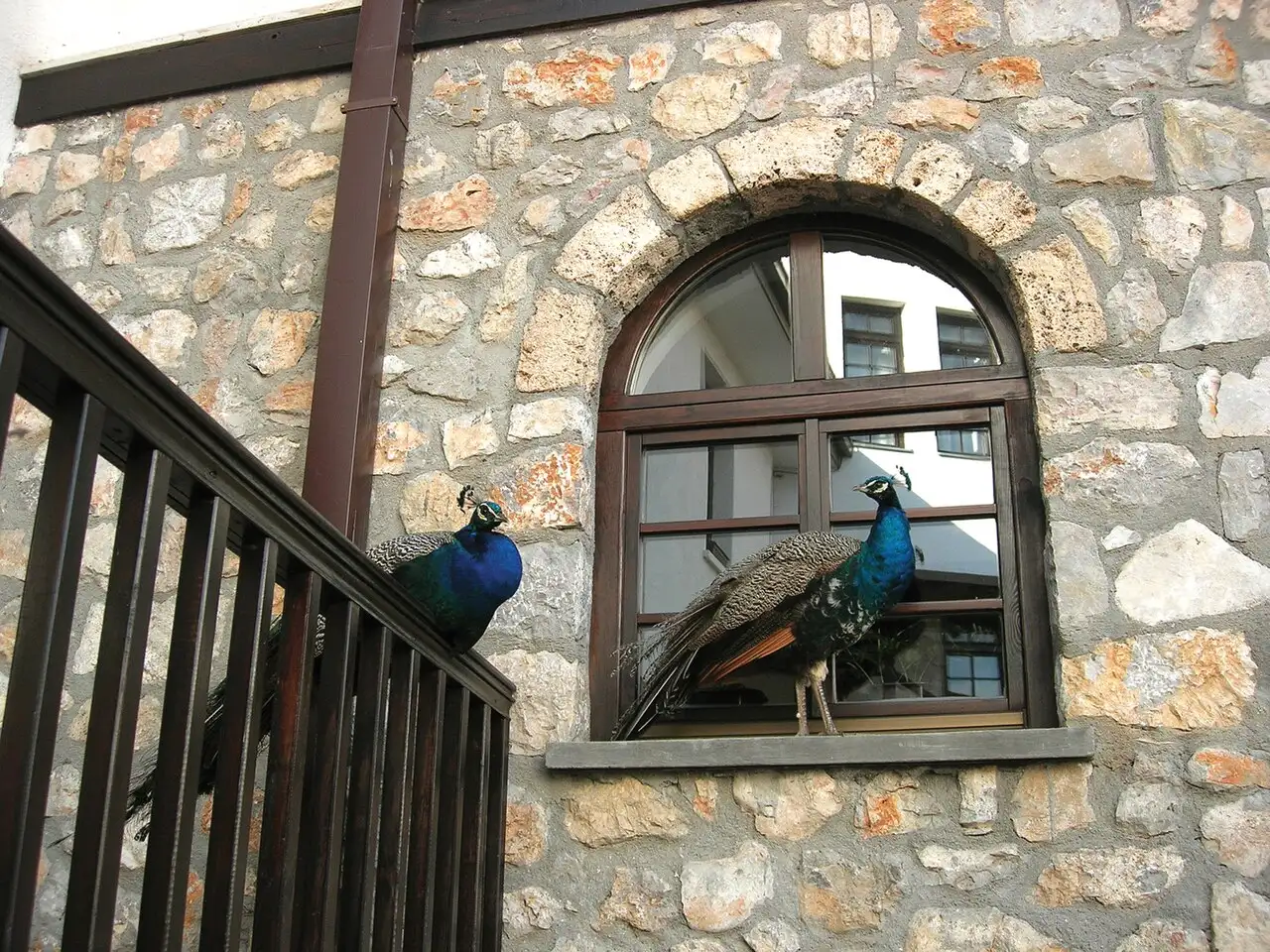
The monastery leans into its most photogenic residents so hard that it markets itself as a “peacock estate.” Peacocks roam the courtyard and the low stone konak buildings, perching on windowsills and railings and letting out that harsh cry from a rooftop at exactly the wrong moment. They are half the reason children remember the visit.
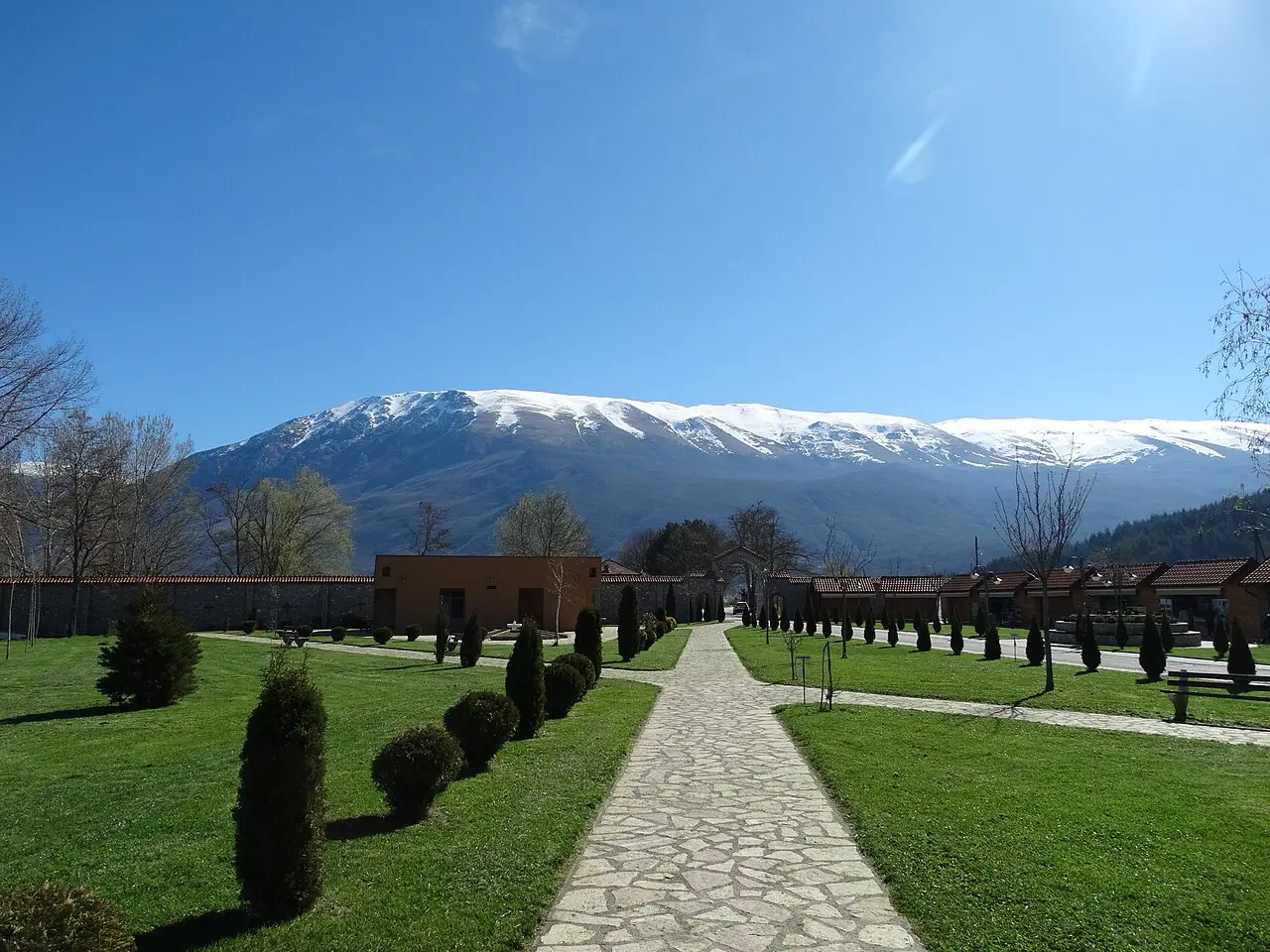
Around the church, the walled grounds open onto lake viewpoints, shaded benches and rose beds, with a couple of terrace restaurants doing grilled fish and cold drinks over the water. The old monastic quarters now run as a hotel, so it’s possible to stay the night up here after the day boats have left and have the headland almost to yourself. That’s an underrated move if you want a quiet lake sunrise without the coach-tour crowd. Below the walls there are small pebble beaches for a swim.
The Black Drim springs
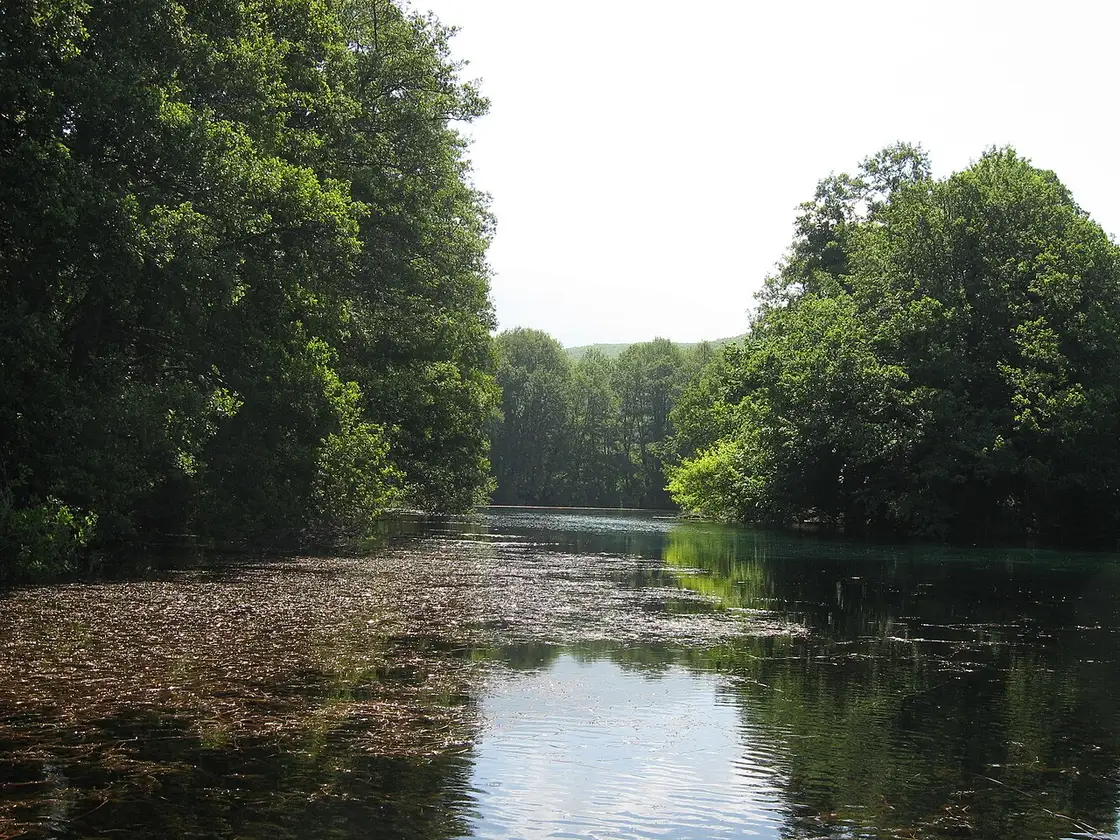
If you only budget time for the church, you’ll miss the best part. Just below the monastery, cold springs bubble up out of the ground and the lakebed and gather into clear green pools before spilling into Lake Ohrid. This is the source of the Crn Drim, or Black Drim, the river that drains the whole lake system and eventually reaches the Adriatic.
Here’s the part that catches people off guard. Most of this water didn’t fall as rain nearby. It comes from Lake Prespa, on the other side of Mount Galicica. Prespa sits roughly 150 metres higher than Ohrid, about 850 metres against 695, and has no river flowing out of it at all. Instead it drains underground, sinking into the limestone of the Galicica and Mali Thate massif and travelling for kilometres through karst channels before surfacing here and at a few other springs along the shore. Isotope studies estimate that somewhere between about 38 and 53 percent of the water leaving some of these big Ohrid springs began in Prespa. Standing at the pools, that’s a strange thing to hold in your head: a lake you can’t see, pouring itself out under a mountain and coming back up at your feet.
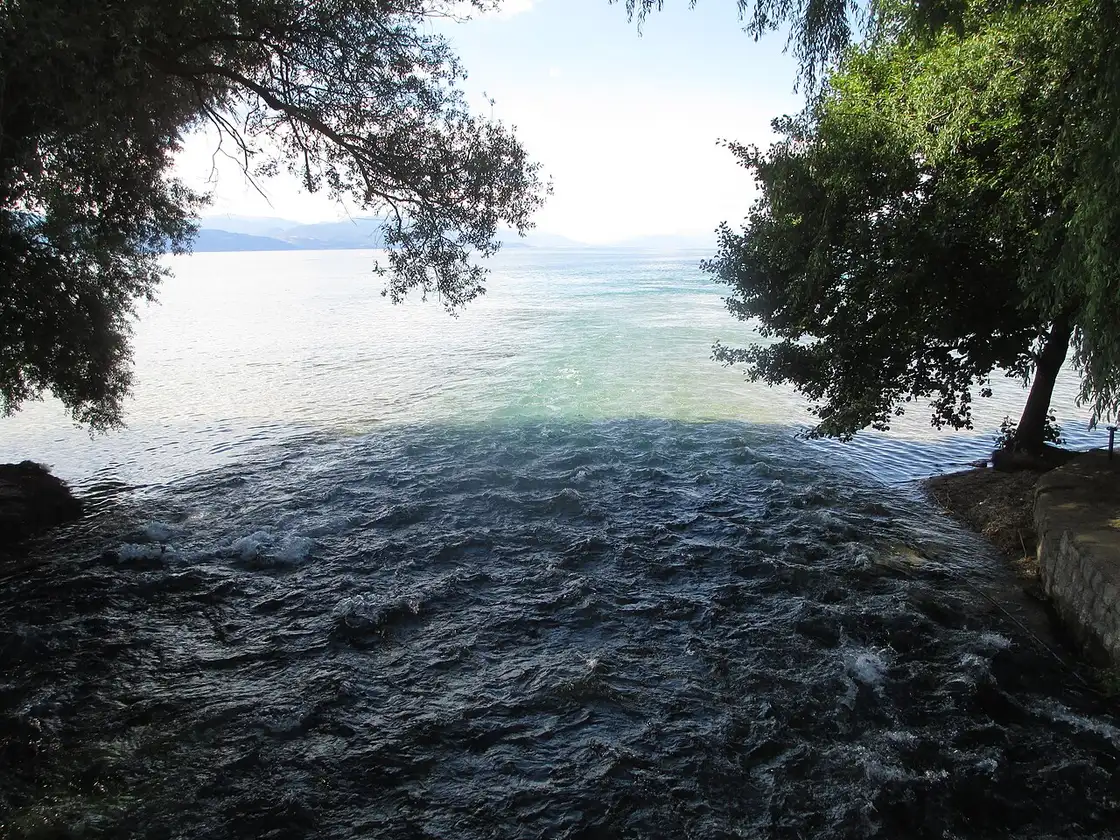
You can get out onto the pools in a small wooden rowing boat, a chun, usually with a boatman who paddles you slowly past the reed beds and over the clearest springs, where the sand on the bottom shivers as water forces up through it. It is a short, calm add-on, priced at a few euros and paid in cash on the spot, and it feels nothing like the big lake cruise: no engine, no timetable, just green water and reflections. Confirm the price before you step in, because it moves with the season.
How to get to Sveti Naum from Ohrid
Sveti Naum is 29 km south of Ohrid along the lake’s eastern shore, and you have four honest options.
| Option | The gist |
|---|---|
| Local bus | Runs from Ohrid bus station, and from street stops along Turistička, for 90 to 150 MKD one way depending on the source (there is no published tariff), about 1 hour. The catch is frequency: only a handful of departures a day, spaced a couple of hours apart, thinner still in winter. Check the board and note the last bus back. |
| Taxi | The flexible pick. On Ohrid’s municipal tariff (50 MKD to start plus 50 MKD per km since 6 May 2026) the 29 km meters at roughly 1,500 MKD, about EUR 24 one way; drivers normally agree a flat fare instead, and the figure travellers have long reported is around EUR 16 one way or EUR 32 return, which predates the rise. Many will wait for you or add a stop at the Bay of Bones. Agree the fare first. |
| Car | About 40 minutes on the shore road, with parking near the entrance; lets you fold in the Galicica viewpoints and the Ljubanista beaches. |
| Boat | The classic arrival is the all-day cruise from Ohrid harbour, covered in the Ohrid boat trip to Sveti Naum guide. |
If you’re choosing between them: take the bus if you’re counting denar and happy to plan around a sparse timetable; take a taxi or drive if you’re two or more people, want the Bay of Bones as well, or are travelling outside the summer boat season. Prices and times shift, so treat the figures above as a guide and confirm locally. Full timetables, fares and what happens if you keep going to the Albanian border are in our Ohrid to Sveti Naum guide.
Entrance, hours and what to bring
The grounds are free to walk into, and the monastery generally opens from around 8 in the morning until early evening, with longer hours in high summer and shorter, patchier ones in winter. The church interior is opened for a small fee or donation, and the springs rowing boat is a separate few-euro cash payment. None of these are fixed, published prices, so treat the numbers here as a guide and confirm on the day.
Bring cash in Macedonian denar. The boat, any church donation, the beach loungers and the restaurants are all easier in denar, and card acceptance out here’s not something to count on. Because this is a working monastery, cover your shoulders and knees for the church; beachwear is fine everywhere else on the headland but out of place inside.
How long to spend, and what to pair it with
A half day is the sweet spot, enough for the church, the springs, the peacocks, a swim and lunch without rushing. With a car, Sveti Naum slots into a bigger southern-shore day: the high mountain road through Galicica National Park drops you here with viewpoints over both Ohrid and Prespa on the way, and the Bay of Bones museum is a short stop back toward town. For ideas on stringing these together, see our roundups of things to do in Ohrid and the best day trips from Ohrid, or read up on the wider Lake Ohrid before you pick a base. Curious about the water on the far side of the mountain? That’s Lake Prespa.
Is Sveti Naum worth visiting?
Yes, and not only for the church. Sveti Naum works because it stacks a 1,100-year-old monastery, a genuinely odd set of springs, a swim and a good lunch onto one easy headland, in a setting right on the Albanian border that feels like the end of the lake and the end of the country. Come by bus or car for a calm half day, or arrive on the cruise and make a full one of it. Skip it only if you’re truly out of time in Ohrid, and even then you’ll probably wish you had gone.
Read also
- The classic way to arrive: Ohrid boat trip to Sveti Naum
- Every way to get here, and across: Ohrid to Sveti Naum and the Albanian border
- Base yourself first: things to do in Ohrid
- The lake in full: Lake Ohrid
- The mountain the springs cross: Galicica National Park
- The source lake over the ridge: Lake Prespa
- More ideas near your base: best day trips from Ohrid
Photos
On the map
The map loads on click - to keep the page lightweight.
The map didn’t load. Check your connection and refresh the page.
Admission and opening hours
- Admission price
- Grounds free to enter; the church interior is opened for a small fee or donation; the springs rowing boat is a separate few-euro cash payment. Checked 2026-07-18 - none are fixed published prices, confirm on site.
- Opening hours
- Grounds generally open daily from around 8:00 to early evening, longer in high summer and shorter in winter; church hours are shorter and seasonal.
Bus times, fares and boat prices change by season - confirm at Ohrid bus station and on site. Bring cash in denar.
Details checked: July 18, 2026
Distance
- Skopje ≈200 km · ~3-3.5 h by car, usually via Ohrid Most travellers base in Ohrid first, then day-trip south to St. Naum.
- Ohrid ≈29 km · ~40 min by car / ~1 h by local bus Buses are few per day and thin out in winter; check the last bus back.
- Bitola ≈95 km · ~1.5-2 h by car
Read also

What to see · 11 min read
Skopje Brutalist Architecture Walking Guide
Verified · September 3, 2026Walk Skopje's post-1963 concrete: Post Office, GTC, Tange's station and MoCA. Dates and architects from named sources.

What to see · 9 min read
Plaošnik & St Clement's: Ohrid's Sacred Hill
Updated · August 25, 2026Plaošnik in Ohrid: St Clement's church, early Christian mosaics and Slavic literacy's cradle - what to see, the walk up and looping Kaneo.

What to see · 9 min read
Skopje Museums: Archaeology to Mother Teresa
Updated · August 23, 2026Four Skopje museums worth an afternoon: archaeology, Mother Teresa, the Holocaust center and Macedonian Struggle - hours, tickets and how to visit.

What to see · 12 min read
Bigorski Monastery: The Carved Wonder of Western Macedonia
Updated · August 4, 2026Sveti Jovan Bigorski: the walnut iconostasis with 500+ carved figures, what the 2009 fire took, and how to get there from Skopje or Ohrid.