
Lake Prespa: Macedonia's Forgotten Great Lake
Lake Prespa, North Macedonia's quiet second lake: Golem Grad snake island, pelicans, empty beaches, and the karst link that feeds Lake Ohrid.
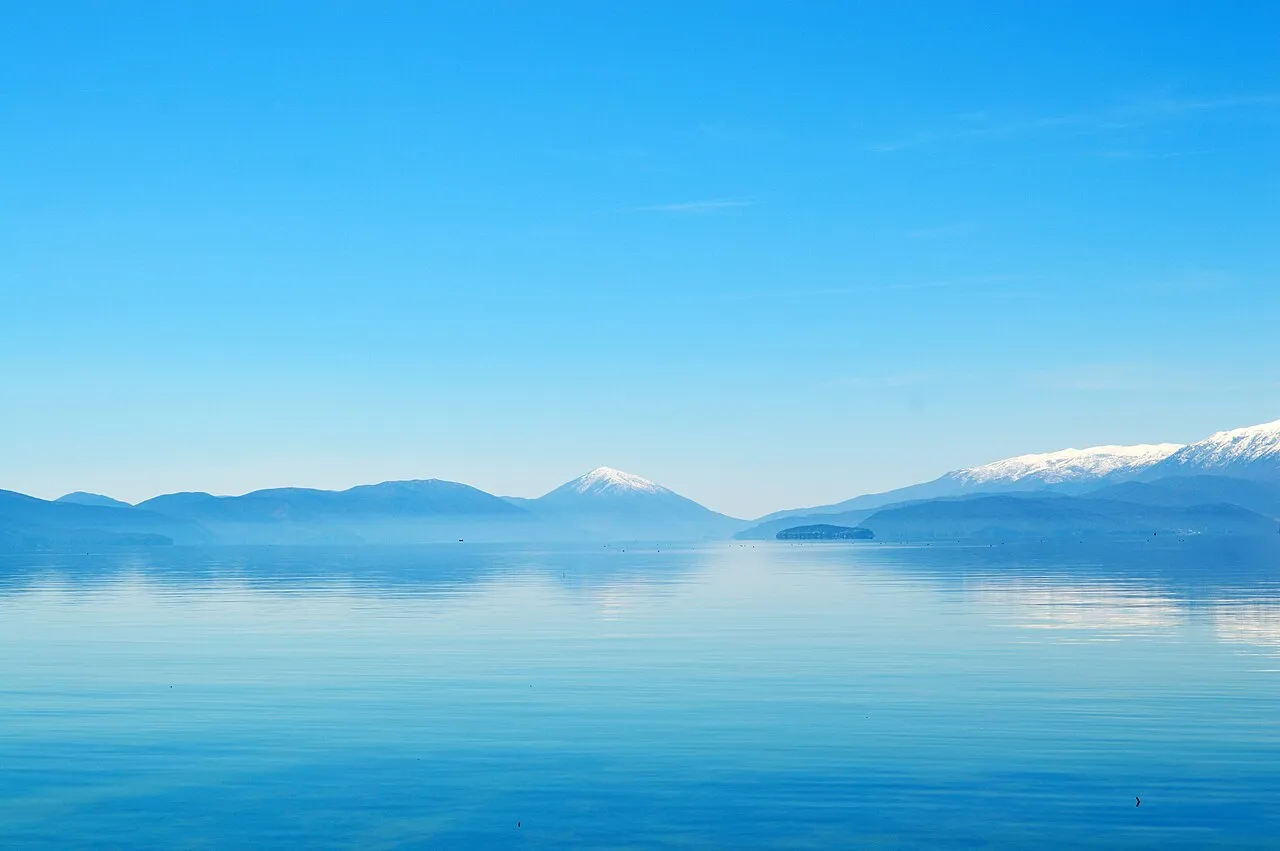
Lake Prespa is Ohrid’s forgotten twin - the second of North Macedonia’s two great southwestern lakes, hidden just over the mountain from its famous neighbour and visited by a tiny fraction of the crowds. It sits high, at 853 m, on the meeting point of three countries, and it has things Ohrid does not: North Macedonia’s only island, a snake island ringed with pelicans, warmer and shallower water, and long empty beaches. It also hides a genuinely strange secret - the lake has no river out of it, and its water vanishes underground to feed Lake Ohrid instead. This guide covers what to see, the boat trip to the island, the beaches, and how to get here.
Coming over the pass with a car, the southwest loop from Ohrid spends a night on this shore between Galicica and Bitola.
Where is Lake Prespa, and why so few people go
Prespa lies about 10 km east of Lake Ohrid, separated from it by the wall of the Galičica mountains, in the far southwest of the country. It’s really two lakes - Great Prespa, shared between North Macedonia, Albania and Greece, and the smaller Little Prespa mostly in Greece - and the exact point where the three borders meet lies out in the open water. Roughly two-thirds of Great Prespa is Macedonian, and the regional town, Resen, is the gateway.
The reason it feels forgotten is simple geography: Ohrid, with its UNESCO old town and airport, is right next door and soaks up almost every visitor, so Prespa stays quiet. That is exactly its appeal. Where Ohrid’s shore is built up and busy in July, Prespa’s villages are sleepy, its beaches often empty, and its prices lower. Come here for the calm, the birds and the swimming rather than the sights.
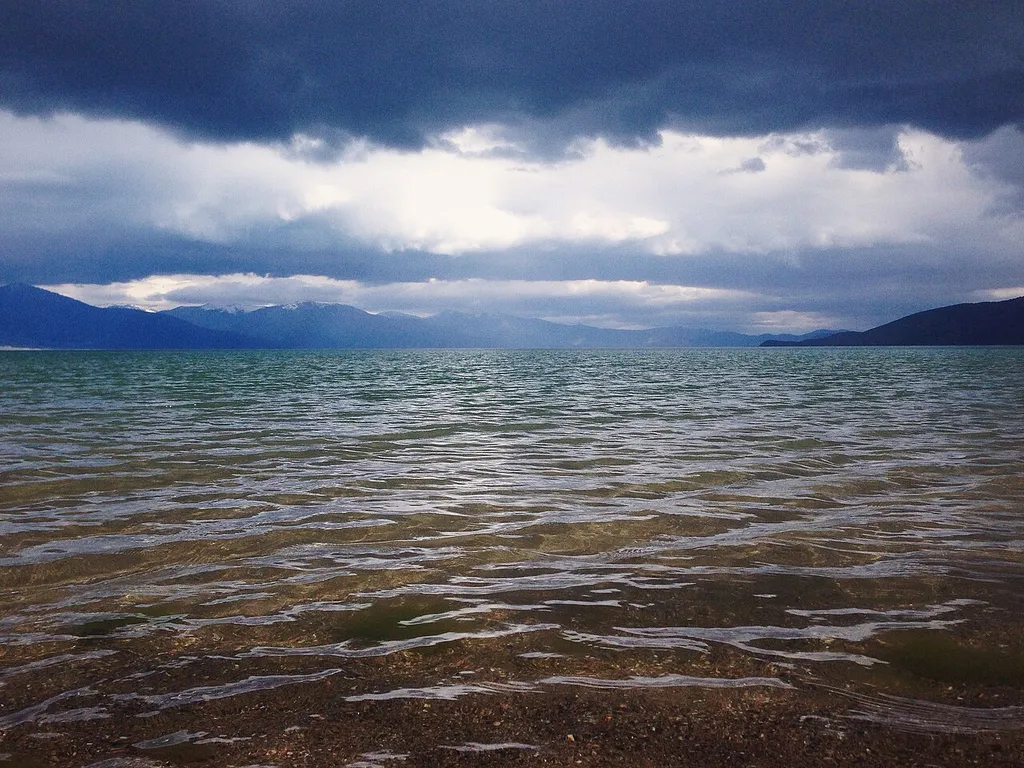
The lake that drains into another lake
Here’s Prespa’s best trick, and the thing to know before you stand on its shore. The lake sits about 150 m higher than Lake Ohrid, in limestone country, and it has no river flowing out of it. Instead, its water seeps down through underground channels in the karst beneath the Galičica massif, crosses inside the mountain, and re-emerges in the springs on the far side - most famously at Sveti Naum - which pour into Lake Ohrid. More than a fifth of Ohrid’s water arrives this way, filtered through the rock from Prespa.
It’s a rare bit of hydrology you can actually picture: two great lakes, one mountain between them, and a hidden river running through the stone. It also ties the two lakes’ fates together, which matters, because Prespa is in trouble - more on that below. For the lake it feeds, see our Lake Ohrid guide.
Golem Grad: Snake Island
The one unmissable thing on Prespa is Golem Grad, a rocky island a couple of kilometres offshore near the Greek and Albanian borders - the only island in North Macedonia. Its name means “Big City”, from the monastic and ancient settlement that once stood here, but everyone calls it Snake Island, and that needs a word of reassurance: the snakes are dice snakes, a harmless water species that basks on the rocks in numbers and will slip into the lake long before you reach them. Don’t let the nickname put you off - this is one of the most memorable half-days in the country.
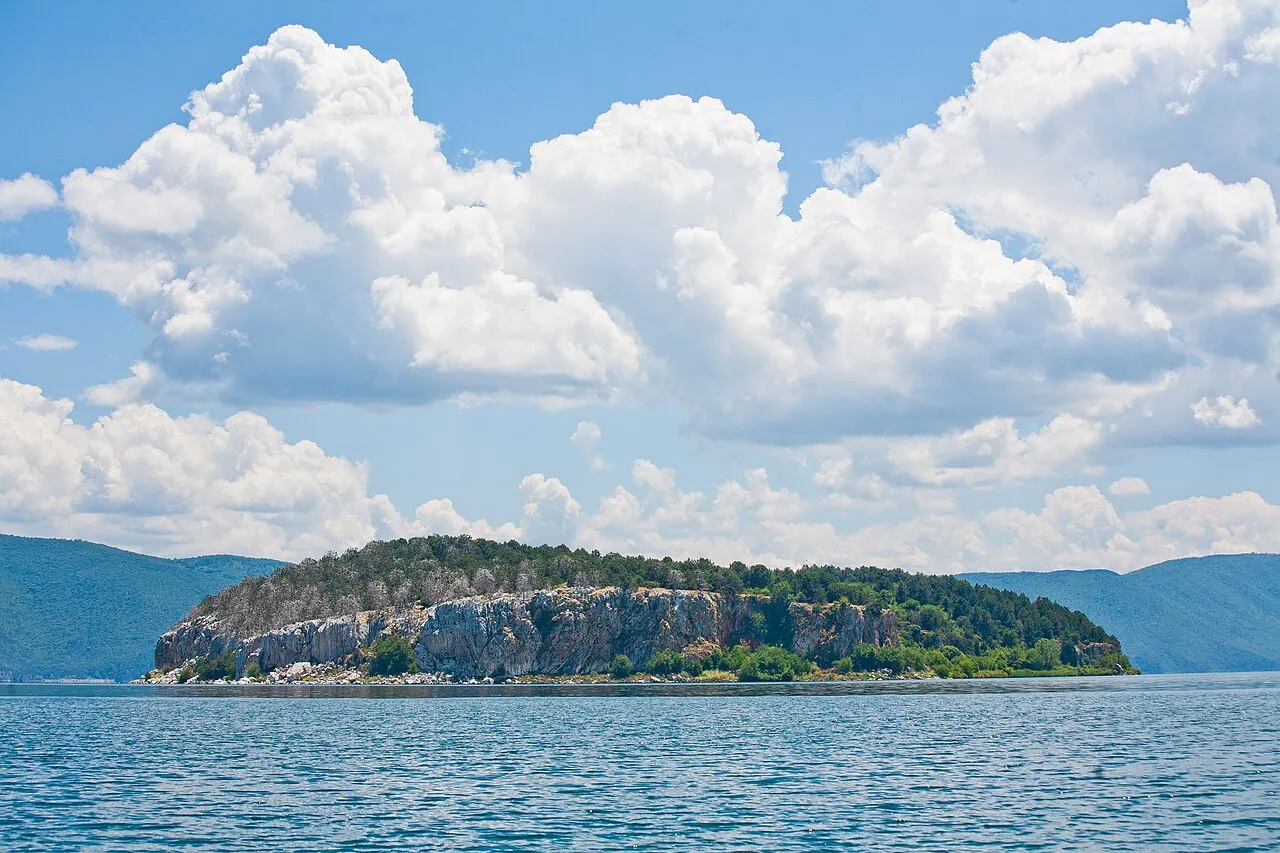
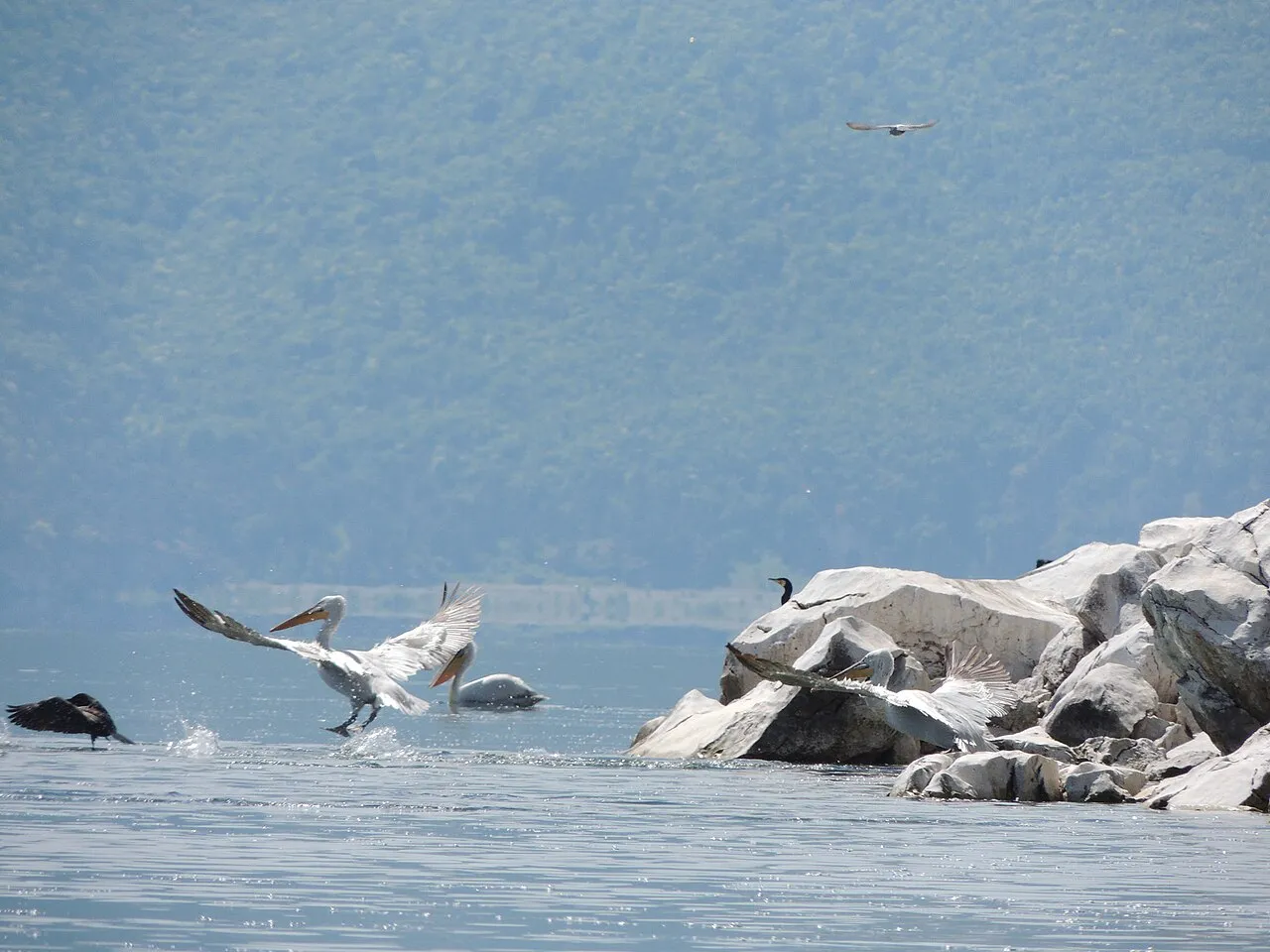
The approach is the magic of it. As the boat nears the cliffs, you pass Dalmatian and great white pelicans on the water and cormorants lined up on the rocks - Prespa is one of the last strongholds of the Dalmatian pelican in Europe, and the island is a breeding refuge. Golem Grad also shelters around a thousand Hermann’s tortoises in the undergrowth, so the “Snake Island” tag undersells the wildlife considerably.
Once ashore, a marked path loops the island past its ruins, because Golem Grad was inhabited for centuries. You can find the little 14th-century Church of St Peter, still holding fragments of fresco, the foundations of early-Christian basilicas from the 5th and 6th centuries, and, right by the water, the walls of a 4th-century Roman cistern. Monks lived here until the mid-20th century; the island has been uninhabited and open to visitors since 2008. Bring water and sun cover - there’s no shop, no café, nothing but rock, woodland and old stones.
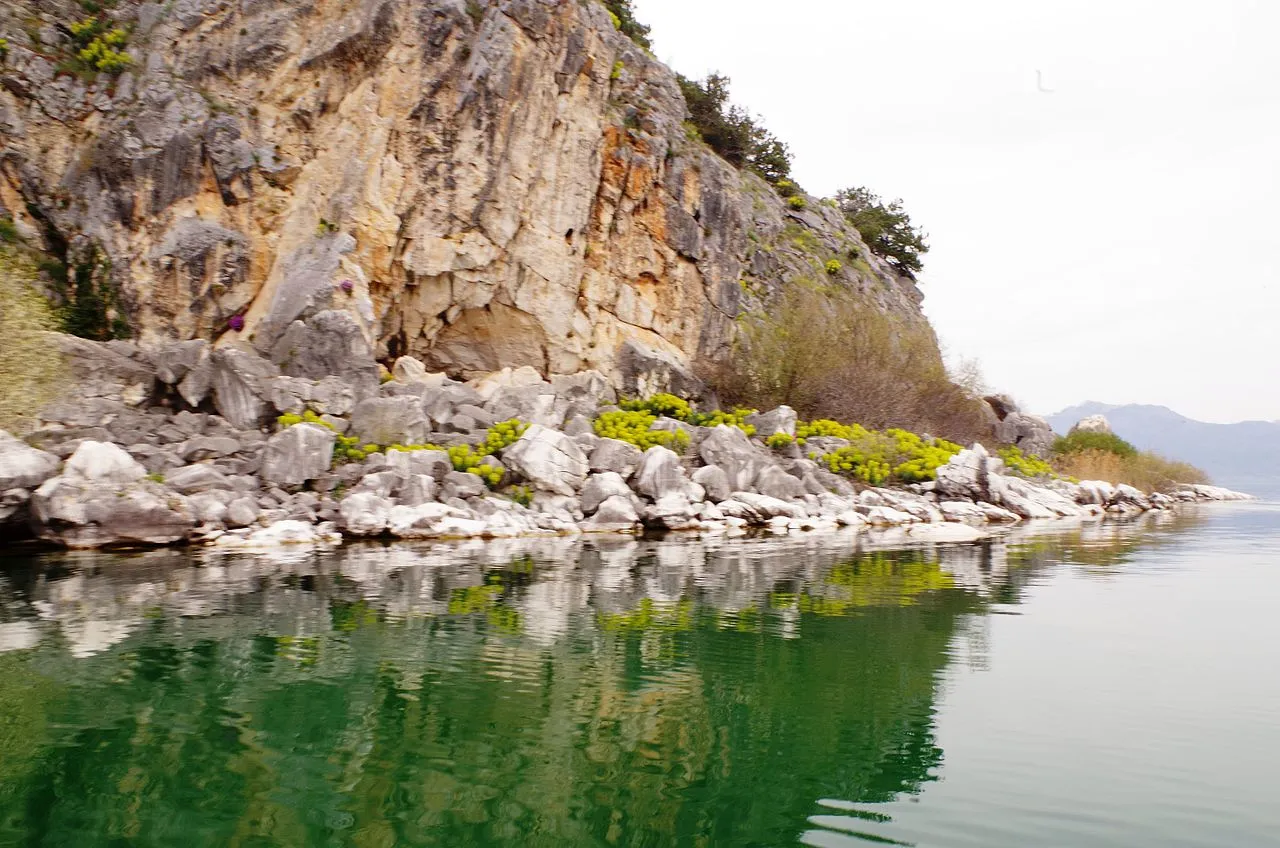
Boats out to Golem Grad are arranged from the lakeside villages of Stenje or Konjsko - there’s no scheduled service, so you hire a local boat, agree a price and a pick-up time, and go. Ask at your guesthouse or in the village; a tour from Ohrid can also set the whole thing up for you.
Beaches, birds and apple country
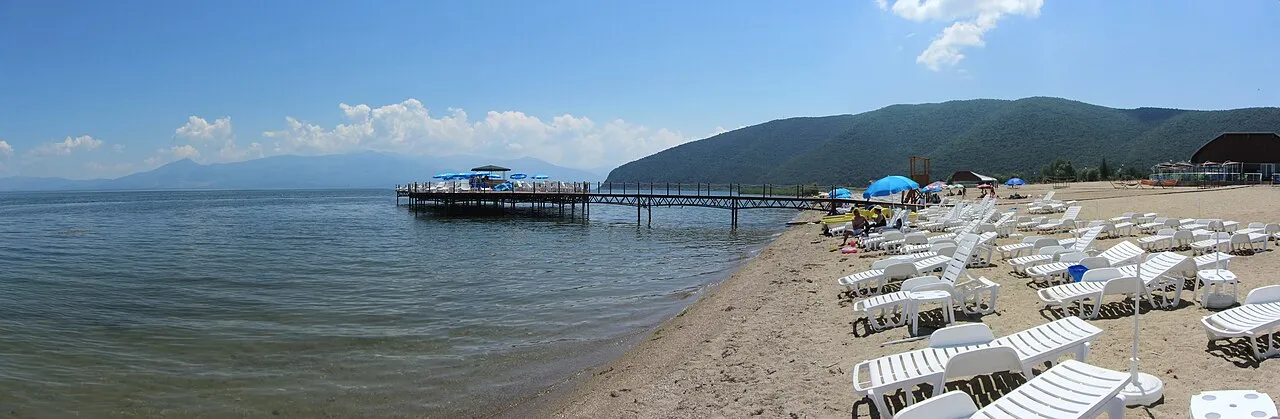
Back on the mainland, Prespa is a swimming lake. Because it’s shallower than Ohrid, the water warms up more in summer - around 24 to 28°C - so it’s the friendlier of the two for a long float, and the beaches are a world away from Ohrid’s busy promenade. Stenje in the northwest has a good sandy beach and is the main base for the island and for birdwatching; Oteševo and Pretor are the old resort beaches, faded but pleasant and cheap; Krani is quieter still.
The north shore, near Resen, holds the Ezerani Nature Reserve, a protected wetland on the Ramsar list where something like a hundred bird species gather - pelicans, cormorants, herons and more - making it a fine spot for a quiet morning with binoculars. And the whole Resen basin around the lake is North Macedonia’s apple country: the orchards run for miles, and in autumn the roadsides fill with crates of fruit. It’s a different, farmed, lived-in landscape from the resort strip of Ohrid.
The disappearing water
One honest note before you plan a trip. Great Prespa is shrinking. Over recent decades its level has dropped markedly - a mix of a warming climate, water drawn off for irrigating those apple orchards, and the natural leak through the karst - and the retreating shoreline is visible in places, with jetties left standing above dry ground. Conservation efforts run across all three countries, but it is a real and worsening problem, and part of why the lake feels so empty. Go, enjoy it gently, and know that this is a fragile place.
How to get to Lake Prespa
Prespa is genuinely off the public-transport map, so a car is close to essential.
From Ohrid. You have two choices for the roughly 50 km. The quicker, all-weather route loops north via Resen; the prettier one climbs over the Galičica mountain road, the panoramic pass between the two lakes, which is glorious in summer but best avoided in bad weather or winter. Either way, reckon on 1 to 1.5 hours. Many visitors do Prespa as a day trip from Ohrid, driving over for a swim and heading back for the evening - the lake villages have little in the way of restaurants, so plan to eat back in Ohrid or in Resen.
From Bitola. It’s about 50 km west via Resen, roughly an hour, which makes Prespa an easy pairing with Bitola and Pelister National Park on the range that rises between them.
From Skopje. Around 200 km and about 3 hours, via Bitola or Ohrid; this is a lake to fold into a wider southwestern loop rather than a day trip from the capital.
| Route | Distance | Time |
|---|---|---|
| Ohrid → Prespa (Stenje) | ~50 km | ~1-1.5 h via Resen or Galičica |
| Bitola → Prespa | ~50 km | ~1 h via Resen |
| Skopje → Prespa | ~200 km | ~3 h |
Distances and times are approximate, and the Galičica road is seasonal - check conditions before you rely on it.
When to go and practical notes
- Summer (May-September) is the season - warm enough to swim, and the only time the boats to Golem Grad run reliably. July and August are the warmest; June and September are sleepier.
- Spring and autumn are best for the birds and the apple harvest, but too cool for swimming.
- Come by car, bring cash, and arrange the island boat locally at Stenje or Konjsko.
- Money: prices are in Macedonian denar (MKD), steady against the euro at roughly 61.5 to €1, and Prespa is cheaper than Ohrid across the board.
- Visas: US, UK, EU and Ukrainian citizens travel visa-free for 90 days in any 180; Russian citizens need a visa (since 21 March 2022). Rules change - confirm with an official source. More in our planning hub.
For where Prespa fits in a longer trip, our 7-day North Macedonia route links the southwest with Skopje, and the best time to visit guide sets out the seasons.
Read also
- Browse all attractions in North Macedonia
- Its famous neighbour over the mountain: Lake Ohrid
- The mountain park that divides the two lakes: Galičica National Park
- What to do on the Ohrid side: things to do in Ohrid
- Day trips including Prespa and Galičica: day trips from Ohrid
- Another high, quiet corner of Pelagonia: Kruševo travel guide
On the map
The map loads on click - to keep the page lightweight.
The map didn’t load. Check your connection and refresh the page.
Admission and opening hours
- Admission price
- Free to visit the shore and villages. A boat out to Golem Grad and a national-park guide are paid separately.
No public transport to the lake villages or the island - come by car, and arrange a Golem Grad boat at Stenje or Konjsko. Best May-September.
Details checked: July 13, 2026
Distance
- Skopje ≈200 km · ~3 h by car via Bitola
- Ohrid ≈50 km · ~1-1.5 h via Resen or the Galičica road
- Bitola ≈50 km · ~1 h via Resen
Read also

What to see · 11 min read
Skopje Brutalist Architecture Walking Guide
Verified · September 3, 2026Walk Skopje's post-1963 concrete: Post Office, GTC, Tange's station and MoCA. Dates and architects from named sources.

What to see · 9 min read
Plaošnik & St Clement's: Ohrid's Sacred Hill
Updated · August 25, 2026Plaošnik in Ohrid: St Clement's church, early Christian mosaics and Slavic literacy's cradle - what to see, the walk up and looping Kaneo.

What to see · 9 min read
Skopje Museums: Archaeology to Mother Teresa
Updated · August 23, 2026Four Skopje museums worth an afternoon: archaeology, Mother Teresa, the Holocaust center and Macedonian Struggle - hours, tickets and how to visit.

What to see · 12 min read
Bigorski Monastery: The Carved Wonder of Western Macedonia
Updated · August 4, 2026Sveti Jovan Bigorski: the walnut iconostasis with 500+ carved figures, what the 2009 fire took, and how to get there from Skopje or Ohrid.