
Ajvar: North Macedonia's Red Pepper Obsession
Ajvar explained: the autumn pepper-roasting ritual, how it differs from pindjur and malidzano, what a jar costs in Skopje and how to fly home with one.
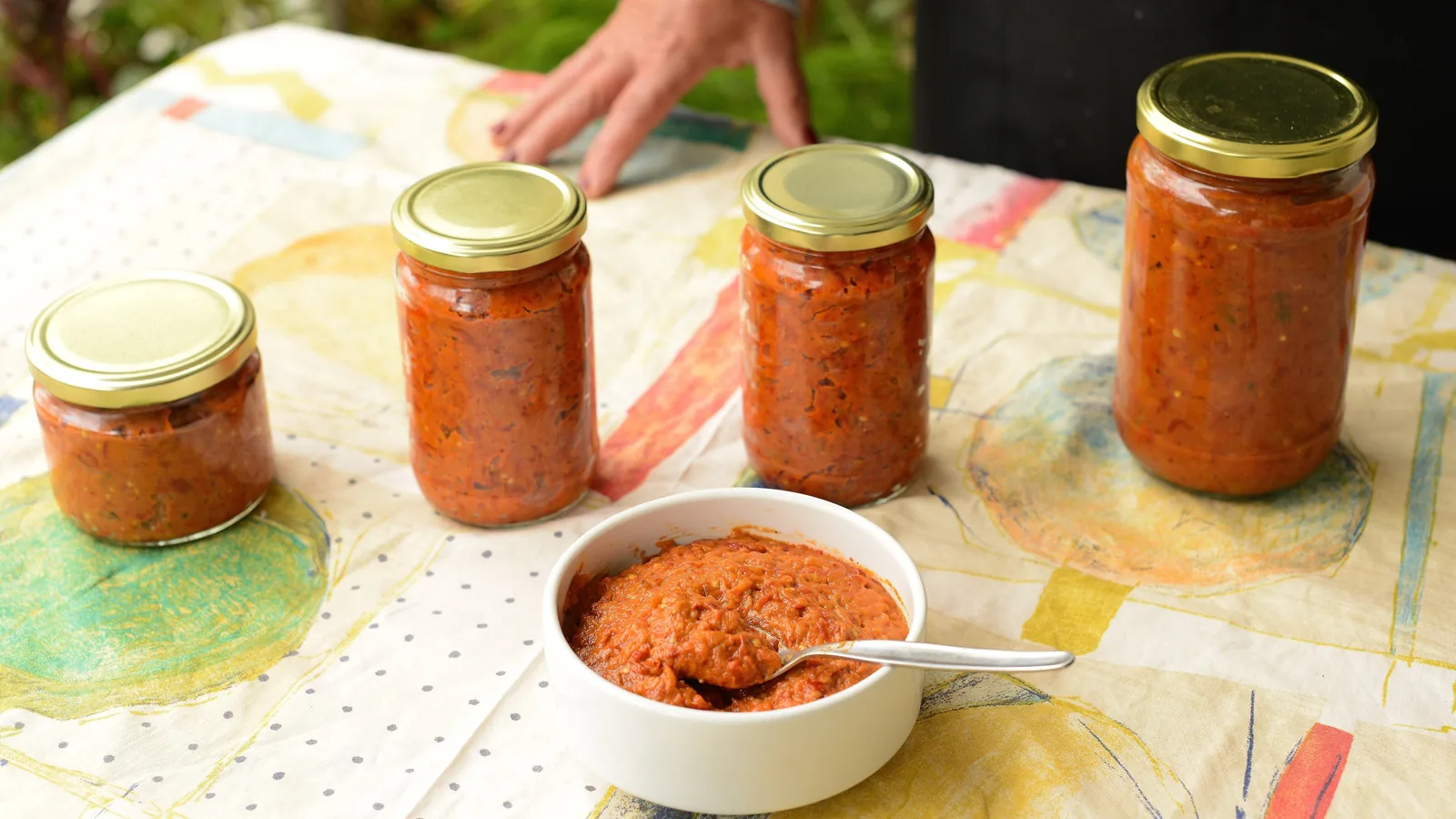
Ajvar is a spread of roasted red peppers, peeled, minced and cooked down slowly with sunflower oil and salt, and in North Macedonia it’s less a condiment than a yearly household project. From the end of summer to the middle of autumn, families roast peppers by the crate and seal enough jars to last the winter. In May 2026 the state’s Cultural Heritage Protection Office entered that ritual in the national register of cultural heritage, so the smoke drifting off balconies in October now has an official file behind it.
The good news for a visitor is the price: a shop jar runs from about 179 to 460 denars (roughly €2.90 to €7.50) in Skopje, which makes it an easy souvenir to pick up. Getting it home takes a little thought. A sealed jar is welcome at UK customs, but the white cheese you’ve been eating it with all week isn’t allowed into the UK or the EU, and the jar itself won’t get through a standard security lane in your hand luggage.
A spread named after caviar
The word gives away a story that starts outside Macedonia. Ajvar comes from the Turkish havyar, salted roe or caviar, and the usual account traces the pepper version to Belgrade restaurants: when domestic caviar production faltered in the 1890s, they served a red pepper salad as “red ajvar” in its place. The name was a stand-in for luxury long before it meant a jar on a farmhouse shelf.
Most of the Balkans makes some version, from Croatia down to Albania. North Macedonia’s claim rests on a register rather than on who cooked it first. “Makedonski ajvar” was recorded in WIPO’s Lisbon register of appellations of origin as international registration No. 894, announced in January 2011. Serbia followed in April 2012 with Leskovački domaći ajvar, homemade ajvar from the town of Leskovac. Both protect a name tied to a place, and neither settles the argument about whose grandmother got there first, which you’ll hear at more than one Balkan dinner table.
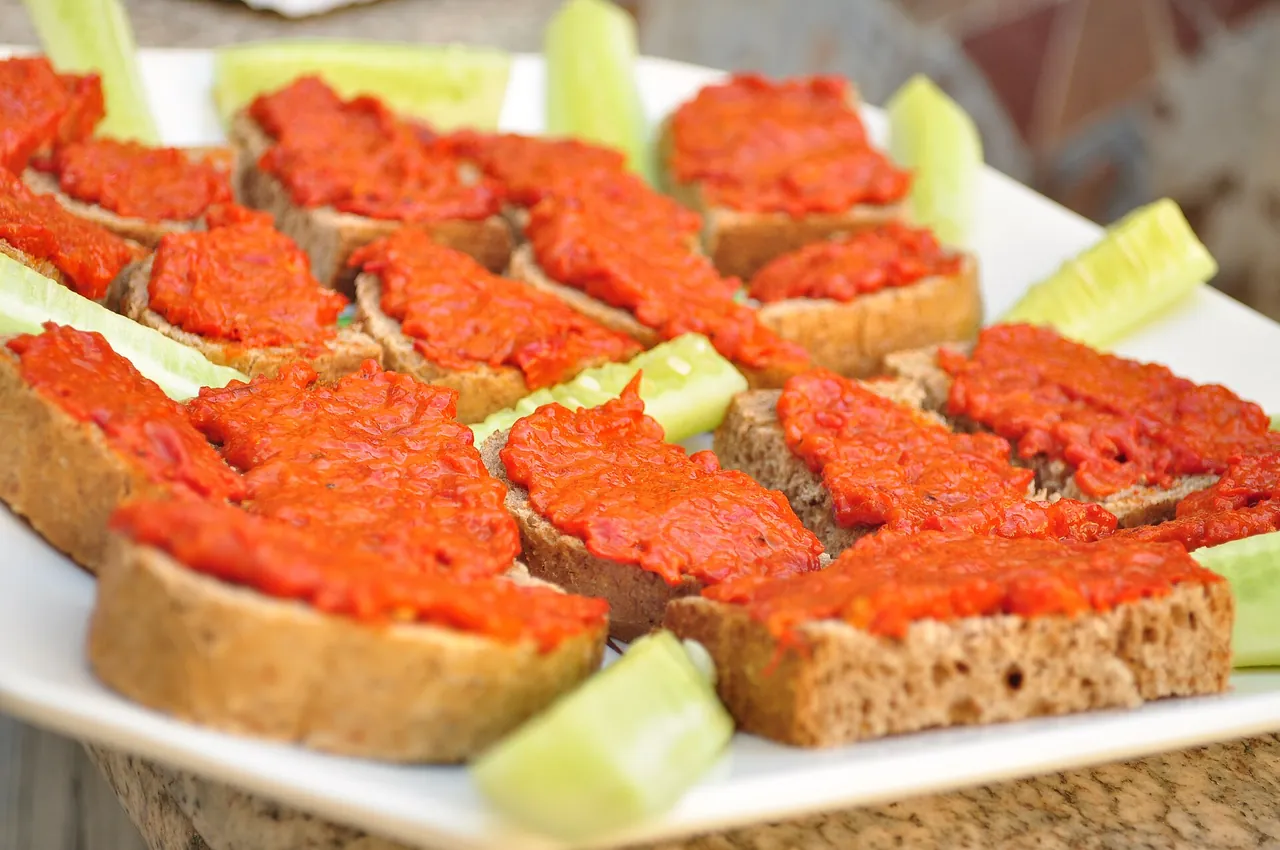
The 2026 heritage listing protects something else: the work, not the product. The Cultural Heritage Protection Office describes ajvar-making as a multi-day family season that runs from late summer to mid-autumn and belongs to the diet of every ethnic community in the country. Recipes travel by word of mouth inside families, and the listing names five styles in one breath: mild, hot, chopped, red and even green.
The pepper, and what a kilo fetches
It starts with the pepper itself. The heritage file names two varieties, Ajvarka and Kurtovska kapija, both grown in the south of the country, and in the Strumica valley in the southeast, the price of Ajvarka turned into a fight in the summer of 2026.
In early August 2026, Strumica’s growers blocked roads over the 25 denars a kilo that buyers were offering, saying it didn’t cover their costs. After a meeting in Strumica brokered by the Ministry of Agriculture, growers, buyers and processors agreed new prices from 12 August: 40 denars a kilo for first-class Ajvarka, 30 for mixed first-and-second class and for peppers bound for industrial processing, and 15 for rejects. By 25 August growers were out again, saying some buyers had slipped back to 25. Forty denars comes to about €0.65 for a kilo of raw peppers, before anyone has lit a fire under them.
Roasting, peeling, waiting
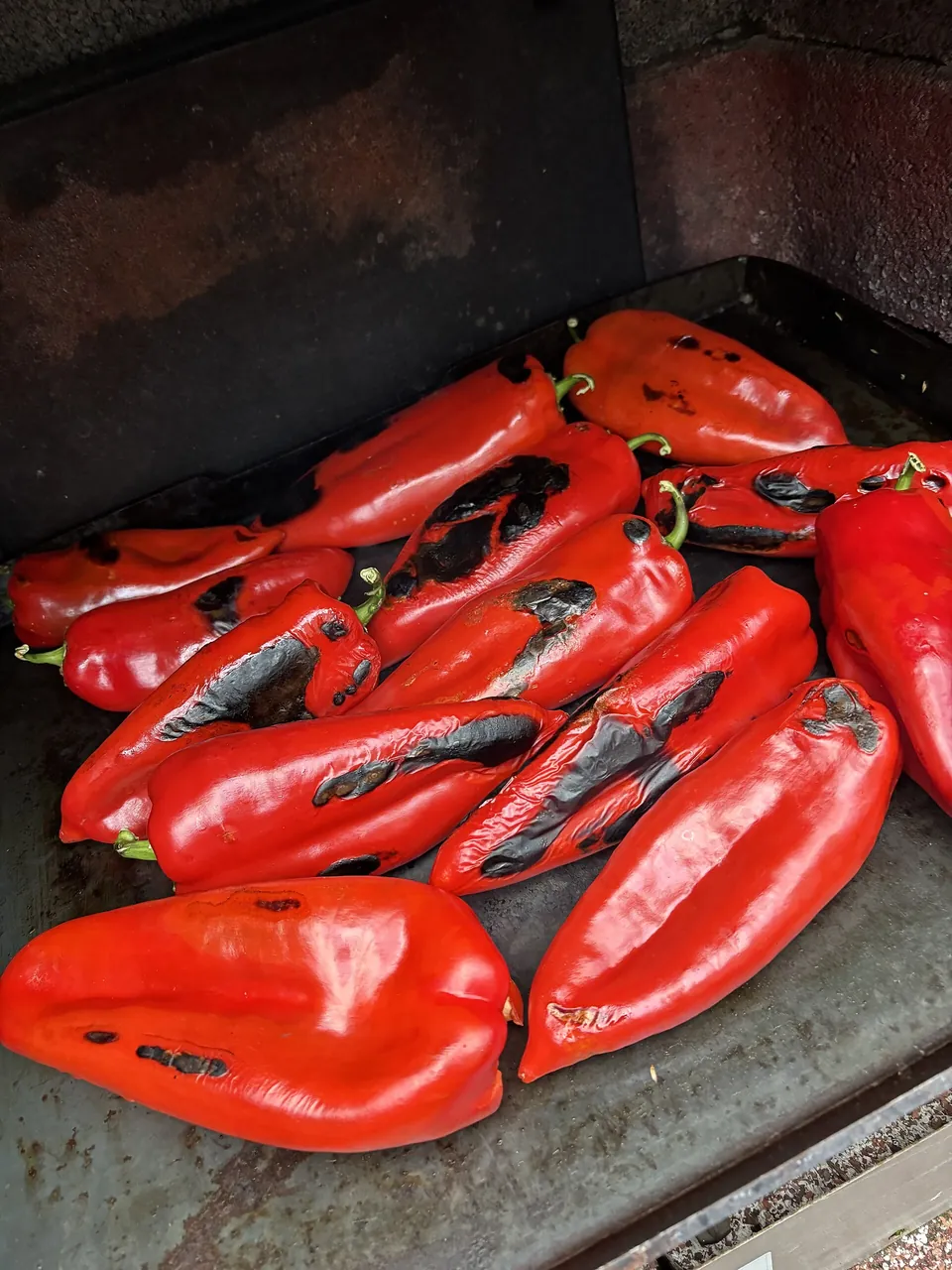
Homemade ajvar is mostly labour. The peppers are roasted whole over a fire, on a stovetop plate or in the oven, then left to cool so the skin lifts away. Peeling and seeding them by hand is the job everybody complains about. The flesh is ground or chopped, stewed for hours in wide pots with sunflower oil to drive off the water, salted at the end and poured hot into sterilised jars.
That roasting and long stewing is what separates a good jar from a flat one. Some industrial producers skip the fire and simply cook fresh minced peppers in oil, a shortcut that gives a lower-quality spread, which is worth knowing when you taste a homemade batch next to a shop jar.
Ajvarijada: a village festival near Strumica
If your trip falls in late September, Bosilovo is worth the detour. It’s a village about 8 km east of Strumica, roughly ten minutes by car, and on 27 September 2026 it held its fifth Ajvarijada. Local women cooked around 400 kg of ajvar on open stoves, and visitors ate it hot with homemade cheese on the sports ground of the Goce Delčev school, between stalls of lutenica, malidzano, pork crackling (čvarki), pottery and honey, with folk singers on the programme.
Watch the Municipality of Bosilovo and Macedonian news in September for the 2027 date before you plan around it. Strumica makes the obvious base, with its hilltop fortress and a famous pre-Lent carnival; our guide to Strumica covers the town and how long to give it.
Telling the cousins apart
Ajvar rarely turns up alone on a meze plate, and the red spreads around it aren’t interchangeable, even if the menu translation makes them sound it.
| Spread | What goes in | How it eats |
|---|---|---|
| Ajvar | Roasted red peppers, sunflower oil, salt; some recipes add aubergine | Smooth or finely chopped, mild to hot |
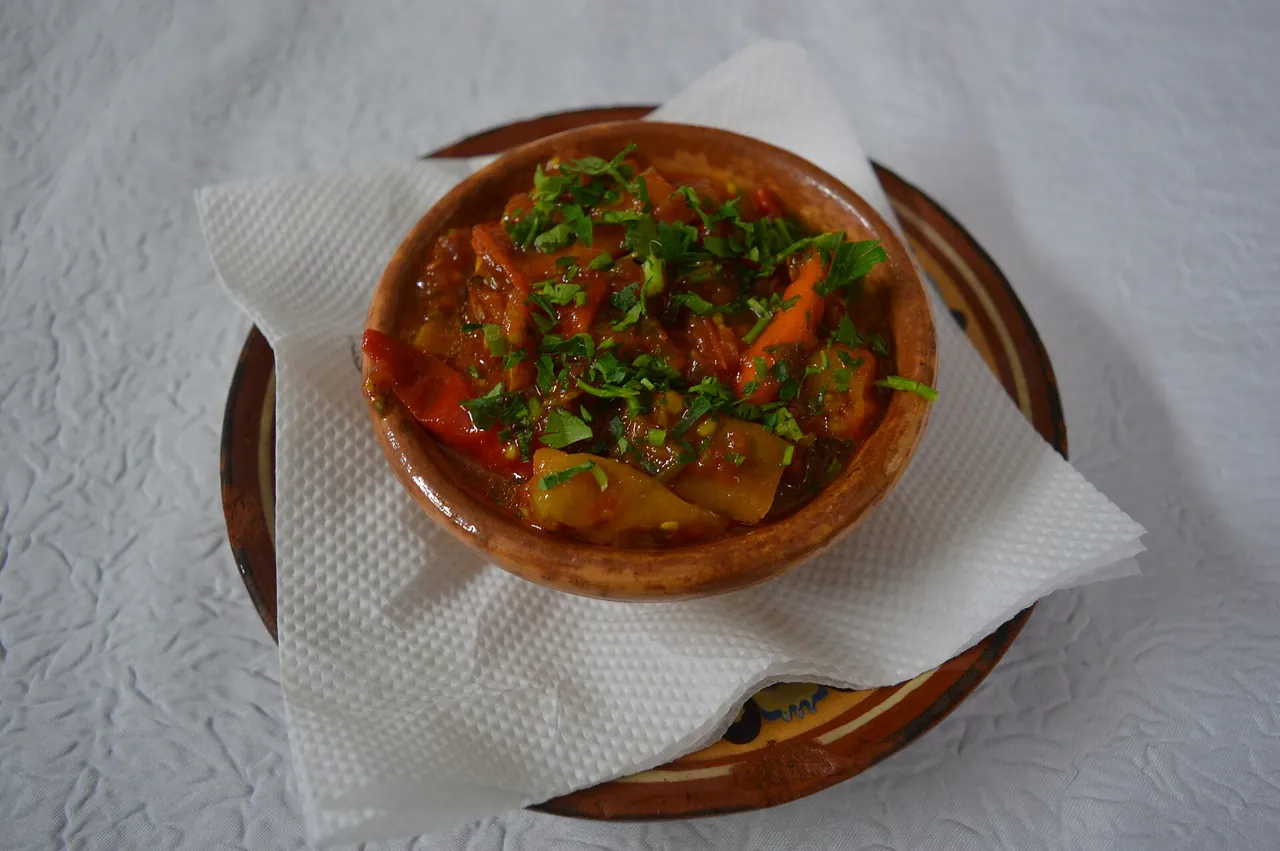
| Pindjur | Roasted peppers with tomato and garlic, often aubergine | Chunkier, fresher, more like a cooked salsa |
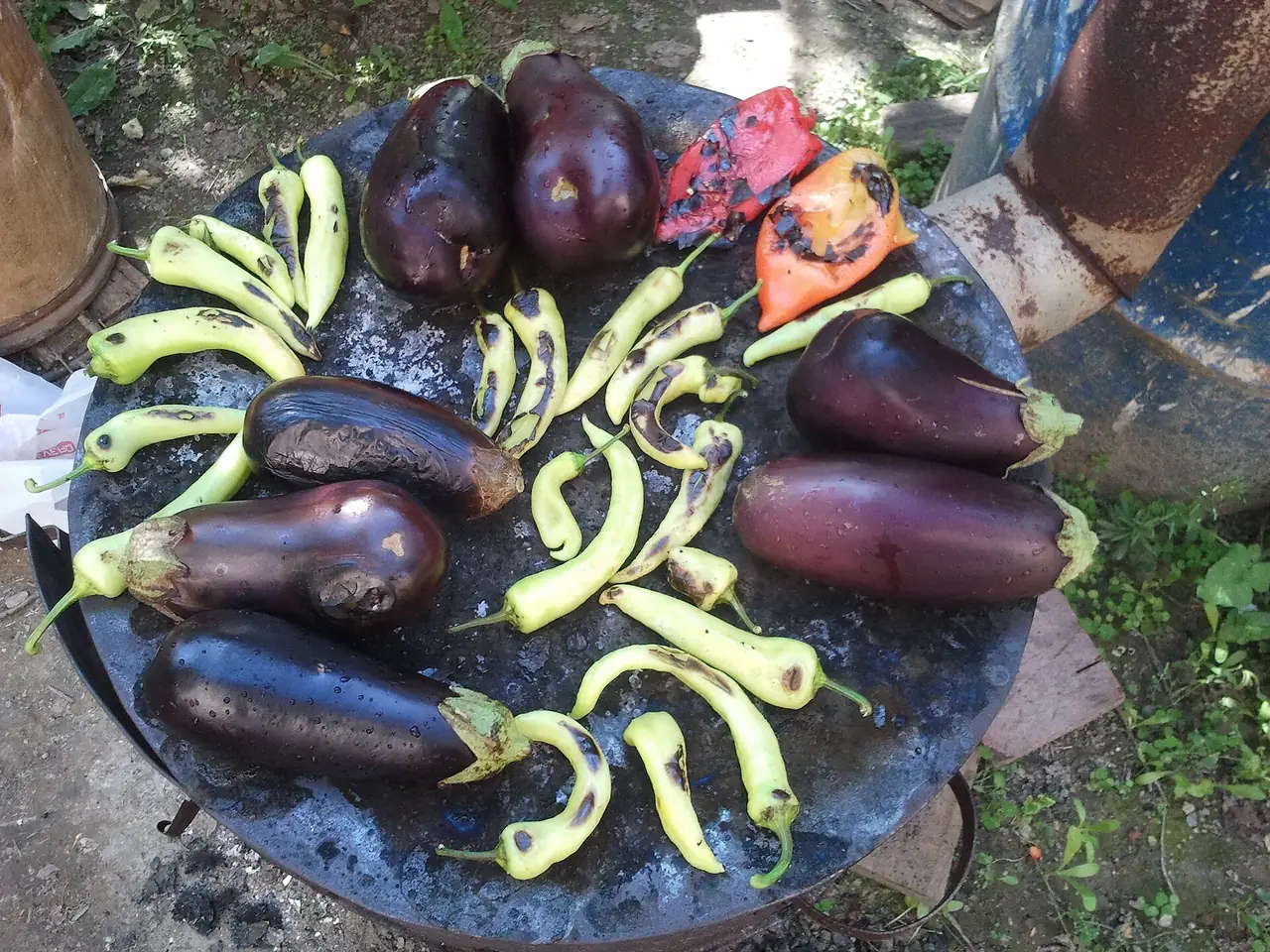
| Malidzano | Peppers and aubergine puréed with oil and salt, sometimes mustard | Paler and creamier, the aubergine leads |
| Lutenica | Peppers and tomato, sometimes aubergine, carrot or garlic | The name means “spicy”, and it often is |
Malidzano’s name comes from the Italian melanzane, aubergine, and it’s served the same way as ajvar, with bread and a slab of white cheese. Pindjur is the one people mix up: in some regions the two words are used for the same thing, so if you order ajvar and get something chunky with visible tomato, you haven’t been tricked. You’ve just been given the neighbour’s recipe.
On the table
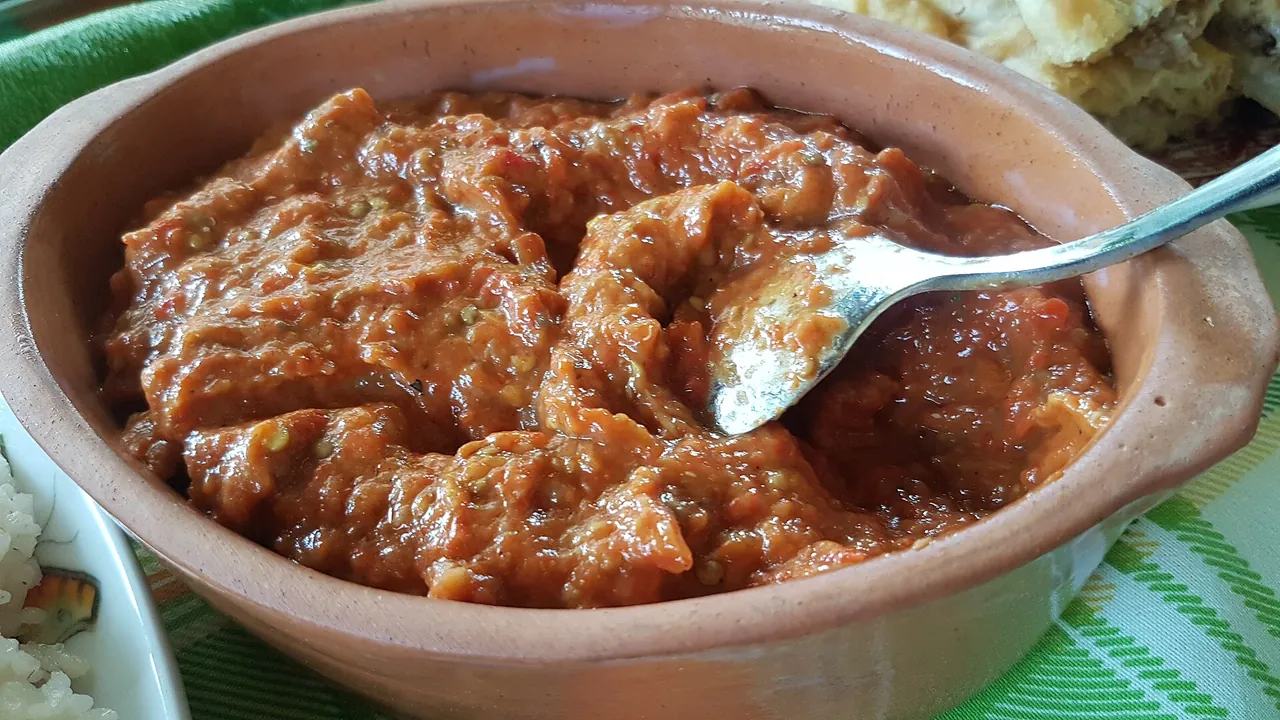
In a kafana, ajvar comes with the first round of small plates: a bowl of it, white cheese (sirenje), bread, maybe roasted peppers or a cured sausage. It turns up again beside grilled meat, and at breakfast it goes straight onto bread. It isn’t a dip to be finished politely: you spread it, scoop it and mop it up.
Two words help. Shop jars are labelled blag (mild) or lut (hot), in Cyrillic, and a homemade batch can go either way, so taste before you pile it on. For everything else on that menu, see what to eat in North Macedonia; for how a kafana table works and where the grill fits in, our guide to Macedonian food goes further, and where to eat in Skopje names places in the capital.
Buying a jar
Supermarkets stock a whole shelf of it, and two Skopje online grocers give a fair idea of the range. On 3 October 2026, their regular prices were:
- Vori, 580 g: 179 denars (159 on offer) at marketonline.mk
- Hans, 550 g: 229 denars at marketonline.mk
- Green Deli, 580 g: 319 denars at marketonline.mk
- MAMA’S, 550 g: 460 denars (349 on offer) at ananas.mk
So a regular-price jar costs about €2.90 to €7.50, which is roughly $3.30 to $8.40 or £2.50 to £6.40. Offers come and go weekly, so treat those as a range rather than a promise.
Homemade is a seasonal hunt. In late September the green markets sell Ajvarka by the kilo to households making their own: at Skopje’s Gjorče Petrov market, first-class peppers went for 80 denars a kilo in late September 2025, according to the farming programme Klasje. The finished jars are made, in the heritage file’s words, in quantities enough for each family, so the easiest way to taste one is to be at a table where it’s served. If you’re staying in a family guesthouse in autumn, asking whether they’ve made ajvar this year is a fair question.
Getting a jar home
Security first. Skopje International Airport runs two kinds of screening. On its CT lanes, liquids can stay in your bag in containers of up to 2 litres each, with no total limit. On standard lanes, the familiar rule applies: containers of 100 ml at most, in one transparent resealable bag of up to 1 litre. The airport only says passengers will be told which screening applies, so a 550 g jar belongs in your checked bag. The UK government’s hand-luggage rules list “semi-liquid foods, for example soup, jam, honey” among liquids, and ajvar is a lot closer to jam than to a sandwich. Wrap it in clothes inside a zip bag: a cracked jar of red oil is a suitcase you’ll be throwing away.
Customs second. For Great Britain, processed and packaged plant products are on the list of foods you may bring from any country without restriction, and a sealed jar of ajvar fits that description. Meat and milk products are a different story: the UK bans them from countries outside the EU and a handful of neighbours, and the EU allows no meat or dairy at all from a non-EU country. North Macedonia isn’t in the EU, so the sirenje and the dried sausage stay behind. Eat them before you leave, and fly home with the ajvar.
Heading to North America or Australia instead, declare the jar and let the officer decide. The US Department of Agriculture lets travellers bring in commercially canned vegetables as long as they’re declared on the customs form, but home-canned products aren’t allowed entry, so the guesthouse’s own batch stays behind. Canada’s food inspection agency lists canned and other processed vegetables with no restriction up to 20 kg, on condition that you declare all food you carry, and Australia’s border force wants food declared on the Incoming Passenger Card, where a biosecurity officer may ask to inspect it. That’s how the three governments’ pages read in October 2026, so look again if your flight is months away.
Read also
- Browse everything in food and drink in North Macedonia
- The bottle to pour with it: Macedonian wine
- Ajvar’s home valley: things to do in Strumica
- Packing for an autumn trip: North Macedonia weather by month
Read also

Food · 8 min read
Where to Eat in Ohrid: Best Restaurants & Lakeside Dining
Updated · July 13, 2026Where to eat in Ohrid: the best lakeside fish restaurants at Kaneo, traditional kitchens in the old town, the trout to order, and what it costs.

Food · 8 min read
Macedonian Wine: A Guide to Grapes and Regions
Updated · July 12, 2026A guide to Macedonian wine: Vranec, Temjanika and Stanušina grapes, the three wine regions, how to read a label and what a bottle costs.

Food · 9 min read
Tikveš Winery & Wine Region: Tours, Tastings, from Skopje
Updated · September 12, 2026Tikveš Winery (founded 1885), Stobi by the Roman ruins, Popova Kula with rooms: which wineries take visitors, what tastings cost, 1-1.5 h from Skopje.

Food · 8 min read
Best Restaurants in Skopje: Old Bazaar, Debar Maalo, Kafanas
Updated · October 3, 2026Where to eat in Skopje by district: kebapi at Destan (grilling since 1913) and burek in the Old Bazaar, kafana dinners with live music in Debar Maalo.