
Pastrmajlija: The Štip Meat Pie and How to Order It
Pastrmajlija is an oval bread pie topped with diced meat and often an egg: where it comes from, how to order one and how to tell a fresh one.
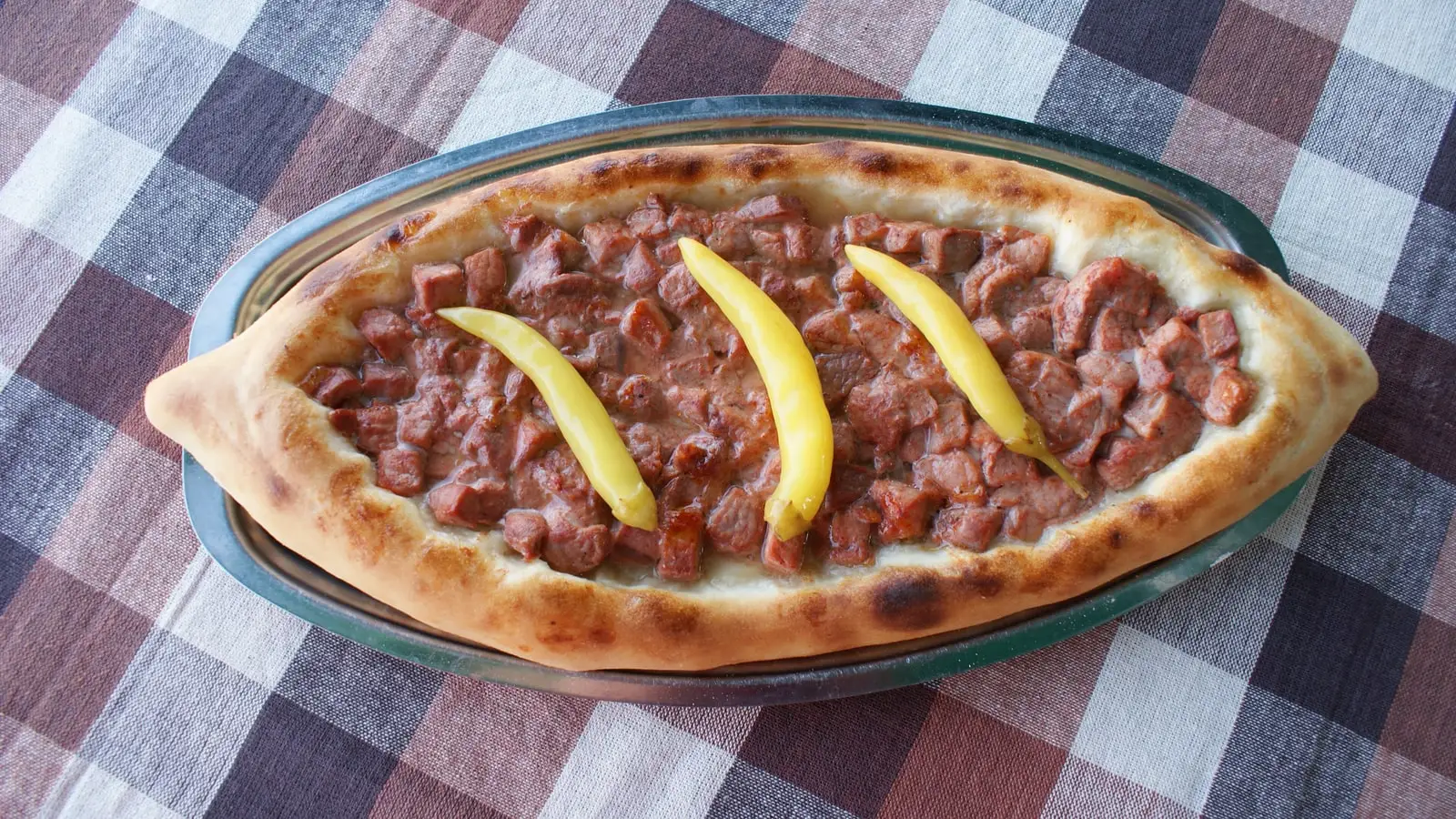
Pastrmajlija is an oval bread pie topped with diced meat, usually baked with cheese and often finished with an egg. It belongs to the east of North Macedonia, with Štip as its best-known home, but it turns up on bakery counters and kafana menus across the country. Eat it hot, from the oven: it works as a meal at the table or as a takeaway.
Menus spell it two ways, which matters when you search. Pastrmajlija and pastrmalija are the same dish. Wikipedia gives both spellings, and the Macedonian digital dictionary it cites uses the second. If you’re searching a map or a delivery app, try both, and the Cyrillic Пастрмајлија as well.
Dough, meat, cheese and the egg
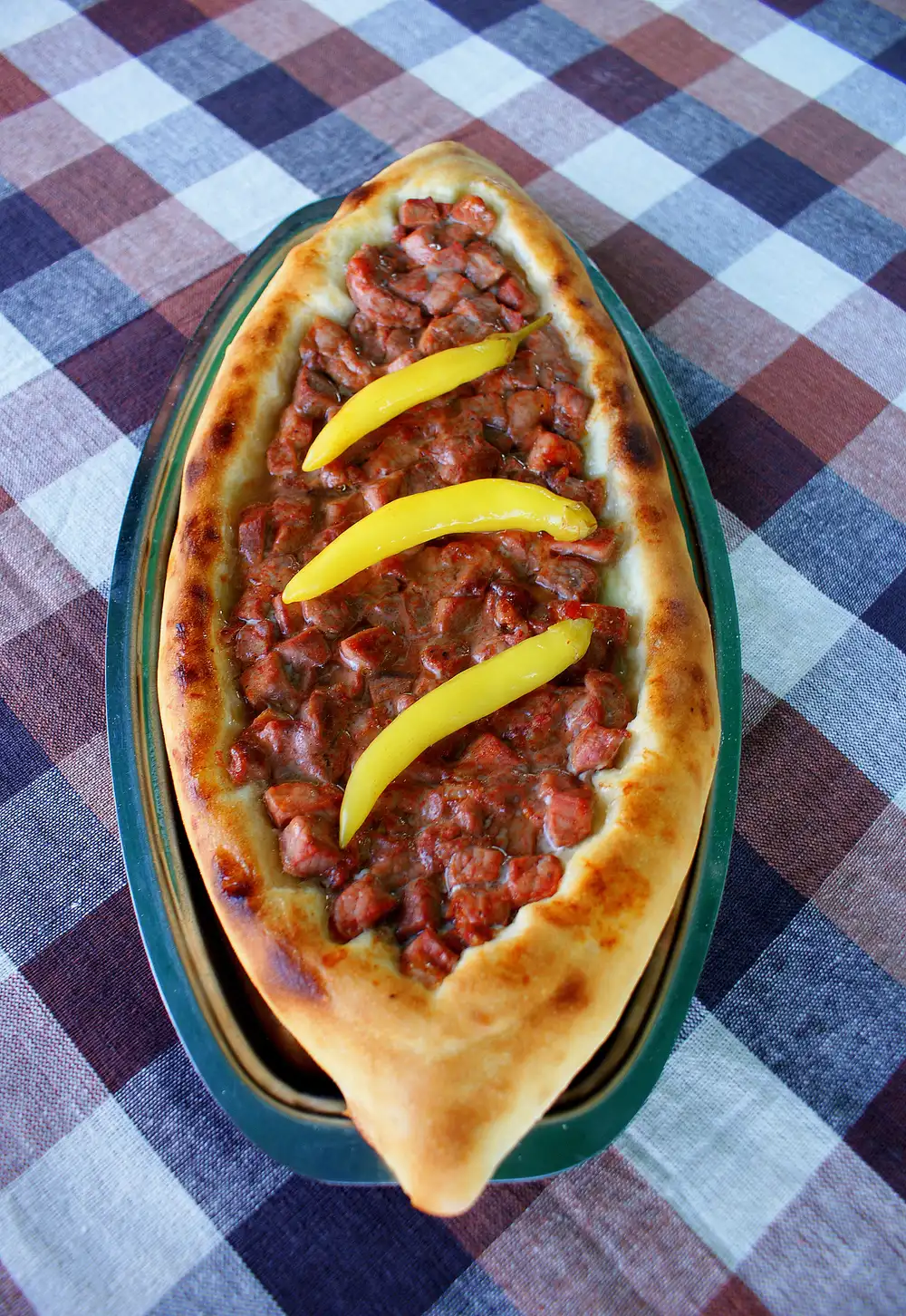
The base is a dough boat, stretched oval so the edges can crisp while the middle stays soft. Into it go dough, cheese, eggs and meat, with the meat cut into cubes and laid across the top. The meat varies: smoked or dried pork and poultry, while the name itself comes from pastrma, salted and dried mutton, sheep or lamb meat (compare Turkish pastırma).
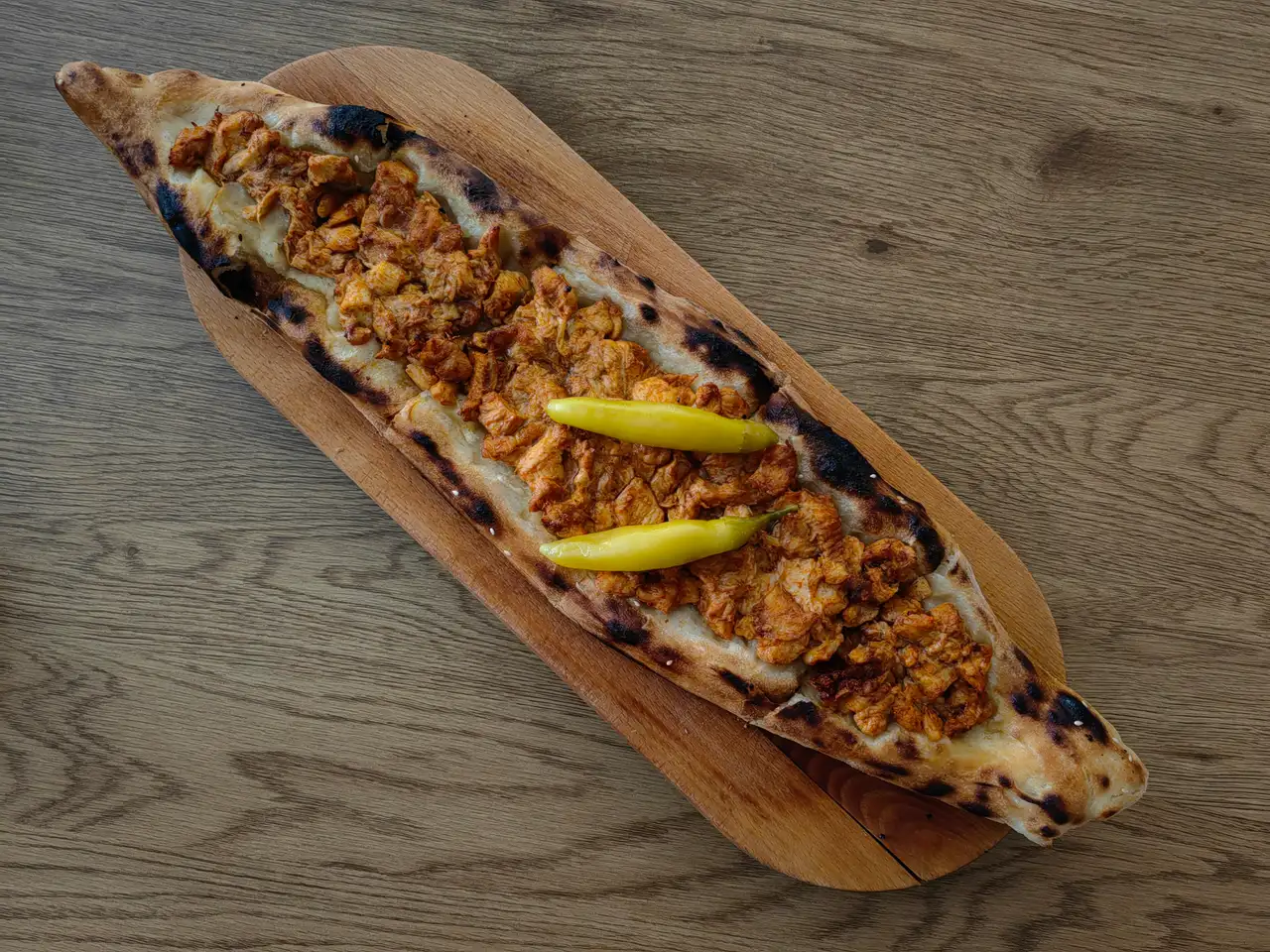
Other add-ons are common enough to expect: lard in the dough, sheep cheese or kashkaval, mushrooms, and spicy pickled pepper on top.
The bread itself is light, crusty and white, according to the regional guide In Your Pocket, which also says the dish is found all over the country but most famously prepared in Štip. One detail separates a proper one from a quick one. A regional travel guide notes that the “real deal” carries a single egg. If the menu doesn’t say, ask whether it comes with egg (so jajce in Macedonian) before you order.
Pastrmajlija is often called a Macedonian pizza. The comparison works for the shape and the takeaway habit and stops at the taste: there’s no tomato sauce, and the cured meat bakes into the dough.
Where it comes from, and why Štip
It’s most at home in five towns: Štip, Veles, Sveti Nikole, Kratovo and Negotino. All sit in the eastern and central part of the country. Štip is the one that has turned the dish into an event: the town holds an annual festival, the Štipska Pastrmalijada, where its bakeries show off. The municipality announced the 2026 edition for Friday and Saturday, 18 and 19 September, on the Vančo Prke promenade and at the City Stadium, opening with the traditional cutting of the pie at 13:00 on the Friday. The organisers set the festival price at 250 denars (about EUR 4) a pastrmajlija, and more than 30 caterers were announced. Dates and venues change from year to year, so check the municipality’s channels in early autumn before you plan a trip around it.
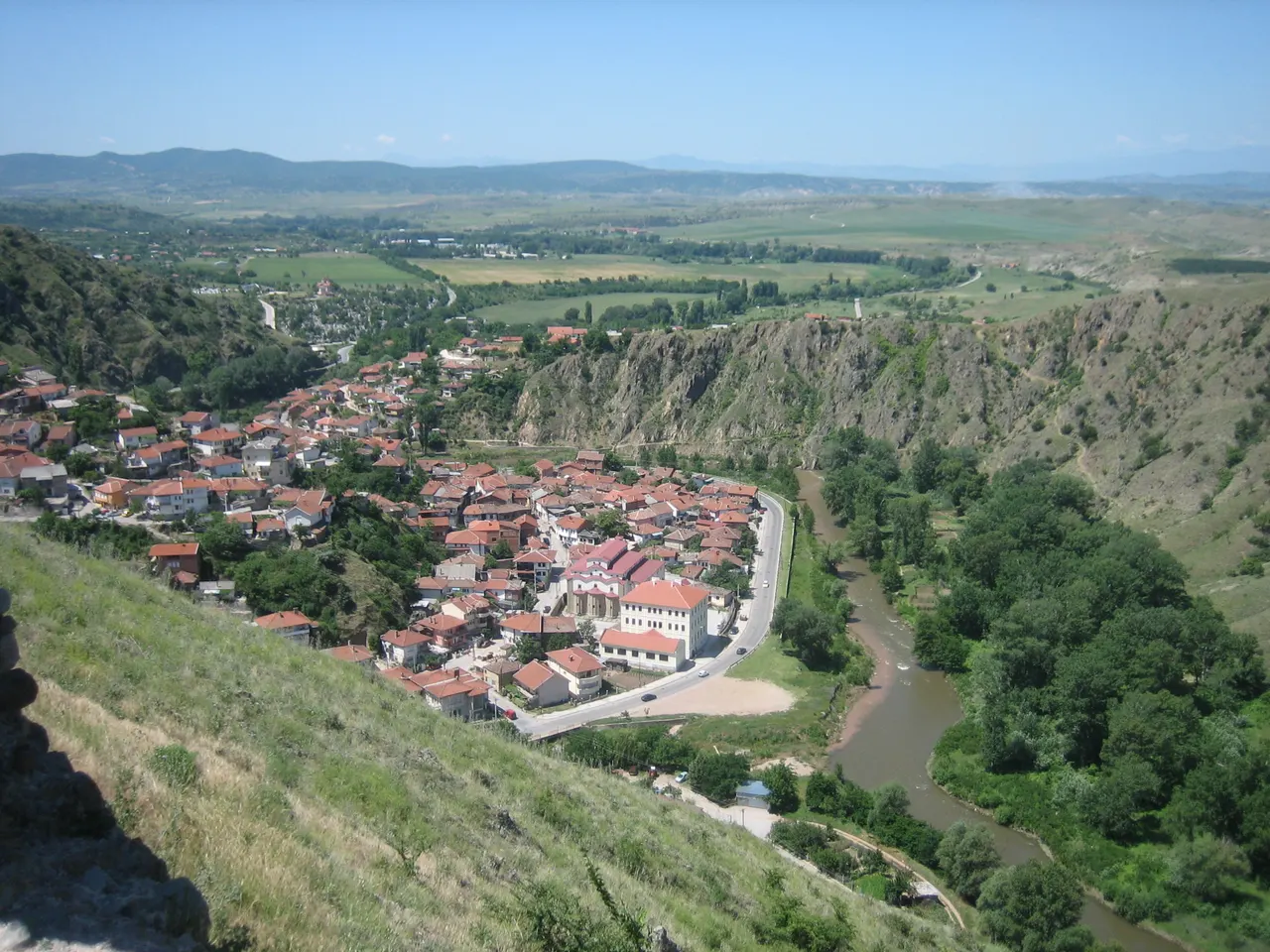
The festival is a good reason to go, though far from the whole story: between festivals it’s everyday food, eaten as part of a meal or taken away.
Kratovo, another of the five, is the one to pair with a day in the hills; our Kratovo guide covers the stone bridges and the old mining town, and a bakery lunch there fits the day naturally.
The family it belongs to
If you’ve eaten etli ekmek in Turkey or khachapuri in Georgia, you already know the outline. Wikipedia’s “see also” for pastrmajlija points to both, along with the Crimean Tatar yantiq (cantık in Turkish), which is a folded turnover rather than an open pie. With the first two the logic is the same: a long, open base of dough with a savoury topping baked into it. The shape is shared, but the identity isn’t. Here the topping is cubed, cured or smoked meat rather than minced, and the egg goes on or into the pie instead of being stirred in at the table.
Getting to Štip for lunch
Štip sits about 75 km east of Skopje, roughly an hour to an hour and a half by car since the A4 motorway section from Miladinovci opened in 2019, and buses run through the day from several small operators. Our Štip guide has the bus detail, the Isar hill and the Bargala ruins, which make a better reason to stay the afternoon than a second pie. Treat Štip as a lunch stop first: the bakeries are the reason to arrive, and the hill and the ruins are the reason to linger.
Veles is another of the five heartland towns, so if you’re driving through the middle of the country, it’s a natural place to stop for a piece.
Eating it in Skopje, and what to expect
You don’t have to leave the capital. Pastrmajlija appears on kafana menus around the city; our Skopje restaurant guide places it on the shared-plates table at Skopski Merak, and the what to eat page covers it among the national dishes. A food tour is the other route if you’d rather have someone choose for you.
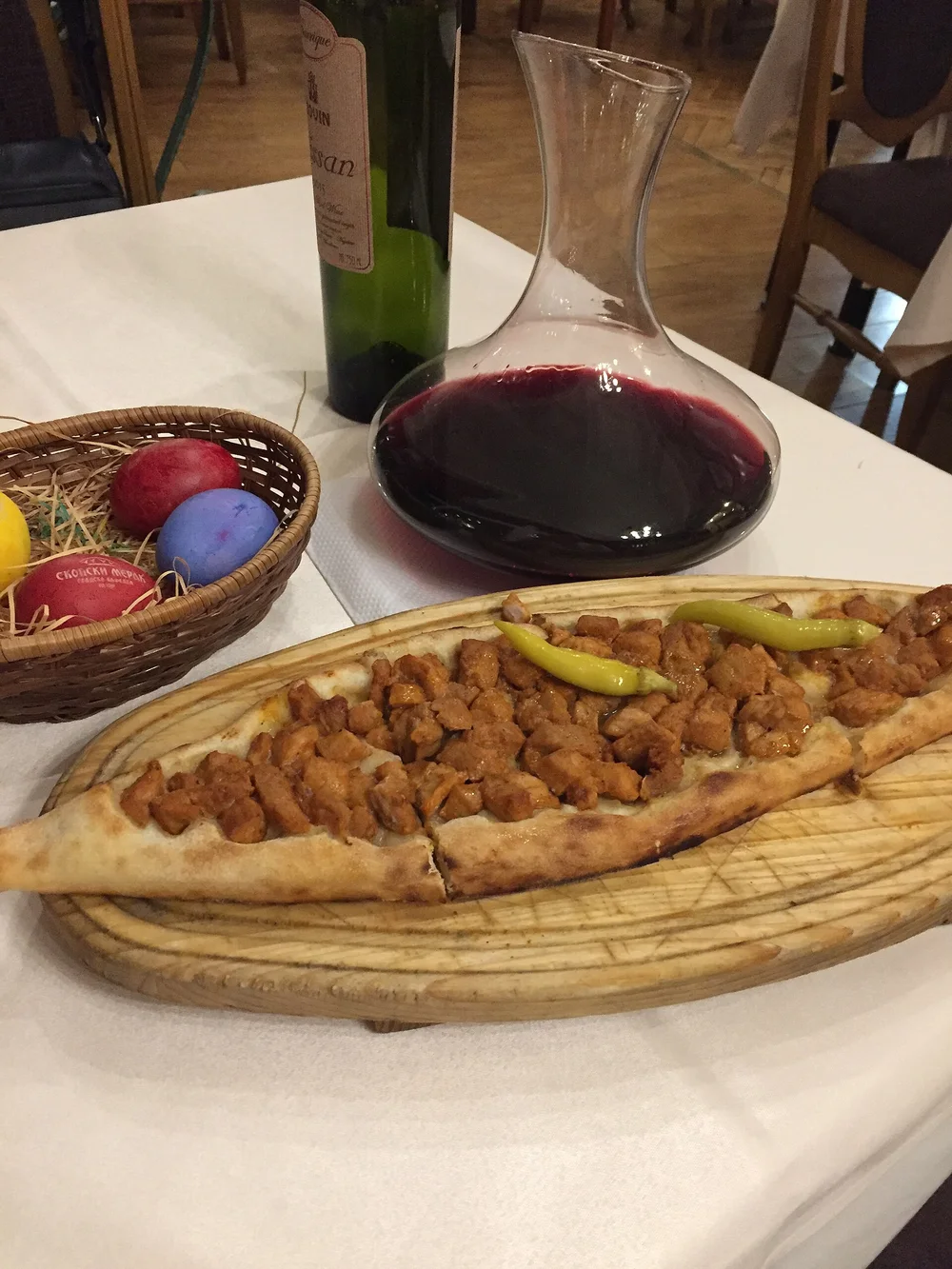
A quick way to judge a pie before you pay is to look at the edges. They should be browned and a little crisp, with the egg set but not rubbery, and the meat should look cooked into the surface, not scattered on top like a garnish. A pale, soft rim usually means the tray has been sitting.
The order itself is short. At a counter, name the dish, point at the tray and ask whether it comes with egg. In a kafana, ask the same question, then ask how many pieces make a portion before you add a second pie, since the answer decides whether one is enough for you or for two.
What to expect once it’s on the table:
- It arrives hot or not at all. A lukewarm one has been waiting. Ask for a fresh one or order something else.
- Portion size varies by place. Ask whether it’s meant for one or for sharing before you order two.
- It’s greasy in the good way. The meat fat is the point. Pair it with plain yoghurt drink or a Vranec red; the Macedonian wine guide explains the grape. Prices depend on the place and the size (a pastrmajlija shop in Bitola lists M, L and XXL on its delivery menu), and the numbers on third-party blogs don’t say which venue they came from, so ask for the price per piece before you order. The festival’s 250 denars, above, applies to the festival only.
Two related pages: the burek guide for the round filo pie on the same bakery shelf, and the tavče gravče guide for the national bean dish.
Three phrases for the counter
You’ll get by in English in most places, but these help in a small bakery, and our Macedonian phrases guide has more for the table:
| Say it | Sounds like | Means |
|---|---|---|
| Пастрмајлија, ве молам | pas-tr-MAI-lee-ya, ve MOH-lam | Pastrmajlija, please |
| Со јајце? | so YAI-tse | With egg? |
| Колку чини? | KOHL-koo CHEE-ni | How much is it? |
Read also

Food · 8 min read
Where to Eat in Struga: Drim Cafés, Eel and Lakeside Fish
Updated · November 19, 2026Where to eat in Struga: riverside tables on the Black Drin, bazaar bakeries, the eel the town is known for and fish houses down the lake at Radožda.

Food · 8 min read
Tavče Gravče: The National Dish and What It Costs
Updated · November 2, 2026Tavče gravče in North Macedonia: what the name means, plain or with sausage, and menu prices read on 31 October 2026 in Skopje, Bitola and Ohrid.

Food · 9 min read
Burek in North Macedonia: Fillings, How to Order, Prices
Updated · October 31, 2026Burek in North Macedonia: filling words to ask for, the quarter-plus-yoghurt order, what a portion cost on 31 October 2026 and where to buy it.

Food · 13 min read
Food Tours & Cooking Classes in North Macedonia
Updated · October 27, 2026Skopje food walks, an Ohrid village cooking class and a private Kratovo lunch class: routes, what's included and per-person or per-group pricing, Oct 2026.