
Rakija in North Macedonia: What to Drink & Buy
Rakija in North Macedonia: lozova, komovica, plum and mastika, what a bottle costs on the shelf, and how much you may carry home to the UK, EU or US.
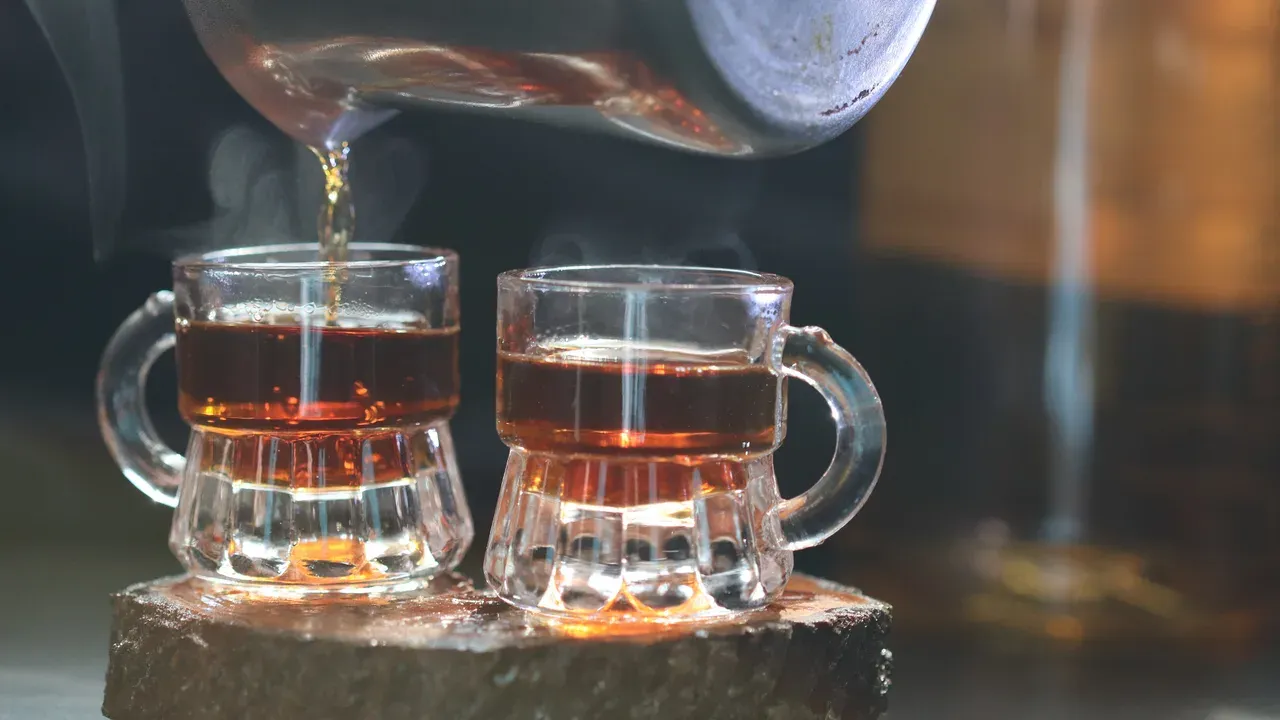
Rakija in North Macedonia is grape brandy first and everything else second: a clear lozova poured chilled, an amber one that has spent time in oak, an anise mastika that changes colour over ice, and in autumn the plum batches that villages still distil at home. On the shelf of a Skopje online grocer on 13 October 2026, a litre of rakija or mastika cost 599 to 1,029 denars (about €10 to €17), and a 0.7 l bottle from the Tikveš winery was 679 to 889 denars (about €11 to €14.50).
The expensive part is the airport. The EU and the US each let you carry only one litre duty-free (the EU counts spirits over 22%, the US all alcohol), so two 0.7 l bottles already go over it there; Great Britain is far more generous at 4 litres of spirits. Plan the shopping before the sipping.
Four names you’ll meet on a menu
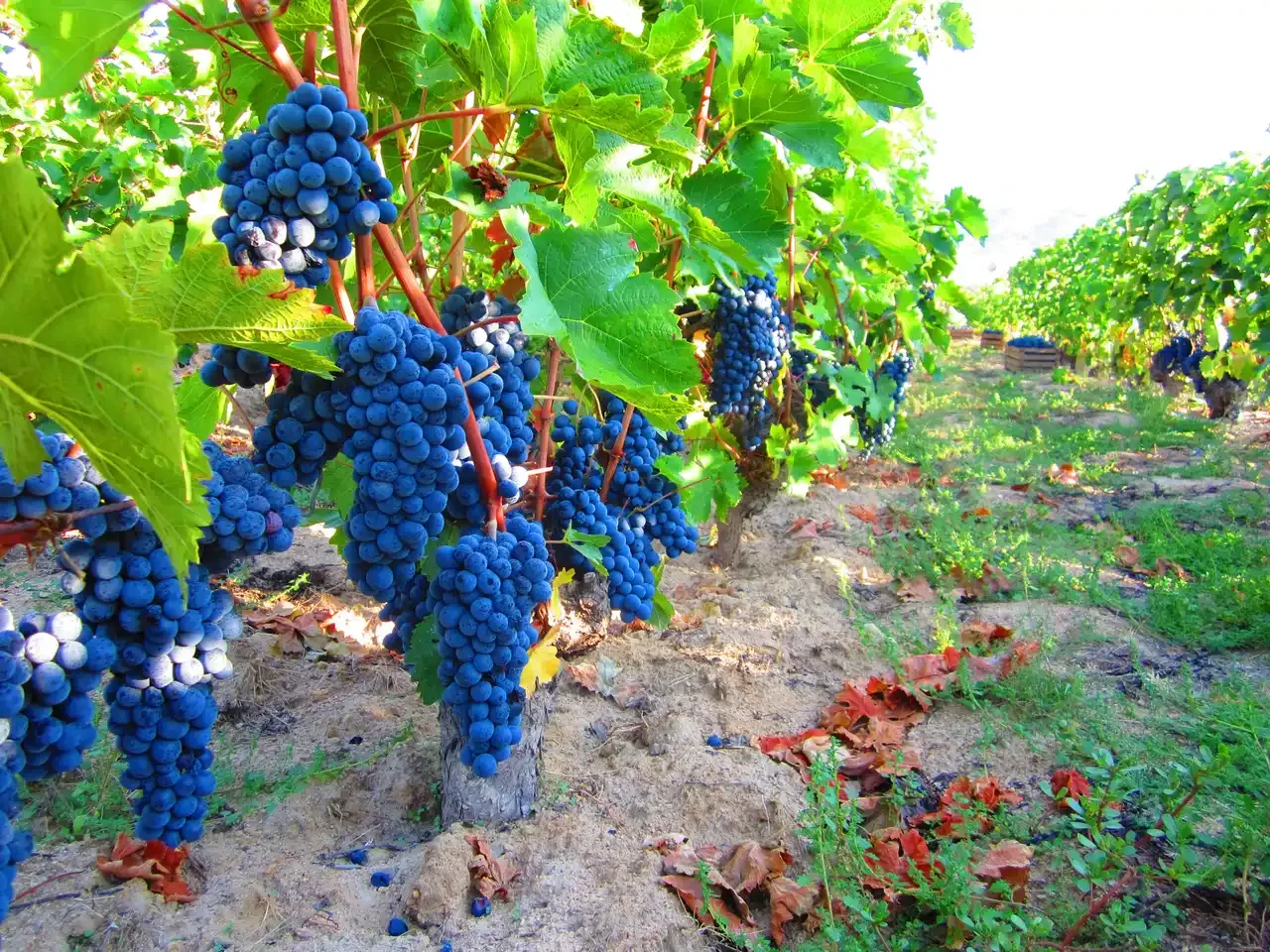
Order “rakija” and you’re most likely handed lozova, but the word covers a family. Lozova is the traditional rakija here, and the bottles on a Skopje shelf bear that out.
| Name | What it is | What to expect |
|---|---|---|
| Lozova | Brandy distilled from wine grapes | 40% on the Tikveš bottles below, 41-43% on some other labels; homemade lozova can run far higher |
| Komovica (also kominarka) | Distilled from grape pomace, the skins and pulp left after pressing | Strength and character vary by distiller |
| Sliva | Plum brandy; made in village kazans in autumn | Homemade batches vary in strength |
| Mastika | Anise-flavoured spirit, served very cold | Strength varies by label; the 47% minimum quoted in Macedonian sources comes from a Bulgarian regulation, not a Macedonian one |
Rakija is a drink of company and meze (small plates), and drinking it neat with nothing to eat is not recommended. Keep that in mind when the first small glass arrives with a plate of meze.
White, yellow, and why colour is not strength
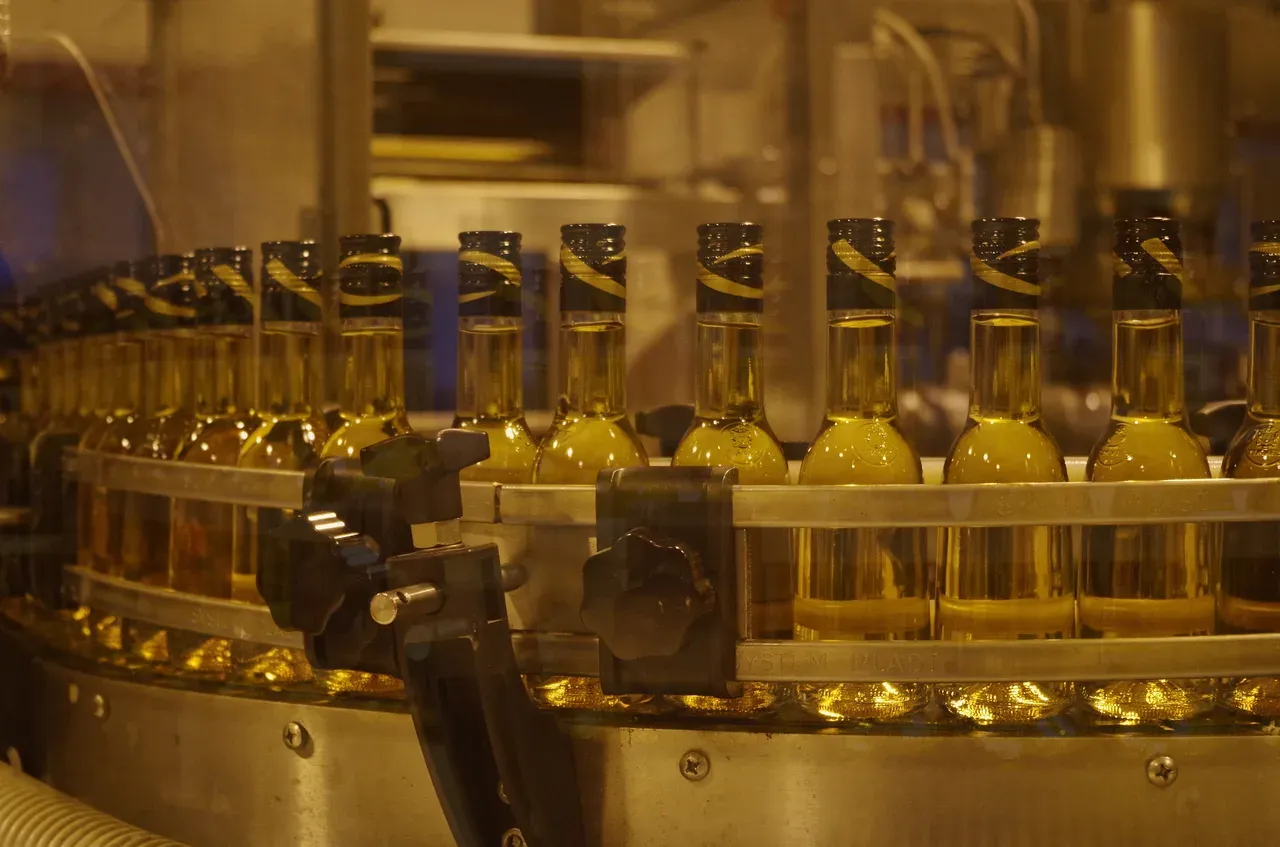
A bela (white) and a zolta (yellow) bottle look like a strong and a gentler version of the same thing. They aren’t. The two Tikveš Kumova rakijas, both described on the winery’s own product sheets, are 40% ABV each.
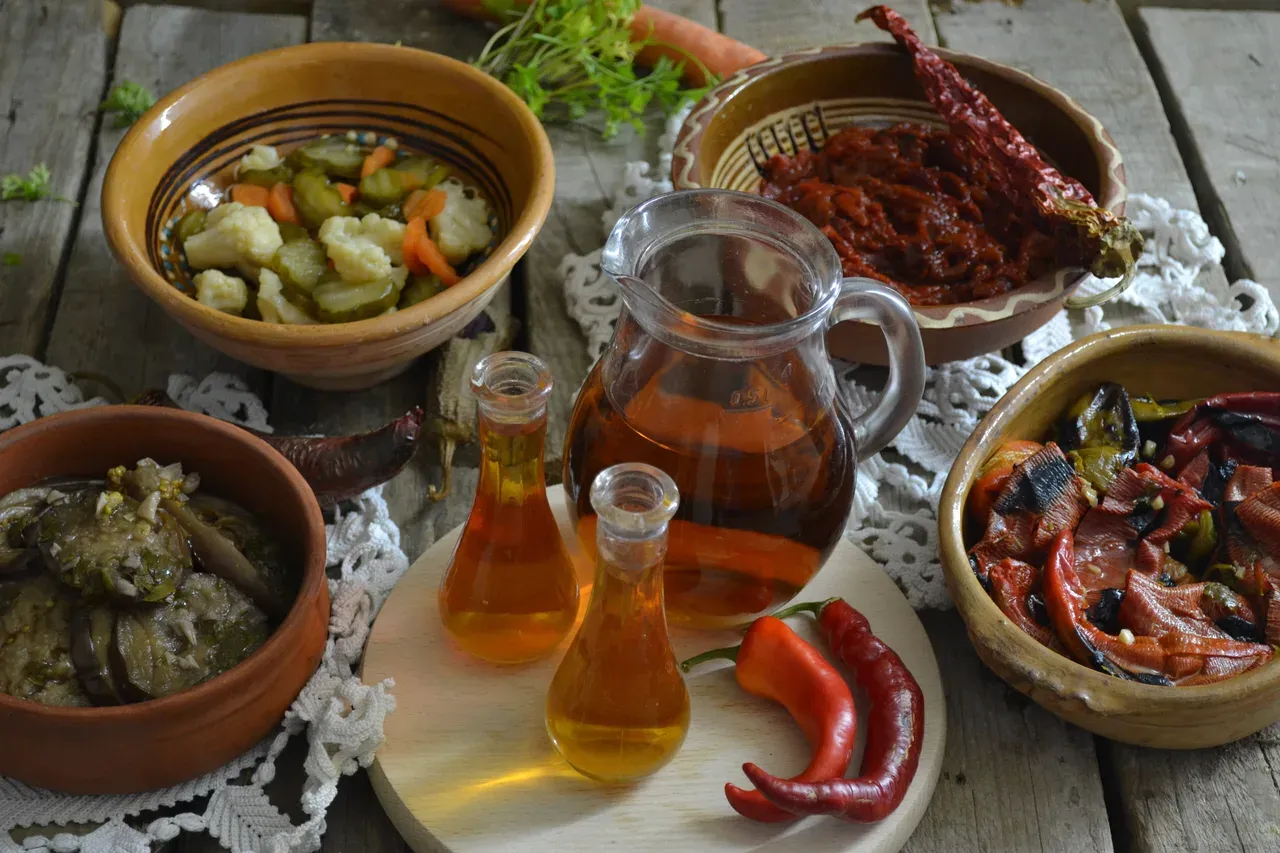
What differs is the wood. Kumova Bela is made from Smederevka and Muscat Hamburg distillates that rest in stainless steel and in oak casks over 50 years old, so old that they no longer give any colour. It’s crystal clear, and the sheet says to serve it well chilled, 6 to 10 °C. Kumova Zolta adds Vranec and Kratošija to the grapes and matures in oak barrels of different ages, which is what turns it pale amber. Tikveš recommends 16 to 18 °C, or 12 to 14 °C as an aperitif.
One more thing the shelf tells you: in the same Kumova line and the same 0.7 l bottle, the aged yellow (679 denars, about €11) was cheaper than the white (889 denars, about €14.50) on the day it was checked. The colour from the wood didn’t buy a higher price, so don’t read a higher number as a higher grade.
Mastika, the one that turns cloudy
Mastika sits apart from the grape family. It’s ethyl alcohol flavoured with anethole from aniseed or fennel, served very cold, and adding water or ice changes the colour, giving it a pale blue tint. If you’ve met ouzo or pastis, you know the effect.
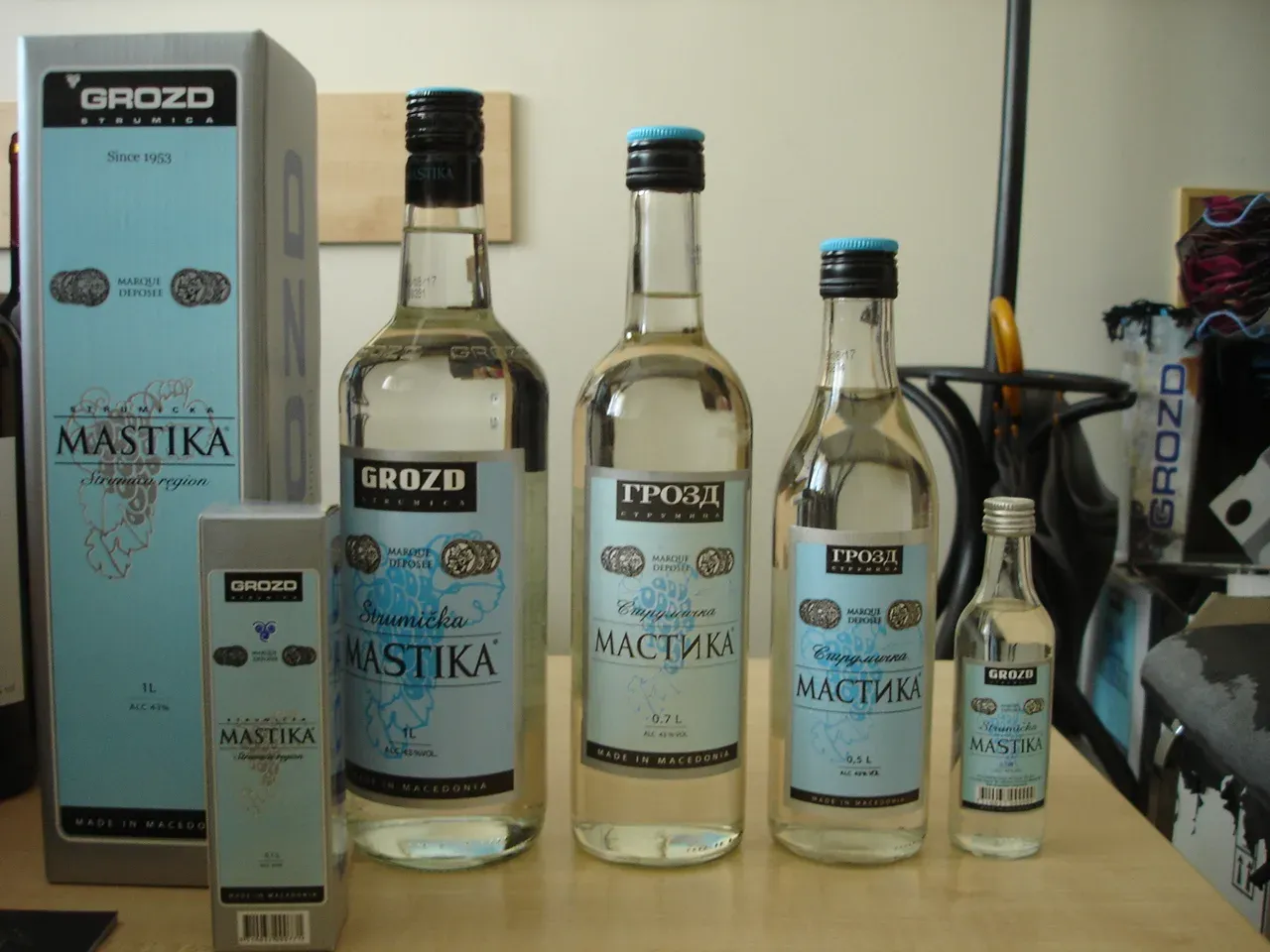
The drink is tied to Strumica in the southeast. Grozd, the town’s distillery, calls the region the home of the best mastika and says it makes its own from grape distillate, with the aroma of anise and acacia honey. If Strumica is on your route, our Strumica guide covers the town and the carnival, and our guide to what to eat in North Macedonia puts mastika next to the rest of the national table. A 1 l bottle of Peshterska mastika, a Bulgarian brand, was 639 denars (about €10.40) on the grocer’s list, and a litre of Grozd mastika was 1,029 denars (about €16.70).
Autumn is kazan season
The kazan is the village pot still, and autumn is when it comes out. A Nova Makedonija report from 24 October 2019 about the villages of Lavchani, Premka and Kozica in the Kichevo area said it was nearly unthinkable for the kettles not to be smoking in September and October. Plums are the fruit there, and households make it.
Homemade is where strength drifts. Shop bottles sit around 40%, while home production can run past 60% at times. So when a host at a guesthouse or a village table pours you a glass from an unlabelled bottle, take it as the courtesy it is, sip it, and keep the small plate close.
How it’s poured and what goes with it
The unwritten rule is company and food. Rakija arrives at the start of a meal or between rounds of meze, and the classic partner on the table is a šopska salad.
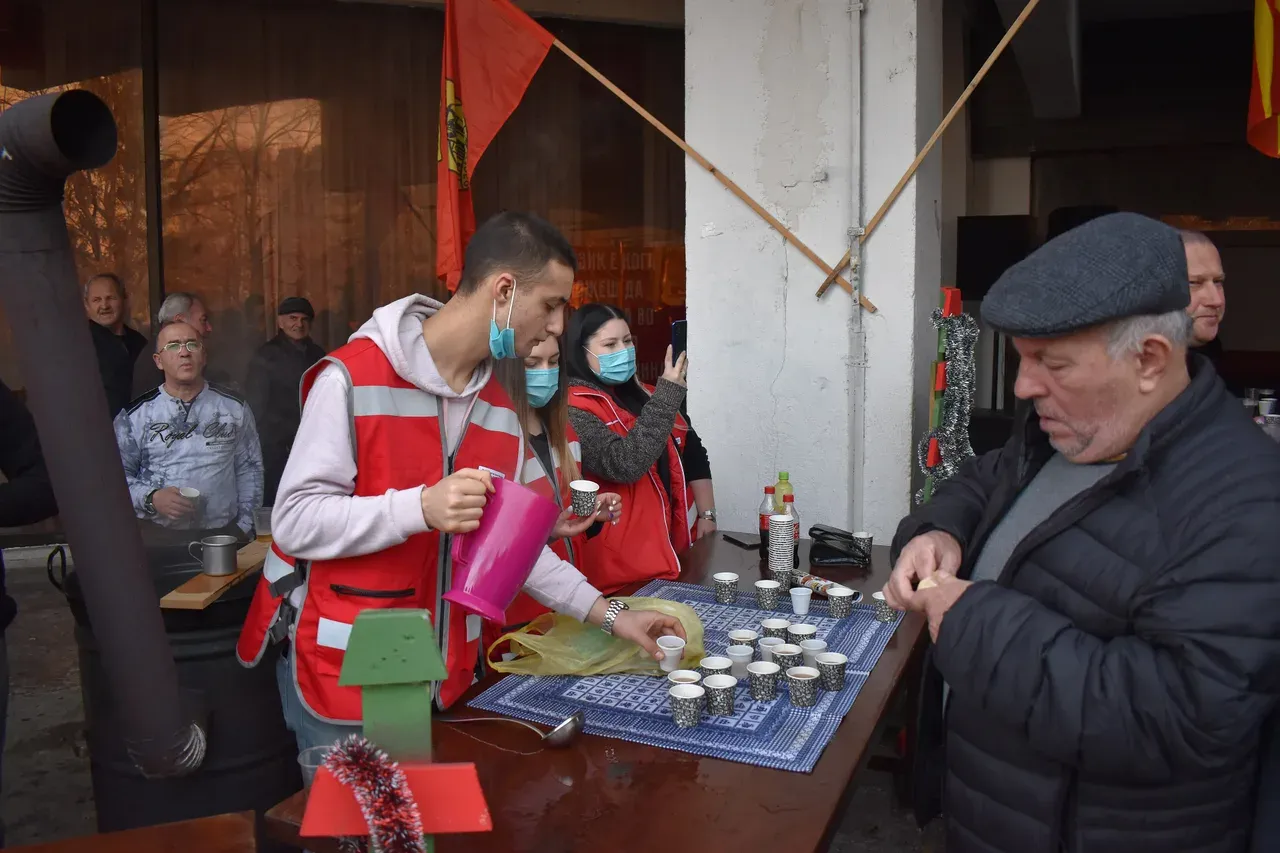
Ask for it chilled if it’s white and at room temperature if it’s yellow, which is what Tikveš’s own sheets recommend for its two bottles. Raise the glass with Na zdravje (cheers); our phrasebook for travellers has more table vocabulary. For where to drink it in a bar, with menu prices printed at two Skopje venues, see Skopje nightlife, and for the wine side of the same table, the Macedonian wine guide.
What a bottle costs, and where to taste it
On 13 October 2026, the Skopje online grocer marketonline.mk listed these regular prices. Exchange rates are the ones on our rates file of 9 October 2026, 61.5 denars to the euro.
| Bottle | Denars | About |
|---|---|---|
| Peshterska rakija (Bulgarian), 1 l | 599 | €9.75 / $10.90 / £8.25 |
| Tikveš Kumova Zolta, 0.7 l | 679 | €11 / $12.40 / £9.35 |
| Tikveš Kumova Bela, 0.7 l | 889 | €14.50 / $16.20 / £12.25 |
| Gordion Amber 43%, 0.7 l | 959 | €15.60 / $17.50 / £13.20 |
| Peshterska mastika (Bulgarian), 1 l | 639 | €10.40 / $11.65 / £8.80 |
Run it per litre and the picture changes: the 1 l Peshterska works out at 599 denars a litre, the 0.7 l Kumova Bela at about 1,270. Offers move weekly, so use the table as a range, not a promise.
Where to taste first. The most direct route is a winery: Tikveš in Kavadarci makes the two Kumova rakijas above, and that guide explains how a visit works from Skopje. Near Ohrid, Distillery Balaklija in Orman runs a guided rakija tasting with lunch. The byFood listing read on 13 October 2026 shows about 2 hours, English guiding, a minimum of two guests, alcohol and lunch included, and about US$65 per guest; confirm date and price at booking, since a reseller sets those. In Skopje itself, the bazaar’s Rakija Bar Kaldrma is covered in Skopje nightlife. If you’re basing yourself on the lake, what to do in Ohrid has the rest of the day.
Getting a bottle home: one litre or four
Three jurisdictions, two numbers. Arriving in Great Britain (England, Wales, Scotland), GOV.UK allows travellers aged 17 or over 4 litres of spirits over 22% ABV, plus 18 litres of wine and 42 litres of beer and cider; Northern Ireland keeps 1 litre of spirits for arrivals from outside the EU. The EU’s Your Europe page gives travellers aged 17 or over 1 litre of spirits over 22% for entry from a non-EU country, with 4 litres of still wine and 16 litres of beer, as long as the goods aren’t for resale. For the US, CBP says one US litre of alcoholic beverages can be included in your personal exemption if you’re 21 or over, it’s for personal use, and it doesn’t break the law of the state where you land, and that state’s rules decide how much you can bring at all.
Two details to settle before you pay for a second bottle:
- The allowance is a category, not a bottle. Go over it and GOV.UK says you pay tax and duty on all the goods in that category, not only the excess. Into the EU or the US, one 0.7 l Kumova plus a 0.3 l flask fits the litre; two 0.7 l bottles don’t. The US charges only the part over the litre: in CBP’s own example of two litres, one is duty-free and the other pays 3% plus any Internal Revenue Tax. Into Great Britain, five 0.7 l bottles (3.5 l) still fit the 4 litres.
- The box depends on where you land. In Great Britain and the EU spirits and wine have separate allowances, so a bottle of Tikveš wine doesn’t eat into your rakija allowance. In the US the one litre covers alcoholic beverages in general, wine included.
On the plane, Skopje’s CT lanes may let a bottle through in your cabin bag, but a connection elsewhere usually won’t, so a 0.7 l bottle is safest in the checked bag; the lane rules are in our ajvar guide. Canada and Australia set their own limits, so check the allowance at their border agencies before you buy.
Read also
- Eating with it: what to eat in North Macedonia
- The jar that goes in the same suitcase: ajvar
- A winery with its own rakija: Tikveš winery and wine region
- Rakija bars and menu prices: Skopje nightlife
Read also

Food · 9 min read
Burek in North Macedonia: Fillings, How to Order, Prices
Updated · October 31, 2026Burek in North Macedonia: filling words to ask for, the quarter-plus-yoghurt order, what a portion cost on 31 October 2026 and where to buy it.

Food · 13 min read
Food Tours & Cooking Classes in North Macedonia
Updated · October 27, 2026Skopje food walks, an Ohrid village cooking class and a private Kratovo lunch class: routes, what's included and per-person or per-group pricing, Oct 2026.

Food · 9 min read
Vegan and Vegetarian in North Macedonia: Say Posno
Updated · October 10, 2026How vegetarians and vegans eat well in North Macedonia: Orthodox posno food, what to order in a kafana, where meat and cheese hide, and the words to use.

Food · 10 min read
Ajvar: North Macedonia's Red Pepper Obsession
Updated · October 27, 2026Ajvar explained: the autumn pepper-roasting ritual, how it differs from pindjur and malidzano, what a jar costs in Skopje and how to fly home with one.