
Vegan and Vegetarian in North Macedonia: Say Posno
How vegetarians and vegans eat well in North Macedonia: Orthodox posno food, what to order in a kafana, where meat and cheese hide, and the words to use.
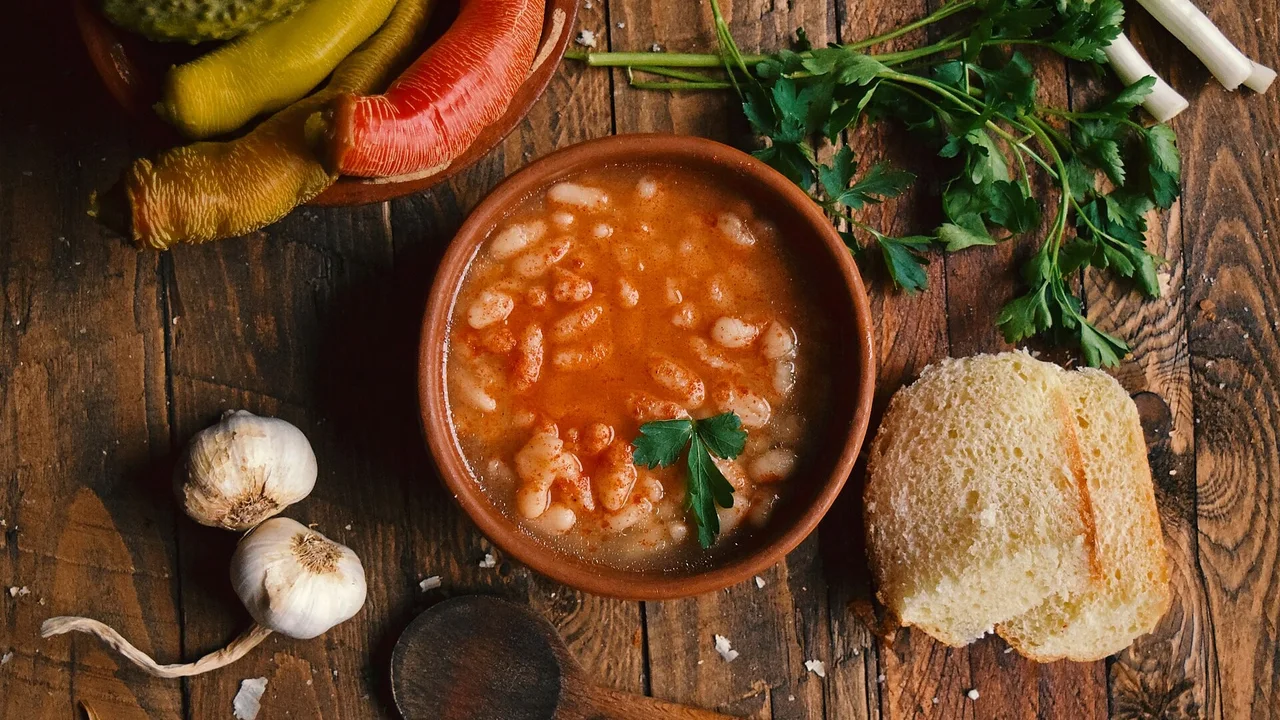
Vegetarians eat well in North Macedonia without much effort, and vegans can too once they know one word: posno. It means “fasting” food, cooked for the Orthodox fast, and the full fast leaves out not only meat and lard but cheese and eggs as well. The church calendar has fasting days in most weeks, every Wednesday and Friday, plus four longer fasts, and the one a winter traveller is most likely to hit runs from 28 November to 6 January. Book a trip for December and you’ll be eating in the middle of it.
The word does a lot, but it isn’t a vegan certificate. On some fasting days the church allows fish, so a posno plate can still come with fish on the side, and a few classic dishes hide bacon or cheese where you wouldn’t look for them. Below is what to order, what to ask, and how it changes once you’re in the Albanian-speaking west.
Posno: the church word that does a vegan’s work
The Macedonian Orthodox Church keeps one-day and multi-day fasts, and its calendar marks every fasting day with a frame around the date. The weekly ones are Wednesday and Friday, except in a few feast weeks such as 7 to 17 January, which starts on Orthodox Christmas Day. The long ones are:
- Great Lent, the seven weeks before Orthodox Easter.
- The Apostles’ fast in early summer, which ends on 11 July; its start moves with Easter.
- The Dormition fast, 14 to 27 August.
- The Christmas fast, 28 November to 6 January: the Macedonian church keeps the old calendar, so Christmas Day falls on 7 January.
What a fast leaves out is clearest in advice the church itself quotes from Bishop Gavril of Velika: a beginner may at first give up meat and lard on fasting days and still eat cheese and eggs, then move up to the full fast. So the full version is effectively plant-based, which is why posno is the word to learn.
The fine print is about fish and oil. In the Apostles’ and Christmas fasts, the rules the church’s magazine publishes allow oil and fish on Saturdays and Sundays, and fish on a big feast day even if it falls on a Wednesday or Friday. A cook who’s thinking about the church calendar may therefore hear “posno” and still reach for the fish. If that matters to you, say “bez riba” (no fish) as well.
What to order in a kafana
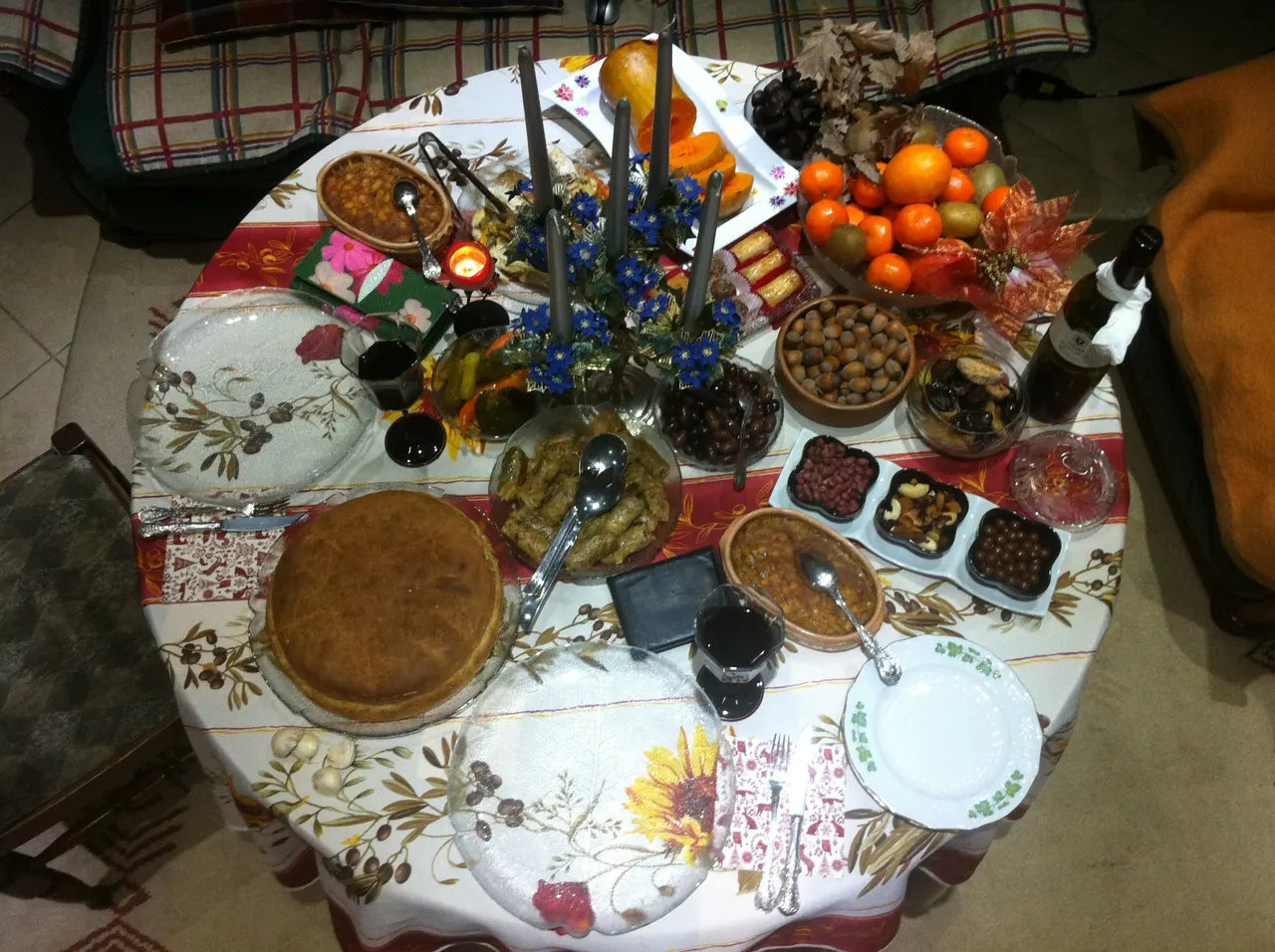
A kafana menu is built around the grill, but the side of the table that isn’t meat is big, and it holds much of the national cooking. The common dishes, by what goes into them:
| Dish | What’s in it | Meat-free? | Vegan? |
|---|---|---|---|
| Tavče gravče | baked beans with onion, dried red pepper and oil | usually; some cooks add smoked pork or bacon | ask for it posno |
| Ajvar, pindžur | roasted red peppers, with tomato, garlic and often aubergine in pindžur | yes | yes |
| Turšija | vegetables pickled in autumn, eaten all winter | yes | yes |
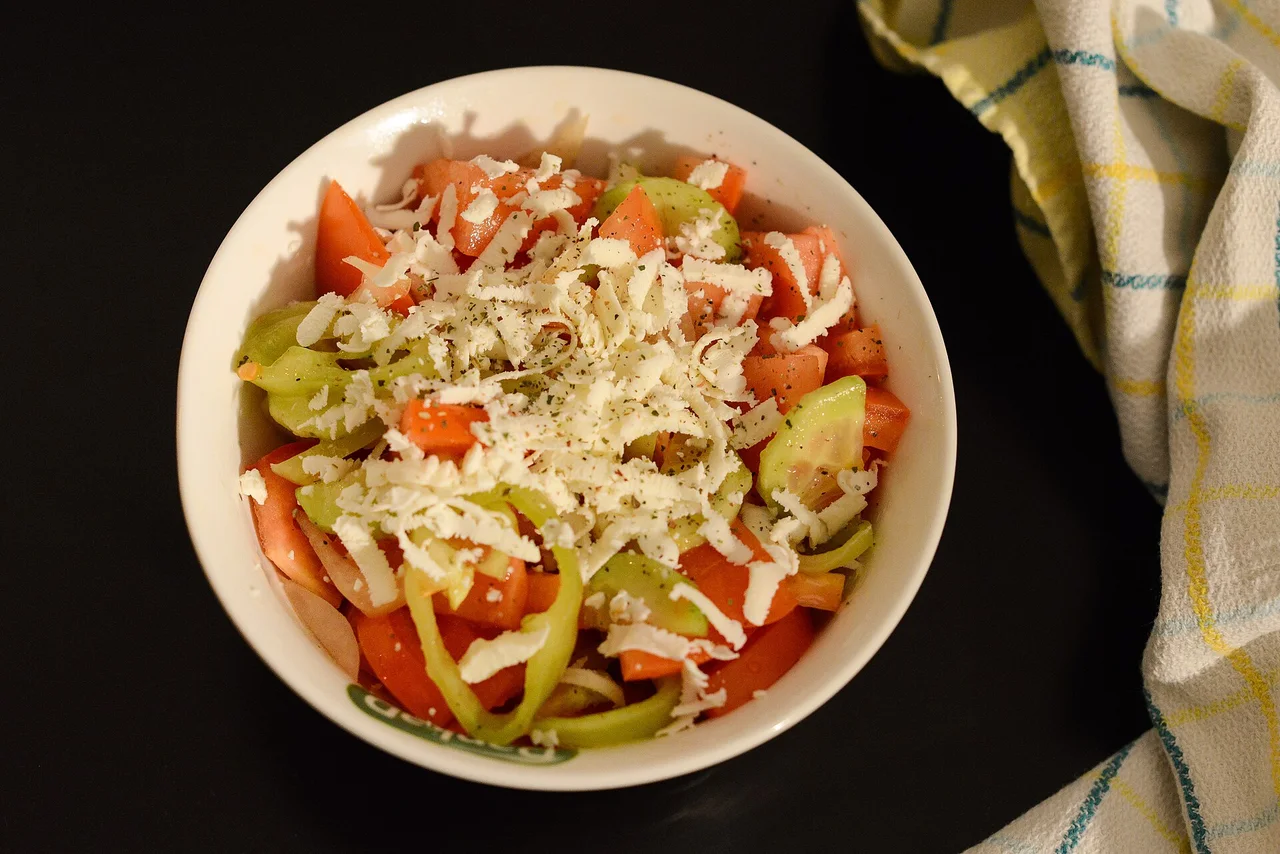
| Šopska salata | tomato, cucumber, onion and peppers under grated white cheese | yes | order it “bez sirenje” |
| Sarma | leaves rolled round rice; the everyday filling has minced meat | only the posna version | the posna version |
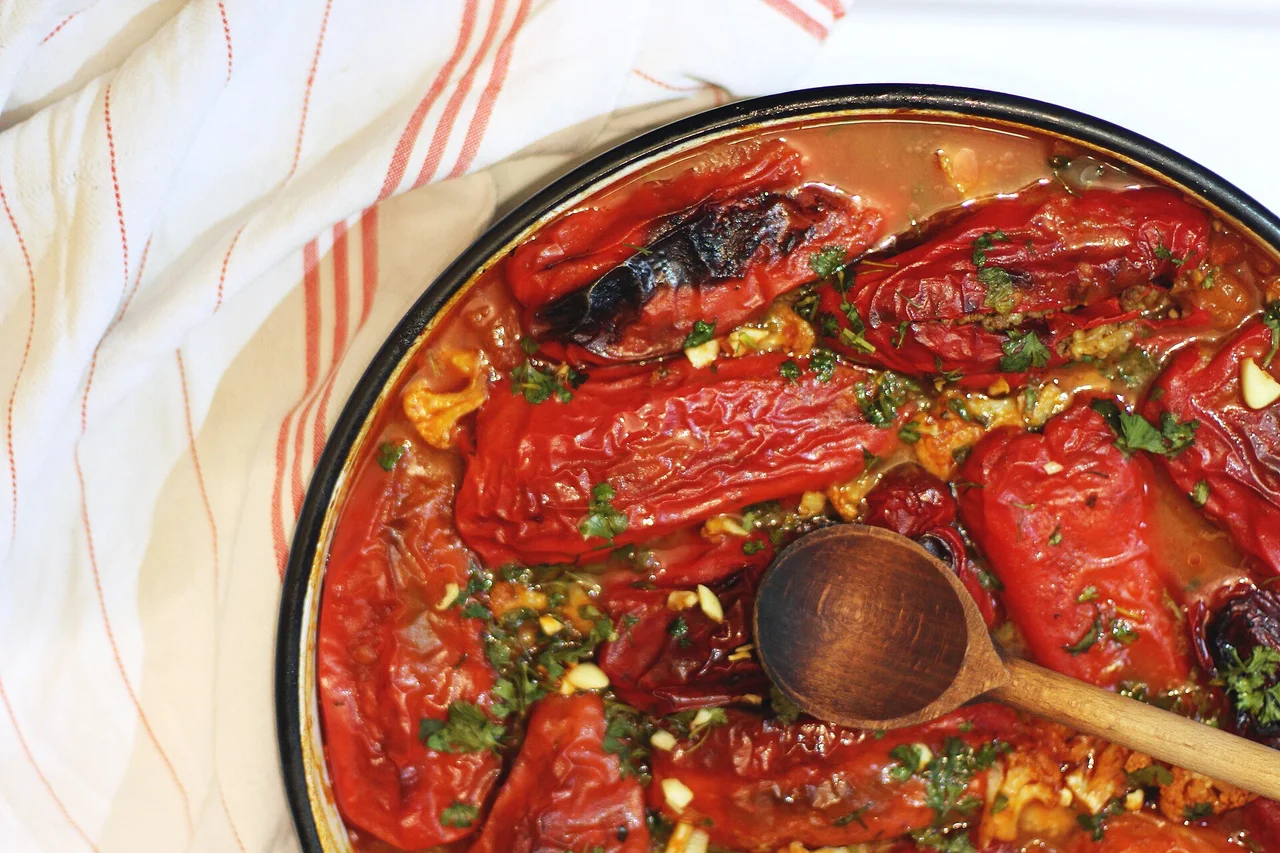
| Polneti piperki | peppers stuffed with rice and, in the classic recipe, minced beef | ask | ask |
| Turli tava | a baked mix of vegetables, sometimes with meat | ask | ask |
| Zelnik | layered pie of leeks, cabbage or greens, often with cheese and eggs | usually | only if it’s posno |
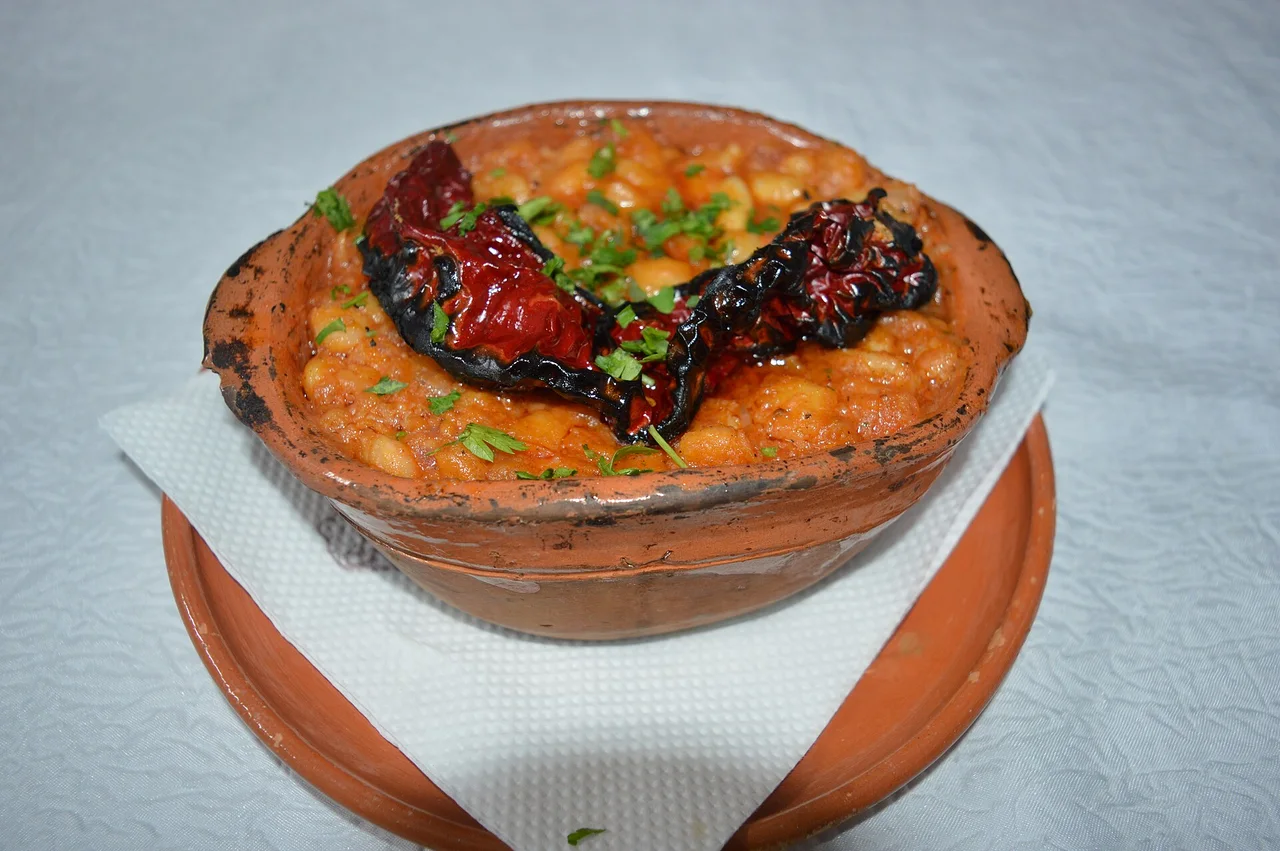
The beans are the anchor. Tavče gravče is the national dish, baked in its clay pan, and the basic recipe is beans, onion, oil and pepper; the risk is the cook who adds smoked meat for depth, so ask “dali ima meso?” before you order. For how it’s cooked and served, see what to eat in North Macedonia, and for the red-pepper spread on every table, our ajvar guide.
Meze plates go in the middle to share, so a vegetarian can build a whole meal from salads, peppers, beans and bread while everyone else works through the grill. How a kafana evening unfolds, course by course, is laid out in Macedonian food explained.
Where meat and cheese hide
Most surprises come from three places.
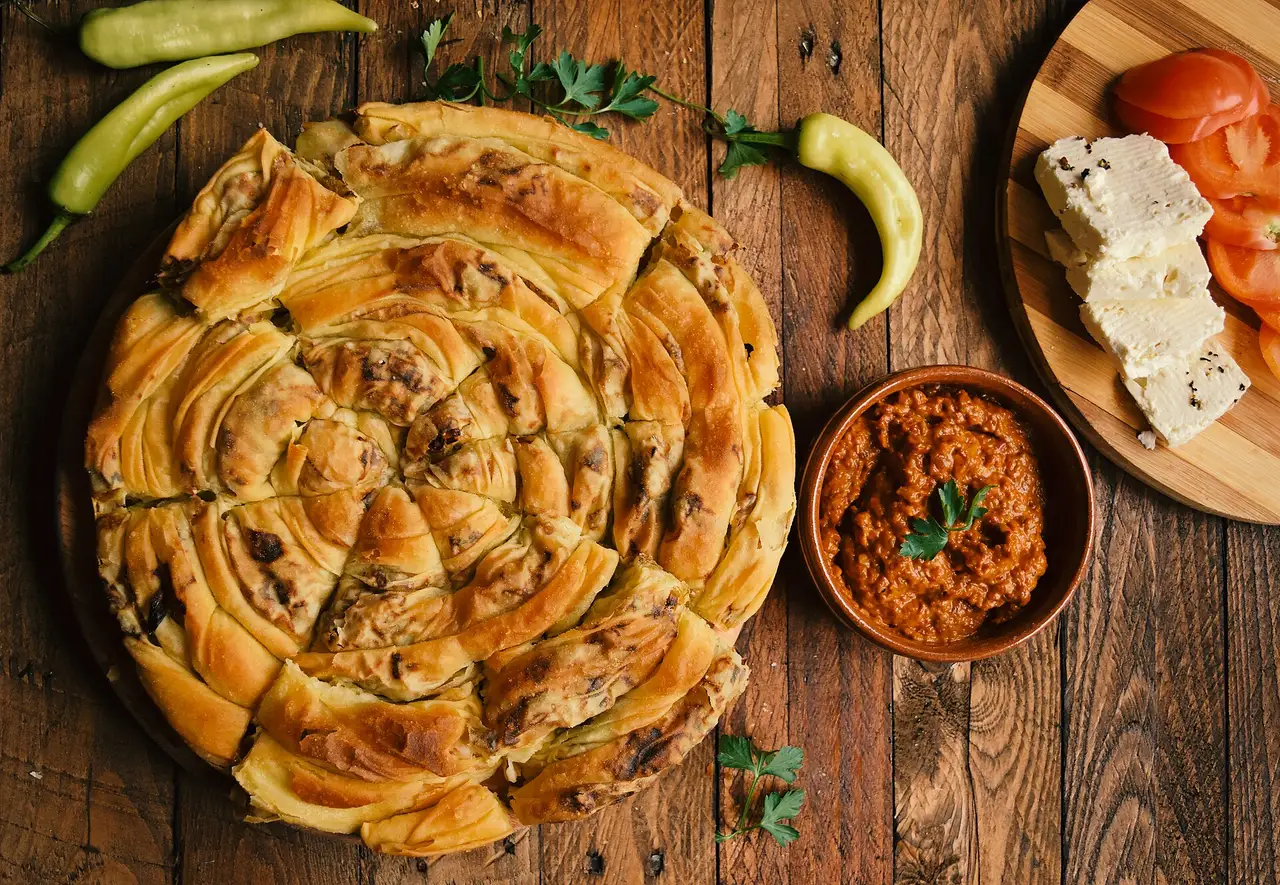
Pies and pastries. Zelnik and burek are layered pastry with a filling, and the filling is often white cheese with egg even when the name suggests leeks or greens. At a bakery, ask what’s inside before you pay: “so sirenje” means with cheese, “so meso” with meat.
Stuffed things. Peppers and sarma rolls are filled with rice, and in the everyday version minced meat is mixed in. The meatless sarma made for Lent and Christmas Eve is a different batch, so it’s on the counter only if the kitchen made it.
The pot. Bean dishes and vegetable bakes are where a little smoked meat goes in for flavour. You can’t see it once it’s cooked, so ask rather than inspect.
Phrases for the kafana and the bakery
Staff in central Skopje and Ohrid often speak English, but a few Macedonian words get a faster, surer answer, and they go down well in a village kafana. Spelled the way they sound:
| You want to say | Say | Sounds like |
|---|---|---|
| I’m vegetarian | Jas sum vegetarijanec (vegetarijanka, said by a woman) | yahs soom veh-geh-tah-REE-yah-nets |
| I’m vegan | Jas sum vegan (veganka) | yahs soom VEH-gahn |
| Without meat, please | Bez meso, ve molam | bez MEH-so, veh MO-lahm |
| Is there meat in it? | Dali ima meso? | DAH-lee EE-mah MEH-so |
| Have you got anything posno? | Imate li nešto posno? | EE-mah-teh lee NESH-to POS-no |
| Without cheese / eggs / milk | Bez sirenje / jajca / mleko | bez SEE-ren-yeh / YAI-tsah / MLEH-ko |
| No fish | Bez riba | bez REE-bah |
Our Macedonian phrases for travellers has the greetings and the bill to go with them.
Markets, jars and an apartment kitchen
If you’re renting a flat for a week, the green market (zelen pazar) is where a vegan should shop first. You’ll find one in Skopje, Bitola and Ohrid, and the vegan shopping there is dried beans and peppers, fresh or strung up to dry. A bag of beans, an onion and some dried red pepper is tavče gravče waiting to happen, and you can make it posno without asking anyone.
Time a trip for the end of summer and the middle of autumn and you’ll see the other side of the pepper year: families roasting peppers by the crate for ajvar, and pickling vegetables for the winter turšija. Both end up in jars, both are vegan in their classic form, and a jar of ajvar turns plain bread into a meal anywhere. The differences between them, and how to fly home with a jar, are on our ajvar page.
For vegetarians, the market stalls also sell the white cheese that goes over a šopska, so a picnic needs nothing more than bread, cheese, tomatoes and a jar.
Skopje, Ohrid and the Albanian-speaking west
Skopje, the capital, has vegetarian and vegan places as well as kafanas. Look them up on HappyCow and check the hours on the day you go. What a kafana meal costs is on our Skopje restaurant page.
Ohrid is a fish town. That’s fine for a pescatarian, but it’s exactly where “posno” can be heard as “fish is fine”, so add “bez riba”. The lakeside menus are covered in where to eat in Ohrid.
Tetovo and the Albanian-speaking west need a different opener. The fast is an Orthodox one, so in majority-Albanian Tetovo and the towns around it posno may not carry the same weight; lead with “Unë jam vegjetarian”, Albanian for “I’m a vegetarian”. The bean pot is still everywhere: tavče gravče even has a Tetovo-style version, and our Tetovo guide covers the bazaar where you’ll find it.
Strumica, in the south-east, is pepper country: the plain around it grows the peppers that go into ajvar, so late summer to mid-autumn is the time to be there. More in the Strumica guide.
A meat-free day, from bakery to kafana
Morning. Head to a pekara and point at the pies, asking “so sirenje?” for each. A vegetarian takes the cheese burek; a vegan does better with bread, fruit and coffee, or a posno pie if the baker has made one.
Lunch. A clay pan of tavče gravče, ordered posno, with turšija and bread. In winter the pickles are from that autumn’s batch, and the beans are filling enough to carry you to dinner.
Evening. Meze for the table: ajvar, pindžur, a šopska with or without its cheese, roasted peppers, and whatever posna sarma the kitchen made. If you’re in Skopje on 7 December 2026 for the Taksirat festival, you’ll be eating inside the Christmas fast, and posno is the easiest word in the city that week.
Read also

Food · 9 min read
Burek in North Macedonia: Fillings, How to Order, Prices
Updated · October 31, 2026Burek in North Macedonia: filling words to ask for, the quarter-plus-yoghurt order, what a portion cost on 31 October 2026 and where to buy it.

Food · 13 min read
Food Tours & Cooking Classes in North Macedonia
Updated · October 27, 2026Skopje food walks, an Ohrid village cooking class and a private Kratovo lunch class: routes, what's included and per-person or per-group pricing, Oct 2026.

Food · 9 min read
Rakija in North Macedonia: What to Drink & Buy
Updated · October 13, 2026Rakija in North Macedonia: lozova, komovica, plum and mastika, what a bottle costs on the shelf, and how much you may carry home to the UK, EU or US.

Food · 10 min read
Ajvar: North Macedonia's Red Pepper Obsession
Updated · October 27, 2026Ajvar explained: the autumn pepper-roasting ritual, how it differs from pindjur and malidzano, what a jar costs in Skopje and how to fly home with one.