
Money in North Macedonia: Denar, ATMs, Cards 2026
You'll spend denar, not euros. NBRM's 15 Aug 2026 rate, bank ATMs, where cards fail, DCC traps and tipping as practice, not law.
You’ll spend Macedonian denar (MKD). Euros are not legal tender here, even if a lakeside waiter will take them at a rate that favours the till. The National Bank has targeted the denar against the euro since January 2002, and on 15 August 2026 its published middle rate was 61.495 denars to one euro - so a 100-denar coffee is 1.63 euros, and that relationship does not lurch from week to week.
The trick is not the currency. It’s the plumbing: which machine you use, whether the screen tries to charge you in dollars, and the places that still want notes in your hand. Daily budgets live on our trip cost page. This one is how the money actually moves.
You’ll spend denar, not euros
The denar is the only legal tender in North Macedonia. The National Bank has the exclusive right to issue it, and it has been the national currency since 26 April 1992 (NBRM, Macedonian currency). ISO code MKD. People still say “denari” in the plural; you’ll see prices written as ден or MKD.
Some hotels, tour desks and Ohrid terraces will quote you in euros, or take euro notes and hand back denar change at their own rate. That’s a courtesy, not a right, and the courtesy is priced for them. Pay in denar and you get the rate the country actually runs on.
What the notes and coins actually are
You don’t need to memorise the portraits. You do need to recognise the sizes, because a 2,000-denar note looks like serious money until you remember it’s about 32.50 euros at the 15 August 2026 middle rate.
Banknotes in circulation, per the National Bank (banknotes page):
- 10 and 50 denars - polymer, in circulation since 15 May 2018. They feel plasticky. That’s normal.
- 100, 200, 500, 1,000 and 2,000 denars - paper.
- The 200 and 2,000 notes arrived on 15 December 2016. The same day the 5,000-denar note was pulled from circulation, so don’t accept one.
Coins in circulation are 1, 2, 5, 10 and 50 denars (NBRM coins page). Small change is real here: a city bus ticket is tens of denars, not euros, and bakers would rather you didn’t pay a burek with a 2,000 note.
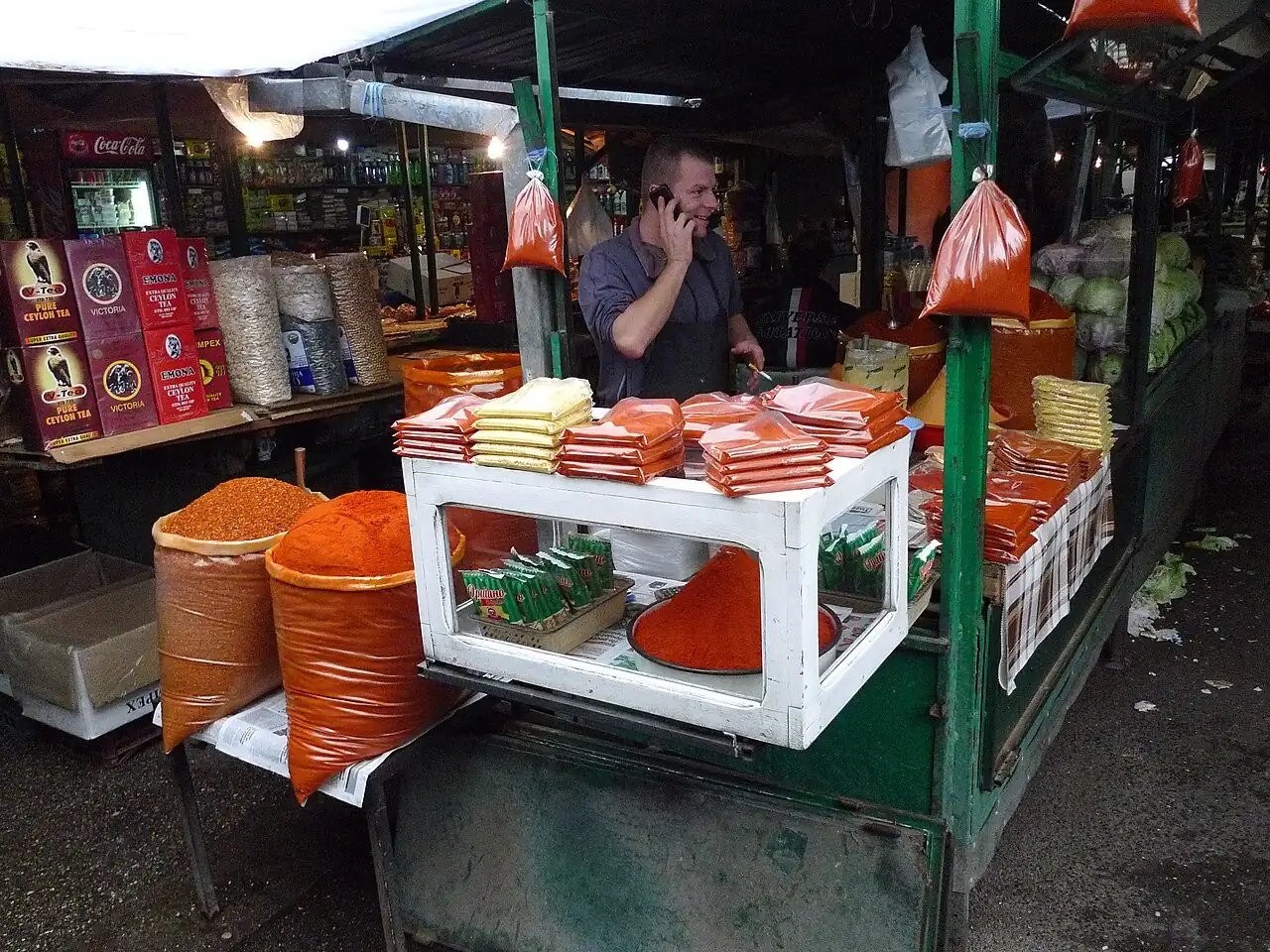
A working stash for a city day is a mix of 100s and 500s plus coins. Keep a 2,000 for the ATM run, not for the pepper stall.
The euro peg, without the folklore number
Travel pages love to print a single magic figure - often 61.3644, sometimes “about 61.5” - and call it the peg. The National Bank does not publish that number on its site. What it does publish is the policy, and the daily rate.
Since January 2002 the National Bank has targeted the denar’s nominal exchange rate against the euro (it targeted the Deutsche Mark from October 1995 until then). The intermediary objective of monetary policy is to keep that rate stable (NBRM, design of monetary policy). In February 2026 the governor put it in plain language: the denar’s exchange-rate stability “remains solidly anchored” (NBRM press release, 6 February 2026).
The number you can actually check is the middle rate on the Foreign Exchange Rates List. For 15 August 2026 (list no. 152, published 14 August, valid from midnight) the National Bank’s own service gave:
| 1 unit | MKD middle rate, 15 Aug 2026 |
|---|---|
| Euro | 61.495 |
| US dollar | 53.1642 |
| Pound sterling | 71.9661 |
So 1,000 denars was 16.26 euros, 18.81 dollars or 13.90 pounds on that day. Tomorrow’s list will be on nbrm.mk/kursna_lista-en.nspx. Banks and exchange offices post their own buying and selling rates around that middle; they are not required to match it to the last decimal.
That stability is why you can price a trip in euros before you fly and not get a nasty surprise on the ground. It is also why paying a card in euros through dynamic currency conversion is a gift to the machine, not to you - you’re leaving a rate the National Bank holds steady in order to take a worse one.
Bank ATMs, the fee on the screen, and DCC
The cheapest denar for most visitors is a bank-branded ATM in town: Komercijalna Banka, Stopanska Banka, NLB Banka, Halkbank. Those names are on buildings in Skopje, Ohrid and Bitola. Airport arrivals has machines too; the same rule applies there as anywhere else.
What that machine will charge you, as the holder of a foreign card, is not a number this page can honestly print. Major banks publish tariffs for their own customers. They do not, on the pages checked for this guide, publish a tourist-facing “foreign card cash withdrawal” line. Traveller reports bounce between “no operator fee” and a flat few hundred denars, which is exactly why a made-up percentage would be a lie. Read the screen. If an operator fee is coming, the machine has to show it before you confirm. Your home bank may add its own foreign-withdrawal or FX charge on top - that’s their tariff, not Macedonia’s.
Two habits save more money than hunting for a “free” machine:
- Decline conversion. If the screen offers to charge you in euros, dollars or pounds, say no. Take the amount in MKD. Dynamic currency conversion (DCC) is the ATM (or the card terminal) selling you its own exchange rate. On a currency the National Bank holds steady, that spread is pure waste.
- Take a sensible chunk, not coffee money. If the operator fee is a flat amount, three 2,000-denar withdrawals cost three fees. One 10,000-denar withdrawal costs one. Don’t empty the card - leftover denar is awkward once you’ve left - but don’t nibble either.
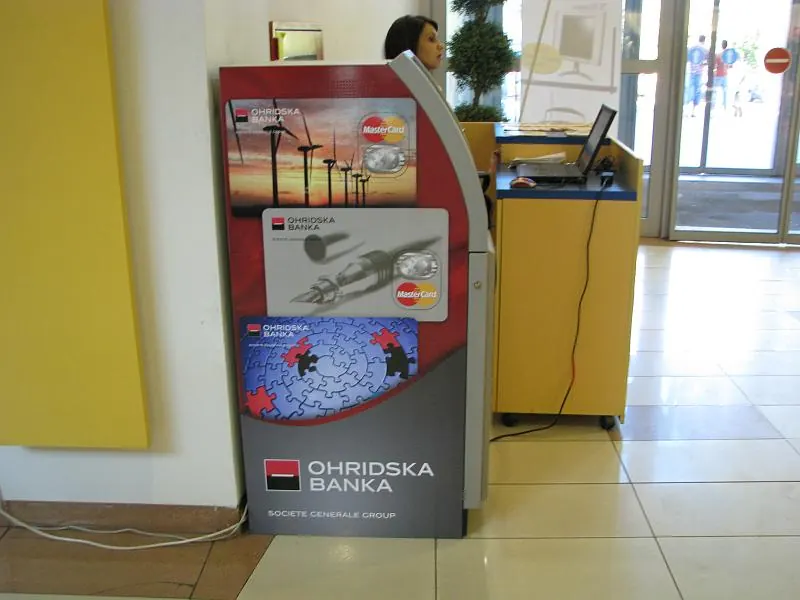
Machines sometimes refuse a foreign card for no obvious reason. Try the next bank’s ATM rather than the same one twice. Coverage thins outside the towns: if you’re heading for Mavrovo, Pelister or a village guesthouse, withdraw in Skopje, Ohrid or Bitola first.
Opening a local account is a different job, and only worth it if you’re staying. That’s the banking in North Macedonia guide, not this one.
Where a card works, and where it doesn’t
Cards are normal in city hotels, shopping malls, supermarkets and many restaurants in Skopje and Ohrid. Visa and Mastercard are the networks you’ll actually meet. American Express is a gamble; don’t build a day around it.
They are not a substitute for cash. Expect to pay in denar notes at:
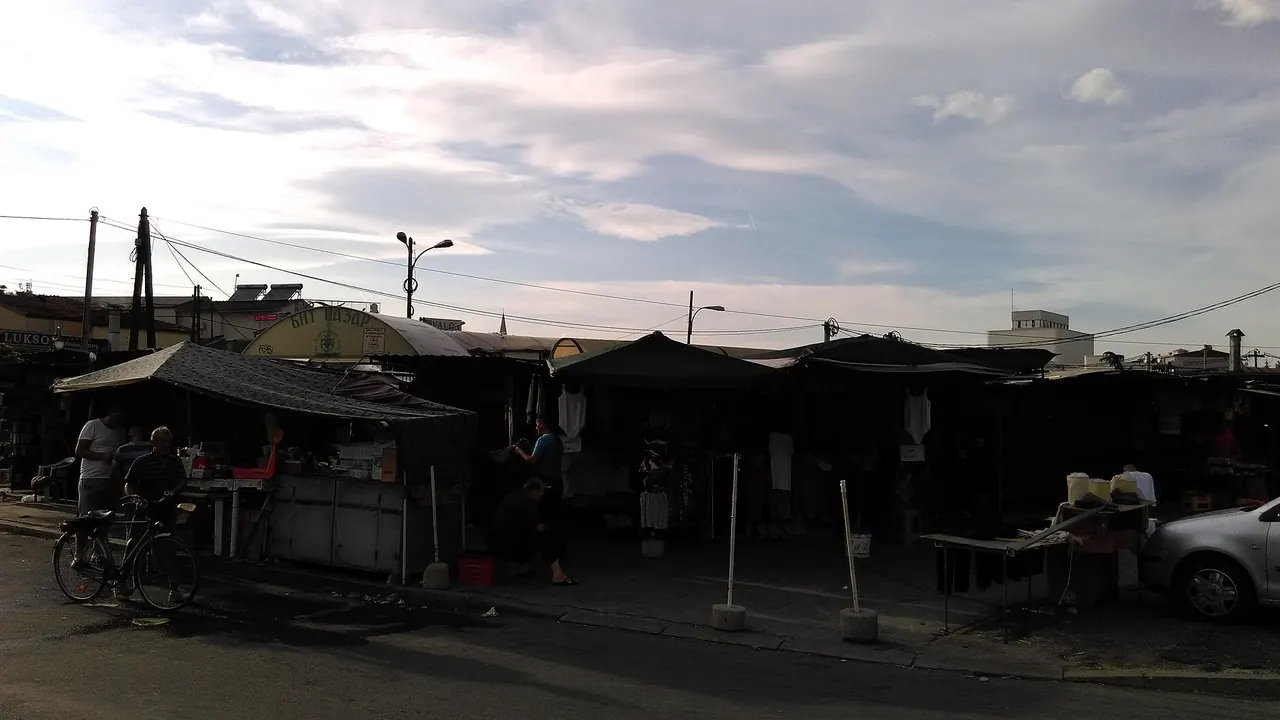
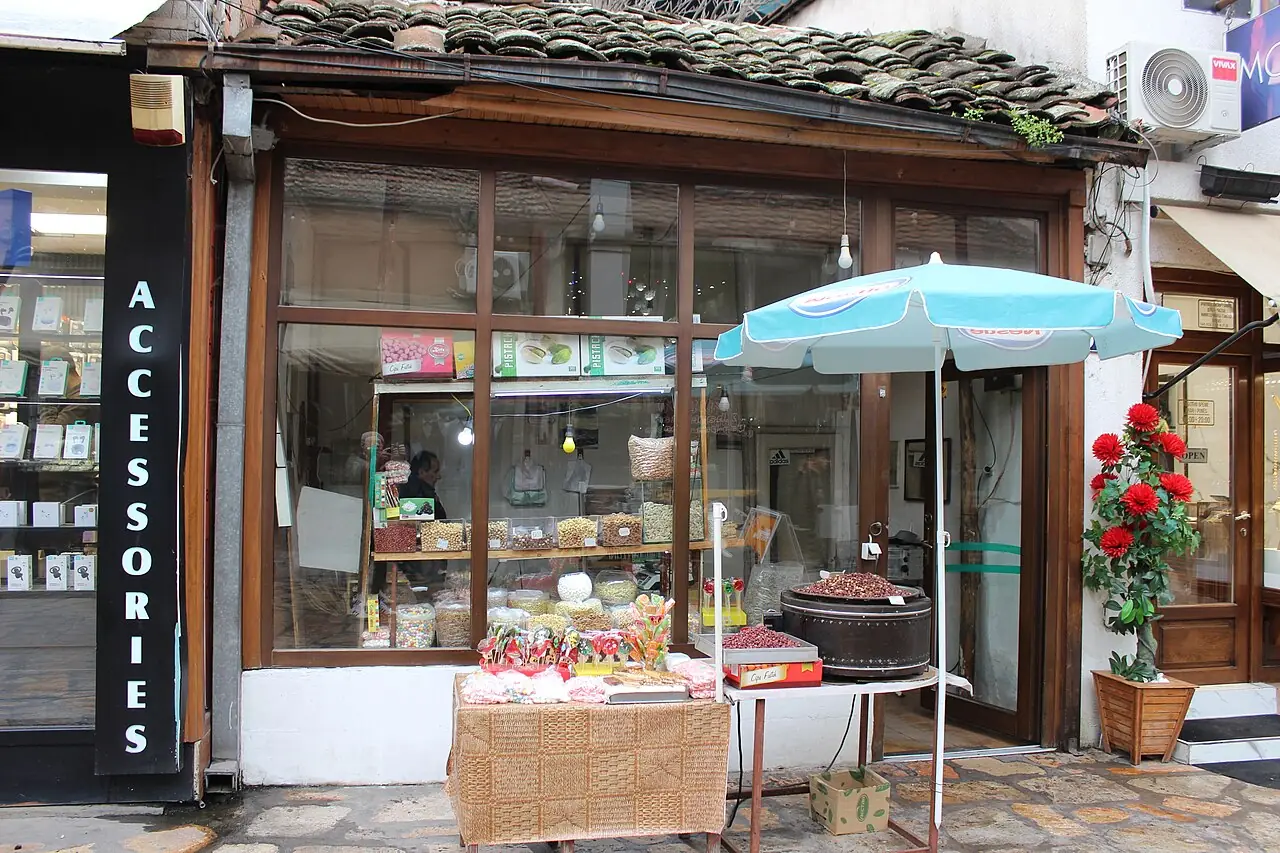
- green markets (Bit Pazar in Skopje is the obvious one)
- bakeries and small kafanas
- bazaar stalls and craft shops
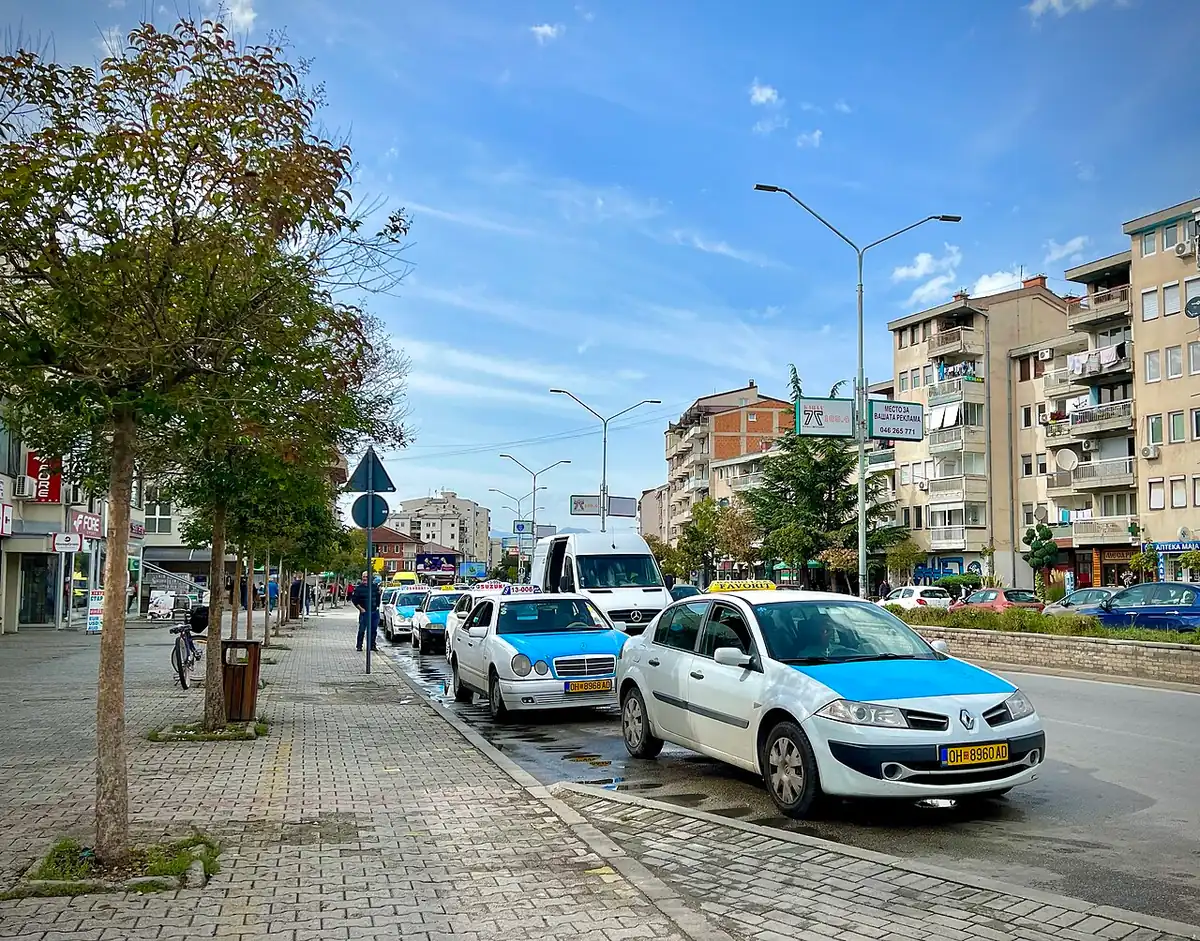
- many taxis, unless the driver runs Bolt
- museum and monastery ticket windows
- boat tickets at Matka and some Ohrid harbour desks
- smaller guesthouses, especially outside the two main towns
That’s observed practice on this site, not a law, and it shifts every year toward more terminals. The honest version is: carry both. A card for the hotel and the supermarket; a fold of notes for everything that still runs on a drawer.
At a card terminal, the same DCC trap shows up as “charge in EUR?” or a pre-converted total in your home currency. Pay in MKD. If the amount looks like it has already been converted, cancel and ask them to run it in denar.
Changing cash after you land
If you already hold euro notes, a licensed exchange office (menjačnica) in town will buy them. Compare the posted buying rate with that day’s NBRM middle rate - on 15 August 2026, 61.495 MKD per euro - and walk on if the gap looks greedy. Airport desks are convenient, not automatically competitive; the posted board is the evidence, not a rumour that “airports are worse.”
Don’t buy a brick of denar before you fly. Few counters outside the country stock it, and you can pull what you need from a bank ATM after landing. Do change leftover notes before you leave, at a licensed office, rather than hoping the next country wants them.
Tipping is a habit, not a rule
There is no law that says you have to tip in North Macedonia, and no official hospitality tariff that sets a percentage. What you’ll see in practice is smaller and more local than the “always 10 percent” line in generic Balkans blogs.
In a cafe, people often round up - 90 denars on an 80-denar coffee, kept as change. At a sit-down restaurant, leaving something in the 5 to 10 percent region in cash is a common way to say the service was good. It is not compulsory, and a bad meal does not require a performance of gratitude. Hotel porters and drivers who haul bags appreciate a small note; taxi drivers more often just keep the rounded fare.
Card terminals frequently cannot add a tip. If you want the money to reach the person who served you, leave it in denar on the table. That’s the whole custom: optional, cash, and sized to the bill, not to a rulebook.
Bringing cash in, taking leftover denar out
For a normal holiday this never bites, but the Customs Administration does publish limits, and they’re worth knowing if you’re the person who travels with an envelope.
Coming in: you may bring foreign cash up to the equivalent of 10,000 euros without declaring it. 10,000 euros or more must be declared at the border (Customs, bringing in foreign cash; English leaflet CARRYING CASH WITH YOU?).
Going out, as a non-resident: you may take out up to 10,000 euros and up to 120,000 denars freely. Above 10,000 euros you need the certificate customs issued when you brought that money in. Residents face a tighter euro cap on the way out; tourists usually don’t.
Those rules were checked against the Customs pages on 15 August 2026. The site’s TLS certificate failed verification that day, so treat the numbers as the published leaflet and confirm at the crossing if you’re carrying anything close to the limit.
If you came here for a daily budget
You want the other pages. The trip cost guide itemises a day. The cost index splits Skopje, Ohrid and Bitola. This page is the kit that makes those numbers spendable: denar in the pocket, MKD on the terminal, and a rate you can look up on the National Bank’s own list instead of a screenshot from last year.
Pack the boring version. A card that works abroad, a second card in a different bag, and enough denar for a market morning plus a taxi that doesn’t take plastic. Check the ATM screen. Pay in MKD. Leave the folklore peg in the folklore.
Good to know
Exchange rates move daily and ATM operator fees are set by the machine, not by this page. The National Bank middle rates and the customs cash-declaration rules below were checked on 15 August 2026. Confirm the rate on nbrm.mk and the fee on the ATM screen before you confirm a withdrawal.
Details checked: August 15, 2026
Read also

Before you go · 11 min read
North Macedonia Travel Tips: Know Before You Go
Updated · September 5, 2026Pack a Type C/F adapter, plan around Sunday shop closures, carry denar, check tap-water alerts, and sort eSIM plus insurance before you land.

Before you go · 10 min read
Macedonian for Travelers: Phrases That Open Doors
Updated · August 31, 2026A working Macedonian phrase kit for travelers: Cyrillic, how to say it, and when it helps in a kafana, taxi or market.

Before you go · 9 min read
Skopje vs Ohrid: Which Should You Base Yourself In?
Updated · September 24, 2026Skopje for flights, museums and day trips; Ohrid for the UNESCO lake and summer swimming - about 3 h 20 apart by bus, and most trips work best split.

Before you go · 12 min read
Skopje or Sofia: Which Balkan Capital to Visit?
Updated · September 26, 2026Skopje's rooms cost less, Sofia's airport transfer is easier, and a direct bus links the two in about 5h for about EUR 27. Here's which to fly into first.