
Is Ohrid Worth Visiting? The Case For and Against
Is Ohrid worth the trip? What UNESCO protects, what summer crowds and prices do to it, when to go instead, and who should pick a different town.
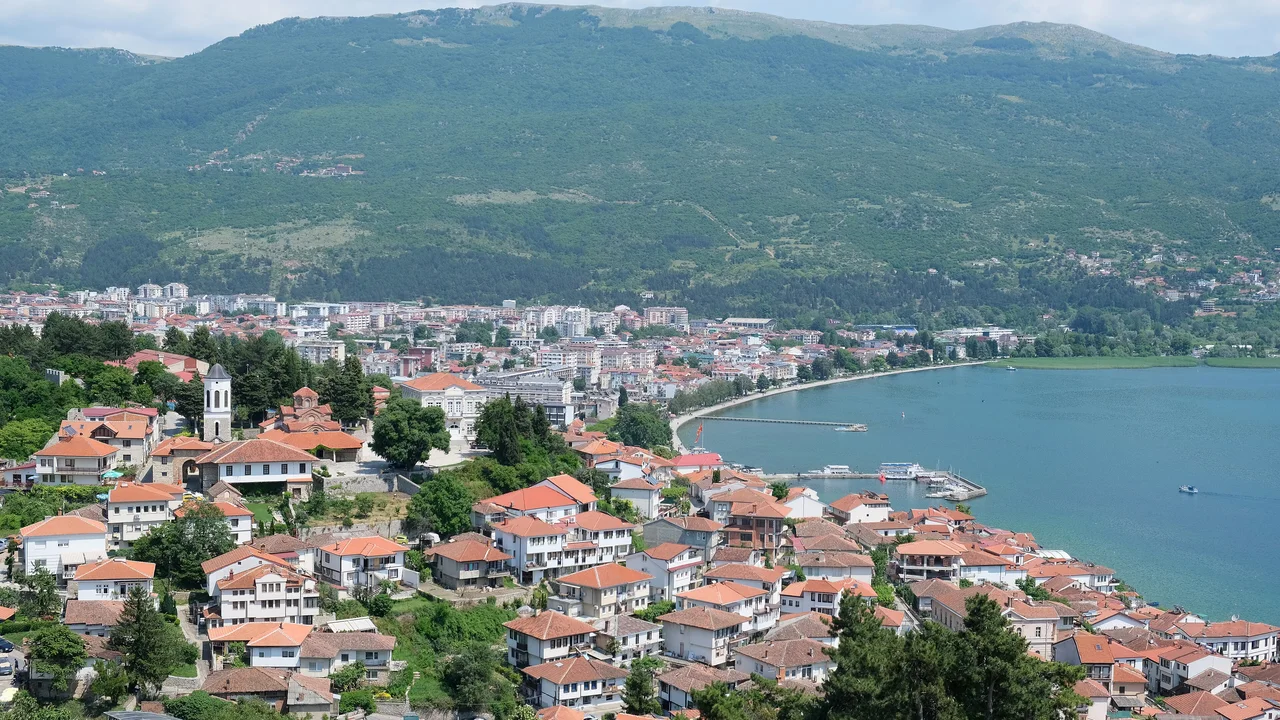
Yes, Ohrid is worth visiting, with a condition: go in June or September rather than the July-August peak, and give it two nights, not a few hours. The town is small. What justifies the trip is the combination: a lake that UNESCO protects for nature and for culture, an old town of churches and Byzantine icons, and a harbour you can sit beside for a whole evening. The honest downsides are that it gets busy and pricey in high summer, and that if you want big-city culture or nightlife, another stop does it better.
What the UNESCO listing covers
Ohrid is a World Heritage site twice over. UNESCO’s entry says the Lake Ohrid region was inscribed for its nature in 1979 and for its cultural heritage a year later, and in 2019 the property was extended to include the Albanian side of the lake. It covers about 94,729 hectares, so the listing is the lake and its shores, not just the postcard town.
That matters for planning. On the natural side, UNESCO describes an ancient tectonic lake with more than 200 plant and animal species that belong to it, 17 of them fish; its age, depth and both shores are in our Lake Ohrid guide. You will not see most of that, but it is why the lake is treated as more than a backdrop. On the cultural side, the entry cites archaeological remains from the Bronze Age to the Middle Ages and more than 800 Byzantine-style icons. The icons are the reason to step inside a church rather than photograph it from the lane.
So the lake is a big part of Ohrid’s value, and you only use it if you get on or into the water. A day of churches and nothing else leaves out the half of the listing that is natural.
The case for going
- It fits in your head. The old town, fortress hill, the ancient theatre and the clifftop church at Kaneo can be walked in a day. Our Ohrid itinerary guide sets out what fits into one, two or three days, so you don’t need to improvise.
- The lake is the second day. A boat trip to the Monastery of Sveti Naum is the classic: Armada lists the return at €20 for adults and children 10 and over (checked 15 November 2026), with online booking open from May to September, and our boat-trip guide also lists guided days at higher prices.
- It’s an easy arrival. Ohrid’s airport is about 10 km northwest of town on the official aerodrome sheet, 15 to 25 minutes by road; transfer prices are further down the page.
- It’s a different trip from the capital. Skopje has its own case: a bazaar, a fortress and a canyon. Ohrid is the lake-and-icons trip.
The case against
Be realistic about three things.
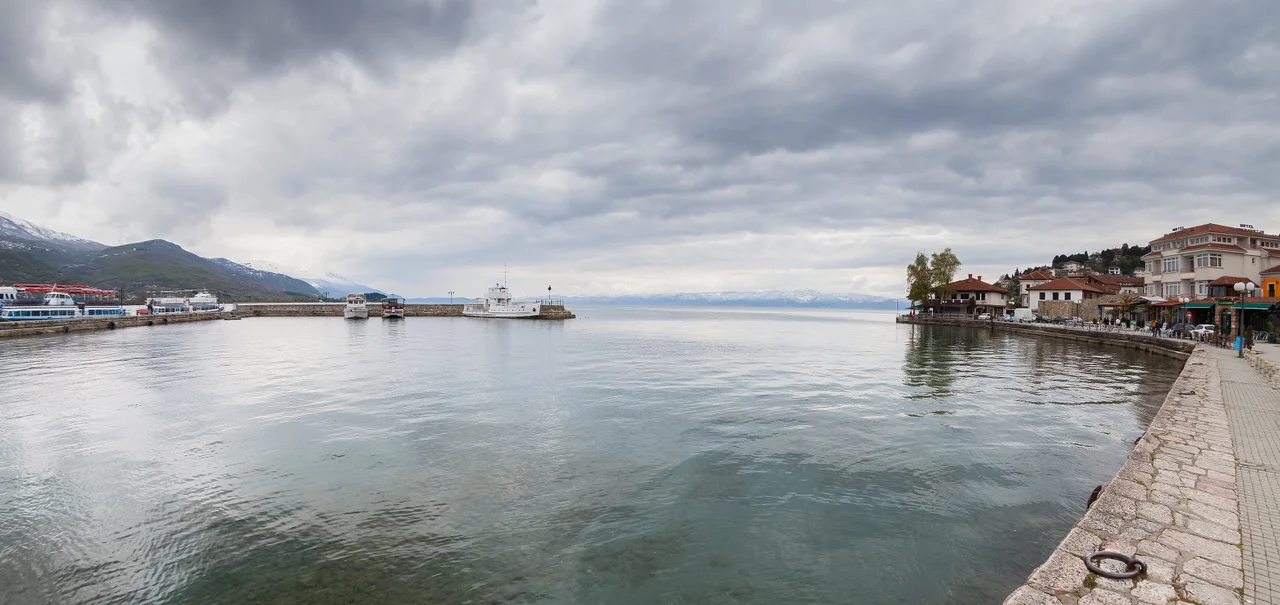
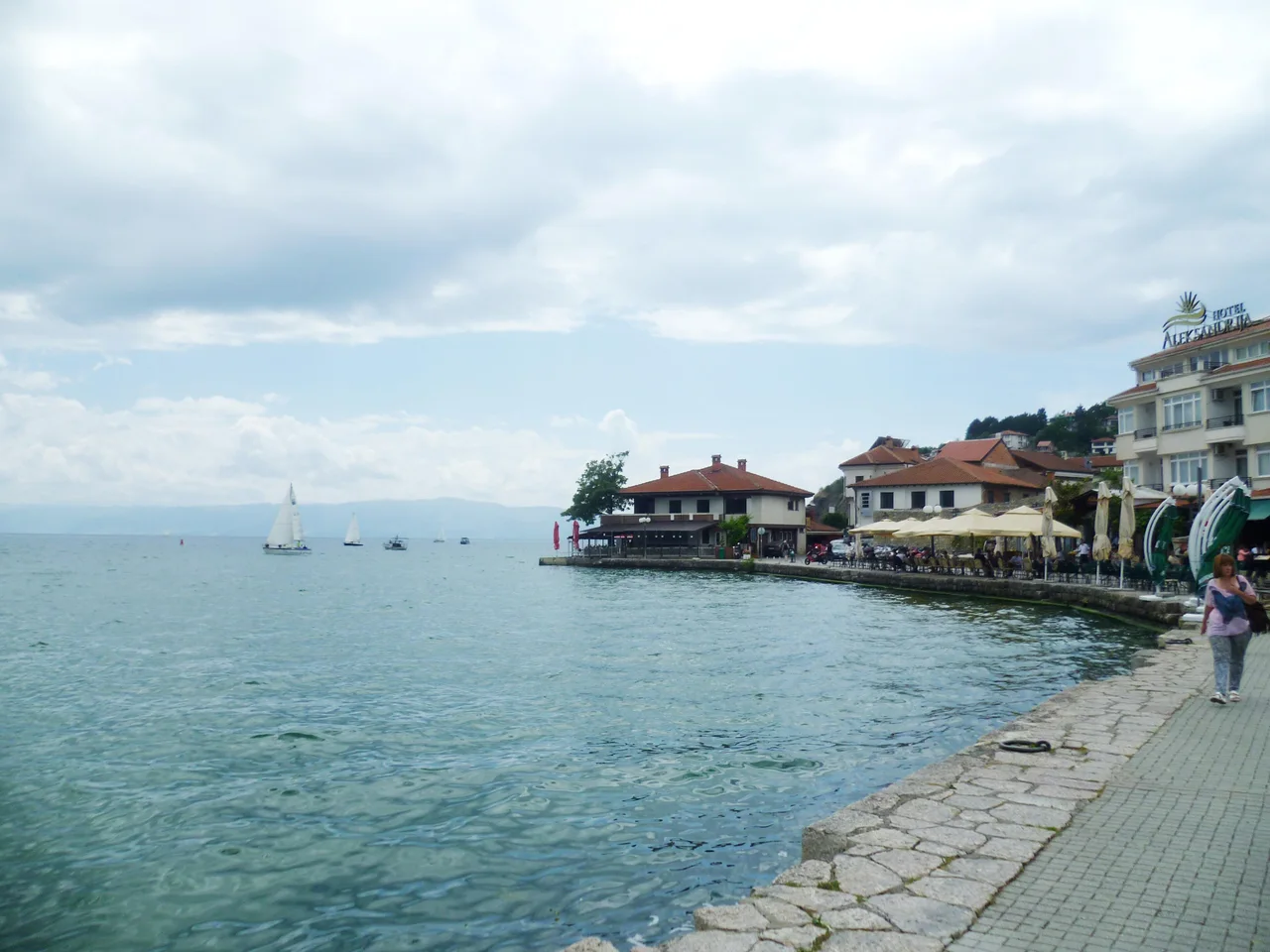
It’s small. If you arrive expecting a lively city, you’ll run out of sights early. Stay four or five nights and the extra days go on the water and on day trips from Ohrid, not on more of the old town.
High summer is a squeeze. Lakeside rooms cost more and go earliest in July and August, as our Ohrid accommodation guide sets out, and the harbour, boardwalk and boat queues are at their busiest then. The Ohrid Summer Festival fills the same weeks with concerts, so book rooms and dinner tables early if your dates overlap. We don’t have an official monthly visitor count to quote, so the room prices are the clearest measure of the summer crush.
It’s not a nightlife town, and hiking needs wheels. Evenings are a lakeside dinner, not a club scene. Galičica rises right behind town, but its trailheads are hard to reach without a car or a tour, and the pass road has shut in recent winters, as Ohrid in winter explains; without a car or a tour, the mountains stay a view.
How the town and the lake share your days
Ohrid gives you two different days, one in town and one on the water, and you’ll probably enjoy one more than the other. For the full list of stops see things to do in Ohrid.
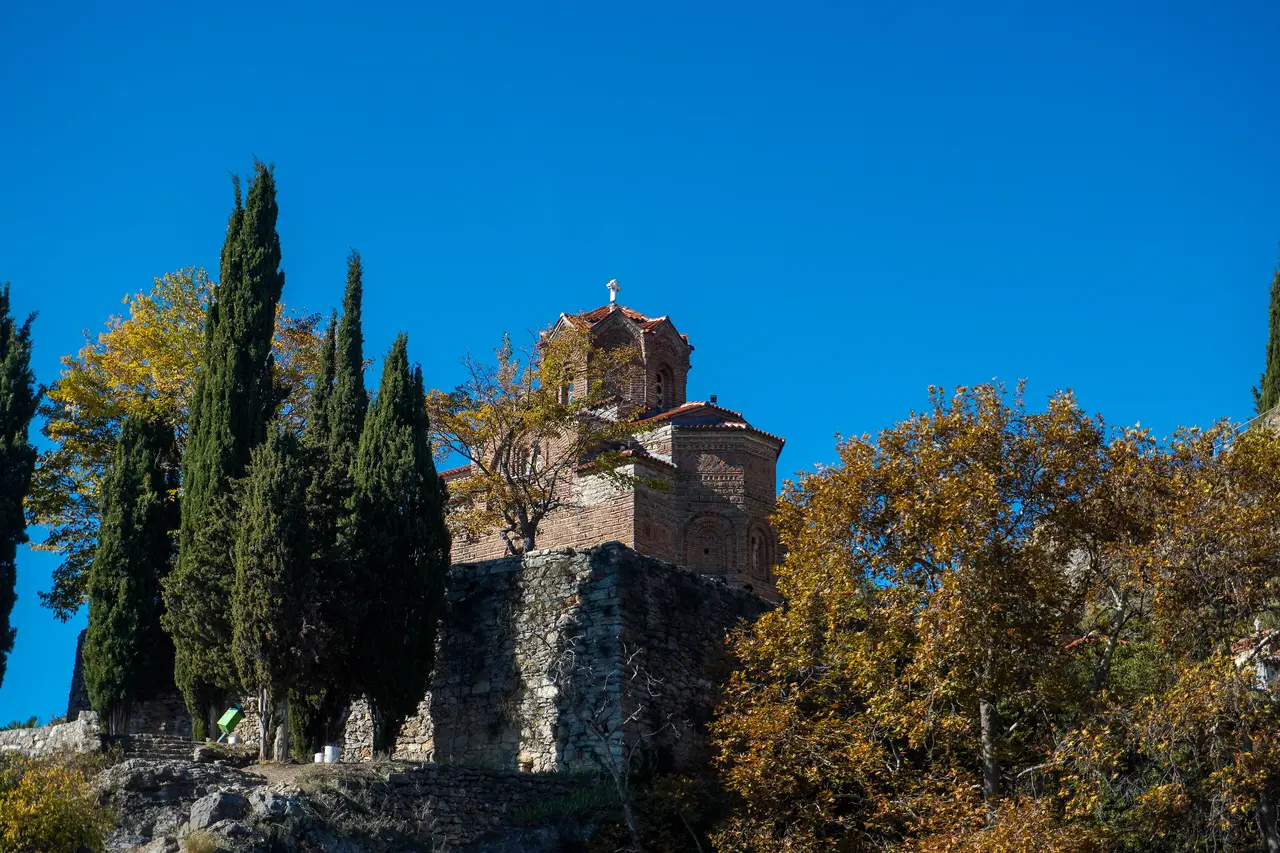
A town day is slow walking uphill and along the shore. The stops that carry the UNESCO story are close together: Plaošnik, with St Clement’s church and its early Christian mosaics; Samuel’s Fortress for the view back over the roofs and the water; and Sveti Jovan at Kaneo, the 13th-century church above the lake, reached along the boardwalk from the old town. All three are within walking distance of each other, with places for a coffee in between. If sights like these are your reason to travel, the town alone repays a full day.
A lake day needs a decision, because the lake is large and the good water isn’t all in town. Our swimming guide sorts the beaches by distance and who they suit, and the Bay of Bones is the reconstructed pile-dwelling village that many boat days include as a stop. Choose between a boat day and a beach day rather than trying to do both, because each fills most of a day.
A trip with a church day and a lake day is what the listing describes, and it’s why two nights is the sensible minimum. One night gets you the town at dusk and a morning on the water, which is enough to decide whether you want to return. If churches bore you and swimming doesn’t appeal, skip Ohrid.
When to go, and what changes
June and September are the shoulder months to aim for: the boats run (Armada’s booking season is May to September) and rooms sit below the July-August level. Outside that boat season, the lake excursions are fewer and the trip shifts to walking, churches and quiet. If you’re looking at December to February, read Ohrid in winter first: it covers which restaurants, hotels and roads are open, and it is a different trip rather than a lesser one.
Getting there and what it costs
Ohrid’s airport is about 10 km northwest of town on the official aerodrome sheet, 15 to 25 minutes by road. A pre-booked Kiwitaxi transfer started at €33 per vehicle for a micro car and €43 for a seven-seat minibus on 15 November 2026. Our Ohrid Airport to town guide covers the taxi rank and the options without a booking. From the capital, how to get to Ohrid from Skopje compares bus and car.
Beyond the old town: Struga and the Albanian shore
The UNESCO listing doesn’t stop at the old town, and neither does the trip. Struga, on the lake’s northern shore, is the quieter base if the old town’s summer crowd puts you off; where to stay in Struga compares its areas and beaches. If the Albanian half of the listing tempts you, the Lake Ohrid two-country guide drives the whole loop, border tips included. If a bigger city with more museums is what you want instead, Skopje does that better; Ohrid vs Bitola weighs the lake against Bitola’s café streets and Roman ruins.
Verdict by traveller
| If you are… | Then |
|---|---|
| A first-time visitor with 2-3 nights | Go, in June or September |
| Travelling in July or August | Go, but price the room first and book early |
| Short on time (one day) | Treat it as a stop on a road trip, old town only |
| Looking for a city break | Choose Skopje, and add Ohrid only if you have the days |
Read also

Before you go · 8 min read
Mavrovo vs Jahorina: Lifts, Passes and Transfers
Updated · November 17, 2026Mavrovo in North Macedonia vs Jahorina in Bosnia: Jahorina's 2026/27 passes against Mavrovo's last list, piste length and airport transfers.

Before you go · 7 min read
Skopje vs Tirana: Which Capital, or How to Split Days
Updated · November 15, 2026Tirana has the bigger airport and a 24-hour airport bus; Skopje has the Ottoman bazaar. A direct coach joins them, so here is how to split the days.

Before you go · 9 min read
Mavrovo vs Bansko: Ski Cost, Lifts and Getting There
Updated · November 8, 2026Mavrovo or Bansko? Lifts, season dates and the latest pass prices side by side, plus flights and transfers from Skopje and Sofia. Checked 8 Nov 2026.

Before you go · 12 min read
Skopje in Winter: What's Open, the Smog and Skiing Nearby
Updated · November 7, 2026Skopje from November to March: museum hours with no winter timetable, the smog map, a cable car that is shut, and skiing an hour or two away.