
Lake Ohrid Two-Country Guide: Ohrid and Pogradec
Drive the whole Lake Ohrid loop across two countries - Ohrid and Sveti Naum in Macedonia, Lin, Pogradec and Drilon in Albania, plus border tips.
You can see both shores of Lake Ohrid from almost anywhere on it, so the obvious question is whether you can drive right round - and you can. The full loop is about 95 km, crosses into Albania and back, and takes in Ohrid, Struga, Lin, Pogradec, Drilon and Sveti Naum in a single unhurried day. The clever part is doing it as a loop rather than an out-and-back: that’s how you leave Macedonia at one border post and come home through a second, so you never drive the same road twice.
It’s a proper two-country day, not a quick hop, and it rewards a car. Buses circle the lake in pieces, but none of them string the whole thing together, and the two most interesting stretches - the quiet Albanian shore and the springs at either end - are exactly where public transport thins out.
The loop at a glance
| Leg | Distance | Notes |
|---|---|---|
| Ohrid → Struga | ~15 km | Lakeside road, Black Drin outflow |
| Struga → Kjafasan / Qafe Thane border | ~12 km | Main crossing into Albania |
| Border → Lin → Pogradec | ~30 km | Albanian west shore, mosaics, lake town |
| Pogradec → Drilon → Tushemisht | ~10 km | Springs, then the second border |
| Sveti Naum → Ohrid | ~29 km | Back in Macedonia, east shore home |
Total is roughly 95 km of driving. Distances are approximate - the lake shore road bends a lot - so treat the numbers as a guide, not a stopwatch.
Which way round, and the two-border trick
Go clockwise: Ohrid, Struga, into Albania near Struga, down the west shore to Pogradec, then back into Macedonia at Sveti Naum and up the east shore to Ohrid. Anticlockwise works too, but clockwise puts the low morning sun behind you on the prettiest stretch and leaves Sveti Naum for late afternoon light - that’s the order we’d pick.
The reason the loop beats a there-and-back is the pair of crossings. The Kjafasan / Qafe Thane post near Struga is the main road border between the two countries, so you use it to get into Albania. Then, at the southern tip of the lake, the small Tushemisht / Sveti Naum crossing brings you straight back into Macedonia by the monastery. Enter by one, leave by the other, and the whole lake unrolls past your window once, cleanly.
Ohrid: the start
Begin in Ohrid, the Macedonian old town that gives the lake its fame. Have a coffee on the waterfront, then point the car north for Struga while the shore road is still quiet. If you’ve never been, build in extra time here at the end of the day rather than the start - there’s a lot to see, and it’s covered in our guide to things to do in Ohrid and the background piece on Lake Ohrid itself.
Struga and the Black Drin
Fifteen minutes up the shore, Struga sits where the Black Drin river leaves the lake and heads off toward Albania on its own. The town is smaller and plainer than Ohrid, but the river channel through the centre, with its footbridges, is a genuinely nice five-minute stop.
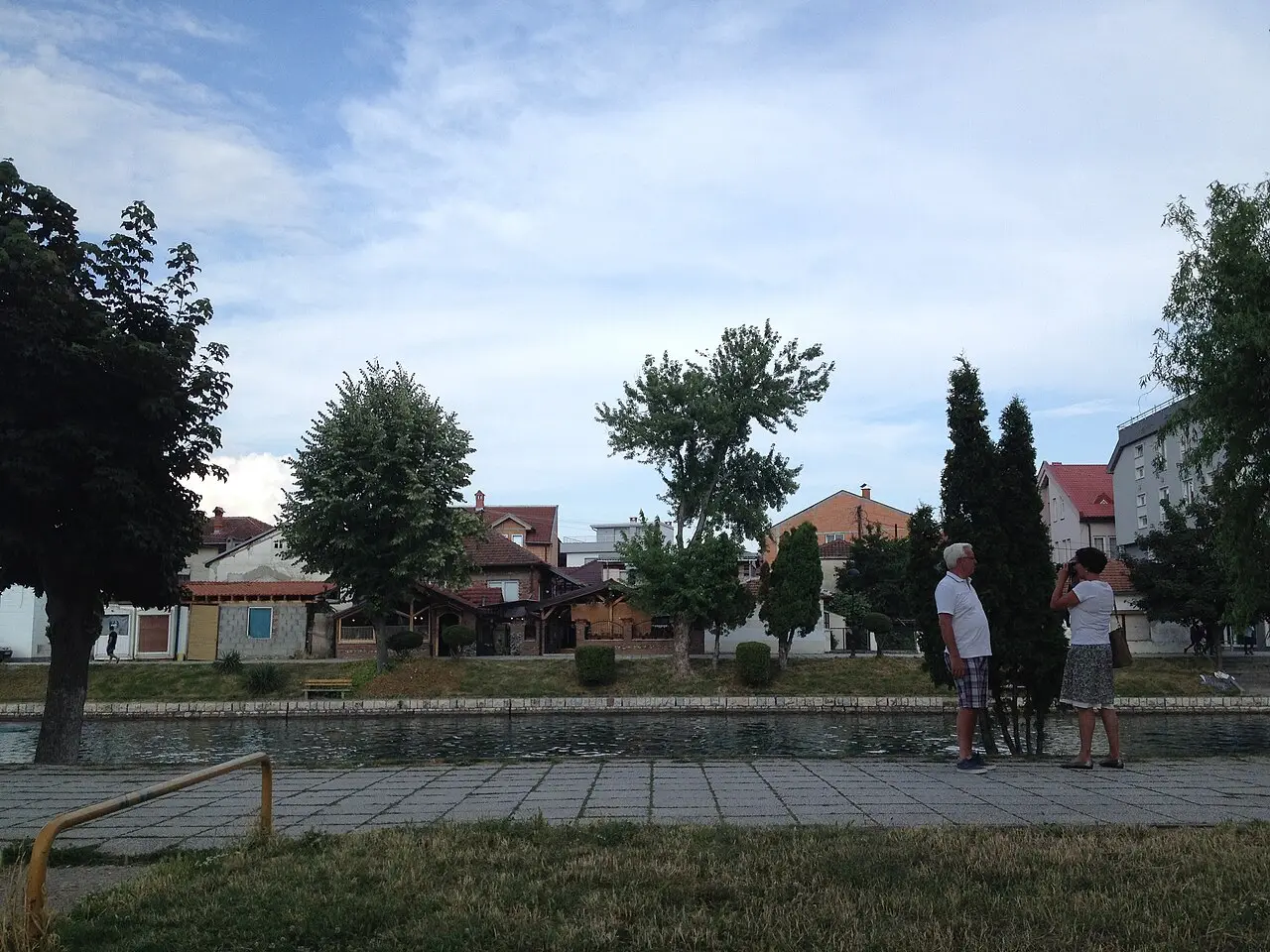
From Struga it’s about 12 km to the Kjafasan border. Fill the tank here if you’re low - fuel is a touch cheaper on the Macedonian side, and you’ll want to cross with a full car rather than hunt for a station in a new currency. More on Struga in the Struga travel guide.
Crossing into Albania
The Kjafasan / Qafe Thane crossing is the busy one. A 2023 version of joint control here didn’t clear the summer queues, and a fuller upgrade agreed in June 2026 isn’t confirmed running yet. In normal conditions you’re through in 15 to 30 minutes; a summer Saturday evening can be slower. Have passports ready for everyone in the car and your rental papers to hand (see the practicalities below - taking a hire car across is the one thing to sort in advance). Once you’re through, the road swings south and the Albanian shore opens up ahead.
Lin and its mosaics
A few kilometres in, a side road drops down to Lin, a village strung along a narrow peninsula that pokes out into the lake. It’s the prettiest single stop on the Albanian side: red roofs, fishing boats, water on three sides. Up on the headland are the remains of a 6th-century basilica whose floor was once laid with intricate mosaics - floral and geometric patterns first uncovered in 1967, part of the same UNESCO-listed Ohrid heritage that protects the Macedonian shore.
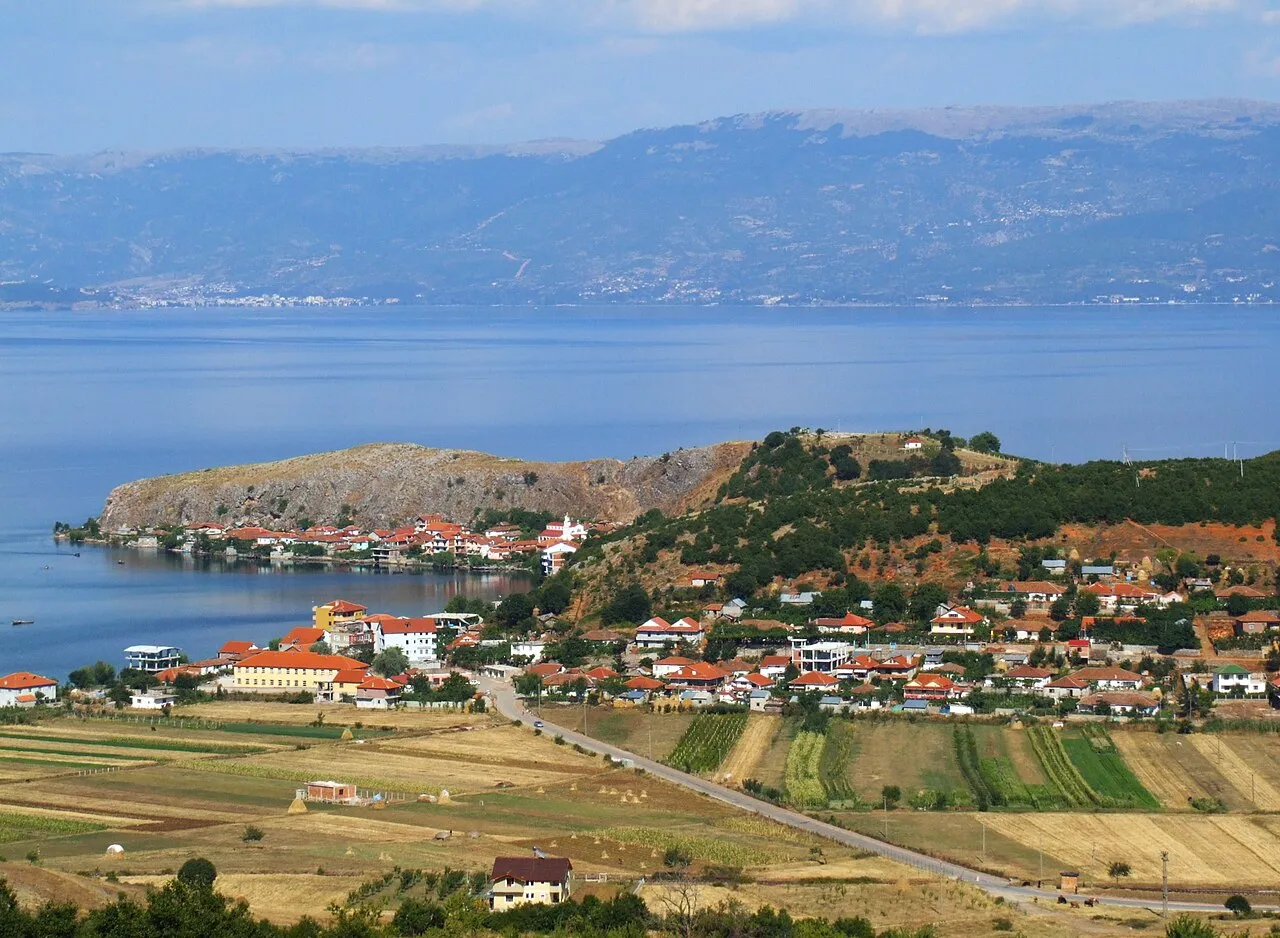
The mosaics are sometimes kept covered to protect them off-season, so treat the walk up for the view and the setting rather than a guaranteed look at the floors.
Pogradec
Back on the main road, Pogradec is the Albanian lake’s home town: a long lakefront promenade, cafes under the trees, and a slower pace than Ohrid. That’s the place for lunch. Order the koran (the local lake trout) or a slab of lakror, the coiled Albanian pie, and sit by the water. Prices land noticeably below the Macedonian side, which is part of the appeal.
Drilon and Tushemisht
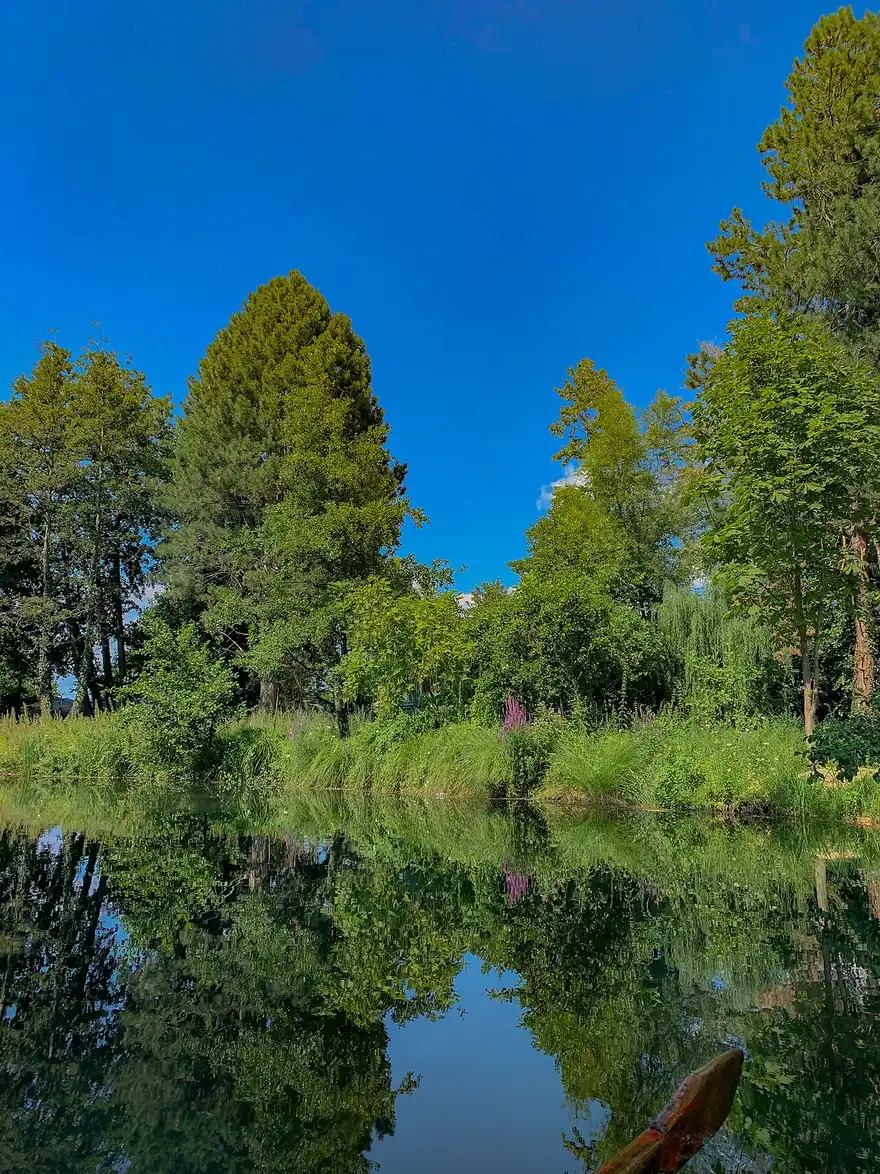
Five kilometres east of Pogradec, Drilon is a small park built around karst springs - cold, glass-clear water welling up out of the ground and running in channels under the plane trees, with rowing boats and, usually, a few swans. If the Macedonian shore has Sveti Naum’s springs, that’s the Albanian answer, and there are more than four kilometres of paths linking the pools to the neighbouring village of Tushemisht.
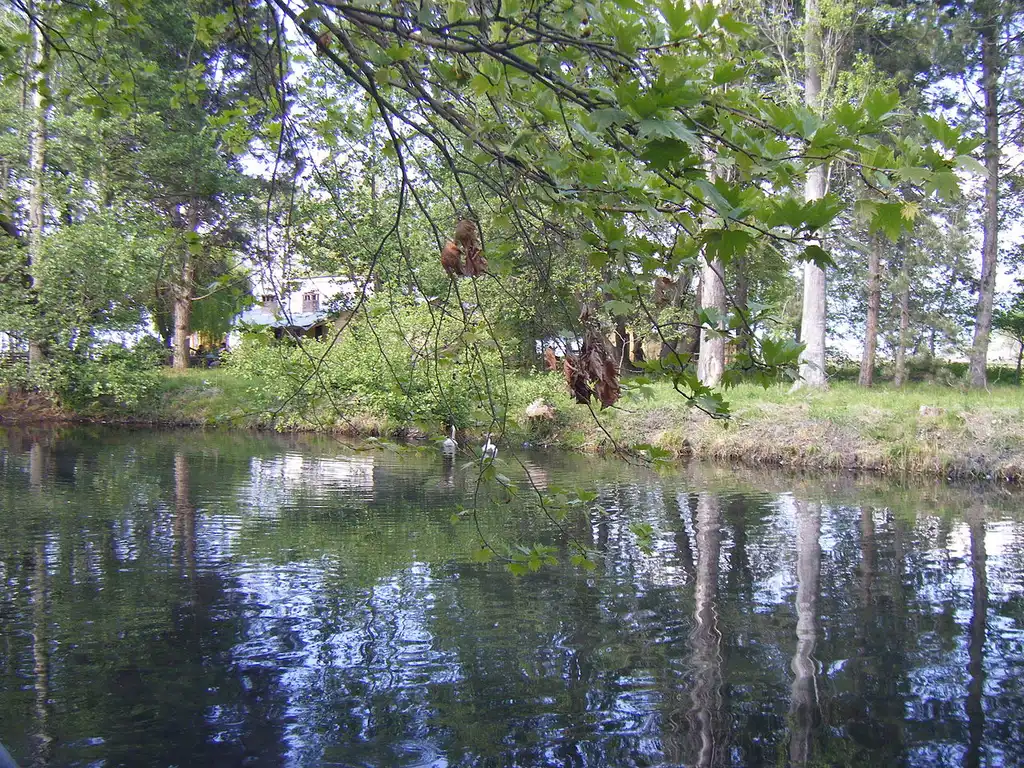
Tushemisht sits right by the second border, so it’s the natural last stop before you cross back.
Back into Macedonia at Sveti Naum
The Tushemisht / Sveti Naum crossing is the small, calm one, tucked into the trees by the monastery. It’s a tourist and local post rather than a freight route, so cars go through but big lorries don’t, and the waits are usually short - figure on 15 to 60 minutes, with the 07:00-10:00 peak, midday and weekends the slowest. No official opening hours are published for it, and Macedonian media still describe it as a seasonal crossing, so don’t bank on a night or out-of-season crossing without checking first; the small posts can close earlier than the map suggests.
You may read that people cross this border “on foot across no man’s land” - that’s the walkers’ experience, roughly a kilometre and a half between the two posts. In a car you simply drive it, and it’s over in a minute. On foot it’s a real walk rather than a hop - about 45 minutes from the monastery through to the first Albanian village - and our Ohrid to Sveti Naum guide has the measured distances and the bus and boat times to go with them.
Sveti Naum, then home to Ohrid
On the Macedonian side, Sveti Naum is the perfect place to end the foreign leg. The 10th-century monastery stands on a bluff above the lake, its own turquoise springs bubble up nearby, and peacocks strut the grounds.
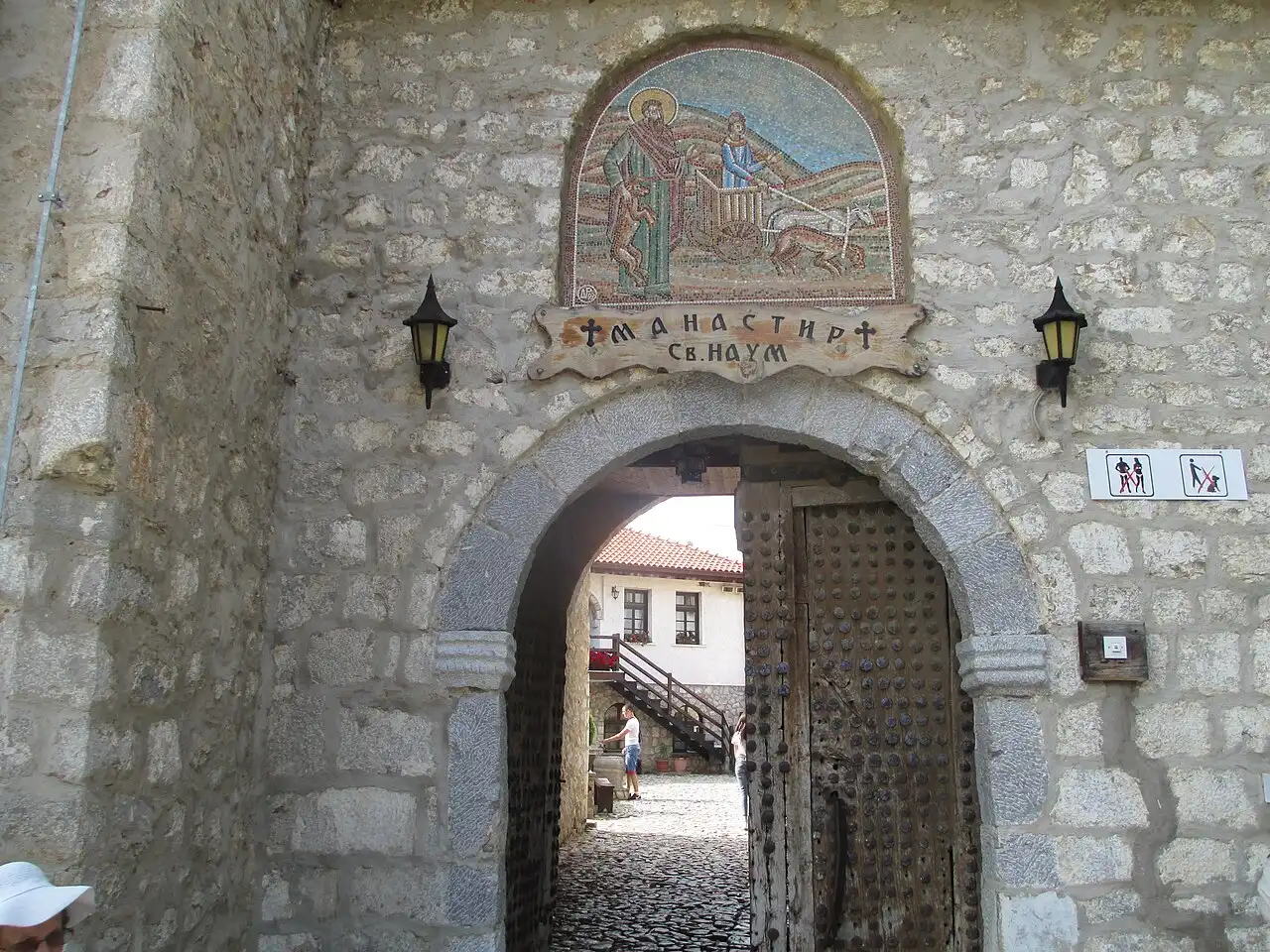
From here it’s about 29 km up the east shore back to Ohrid, a lovely late-afternoon drive with the lake on your left the whole way. The full story of the monastery and its spring boats is in our guides to Sveti Naum monastery and the Ohrid boat trip to Sveti Naum.
Practicalities
Two currencies. North Macedonia uses the denar, Albania the lek. You don’t need to load up on both - cards are widely taken, and euro cash is accepted in a pinch at tourist spots on either side - but don’t change a big wad of denar into lek for one lunch. Keep a little local cash for coffee, parking and the odd small entry fee.
Passports and the border. Both countries sit outside the EU and Schengen, so this is a real international crossing with a passport check, not an open internal border. Citizens of the EU, UK, US and Canada cross visa-free, but rules change, so confirm your own case against the official source and our North Macedonia visa requirements before you go. If you want a sense of how the two countries compare beyond the lake, we lay it out in North Macedonia vs Albania.
Taking a hire car across. This is the one thing to arrange ahead. Most companies will let you drive into the neighbouring country only with a Green Card insurance extension that names both countries, and often a signed cross-border authorisation - some cheaper local rentals don’t allow it at all, or charge a fee. Ask before you book, not at the desk. Our car rental guide covers what to check.
When to go. May to October is the window: warm water, long light, everything open. July and August are hottest and busiest, and that’s exactly when both border queues are longest, so start early. In winter the loop still drives, though check the Sveti Naum post before you set out - if it’s shut you come back via Kjafasan - and Drilon and the smaller spots go quiet while the light is short.
See also
- Things to do in Ohrid - the base town in detail
- Lake Ohrid - the UNESCO lake itself
- Sveti Naum monastery - the southern springs
- Ohrid to Sveti Naum and the border - buses, boats and the crossing on foot
- Struga travel guide - the Black Drin town
- Renting a car in North Macedonia - cross-border rules
- The Albanian side, from Tirana: Tirana to Lake Ohrid
- Getting here first: the Skopje to Ohrid road trip
Route day by day
- Days on the road
- 1
- Distance
- ≈95 km
- Budget from
- 45 EUR
- Best season
- May, June, July, August, September, October
The route at a glance
-
Ohrid (MK)
Route startstop ≈90 min
The start. UNESCO old town on the Macedonian shore - fuel up and head north around the lake toward Struga.
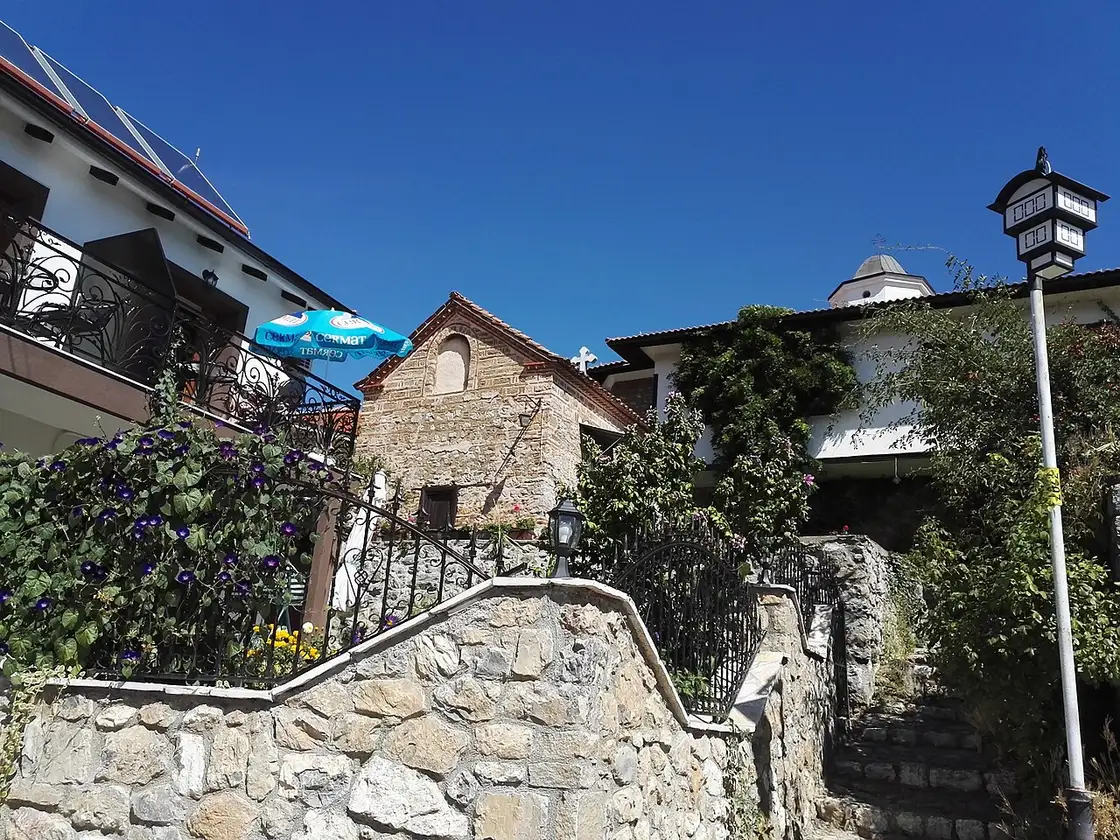
Photo: Qasinka · CC0 · Wikimedia Commons ( source) -
Struga (MK)
15 km from the startstop ≈30 min
Where the Black Drin flows out of the lake. Last Macedonian town before the Kjafasan / Qafe Thane border, ~12 km on.
Photo: Liridon · CC0 · Wikimedia Commons ( source) -
Lin (AL)
37 km from the startstop ≈60 min
A village on a narrow peninsula on the Albanian shore, with a 6th-century basilica and mosaics above the water.
Photo: Pudelek (Marcin Szala) · CC BY-SA 3.0 · Wikimedia Commons ( source) -
Pogradec (AL)
57 km from the startstop ≈60 min
The main Albanian lake town - a long lakefront promenade, koran trout and lakror pie for lunch.
Photo: GresildaCekrezi · CC0 · Wikimedia Commons ( source) -
Drilon and Tushemisht (AL)
63 km from the startstop ≈45 min
Karst springs and shady water gardens ~5 km east of Pogradec, then the lakeside village of Tushemisht by the border.
Photo: Nicholson1989 · CC BY 3.0 · Wikimedia Commons ( source) -
Sveti Naum (MK)
67 km from the startstop ≈60 min
Back into Macedonia at the Tushemisht crossing: a 10th-century monastery above the lake springs. Then ~29 km back to Ohrid.
Photo: Avi1111 (Dr. Avishai Teicher) · CC BY-SA 4.0 · Wikimedia Commons ( source)
Route map
The map with stops loads on click - to keep the page lightweight.
The map didn’t load. Check your connection and refresh the page.