
Skopje vs Tirana: Which Capital, or How to Split Days
Tirana has the bigger airport and a 24-hour airport bus; Skopje has the Ottoman bazaar. A direct coach joins them, so here is how to split the days.
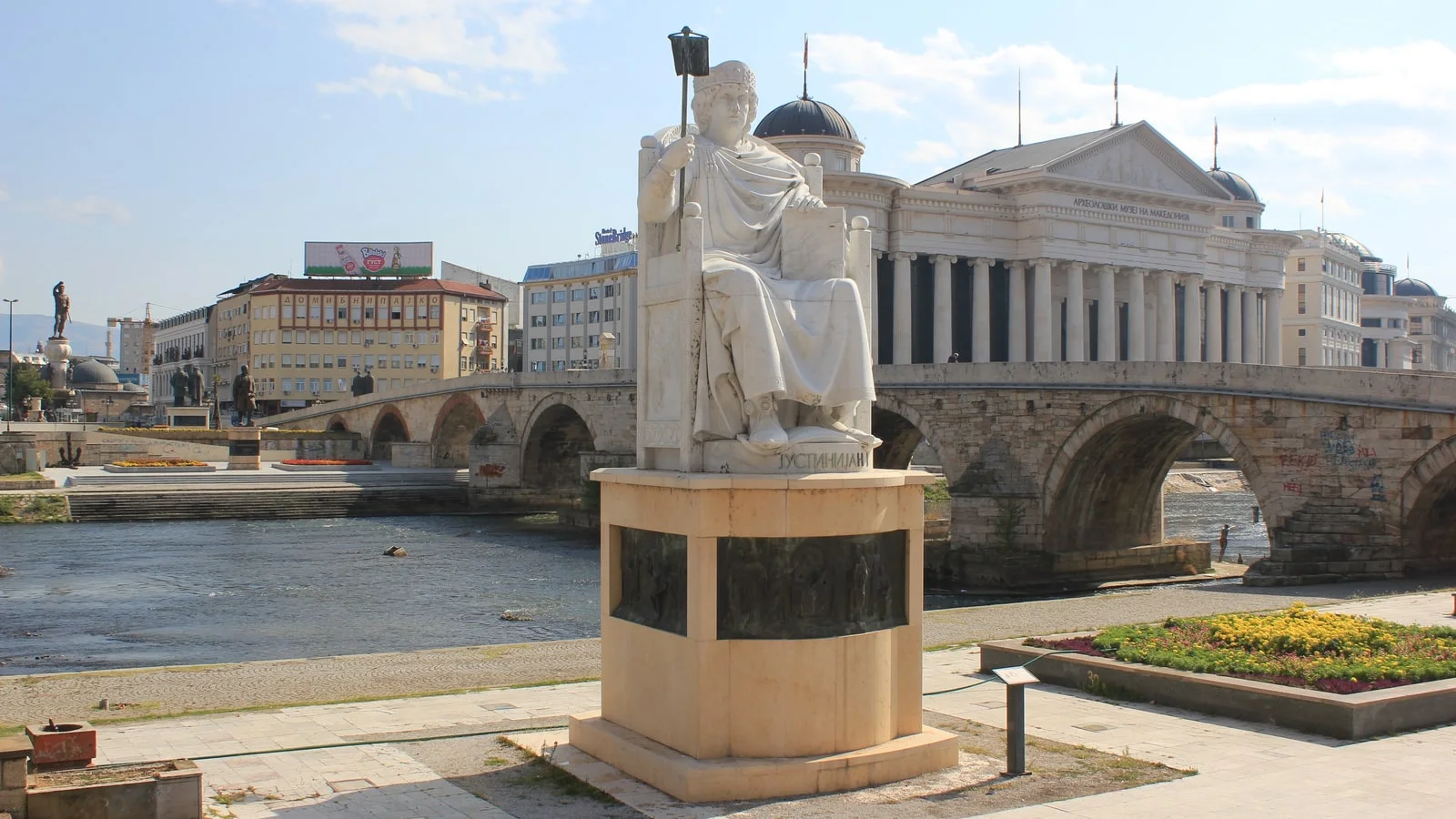
Pick Tirana if you want the busier airport, an airport bus every hour all night and a city that feels repainted from the ground up. Pick Skopje if you want an Ottoman bazaar and a canyon a short ride away. Most trips shouldn’t pick at all: a direct coach links the two capitals in five to seven hours, and Lake Ohrid makes a natural stop between them, so the useful questions are which one you land in and where the lake fits.
Landing: the two airports are not equals
In 2025 Tirana’s airport handled 11.64 million passengers and Skopje’s handled 3.21 million, about 3.6 times as many (both figures from the airports’ own 2025 traffic reports). For you that mostly means more airlines competing on the same date, so price fares into both cities before you fall for either. The Skopje to Tirana guide shows what that does to an open-jaw ticket.
The bigger gap is what happens after the baggage belt. Tirana’s official airport page lists a public bus that runs 24 hours a day, every full hour, takes 30 to 40 minutes and costs 400 lek, or EUR 4.50 if you pay in euros (our airport-to-city price index converts the lek price at about EUR 4.29). It leaves from a stop behind the Palace of Opera and Ballet. Skopje’s airport publishes the Erak shuttle at 199 MKD (about EUR 3.24) one way, but its timetable is built around flight arrivals and departures, not a fixed hourly rhythm. Both are the operators’ own prices as of November 2026.
That turns into a rule for late landings. At 2 a.m. in Tirana there’s a bus within the hour. In Skopje the gap comes earlier than you’d expect: on Erak’s winter 2026/2027 timetable the last airport bus before midnight leaves at 19:30 at the latest (17:45 on Mondays), and only one or two run after midnight, so a 22:00 landing usually means the taxi. It charges from a published airport price list, not a meter. Neither is a disaster, but it should decide which landing time you book. If the plane touches down in the small hours either way, a pre-booked car removes the question.
What each city does best
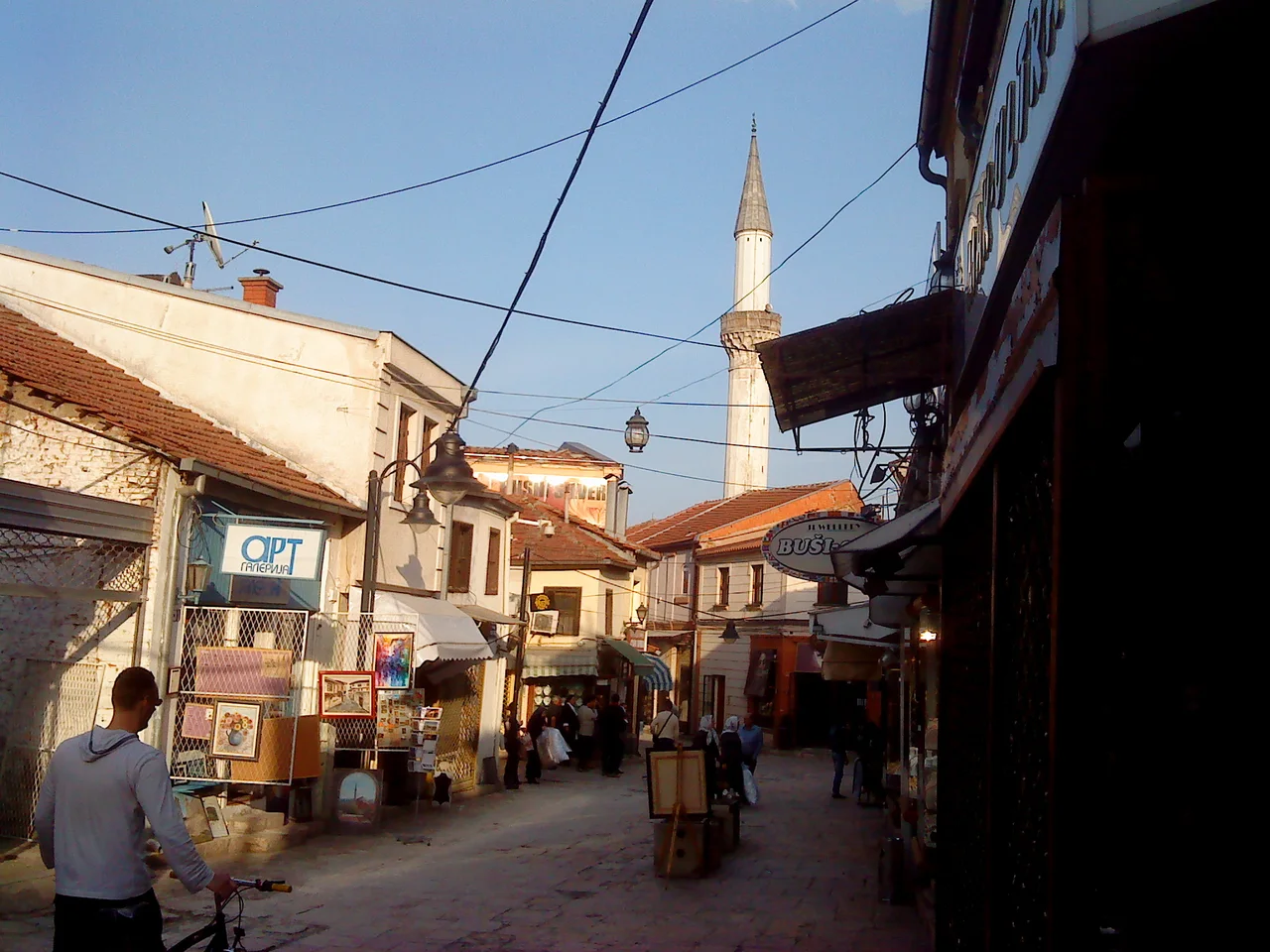
Skopje is two cities facing each other across the Vardar. The north bank is Ottoman: the Old Bazaar, the mosques and the fortress above them. The south bank is the statue-heavy square of the “Skopje 2014” rebuild, which splits visitors more than anything else in town. Our Skopje guide walks both banks, and two days covers them with room to spare.
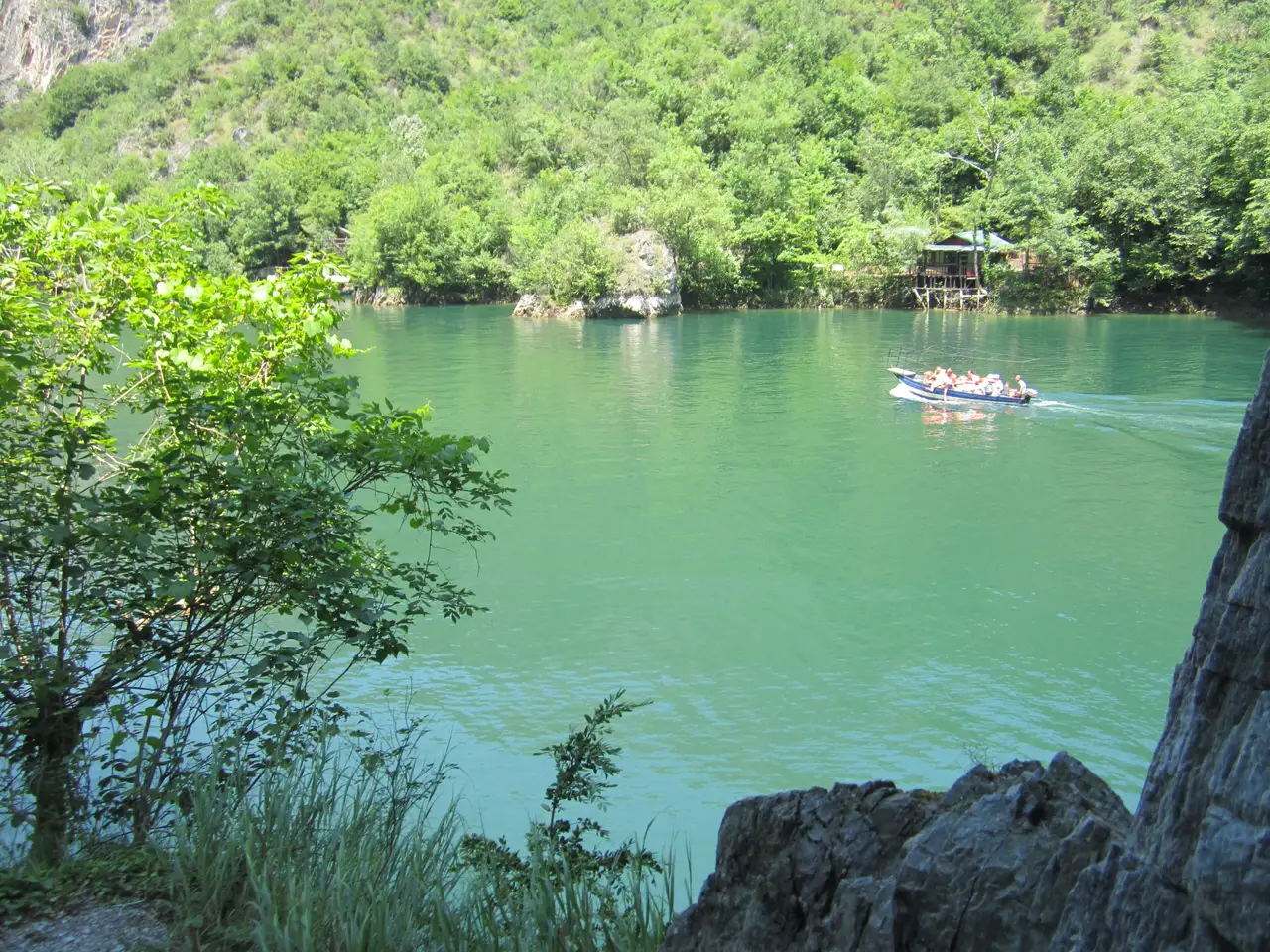
Skopje’s best card for a short trip is geography. Matka Canyon sits about 17 km from the centre, so an afternoon of cliff paths and a boat on the reservoir fits between lunch and dinner. One thing to leave out of the plan: the Vodno cable car was shut for an overhaul from April 2026 and we couldn’t confirm a reopening in mid-November 2026, so check that it’s running before you build a day around it.
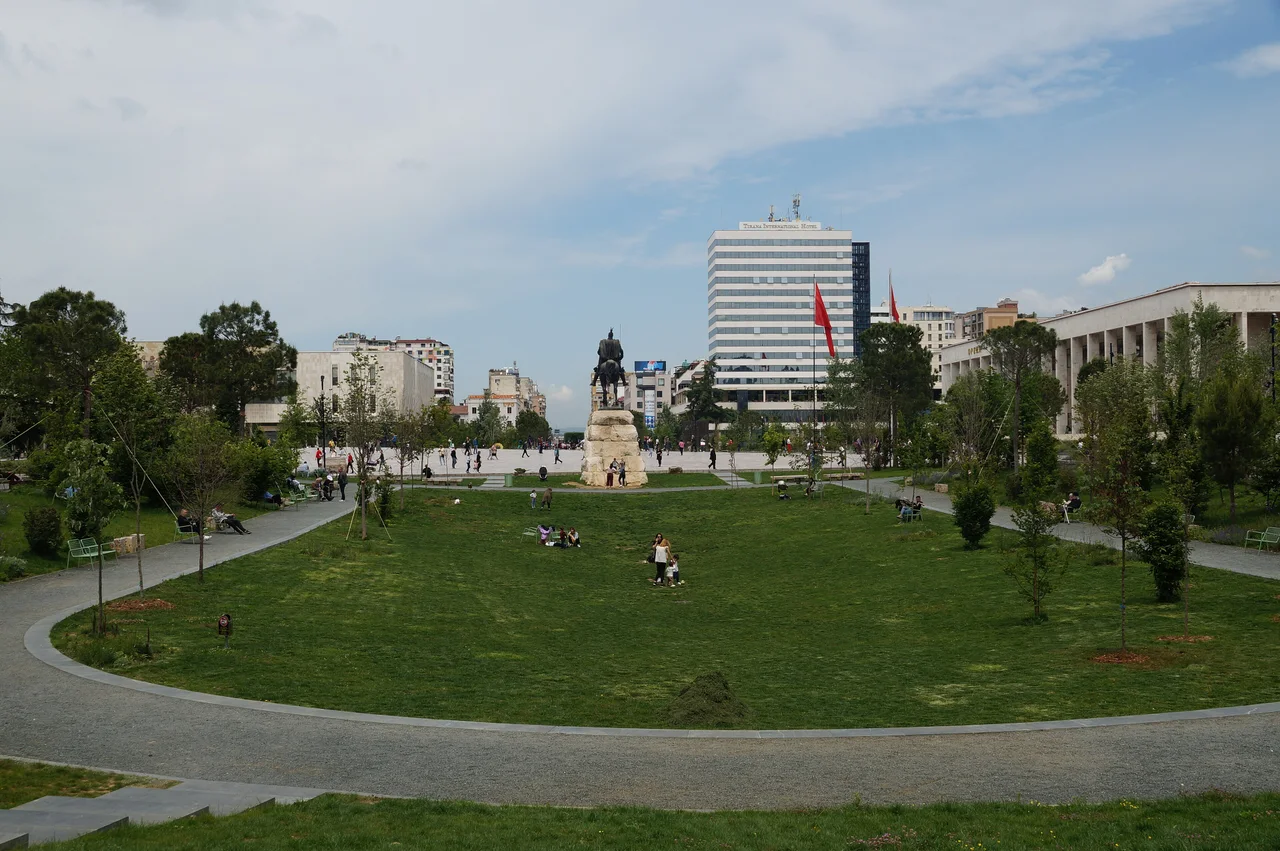
Tirana is the younger, louder, more colourful one. The sister site’s Tirana guide clusters the sights around Skanderbeg Square: the climbable Pyramid, the bunker museums and cafés in repainted socialist blocks. Start at the square, since the guide puts most of the centre around it, and keep the evening free for the cafés, because that’s what the city does better than Skopje.
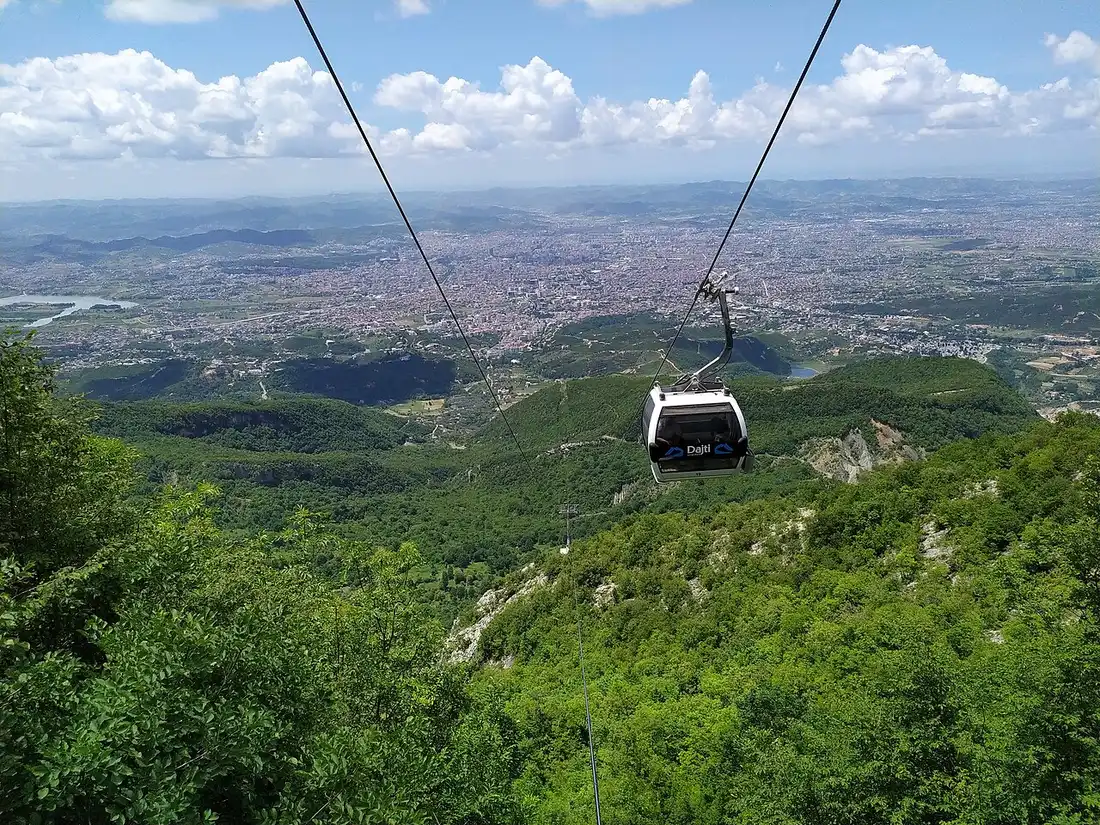
For the mountain, the sister site’s Dajti Ekspres guide covers the cable car above the city. The operator’s own timetable shows it closed on Tuesdays (checked in November 2026), so plan it for another weekday. In broad strokes, Tirana is the one for eating out and evenings, Skopje the one for history and day trips. Give the other city a night too: the coach makes it cheap.
Cash, Schengen and roaming
The practical difference is currency. Skopje runs on denars and Tirana on lek, not the euro. Small bus tickets and bakery stops lean on cash in both places, so draw a little local money at each end and spend leftover denars before you cross. Both countries sit outside the Schengen area, so days here don’t use up your 90 in Schengen, and outside the EU, so check whether your home plan’s roaming covers them or buy a local eSIM. Beds and rooms cost about what you’d expect in two Balkan capitals and move with the date and the season, so compare live prices for your own dates rather than routing the trip around them. For daily budgets see the North Macedonia cost index.
The coach that joins them
There’s no flight or train between the two capitals, so the coach is the link. It covers the road in five to seven hours depending on the corridor, at about EUR 20 to 30 a seat as of November 2026. The overnight service is where this pair has a trap of its own. Two of the four daily Gjirafa departures arrive at 02:30 and 05:00 at a terminal out by Tirana’s ring road, and the 24-hour airport bus doesn’t leave from there, it leaves from behind the Opera. Book the first night’s bed before you take the overnight, and count a taxi in. The Skopje to Tirana guide explains the three roads and the border waits.
This is also what makes the open-jaw ticket worth pricing: fly into whichever capital has the cheaper seat, take the coach, and fly home from the other. You skip the ride back and pay one coach fare instead of two. If you’re also weighing Bulgaria’s capital, the same logic runs through Skopje or Sofia, and North Macedonia vs Albania compares the two countries as a whole.
The lake in the middle
The cleanest answer for a week is a line, not a pair: Skopje, Lake Ohrid, Tirana. Not every coach goes that way: the quickest road between the capitals runs through Kosovo, and another crosses the mountains via Debar. The lake road passes Struga, crosses the Kjafasan-Qafë Thanë pass and runs on via Elbasan, so that’s where to split the trip. Take a coach from Skopje to Ohrid or Struga, give the lake a night or two, and take a bus or furgon on to Tirana. You pay for two shorter rides instead of one long one. Tirana to Ohrid and Skopje shows the corridor, furgons and border included.
Nights per city
How many nights each city gets follows from the length of the whole trip. Three ways it usually goes:
- Three or four days, one capital. Take whichever flight is cheaper and stay put. Two days is enough for either centre, and the third goes on Matka Canyon from Skopje or the Dajti cable car from Tirana (closed on Tuesdays).
- Five to seven days, both capitals. Two nights each, with the spare days spent on the lake or a day trip. The coach eats most of a day, so keep the arrival-day plans light. How many days in Skopje sets out the Skopje half.
- A week or more with Lake Ohrid. Skopje, the lake, then Tirana, as above, with the coach split at the water.
Before you book, check entry rules for your own passport on the official pages the Skopje to Tirana guide cites, and book the first night’s bed before you settle on a late flight.
Read also

Before you go · 8 min read
Is Ohrid Worth Visiting? The Case For and Against
Updated · November 18, 2026Is Ohrid worth the trip? What UNESCO protects, what summer crowds and prices do to it, when to go instead, and who should pick a different town.

Before you go · 8 min read
Mavrovo vs Jahorina: Lifts, Passes and Transfers
Updated · November 17, 2026Mavrovo in North Macedonia vs Jahorina in Bosnia: Jahorina's 2026/27 passes against Mavrovo's last list, piste length and airport transfers.

Before you go · 9 min read
Mavrovo vs Bansko: Ski Cost, Lifts and Getting There
Updated · November 8, 2026Mavrovo or Bansko? Lifts, season dates and the latest pass prices side by side, plus flights and transfers from Skopje and Sofia. Checked 8 Nov 2026.

Before you go · 12 min read
Skopje in Winter: What's Open, the Smog and Skiing Nearby
Updated · November 7, 2026Skopje from November to March: museum hours with no winter timetable, the smog map, a cable car that is shut, and skiing an hour or two away.