
Skopje to Tirana (Albania): Buses, Driving & the Border
Skopje to Tirana by bus, transfer or car: departures, fares in euros and dollars, the three road corridors, border rules and what it really costs.
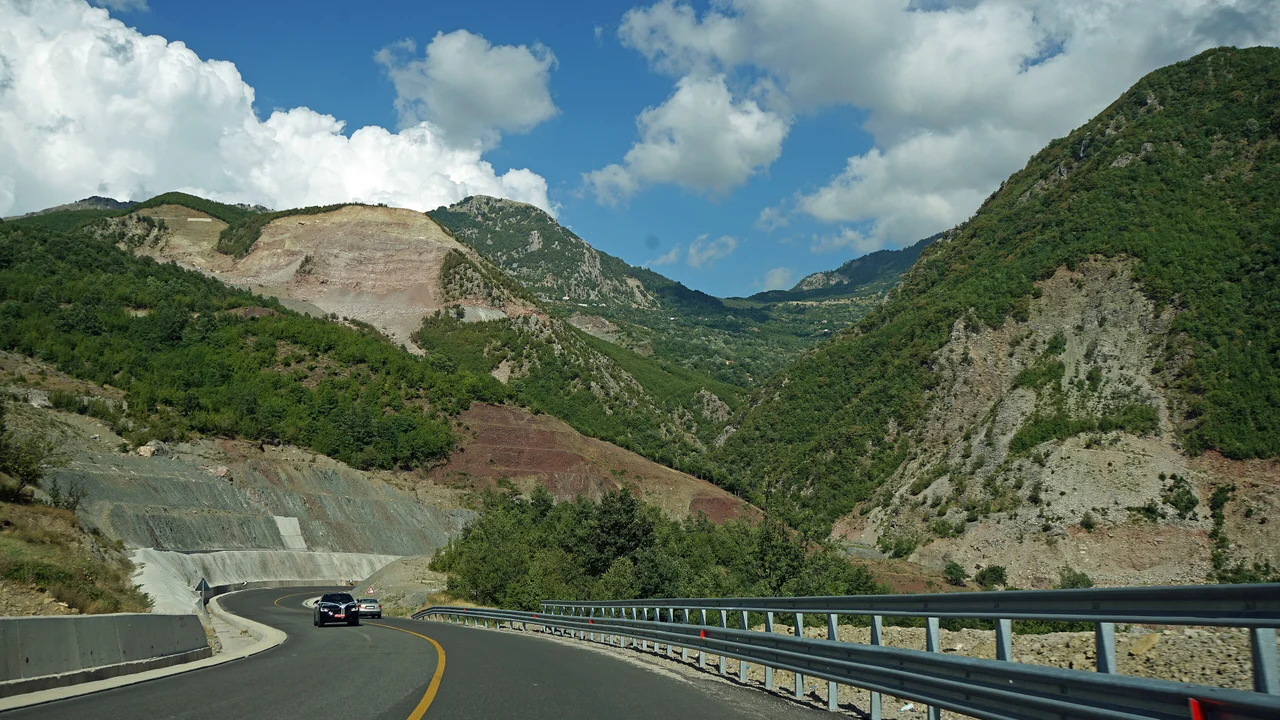
There’s no train and no flight between Skopje and Tirana, so the road is the whole story. The default answer is a direct bus: somewhere between four and seven departures a day depending on the season, about 20 to 30 euros (roughly $23 to $35), and five to seven hours including the border stop. Driving yourself takes four to five hours of actual driving, plus passport control, and the distance is anywhere from 220 to 290 km depending on which road you end up on.
That last bit is the thing nobody warns you about. Ticket platforms sell this exact city pair as a 243 km trip and as a 288 km trip, and the buses genuinely don’t all go the same way. One corridor crosses a single border in the mountains, another runs mostly on motorway but puts you through Kosovo and two passport checks, and a third loops down past Lake Ohrid. Which one you get is decided by the operator, not by the price you pay.
What it costs and how long it takes
Fares here are boring: everyone charges about the same. FlixBus lists the run as direct, 288 km, fastest 5 hours 10 minutes, from EUR 20.89, with at least five departures a day, first 08:10 and last 21:00. Gjirafa Travel shows three direct services at EUR 20 (Ido Tours 08:00 and 20:50, Drita Travel 16:00) plus a 22:00 overnight with Amalfi at EUR 30 taking seven hours: four in all. Balkanviator, which aggregates timetables, counts up to seven departures from 06:00 to 23:20 across nine carriers.
At the Bank of Albania’s rate on 31 July 2026, a euro was 93.53 lek and a US dollar 81.28 lek, so a EUR 20 seat is about $23 and the overnight $35: close to unbeatable for a five to seven hour international coach. Fares and times shift with the season, so check the live ones.
In July and August book a day or two ahead: afternoon and evening services fill with families and diaspora traffic. Do it from home - FlixBus and Gjirafa sell this route online and take a foreign card.
There’s a bigger reason this coach exists. Tirana’s airport handled 11.64 million passengers in 2025; Skopje’s handled 3.21 million. The cheap fare into the region lands in Tirana far more often, so flying into one capital and out of the other beats backtracking, and at EUR 20 this bus joins them up for nothing.
Where you leave from, where you land
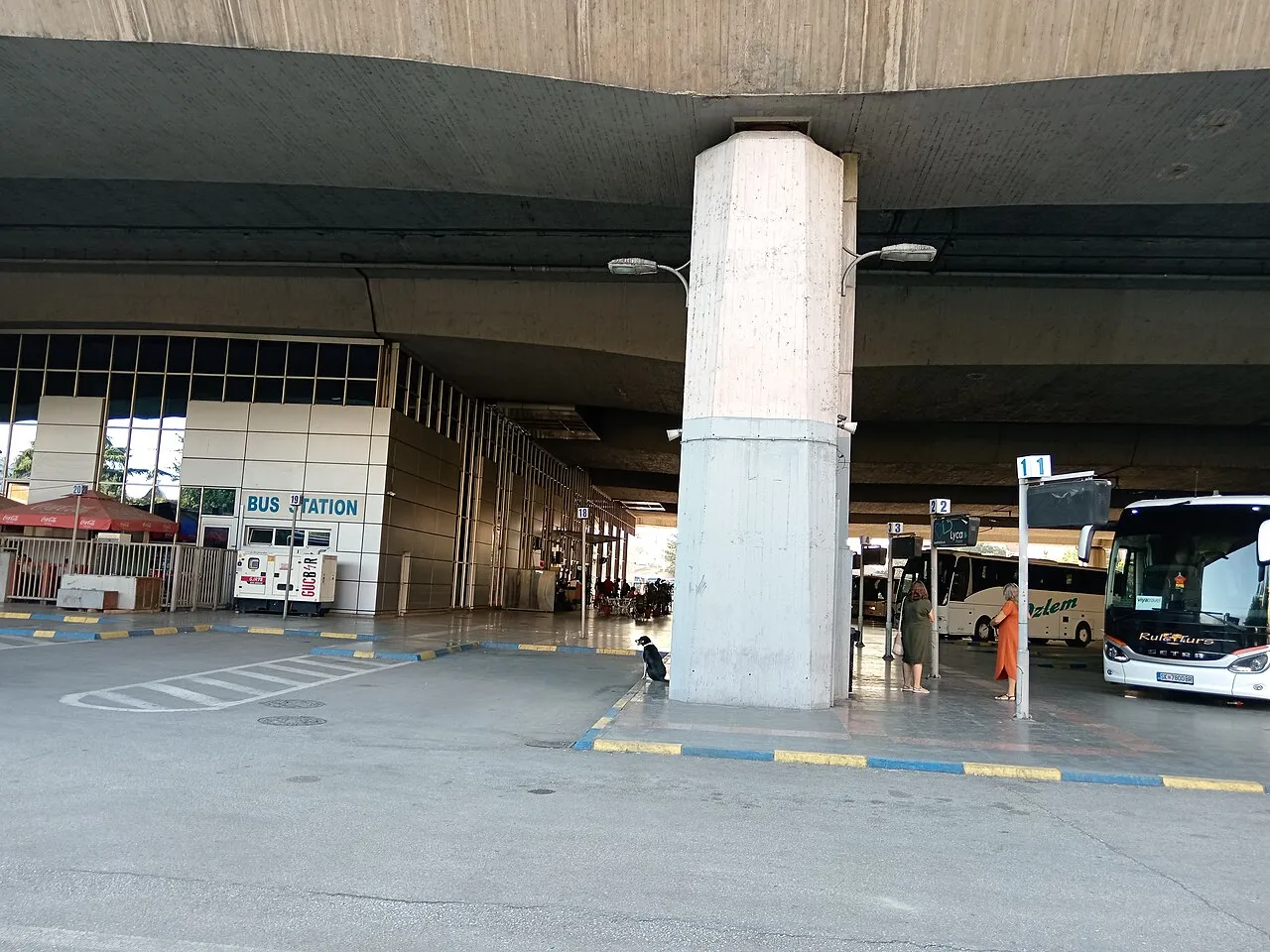
Departures use Skopje’s central bus station at Nikola Karev 20, under the railway station’s concrete deck, about a kilometre from the Stone Bridge. FlixBus names that address; with nine carriers on this pair, check your ticket says the same. The destination is propped in the windscreen in Albanian, so look for Tiranë.
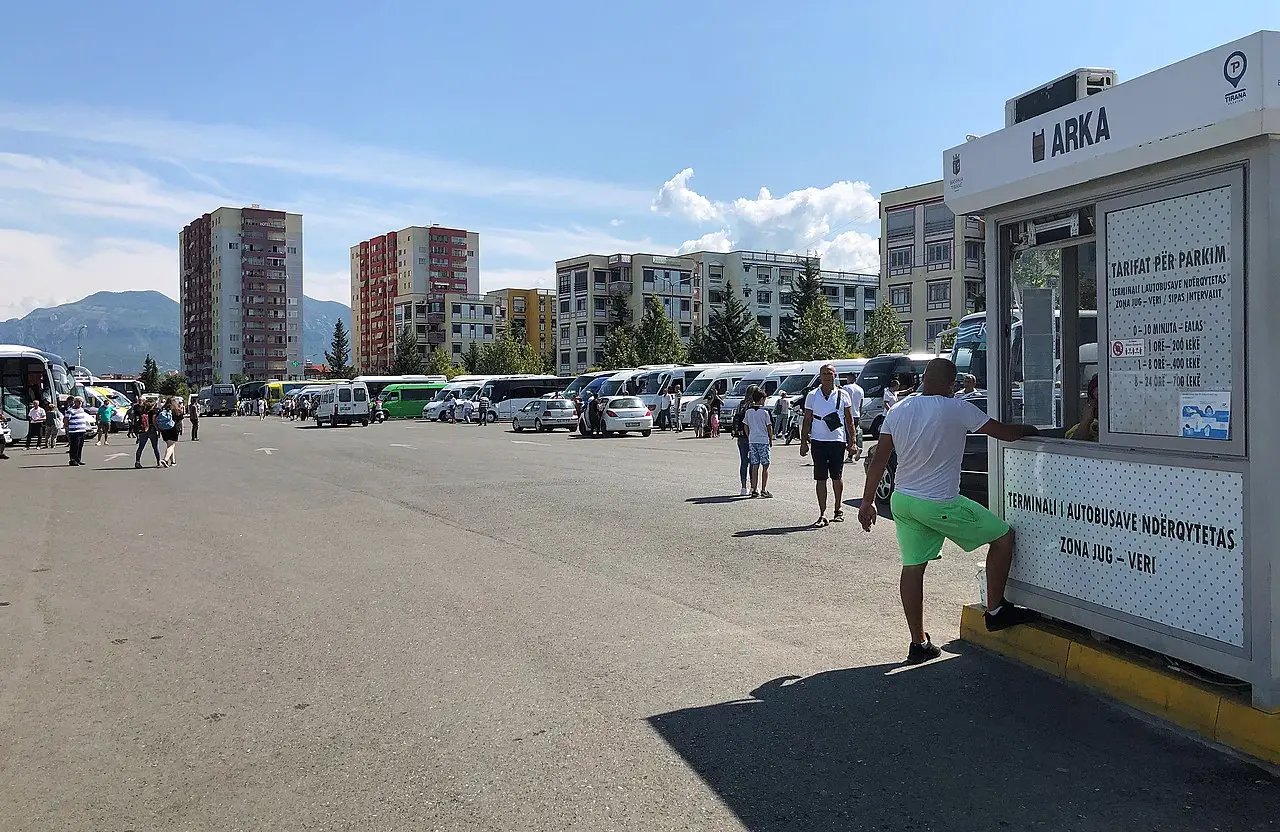
The Tirana end is less tidy. Most international coaches use the East Terminal (Terminali Lindor) by the TEG shopping centre, well out of town, though FlixBus also lists Asllan Rusi, Kthesa e Kamzës and the airport. Read your ticket. A city bus to Skanderbeg Square costs pocket change and a taxi ten to fifteen euros; agree the fare first.
Now put those two facts together, because the ticket page won’t. Two of the four Gjirafa departures are overnights, landing at 02:30 and 05:00 - out by the ring road, in the dark, with no city bus running and no queue of taxis competing for you. If the 20:50 suits you, book the Tirana bed before leaving Skopje and count the taxi in. Otherwise take the 08:00.
Three roads, one journey
We measured all three corridors on OpenStreetMap routing (driving only, no border waits):
| Corridor | Distance | Driving time | Border posts | Why take it |
|---|---|---|---|---|
| Debar and the Arbri Road | ~218 km | ~4 h 00 | 1 | Shortest, one crossing |
| Kosovo motorways | ~286 km | ~4 h 10 | 2 | Fast tarmac, two frontiers |
| Struga and Lake Ohrid | ~289 km | ~5 h 15 | 1 | Scenic, stops at Ohrid |
The published distances only half fit. FlixBus’s 288 km sits on the Kosovo corridor we measured at 286. Gjirafa’s 243 km matches none of the three, and its own leg pages add up to 239 (144 plus 95 via Debar), so it’s likely their arithmetic, not a fourth road. Platforms measure differently, and a coach detouring through Tetovo collects kilometres no router counts.
Reading the stops is easier than it sounds. Tetovo, Gostivar or Debar means the mountain road and one passport check; Kumanovo, Pristina, Prizren or Kukës means Kosovo and two; Struga, Ohrid, Pogradec or Elbasan means the lake. Some listings, Gjirafa’s included, show no stops at all - then ask the operator. For US, UK, Canadian, Australian and EU passports all three are visa-free, so this isn’t a legal problem: it decides how long you sit and how many stamps you collect.
The Debar route is the one that changed recently. Albania’s Arbri Road opened to traffic on 14 March 2025, when the Murrizi tunnel went into service: a 3,789 m main bore with a parallel emergency tunnel, on a road the government calls fully operational between Tirana and Dibra. It runs through Bulqizë and Maqellarë to the Bllatë (Blato) crossing near Debar, putting Tirana to Skopje at about 210 to 220 km, the shortest line on the map.
It isn’t a finished road, though. In January 2026 the Albanian Road Authority told parliament that the Murrizi tunnel has not been handed over for certification, after an MP filmed cracks and water dripping from the roof. The concessionaire told BIRN the damage comes from work still under way in the parallel safety tunnel, with repairs to follow; the authority says the tunnel is safe. Buses run it daily, but don’t picture a motorway, and drive it in daylight.
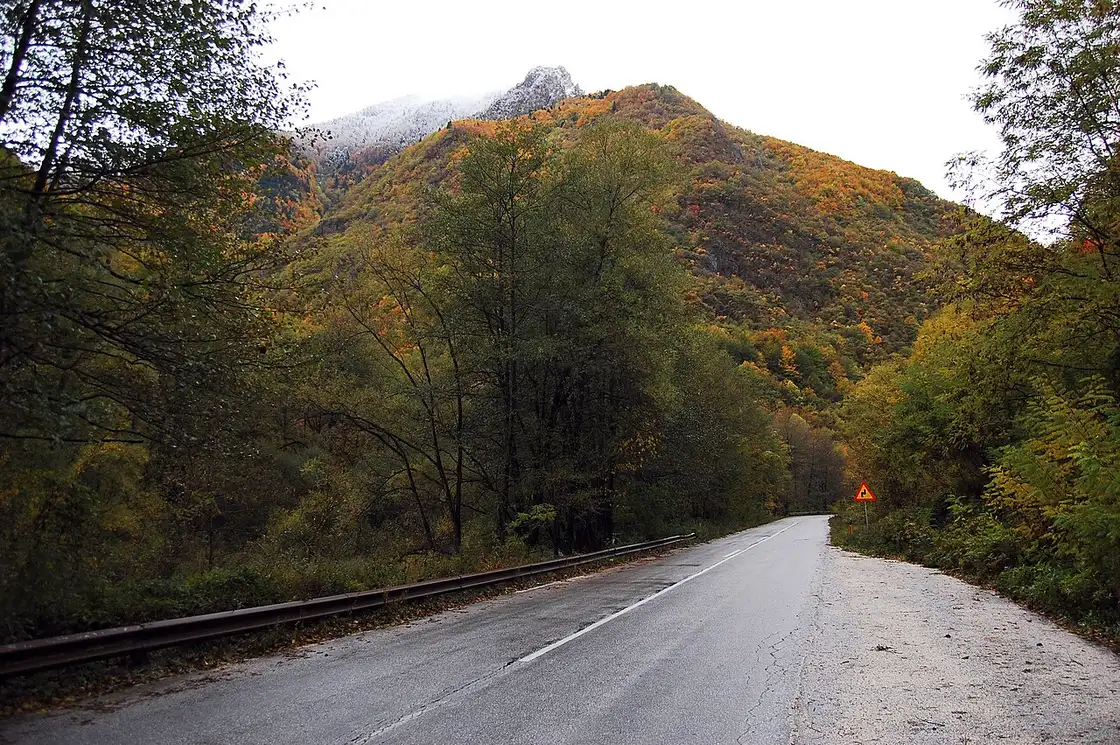
A shorter road isn’t a faster bus, either. The Macedonian half, Skopje to Debar, is a two-lane mountain road: about 144 km and 2 h 40 on the platform’s own figures, our routing run slightly quicker. Debar to Tirana sold separately is quoted at four hours, which is 95 km at 24 km/h and reads like a pre-tunnel timetable. Either way, don’t build your own shortcut at Debar.
The Kosovo corridor is the opposite trade: longer on paper, mostly motorway. North to Blace, across Kosovo, into Albania at Morinë/Vërmicë, then down the A1 Rruga e Kombit through the 5.5 km Thirrë-Kalimash tunnel. Four relaxed hours, two sets of passport checks, and a toll.
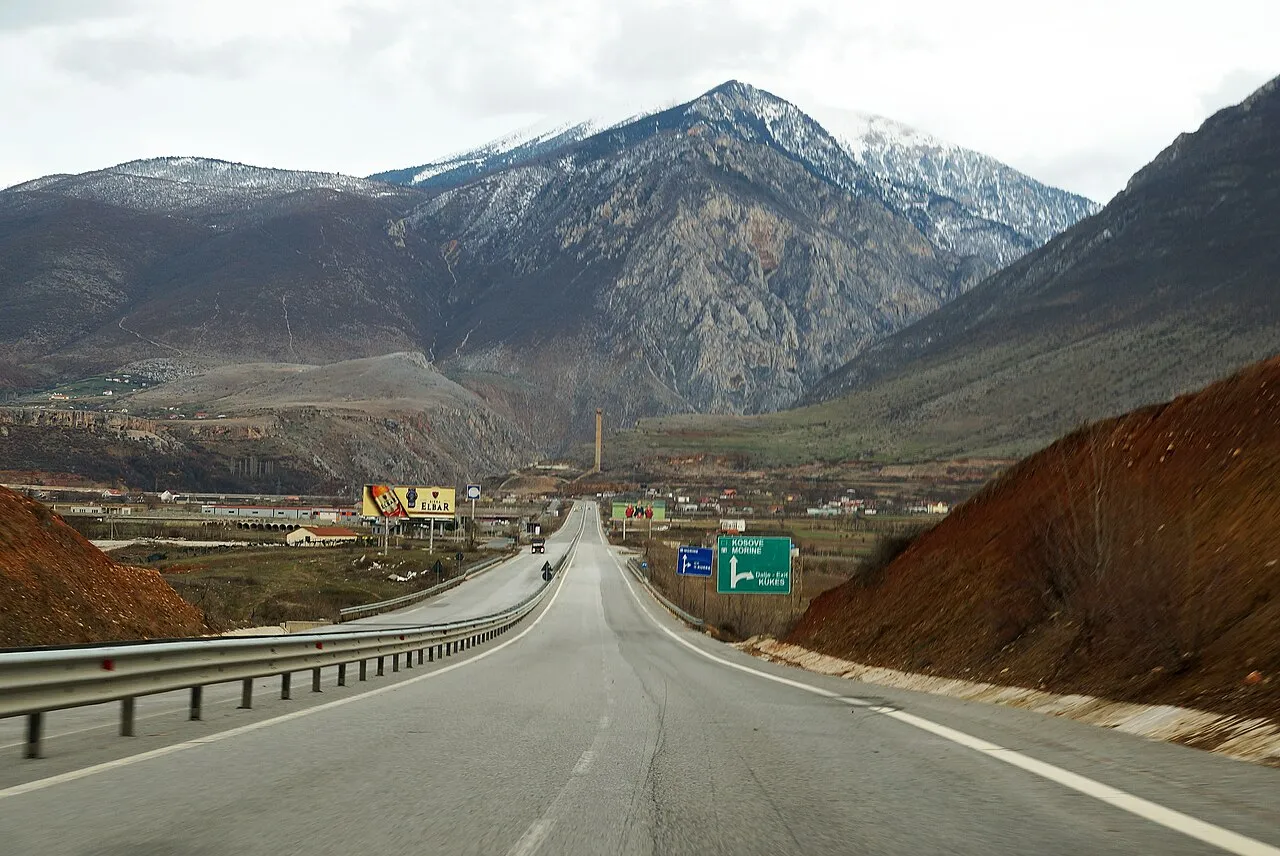
The third way, past Struga and over the Qafë Thanë pass, is the slowest for a capital-to-capital run and the only one that touches Lake Ohrid. If your plan has any give, splitting the trip there beats grinding it out; that leg is Tirana to Ohrid and Skopje, furgons and Kjafasan included.
At the border
Entry rules change - check the official page for your own passport before you travel. The lines below come from government sources, checked 1 August 2026.
- British citizens: no visa for Albania, 90 days in any 180, passport valid at least three months after the day you leave (UK FCDO).
- Canadians: no tourist visa for stays up to 90 days in any 180-day period (Government of Canada).
- US citizens: no visa either, and the allowance is unusually generous. The US Embassy in Tirana says Americans may generally stay up to one year without a residence permit, on a passport with three months of validity left; restarting that year takes 90 days outside Albania, and short hops don’t reset it. These procedures are the Albanian government’s and can change.
- Kosovo transit: the official Kosovo embassies portal lists the US, UK, Canada, Australia, EU and Schengen states among the nationalities needing no short-stay visa.
- Back into North Macedonia: EU and Schengen nationals need no visa and can enter on a national ID card; Russian citizens do need one. If your passport normally needs a visa, note the temporary rule running to 31 December 2026: a valid multiple-entry British, American or Canadian visa gets you in for 15 days without applying.
One quiet bonus: none of these three countries sits in the Schengen area, so time here is free of the 90/180 clock, real money on a long European trip. The Macedonian side is unpacked in our North Macedonia visa requirements guide.
The mechanics are simple: an officer collects passports at the window, or the whole coach files through the booth. Waits run from minutes to an hour, worst on Friday evenings and summer weekends. At Blace a Skopje rental firm reckons 10 to 20 minutes on a weekday morning, 30 to 60 at weekends.
Driving it yourself
Renting is tempting here, and the maths works if you’re touring anyway. The paperwork is where it goes wrong.
Permission first. Taking a Skopje hire car across any border needs written permission and an insurance extension arranged when you book, not at the desk on the morning; cross without them and the cover is void for the whole rental, not just the foreign leg. One Skopje operator sells a cross-border pack at EUR 50 per rental for Albania, Kosovo, Serbia, Greece and Bulgaria; others charge per border, around EUR 34 to 35.
Kosovo needs its own policy. Kosovo sits outside the Green Card system: no country’s green card is valid there apart from Albania’s and North Macedonia’s, covered by a mutual-recognition memorandum. Serbian and Montenegrin plates get special tariffs, which still means buying something. So it comes down to your plates: hired in Skopje, you’re fine; driving your own car from Germany, you buy border liability insurance at the crossing or online first.
The car has to come back. A one-way drop, Skopje pickup and Tirana return, is normally refused or priced to hurt, so ask before booking. Deposits, excess and the fine print are in renting a car in North Macedonia.
Budget for tolls via Kosovo: Albania’s A1 has been tolled since 2018, about five euros for a car at Kalimash plus roughly EUR 2.1 each way on the Thumanë-Kashar section. Carry lek and euro in cash, spend leftover denar before you cross, and check winter conditions on the Debar road through Mavrovo. Everyday driving risk on the Macedonian side is covered in our safety guide’s roads and driving section.
A private transfer is the third way, and it isn’t a budget move: a car here runs to a few hundred euros, several times four bus seats, so the “split it four ways” logic doesn’t survive a real quote. What you buy is a door-to-door run of four to five hours at your hour, not the timetable’s. Get a quote for your date and party, then settle three things: per vehicle or per person, whether border waiting is included, and where the driver meets you.
Which one should you book?
Three ways this normally goes.
- In Tirana today, one bag, no detours. Any direct coach that fits your morning; at EUR 20 to 30 the corridor is the operator’s problem, and a daytime departure spares you the 02:30 arrival.
- You want the lake out of it. Book to Struga or Ohrid, sleep there, carry on next day: a day lost, and the slowest corridor becomes the one you remember.
- You’re taking a car. Skip Kosovo unless the plates are Macedonian or Albanian, get cross-border permission into the contract, and drive the Debar road in daylight.
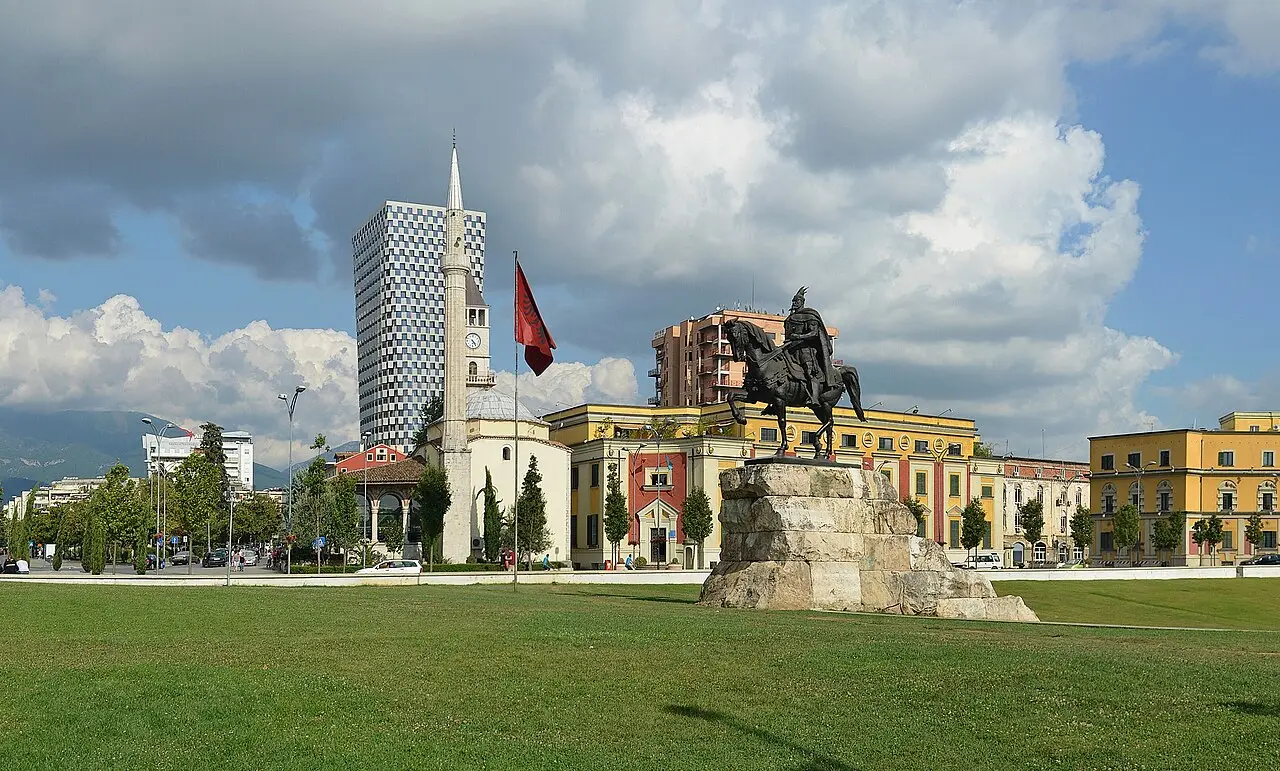
At the far end, our sister site’s Tirana city guide takes over.
Read also
- Tirana to Ohrid and Skopje - the lake corridor and Kjafasan border
- Getting to North Macedonia - every land and air route in
- Renting a car in North Macedonia - deposits, excess, cross-border rules
- North Macedonia visa requirements - who needs a visa, for how long
- Getting around North Macedonia - buses, taxis and driving here
Read also

Transport · 12 min read
North Macedonia Border Crossings: A Driver's Guide
Updated · September 13, 2026North Macedonia border crossings to Albania, Greece, Bulgaria, Serbia and Kosovo: which to use, queue snapshots and how to check them live, the green card.

Transport · 10 min read
Skopje to Tetovo Bus 2026: 200 MKD, 40-50 Min, Timetable
Updated · September 12, 2026Skopje to Tetovo: 45 km, intercity bus 200 MKD (about €3.25) in 40-50 minutes from the Transportation Center, times read 1 Sept 2026, and the A2 drive.

Transport · 10 min read
Flights to North Macedonia: SKP & OHD Routes
Verified · August 28, 2026Fly into Skopje (SKP) or Ohrid (OHD) in 2026: Wizz Air 35-route SKP base, which Ohrid seasonals are already ending, and who else flies - checked Aug 2026.

Transport · 12 min read
Thessaloniki to Ohrid: How to Make the Trip
Updated · September 3, 2026Thessaloniki or SKG to Lake Ohrid: drive it in about 4.5h via the quiet Medzitlija border, or take the train to Florina and a bus via Bitola in 5.5h.