
Tirana to Ohrid & Skopje: Bus Times, Border & Cost 2026
Tirana to Ohrid and Skopje by bus, furgon, transfer or car: routes, times, the Kjafasan border crossing, costs in euros and 2026 visa rules.
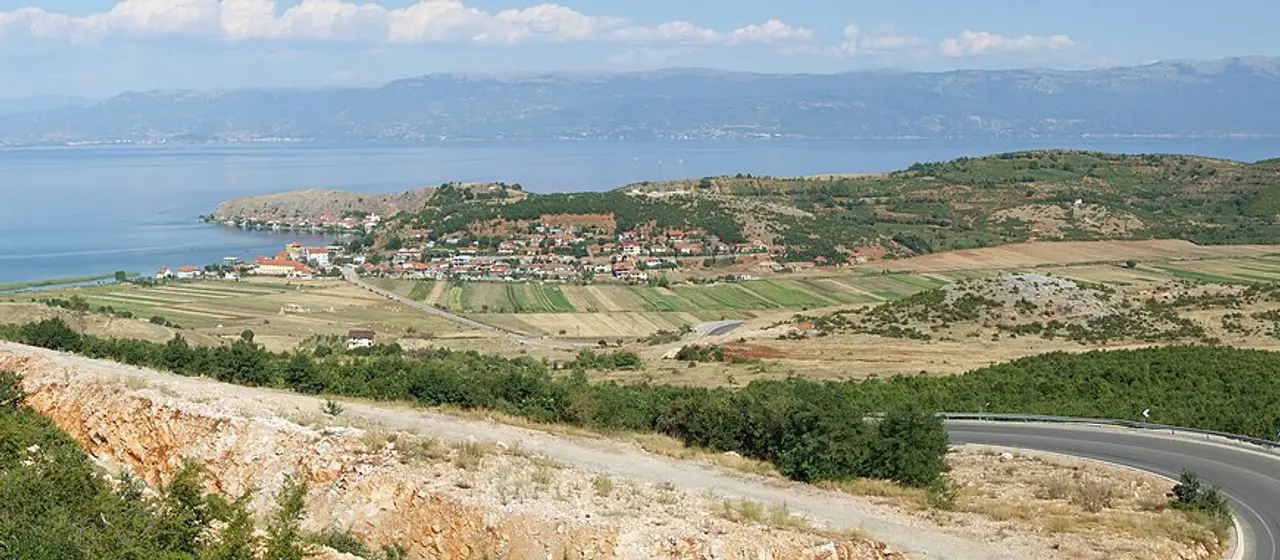
The easiest way from Tirana to Ohrid is the direct bus or shared minibus (a furgon): there are roughly 5-7 a day, the trip takes about 3 to 3.5 hours including the border, and a ticket runs about €15-20. They leave mostly from the South/Regional terminal in southeast Tirana, cross into North Macedonia at the Kjafasan-Qafë Thanë pass near Struga, and drop you at Ohrid bus station. To carry on to Skopje, change at Ohrid and take an onward coach - another 170 km and about 3-3.5 hours. If you’d rather not change buses or watch a timetable, a rental car or a private transfer does Tirana to Ohrid door to door in around 2.5-3 hours.
This is one of the Balkans’ great short hops - two countries, one lake - and it’s genuinely simple. The route more or less runs itself; the one thing worth checking twice is the visa rules for 2026, so nobody gets a nasty surprise at the barrier. If you’re spending time in the Albanian capital before you set off, our things to do in Tirana guide covers the city.
Quick answer: bus, furgon, transfer or car?
| Option | Best for | Typical time (Tirana-Ohrid) | Rough cost |
|---|---|---|---|
| Direct bus | Most travellers, low budget | ~3-3.5 h | ~€15-20 |
| Furgon (shared minibus) | Flexibility, leaves when full | ~3-3.5 h | ~€12-18 |
| Private transfer | Door-to-door, groups, late arrivals | ~2.5-3 h | quote per vehicle |
| Rental car | Road trips, onward to Skopje at your pace | ~2.5-3 h | hire + fuel + one-way fee |
Times are for Tirana to Ohrid; add the Ohrid-Skopje leg by bus (FlixBus quotes 3 h 20 min for its own runs; the local carriers publish no journey time) if you’re going all the way to the capital. Treat the numbers as a planning range - operators, departures and prices shift with the season, and a busy summer border slows everyone down.
For the destinations themselves, pair this with things to do in Ohrid and, once you reach the capital, things to do in Skopje.
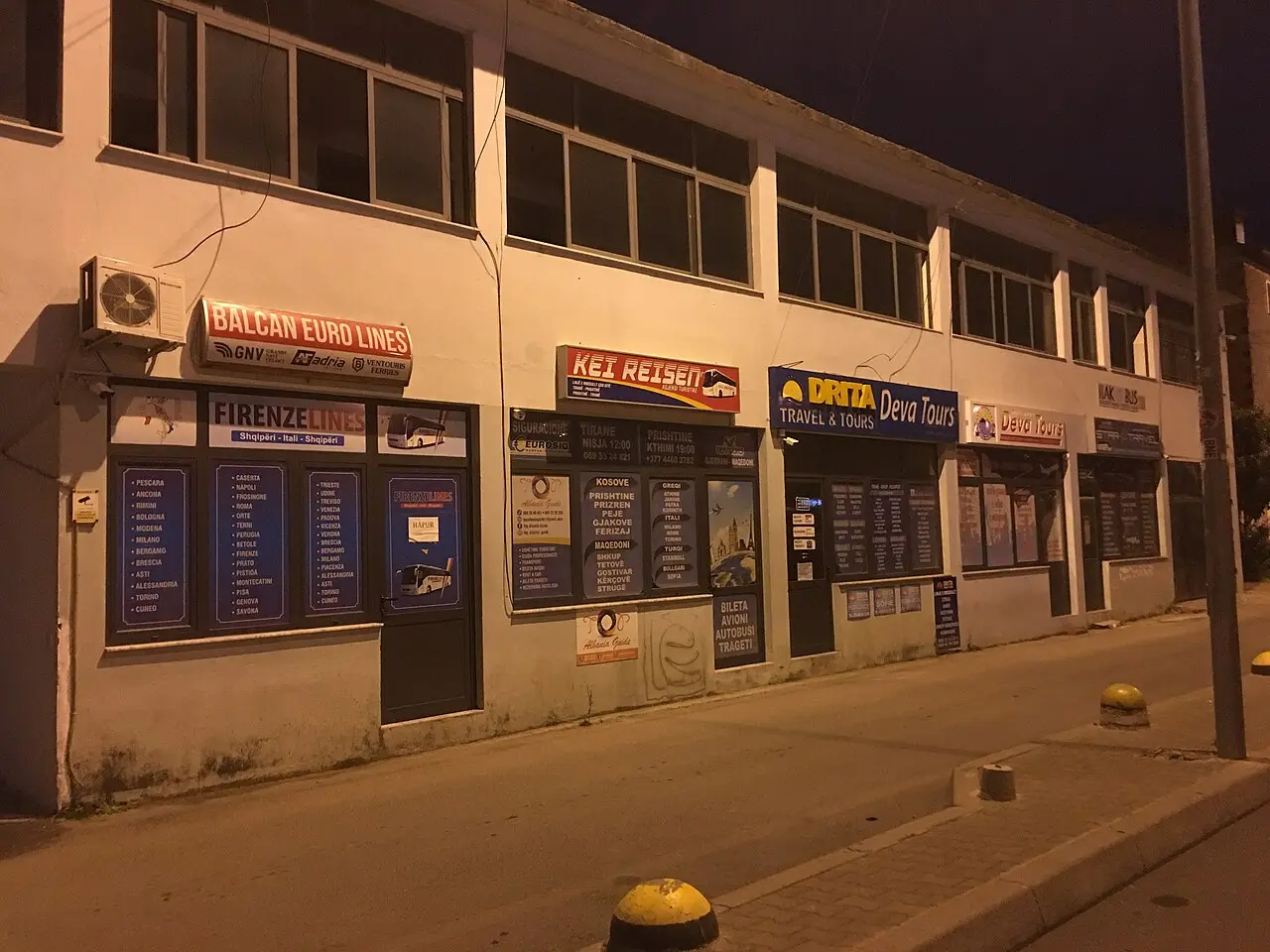
Option 1: the direct bus or furgon
This is how most people make the crossing, and it works. Buses and furgons to Pogradec, Struga and Ohrid leave from the South/Regional bus terminal on the southeastern edge of Tirana (a few operators, including FlixBus, use the East Terminal, Terminali Lindor - check which one your ticket names). There are roughly 5-7 departures a day, with the first generally around 06:00-08:00 and the last in the late afternoon, about 16:00-18:00. Outside those hours, plan for the next morning rather than hoping for a night service.
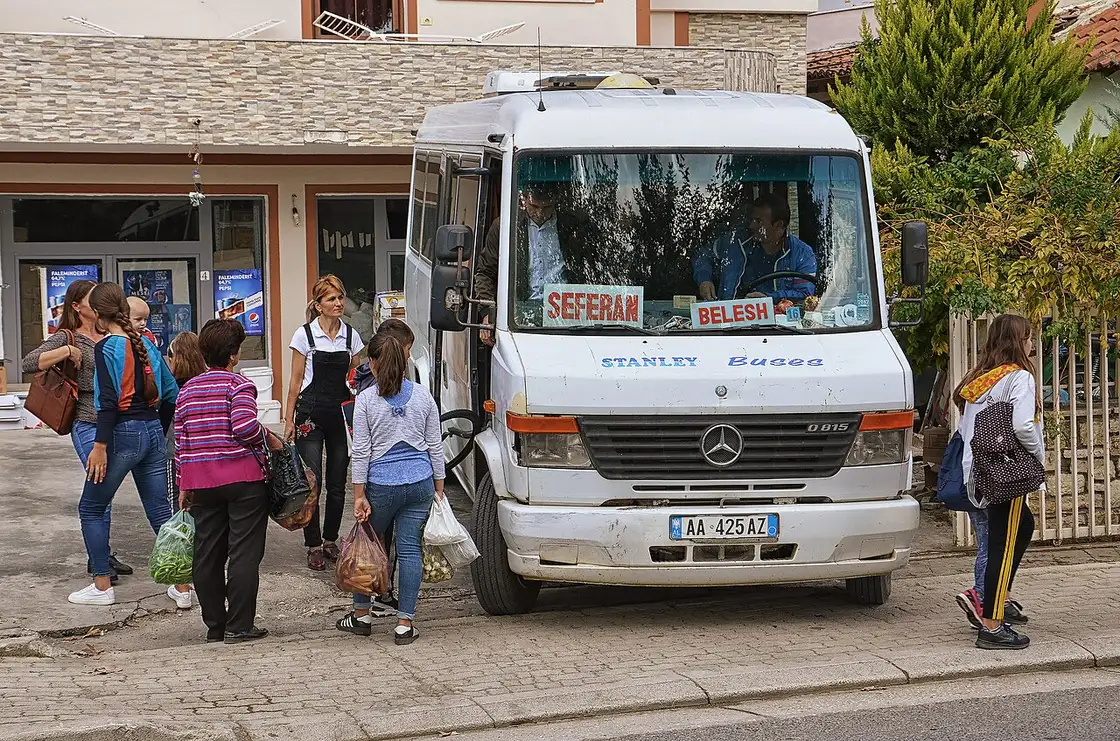
The difference between a bus and a furgon is mostly formality. A bus is a full coach on a set departure; a furgon is a shared minibus that often leaves when it fills up rather than to a strict clock - cheaper and frequent on this corridor, but you may wait for the last seats to sell. For either, the destination is usually painted or propped in the windscreen, so look for Ohrid, Struga or Pogradec. Fares land around €15-20 for the bus and a touch less for a furgon; pay the driver, and it’s smart to carry both euros and some local cash.
A useful quirk of geography: the road hugs the Albanian shore of Lake Ohrid past the village of Lin before the border, so the last half-hour in Albania is one of the prettiest stretches of the whole trip. Grab a window seat on the right.
The border: Kjafasan-Qafë Thanë
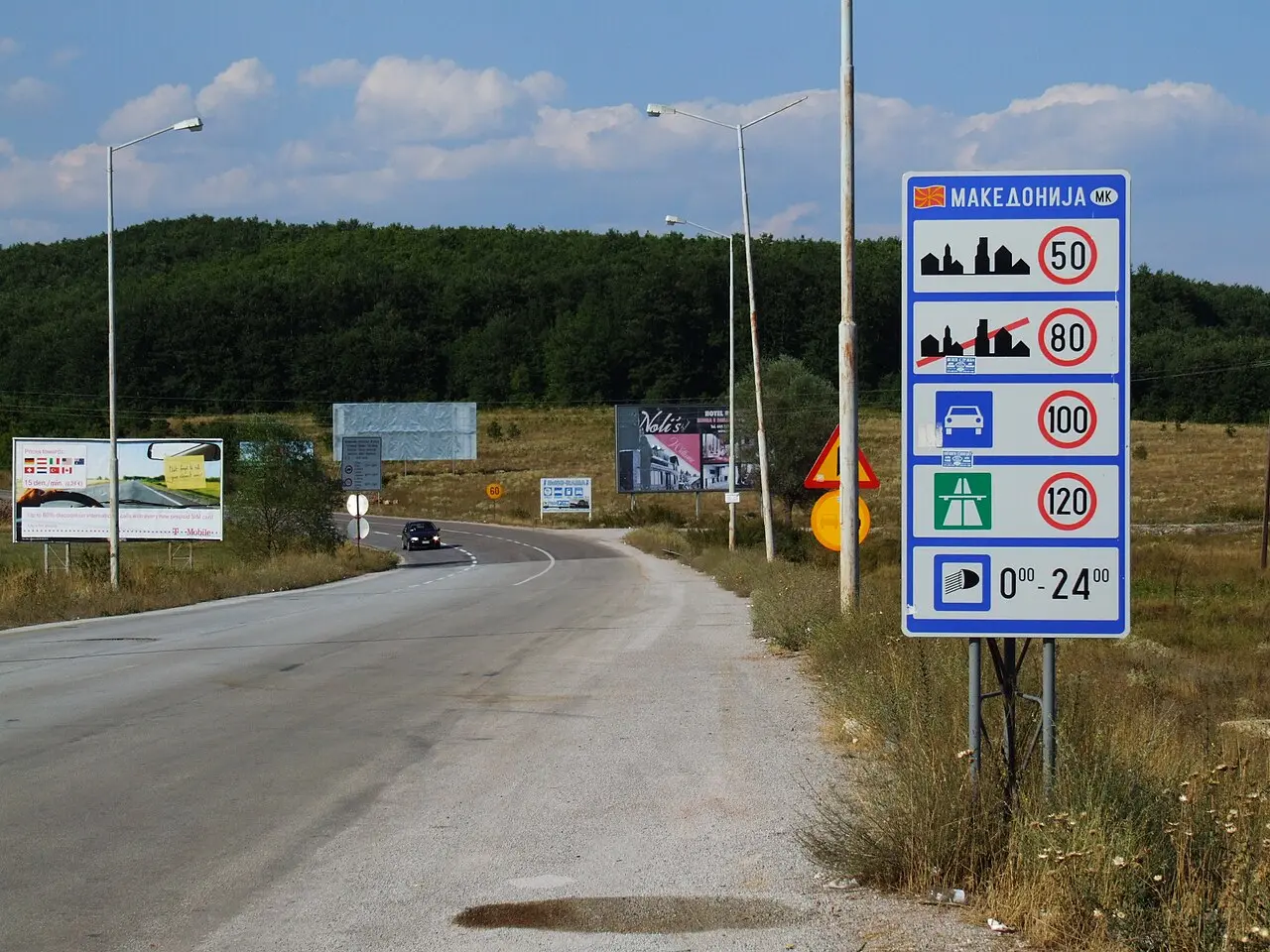
The crossing you’ll use is Kjafasan (the North Macedonian side) and Qafë Thanë (the Albanian side), the main road border between the two countries, set on a mountain pass about 12 km southwest of Struga above Lake Ohrid. It’s the busy one: a version of one-stop-shop joint control opened here in 2023, though it didn’t clear the summer queues, and a fuller upgrade agreed in June 2026 isn’t confirmed running yet - budget for a normal wait rather than a fast one.
On the bus, the routine is easy. Everyone usually stays seated while an officer collects and stamps passports, or you may step off briefly at the booth - follow the driver’s lead. Budget 15-30 minutes for the stop in normal conditions; it can drag on summer evenings, when the Albanian diaspora is heading home and traffic backs up. Have your passport out and ready, and don’t wander off - the bus won’t wait long once it’s cleared.
Do you need a visa? (2026)
Entry rules change - check the official source before you travel. The details below come from the Ministry of Foreign Affairs of North Macedonia (mfa.gov.mk), checked on 2026-06-29, but confirm your own nationality’s status with the ministry or your embassy before the trip.
For the travellers most likely to make this crossing, North Macedonia is visa-free, and the same rules apply at the land border as at the airport:
- EU and Schengen-area citizens enter without a visa and may use a national ID card rather than a passport.
- US, UK and Canadian citizens enter visa-free for up to 90 days.
- Albanian citizens enter visa-free (as part of the Western Balkans arrangements), so a local friend or guide can cross with you without paperwork.
Two things worth flagging. First, North Macedonia is outside the Schengen Area, so the days you spend here don’t count against any Schengen 90/180 allowance - handy if you’re touring the wider region. Second, if you hold a passport that normally needs a visa for North Macedonia, there are separate rules for holders of valid multiple-entry Schengen, US, UK or Canadian visas (a limited visa-free window per entry), and these are exactly the kind of conditions that change year to year - so verify them directly with the ministry rather than relying on a blog. When in doubt, the official MFA page is the only source to trust.
Albania’s own entry rules are similarly generous for EU/US/UK/Canada visitors, so for most readers the round trip needs no visa for either country - but, again, confirm for your passport.
Option 2: a private transfer
If changing buses, watching timetables and queuing at a furgon stand isn’t your idea of a holiday, book a private transfer. A driver collects you in Tirana - airport or hotel - and takes you straight to your door in Ohrid in about 2.5-3 hours, border included. It’s the comfortable choice for groups splitting the cost, families, late flights into Tirana, or anyone with heavy luggage. Prices vary too much to pin down, so get a live quote for your date and party size, and check whether waiting time at the border is included. For carrying on to Skopje, a transfer can do the whole Tirana-Ohrid-Skopje run, though at that distance many travellers switch to a bus or a hire car for the second leg.
Option 3: rent a car and drive
Driving turns the crossing into a road trip, and on this route that’s a real temptation - the Albanian lake shore, Lin, the pass, then Ohrid and the open road to Skopje. The drive from Tirana to Ohrid is roughly 2.5-3 hours; Ohrid to Skopje adds about the same again on the modern road through Kičevo. Two things to sort before you book: tell the rental company you’re taking the car across the border (you’ll usually need a Green Card insurance extension and written permission), and check the one-way drop fee if you’re collecting in Albania and leaving the car in North Macedonia. Our renting a car in North Macedonia guide covers deposits, the insurance excess and driving rules in detail.
A car also unlocks the bits the bus skips - St. Naum at the south end of the lake, beaches, the Galičica viewpoints - so if Ohrid is a base rather than a single night, it’s worth the extra.
Carrying on to Skopje
If your real destination is the capital, the simplest plan is Tirana → Ohrid by bus, then Ohrid → Skopje by coach. Ohrid’s bus station has several daily departures to Skopje, the road is about 170 km, and the ride takes roughly 3 to 3.5 hours across the mountains via Kičevo. Buy the onward ticket at Ohrid station when you arrive, or earlier in summer when seats fill. There is no useful train on this corridor - North Macedonia’s rail network doesn’t reach Ohrid at all - so it’s bus or car. For the full rundown of intercity coaches, city transport and tickets once you’re in the country, see getting around North Macedonia.
If the timing is tight, don’t force a same-day Tirana-Skopje marathon. Ohrid is the obvious overnight - it’s a UNESCO-listed lakeside town and one of the best stops in the Balkans, so breaking the journey there is a feature, not a delay.
One thing to be straight about: a direct capital-to-capital coach does exist. Between them, operators run four to seven departures a day between Skopje and Tirana, taking five to seven hours for about EUR 20 to 30, and some of them never come near the lake - they go via Debar or through Kosovo instead. So the choice is really about what you want. This page is the lake corridor, with Ohrid as a destination rather than a waypoint; if the lake is not the point and you just need to be in the other capital, our Skopje to Tirana guide compares the three road corridors, the border stops and the overnight arrivals in that direction.
Money, time and practical tips
- Carry euros and local cash. Fares are often quoted in euros (€15-20); once across, you’ll want Macedonian denar (steady at about 61.5 to €1) for tickets, food and taxis.
- Aim for a morning departure. With the last buses around 16:00-18:00 and a 3-hour-plus ride, an early start leaves daylight at the other end.
- Have your passport ready at the border. The Kjafasan stop is usually 15-30 minutes; keep documents handy and stay with the bus.
- Expect summer-evening queues. Diaspora traffic can slow the crossing on warm-weather weekends - build in a buffer.
- Going to Skopje? Plan the change at Ohrid. It’s a two-leg trip by bus, and Ohrid is the natural overnight.
- Driving across? Sort the Green Card and one-way fee. Cross-border car hire needs the insurance extension and permission in writing.
Done right, Tirana to Ohrid is one of the easiest and most scenic border hops in southeast Europe - a lake on both sides, a quick stamp at the top of the pass, and a UNESCO town waiting on the far shore. Sort the bus or the car, keep your passport handy, and enjoy the ride.
Read also
- Things to do in Ohrid - what to do at the lake when you arrive
- Things to do in Skopje - useful if you carry on to the capital
- Getting around North Macedonia - buses, taxis and the onward picture
- Renting a car in North Macedonia - deposits, insurance and cross-border rules
- Skopje to Tirana - the capital-to-capital run, its three corridors and the border
- The section hub: transport in North Macedonia
Photos
Read also

Transport · 13 min read
Skopje to Mavrovo 2026: Bus 480 MKD, 96 km, Winter Tyres
Updated · September 26, 2026Skopje to Mavrovo: 96 km, about 1h45 by car, one 09:34 bus for 480 MKD (730 MKD return), tolls, and the 15 Nov-15 Mar winter-tyre law. Checked Sep 2026.

Transport · 12 min read
North Macedonia Border Crossings: A Driver's Guide
Updated · October 3, 2026North Macedonia border crossings to Albania, Greece, Bulgaria, Serbia and Kosovo: which to use, queue snapshots and how to check them live, the green card.

Transport · 10 min read
Skopje to Tetovo Bus 2026: 200-250 MKD, 40-50 Min, Timetable
Updated · September 26, 2026Skopje to Tetovo: 45 km, bus 200-250 MKD (about €3.25-4.06) in 40-50 minutes from the Transportation Center, fares read 26 Sept 2026, and the A2 drive.

Transport · 10 min read
Flights to North Macedonia: SKP & OHD Routes
Verified · August 28, 2026Fly into Skopje (SKP) or Ohrid (OHD) in 2026: Wizz Air 35-route SKP base, which Ohrid seasonals are already ending, and who else flies - checked Aug 2026.