
Skopje or Sofia: Which Balkan Capital to Visit?
Skopje's rooms cost less, Sofia's airport transfer is easier, and a direct bus links the two in about 5h for about EUR 27. Here's which to fly into first.
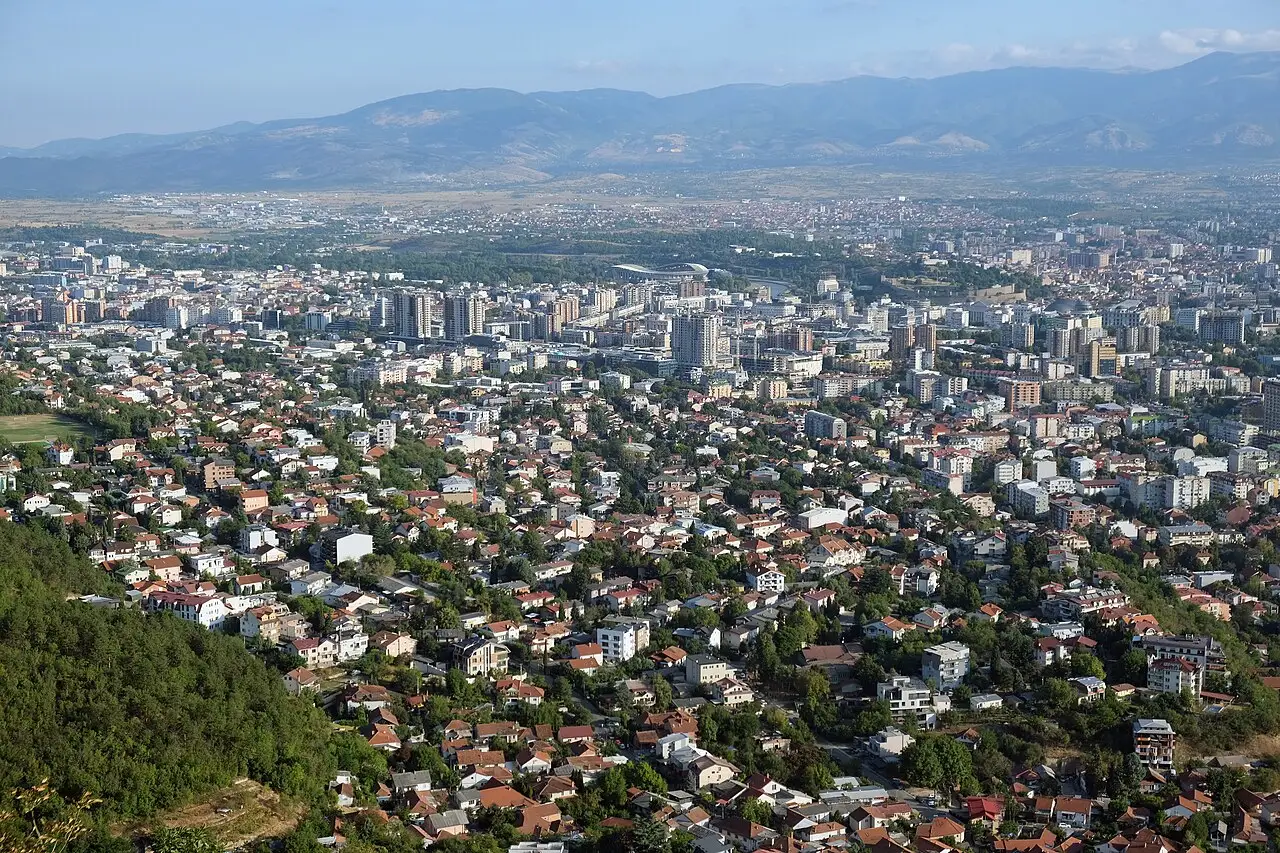
A direct bus covers the 230 km between these two capitals in about 5 hours for about EUR 27, which is the fact most comparisons bury. Fly into Sofia for more flight choices, a cooler summer and an airport metro straight into the centre. Fly into Skopje for the cheaper room, an Ottoman bazaar instead of a shopping boulevard, and a shorter hop onward to Lake Ohrid. Most people asking which capital to visit, arriving from London, Berlin or Vienna, are really asking which one to land in first.
Which capital fits which trip
| Your priority | Book |
|---|---|
| More flights, more airlines, a full-service option | Sofia |
| The cheaper hotel room | Skopje |
| The cheaper, easier airport transfer | Sofia |
| Roman ruins sitting under a Soviet-era square | Sofia |
| An Ottoman old town and a statue-heavy centre | Skopje |
| Cooler summer weather | Sofia |
| A springboard to Lake Ohrid and the rest of the Balkans | Skopje |
| Both, on one trip | Either - there’s a same-day bus |
Flying in: Sofia has more options, Skopje has the daily Berlin flight
Sofia’s airport is simply bigger. Flight-schedule tracker flightconnections.com counts 91 non-stop destinations in 29 countries from Sofia against 52 in 22 countries from Skopje - about 75% more, not quite the “double” the raw destination counts first suggest. On the three cities that matter most for this comparison, the gap isn’t uniform, and one of them flips outright. To Vienna, Sofia gets well over 100 flights a month on Austrian Airlines and Ryanair against Skopje’s 62 on Austrian Airlines alone - a real, durable gap however you count it. To London, Sofia is served by three airports (Stansted, Luton and Heathrow) for around 161 flights a month, currently split between Ryanair, Wizz Air, and British Airways plus Bulgaria Air; a fourth airport, Gatwick, joins once easyJet’s new route starts in December 2026. Skopje has one London route, Wizz Air to Luton - but checking the airport’s own summer schedule shows it running daily through peak season, about 30 flights a month, not the 18 a blended annual average implies, so the real gap is closer to five or six to one than nine to one. You’ll want the live schedules, not the annual averages.
Berlin is where Skopje currently leads. Wizz Air flies Skopje-Berlin daily, about 31 flights a month, and has for a while. Wizz Air’s own Sofia-Berlin route doesn’t start until 20 September 2026, four times a week; until then, Sofia-Berlin runs on Bulgaria Air and Ryanair alone, around six flights a week combined - fewer than Skopje gets on this one route by itself. Sofia’s network is still the bigger one overall, and its London spread is real, but Berlin is a case where checking the actual operator schedules reverses the comparison rather than confirming it - don’t trust the “Sofia always wins” line on this corridor.
The direct bus between them
If you’re already in one capital, flying to the other rarely makes sense. FlixBus runs the corridor twice a day - first departure 07:00, last 17:30 - covering about 229 km in 4 hours 40 minutes to 5 hours for fares from EUR 26.98; Citylines was selling the same route for about EUR 29 on the dates checked, with a 17:30 departure landing at 23:30. Driving covers the same ground in roughly 3.5 hours before the border, which sits at Deve Bair on the Macedonian side and Gyueshevo on the Bulgarian one and runs 24 hours. There’s no useful passenger train either way. Figures checked 22 August 2026 (journey times 26 September 2026) - like any bus route, fares and exact times move, so confirm yours before you book. Full timetables, the Bulgarian e-vignette price and what the crossing actually involves are in our Skopje to Sofia guide.
That bus is the best argument for not treating this as a single choice at all. Under six hours and about EUR 27 buys both capitals on one trip, which changes the maths for anyone with five days or more: fly into whichever city has the cheaper seat that week, then add the other one overland rather than booking a second flight. You’ll thank yourself for not forcing a pick.
Rooms, taxis and coffee: the real price gap
Skopje is the cheaper base on rooms, though not by the margin a single cherry-picked listing can suggest. This site’s own Skopje guide puts a hostel dorm at about EUR 12-18, a budget private double at EUR 25-45, a mid-range 3-star double at EUR 45-80, and a 4-star or boutique room at EUR 80-130 and up. Sofia’s equivalent guide splits the same ground by metric: a dorm bed at EUR 9-15, a budget private room at EUR 20-40, a 3-4 star centre hotel at EUR 50-90, and five-star at EUR 100-150. Line the bands up and the picture isn’t one-directional - Skopje runs cheaper through the middle of the market, Sofia is cheaper on dorm beds: a same-day check of Hostelworld’s Sofia listings found beds from about EUR 5 at the four cheapest properties, and the operator price list at Hostel Mostel, a long-running central hostel, puts its own dorms at EUR 9-15. Both undercut Skopje’s dorm floor.
Coffee doesn’t move the needle either way. Skopje’s own consumer press has quoted an espresso at up to 150 MKD (EUR 2.44) against roughly EUR 2 in Sofia, but that 150-denar figure comes from a 2025 hospitality-industry pay dispute that called it “absolutely unrealistic” for an everyday cup - Skopje’s normal range is 80-150 MKD (EUR 1.30-2.45), which overlaps Sofia’s price rather than beating it. Don’t budget the trip around coffee maths.
The airport is where Sofia comes out clearly ahead. Skopje’s airport taxi runs a published fixed fare of 1,500 MKD (EUR 25) for the 23 km into town, and the only cheaper option is a shuttle bus that stops running at 20:00. Sofia’s official taxi costs less - EUR 13-15 for a similar ride - and its M4 metro runs from Terminal 2 to the centre in about 20 minutes for EUR 0.80, operating roughly 05:26 to 23:49 - close to round the clock, not just a daytime option. Skopje has no rail link at all, and its shuttle bus is done for the day by early evening; land after 20:00 in Skopje and the fixed-fare taxi is your only choice, while a late arrival in Sofia can usually still take the metro. That gap in flexibility, not just the fare, is the real airport-transfer story.
Full breakdowns, including Ohrid and Bitola for comparison, live in our North Macedonia cost index and airport transfer prices across the region; for the Skopje side specifically, see where to stay in Skopje and Skopje Airport to the city centre.
Two days in Skopje
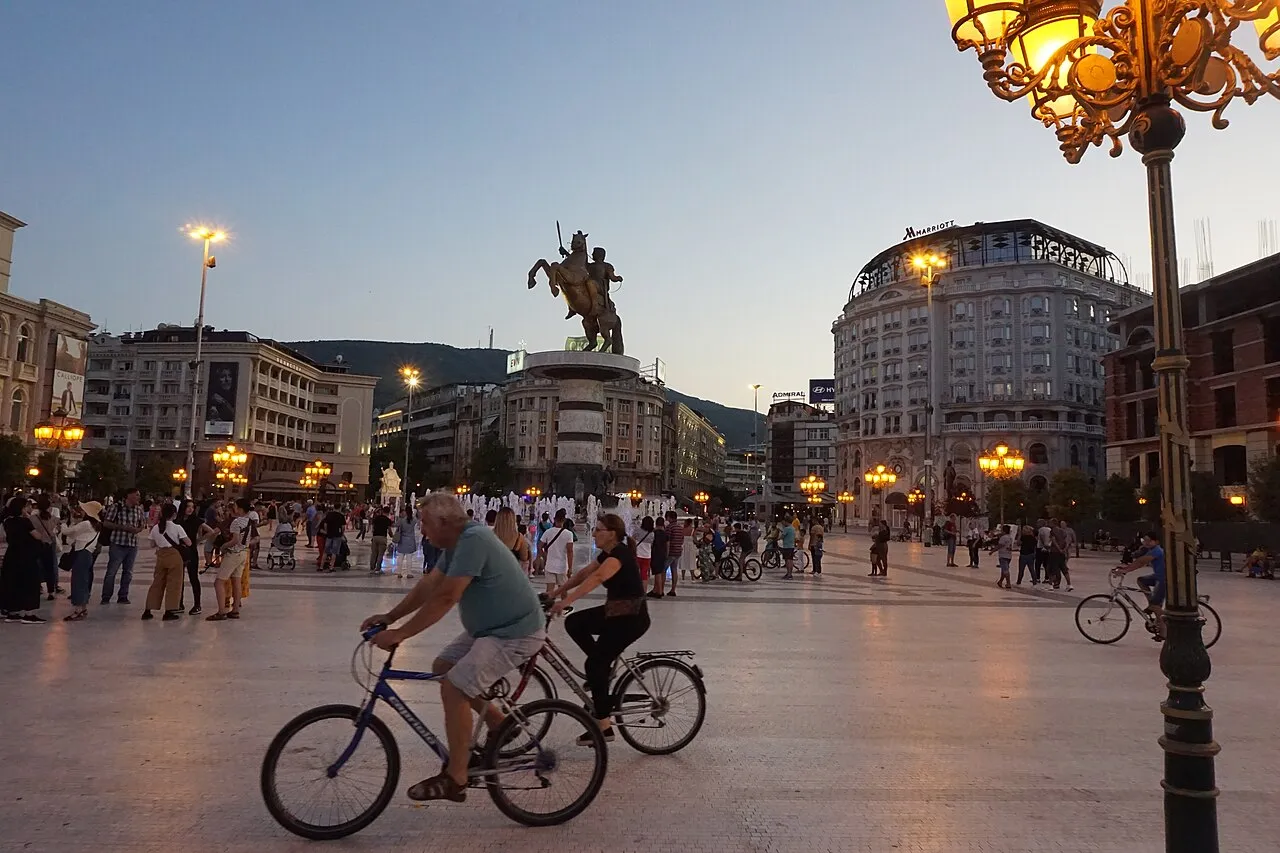
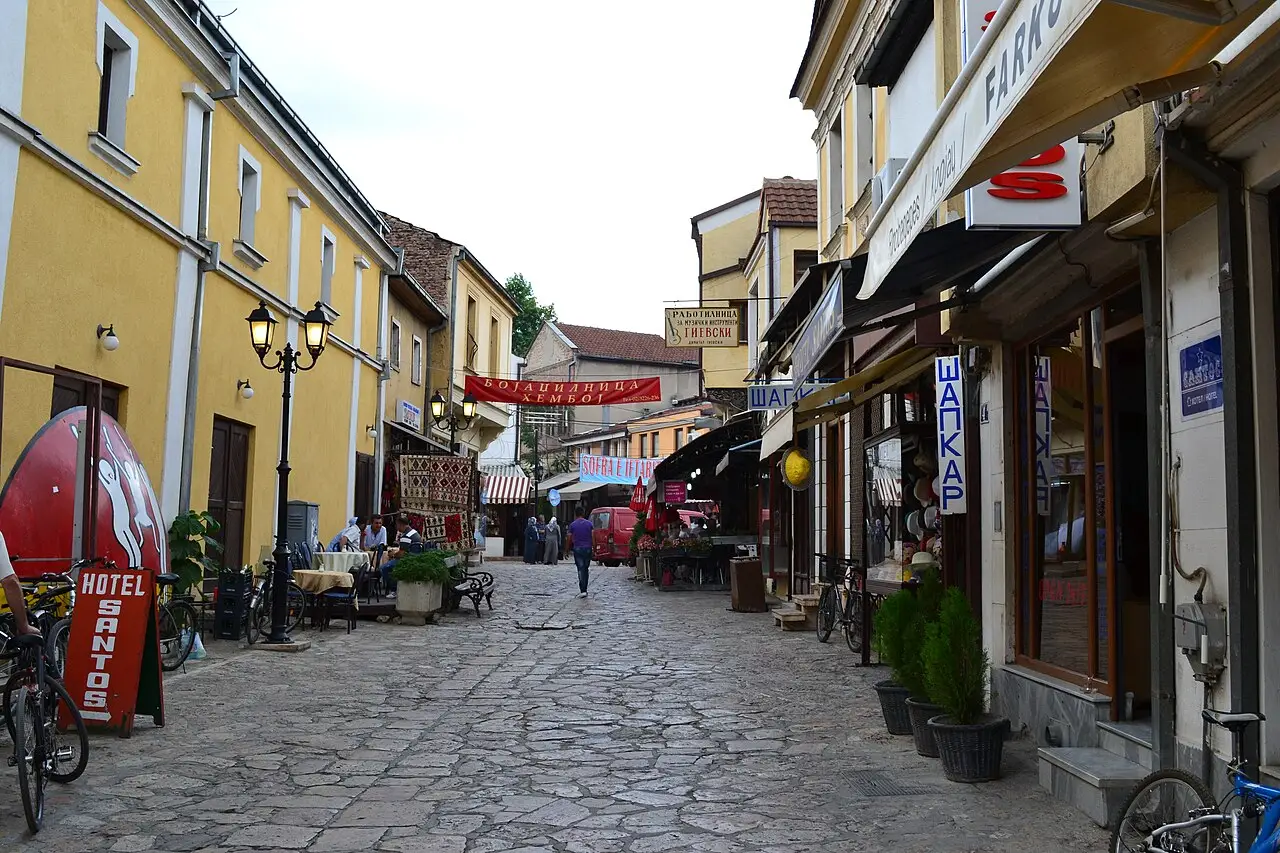
Two days is the right length for Skopje, and the is it worth visiting question really comes down to whether you like the split personality: an Ottoman old town on one bank of the Vardar, a forest of new statues on the other. Cross the 15th-century Stone Bridge into the Old Bazaar, among the largest Ottoman-era markets left standing in the Balkans, and spend a morning among its mosques, hammams and grill houses. Walk back over the river to Macedonia Square, the centrepiece of the “Skopje 2014” rebuild: bronze statues, a triumphal arch, and the outsized Warrior on a Horse fountain that most visitors assume is Alexander the Great. It’s kitsch to some, good fun to others, and either way it costs nothing to wander.
With a second day, add Matka Canyon, about 15 km out and an easy half-day of cliff paths, a boat or kayak on the reservoir, and cave churches. Our full Skopje guide covers the rest, including the Old Bazaar in more depth and the way up Vodno (the ridge our cover photo above looks down from) to the Millennium Cross - on foot, with the cable car idle since April 2026.
Two days in Sofia, three with the mountain
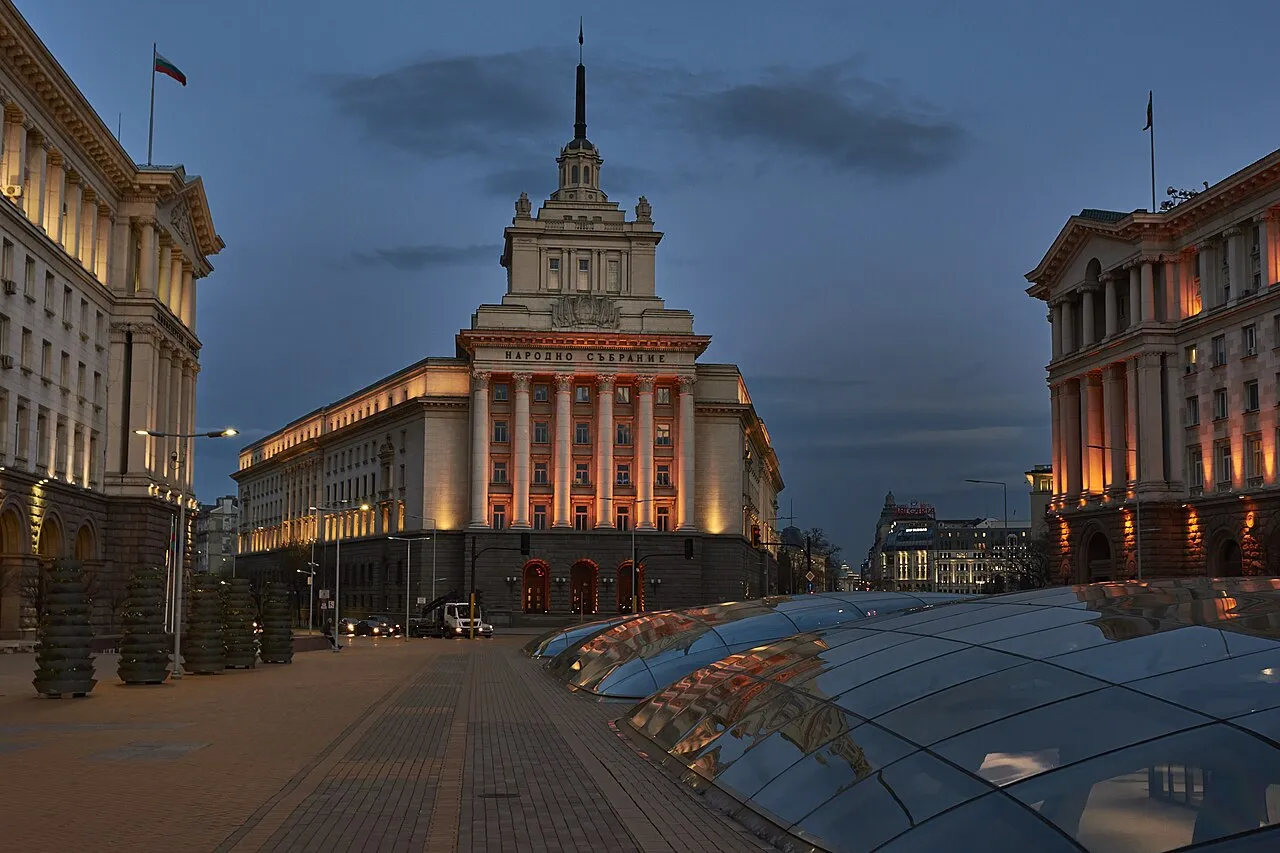
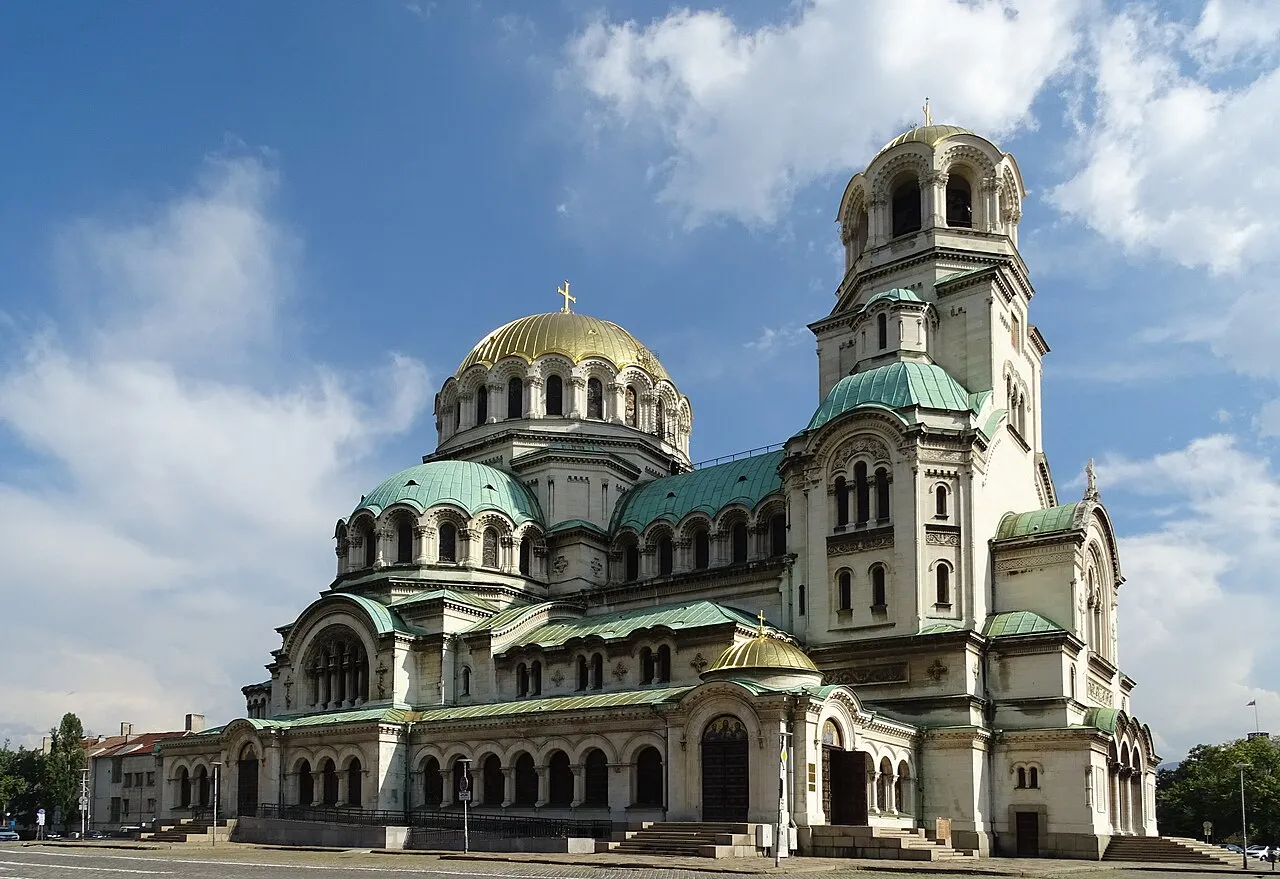
Sofia rewards the same two-day rhythm, with a third day worth adding if you like mountains. Start at the gold-domed Alexander Nevsky Cathedral, free to enter, then walk a few minutes to the Largo - the Soviet-era government ensemble - where glass domes set into the pavement shelter the excavated Roman street of Serdica, the city that stood here before Sofia did. It’s an odd, effective bit of layering: one empire’s ruins under another’s grandest square.
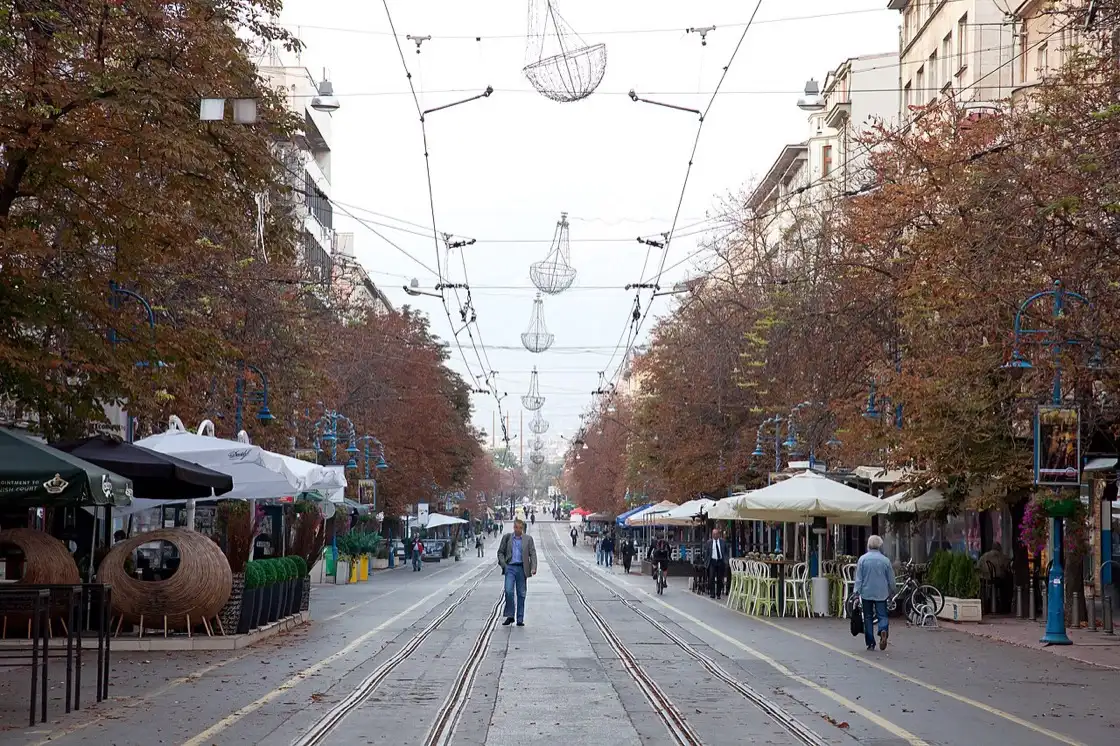
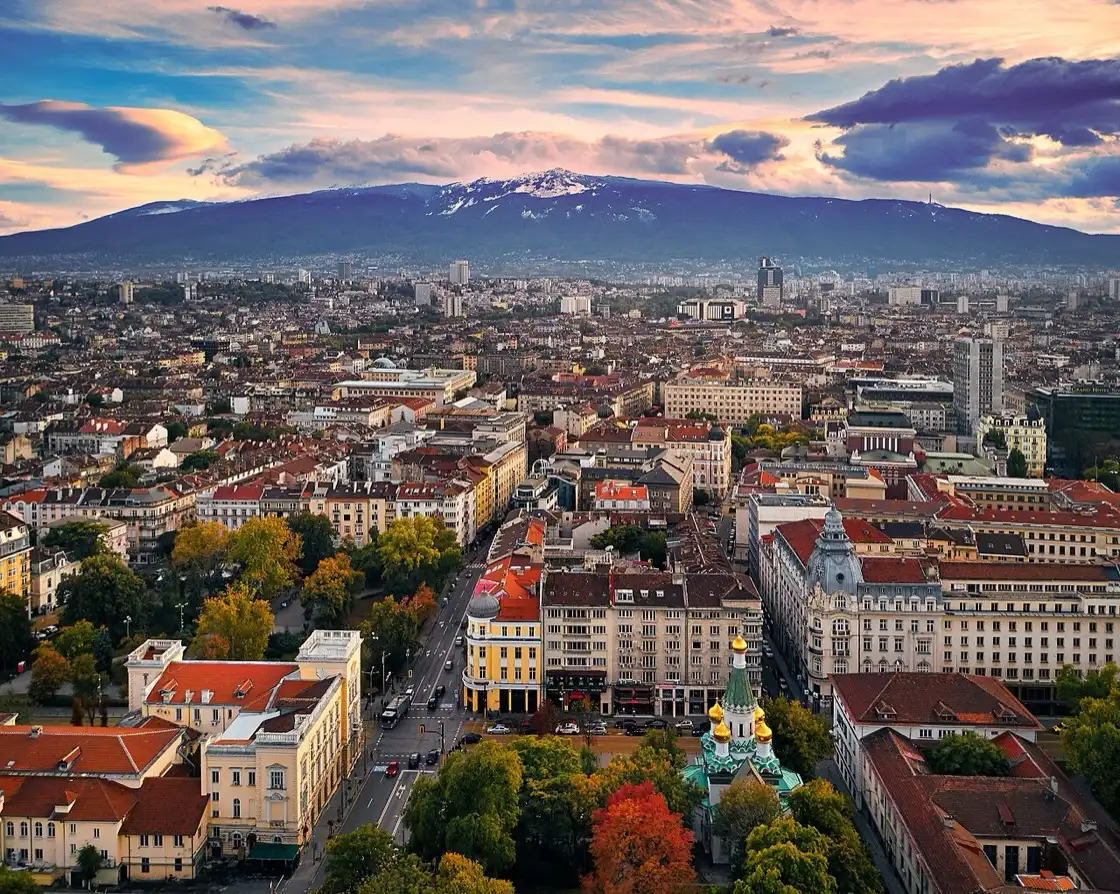
The third day is Boyana Church, a UNESCO site for its 13th-century frescoes (visits are timed, so book ahead), paired with Vitosha, the mountain that fills the skyline south of the city. There’s no cable car up it any more - the Simeonovo gondola stopped running in 2023 and has since been written off for good, and the other two lifts have sat derelict for years - so the way up is bus 66 to the Aleko hut area, then a walk. It’s still a real, popular hike; locals go up for a Sunday the same way Skopje locals go up Vodno - and Vodno has no lift to shortcut it either, because its own cable car has stood unused since April 2026, pending an overhaul. Vitosha Boulevard, the pedestrianised café strip through the centre, is worth an evening regardless of which extra day you pick. Our sister site’s full Sofia guide has the timed-ticket details for Boyana, current transport up Vitosha, and the rest of the walking order.
Summer heat, mountain snow
Both capitals sit right under a mountain the locals actually use, which is a closer parallel than most comparisons let on: Skopje has Vodno, Sofia has Vitosha, and both fill up with weekend hikers in good weather. Where the two split is temperature. Skopje sits in a closed valley, and this site’s own climate page puts July-August highs at 30-32°C, with heatwaves pushing past 35°C. Sofia, roughly 300 m higher and more open, is milder - but not by as much as this page first said: Bulgaria’s national weather service puts its 1991-2020 average at 27.8°C in July and 28.3°C in August, a few degrees cooler than Skopje rather than the marginal gap a lower, uncorrected figure implied. Either way, if summer heat is a real concern, Sofia is the more comfortable of the two - that’s why shoulder season suits Skopje better - and Skopje is better tackled in spring, early summer or September instead.
Winter narrows the gap: both get properly cold and occasionally snowy. Skopje’s nearest ski area is Mavrovo, a proper resort with chairlifts; Sofia’s Vitosha has some slope infrastructure too, though its main lift up the mountain has sat idle for years - skiing there now means small weekend-only tows, not a full lift-served day. You’ll want the weather page before you pack. For how cold the capital gets, and when, see how cold Skopje gets each month.
What the one-route city risks
Skopje’s whole case rests on cost and proximity to Ohrid, not on route redundancy - and that matters most on the London link. It’s a single airline, a single daily flight, no second carrier on the same city pair. Wizz Air cancels or reschedules that flight and the backup isn’t another Skopje-London option, it’s a connection through Vienna or Belgrade, or the overland run into Sofia’s much bigger, four-carrier hub. Sofia’s spread across three airports and four airlines means one cancelled flight barely registers; Skopje’s single route means it does. Don’t build a tight connection on that one flight.
Currency, at least, is a non-issue either way. Bulgaria adopted the euro on 1 January 2026, and the Macedonian denar has held at about 61.5 to the euro since 2002, so an open-jaw trip - fly into one capital, out of the other - doesn’t add any exchange-rate guesswork. Book each city’s hotel, bus ticket or taxi in whatever currency it’s quoted in, and the total won’t shift between booking and arrival.
If you’re timing this trip around Berlin specifically, mark one date: Wizz Air’s own Sofia-Berlin service starts 20 September 2026. Book before then and Skopje’s daily flight is the more frequent option on that city pair; book after, and Sofia catches up.
Read also
- Is Skopje worth visiting?
- The full Skopje rundown: what to see and do
- Choosing a coast instead: North Macedonia vs Albania
- The route between them: Skopje to Sofia
- Landing in Skopje: Skopje Airport to the city centre
- Every regional airport transfer compared: Airport to city price index
- Prices side by side: North Macedonia cost index
Read also

Before you go · 11 min read
North Macedonia Travel Tips: Know Before You Go
Updated · September 5, 2026Pack a Type C/F adapter, plan around Sunday shop closures, carry denar, check tap-water alerts, and sort eSIM plus insurance before you land.

Before you go · 10 min read
Macedonian for Travelers: Phrases That Open Doors
Updated · August 31, 2026A working Macedonian phrase kit for travelers: Cyrillic, how to say it, and when it helps in a kafana, taxi or market.

Before you go · 9 min read
Skopje vs Ohrid: Which Should You Base Yourself In?
Updated · September 24, 2026Skopje for flights, museums and day trips; Ohrid for the UNESCO lake and summer swimming - about 3 h 20 apart by bus, and most trips work best split.

Before you go · 10 min read
Best Things to Do in North Macedonia
Updated · September 24, 2026Lake Ohrid, Skopje's bazaar, Matka Canyon, Bitola mosaics and one mountain or wine day - the first-trip shortlist, with links to the full guides.