Balkan Grand Loop: Macedonia to Croatia Road Trip
Drive the Balkan Grand Loop from Skopje: Ohrid, Tirana, the Bay of Kotor and Dubrovnik across four countries, with distances, borders and stops.
The Balkan Grand Loop strings four countries into one drive: from Skopje it runs west to Lake Ohrid, crosses into Albania for Tirana, climbs the Adriatic through Montenegro to the Bay of Kotor, and finishes at the walls of Dubrovnik in Croatia before curling back home. It’s roughly 1,070 km all in, and the sweet spot is about ten days - enough to actually stop, not just clock the borders. You want your own car, four sets of documents, and a bit of patience at three international crossings.
Here’s the decision that shapes the whole trip: do you loop it or drive it one way. Looping back to Skopje means a long inland day through Kosovo, which is cheaper but adds a border and its own insurance. Dropping the car in Dubrovnik or Split saves that day but costs a one-way fee that can run into the hundreds. I’ve laid out both below, along with the legs, the roads and where to break, so you can price it before you book.
The loop at a glance
| Leg | Distance | Border | Notes |
|---|---|---|---|
| Skopje → Ohrid (MK) | ~170 km | none | A2 via Tetovo and Kicevo, part mountain road |
| Ohrid → Tirana (AL) | ~130 km | Qafe Thane | West via Struga, down the Shkumbin valley |
| Tirana → Kotor (ME) | ~196 km | Sukobin | Coast via Shkoder, Bar and Budva |
| Kotor → Dubrovnik (HR) | ~92 km | Debeli Brijeg | Two-lane Adriatic coast road |
| Return: Dubrovnik → Skopje | ~480 km | Kosovo | Inland via Podgorica and Pristina |
The outbound arc to Dubrovnik is about 590 km; the inland return adds roughly 480 km for a full loop near 1,069 km. Split it however your days allow, but don’t try to compress the coast - the borders eat time you can’t predict.
Skopje: pick up the car
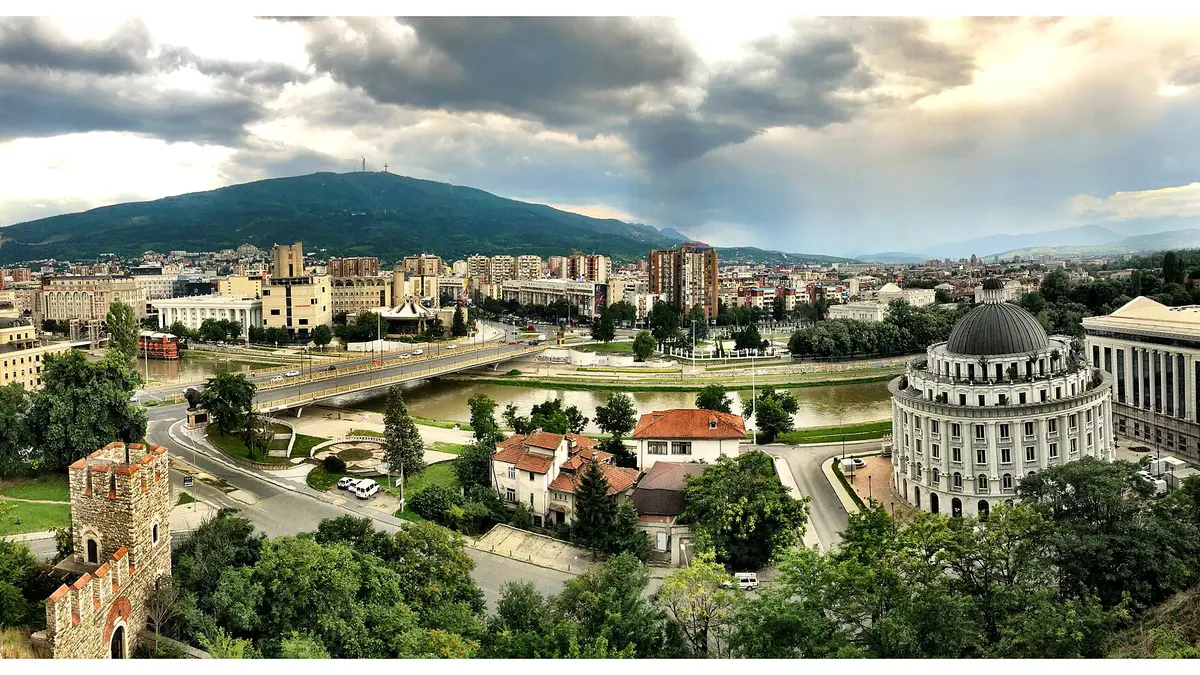
Start in Skopje, where the hire car and the paperwork both begin. Give the capital half a day at least: the Old Bazaar is the largest Ottoman market quarter in the Balkans outside Istanbul, the Stone Bridge links it to the statue-crammed main square, and the Millennium Cross on Vodno looks out over the whole valley you’re about to leave. That view is the optional extra on a half-day stop: the cable car has been out of commission since April 2026, so it means driving the new hire car up to Sredno Vodno and climbing for about an hour: allow roughly two and a half hours from the centre and back. It’s worth it if you’re staying the night and can go up the afternoon before you set off west.
Do the boring but critical bit at the desk before you leave the city: confirm the Green Card insurance names Albania, Montenegro and Croatia, and that you have the cross-border permit in the folder. This is the single thing that derails Balkan road trips - the car looks fine, then the border agent asks for a document you don’t have. Our renting a car in North Macedonia guide has the full checklist.
Ohrid: the lake and the first border
Ohrid is 170 km west on the A2, about two and a half to three hours through Tetovo, Gostivar and Kicevo. The last stretch, Kicevo to Ohrid, is still a mountain road rather than the four-lane it’s meant to become, so give it more time than the distance suggests. It is worth the drive: Ohrid is a UNESCO old town on one of the oldest lakes in Europe, and it earns two nights, not a photo stop. Climb to Samuel’s Fortress, walk out to the Church of St John at Kaneo on its cliff, and eat by the water. The background is in our Lake Ohrid guide, and if you want a slower first half of the trip the North Macedonia 7-day itinerary fills in Bitola and the parks.
When you leave, point the car west through Struga for the Kjafasan / Qafe Thane crossing, about 12 km on. A 2023 version of joint control here didn’t clear the summer queues, and a fuller upgrade agreed in June 2026 isn’t confirmed running yet, so don’t count on a fast crossing. Fill the tank in Struga - fuel is a touch cheaper on the Macedonian side, and you cross with a full tank rather than hunting for a station in a new currency.
Tirana: into Albania
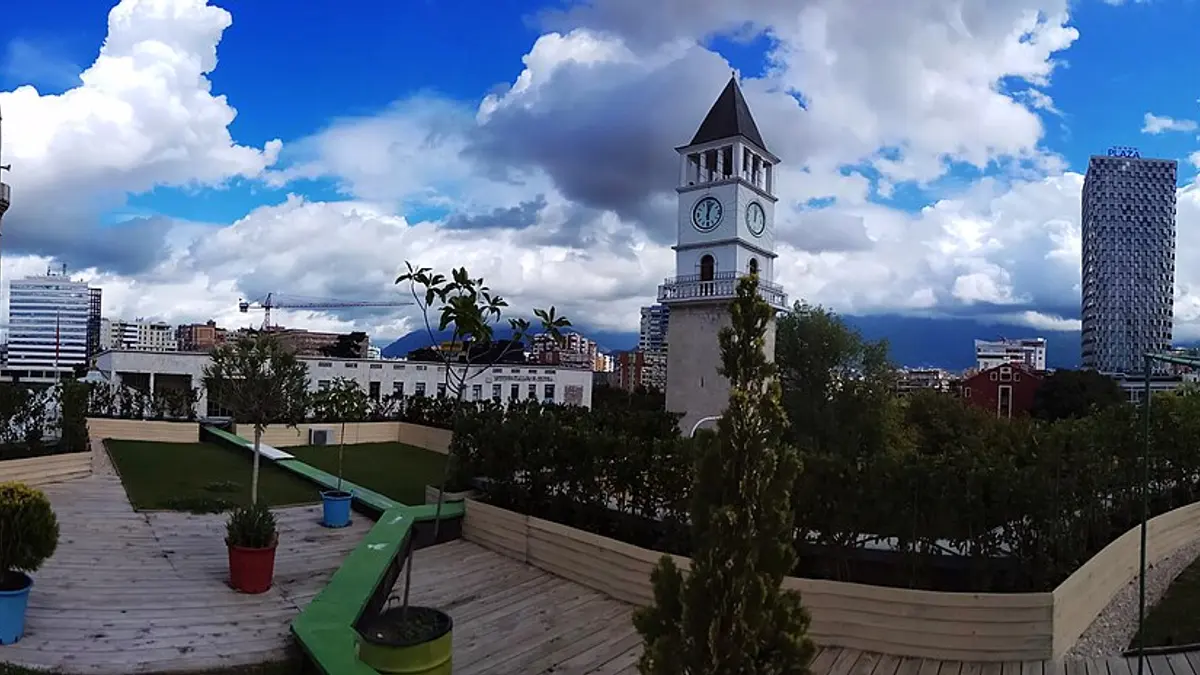
Past the border the road drops down the Shkumbin valley, following the river through Librazhd to Elbasan, then a fast motorway run through the Krrabe tunnel into Tirana. The capital is a jolt after the lake - loud, colourful and growing. Skanderbeg Square is the open heart of it, with the clock tower and the National History Museum, and the Blloku district is where the city eats and drinks. Give it a night. The Albania guidebook covers the city properly in things to do in Tirana.
If beaches are the point of your trip, this is where you can bolt on a southern detour: the Albanian Riviera around Himara and Ksamil is stunning, but it’s a two-day round trip south of Tirana and pulls you away from the loop rather than along it. Do it if you have a fortnight; skip it if you’re holding to ten days and heading north for Montenegro.
Up the coast: Budva and the Bay of Kotor
From Tirana the road runs north to the coast, crossing into Montenegro at Sukobin near the Bojana delta, then up past Shkoder, Bar and the resort strip to Budva. Reckon on about 196 km and three and a quarter hours of driving, plus the border - in July and August the coastal crossing backs up, so an inland run via Hani i Hotit and Podgorica is the quieter option. Budva is Montenegro’s party town: a small stone old town jutting out on its own little headland, wrapped by the beaches and beach bars that get loudest after dark. Treat it as a lunch-and-swim break, not an overnight.
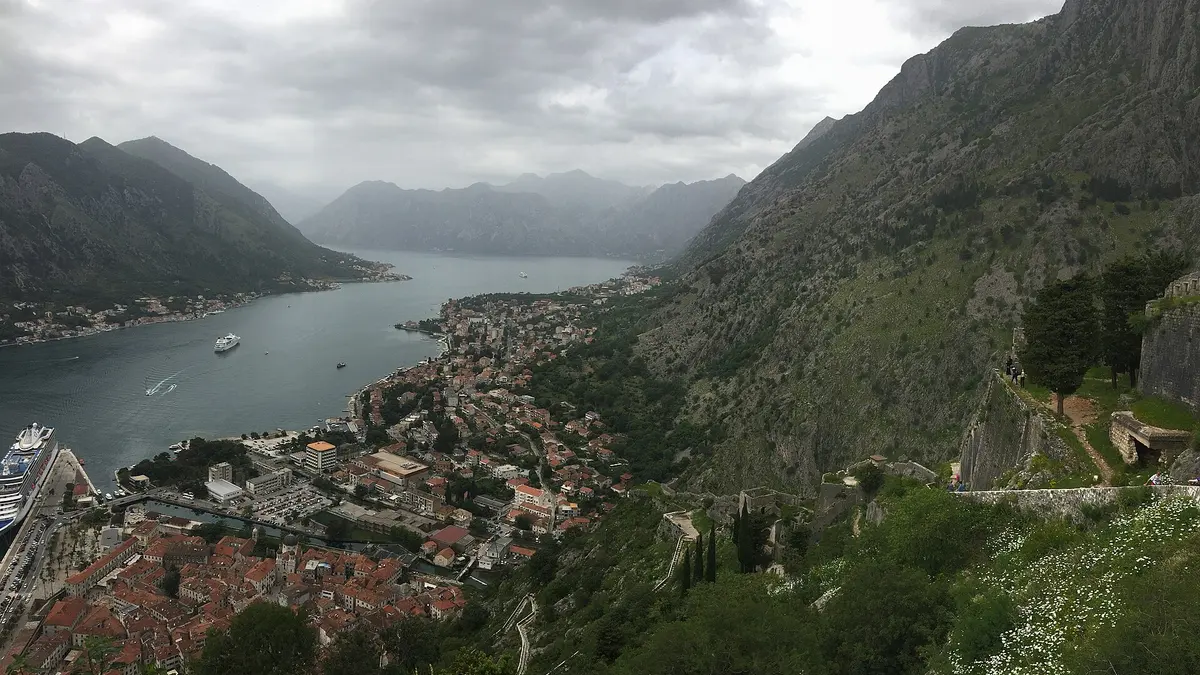
The reason to be here is 20 km further on. Kotor sits at the head of the Bay of Kotor, a flooded canyon that looks like a fjord, ringed by mountains that drop straight into the water. The medieval old town is a knot of stone lanes, and the real thing to do is climb the city walls up the hillside to the fortress - a steep, sweaty hour that pays off with the view on this page. The Montenegro guidebook’s Kotor guide has the detail.
Dubrovnik: the turnaround
The last leg to Dubrovnik is short and spectacular: about 92 km of two-lane road hugging the shoreline, sea on the left and limestone on the right, then the Debeli Brijeg crossing into Croatia. This border is the one to plan around - out of season it’s 15 to 20 minutes, but at midday in July and August it can sit for two to three hours, so cross early or late and never in the middle of the day.
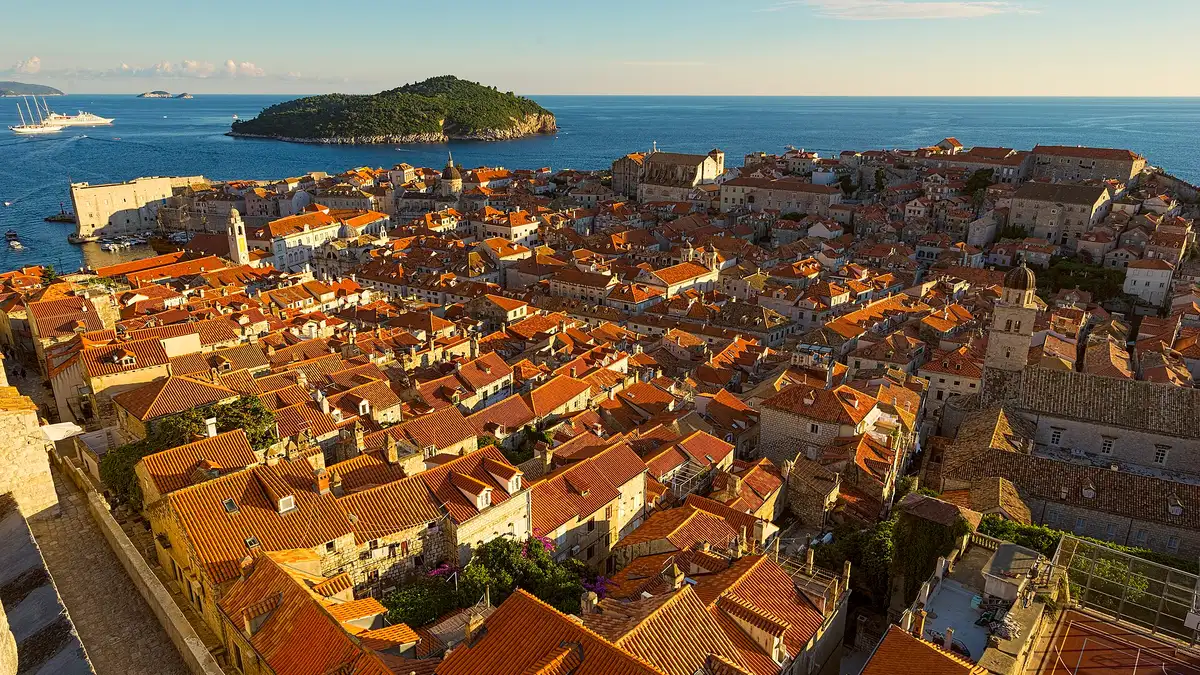
Dubrovnik is the climax and the natural end of the arc: the walled old town, the marble-paved Stradun and a circuit of the city walls above the sea. Two nights is right. The Croatia guidebook’s Dubrovnik travel guide covers the walls, the beaches and where to stay. From here you either turn the loop back toward Skopje or, if you’ve arranged a one-way rental, hand the car back and fly out.
Closing the loop
To make it an actual loop rather than a there-and-back, drive inland from Dubrovnik: back down through Montenegro to Podgorica (~144 km), then across into Kosovo for Pristina (~245 km), and finally the short hop to Skopje (~92 km) via the Blace crossing. It’s a long day and change, but it closes the circle without retracing a metre of coast.
The catch is Kosovo. It sits outside the main Green Card system, so a rental car needs explicit Kosovo cover - sort it with the rental company when you pick the car up, usually a Zone-1 or green-card add-on of around EUR 50, because you generally cannot just buy it at the border. Just as important, many companies will not let their cars into Kosovo at all. Check both before you commit to the inland return - if the answer is no, either retrace the coast or take the one-way drop in Dubrovnik and skip the return drive entirely.
Practicalities
The car and the Green Card. This is a four-country drive, so the paperwork matters more than the route. You need a Green Card that names Albania, Montenegro and Croatia (roughly EUR 30-50) plus a cross-border permit (roughly EUR 40-60), both sorted at pickup and kept in the car. A one-way international drop-off - picking up in Skopje and leaving the car in Croatia - is the cleanest way to skip the return leg, but expect a fee in the EUR 300-600 range. Weigh that against a full extra day of driving and a Kosovo border. See getting around North Macedonia for the wider transport picture.
Borders and timing. Three of the four crossings sit outside the EU and Schengen, so you clear a passport check at each; only Croatia is inside. The two that queue are Sukobin (Albania into Montenegro) and Debeli Brijeg (Montenegro into Croatia). In July and August both can crawl at midday, so make a habit of crossing before 8am or after 4pm. EU, UK, US and Canadian passport holders cross all four visa-free, but confirm your own case against the official source and our North Macedonia visa requirements.
Money. Four countries, three currencies: North Macedonia uses the denar, Albania the lek, and both Montenegro and Croatia the euro. Cards work in towns everywhere, so don’t stock up on denar or lek - keep small local notes for coffee, parking and fuel, and you’ll barely touch cash on the euro half.
When to go. May, June, September and October give you warm sea, open evenings and the shortest border queues. July and August are hottest, busiest and slowest at the crossings; that’s also peak season on the Montenegrin and Croatian coast, so book beds ahead. Winter works for the cities but the coast half goes quiet.
See also
- North Macedonia 7-day itinerary - a slower first leg before you cross out
- Lake Ohrid - the UNESCO lake at the start
- Ohrid to Tirana and the Adriatic - the Macedonia-to-Albania leg in detail
- Renting a car in North Macedonia - Green Card and cross-border rules
- Getting around North Macedonia - buses, transfers and driving
- More ideas: the full list of North Macedonia routes
Route day by day
- Days on the road
- 10
- Distance
- ≈1069 km
- Budget from
- 500 EUR
- Best season
- May, June, July, August, September, October
The route at a glance
-
Skopje (MK)
Route startstop ≈240 min
Pick up the hire car in the capital - Old Bazaar, the Stone Bridge and Kale Fortress, plus Vodno if you can spare a few more hours (no cable car since April 2026). Sort the Green Card and cross-border permit before you drive off.
Photo: aiva. · CC BY 2.0 · Wikimedia Commons ( source) -
Ohrid (MK)
170 km from the startstop ≈1440 min
~170 km west on the A2 via Tetovo, Gostivar and Kicevo (~2.5-3 h). The UNESCO lake town - two nights, then west to the Albanian border at Kjafasan.
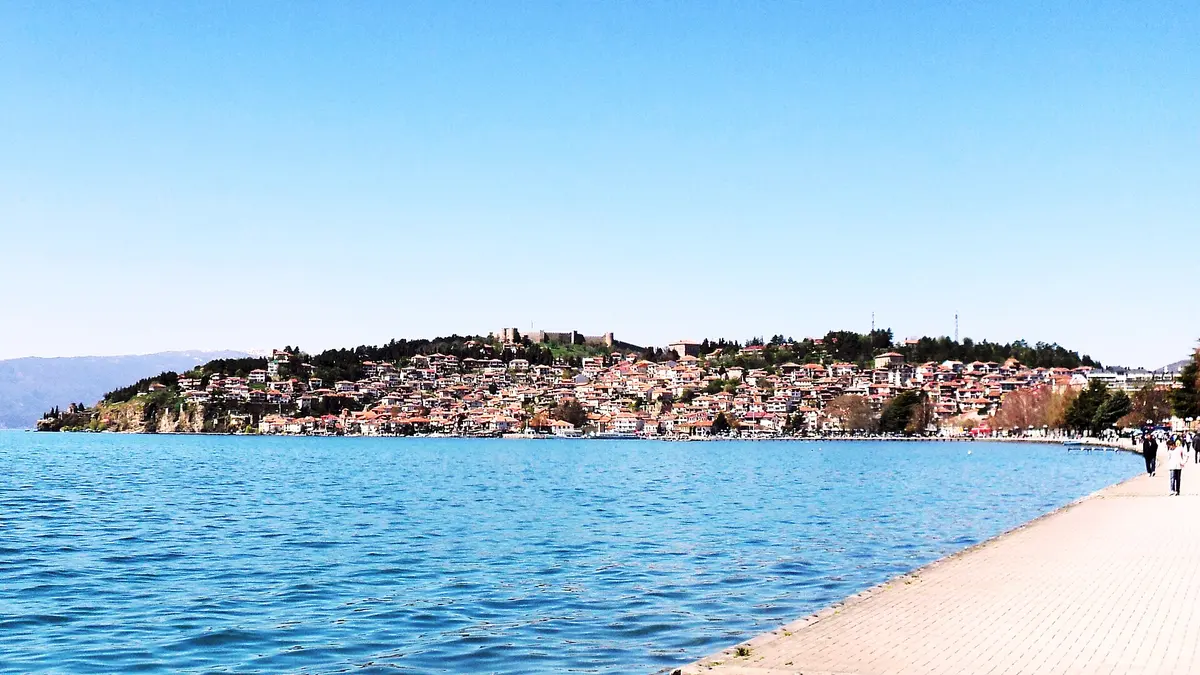
Photo: Photo Balkan · CC BY-SA 3.0 · Wikimedia Commons ( source) -
Tirana (AL)
300 km from the startstop ≈1440 min
~130 km from Ohrid (~2.5-3 h with the Qafe Thane crossing), down the Shkumbin valley via Elbasan. Skanderbeg Square, Blloku and the Dajti cable car.
Photo: Leeturtle · CC BY-SA 3.0 · Wikimedia Commons ( source) -
Budva (ME)
476 km from the startstop ≈300 min
Up the coast into Montenegro via the Sukobin crossing, Shkoder and Bar (~196 km, ~3 h 15 + border). A walled seaside old town and the busiest beaches on the Adriatic.
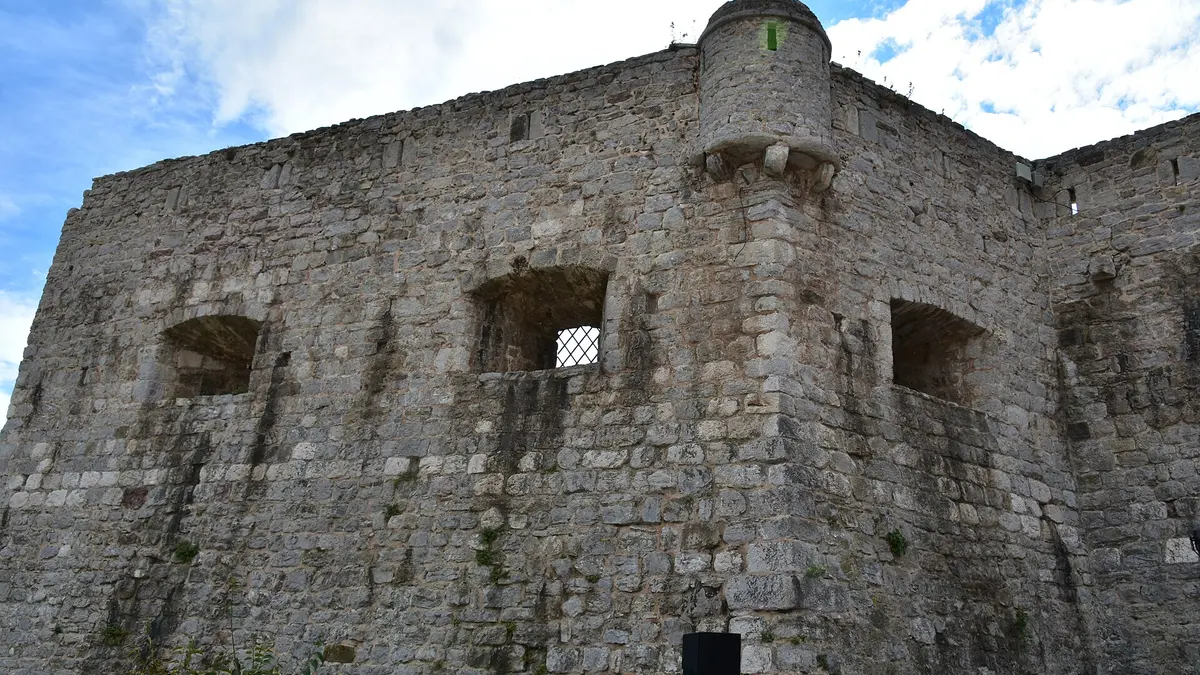
Photo: Richard Mortel · CC BY 2.0 · Wikimedia Commons ( source) -
Kotor (ME)
496 km from the startstop ≈720 min
~20 km on around the Bay of Kotor. A medieval walled town at the head of the fjord, with a wall climb up to the fortress for the classic view.
Photo: Morganjgonzalez · CC BY-SA 4.0 · Wikimedia Commons ( source) -
Dubrovnik (HR)
588 km from the startstop ≈1440 min
~92 km up the coast (~2 h + the Debeli Brijeg border). The walled Croatian city is the turnaround - then loop back inland or drop the car here.
Photo: Miguel Mendez · CC BY 2.0 · Wikimedia Commons ( source)
Route map
The map with stops loads on click - to keep the page lightweight.
The map didn’t load. Check your connection and refresh the page.