
Is North Macedonia Expensive? From €50/Day in 2026
Is North Macedonia expensive? No - one of Europe's cheapest. Backpackers get by on about €50/day, mid-range €60-100, plus the one Ohrid exception.
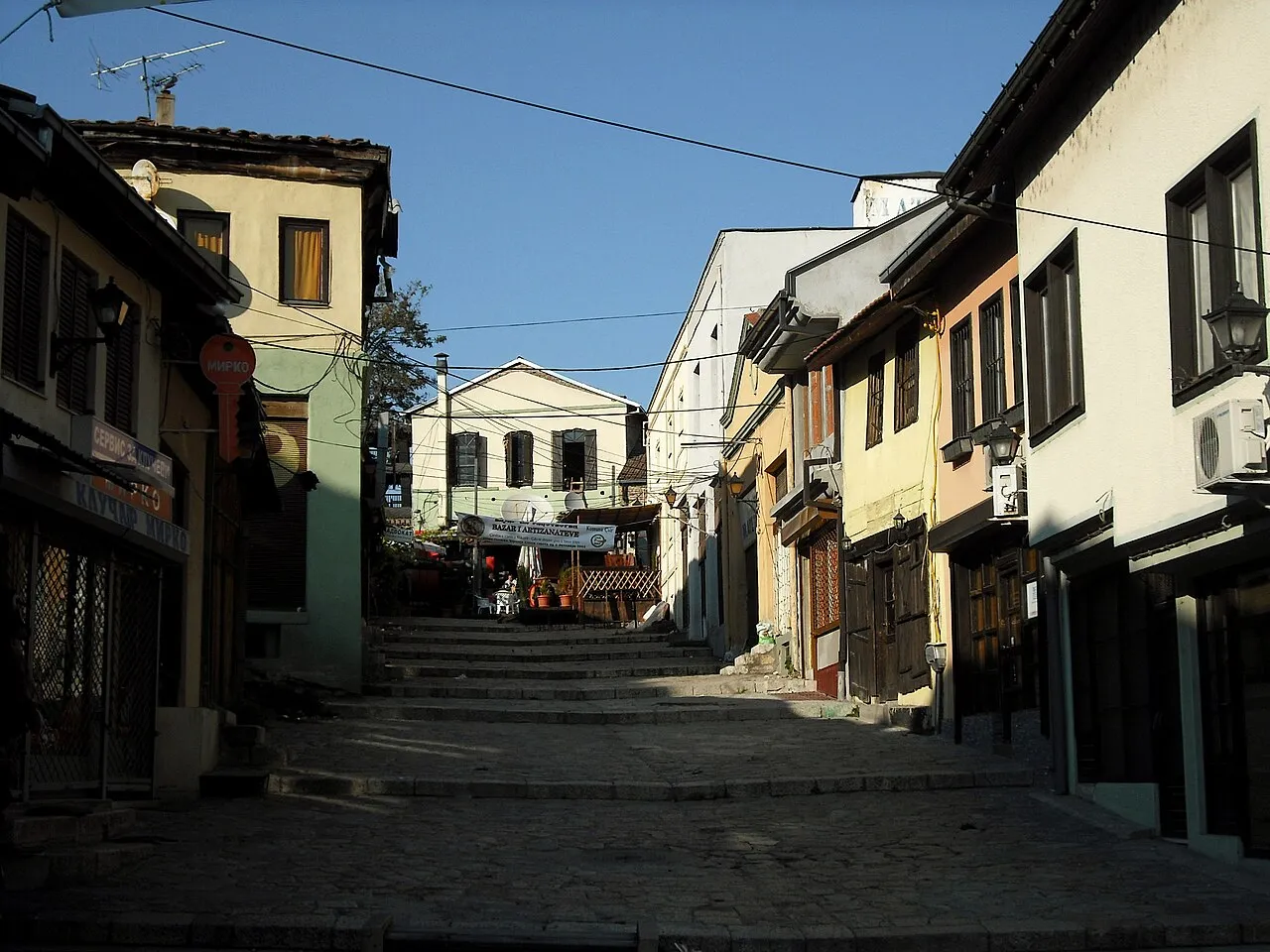
No - North Macedonia is one of the cheapest countries you can travel in Europe, and it stays cheap even in high summer. A backpacker gets by on about €50 a day, a comfortable mid-range trip runs €60-100 per person, and even a soft-luxury week rarely tops €150 a day (Budget Your Trip, checked July 2026). The one thing that breaks the pattern is Ohrid in July and August, when lakefront rooms jump. Below is what your money actually buys in 2026, three honest daily budgets, and the small print worth knowing before you book.
The short version: a sit-down meal costs a few euros, a cross-country bus costs the price of a coffee back home, and museum tickets are pocket change. If you’ve travelled anywhere in Western Europe, your first reaction on the ground is usually the same - things are so cheap you keep double-checking the bill.
Why prices here are predictable
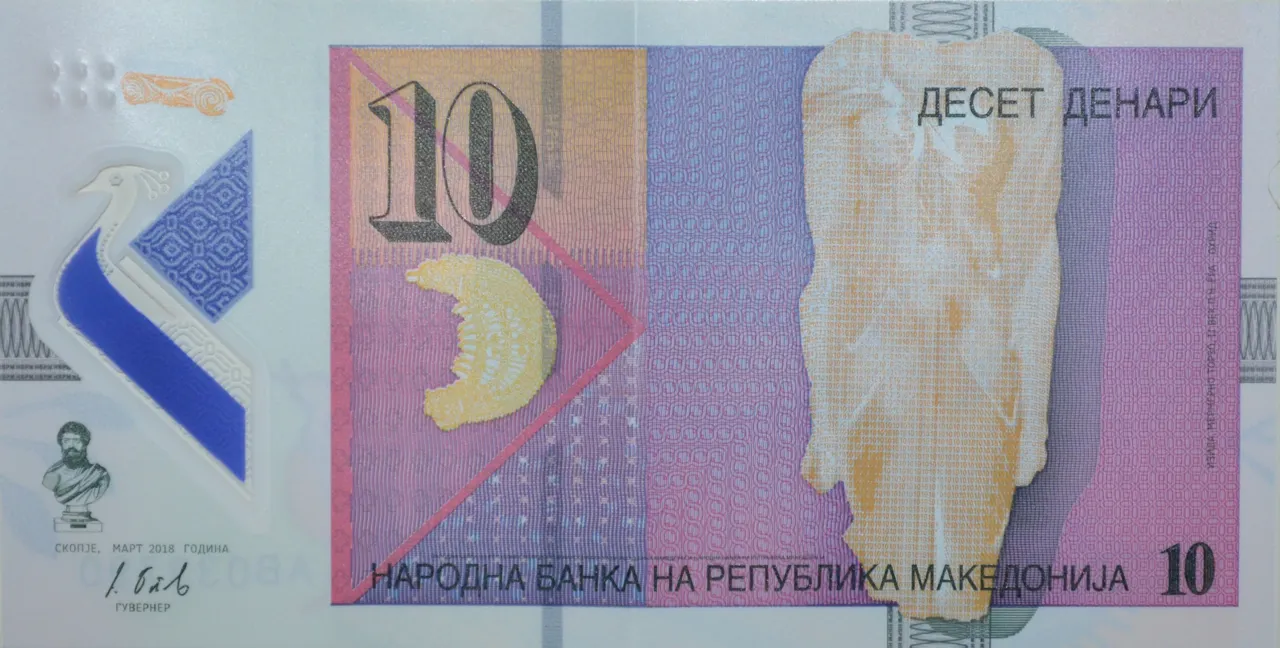
Two things keep North Macedonia both cheap and easy to budget for. First, low local prices: a restaurant meal, a museum entry and an intercity bus all cost a euro or a few, not a tenner. Second, the currency. The Macedonian denar (MKD) has been de-facto pegged to the euro since 2002 at a central parity of 61.3644 MKD to €1, held inside a narrow band by the National Bank (National Bank, via Wikipedia). So the rate barely moves, and you can price your trip in euros before you leave and be right when you arrive.
For this guide I use roughly 61.5 MKD = €1. Treat every figure as a 2026 range, not a fixed price - fares and entry fees nudge around and climb in high season.
Three daily budgets, in plain numbers
Aggregated traveller data pins the spread neatly. Most visitors spend somewhere between $56 and $234 a day, and the average lands near $126 (Budget Your Trip). Because the dollar and euro sit close together in 2026, those are near enough euro figures too. Here’s how that plays out by travel style:
| Style | Per person / day | What it buys |
|---|---|---|
| Backpacker | about €45-55 | Hostel dorm, bakery and kafana meals, buses, the odd paid sight |
| Mid-range | about €60-100 | Private room or 3-star, restaurant dinners, a boat trip, occasional taxi |
| Comfort | about €130-150+ | 4-star or lakefront room, nice dinners, private tours and transfers |
A week works out around €800 solo or €1,600 for a couple at a mid-range pace, flights aside. The gap between the columns is almost entirely down to two levers: where you sleep and how you get around. Nail those and the rest falls into place.
What things actually cost
Numbers make the “cheap” claim concrete. The taxi and petrol lines below use the city’s own tariff and the national regulator’s own price; coffee and beer are spot-checked against real venues and 2026 local reporting; meal and dinner figures are planning estimates rather than dated spot-checks - see our trip cost page for the full sourcing:
- Meal at an inexpensive restaurant or kafana: roughly €6-8 (350-500 MKD) at an everyday spot; a touristy terrace charges more.
- Three-course dinner for two, mid-range: roughly €25-32 (1,500-2,000 MKD).
- Fast-food combo: about 350 MKD (€5.70); a burek (filled filo pie) from a bakery is €1-2.
- Coffee: 80-150 MKD (€1.30-2.45) at an ordinary café; some smarter central spots have pushed toward 150-200 MKD, which a hospitality-industry complaint called “absolutely unrealistic” for an espresso - the flagged exception, not the everyday price. Half-litre of draught beer: 150-300 MKD (€2.45-4.90).
- City bus ticket in Skopje: 35 MKD (€0.57) by card or app, 50 MKD for a paper single; a taxi starts at 50 MKD, the current tier of the city’s fuel-linked taxi tariff (City of Skopje Transport Council).
- Petrol: 91.00 MKD/L (€1.48), the national regulated price set by the Regulatory Commission for Energy.
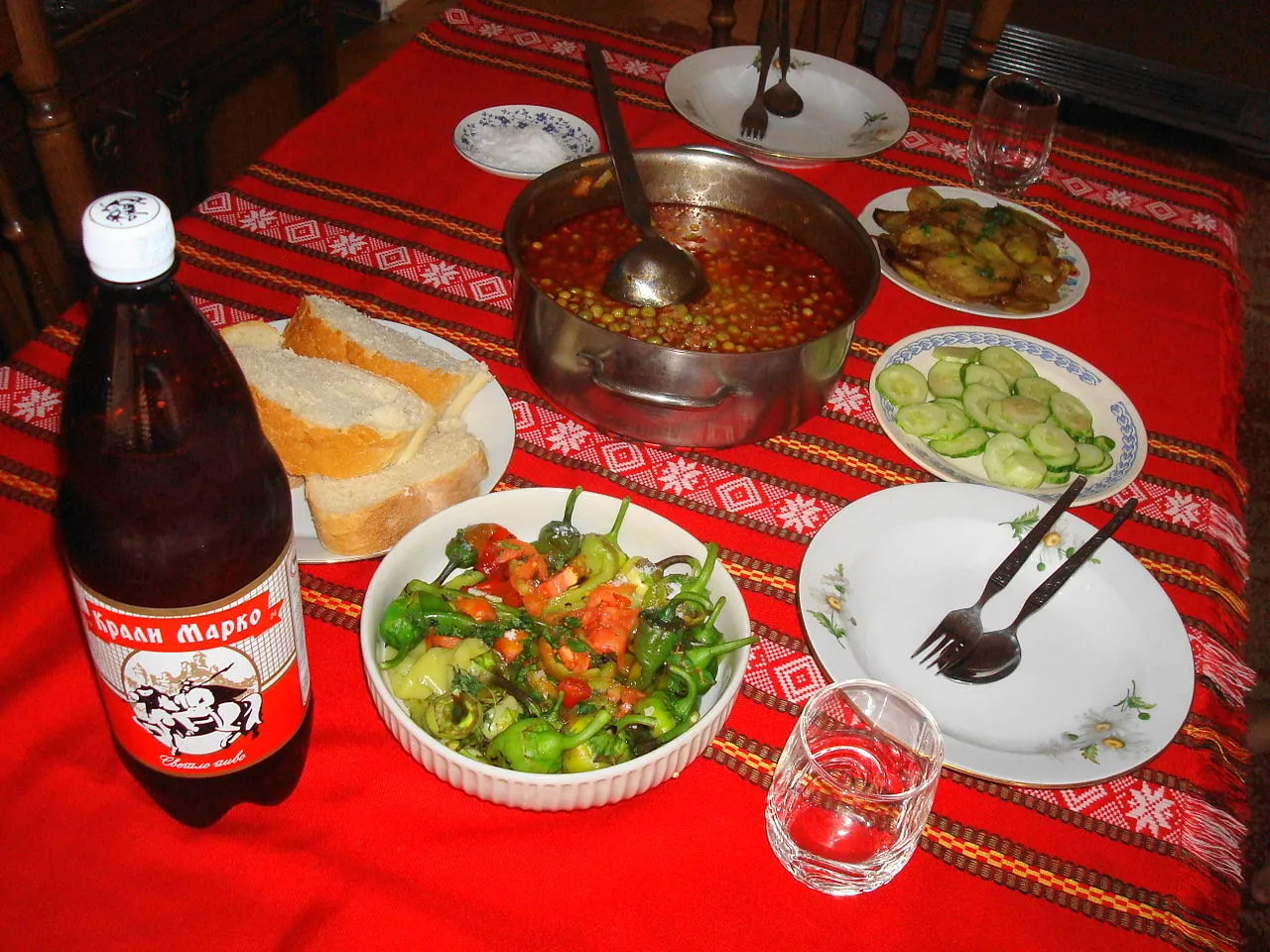
So a day of eating well - bakery breakfast, kafana lunch, a proper restaurant dinner with a beer - lands around €20-30, and you can halve that if you lean on markets and bakeries. The traditional dishes to seek out (tavče gravče, grilled kebapi, ajvar, šopska salad, a glass of Tikveš wine) also happen to be the cheapest things on the menu. For the full itemised rundown across the country, our North Macedonia trip cost guide breaks every line down.
Accommodation: where the budget is really set
This is the biggest lever, and where the numbers swing most. A hostel dorm bed runs about €10-15 a night in Skopje or Ohrid; the cheapest beds dip below that off-season. A budget hotel in Skopje averages around €23, with the city’s overall hotel average near €38 and peak-season rooms nearer €70 (Budget Your Trip and Expedia hotel data). A mid-range double is comfortably €35-70 most of the year, often with breakfast in family-run places.
Skopje is a year-round city, so its rates stay fairly flat. That makes it a reliably cheap base - see where to stay in Skopje for the best-value neighbourhoods.
The one exception: Ohrid in July and August
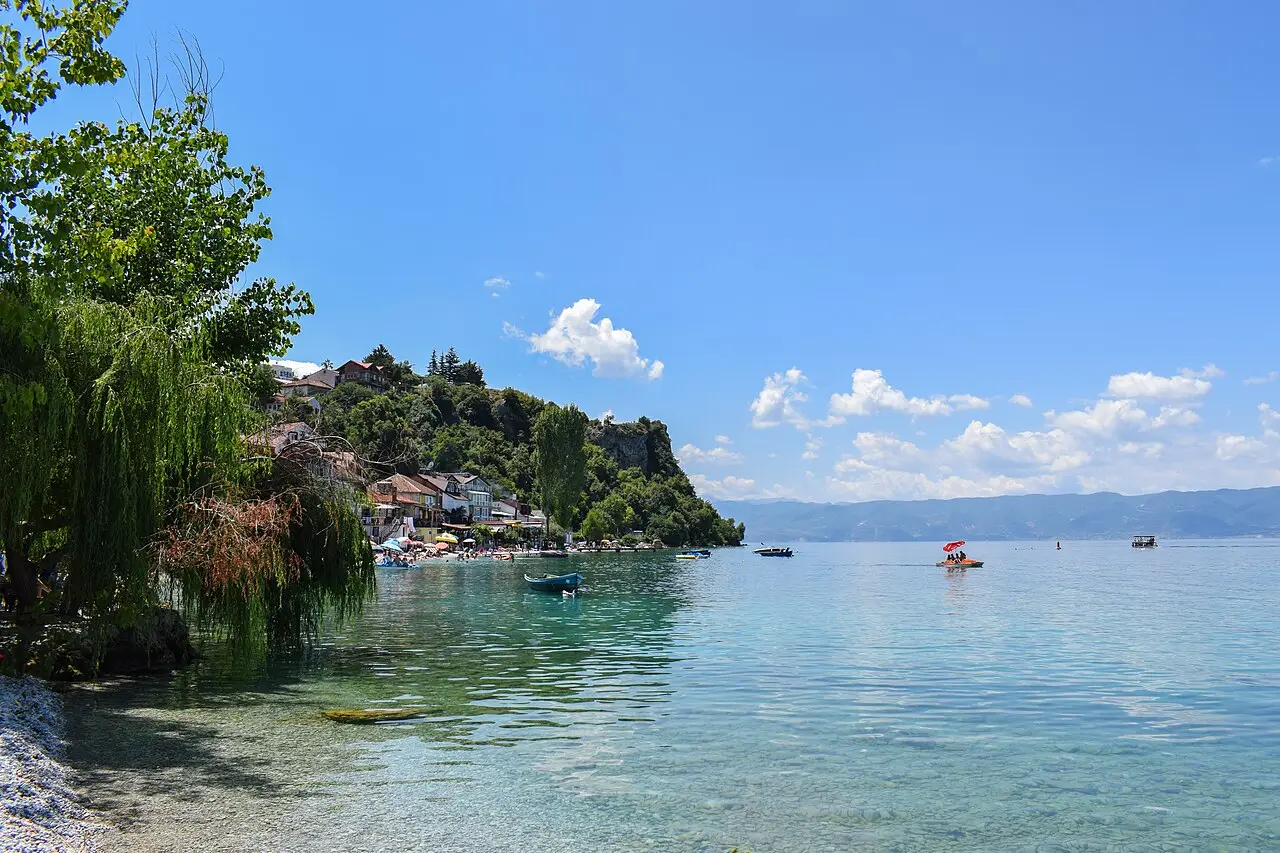
Here’s the honest caveat that most “cheap Balkans” posts skip. Ohrid is a summer resort, and in July and August its hotel prices behave like one - lakefront rooms climb well above Skopje and can push toward €100+ a night at the peak, far above the town’s own off-season rate (trip cost guide, Expedia Ohrid). If your dates are locked to peak summer, book Ohrid early and expect to pay resort money for a lake view.
The easy fix costs nothing: go in June or September instead. The water is still warm enough to swim, the old town is quieter, and rooms cost a fraction of the August rate. Our best time to visit North Macedonia guide lays out the shoulder-season trade-offs, and there’s more on the lake itself in things to do in Ohrid.
Getting around is cheap - and how you do it matters
Transport is the other big lever, and it’s genuinely inexpensive. Intercity buses are the backbone: the longest leg most people take, Skopje to Ohrid, is a 3-hour ride from about €13-15 and runs 16 to 17 times a day. Skopje to Bitola is around €17, Skopje to Tetovo from €3 (FlixBus, Rome2Rio). Within cities, a bus ticket is under a euro and taxis are cheap by the meter.
Renting a car costs more but unlocks the country: economy hire runs €10-25 a day, dipping to about €12 off-season and rising past €40 at peak. Fuel is about €1.34 a litre. For a small country with spread-out sights, a few days of car hire is often worth it - our renting a car in North Macedonia guide covers what to check, and getting around North Macedonia compares buses, transfers and driving on price.
Sights, tours and the odd hidden cost
Entry fees are refreshingly low. There’s no national tourist tax to enter the country, and most museums and monasteries cost €1-5. Big-ticket experiences are paid per operator: at Matka Canyon the gorge is free to walk. The boat to Vrelo Cave costs 500 denars (about 8.5 euro) at the operator’s own price list. Whether cave entry is included is not stated there, so ask at the jetty before you pay. A kayak is about 150-300 MKD for the hour. Guided day tours and the Ohrid-to-Sveti Naum boat run more, but by European standards remain cheap.
Two smaller costs are easy to forget. Cash: cards work in city hotels, supermarkets and most restaurants, but bazaar stalls, bakeries, market produce, Matka boats and some guesthouses run on denar - carry some, and check your bank’s foreign-withdrawal fee. Data: rather than roaming, a North Macedonia eSIM starts at about $4-5 for a few gigabytes (roughly $2-3/GB), which is far cheaper than a surprise roaming bill (Airalo eSIM pricing, checked July 2026); our guide to the best eSIM for North Macedonia weighs that against a local SIM at 399 denars.
So, is it worth the price?
Comfortably, yes. North Macedonia consistently sits near the very bottom of Europe’s cost rankings, and it delivers a lot for the money: a UNESCO lake, an atmospheric capital, mountains and monasteries, and some of the friendliest prices on the continent. It’s cheaper than Croatia or the Greek coast and on par with Albania or Bulgaria, with fewer crowds than any of them. If you’re weighing it up against neighbours, is North Macedonia worth visiting makes the case in full, and how many days in North Macedonia helps you turn a daily budget into a trip total.
The one rule to remember: keep Ohrid to the shoulder season, or budget for a resort in high summer. Do that, and this is about as much country as your money will buy anywhere in Europe.
See also
- North Macedonia trip cost - the full itemised breakdown
- Best time to visit North Macedonia - when to dodge the Ohrid price spike
- How many days in North Macedonia - turn a daily budget into a trip total
- Getting around North Macedonia - buses, transfers and driving on price
- Renting a car in North Macedonia - what a few days of hire costs
- Is North Macedonia worth visiting? - the value case
Admission and opening hours
- Admission price
- No national tourist tax to enter the country; most museums and sites cost about €1-5. Boat trips, kayaks and guided tours are paid on site or per operator.
All figures are 2026 ranges and move with the season - confirm current prices on the day.
Details checked: July 8, 2026
Read also

Before you go · 11 min read
Matka Canyon Day Trip: Bus, Taxi or Tour + Day Budget
Updated · August 8, 2026Matka Canyon from Skopje: bus vs taxi vs tour prices, what a full day actually costs, and the bus 60 quirk most guides miss.

Before you go · 8 min read
Best Day Trips from Bitola: Pelister, Prespa & More
Updated · August 7, 2026Day trips from Bitola: Pelister in 30-40 min, Lake Prespa in about 1 h, Heraclea mosaics, plus Kruševo and Prilep - car, taxi or tour.

Before you go · 11 min read
North Macedonia Weather by Month: When to Go
Updated · August 6, 2026North Macedonia weather by month: Skopje and Ohrid highs, rain, sunshine and Lake Ohrid water temps - plus what to pack and when to go for what.

Before you go · 12 min read
Where to Stay in Struga: Areas, Beaches & Prices
Updated · August 3, 2026Struga rooms opened at $40 a night against $58 in Ohrid 15 km away: the centre, the beach strip, Kalishta and Radozda compared, and what each costs.