
North Macedonia to Greece Border: EES Checks & Queues
Bogorodica-Evzoni: 30-40 min waits in Aug 2026, up to 2h cars / 5h+ coaches at peak. What EES adds, what to bring, and the biometric-pause status now.
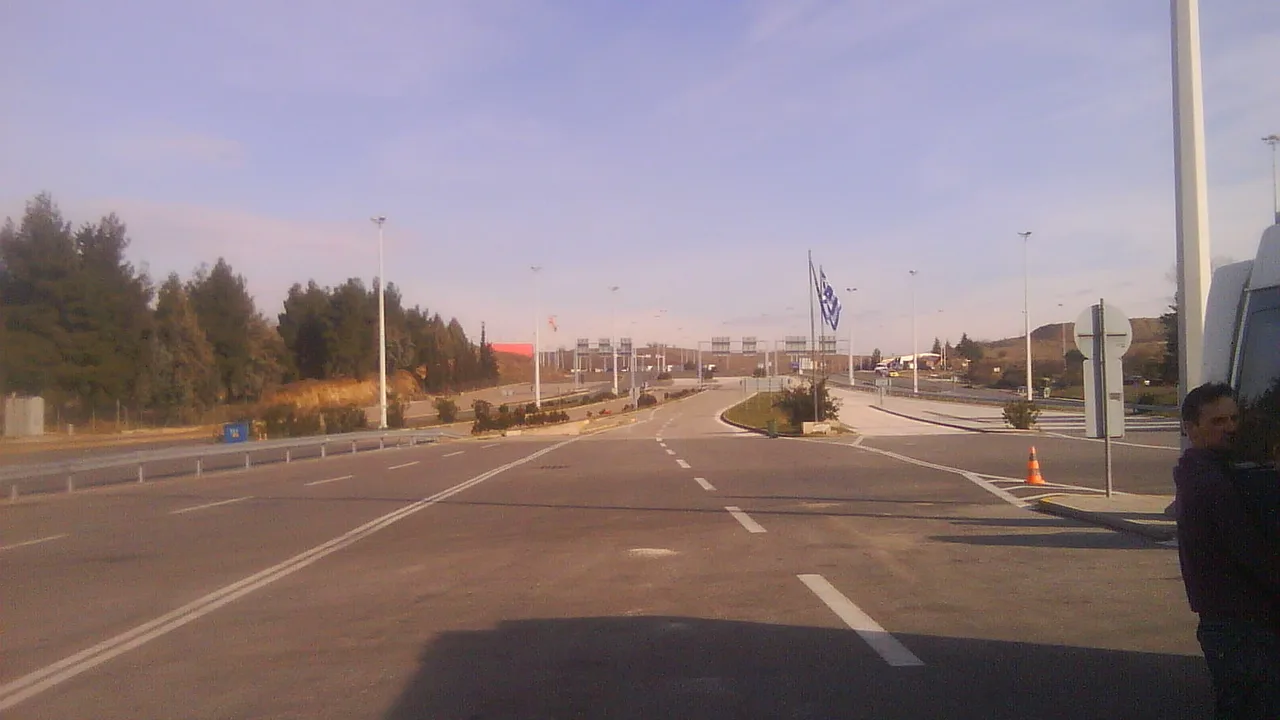
Greece is in Schengen. North Macedonia isn’t. So the moment you roll up to Bogorodica-Evzoni, Medzitlija-Niki or Star Dojran, you’re at a full EU external border, and since 10 April 2026 that means the Entry/Exit System: a facial image, four fingerprints and a digital record instead of the old passport stamp. First registration takes roughly two to three minutes per traveller instead of twenty or thirty seconds, and that arithmetic is the whole story of this summer’s queues. On 2 August 2026 the Macedonian auto club listed the wait at Bogorodica at about 30 minutes to leave the country. On the worst mornings of this season, Greek and Macedonian media reported two hours for cars and over five for coaches. You’ll feel the difference even on a quiet day.
Whether you need a visa to get into North Macedonia is a different question, answered in our North Macedonia visa requirements guide, and the fares for the Skopje-to-SKG run sit in Skopje to Thessaloniki Airport. This page is the barrier itself.
Verified as of 2 August 2026 against the European Commission, the published text of Regulations (EU) 2017/2226 and 2025/1534, Frontex guidance for the official EES app, and the AMSM daily road bulletin; the status of the biometric pause was re-checked on 11 September 2026. Border rules and waiting times change, sometimes within a week. Confirm your own situation with an official source before you travel.
What EES actually is, and where it bites
The Entry/Exit System is the EU’s replacement for ink. It records your travel document details, a facial image, fingerprints and the date and place of every entry and exit, across 29 European countries. The roll-out began on 12 October 2025 and the Commission declared the system fully operational on 10 April 2026, ending the manual stamp for non-EU travellers. By 27 July 2026 it was reporting over 145 million entries and exits on file.
Who gets registered? Essentially every non-EU visitor on a short stay of up to 90 days in any 180, which means US, UK, Canadian and Australian passports go through it. The exemption list is narrower than people hope: EU citizens and nationals of Iceland, Liechtenstein, Norway and Switzerland, passport holders of Andorra, Monaco, San Marino and the Holy See, and holders of a long-stay visa, residence permit or EU family residence card - except Cyprus and Ireland, whose long-stay visa and residence permit holders are still registered. Nothing there helps a tourist driving south for a beach week - you’re in the biometric queue.
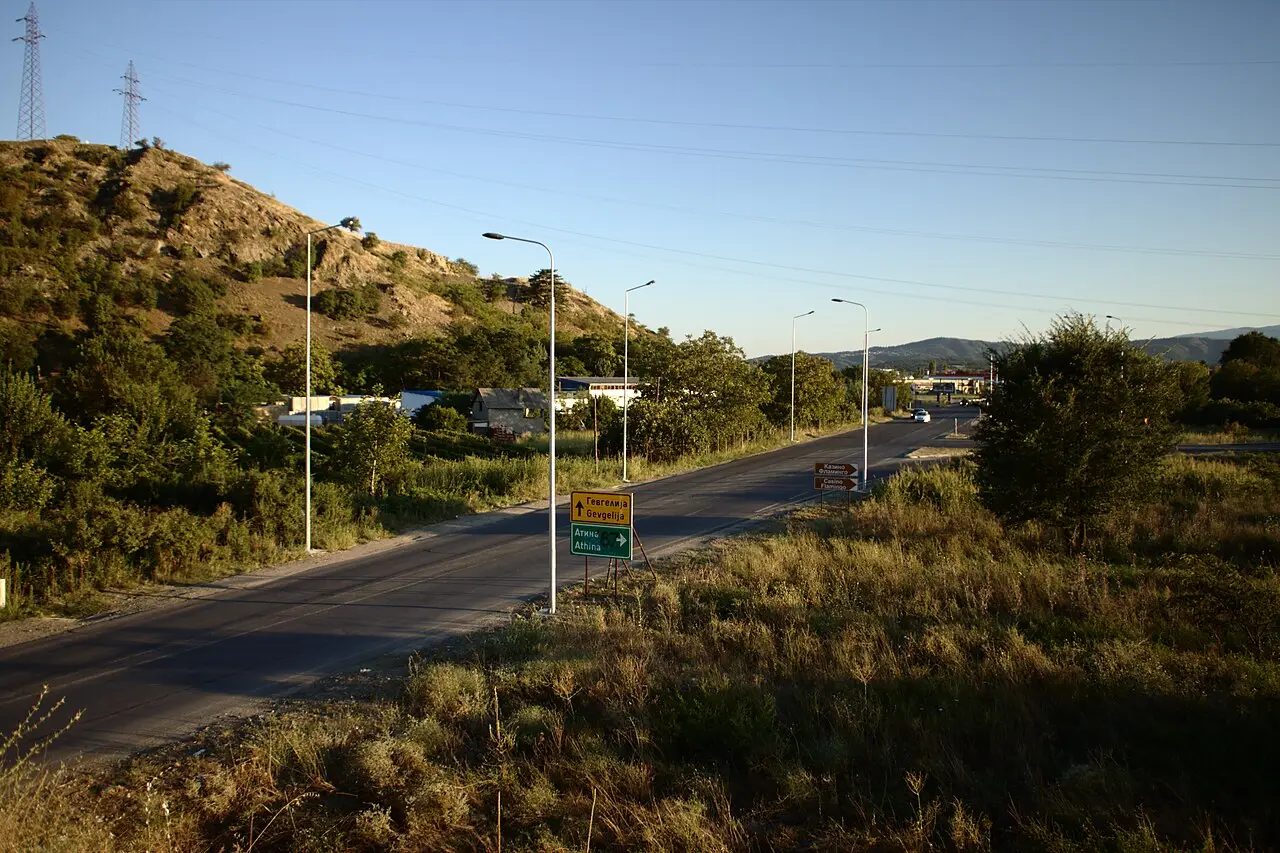
And none of this is North Macedonia’s doing. The Macedonian side still runs a conventional check, quickly, with no biometrics. EES lives entirely on the Greek side, because that’s where the EU begins, and this is now the one border in the neighbourhood where the two halves work at completely different speeds. That’s the asymmetry travellers keep misreading.
What happens at the booth
On your first crossing since the system went live, the officer reads your passport chip, takes a live facial image and captures four fingerprints - the regulation specifies the index, middle, ring and little finger of the right hand. That builds an individual file, kept for three years after your last exit record. Children under 12 are exempt from fingerprints by law; they still get the photo and document check.
On later crossings inside that window there’s nothing new to enrol, so it’s a verification against what’s on record. Faster, yes. A wave-through, no.
The part people forget is that exits are registered too. Coming back north out of Greece you go through Greek control again to close the record, and plenty of travellers plan carefully around the southbound morning queue only to walk into the northbound Sunday-evening one.
An officer can also ask you to justify the purpose of the trip and show you can pay for it: the Schengen Borders Code requires a passport issued within the previous 10 years and valid at least three months beyond your intended departure, plus evidence of purpose and sufficient means. With a Western passport in a car queue you’ll almost never be asked, but keep a hotel booking reachable on your phone rather than buried in an email you can’t open on one bar of signal.
Here’s the small trap. There’s an official EU pre-registration app, Travel to Europe, and people turn up assuming they’ve done the hard part. The Frontex guidance for it says it currently works for arrivals into Sweden (passport data, facial image, questionnaire) and Portugal (questionnaire only), and that if your crossing isn’t listed, the app isn’t available there. Greece isn’t listed - so don’t expect the app to shorten Evzoni.
The queue, in real numbers
Two to three minutes per traveller instead of twenty or thirty seconds sounds trivial until you multiply it by a full car and then by the cars ahead of you. That’s the mechanism behind every headline this summer. The numbers I could verify, with their dates:
| When | Bogorodica-Evzoni | Other crossings |
|---|---|---|
| 2 Aug 2026 (AMSM daily bulletin) | about 30 min to exit | no lengthy delays reported |
| 29 Jul 2026 (BTA, citing AMSM) | about 40 min towards Greece | Medzitlija-Niki and Star Dojran: no significant delays |
| Late May to June 2026 (Greek and Macedonian media) | reported peaks of 2-3 km of queue, ~2 h for cars, 5 h+ for coaches | - |
So the honest picture isn’t “the border is broken”. A normal day costs you half an hour where it used to cost five minutes, and a bad August Saturday can cost a chunk of the day. The bad slots are predictable: southbound Friday evening and Saturday morning, northbound Sunday afternoon and evening, plus public holidays on either side. Nights are the fastest thing going. Check on the day rather than trusting anybody’s average, mine included: the AMSM daily road bulletin (amsm.mk) lists waiting times per crossing and is what Macedonian newsrooms quote. You’ll want that check before you leave the hotel.
Greece isn’t sitting still, either. After a meeting in Thessaloniki with regional authorities, customs and the Hellenic Police, the government announced reinforced IT, extra staff, traffic rerouting and modular control booths that turn a single lane into two at Evzoni and at Kipi on the Turkish border. Whether that lands before the season ends or after it’s the open question locally.
Is Greece still switching the biometrics off?
Not under the EU rule it used this summer. That queue-driven pause ran until 6 September 2026 and has now lapsed, and no Greek authority has said how Evzoni runs since.
The safety valve was real and narrow. Regulation (EU) 2025/1534 let a member state partially suspend EES at one specific crossing point for a maximum of six hours at a time, only “in exceptional circumstances that lead to traffic of such intensity that the waiting time at a border crossing point becomes excessive”. Partial meant everything else was still recorded and only the biometrics were skipped. The Commission was blunt that it wasn’t a licence for blanket exemptions: its spokesperson said in May 2026 that the framework “does not foresee blanket exemptions for nationals of specific third countries and for an extended period of time”.
Greece used it. Answering parliamentary questions on 21 and 27 May 2026, Deputy Minister of Citizen Protection Ioannis Lambropoulos put the window as running to 8 July 2026, extendable to 6 September 2026. That matched the regulation, where the 90-day allowance could be automatically extended by 60 days and the provision ceased to apply 330 days from 12 October 2025. The extension did run: a Commission spokesperson said on 1 September that the option ran up to and including 6 September.
Nine European countries, Greece among them (eight EU members plus Switzerland), wrote to the Commission in July asking to keep the mechanism past that date. When we checked on 11 September 2026, no extension had been adopted. The end date is written into the regulation itself, and the Commission’s line on 1 September was that EES had “broadly worked well” over the summer and that it was in “close and constructive contact with those few member states where some adjustments are needed at certain border crossing points”, without naming them. It also spoke of “an additional period of operational adjustment” at those few crossings, but announced no change to the rules. We found no Greek government or police notice on how checks at Evzoni work after the deadline. So the practical rule is the one it was all summer: plan on full biometric registration, a live photo and four fingerprints on your first crossing, and check the current position with an official source shortly before you travel.
The other acronym, ETIAS, isn’t in force. The Commission was still saying “last quarter of 2026” in April and that target has since slipped out of view, so there’s nothing to apply for today. Re-check a month before you go.
Which crossing to use
Three crossings connect the two countries on roads a tourist would use. Bogorodica-Evzoni is the main one, on the A1/E75: about 160 km of motorway from Skopje to the barrier and roughly 76-78 km more to Thessaloniki. Fastest road, busiest border. Medzitlija-Niki is the western back door from Bitola, Ohrid or Prespa, dropping you towards Florina, and Star Dojran-Doirani covers the eastern corner by the lake. Both were reported clear on the same late-July day when Bogorodica was running 40 minutes.
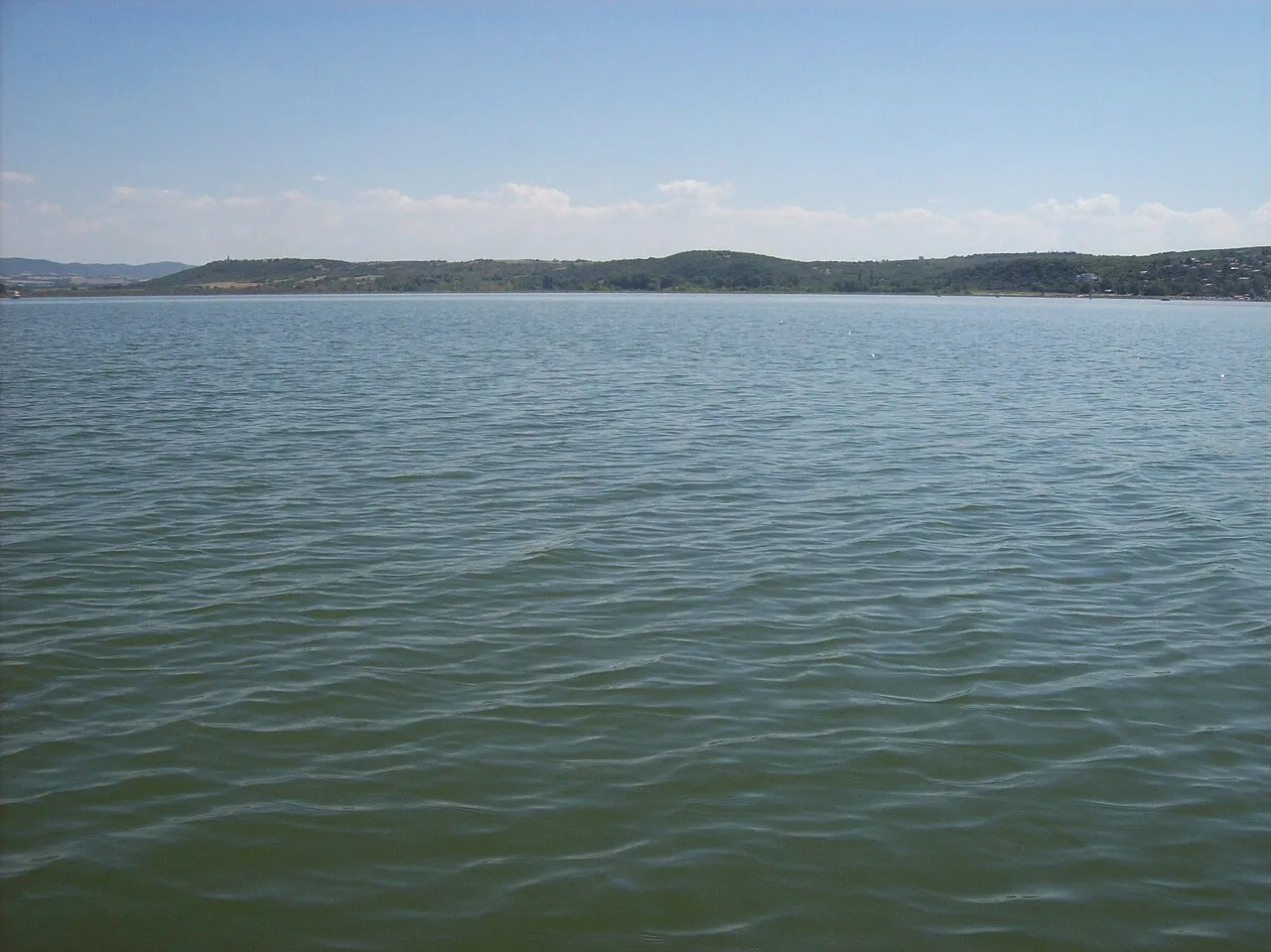
Before you get clever, do the sum. Detouring to a quiet crossing usually adds well over an hour of driving to dodge a wait that’s running half an hour, so it pays only on the genuinely bad mornings, and mostly only if you were heading through Bitola or Dojran anyway.
Driving your own car or a rental
The car brings its own paperwork, separate from anything EES does to you. Taking a North Macedonian rental into Greece needs a Green Card, the international insurance extension, arranged in advance: National asks for at least seven working days’ notice and about EUR 34 per border, Hertz lists roughly EUR 35 for the zone that includes Greece, and a 2026 guide quotes around EUR 50. Not every company permits the crossing at all, so ask before you book rather than at the barrier. Deposits and excess are covered in renting a car in North Macedonia.
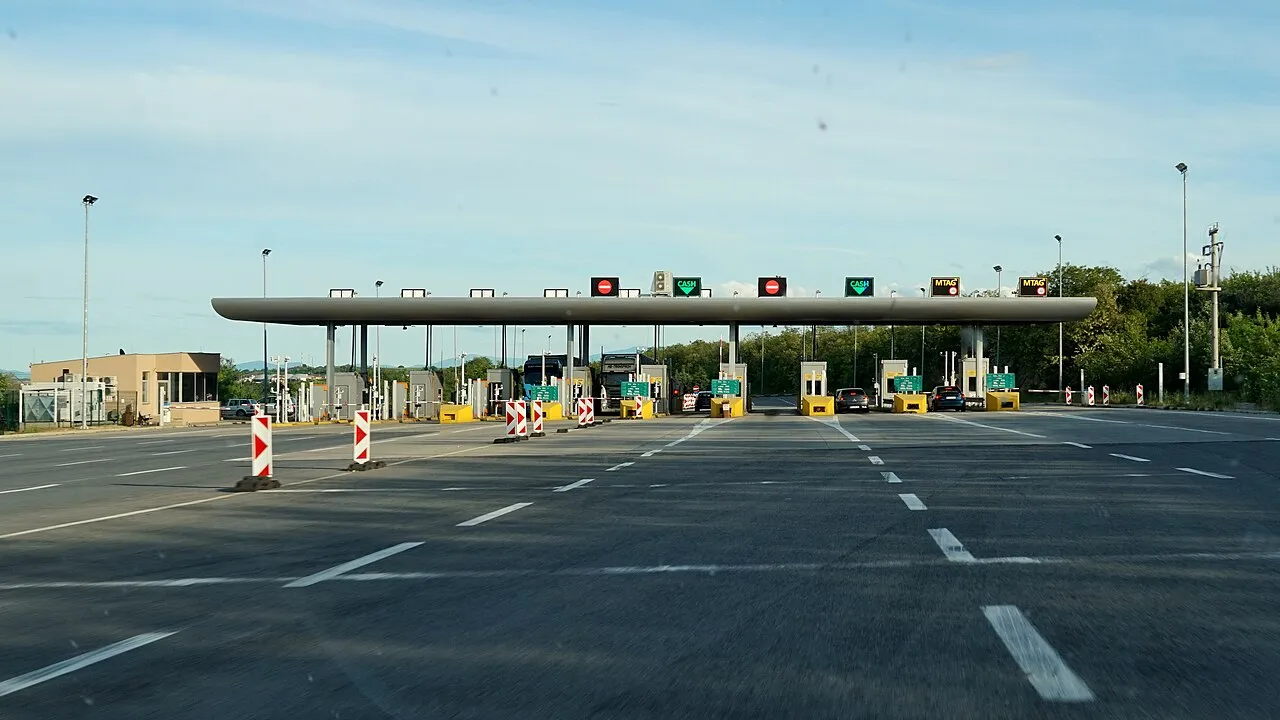
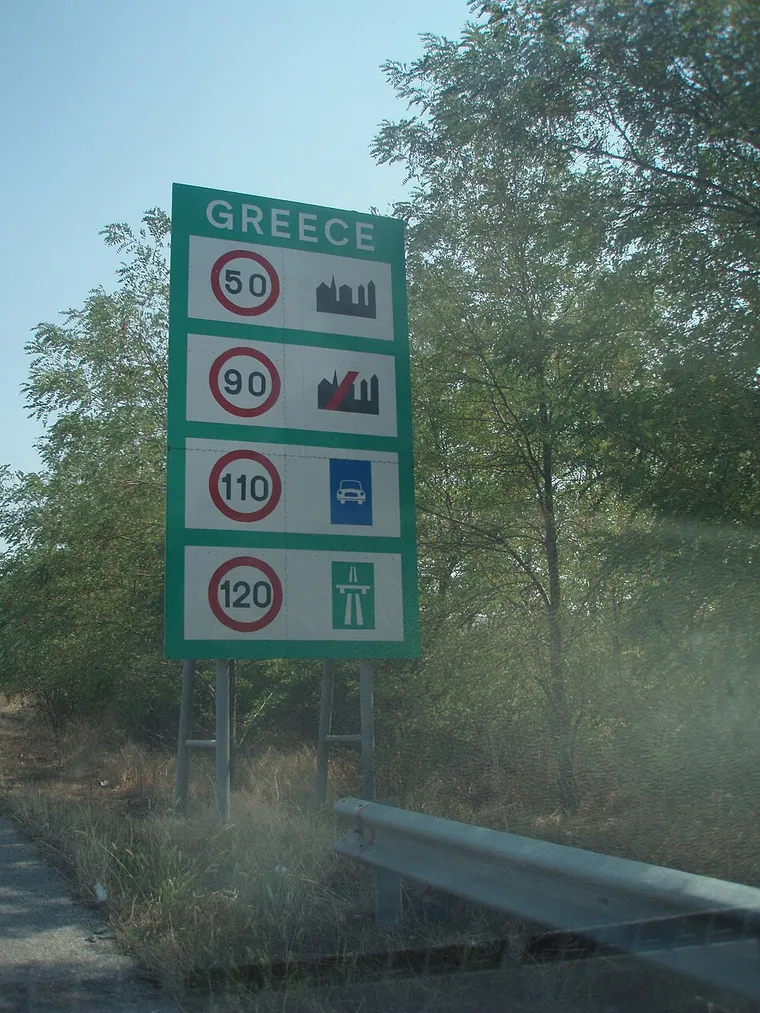
Both A1 sections are tolled, in separate systems, so you’ll pay in denars going down and euros once you’re through. Speed limits change at the line too, and the board just past the barrier spells them out. For the northern half, driving in North Macedonia covers the tolled ramps and road rules.
Buses and coaches take the worst of it
A coach is fifty-odd people who all need processing before the vehicle moves, and it doesn’t leave until the last passenger is back on it. If a third of them are first-time registrations at two to three minutes each, that’s where the five-hour reports come from, with nobody being lazy or obstructive.
So the advice is unglamorous: don’t aim a coach at a same-day flight. The daily Skopje-Thessaloniki coach leaves at 17:00 for about EUR 20, reaching the border in the evening, on the right side of the morning rush. For the wider overland picture, see getting to North Macedonia.
The Schengen clock, and why North Macedonia now helps
Here’s the upside nobody advertises. North Macedonia sits outside Schengen, so days spent here don’t count against your 90-days-in-180 Schengen allowance. That was always true, but it used to be enforced by an officer squinting at smudged stamps; now EES counts your Schengen days automatically, to the day, in both directions. A fortnight around Ohrid and Skopje is a fortnight genuinely banked, provably, with no argument at the next border - and equally, an overstay is now detected rather than missed. North Macedonia’s own allowance runs separately, 90 days in any 180 for US, UK, EU, Canadian and Australian citizens, and your Schengen count doesn’t touch it.
Before you go: the short list
- Passport, not an ID card. Issued within the last 10 years, valid three months past your planned departure from Schengen.
- Assume biometrics. The EU’s six-hour biometric pause ran until 6 September 2026 and has lapsed, with no extension adopted as of 11 September 2026. Plan on the photo and fingerprints, and check the current rules before you travel.
- Check the wait that morning. The AMSM bulletin lists it per crossing; don’t rely on last year’s blog.
- Avoid the known peaks. Southbound Friday evening and Saturday morning, northbound Sunday afternoon.
- Green Card if the car is a rental. Days of notice, about EUR 34-35 with the rental operators themselves (third-party guides quote up to EUR 50), and not every company allows it.
- Both currencies. Denars for the North Macedonian tolls, euros for the Greek ones.
- Insurance that covers both countries. A trip that crosses in and out of the EU is where single-country cover leaves a gap.
- General safety. Crime and road risk in North Macedonia are low by regional standards - see our North Macedonia safety guide for the specifics.
Cross at a sensible hour with your documents in your hand and this is a thirty-minute stop on a good road. Cross at eleven on an August Saturday and it’s the reason you’ll be checking in after dark.
Read also
- North Macedonia visa requirements - who needs a visa, and the passport rules
- Skopje to Thessaloniki Airport - transfers, the daily coach and the drive to SKG
- Renting a car in North Macedonia - deposits, excess and the Green Card
- Driving in North Macedonia - tolls, fuel and road rules on the A1
- Getting to North Macedonia - the overland corridors from every neighbour
- Things to do in Bitola - base for the quieter Medzitlija-Niki crossing
Good to know
Border and entry rules change - check with the authorities before you rely on this. Everything here was checked on 2 August 2026 against the European Commission (home-affairs.ec.europa.eu), the text of Regulations (EU) 2017/2226 and 2025/1534 on EUR-Lex, Frontex guidance for the official EES app, and the AMSM daily road bulletin; the biometric-pause status was re-checked on 11 September 2026. Rules and waiting times change - confirm your own situation before you travel.
Details checked: August 2, 2026
Read also

Before you go · 11 min read
North Macedonia Travel Tips: Know Before You Go
Updated · September 5, 2026Pack a Type C/F adapter, plan around Sunday shop closures, carry denar, check tap-water alerts, and sort eSIM plus insurance before you land.

Before you go · 10 min read
Macedonian for Travelers: Phrases That Open Doors
Updated · August 31, 2026A working Macedonian phrase kit for travelers: Cyrillic, how to say it, and when it helps in a kafana, taxi or market.

Before you go · 9 min read
Skopje vs Ohrid: Which Should You Base Yourself In?
Updated · September 2, 2026Skopje for flights, museums and day trips; Ohrid for the UNESCO lake and summer swimming - about 3 h 20 apart by bus, and most trips work best split.

Before you go · 12 min read
Skopje or Sofia: Which Balkan Capital to Visit?
Updated · September 2, 2026Skopje's rooms cost less, Sofia's airport transfer is easier, and a direct bus links the two in 5h40 for about EUR 27. Here's which to fly into first.