
Skopje to Pristina: Buses, Transfers & the Border
Skopje to Pristina in about 2 hours: bus times and fares, the Blace border, driving and Kosovo insurance, plus when to fly via PRN instead.
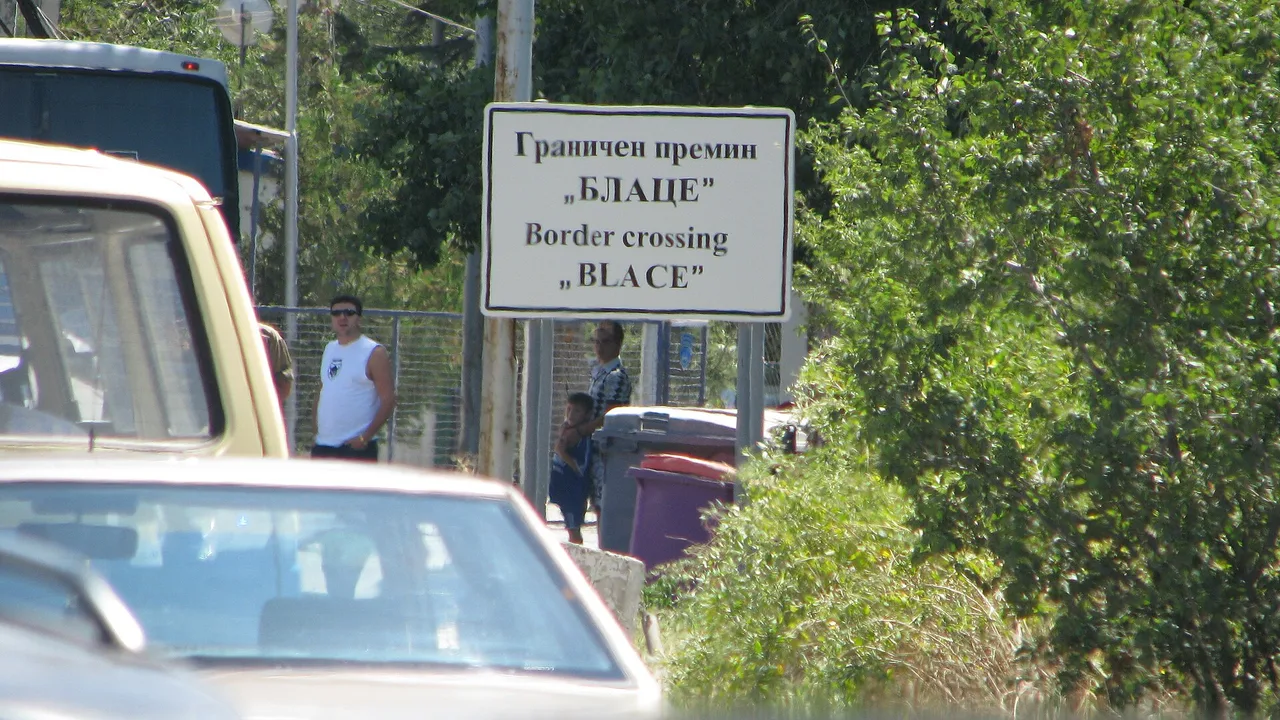
Skopje and Pristina sit about 92 km apart, which makes this the shortest capital-to-capital hop in the region and the cheapest. The bus takes around two hours, running through the day from Skopje Central Bus Station. Driving is about 1 h 30 plus whatever the border costs you. There’s no passenger train, and the crossing you’ll use is Blace on the Macedonian side, Hani i Elezit on the Kosovan. On 2 August 2026 the Macedonian auto club listed the Blace wait at about 30 minutes to leave the country.
Two things make this trip more interesting than the distance suggests. Pristina’s airport is now bigger than Skopje’s - 4.6 million passengers in 2025 against Skopje’s 3.21 million - so on some European routes it’s the smarter place to fly into. And if you’re driving, Kosovo sits outside the Green Card insurance system, with one exception that happens to work in your favour when the car has Macedonian plates.
Quick answer: bus, transfer or car?
| Option | Cost | Time | Best for |
|---|---|---|---|
| Bus | ~EUR 10-12 | ~2 h | Solo travellers, no paperwork, frequent departures |
| Private transfer | Quote per car | ~1 h 45 | Two or more people, luggage, early or late runs |
| Own or rental car | Fuel plus insurance | ~1 h 30 + border | Balkan road trips, if the company allows Kosovo |
For one or two people with hand luggage the bus wins on price and there’s nothing to arrange. For a family or a group a transfer costs about the same per head and removes the bus station at both ends. The car only earns its place if Kosovo is already on a longer loop, because the insurance question is the fiddliest part of the whole trip.
Option 1: the bus
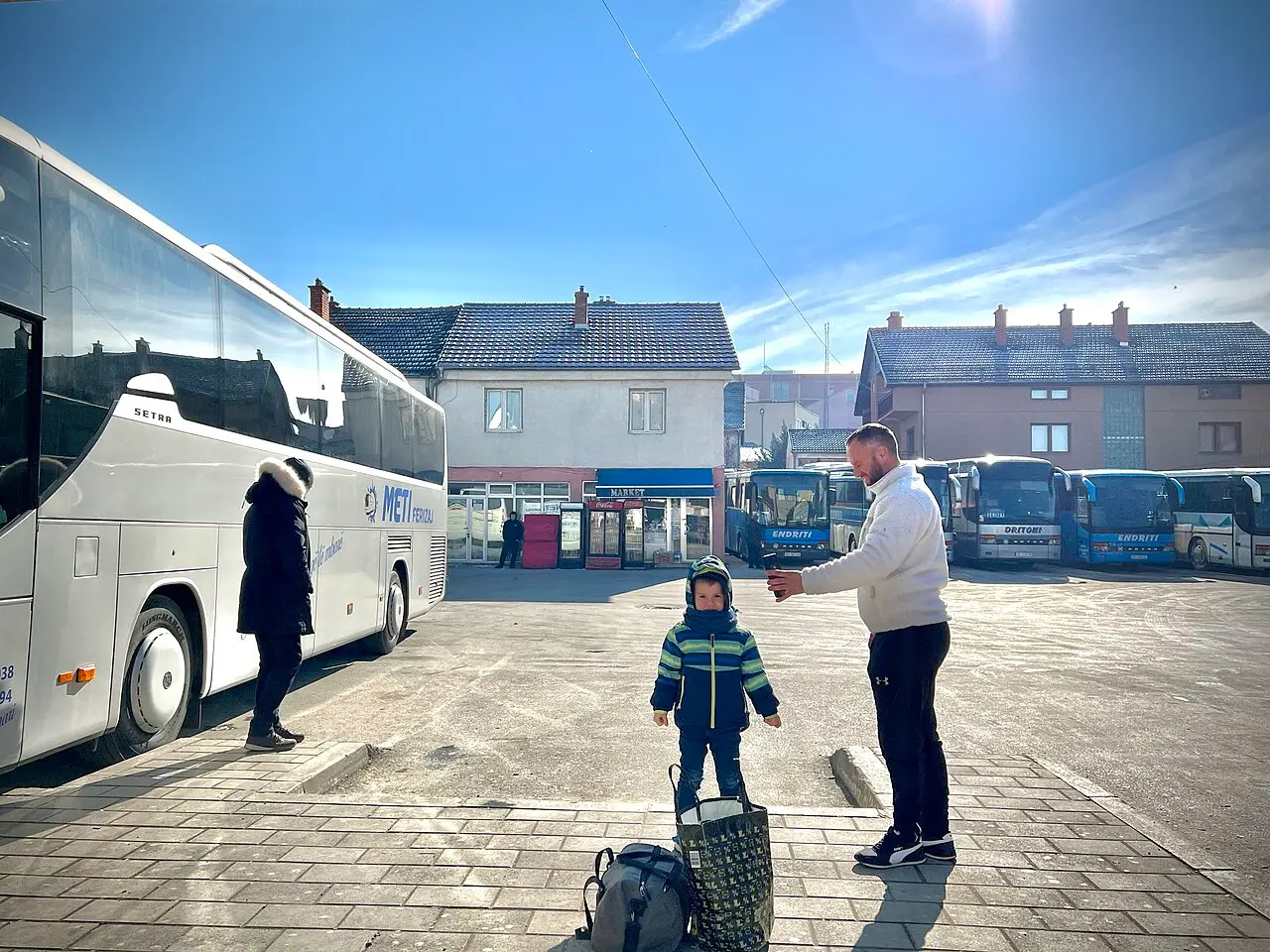
Buses leave from Skopje Central Bus Station, the Transport Centre under the railway station, and run right through the day. Timetable aggregators list up to 19 departures, the first around 05:15 and the last around 20:50, spread across operators like Albus, Motoja, Amalfi Turs, Arena Turs and Euro Linia. That fragmentation is exactly why booking sites disagree with each other, and why it’s worth confirming at the counter rather than trusting a screenshot from last season.
No single operator publishes a through fare for Skopje-Pristina. Through summer 2026, desks and drivers have quoted EUR 10-12 one way; pay in cash and agree the price before you board. Booking aggregators sometimes surface door-to-door shuttles on the same route for EUR 20 or more - that’s a different, pricier product, not a markup on the bus. The scheduled run is 1 h 55 to 2 h, and that figure already assumes a routine border stop rather than a bad one. Add slack in summer and at weekends.
One thing catches people out: some services terminate short of central Pristina, or set passengers down at Ferizaj on request. Ask where the bus actually finishes before you board, particularly if you’ve booked a hotel on the strength of “arrives Pristina”.
Option 2: private transfer
A pre-booked car covers the route in roughly 1 h 45 door to door and skips both bus stations. It’s worth the money in three situations: two or more of you, so the per-head cost lands near the bus fare; real luggage; or a departure outside the useful bus window, meaning very early mornings and late evenings.
Ask for a live quote for your date and passenger count, and check whether the price is per vehicle or per person - the two look very different on a family booking. Confirm that the driver’s insurance covers Kosovo too. For a professional operator it will, but it’s a thirty-second question and the answer tells you who you’re dealing with.
Option 3: driving, and the Kosovo insurance catch
Driving is the quickest option on paper, around 1 h 30, and the obvious choice if North Macedonia and Kosovo are two legs of the same trip. The complication isn’t the road. It’s the paperwork.
Kosovo is not a member of the Green Card system, for the time being. Per the Kosovo Insurance Bureau, as published by AMRKS: no country’s green card is valid there except those of Albania and North Macedonia, which have a memorandum of mutual recognition with Kosovo. Every other foreign-plated vehicle buys border third-party liability insurance at the crossing, priced by vehicle type.
That exception is genuinely useful if you’re starting in Skopje. A Macedonian-plated car with a valid green card is in the one lane that already works, where a Serbian, Croatian or German plate is not. Two things still need settling at the rental desk, not at the barrier:
- Does the company allow Kosovo at all? Plenty don’t, and the restriction usually lives in the contract rather than anywhere obvious on the website.
- Is the green card issued to cover it? Where a company handles Kosovo as an explicit add-on, expect something around EUR 50 arranged at pickup.
A no on either and your options are the bus, a transfer, or a different rental company. For deposits, excess and the wider cross-border rules see renting a car in North Macedonia, and for road conditions on the Macedonian side, driving in North Macedonia.
The border at Blace
The crossing is Blace on the Macedonian side and Hani i Elezit on the Kosovan, roughly 25 km northwest of Skopje on the main road. It has run one-stop passenger control since 14 April 2025 (republika.mk), so Kosovan and Macedonian officers clear you together at a single stop rather than twice.
Waits here are usually shorter than on the Greek side, because neither country is in the EU or Schengen and there’s no biometric registration to sit through. On the day this page was written the Macedonian auto club listed about 30 minutes to exit at Blace, with Tabanovce towards Serbia running over an hour. Weekend afternoons and the diaspora travel weeks in July and August are the reliably slow slots; a weekday morning is usually quick. If Greece is your next border instead, that one now works very differently - see the North Macedonia to Greece border under EES.
Entry into Kosovo is straightforward for most Western passports. British citizens can visit without a visa for up to 90 days, and the passport only has to be undamaged and valid for the length of the stay, with no extra months required on top. US, Canadian, Australian and EU citizens are likewise visa-free for up to 90 days, but rules are nationality-specific and do change, so check your own government’s advice before you book. Kosovo uses the euro, so bring some: your denars stop being useful the moment you’re through. For the wider safety picture once you’re back on the Macedonian side, see is North Macedonia safe to visit.
One rule that is not negotiable: don’t plan to drive on from Kosovo into Serbia unless you entered the region through Serbia first. Serbia doesn’t treat the Kosovo crossings as international borders, and the UK Foreign Office reports foreign nationals being refused entry to Serbia because of Kosovo stamps in their passports. If Belgrade is on your route, do Serbia before Kosovo, or come back through Skopje. This is political and it shifts; confirm the current position before you travel.
Why the train doesn’t help
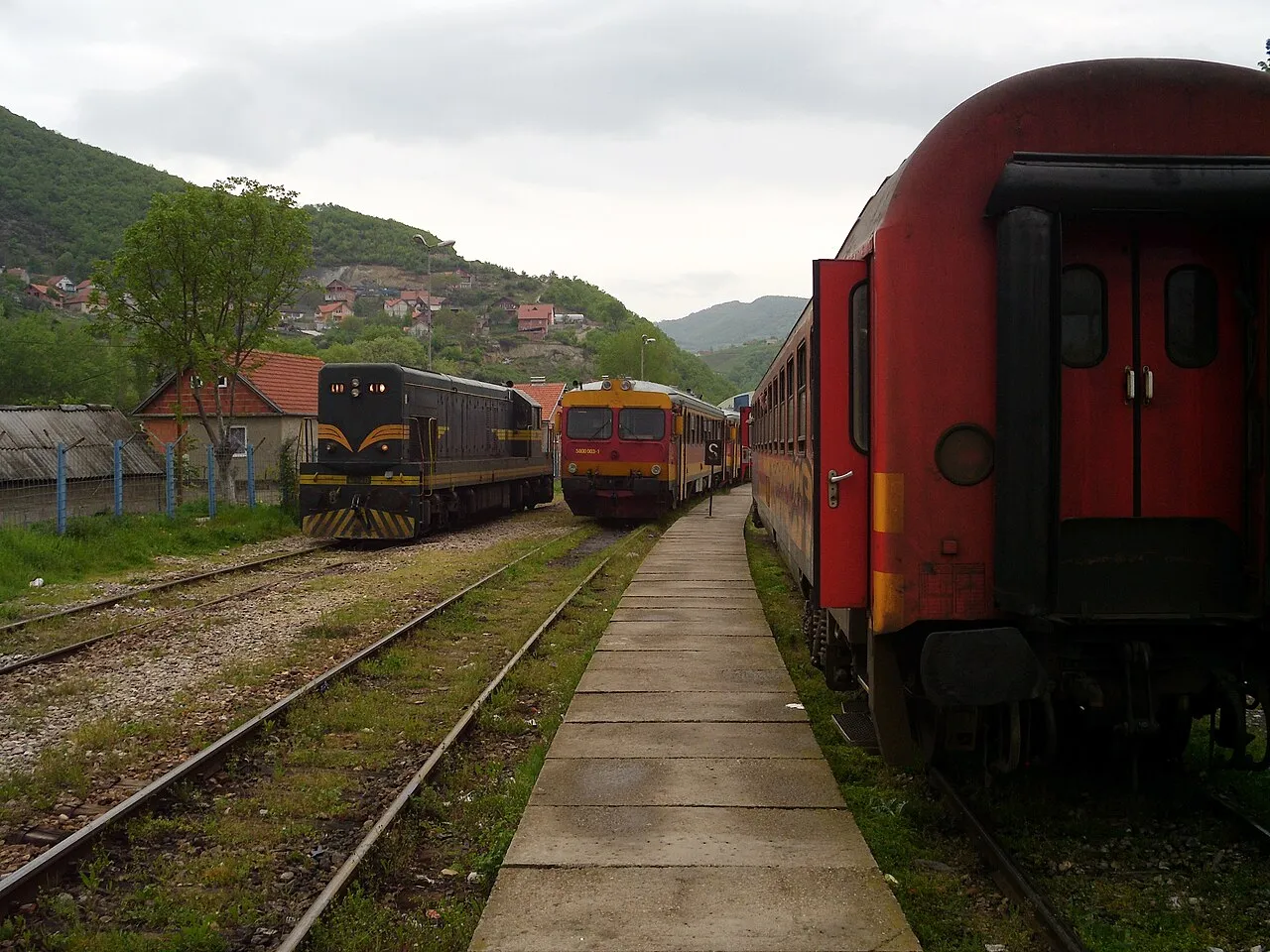
There is a railway. It runs from Skopje up the valley, over the border at Hani i Elezit and on through Ferizaj to Pristina, and for a few years it carried a through train. It doesn’t carry passengers today. Service was suspended around 2020, the line on the Kosovan side has been under reconstruction, and reporting from early 2025 put that phase at roughly 60% finished, with passenger service seen as unlikely before late 2026 or early 2027. Treat any timetable you find online for this route as historical until an operator says otherwise.
Flying: when PRN beats SKP
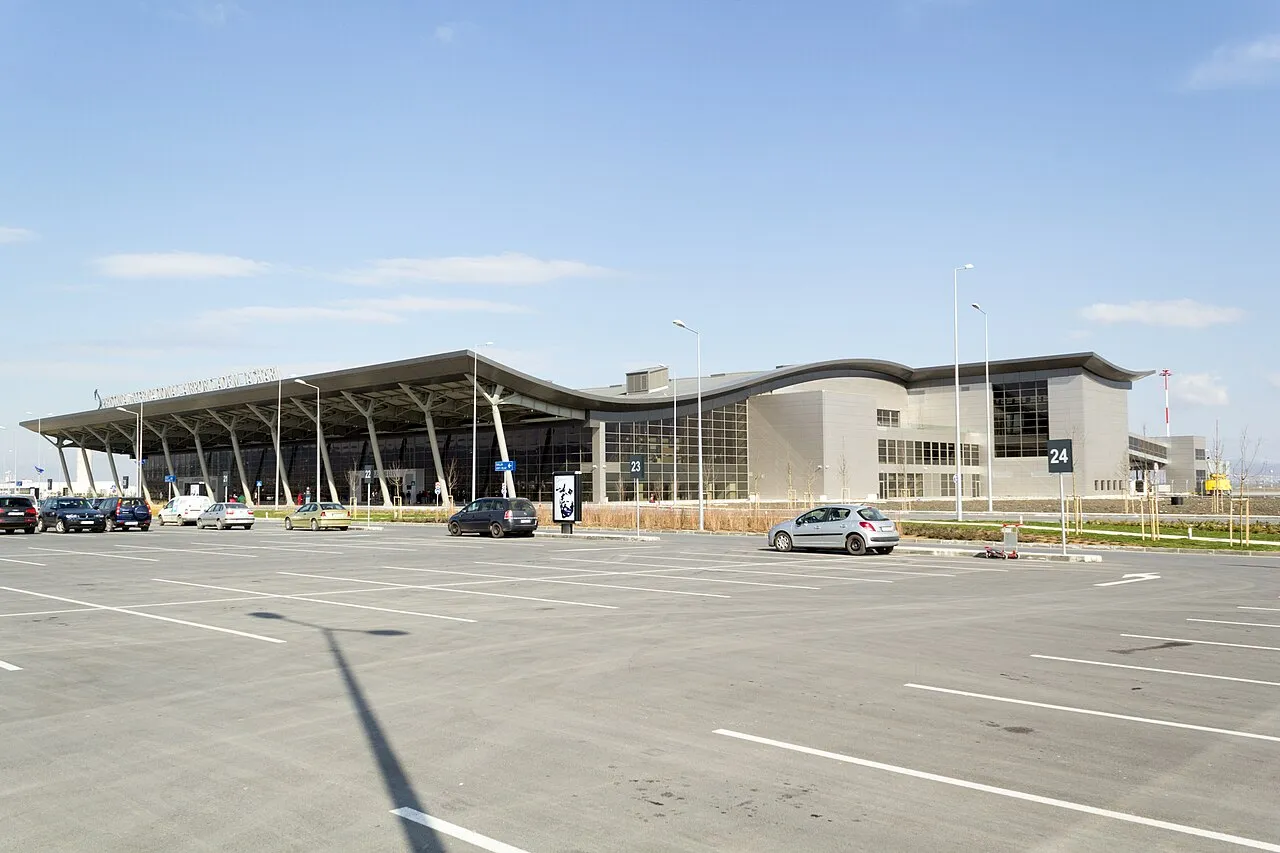
Here’s the part most Skopje itineraries miss. Pristina International Airport is now the bigger of the two. It handled 4,600,484 passengers in 2025, up 12.7%, against 3.21 million at Skopje - and it sits 90 minutes up the road.
It’s about to get better connected, too. Wizz Air announced on 29 July 2026 that it’s opening a base at Pristina, with one Airbus A321neo based there from November 2026, three new routes to Brussels Charleroi, Karlsruhe/Baden-Baden and Basel-Mulhouse, and Dortmund going to five flights a week. That takes its Pristina network to nine routes across six countries, on top of existing links to London Luton, Bratislava, Milan Malpensa, Rome Fiumicino, Memmingen and Dortmund.
So if you’re coming from the UK or western Europe and the Skopje fare looks steep on your dates, price PRN alongside SKP and add a transfer or the two-hour bus. It’s the same arbitrage that makes Thessaloniki worth checking from the other direction, covered in Skopje to Thessaloniki Airport. What makes no sense at all is flying between the two: the airports are barely 83 km apart in a straight line, and any flight would burn more time in terminals than the whole road trip takes.
Making it a day trip, or a stopover
Two hours each way means Pristina works as a long day trip from Skopje, and plenty of people do exactly that: an early bus out, most of a day in the city, an evening bus back.
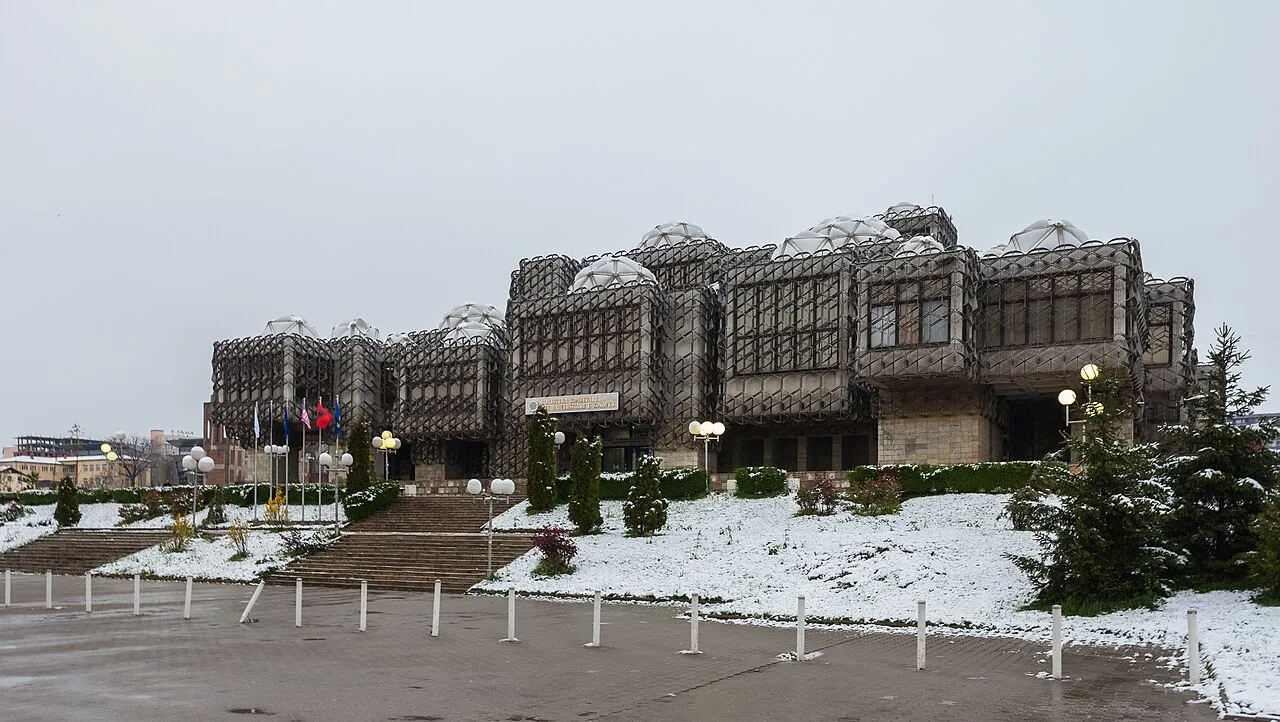
A night is better, though. The centre is compact and walkable, the food is good and cheap, and the evening walk along Mother Teresa Boulevard is the best thing the city does. If you’re building a wider regional route, Pristina slots naturally between Skopje and either Prizren or Peja, and the same corridor carries on towards Podgorica.
One quiet bonus for long-trip planners: neither North Macedonia nor Kosovo is in Schengen, so days spent in either country don’t eat into your 90-days-in-180 Schengen allowance. Bouncing between the two is one of the cheapest ways in Europe to wait out a Schengen clock.
Practical tips
- Buy at the station. Outside holiday peaks there’s no need to book ahead; departures run all day.
- Ask where the bus terminates. Some services stop short of central Pristina or set down at Ferizaj.
- Carry euros. Kosovo uses them, and denars stop working at the barrier.
- Check Kosovo on the rental contract before you pay. Many companies forbid it, and the green card has to cover it.
- Do Serbia before Kosovo, never after, if Belgrade is anywhere on your route.
- Weekday mornings at the border. July and August weekends are the slow ones.
For the wider picture of arriving and moving around, see getting to North Macedonia and getting around North Macedonia.
Read also
- Getting to North Macedonia - the Pristina, Sofia and Thessaloniki corridors into Skopje
- Getting around North Macedonia - buses, taxis and fares once you’re here
- Renting a car in North Macedonia - deposits, excess and cross-border permission
- Driving in North Macedonia - tolls, fuel and the road rules
- North Macedonia to Greece border under EES - the other land border, and why it is slower
- Skopje to Thessaloniki Airport - the same airport arbitrage to the south
Good to know
Border, insurance and entry rules change - check with the authorities before you rely on this. Border waits and entry rules were checked on 2 August 2026 against the AMSM daily road bulletin, the Kosovo Insurance Bureau (amrks.org) and UK FCDO travel advice. Bus through-fares have no single published operator tariff - confirm at the desk. Rules and waiting times change - confirm your own situation before you travel.
Read also

Transport · 12 min read
North Macedonia Border Crossings: A Driver's Guide
Updated · September 13, 2026North Macedonia border crossings to Albania, Greece, Bulgaria, Serbia and Kosovo: which to use, queue snapshots and how to check them live, the green card.

Transport · 10 min read
Skopje to Tetovo Bus 2026: 200 MKD, 40-50 Min, Timetable
Updated · September 12, 2026Skopje to Tetovo: 45 km, intercity bus 200 MKD (about €3.25) in 40-50 minutes from the Transportation Center, times read 1 Sept 2026, and the A2 drive.

Transport · 10 min read
Flights to North Macedonia: SKP & OHD Routes
Verified · August 28, 2026Fly into Skopje (SKP) or Ohrid (OHD) in 2026: Wizz Air 35-route SKP base, which Ohrid seasonals are already ending, and who else flies - checked Aug 2026.

Transport · 12 min read
Thessaloniki to Ohrid: How to Make the Trip
Updated · September 3, 2026Thessaloniki or SKG to Lake Ohrid: drive it in about 4.5h via the quiet Medzitlija border, or take the train to Florina and a bus via Bitola in 5.5h.