
Skopje to Matka & Mavrovo: Western Loop
A Skopje road trip looping west to Matka Canyon and Mavrovo National Park - the sunken church, Bigorski and Galicnik - in one or two days.
This western loop takes the two best day trips out of Skopje - the gorge of Matka Canyon and the mountains of Mavrovo National Park - and strings them into one circuit that starts and ends in the capital, so you never change hotels. The short version: Matka is barely 30 minutes from the city, but Mavrovo is a further 90 minutes or so up through Tetovo and Gostivar, which is why this works as a rushed single day or, much better, a relaxed two-day trip with a night in the mountains. Reckon on about 250 km of driving over the whole loop, most of it easy, some of it slow mountain road.
You want a car for this. Matka can be reached by city bus, but Mavrovo has no quick public link, so without your own wheels you’re left with organised tours that rarely combine the two. Pick the car up in Skopje, do Matka first as a warm-up, then head west for the sunken church, Bigorski and Galicnik.
Loop at a glance
| Leg | Distance | Time |
|---|---|---|
| Skopje → Matka Canyon | ~17 km | ~30 min |
| Matka → back through Skopje → Mavrovo | ~130 km | ~2-2.5 h |
| Around Mavrovo (church, Bigorski, Galicnik) | ~40 km | half a day |
| Mavrovo → Skopje | ~100 km | ~1.5-2 h |
Distances are approximate driving figures. Matka sits on a short spur southwest of Skopje, while the Mavrovo road runs west through Tetovo and Gostivar - the two don’t join up, so you loop back past the city between them rather than driving one continuous arc.
Stop 1: Matka Canyon
Start early and drive the 17 km southwest to Matka Canyon, a steep gorge on the Treska river with a dam-lake at the bottom, hemmed in by cliffs and dotted with small medieval churches. It’s the easiest wild escape from the capital and gets busy by late morning, so beating the crowd is worth the alarm.
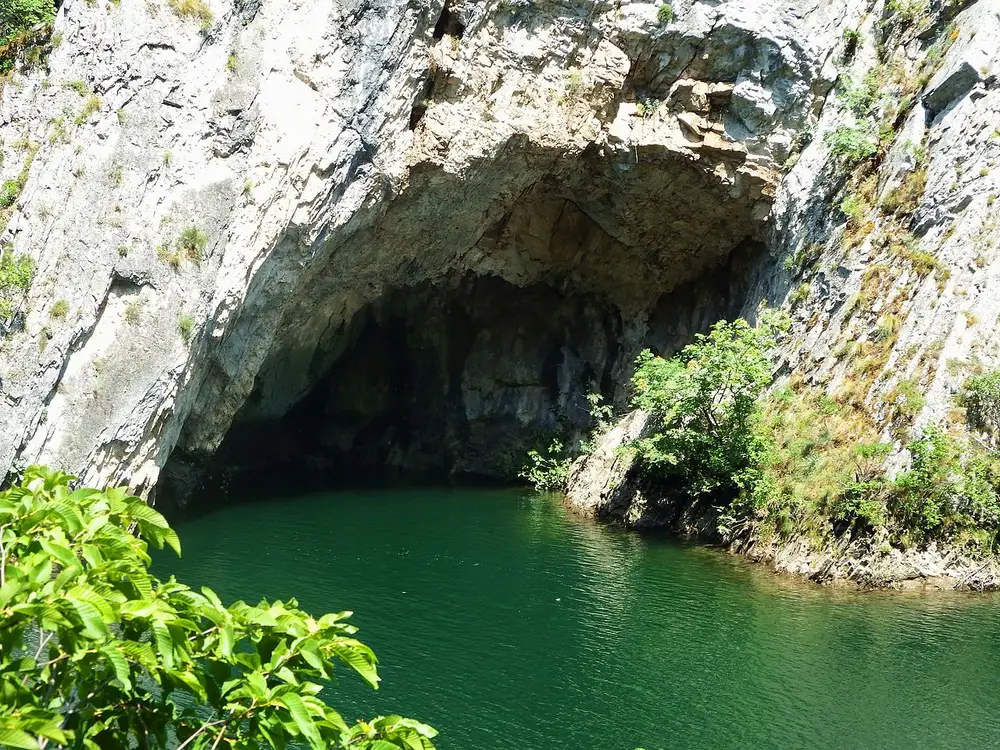
The canyon itself is free to enter. The thing to do is take a boat to the Vrelo cave and back - about 500 MKD a head (roughly 8.5 euro at the operator’s own price list; whether cave entry is included is not stated, so ask at the jetty), a 20-minute glide across water so green it looks dyed. If you would rather go under your own steam, kayaks rent from around 150 MKD for 30 minutes, and it’s about 45 minutes’ paddle to the cave each way. Afterwards, walk the lakeside path to the church of Sveti Andrea and have lunch on the terrace by the dam.
Coming by bus instead of driving? City bus 60 runs from Skopje’s central station for about 35-50 MKD depending on how you pay (35 by card or app, 50 for a paper single - a transport card is cheaper than cash), taking about an hour. One local quirk worth knowing: when the car park is choked with taxis and tour coaches, the 60 turns around before the end and you walk the last stretch - no drama, but factor in the extra time. For the full rundown, see the Matka Canyon guide.
Driving west: Tetovo and Gostivar
Back past Skopje, the A2/E65 runs west toward the mountains. It’s divided motorway as far as Gostivar, quick and dull, though the Tetovo-Gostivar section has no hard shoulder, so keep your wits about you. Tetovo itself, about 40 km out, is worth a coffee stop for its extraordinary Painted Mosque, its walls covered inside and out in floral frescoes. Beyond Gostivar the road leaves the plain and climbs into Mavrovo National Park - the largest of the country’s four, a 731 km² sweep of forest, summits and reservoir.
Stop 2: the sunken church of St. Nicholas
The image everyone comes for stands in the shallows of Lake Mavrovo: the Church of St. Nicholas, built in 1850 and drowned in 1953 when the valley was dammed for hydro power. Its stone walls and red-roofed belfry survived the flooding, so now it sits marooned in the water, mirrored on a still day.
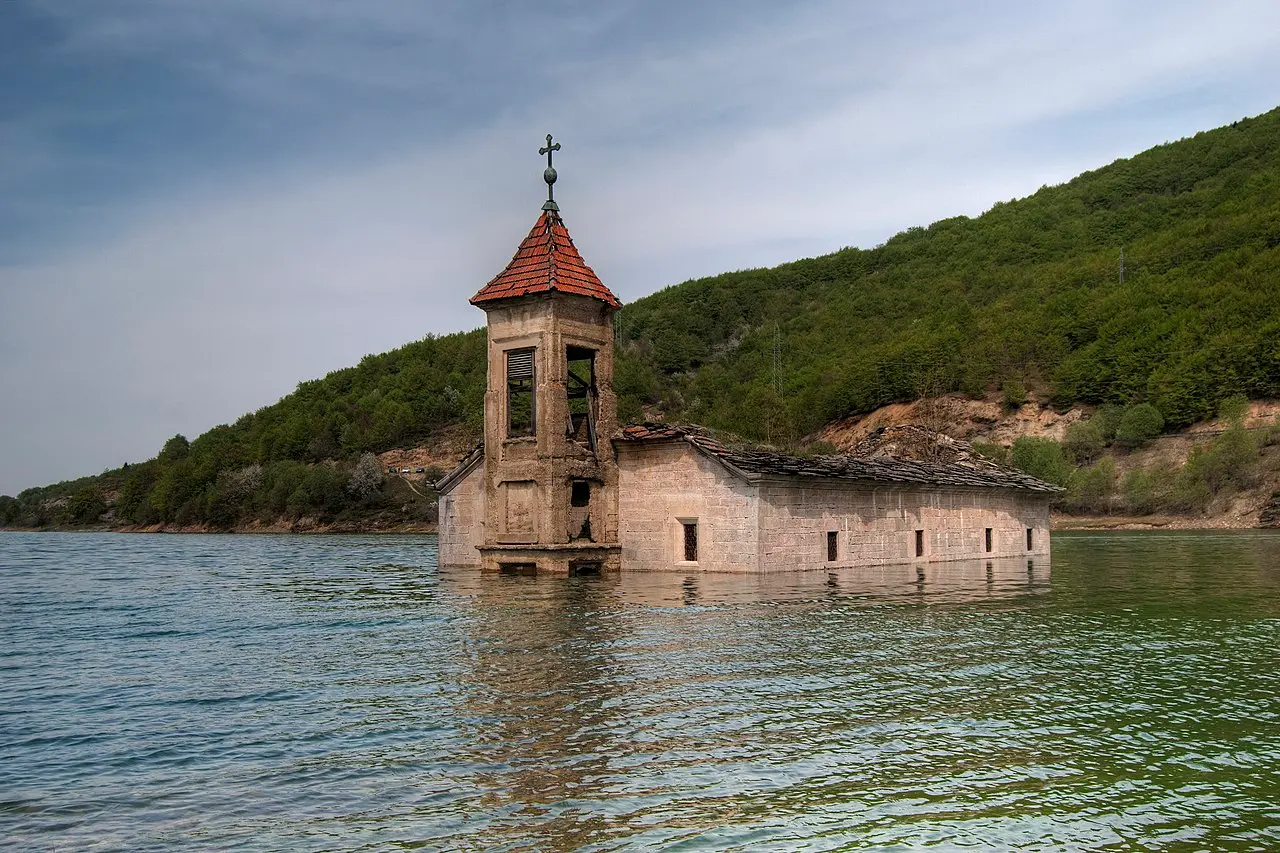
Here’s the catch nobody tells you: how much of the church you see depends entirely on the water level. In a wet spring it stands half in the lake, unreachable; in a dry autumn the reservoir drops and you can walk right out across the exposed bed to its walls. Both are photogenic, but they’re completely different scenes, so temper your expectations to the season. It’s free, and there’s nowhere to buy a ticket - you simply pull over and walk down.
Stop 3: Bigorski Monastery
A little further along the Radika valley sits Bigorski Monastery (Sveti Jovan Bigorski, “St. John the Baptist”), one of the most important monasteries in the country and, for my money, the single most rewarding stop after the church. Founded in 1020 and rebuilt over the 18th and 19th centuries, its treasure is the iconostasis: a wall of walnut carved between 1829 and 1835 by the famed Mijak woodcarvers into a dense thicket of biblical scenes, birds and animals, reckoned among the finest woodwork in the Balkans. Our full Bigorski Monastery guide covers the 2009 fire, the carvers’ hidden self-portraits and the walk up from the road-level restaurant.
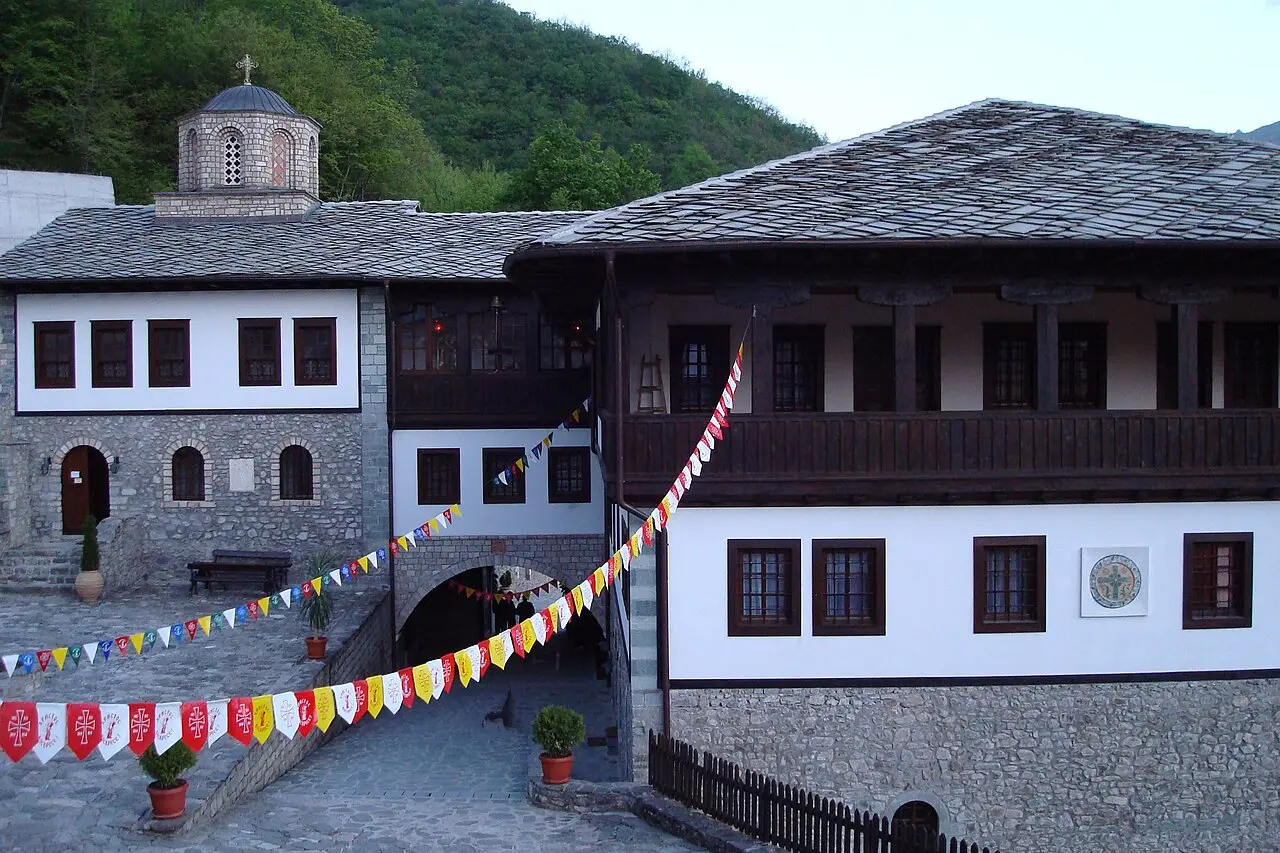
It’s an active, working monastery, so dress modestly - covered shoulders and knees - and check that the church is open before you count on seeing the carving. There’s guest lodging here too, if you want to slow the loop right down.
Stop 4: Galicnik
The last stop is the mountain village of Galicnik, perched at around 1,400-1,500 m on the slopes of Bistra, a cluster of stone houses stacked up a steep bowl. For most of the year it’s all but empty - a summer-only place now, its herding families long gone - but it comes alive for the Galicnik Wedding (Galicka Svadba), a folk festival held each year on the weekend nearest 12 July (Petrovden). In 2026 that falls on the weekend of 11-12 July, when a couple is married in full traditional dress and the men perform the thunderous Teshkoto dance to drum and zurla.
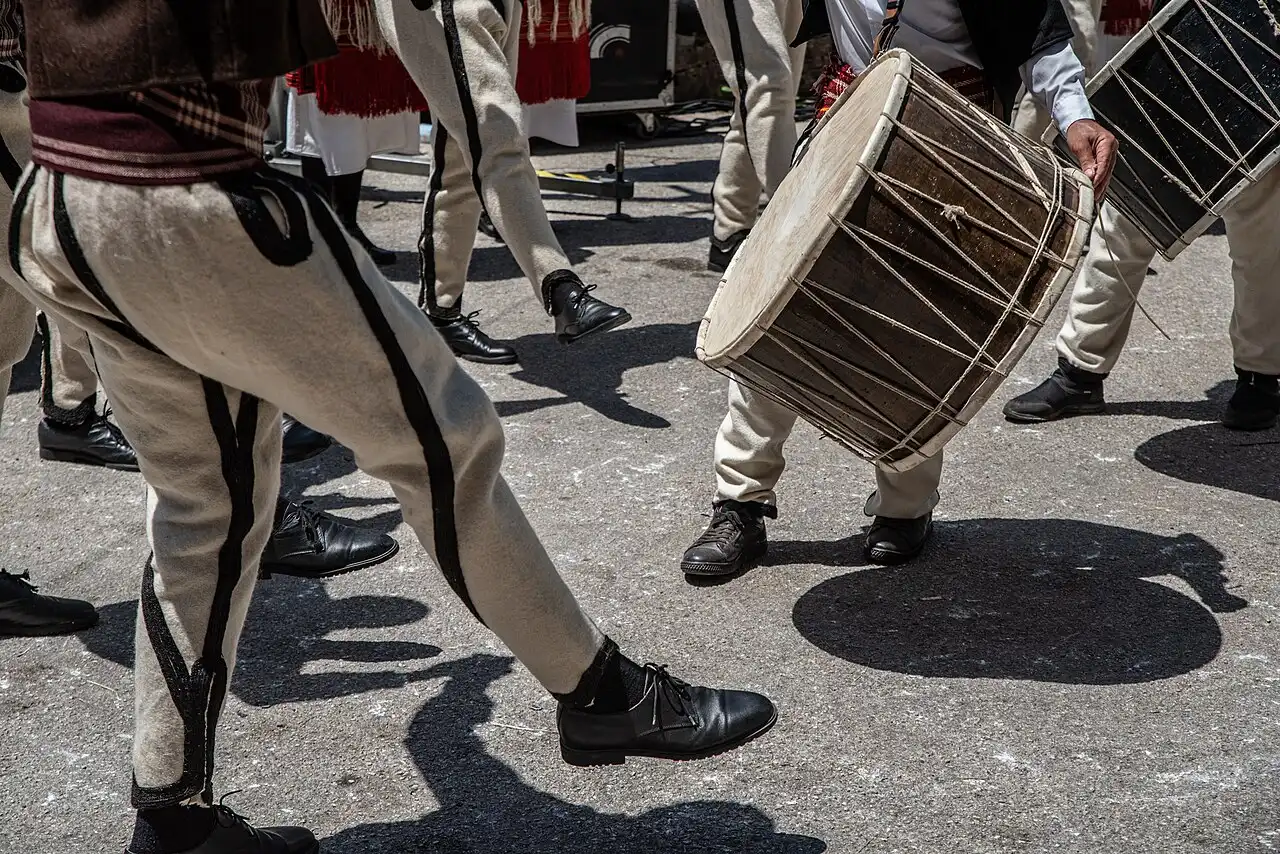
Dates shift year to year, so if the wedding is the reason you’re coming, confirm before you plan around it. Outside that weekend the draw is simply the setting and the walk up - and the famous Galicnik cheese, if a shepherd is about.
One day or two?
You can do the whole loop in a single long day if you leave Skopje at dawn, keep Matka short and drive efficiently - but it’s a big day, and you’ll be tired by the time you point the car back east from Mavrovo. The far better plan is two days: Matka and the drive west on day one, a night in Mavrovo village or a guesthouse near Bigorski, then the church, monastery and Galicnik at a human pace on day two before the run home. The Mavrovo National Park guide covers where to stay and what else is up there, from Duf Waterfall to the ski centre.
Practicalities
Car. This is a driving route - the only sensible way to link Matka and Mavrovo. North Macedonia drives on the right; roads are good to Gostivar and slower, twistier and occasionally snowbound beyond. Fuel up before the mountains and carry some denar cash for village stops and monastery donations. See renting a car in North Macedonia and driving in North Macedonia for the rules and what to check.
Without a car. Matka is doable by bus, but Mavrovo really isn’t on a day-return basis - you would need a tour or a private driver. If that’s you, treat Matka and Mavrovo as two separate trips rather than a loop.
When to go. Late spring to autumn (May-October) is the window. Summer brings the Matka boats at full tilt and the Galicnik Wedding in mid-July; autumn turns the Mavrovo beech forests gold and drops the lake to reveal the church. Winter swaps hiking for skiing but slows the mountain roads right down.
See also
- Matka Canyon - the gorge in full
- Mavrovo National Park - the church, Bigorski, Korab and skiing
- Things to do in Tetovo - the gateway town on the western road
- Renting a car in North Macedonia - the easiest way to drive the loop
- Driving in North Macedonia - limits, tolls and mountain-road notes
- Not looping back? The linear Skopje to Ohrid road trip carries on south instead
- Going further: the 7-day North Macedonia route
Route day by day
- Days on the road
- 2
- Distance
- ≈250 km
- Budget from
- 90 EUR
- Best season
- May, June, July, August, September, October
The route at a glance
-
Skopje
Route startstop ≈120 min
The start and finish. Pick up the car, cross the Stone Bridge and see the Old Bazaar before heading out.
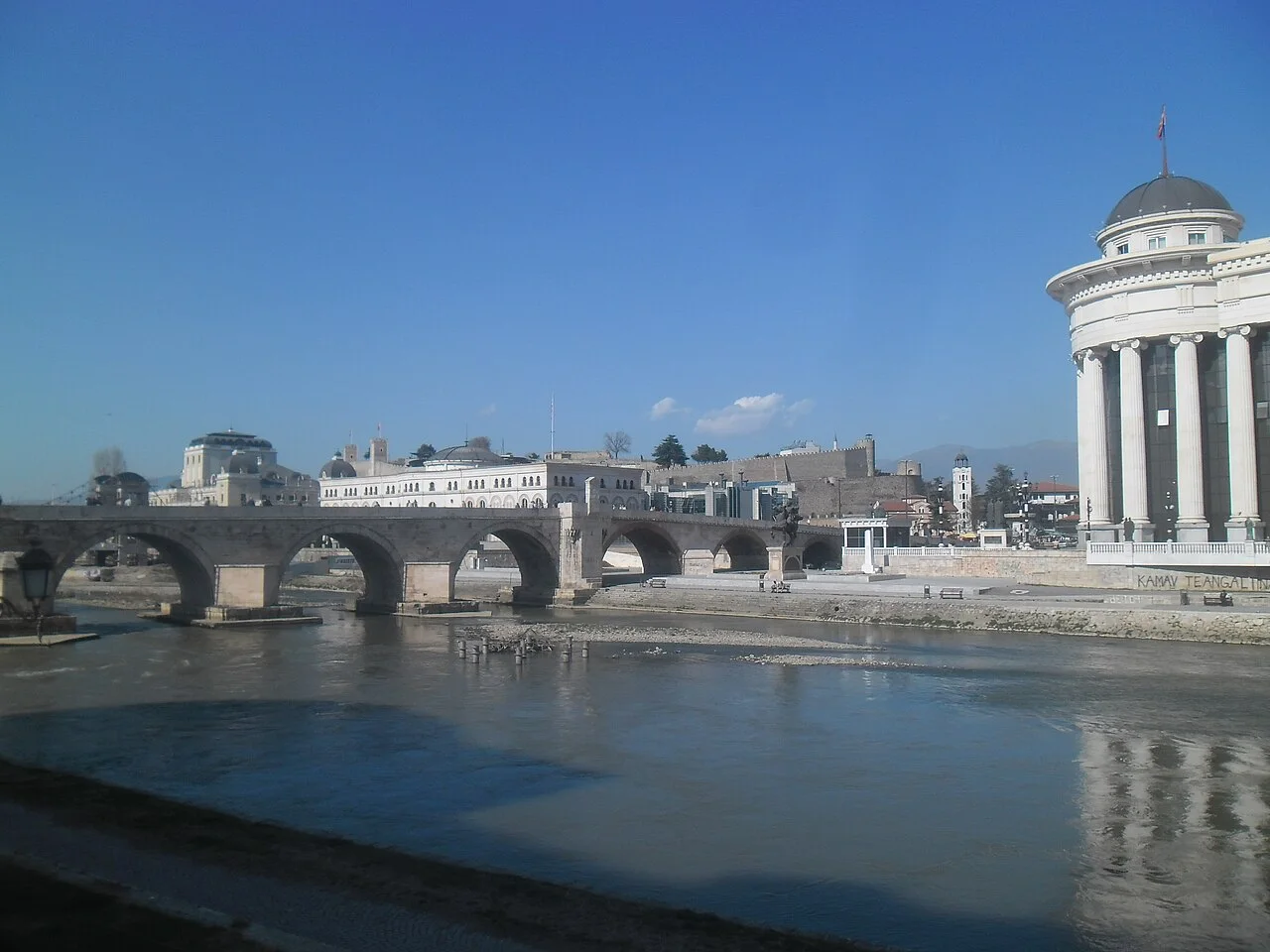
Photo: August Dominus · CC BY-SA 4.0 · Wikimedia Commons ( source) -
Matka Canyon
17 km from the startstop ≈180 min
Only 17 km southwest of the city. Boat to the Vrelo cave, walk the lakeside path to Sveti Andrea, lunch by the dam.
Photo: Delfina · CC BY-SA 4.0 · Wikimedia Commons ( source) -
Lake Mavrovo
130 km from the startstop ≈90 min
The sunken Church of St. Nicholas standing in the reservoir - the signature image of the west, ~100 km from Skopje via Tetovo and Gostivar.
Photo: Daniela Stefanoska · CC BY-SA 4.0 · Wikimedia Commons ( source) -
Bigorski Monastery
155 km from the startstop ≈60 min
St. John the Baptist monastery on the Radika, famous for a walnut iconostasis carved by 19th-century Mijak masters.
Photo: MacedonianBoy · CC BY-SA 4.0 · Wikimedia Commons ( source) -
Galicnik
175 km from the startstop ≈60 min
A near-abandoned Mijak stone village high on Bistra - home of the Galicnik Wedding folk festival each July.
Photo: Biljana Jurukovski · CC BY-SA 4.0 · Wikimedia Commons ( source)
Route map
The map with stops loads on click - to keep the page lightweight.
The map didn’t load. Check your connection and refresh the page.