
North Macedonia Border Crossings: A Driver's Guide
North Macedonia border crossings to Albania, Greece, Bulgaria, Serbia and Kosovo: which to use, queue snapshots and how to check them live, the green card.
North Macedonia has 16 official road crossings with its five neighbours, and three already run genuine one-stop passenger control - Tabanovce toward Serbia, and Blace plus the smaller Jazince-Globocica toward Kosovo - where you clear passport control once instead of twice. Everywhere else you clear Macedonian control, drive a short stretch of no-man’s-land, then clear the other side’s post separately: Bulgaria and Greece aren’t in the one-stop programme, which so far only covers the neighbours outside Schengen. What follows is each border by neighbour: the crossing to take, the smaller ones worth a mention only for a specific reason, and the paperwork - a green card, mostly - that trips up rental drivers more than any queue does.
One-stop control: live at three crossings, pending at Kjafasan
| Neighbour | Main road crossing | One-stop passenger control | Wait when last checked |
|---|---|---|---|
| Albania | Kjafasan (Qafe Thane), near Struga | Agreed 27 June 2026, not yet confirmed live | 15-30 min, typical* |
| Greece | Bogorodica (Evzoni), near Gevgelija | No - not in the programme | ~30 min to exit (2 Aug 2026) |
| Bulgaria | Deve Bair (Gyueshevo), near Kriva Palanka | No - not in the programme | No significant delays (2 Aug 2026) |
| Serbia | Tabanovce (Presevo), on the E75/A1 | Yes, since 4 July 2025 | Over an hour (2 Aug 2026) |
| Kosovo | Blace (Hani i Elezit), north of Skopje | Yes, since 14 April 2025 | ~30 min to exit (2 Aug 2026) |
*Albania: reported typical time for Kjafasan, checked June 2026, not a dated reading. Greece, Bulgaria, Serbia, Kosovo: one AMSM snapshot, 2 August 2026 - check the live bulletin (amsm.mk) yourself the day you travel.
Officers at Tabanovce, Blace and the smaller Jazince-Globocica post (also into Kosovo) work out of the same building as their Macedonian counterparts - Tabanovce since 4 July 2025, Blace since 14 April 2025, Jazince-Globocica since 28 May 2025. No guarantee of speed, though: on 2 August 2026, the AMSM bulletin still had Tabanovce as the slowest of the five. Bogorodica and Deve Bair aren’t included - the programme so far covers only the neighbours outside Schengen, and nothing is announced for either. Don’t confuse this with the “Joint Contact Office” the Ministry also runs at Tabanovce, Deve Bair and Qafasan: by its own description, that’s police “data exchange on cross-border crime,” not a shared passport desk. Kjafasan should join the list next, under the 27 June 2026 agreement, though nothing yet confirms it running. Not driving? Scheduled coaches on these corridors are in getting to North Macedonia.
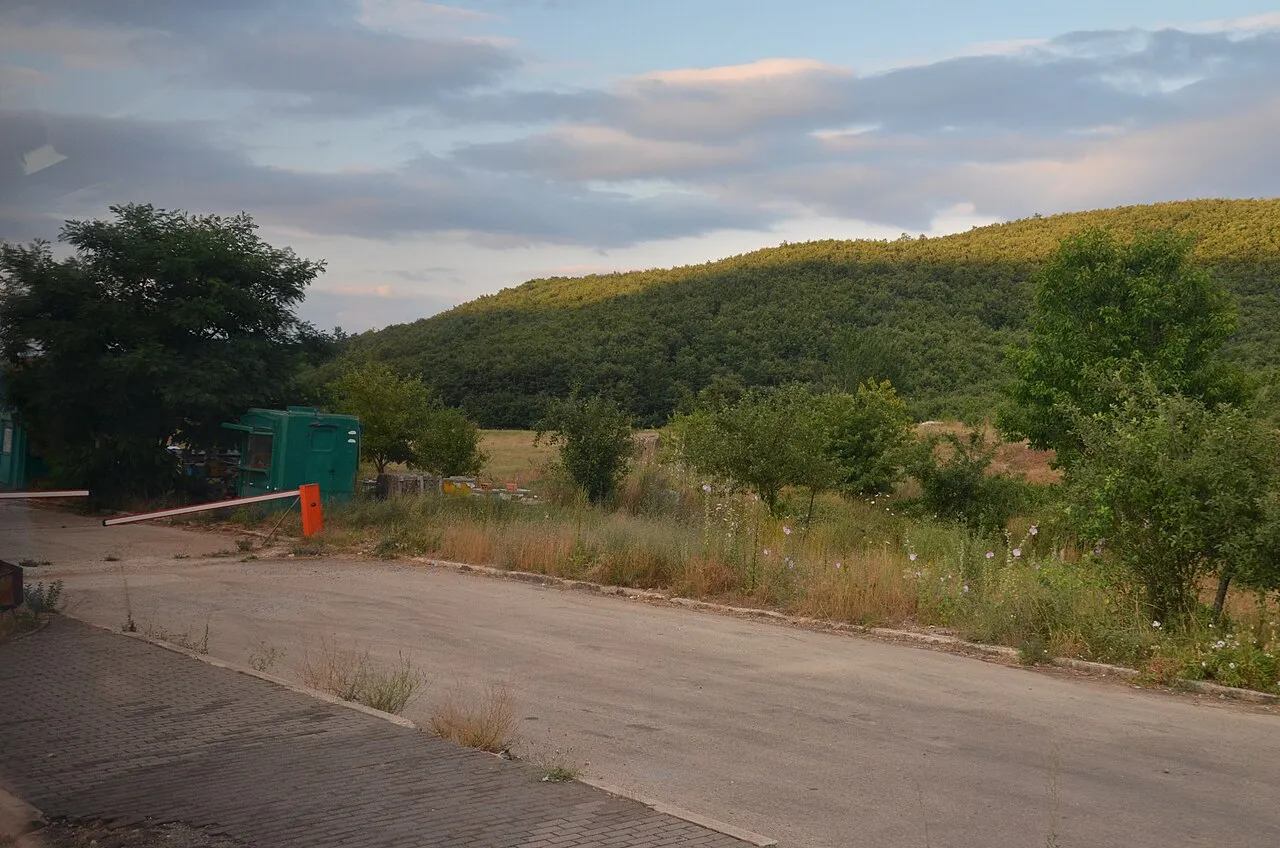
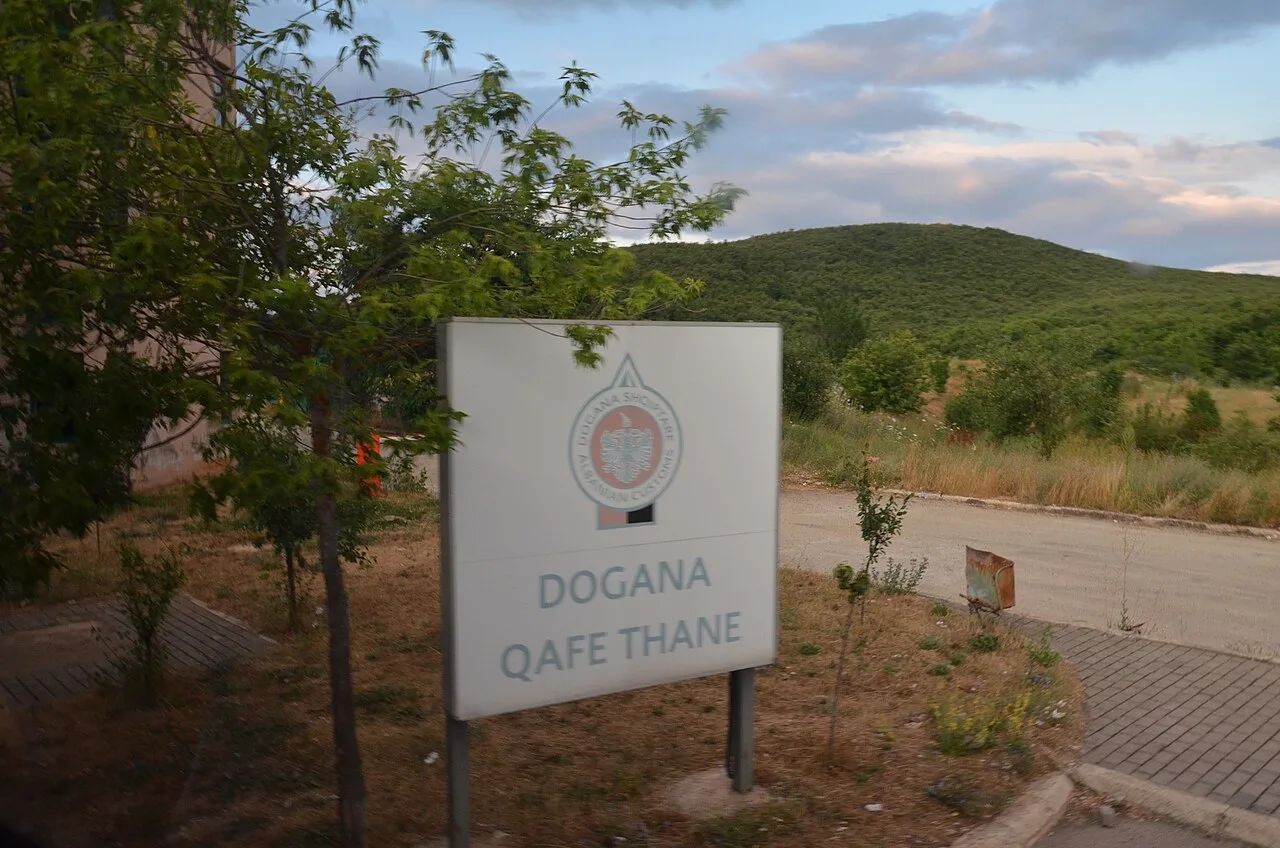
Albania: Kjafasan for the road, several smaller posts besides
Kjafasan, about 12 km southwest of Struga on the Corridor 8 road, is the crossing to use for anything beyond a short lakeside trip - the Tirana-Ohrid buses and furgons use it, and reported crossing times run 15 to 30 minutes. A 2023 version of joint control here did not clear the summer queues, per Macedonian media, so treat the new agreement as promised rather than proven.
Several smaller posts also lead into Albania, and none of them are shortcuts. Sveti Naum, by the monastery at the south end of Lake Ohrid, takes only cars and pedestrians - no coaches, no freight - and Macedonian media still call it seasonal; no official source publishes its hours, so confirm locally before a late or off-season run. It’s a fine way to spend an afternoon on the Albanian shore, a poor way to move house. Blato, further north near Debar, is reported open around the clock, but that’s a single aggregator, not a government notice - read the hours as unconfirmed. Dzepiste, also near Debar, and Stenje, on Lake Prespa near Resen, are two more, both minor and local.
Greece: Bogorodica carries the traffic, the other two barely register
Bogorodica, near Gevgelija, is the only crossing on this border with a motorway running up to it on the Macedonian side, and it’s what every Skopje-Thessaloniki bus and most road-trippers use. It’s also a full EU external border: the Entry/Exit System phased in from 12 October 2025 and went fully live on 10 April 2026, meaning fingerprints and a facial scan on your first crossing instead of a stamp. When we last checked the AMSM bulletin, on 2 August 2026, the wait to leave the country ran about 30 minutes; on the worst summer mornings, Greek and Macedonian outlets have reported two hours for cars and longer for coaches. Full mechanics and current queues are in our dedicated Greece border and EES guide - this page only needs you to know which barrier to pick.
Two quieter alternatives exist if you’re not tied to the motorway. Medzitlija, near Bitola, was running with no significant delays on the same day Bogorodica sat at 30 minutes, though no official source publishes its own hours. Star Dojran, by the lake in the far southeast, is the smallest of the three and rarely shows up in the daily bulletins at all - useful mainly because almost nobody else uses it.
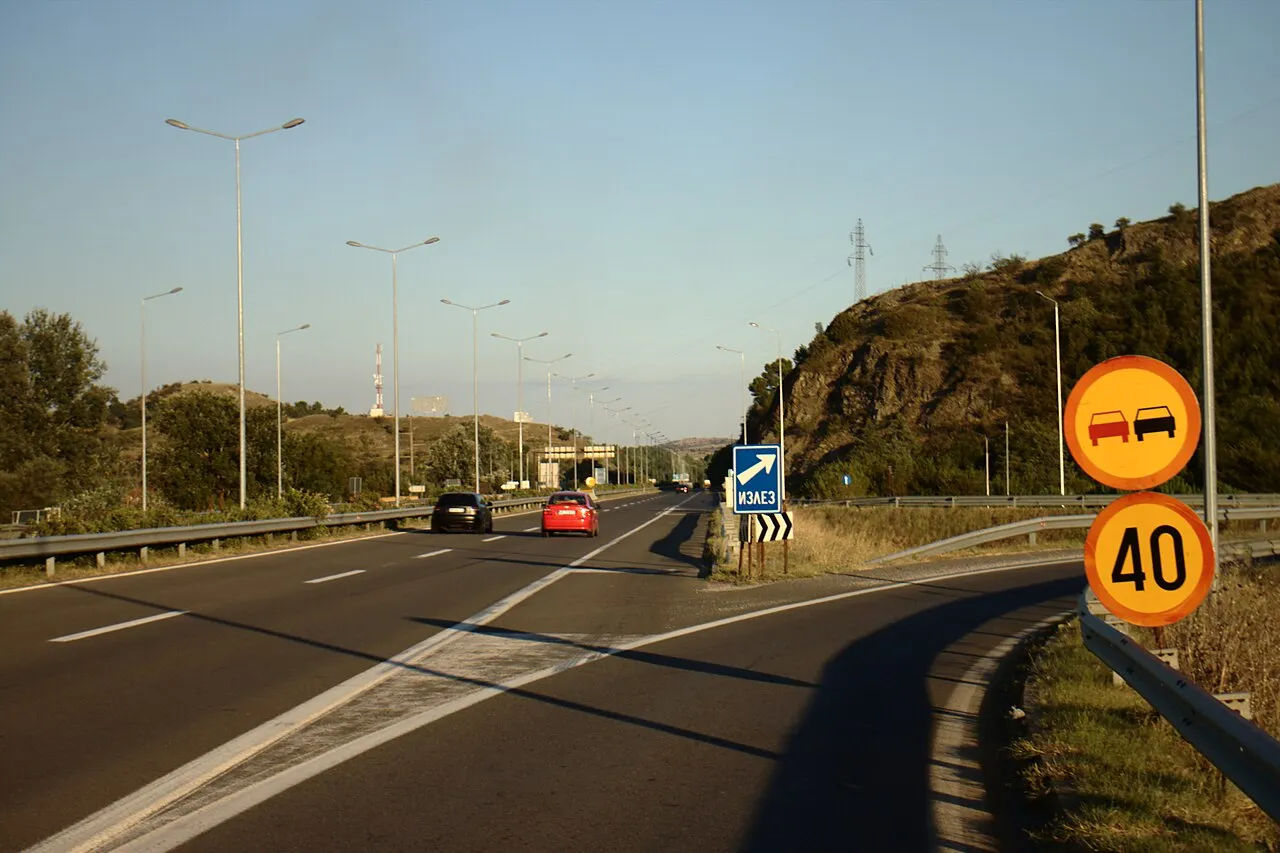
Bulgaria: Deve Bair, and two names your GPS won’t suggest
Deve Bair, reached from Kriva Palanka, is the crossing for Sofia. Like Bogorodica, it isn’t in the Ministry’s One Stop programme, so you clear both sides separately. The “Joint Contact Office” listed here is the police crime-liaison post described above, not a passport shortcut.
Two more official crossings run further south, confirmed by name in Bulgarian state media: Delchevo pairs with Stanke Lisichkovo, and Novo Selo pairs with Zlatarevo, near Petrich. All Bulgarian checkpoints, these three included, are officially open 24/7 per Bulgaria’s own Border Police. Delchevo-Stanke Lisichkovo is a live exception to plan around: as of 11 September 2026 it’s down to one lane each way while North Macedonia’s customs administration rebuilds the post with EU funding, and the Interior Ministry is telling travellers to use a different Bulgarian crossing where they can.
Bulgaria brought the EU’s Entry/Exit System to its land borders with North Macedonia from 6 January 2026, three months ahead of the EU-wide deadline. A freight-only trucker protest against the new checks was still disrupting trucks at Gyueshevo when Novinite reported it on 28 January, the queue running past two kilometres per Bulgarian radio. Bulgarian reporting was careful to note ordinary cars kept crossing all three posts without trouble throughout - freight gets stuck first in a dispute like that, passenger traffic usually last.
Serbia: Tabanovce, because there isn’t really a second choice
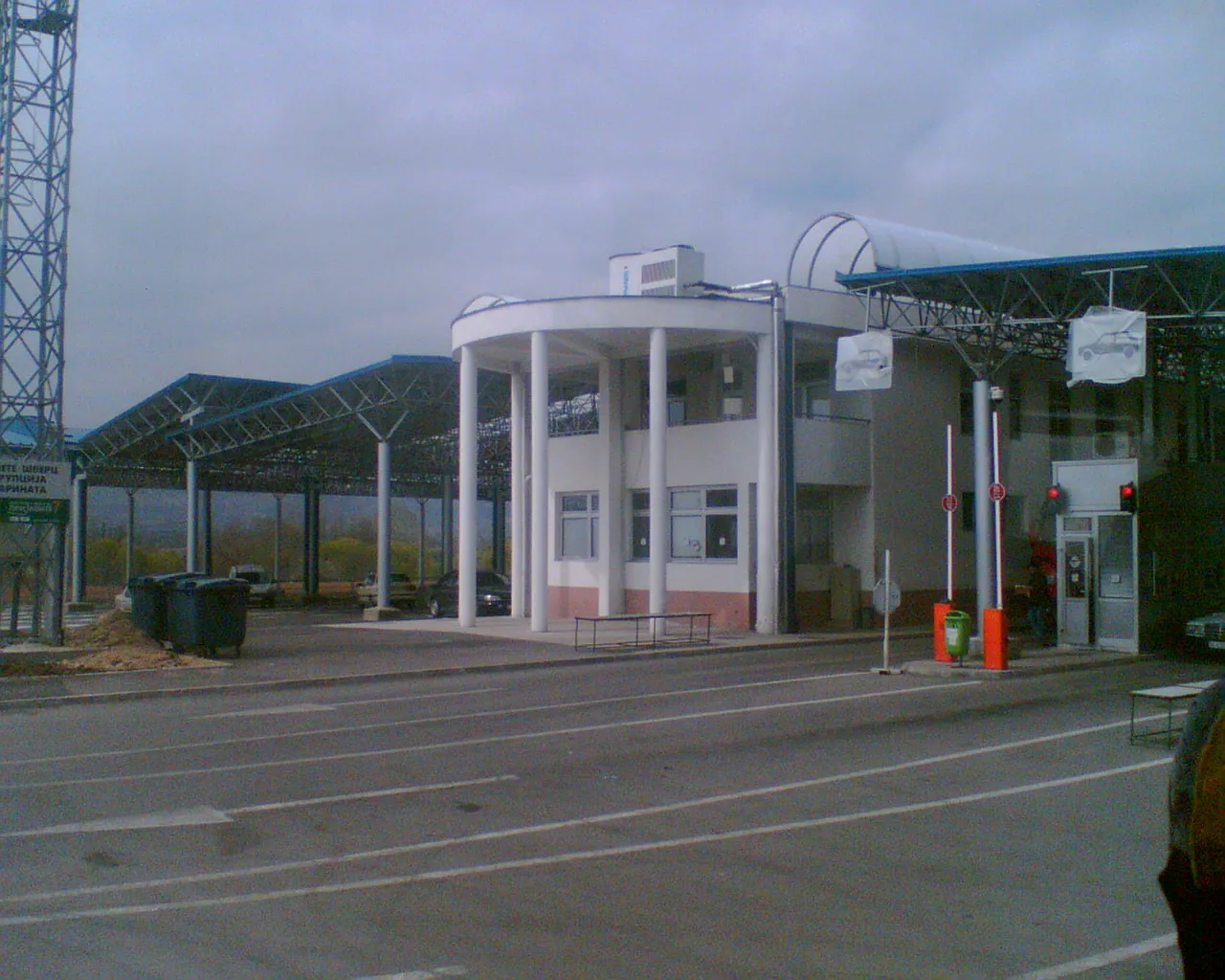
Tabanovce carries the E75/A1, the only crossing worth planning around if you’re driving to or from Belgrade. Serbian and Macedonian officers have worked out of one integrated building since 26 August 2019, and since 4 July 2025 that has meant genuine one-stop passenger control - a single check instead of two. The Ministry of Interior says the wait has come down even as summer passenger numbers rose 15 to 20 percent; on 2 August 2026, our own check of the AMSM bulletin still had Tabanovce running over an hour while the other four crossings sat close to normal. One-stop control removes a step. It doesn’t guarantee a short queue.
A smaller, local post at Pelince, north of Kumanovo, serves regional traffic near the Prohor Pcinjski monastery - not on any published intercity route, and no reason to detour there unless it’s genuinely your destination.
Kosovo: Blace, the shortest capital-to-capital hop
Blace is effectively the only road crossing that matters here, and geography explains why: Skopje and Pristina sit just 92 km apart by road, and Blace is the crossing the intercity buses and the main road both use - fares and timings are in our Skopje to Pristina guide. Only about 1.5 km at the crossing is motorway; the connecting 10.5 km back toward Skopje only broke ground in late August 2026, and Macedonian media call the current road rough, so budget extra time. On 2 August 2026, the AMSM exit wait was about 30 minutes - similar to Bogorodica that same day.
The paperwork is more interesting. Blace has run one-stop control since 14 April 2025; the Ministry extended it to the smaller Jazince-Globocica post on 28 May 2025. Kosovo also sits outside the international Green Card system, and the only two exceptions it recognises are Albanian and Macedonian cards. Arrive on Macedonian plates with a valid card and you’re the one case the Kosovo rules already cover; every other foreign plate buys mandatory border liability insurance on the spot, at an unpublished, vehicle-dependent price.
The green card: the one document rentals get wrong
All five borders run on the same rule: your insurance has to explicitly extend to the country you’re entering, proven by a green card. North Macedonia’s insurers issued 260,815 of them in 2023 alone - routine paperwork, not a rare edge case.
In your own car, check which countries are listed on your existing card before you leave home. In a rental, ask first: add-ons vary, from Alfa’s flat EUR 35 for Albania to National’s roughly EUR 34 per border, to about EUR 50 for Kosovo - the Alfa figure is in car rental in Ohrid, the Kosovo one in Skopje to Pristina, and the National fee on the Greece border and EES page. Get the fee confirmed in writing before you book; an unauthorised crossing can void the whole policy.
Bringing a foreign-plated car in and your own card doesn’t list North Macedonia? A UK motoring-club guide quoted about EUR 30 for a month of border cover (~1,850 MKD) in June 2026 - guide prices drift, so confirm the live rate at the counter. That figure is for entering North Macedonia only; what the other four charge is separate, and Kosovo, as above, publishes nothing.
Localrent’s own page is upfront about the limits: crossing borders “exists but depends on the rental company.” Our advice, not theirs: settle it in writing when you book, not once you’re through passport control.
Travel insurance and the paperwork before you cross
A trip that touches up to six countries’ medical systems in one loop - North Macedonia plus whichever neighbours you cross into - is exactly the case travel insurance exists for. It covers a different risk from the green card: the green card pays if your car damages someone else’s, travel insurance covers you, in a hospital, where your home cover likely doesn’t reach.
Visas are a separate question, answered properly with sources in our North Macedonia visa requirements guide. Keep your passport reachable without digging through the boot, and carry your vehicle registration or rental agreement alongside the green card.
Matching the crossing to the trip
If the destination is a capital, the pattern mostly holds: Tabanovce for Belgrade, Deve Bair for Sofia, Bogorodica for Athens or Thessaloniki. Kjafasan is the exception - it’s for Lake Ohrid and onward into Albania (our Tirana to Ohrid and Skopje guide covers that corridor). Skopje-Tirana traffic splits across three corridors, and the shortest is the Debar/Arbri Road, not this one - see Skopje to Tirana for the comparison. One-stop control at Tabanovce and Blace saves a step, not necessarily time; don’t count on it to beat a bad day at the border. The smaller crossings earn their keep only when the destination is local: Sveti Naum for an afternoon in Albania without the luggage, Star Dojran or Medzitlija once you know Bogorodica is running badly, Pelince if Kumanovo really is where you’re going. None of them save you the paperwork - the green card question is identical at a quiet local post and on the E75 - so settle that before you leave home.
Read also
- Driving in North Macedonia - tolls, speed limits and the green card at home
- Getting to North Macedonia - overland routes from Sofia, Thessaloniki and Pristina
- North Macedonia visa requirements - who needs a visa, and the passport rules
- North Macedonia to Greece border: EES checks and queues - the busiest crossing in detail
- Renting a car in North Macedonia - deposits, excess and the green card for rentals
- Ohrid to Sveti Naum and the Albanian border - the lake crossing in full
- The section hub: transport in North Macedonia
Read also

Transport · 10 min read
Skopje to Tetovo Bus 2026: 200 MKD, 40-50 Min, Timetable
Updated · September 12, 2026Skopje to Tetovo: 45 km, intercity bus 200 MKD (about €3.25) in 40-50 minutes from the Transportation Center, times read 1 Sept 2026, and the A2 drive.

Transport · 10 min read
Flights to North Macedonia: SKP & OHD Routes
Verified · August 28, 2026Fly into Skopje (SKP) or Ohrid (OHD) in 2026: Wizz Air 35-route SKP base, which Ohrid seasonals are already ending, and who else flies - checked Aug 2026.

Transport · 12 min read
Thessaloniki to Ohrid: How to Make the Trip
Updated · September 3, 2026Thessaloniki or SKG to Lake Ohrid: drive it in about 4.5h via the quiet Medzitlija border, or take the train to Florina and a bus via Bitola in 5.5h.

Transport · 11 min read
OHD to Ohrid 2026: No Bus, Meter Taxi or Transfer
Verified · August 16, 2026OHD to Ohrid: no airport bus, 15-25 min by road. Meter taxi roughly 550-725 MKD (€9-12); Kiwitaxi from €33 Micro. Confirm fares on the day.